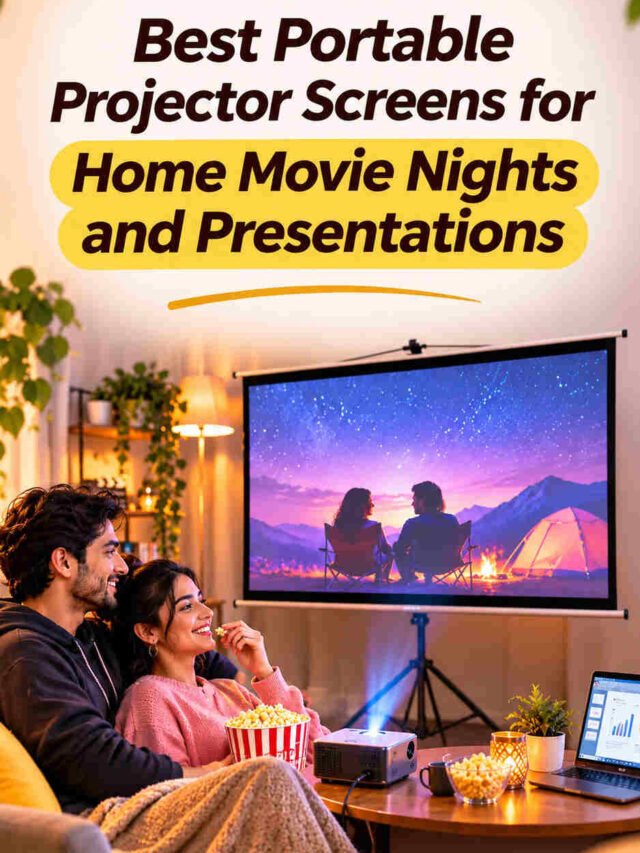
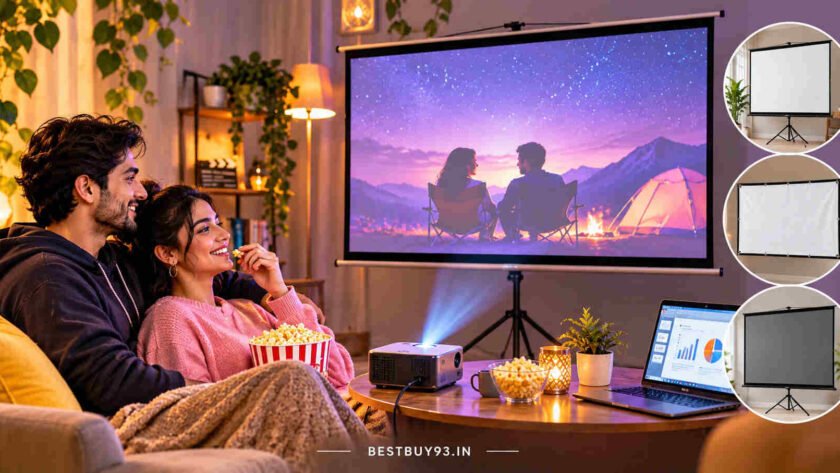

A portable projector is fun until you realise the “screen” is a cream-coloured bedroom wall, a bedsheet with suspicious wrinkles, or whatever blank surface happens to be available. 😭
A proper portable projector screen gives you a flatter, more predictable projection surface and, more importantly, lets you create a movie or presentation setup almost anywhere from your living room and terrace to an office meeting room or classroom.
But not every screen marketed as “portable” works the same way.
Some come with their own tripod stand and can be set up without drilling or hooks. Others are lightweight foldable eyelet screens that are much easier to carry but need a wall, frame, hooks or ropes. You’ll also find white and grey projection surfaces, plus 16:9 and 4:3 aspect ratios.
For most people buying a screen primarily for Netflix, YouTube, gaming and movie nights, 16:9 is the safer choice because it matches modern widescreen video more naturally. Optoma similarly recommends 16:9 for movies, TV and general use, while 4:3 remains more relevant for older content and presentations.
For this guide, we compared portable projector screens currently available in India based on screen size, aspect ratio, mounting method, portability, screen material, suitability for movies versus presentations, current availability and overall value.
Quick Answer: Which Portable Projector Screen Should You Buy?
| Pick | Projector Screen | Best For | Size | Aspect Ratio | Type |
|---|---|---|---|---|---|
| Best Overall | Inlight Cineview Tripod Screen | Movies + presentations | 92-inch | 16:9 | Tripod |
| Best Budget | SAVSOL Foldable Projector Screen | Home movie nights | 100-inch | 16:9 | Foldable |
| Best Large Tripod | Zebronics PST120B | Presentations & events | 120-inch | 4:3 | Tripod |
| Best Value Tripod | Technolite Tripod Screen | Office/classroom use | 120-inch | 4:3 | Tripod |
| Best Grey Screen | Technolite Grey Screen | Better perceived contrast | 106-inch | 16:9 | Foldable |
| Best Budget Alternative | Xtectorview Foldable Screen | Casual home theatre | 100-inch | 16:9 | Foldable |
| Best Premium Grey Tripod | BIG VUE Matte Grey Screen | Presentations + mixed lighting | 100-inch | 4:3 | Tripod |
Our Top Pick
The Inlight Cineview 92-inch 16:9 Tripod Projector Screen is our best overall choice because its widescreen format suits home entertainment while the self-standing tripod design also makes it practical for meetings, presentations and temporary setups.
If your priority is maximum portability at the lowest cost, the SAVSOL 100-inch 16:9 Foldable Screen offers better value but you’ll need somewhere to hang or tension it.
1. Inlight Cineview 92-inch 16:9 Tripod Projector Screen — Best Overall
If you want one portable projector screen for both home entertainment and professional presentations, the Inlight Cineview is the most balanced option in this roundup.
Its 92-inch diagonal screen measures roughly 7 ft × 4 ft and uses a 16:9 aspect ratio, which makes it a natural match for most modern movies, OTT content, YouTube videos, gaming consoles and widescreen laptop content.
Current product information lists a matte-white projection surface and viewing angles of up to 170 degrees. The screen is mounted on a tripod system rather than requiring permanent wall installation.
Key Features
- 92-inch diagonal screen
- 16:9 widescreen aspect ratio
- Approximately 7 ft × 4 ft viewing area
- Matte-white projection surface
- Tripod-style floor stand
- Designed for home cinema, offices and meeting rooms
- Portable, temporary installation
Why We Recommend It
The biggest advantage here is versatility.
Many inexpensive portable screens are just fabric with eyelets. They’re easy to store, yes but when presentation day arrives, somebody still has to find hooks, tape, ropes, nails or a conveniently cooperative wall.
A tripod screen solves that problem.
Place it on the floor, open the stand, deploy the screen and align your projector.
The 16:9 format is also particularly useful if you’re buying the screen for movies. Widescreen home entertainment content generally fits a 16:9 screen more efficiently than a traditional 4:3 presentation screen.
Best For
- Home movie nights
- YouTube or OTT viewing
- Office presentations
- Small meeting rooms
- Teachers and trainers
- People who don’t want permanent installation
Who Should Skip It
Skip it if you specifically need a very large 120-inch or larger screen, or if you need something compact enough to fold into a backpack.
A tripod screen is portable but “portable” here means movable, not tiny.
Pros
| Reasons to Buy | What to Keep in Mind |
|---|---|
| 16:9 is ideal for modern entertainment | 92-inch may feel small in a large hall |
| Tripod means no wall installation | Bulkier than fabric-only screens |
| Suitable for movies and presentations | Requires floor space for tripod legs |
| Matte-white projection surface | More expensive than basic eyelet screens |
Our Verdict
Best all-round choice for most buyers.
If you’re unsure whether your projector will be used more for movies or presentations, this is the type of screen I’d pick.
Check the Latest Price on Amazon India
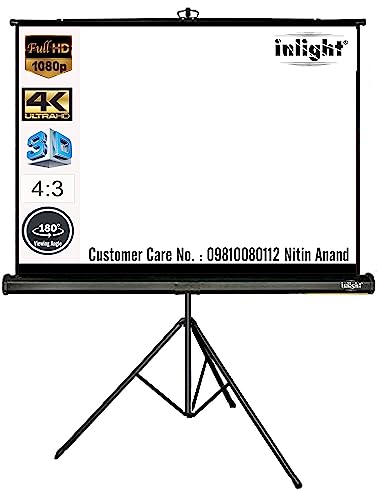
- Comes with UHD-3D-4K-8K Support Technology, Black Coated Fabric from Back Side, Easy to use and Low Maintenance, 8 Feet …
- Keeps your Eyes Strain Free while Viewing, Comes With Anti UV Coating to Protect Eyes, A+++++ Grade Fabric, Ideal for Pr…
- Ideal for Presentation, Meetings Rooms, Home Cinema
2. SAVSOL 100-inch 16:9 Foldable Projector Screen — Best Budget Pick
Want the largest useful widescreen experience without spending thousands on a stand?
The SAVSOL 100-inch foldable screen is worth considering.
The 16:9 model measures around 221 × 125 cm and is marketed for indoor and outdoor use. Current Indian listings show the screen around the ₹1,000 range, although prices can change.
Key Features
- 100-inch diagonal
- 16:9 aspect ratio
- Around 221 × 125 cm
- Foldable construction
- Eyelet mounting
- Designed for home theatre, office and classroom use
- Lightweight and easy to store
Why We Recommend It
This is the kind of screen that makes sense for someone who says:
“I don’t need a fancy setup. Bas wall pe lagana hai and movie dekhna hai.” 😄
A 100-inch 16:9 screen gives you a noticeably more cinematic picture than projecting onto a random wall.
And because the entire screen folds rather than retracting into a metal tripod housing, it takes up much less storage space.
The Catch
You need to stretch the fabric properly.
Wrinkles and waves matter because a projection surface should ideally remain flat. B&H’s projection-screen guidance notes that flatter, properly tensioned surfaces help maintain better image focus.
So don’t simply hang the screen loosely from two corners and blame your projector when people’s faces start looking like they’re floating over Himalayan terrain.
Best For
- Budget home theatre
- Bedroom movie setups
- Occasional terrace movie nights
- Rental homes
- People with limited storage space
Who Should Skip It
Skip it if you need to move the screen between conference rooms, classrooms or offices frequently. A tripod model will usually be quicker and more self-contained.
Pros & Cons
| Reasons to Buy | What We Don’t Like |
|---|---|
| Affordable | Needs mounting points |
| 100-inch widescreen size | Fabric must be tensioned properly |
| 16:9 suits movies | Less convenient for frequent presentations |
| Very easy to store | No integrated stand |
Our Verdict
Best inexpensive option for movie nights at home.
If your budget is around ₹1,000 and you already have a wall where the screen can be mounted, it’s difficult to justify spending five times more purely for portability.
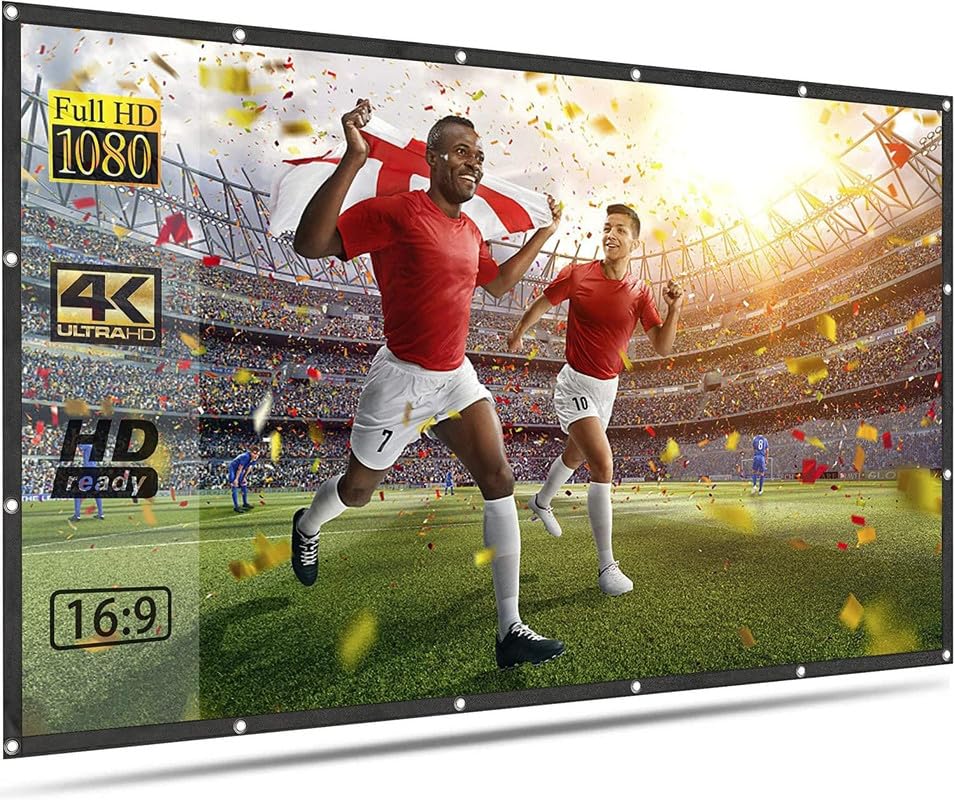
- Premium 1.2 Gain Matte White Eyelet Projector Screen designed for a bright, clear and detailed viewing experience.
- Supports Full HD 1080P, UHD, 3D, 4K and 8K projection for movies, presentations, teaching and entertainment.
- 16:9 aspect ratio design provides a suitable projection format for compatible content and projectors.
3. Zebronics PST120B 120-inch Tripod Projector Screen — Best Large Tripod Screen
Need something considerably bigger for presentations, training sessions, classrooms or group viewing?
The Zebronics PST120B is a serious step up in size.
Zebronics officially lists a 304.8 cm / 120-inch screen with a tripod mount, matte-white fabric, 4:3 aspect ratio, 160-degree viewing angle and 1.0 screen gain. It weighs approximately 7.34 kg.
Key Features
- 120-inch screen
- 4:3 aspect ratio
- Matte-white fabric
- 1.0 gain
- 160° viewing angle
- Adjustable-height tripod
- Manual roller system
- Black backing
- Metal housing
Why We Recommend It
Unlike generic fabric screens, Zebronics provides clearly stated specifications for gain, viewing angle, mounting and dimensions.
A 1.0 gain matte-white screen is a sensible general-purpose specification. B&H notes that matte white is among the safest versatile choices, while 1.0-gain material distributes brightness relatively uniformly across wider seating positions.
The integrated black backing is also designed to reduce light penetration through the material.
But There’s One Important Issue
It’s 4:3, not 16:9.
That’s great for:
- Legacy presentation content
- Classroom material
- PowerPoint decks
- Training environments
But for Netflix and widescreen movies, a 16:9 image won’t use the entire screen height.
ProjectorCentral likewise notes that 4:3 is more naturally suited to traditional presentations, while 16:9 better matches widescreen home-theatre material.
Best For
- Office presentations
- Schools and colleges
- Training programmes
- Seminars
- Group presentations
- Mixed professional use
Who Should Skip It
If 90% of your use is movies and streaming, choose a 16:9 screen instead.
Pros & Cons
| Reasons to Buy | What We Don’t Like |
|---|---|
| Huge 120-inch display | 4:3 isn’t ideal for modern movies |
| Tripod included | Fairly bulky |
| Known 1.0 gain | Heavier than fabric screens |
| 160° viewing angle | Costs more than foldable screens |
| Black backing | Requires substantial floor space |
Our Verdict
Our preferred large tripod option for presentations and professional use.
For movie-first buyers, however, the aspect ratio keeps it from taking the top position.
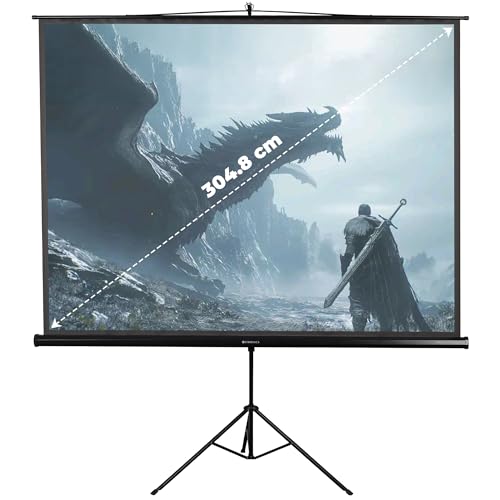
- ADJUSTABLE STAND The sturdy tripod stand offers stable support and adjustable height, making it easy to set the screen a…
- 4K SUPPORT SCREEN Features a big 120-inch (304.8 cm) viewing area that supports 4K content, delivering sharper visuals a…
- WIDE VIEWING EXPERIENCE Offers a wide 160-degree viewing angle with a standard 4:3 screen ratio, ensuring clear visuals …
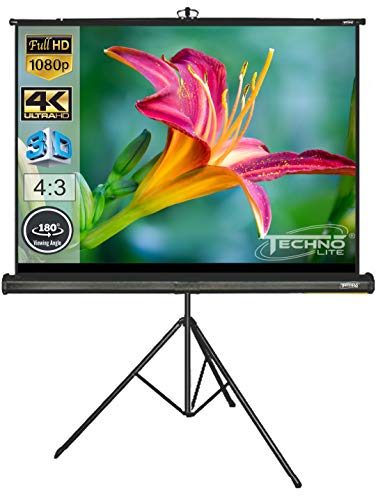
4. Technolite 120-inch Tripod Projector Screen — Best Value Large Tripod
Technolite’s 120-inch tripod screen offers a similar large-format concept at a more accessible price point.
Current listings show an 8 × 6 ft, 120-inch screen with a 4:3 aspect ratio and tripod stand.
Why We Recommend It
If you want a screen that can physically stand on its own without spending premium money, the Technolite makes sense.
The 120-inch size is particularly useful when:
- Your audience sits farther away
- You’re presenting text or spreadsheets
- You’re running workshops
- You’re using the projector in a hall
- You want occasional outdoor viewing
Best For
- Presentations
- Offices
- Training rooms
- Classrooms
- Large living rooms
- Occasional events
Who Should Skip It
Again, the 4:3 ratio makes this less attractive as a movie-first screen.
Pros
- Large 120-inch screen
- Tripod included
- No permanent installation
- Useful for professional presentations
- Better suited to frequent setup than eyelet fabric
Cons
- 4:3 format
- Larger to store
- Requires more floor space
- Not as backpack-portable as foldable fabric
Our Verdict
Choose this over a basic foldable screen when ease of setup matters more than minimum storage size.
- Comes with UHD-3D-4K Ready Technology, Black Coated Fabric from Back Side, Easy to use and Low Maintenance, 6 Feet (Widt…
- Keeps your Eyes Strain Free while Viewing, Comes With Anti UV Coating to Protect Eyes, A+++++ Grade Fabric, Ideal for Pr…
- Ideal for Presentation, Meetings Rooms, Home Cinema
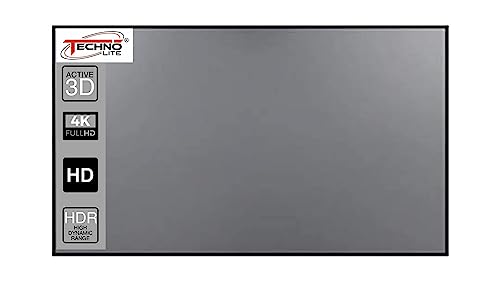
5. Technolite 106-inch Grey Foldable Projector Screen — Best Grey Screen for Movie Nights
White isn’t the only projector-screen colour.
Technolite also sells a grey 106-inch 16:9 portable projection material, measuring roughly 92 × 52 inches. Current listings describe it as a high-contrast flexible screen material designed for UHD/3D/4K projection.
Why Consider a Grey Screen?
Grey projection surfaces can help create stronger perceived blacks and contrast, particularly when your room isn’t perfectly dark.
But there’s a trade-off.
High-contrast or grey screens can reduce overall brightness compared with standard matte white. B&H specifically notes that high-contrast surfaces may improve darker areas but typically come with lower gain.
So don’t automatically assume grey = better.
Choose Grey If
- Your projector is reasonably bright
- You watch mostly films
- Your room has light-coloured walls
- You care about black levels and contrast
- You can tolerate slightly lower brightness
Stick With White If
- Your projector is relatively dim
- You frequently present documents
- Several viewers sit off-centre
- You want the safest all-purpose option
Best For
- Home cinema
- Movie nights
- Darker films and TV shows
- Gaming
- People who dislike washed-out blacks
Who Should Skip It
Owners of very low-brightness portable projectors may get more practical benefit from a standard matte-white screen.
Our Verdict
An interesting movie-first option for buyers willing to experiment with grey projection material.
Just don’t buy it solely because the listing says “high contrast.” Your projector brightness and room lighting still matter.
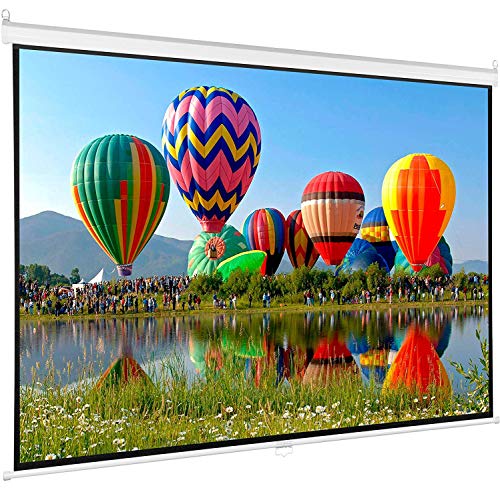
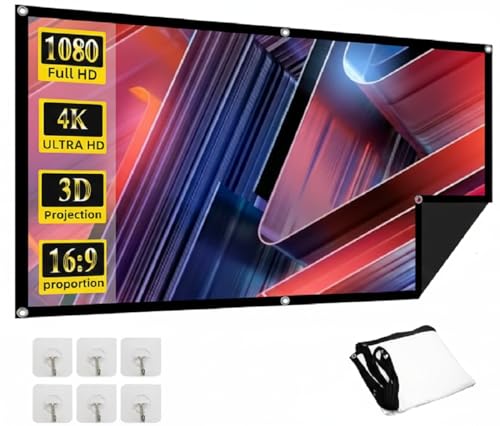
6. Xtectorview 100-inch 16:9 Foldable Projector Screen — Best Budget Alternative
If SAVSOL isn’t available or you simply want another inexpensive option, Xtectorview has several portable foldable screens in India.
Its 100-inch 16:9 model is listed at around 221 × 125 cm, with current Flipkart listings around the ₹1,000 mark.
Why We Recommend It
The appeal is straightforward:
100 inches + 16:9 + foldable + cheap.
No complicated engineering degree required. 😄
It works especially well as a screen that stays in one room but can still be folded away when necessary.
Best For
- Budget buyers
- Bedrooms
- Small home theatres
- Occasional movie nights
- Temporary indoor projection
Who Should Skip It
If you genuinely need to set up and dismantle the screen every day, tripod or pull-up designs are much more convenient.
Pros & Cons
| Reasons to Buy | What We Don’t Like |
|---|---|
| 100-inch widescreen | Needs mounting |
| Inexpensive | Wrinkle management matters |
| Foldable | No standalone frame |
| Easy to store | Basic construction |
Our Verdict
A sensible no-frills 16:9 screen if you’re trying to upgrade from projecting directly on a wall without turning the room into a ₹50,000 home theatre project.
- 100 INCH 16:9 WIDESCREEN: XTECTORVIEW 100 Inch Projector Screen features a 16:9 aspect ratio with an approximately 87 x …
- 1.2 GAIN WHITE PROJECTION SURFACE: Designed with a 1.2 gain white projection surface for a balanced projection experienc…
- UHD 3D 4K & 8K COMPATIBLE: The projection screen supports UHD, 3D, 4K and 8K technology-compatible content when used wit…
7. BIG VUE Matte Grey Tripod Projector Screen — Best Premium Grey Tripod
BIG VUE offers matte-grey tripod screens in several sizes, including 84, 100 and 120 inches.
The current 100-inch grey tripod version is available in India, while product information highlights the portable stand, matte-grey material, black masking border and adjustable manual self-locking mechanism.
Why We Recommend It
It combines two features that don’t commonly appear together in cheap projector screens:
grey material + integrated tripod.
That makes it interesting for buyers using the projector in rooms where lighting isn’t always ideal but permanent installation isn’t practical.
Best For
- Office presentations
- Training spaces
- Multi-purpose rooms
- Occasional indoor movie nights
- Buyers wanting a more robust portable system
Who Should Skip It
The 4:3 variants aren’t our first recommendation for movie-only setups.
And the price premium is substantial compared with ₹1,000 foldable screens.
Our Verdict
Buy it when convenience and reusable professional setup matter more than getting the cheapest square metre of projection fabric possible.
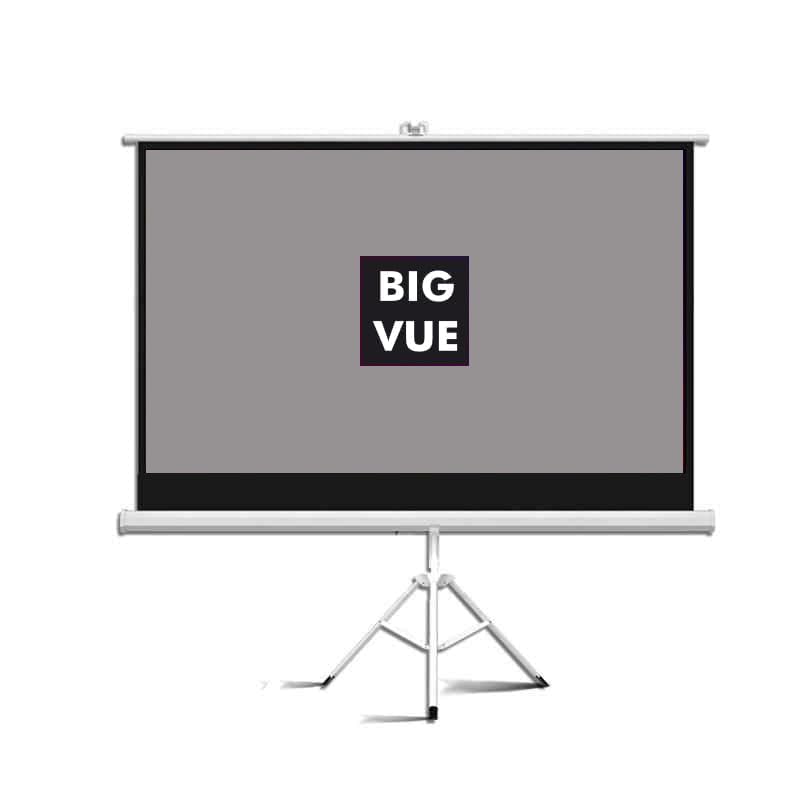
- The portable projection screen stand is designed for easy transport and quick setup, making it an ideal solution for tra…
- The portable projector screen enables exceptional clarity and vibrancy in displaying images and videos.
- The grey projection screen is made of matte fabric, which is great for viewing. It features a black border that improves…
Portable Foldable Screen vs Tripod Screen: Which Is Better?
This is probably the most important decision after aspect ratio.
| Feature | Foldable Screen | Tripod Screen |
|---|---|---|
| Storage | Excellent | Moderate |
| Transport | Very easy | More cumbersome |
| Setup | Needs hooks/support | Self-standing |
| Flatness | Depends on tension | Usually more consistent |
| Price | Usually cheaper | Usually costlier |
| Office use | Okay | Excellent |
| Home cinema | Excellent value | Excellent |
| Outdoor use | Requires support | Easier, but wind matters |
Choose a Foldable Screen If:
You want something cheap, light and easy to store.
Choose a Tripod Screen If:
You regularly move between locations or don’t want to depend on walls and hooks.
16:9 vs 4:3: Which Projector Screen Should You Buy?
Choose 16:9 for:
- Netflix
- Amazon Prime Video
- YouTube
- Gaming
- Most modern movies
- Modern home projectors
- General home entertainment
Elite Screens identifies 16:9 as the common HDTV format and a popular choice for home cinema.
Choose 4:3 for:
- Legacy presentation projectors
- Older slides
- Certain classroom setups
- Traditional presentation content
- Mixed institutional use
What About PowerPoint?
Modern laptops and presentation decks often use widescreen layouts, so 16:9 can still work perfectly well for contemporary PowerPoint presentations.
Don’t automatically buy 4:3 merely because the word “presentation” appears in the product description.
Match the screen to your projector’s native aspect ratio and the content you actually use. ProjectorCentral warns that mismatched projector and screen ratios can result in unused screen areas or scaling compromises.
What to Look for When Buying a Portable Projector Screen
1. Screen Size
Bigger sounds better until your 150-inch screen consumes an entire wall and your projector isn’t bright enough to illuminate it properly.
Popular portable sizes include:
- 72–84 inches: compact rooms
- 90–100 inches: most homes
- 110–120 inches: larger living rooms and presentations
- 130 inches+: halls, outdoor viewing and larger groups
Optoma suggests matching screen size to both room dimensions and viewing distance rather than simply buying the largest available option.
2. Aspect Ratio
For most BestBuy93.IN readers buying primarily for home entertainment:
16:9 gets our vote.
For older presentation equipment:
4:3 may still make sense.
3. Screen Gain
Screen gain indicates how the surface reflects projected light.
A 1.0-gain screen is a useful general-purpose benchmark.
Higher gain can make the centre of the picture look brighter but often reduces optimal viewing angles and may introduce hotspotting.
Don’t blindly chase “high gain.”
4. White vs Grey Material
White
Best all-rounder.
Good for:
- General home use
- Presentations
- Wider seating
- Lower-brightness projectors
Grey
Useful for:
- Improving perceived contrast
- Home cinema
- Rooms with less-than-perfect light control
But grey material may reduce brightness.
5. Viewing Angle
This becomes important when several people are watching.
If you’re sitting directly in front of the screen alone, almost anything works.
If ten relatives have invaded movie night and everyone is sitting across the room at weird angles, wider viewing uniformity matters considerably more. 😂
6. Screen Flatness
A projection screen should remain as flat as possible.
Waves and wrinkles distort straight lines and become especially obvious with:
- Presentation text
- Subtitles
- Excel sheets
- Gaming HUDs
- Computer desktops
If you’re choosing fabric, stretch it properly.
7. Setup Method
Ask yourself:
Where exactly will I put this thing?
Portable doesn’t automatically mean freestanding.
Eyelet screens usually need:
- Hooks
- Nails
- Rope
- Velcro
- A frame
Tripod screens stand independently.
8. Storage Size
A 120-inch tripod screen can technically be portable while still being absolutely annoying in a tiny flat.
Check folded dimensions before buying.
9. Indoor vs Outdoor Use
For outdoor movie nights, you’ll need more than a screen.
Consider:
- Wind
- Screen stability
- Ambient light
- Nearby streetlights
- Projector brightness
- Power supply
Outdoor projection works best after sunset.
Trying to defeat the Indian afternoon sun with a portable projector is a battle physics has already decided. 😭
Common Mistakes to Avoid
Buying Based Only on “4K Support”
A projector screen doesn’t have pixels like a TV.
Terms such as “4K screen” generally describe the material being suitable for displaying a high-resolution projected image.
Your actual resolution comes primarily from the projector and source.
Ignoring Aspect Ratio
A giant 4:3 screen isn’t automatically better than a smaller 16:9 screen if you’re watching movies.
Assuming Portable Means Tripod
Many ₹700–₹1,500 products are simply foldable fabric.
Check what comes in the box.
Buying an Oversized Screen for a Weak Projector
As image size increases, the projector’s available light is spread across a larger area.
A massive screen can therefore look dimmer.
Hanging Foldable Screens Loosely
Proper tension makes a huge difference.
Assuming Grey Is Automatically Better
Grey screens can improve perceived contrast but can also reduce brightness.
Match material to your projector.
Ignoring Room Lighting
Before spending thousands upgrading your screen, try:
- Closing curtains
- Turning off nearby lights
- Moving lamps away from the screen
- Using darker room surfaces where practical
Room control sometimes improves your picture more than buying a fancy new screen.
How We Selected These Portable Projector Screens
We evaluated projector screens available in India using:
- Current availability
- Screen dimensions
- Aspect ratio
- Screen material
- Tripod versus foldable design
- Ease of setup
- Storage requirements
- Suitability for home movies
- Suitability for presentations
- Viewing angle where available
- Gain where disclosed
- Price-to-feature value
- Customer feedback where available
- Manufacturer information
- Use-case versatility
Specifications were cross-checked against manufacturer information and current Indian retail listings where possible.
BestBuy93.IN has not claimed personal hands-on testing of these products.
Prices and availability can change, so always check the latest listing before purchasing.
Frequently Asked Questions
What is the best projector screen size for home movie nights?
For most bedrooms and living rooms, 90 to 100 inches offers a good balance between immersion and practicality. A 120-inch screen can feel more cinematic in larger rooms, but your projector needs enough brightness and sufficient throw distance to fill it properly. Best Portable Projector Screen
Is a 16:9 or 4:3 projector screen better?
For movies, Netflix, YouTube and gaming, 16:9 is generally the better option. A 4:3 screen is more relevant to older presentation systems and legacy content. Match the screen to your projector’s native ratio whenever possible. Best Portable Projector Screen
Is a projector screen better than a white wall?
Usually yes, particularly when the wall has colour, texture, uneven paint or imperfections. A purpose-built screen provides a more consistent projection surface and can improve perceived uniformity and image presentation. Best Portable Projector Screen
Are foldable projector screens good?
Yes, especially if budget and storage matter. Their main weakness is that wrinkles or poor tensioning can create an uneven viewing surface. Mount all available eyelets and keep the screen reasonably taut. Best Portable Projector Screen
Is a grey projector screen better than white?
Not universally. Grey surfaces can improve perceived black levels and contrast, but may also reduce brightness. Matte white remains the safer general-purpose choice, particularly for lower-brightness projectors and wider seating arrangements. Best Portable Projector Screen
Can I use a projector screen outdoors?
Yes, but use it after sunset whenever possible and secure it properly. Wind can turn a large projector screen into something halfway between a sail and a missing-person report. 😭 Tripods may need additional stabilisation outdoors.
Do I need a 4K projector screen for a 4K projector?
You need a sufficiently smooth, suitable projection material, but the screen itself doesn’t contain pixels. “4K ready” is therefore not comparable with a 4K television panel. The projector determines the native projected resolution.
Which is better: tripod or foldable projector screen?
Choose a tripod screen if you move the setup frequently or cannot mount anything on walls. Choose a foldable screen if you want the cheapest and easiest-to-store option and already have a suitable mounting location.
Final Verdict
For most people looking for the best portable projector screen for both movie nights and presentations, the Inlight Cineview 92-inch 16:9 Tripod Projector Screen is our top pick.
Its 16:9 format works naturally with modern entertainment, while the self-standing tripod makes it considerably easier to use in offices, classrooms or different rooms.
If budget matters most, go for the SAVSOL 100-inch 16:9 Foldable Projector Screen. You sacrifice the stand, but you get a larger widescreen projection area at a fraction of the cost.
For large presentations, our pick is the Zebronics PST120B 120-inch Tripod Screen. Its 120-inch display, 1.0 gain, matte-white material and tripod design make it better suited to classrooms, offices and training environments.
For movie lovers interested in improved perceived contrast, the Technolite 106-inch Grey Screen is worth considering provided your projector has enough brightness.
Best Picks at a Glance
🏆 Best Overall: Inlight Cineview 92-inch 16:9 Tripod Screen
💰 Best Budget: SAVSOL 100-inch 16:9 Foldable Screen
📊 Best for Presentations: Zebronics PST120B 120-inch Tripod Screen
🎬 Best Grey Movie Screen: Technolite 106-inch Grey Screen
🏠 Best Budget Alternative: Xtectorview 100-inch 16:9 Screen
The key is simple: buy for your room and content not just the biggest diagonal number you can find.
A well-chosen 92-inch screen can give you a much better experience than a poorly mounted 150-inch bedsheet impersonator. 📽️🍿