
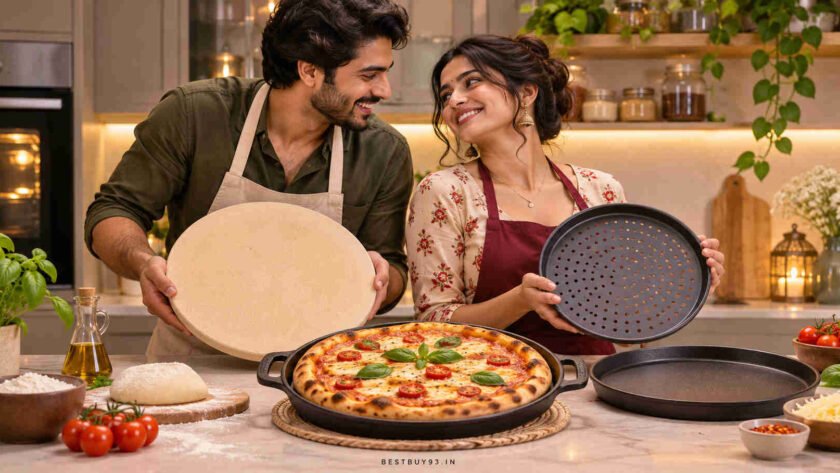

Homemade pizza has one tiny habit that can ruin an otherwise perfect evening: the toppings look gorgeous while the bottom of the crust remains pale, soft and slightly sad. 🍕😭
Your oven may be hot enough to melt mozzarella beautifully, but a crispy pizza base needs plenty of heat hitting the underside of the dough too. That’s where pizza stones and pizza pans become useful.
A pizza stone stores heat and transfers it rapidly into the dough once you slide the pizza onto it. A perforated pizza pan improves airflow beneath the base, while cast iron stores a large amount of heat and works particularly well for thicker, pan-style pizzas.
King Arthur Baking notes that baking stones and steels provide concentrated heat to the underside of pizza, helping create stronger browning and a crispier crust than an ordinary cool baking sheet. Proper preheating is critical; otherwise, much of the benefit disappears.
For this BestBuy93.IN guide, we compared pizza stones and pizza pans available to Indian buyers based on material, size, heat retention, oven compatibility, ease of use, cleaning, versatility, current availability and value for money.
Whether you’re trying to recreate a thin pizzeria-style crust, making family pizzas in an OTG, or prefer thick cheesy pan pizza, there’s a better option than sacrificing another dough to the soggy-base gods. 😄
Quick Answer: Which Pizza Stone or Pizza Pan Should You Buy?
| Pick | Product | Type | Size | Best For |
|---|---|---|---|---|
| 🏆 Best Overall | Primeway Cordierite Pizza Stone | Cordierite stone | 15 × 12 inch | Crispy homemade pizza |
| 💰 Best Budget | PureBake Premium Pizza Pan | Perforated carbon steel | 11 inch | Beginners & thin crust |
| 🧡 Best Cast Iron | Bergner Eco Cast Pizza Pan | Cast iron | 26 cm | Pan pizza & versatility |
| 🔥 Best Premium Stone | Weber Pizza Stone | Cordierite + tray | 26 cm | Grill & BBQ users |
| 🍕 Best Pan Set | Matiko 3-Piece Pizza Pan Set | Perforated carbon steel | Multiple sizes | Families |
| 🧀 Best for Deep Dish | Chicago Metallic Deep Dish Pizza Pan Set | Carbon steel | Deep-sided | Thick/deep-dish pizza |
| 🌬️ Best Perforated Alternative | Bakken Swiss Perforated Pizza Pan | Carbon steel | 13 inch | Extra-crisp thin crust |
Our Top Recommendation
For someone primarily interested in crispy homemade pizza, the Primeway 15 × 12-inch Cordierite Pizza Stone is our overall pick.
The rectangular cordierite surface gives you more usable space than many compact round stones, while its heat-retaining material is exactly the type of baking surface that helps a domestic oven mimic some of the bottom heat you’d get from a dedicated pizza oven.
If you want something cheaper and easier to handle, start with the PureBake 11-inch perforated carbon-steel pan.
1. Primeway 15 × 12-Inch Cordierite Pizza Stone — Best Overall
If crispy crust is your main priority, Primeway’s rectangular cordierite stone is the most interesting all-round option in this list.
The current product listing specifies a 15 × 12-inch rectangular natural cordierite surface, approximately 1 cm thick and around 1.97 kg in weight. It is intended for ovens and BBQ grills and is marketed for pizza, bread, cookies and other baked foods.
Why We Recommend It
The biggest reason is the material.
Cordierite is widely used for pizza stones because it handles high temperatures while storing and redistributing heat effectively. Primeway also specifies thermal-shock resistance, although you should still avoid suddenly exposing any hot stone to cold water.
The second advantage is its rectangular shape.
Serious Eats’ testing of pizza stones similarly found that larger rectangular stones can be easier to use because they give you more landing space when sliding pizza from a peel and are versatile enough for bread and other baking.
That extra margin is surprisingly useful. Your beautifully stretched round pizza has a funny way of becoming an abstract geographical shape the second you try to launch it into the oven. 😂
Key Specifications
| Feature | Details |
|---|---|
| Material | Natural cordierite |
| Shape | Rectangular |
| Size | 15 × 12 inches |
| Thickness | Around 1 cm |
| Weight | Around 1.97 kg |
| Suitable for | Oven, BBQ/grill |
| Dishwasher safe | No |
Best For
This is best suited to people who regularly make thin-crust, Neapolitan-inspired, New York-style or artisan homemade pizzas and don’t mind preheating the stone properly.
Who Should Skip It
If you want pizza ready in 15 minutes from the moment you switch the oven on, a stone may feel inconvenient.
A baking stone works best when it has plenty of time to heat thoroughly. King Arthur recommends a substantial preheat for baking stones often around 45–60 minutes depending on the recipe and oven.
Pros & Cons
| Reasons to Buy | What We Don’t Like |
|---|---|
| Cordierite retains useful baking heat | Needs long preheating |
| Large rectangular surface | Heavy compared with a pan |
| Suitable for pizza and bread | Can crack if thermally shocked |
| Useful in ovens and grills | Requires careful cleaning |
| More landing area than small round stones | Not dishwasher safe |
Our Verdict
Best choice for serious homemade pizza lovers who want a noticeably crispier bottom crust.
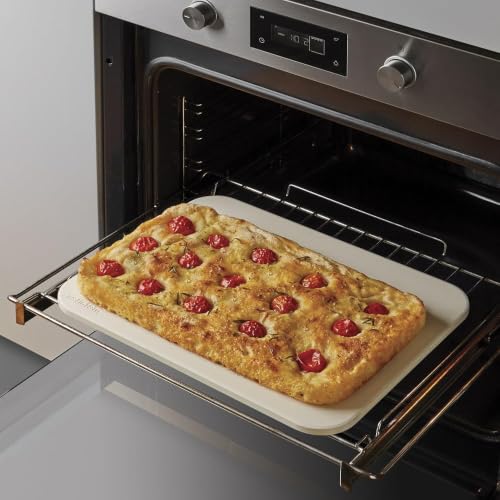
- Natural Cordierite: Accumulating and releasing heat, our pizza stones help you bake crispy crust pizza.
- The porous structure keeps your pizza soft and crunchy by eliminating moisture to prevent your crust from becoming soggy
- High Heat Resistance: Resistant up to 800 ° C or 1472 ° F this oven stone for baking is perfect for grilling & baking th…
2. PureBake Premium 11-Inch Perforated Carbon Steel Pizza Pan — Best Budget Pick
Not everyone wants to preheat a two-kilogram stone for an hour every time pizza cravings attack.
That’s where a perforated pizza pan makes a lot of sense.
The PureBake model currently available in India is an 11-inch carbon-steel pizza pan with perforated holes and a non-stick surface.
Why We Recommend It
The holes are the important part.
Instead of trapping steam directly underneath the dough like a completely solid tray can, perforations expose more of the base to circulating oven heat.
That makes this style particularly useful for:
thin pizzas, pre-baked bases, frozen pizzas and dough that is already reasonably firm before going into the oven.
The product is also far cheaper than premium stones, making it an easy first upgrade if you’re currently using an ordinary baking tray.
Key Specifications
| Feature | Details |
|---|---|
| Material | Carbon steel |
| Diameter | 11 inches |
| Base | Perforated |
| Surface | Non-stick |
| Best use | Thin-crust pizza |
| Storage | Easy |
Why Beginners May Prefer It
There is no pizza peel technique to master.
Simply stretch the dough inside the pan, add toppings and put the pan into the oven.
With a stone, you’re transferring raw dough onto a blazing-hot surface. Until you’ve practised the motion a few times, there is a non-zero possibility that your circular Margherita enters the oven as a folded calzone against its will. 😭
Who Should Skip It
If your dream is a very airy, blistered crust with aggressive bottom browning, a properly heated stone or ideally a baking steel can transfer more concentrated heat to the dough.
King Arthur’s comparison found that stones and steels hold substantial thermal energy specifically for this purpose.
Pros & Cons
| Reasons to Buy | What We Don’t Like |
|---|---|
| Very affordable | Less thermal mass than a stone |
| Lightweight | Not ideal for very wet dough |
| Perforations encourage browning | Coating needs careful handling |
| Easy for beginners | Limited to roughly 11-inch pizzas |
| Easier storage | Won’t mimic hearth baking as closely |
Our Verdict
Best budget choice for beginners and casual pizza nights.
If you’re not sure whether homemade pizza will become a weekly obsession or a two-Sunday hobby, start here before buying expensive gear.
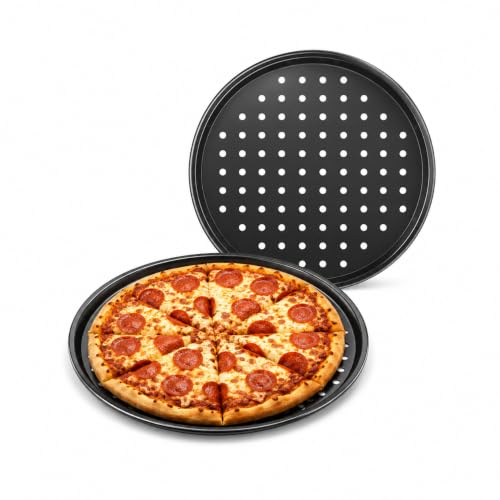
- 𝐂𝐑𝐈𝐒𝐏𝐘 𝐂𝐑𝐔𝐒𝐓 𝐄𝐕𝐄𝐑𝐘 𝐓𝐈𝐌𝐄 – Elevate your pizza game with our unique perforated design that allows for optimal airflow. Enj…
- 𝐕𝐄𝐑𝐒𝐀𝐓𝐈𝐋𝐈𝐓𝐘 𝐑𝐄𝐃𝐄𝐅𝐈𝐍𝐄𝐃 – More than just a pizza pan! Bake cookies, roast veggies, and prepare your favorite snacks with e…
- 𝐁𝐔𝐈𝐋𝐓 𝐓𝐎 𝐋𝐀𝐒𝐓 – Crafted from heavy-gauge carbon steel, our pan delivers unbeatable durability and heat resistance, ensur…
3. Bergner Eco Cast Iron 26cm Pizza Pan — Best Cast Iron Pizza Pan
Cast iron sits somewhere between a pizza stone and a traditional pan.
It gives you a defined pan shape but also provides excellent heat retention.
Bergner’s Eco Cast Pizza Pan measures approximately 26 cm, weighs around 2.35 kg, comes pre-seasoned with vegetable oil and includes silicone sleeves. The manufacturer lists compatibility with gas, electric and induction cooktops and gives the product a one-year warranty.
Why We Recommend It
This is the most versatile product in the roundup.
You aren’t buying something that only comes out when Pizza Friday appears on the calendar.
Cast iron can also be used for other foods, while the high thermal mass is useful for creating substantial browning beneath pizza dough.
It is especially attractive for:
thicker pizzas, focaccia-style bases, pan pizzas and recipes where you want a crisp fried-like lower crust.
The Big Advantage: Stovetop + Oven Flexibility
Depending on your recipe, cast iron allows techniques where the pan can initially receive heat from the cooktop before finishing under oven heat.
That can be useful in Indian kitchens where the OTG doesn’t deliver enormous bottom heat.
Pros & Cons
| Reasons to Buy | What We Don’t Like |
|---|---|
| Excellent heat retention | Heavy |
| Pre-seasoned | Requires seasoning maintenance |
| Multiple cooking uses | Slower to heat than thin metal |
| Compatible with multiple cooktops | Must be dried carefully to prevent rust |
| Good for pan-style pizza | 26cm size limits very large pizzas |
Our Verdict
If you already enjoy cast-iron cookware, this is probably the most useful multi-purpose purchase in the list.
Just don’t expect it to feel lightweight. Cast iron enters the kitchen with the subtlety of gym equipment. 😄
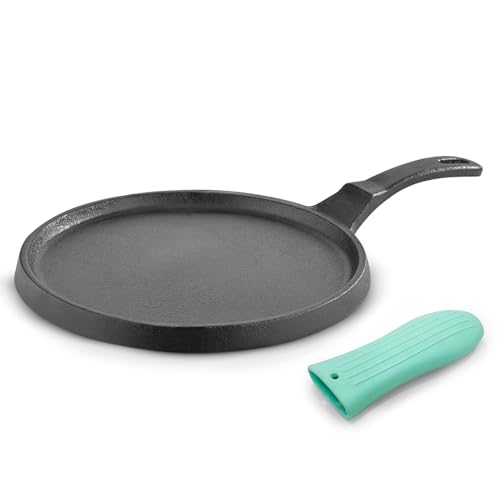
- 💪🏻Durable Cast Iron Construction : Made from high-quality cast iron for excellent durability and long-lasting performanc…
- ♨️Induction-Compatible Bottom : The pan features an induction-ready base, perfect for use on all types of cooktops, incl…
- 🔥Even Heat Distribution : The cast iron design ensures heat is evenly distributed across the pan, creating perfectly coo…
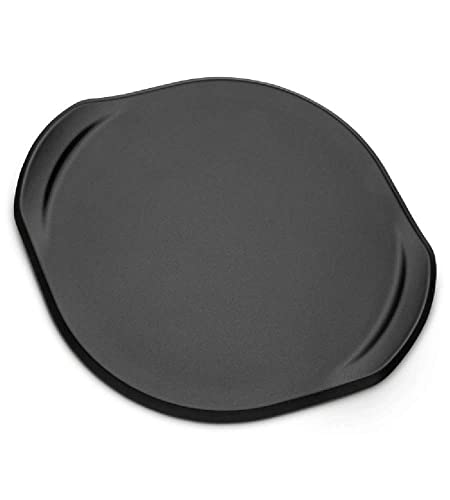
4. Weber 26cm Pizza Stone — Best Premium Stone for Grills
Weber’s 26cm Pizza Stone is a compact cordierite stone supplied with an aluminium carrying tray.
Weber says its cordierite material absorbs and releases heat and that the stone fits its grills, including smaller models such as the Weber Q 100/1000 and Smokey Joe.
Why We Recommend It
This makes more sense for someone who already owns a Weber grill or regularly cooks outdoors than someone looking for the cheapest OTG accessory.
The tray also makes carrying and serving easier than handling bare hot stone.
Best For
Outdoor pizza nights, BBQ enthusiasts, Weber owners and compact pizzas.
Who Should Skip It
If you’re only using a domestic oven, the Primeway gives you considerably more baking area for less money.
Pros & Cons
| Reasons to Buy | What We Don’t Like |
|---|---|
| Genuine cordierite stone | Expensive for its size |
| Aluminium carrying tray | Only 26cm |
| Grill-friendly | Less surface area than rectangular stones |
| Trusted grill brand | Overkill for occasional pizza |
Our Verdict
Excellent niche choice for grill owners not necessarily the best value for an ordinary home oven.
5. Matiko 3-Piece Perforated Pizza Pan Set — Best for Families
A multi-size pizza-pan set solves a problem pizza stones don’t:
everyone wants a different pizza.
One person wants paneer tikka. Someone wants extra jalapeño. Someone has decided pineapple is a personality trait.
Multiple pans let you bake different sizes and toppings without turning one pizza into a diplomatic negotiation.
The Matiko set currently available in India uses carbon-steel perforated pizza trays in multiple sizes.
Why We Recommend It
It makes sense if you:
regularly cook for several people, make personal pizzas, want both medium and larger trays or prefer pans to the launch-and-peel workflow of stones.
Pros & Cons
| Reasons to Buy | What We Don’t Like |
|---|---|
| Multiple sizes | Takes more cupboard space |
| Perforated for airflow | Not the same heat retention as stone |
| Useful for families | Coating requires sensible utensil use |
| Easier than pizza stones | Several pans may be unnecessary for singles |
Our Verdict
Best practical option for family pizza nights where convenience beats pizza-nerd perfection.
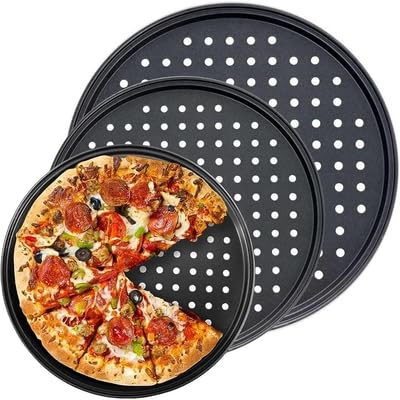
- ULTIMATE CRISPY CRUST TECHNOLOGY – Designed with a perforated surface, these pizza pans feature precision-engineered hol…
- 3-PIECE VERSATILITY SET – Why settle for one size? This value pack includes 9-inch, 11-inch, and 12-inch pans. Whether y…
- PREMIUM NON-STICK CARBON STEEL – Crafted from heavy-duty, warp-resistant carbon steel, these pans provide even heat dist…
6. Chicago Metallic Deep Dish Pizza Pan Set — Best for Deep-Dish Pizza
Not every pizza wants to be thin.
Sometimes pizza chooses violence: thick crust, huge cheese layer, sauce, fillings and enough calories to require emotional preparation. 😂
For that, you need proper sides.
The Chicago Metallic Deep Dish Pizza Pan Set is designed for deep-dish and pan-style pizza, rather than the flat thin-crust style targeted by stones and perforated trays.
Why We Recommend It
Deep pans support the dough while it rises and provide room for heavier layers of sauce, cheese and fillings.
That makes them particularly useful for:
Chicago-style deep dish, thick pan pizza, stuffed pizza and other high-sided bakes.
Who Should Skip It
Do not buy a deep-dish pan expecting a Neapolitan-style crispy flat crust.
Different tool, different pizza.
Pros & Cons
| Reasons to Buy | What We Don’t Like |
|---|---|
| Proper sides for deep dish | Not ideal for thin crispy pizza |
| Supports heavy toppings | More specialised use |
| Carbon steel transfers heat efficiently | Imported pricing may vary |
| Useful for pan pizza | Takes more storage space than flat trays |
Our Verdict
Best specialist option if thick pizza is your actual goal.

- PROFESSIONAL 4-PIECE SET: Create individual 7-inch deep dish pizzas; Perfect for family pizza nights and entertaining; E…
- SUPERIOR CRUST PERFORMANCE: Engineered with strategic perforations that promote optimal airflow; Creates perfectly crisp…
- PREMIUM CONSTRUCTION: Made from heavy-duty carbon steel with reinforced rolled rims for enhanced durability; Ensures eve…
7. Bakken Swiss 13-Inch Perforated Pizza Pan — Best Large Perforated Alternative
If PureBake’s 11-inch size feels restrictive, a 13-inch perforated carbon-steel pan gives you room for a more generous pizza.
The Bakken Swiss pan uses a perforated design intended to expose the bottom crust to more oven heat.
Why Choose It?
The extra two inches sound small until you’re feeding more than one hungry person.
A 13-inch pan gives you roughly 40% more surface area than an 11-inch pan, assuming similar circular dimensions.
That is the difference between “nice dinner” and “why did you take the last slice?” 😭
Our Verdict
A sensible option for buyers who like the simplicity of perforated trays but want something closer to takeaway-pizza sizing.

- NON-STICK DESIGN – Thanks to the non-stick coating of this pizza tray for oven, your pizza will never be stick to the su…
- A QUALITY YOU CAN TRUST – Crafted from high-quality carbon steel that is FOA, PFOS and PTFE free, this non-stick pizza t…
- PERFECT FOR YOUR NEXT GOURMENT PIZZA PARTY- If you’re searching for a powerful round pizza pan that will help you make y…
Pizza Stone vs Pizza Pan: Which Is Better?
Neither is automatically better.
They create different cooking environments.
| Feature | Pizza Stone | Perforated Pan | Cast Iron Pan |
|---|---|---|---|
| Crispy thin crust | ⭐⭐⭐⭐⭐ | ⭐⭐⭐⭐ | ⭐⭐⭐⭐ |
| Ease of use | ⭐⭐⭐ | ⭐⭐⭐⭐⭐ | ⭐⭐⭐⭐ |
| Preheating required | High | Low–moderate | Moderate |
| Heat retention | Excellent | Moderate | Excellent |
| Weight | Heavy | Light | Very heavy |
| Cleaning | More careful | Easier | Requires seasoning |
| Beginner friendly | Moderate | Excellent | Good |
| Pan/deep pizza | Poor | Moderate | Excellent |
| Bread baking | Excellent | Limited | Good |
| Storage | Moderate | Excellent | Moderate |
Choose a Pizza Stone If…
Your priority is a crisp, browned base with a more pizzeria-like result.
Stone works particularly well when you have a reasonably hot oven and don’t mind the preheat.
King Arthur found baking stones produce more even bottom browning and a crisper crust than ordinary aluminium sheets because the stone provides sustained heat directly beneath the dough.
Choose a Perforated Pan If…
You want something cheap, convenient and beginner-friendly.
It’s especially useful for thin crust, ready-made pizza bases and frozen pizza.
Choose Cast Iron If…
You enjoy pan pizza, want excellent heat retention and want a product that can do far more than bake pizza.
What to Look for When Buying a Pizza Stone or Pizza Pan
Material
Material changes how quickly heat reaches your crust.
Cordierite: Excellent heat retention, suitable for high temperatures and commonly used for baking stones.
Carbon steel: Lightweight, affordable and faster-heating than stone.
Cast iron: Heavy but excellent at storing and transferring heat.
Aluminium: Light and conductive but has much less thermal mass than a thick stone or cast-iron pan.
Size
Check your oven before buying.
A 15 × 12-inch stone may sound completely normal until it reaches your kitchen and discovers that your compact OTG has other plans.
Measure:
usable rack width × usable rack depth, leaving enough clearance for airflow and easy insertion.
Don’t rely only on the advertised litre capacity of your OTG.
Thickness
A thicker stone generally stores more heat but also requires more time to heat.
Serious Eats found thicker stones useful for heat retention between successive pizzas, while thinner stones can heat and recover faster.
So thicker isn’t universally “better.”
Shape
Rectangular stones have one underrated advantage:
more landing space.
You can bake a round pizza on a rectangle perfectly well, while a large rectangular stone can also accommodate breads and irregular shapes.
Perforated vs Solid Pan
Choose perforated for maximum airflow beneath thin pizza.
Choose solid when you’re working with:
very soft dough, lots of oil, deep-dish recipes or toppings/sauces that could leak through the holes.
Maximum Oven Temperature
Check what your specific pan’s coating and material are rated to withstand.
This becomes especially important with non-stick pans because pizza often benefits from using the hottest oven setting available.
Handles
Handles sound minor until you’re trying to remove a 250°C cast-iron pan while mozzarella is bubbling like lava.
Silicone grips, handles or serving racks can meaningfully improve usability.
How to Get a Crispier Homemade Pizza Base
Even the world’s greatest pizza stone cannot rescue poor technique.
Your biggest weapon is heat.
King Arthur recommends thoroughly preheating pizza stones, often for around 45–60 minutes depending on the setup, because the stone needs time to accumulate enough heat to brown the bottom effectively.
Use the hottest suitable oven temperature your equipment and recipe safely support.
Avoid drowning the dough in sauce. Excess water from tomato sauce, fresh mozzarella and vegetables has to go somewhere, and that somewhere is usually your crust.
For wet vegetables such as mushrooms, spinach or paneer marinades, reducing excess moisture before topping can help.
And don’t pile on six kilograms of cheese because Instagram said “cheese pull.”
At some point, you’re no longer making pizza. You’re building infrastructure. 😂
Common Mistakes to Avoid
The most common errors are surprisingly simple:
- Not preheating the stone long enough. A lukewarm stone is just an expensive beige tray.
- Putting a cold stone into an extremely hot environment suddenly. Thermal shock can crack some stones.
- Pouring cold water on a hot pizza stone. Let it cool completely first.
- Using soap on a porous unglazed stone when the manufacturer advises against it. Porous material can absorb moisture and odours.
- Buying a stone without measuring your oven. This happens more often than anyone wants to admit.
- Overloading the pizza with wet toppings. More moisture means a softer base.
- Using metal tools aggressively on non-stick pans. Scratched coating defeats the reason you bought non-stick bakeware.
Primeway specifically advises allowing its stone to cool before cleaning and avoiding detergents, while Weber recommends brushing/rinsing its cordierite stone without soap.
How We Selected These Pizza Stones and Pans
BestBuy93.IN evaluated these products using current Indian availability, material, size, heat-retention characteristics, oven compatibility, ease of use, versatility, cleaning requirements, price positioning and suitability for different pizza styles.
We also reviewed manufacturer specifications where available and cross-checked general pizza-baking guidance with established baking resources.
We did not claim hands-on testing of these products.
Product availability and prices can change, particularly for imported bakeware, so check the latest listing before purchasing.
Also Read | Easy Homemade Pizza for Weekend Treats
Frequently Asked Questions
Is a pizza stone really better than a pizza pan?
For a thin, crisp and well-browned base, a properly preheated stone generally has an advantage because it stores substantial heat and transfers that heat directly into the dough. However, a pizza pan is easier to use and can still make excellent pizza, especially when perforated or preheated.
Which material is best for a pizza stone?
Cordierite is one of the most practical materials for home pizza stones because it withstands high baking temperatures, retains heat well and is commonly designed to handle thermal cycling better than basic ceramic. It can still crack if mishandled, so always follow the manufacturer’s care instructions.
How long should I preheat a pizza stone?
A useful starting point is around 45–60 minutes in a fully heated oven, although you should follow the instructions supplied with your particular stone. King Arthur similarly recommends thoroughly preheating stones because a partially heated surface will not deliver the same intense bottom heat.
Is a perforated pizza pan better for crispy crust?
A perforated pan can produce a crisp crust because the holes allow more circulating oven heat to reach the underside of the pizza. It’s particularly convenient for thin crusts and prepared pizza bases, although a hot stone generally provides greater stored heat.
Can I use a pizza stone in an OTG?
Often yes, provided the stone physically fits and its manufacturer approves oven use. Measure your rack first and leave reasonable space around the stone. Compact OTGs may struggle with oversized stones, and heating behaviour varies substantially between models.
Can I wash a pizza stone with soap?
Many unglazed cordierite stones should not be cleaned with soap because the porous material can absorb liquid. Weber, for example, recommends brushing and rinsing its cordierite stone with water without soap. Always follow the instructions for your particular stone.
Which is better: cast iron or a pizza stone?
Choose stone for thin, hearth-style pizza and cast iron for thicker pan pizzas or if you value multi-purpose cookware. Cast iron is extremely good at retaining heat but is much heavier and requires seasoning and careful drying.
Why did my pizza stone crack?
Possible causes include thermal shock, sudden temperature changes, placing a hot stone on a cold surface or rinsing a hot stone with cold water. Cracking risk varies by material and construction, so always heat and cool the stone according to the manufacturer’s instructions.
Final Verdict
For most home cooks chasing a crispy, pizzeria-style base, our overall pick for Best Pizza Stones and Pans for Crispy Homemade Pizza is the Primeway 15 × 12-inch Cordierite Pizza Stone.
Its rectangular cordierite surface provides strong heat retention, useful baking area and enough versatility for pizza, bread and other baked foods.
If you want the easiest inexpensive entry point, choose the PureBake 11-inch Perforated Carbon Steel Pizza Pan. It’s lighter, easier to store and far less intimidating for first-time pizza makers.
For thick pan pizzas and maximum versatility, the Bergner Eco Cast Iron 26cm Pizza Pan is our favourite. You’re getting serious heat retention plus cookware that isn’t condemned to spend 28 days per month hiding in a cupboard.
And if you already own a Weber grill, the Weber 26cm Cordierite Pizza Stone is the premium grill-friendly choice.
Best Picks at a Glance
🏆 Best Overall: Primeway 15 × 12-inch Cordierite Pizza Stone
💰 Best Budget: PureBake 11-inch Perforated Pizza Pan
🔥 Best Cast Iron: Bergner Eco Cast 26cm Pizza Pan
🥩 Best for BBQ: Weber 26cm Pizza Stone
👨👩👧👦 Best Set: Matiko 3-Piece Perforated Pizza Pan Set
🧀 Best Deep Dish: Chicago Metallic Deep Dish Pizza Pan
Whichever one you choose, remember the part that matters most:
the surface needs heat.
Preheat properly, control moisture in your toppings and give the bottom of that pizza a fighting chance.
Your mozzarella has been carrying the entire homemade-pizza operation for long enough. 🍕🔥