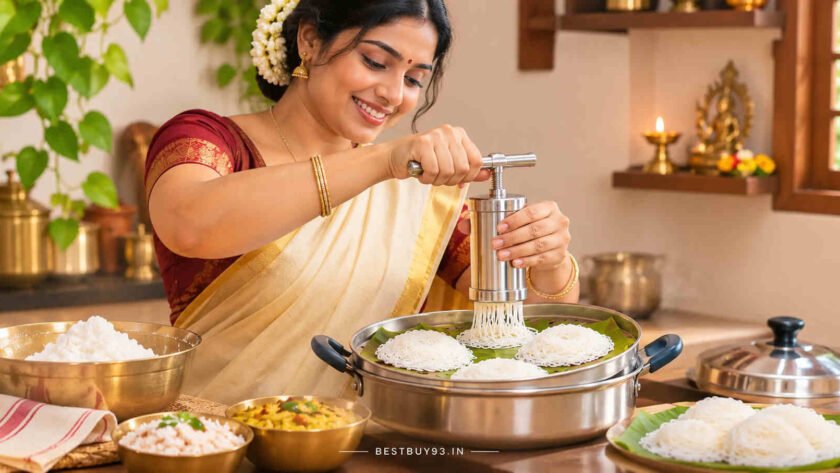

Soft, delicate idiyappam looks simple on the plate. But anyone who has actually tried pressing those fine rice-flour strands knows the truth: the press can either make breakfast beautifully easy or turn it into an arm workout you never signed up for. 😭
A good idiyappam press should push warm rice-flour dough through a fine pinhole disc smoothly and evenly, without forcing you to wrestle with the handle or stopping every few seconds to clear clogged holes.
The same tool may also be sold as an idiyappam maker, string hopper press, sevai press, sevanazhi, sev sancha or murukku press, depending on the design and region. Multi-disc versions can often make sev, chakli, murukku and other snacks as well.
For this guide, we compared current manual and electric options available to Indian shoppers based on material, pressing mechanism, number and usefulness of jalis, ease of cleaning, grip, versatility and suitability for fine idiyappam strands.
Our top manual pick is the Anjali Kitchen Express Gripper with 12 SS Jali, while people who regularly make larger batches or struggle with manual pressing may find a cordless Pigeon idiyappam maker more convenient.
Quick Answer: Best Idiyappam Presses at a Glance
| Product | Best For | Type | Material / Build | Attachments |
|---|---|---|---|---|
| Anjali Kitchen Express Gripper | Best Overall Manual | Hand press | Food-grade stainless steel | 12 SS jalis |
| Puno Stainless Steel Kitchen Press | Best Budget | Manual | Stainless steel | 6 jalis |
| Rajwadi Stainless Steel Press | Best Simple Traditional Option | Manual | Stainless steel | 5 jalis |
| DJAYK 15-in-1 Kitchen Press | Best Multipurpose | Manual | Stainless steel | 15 jalis |
| Lowinza Stainless Steel Kitchen Press | Best Value Multi-Jali Option | Manual | Stainless steel | 15 jalis |
| Pigeon Cordless Noodle & Idiyappam Maker | Best Electric | Cordless electric | Stainless steel + food-grade plastic | 7 moulds in listed pack |
| EKIY Electric 12-Mould Maker | Best Electric Alternative | Rechargeable electric | Stainless steel | 12 moulds |
Best Overall Manual: Anjali Kitchen Express Gripper
Best Budget: Puno Stainless Steel Kitchen Press
Best Multipurpose: DJAYK 15-in-1
Best Electric: Pigeon Cordless Noodle & Idiyappam Maker
1. Anjali Kitchen Express Gripper with 12 SS Jali — Best Overall Manual Press
For most home kitchens, the Anjali Kitchen Express Gripper is the most balanced option on this list.
Anjali specifies a food-grade stainless-steel construction, ergonomic grip, detachable components and multiple attachments, with this particular model supplied with 12 stainless-steel jalis.
That combination is useful because an idiyappam press needs to do two things particularly well: provide enough pressure to extrude the rice dough and allow you to clean the fine holes properly after use.
Why We Recommend It
Unlike very basic cylindrical presses, the gripper-style mechanism gives you a defined handle to work with.
That can be more comfortable for people who do not enjoy repeatedly twisting a traditional screw press.
The 12-jali set also makes the tool useful beyond idiyappam. You can use suitable plates for snacks such as sev, murukku and chakli.
What We Like
- Food-grade stainless-steel construction
- 12 interchangeable SS jalis
- Ergonomic gripping mechanism
- Detachable design
- Established Indian kitchenware brand
- Useful for multiple Indian snacks
What We Don’t Like
- More attachments also mean more tiny pieces to store
- You still need reasonably soft dough for fine idiyappam
- Manual pressing requires some hand pressure
Best For
Families wanting one reliable manual kitchen press for idiyappam plus several other snacks.
Who Should Skip It
If pressing dough manually is difficult because of wrist or hand discomfort, consider an electric model instead.
Verdict
This is our Best Overall manual idiyappam press because it balances build quality, versatility and an easier gripping mechanism without introducing the charging and cleaning considerations of an electric machine.
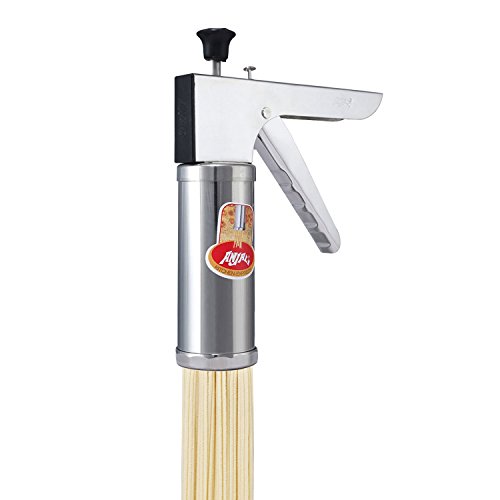
- Ideal hand press
- Make healthy snacks at home
- Anjali product
2. Puno Stainless Steel Kitchen Press — Best Budget Pick
If you only make idiyappam occasionally, spending several thousand rupees on an electric machine may be unnecessary.
The Puno Stainless Steel Kitchen Press is currently listed as a multipurpose idiyappam, murukku, bhujia and noodle press with six different jalis.
Its biggest attraction is straightforward value.
You get a stainless-steel manual press plus interchangeable discs without needing batteries, charging cables or a motor.
Why We Recommend It
For idiyappam, you do not actually need 15 different attachments.
You mainly need one properly made fine-hole disc and a press that produces steady pressure.
A six-jali design can therefore be perfectly adequate if the included fine disc produces the strand thickness you prefer.
Reasons to Buy
- Affordable manual design
- Stainless-steel construction
- Six interchangeable jalis
- No electricity required
- Can make several Indian snacks
- Compact enough for regular kitchen storage
What We Don’t Like
Budget presses can vary in handle smoothness and finishing, so inspect the threading, locking mechanism and jali fit when your product arrives.
Best For
Occasional idiyappam makers and buyers looking for a simple low-cost first press.
Who Should Skip It
If you regularly make large family batches, a larger or electrically assisted press can reduce repetitive work.
Verdict
You do not have to spend heavily to make good idiyappam. For occasional home cooking, a basic stainless-steel multi-jali press can be more than enough.
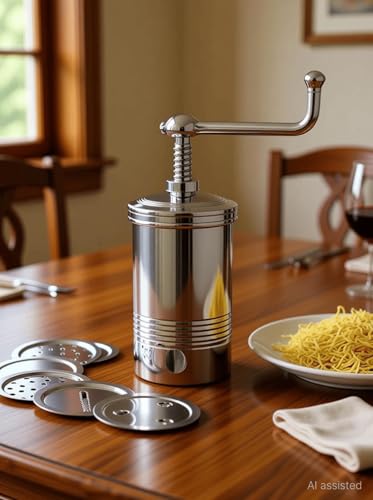
- VERSATILE KITCHEN PRESS: This stainless steel sev sancha machine lets you make sev, murukku, bhujiya, noodles, chakali, …
- 6 INTERCHANGEABLE JALI DISCS: Comes with 6 different jali plates, allowing you to create a wide variety of shapes and te…
- PREMIUM STAINLESS STEEL BUILD: Crafted entirely from high-grade stainless steel, this press is sturdy, rust-resistant, a…
3. Rajwadi Stainless Steel Press — Best Simple Traditional Option
The Rajwadi Stainless Steel Press is another straightforward manual design for idiyappam and traditional Indian snacks.
Its current product specification lists a stainless-steel body and stainless-steel blades/jalis, with five different screens intended for preparations including sevai, sev, gathiya, murukku, chakli and bhujia.
Why We Recommend It
There is something appealing about a tool that does not try to become a kitchen robot.
Put the dough in, select the appropriate jali, press, clean it and put it away.
Done.
The five-disc package is also less overwhelming than sets containing dozens of attachments you may never touch after the first week.
Best For
Traditional kitchens, occasional idiyappam preparation and cooks who value simple mechanical tools.
Pros
- Stainless-steel body
- Five interchangeable jalis
- Multipurpose use
- No charging or electrical components
- Beginner-friendly design
Cons
- Fewer patterns than 12- or 15-jali presses
- Still relies on manual pressure
- Make sure the finest included plate suits the thinness you want
Verdict
The Rajwadi model is a sensible choice if you want a simple reusable press rather than a highly accessorised gadget.

- Body Material: Stainless Steel, Blade Material Type: Stainless Steel
- Comes with 4 different jalis (screens) for making various types of snacks like Sevaiya, Sev, Gathiya, Murukku, Chakli, B…
- Easy to use and operate, making it suitable for both beginners and experienced cooks
4. DJAYK 15-in-1 Stainless Steel Kitchen Press — Best Multipurpose Press
If your idiyappam maker is going to spend the rest of the week making chakli, sev, bhujia and farsan, a larger attachment set starts to make more sense.
The DJAYK 15-in-1 Stainless Steel Kitchen Press is currently marketed with 15 jalis for dishes including idiyappam, murukku, chakli, sev and other snacks.
Why We Recommend It
Its appeal is versatility rather than idiyappam alone.
With many jalis available, you can experiment with different strand thicknesses and snack shapes instead of purchasing a separate press for every preparation.
Best For
Families that regularly make multiple homemade farsan and South Indian snacks.
Who Should Skip It
If you only want idiyappam, most of those 15 discs may sit untouched in a drawer.
Remember: attachment count is not the same thing as better idiyappam.
Pros
- 15-jali set
- Stainless-steel construction
- Multiple food applications
- Good option for festival snack preparation
- Manual design requires no charging
Cons
- More components to wash and store
- Extra jalis add little value if you only make string hoppers
- The fine-hole jali matters more than the total number of jalis
Verdict
Choose this one for versatility, not because “15” automatically beats “6”.
For idiyappam specifically, one excellent fine-hole plate is worth more than fourteen plates you never use.

- 15-in-1 Multipurpose Snack Maker: Make traditional Indian snacks effortlessly with 15 interchangeable jali discs – perfe…
- Durable Stainless Steel Build: Heavy-duty food-grade stainless steel construction ensures rust-free, long-lasting perfor…
- Easy Manual Press Operation: Smooth, ergonomic handle lets you press dough evenly to create perfect snack shapes without…
5. Lowinza Stainless Steel Kitchen Press with 15 Jalis — Best Value Multi-Jali Alternative
The Lowinza Stainless Steel Kitchen Press is another current marketplace option aimed at buyers who want a multipurpose snack press.
Its listing describes a stainless-steel kitchen press supplied with 15 jalis, suitable for dishes such as murukku, chakli and idiyappam.
Why We Recommend It
It occupies the useful middle ground between a bare-bones six-disc press and an electric machine.
There are no batteries or motors to maintain, but you still get a broad selection of extrusion shapes.
Best For
Home cooks who enjoy switching between:
idiyappam, sev, bhujia, chakli, murukku and similar pressed snacks.
Pros
- 15 interchangeable jalis
- Stainless-steel design
- Broad snack-making versatility
- Compact manual construction
- No electrical maintenance
Cons
- Budget multi-disc presses can differ in fit and finish
- Numerous small discs are easy to misplace
- Manual effort remains unchanged
Verdict
A good option if you specifically want lots of jali choices without moving into an electric machine.

- ✔ Premium Stainless Steel Construction – Made from high-quality food-grade stainless steel for durability, rust resistan…
- ✔ 15 Different Jalis for Multiple Snacks – Comes with 15 interchangeable jalis to prepare Sev, Bhujia, Gathiya, Murukku,…
- ✔ Easy Manual Operation & Comfortable Grip – Ergonomic handle ensures smooth pressing with less effort, making this kitc…
6. Pigeon Cordless Noodle & Idiyappam Maker — Best Electric Pick
And now we arrive at the option for anyone who has looked at a manual press midway through a large breakfast batch and thought:
“Surely electricity can solve this.” 😂
The Pigeon Cordless Noodle & Idiyappam Maker uses a rechargeable motor to push the dough instead of relying entirely on hand pressure.
One currently available seven-mould configuration lists a 1500mAh rechargeable lithium-ion battery, 40W power, Type-C charging, stainless-steel and food-grade plastic construction and a 1-year Pigeon manufacturer warranty. The listing also identifies the fine mould as suitable for idiyappam and sevai.
Why We Recommend It
Electric extrusion makes the most sense when you:
- prepare large batches
- make idiyappam frequently
- dislike screw pressing
- want more uniform motorised pressure
- have difficulty applying repeated manual force
The cordless design is particularly useful because you can hold the maker directly above your idiyappam plate or steamer without dragging a power cable around the kitchen.
Best For
Frequent idiyappam makers, larger families and anyone who wants less manual pressing effort.
Who Should Skip It
For someone making idiyappam once every few months, a basic stainless-steel manual press is cheaper, smaller and simpler.
Pros
- Cordless operation
- 1500mAh rechargeable battery
- Type-C charging
- 40W motor
- Fine idiyappam mould
- Multiple interchangeable moulds
- Manufacturer warranty listed
- Reduces repetitive pressing effort
Cons
- Significantly more expensive than a manual press
- Motor section cannot simply be submerged during washing
- Requires charging
- More components can eventually fail than on a basic mechanical press
Verdict
The Pigeon makes sense when convenience matters more than absolute simplicity.
If idiyappam is a frequent breakfast in your home, this is the electric option I would look at first.
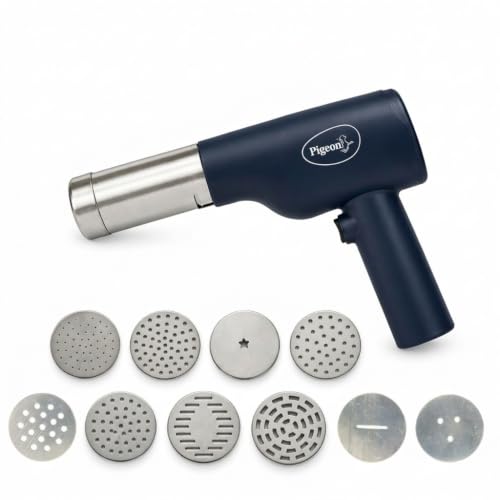
- COMPLETE NOODLE MAKING KIT: Electric pasta and noodle maker includes main machine, dough barrel, USB Cable, and 10 inter…
- RECHARGEABLE DESIGN: Built-in rechargeable battery with DC5V 2A charging adapter, features indicator light that turns re…
- EASY OPERATION: Simple push-rod mechanism with forward and backward controls, press '0' to stop, mix flour and water in …
7. EKIY Electric 12-Mould Idiyappam Maker — Best Electric Alternative
The EKIY Electric Idiyappam Maker is another cordless option currently listed in India, with a package advertised around 12 moulds, rechargeable operation and a stainless-steel extrusion system.
It is aimed at people wanting one motorised appliance for idiyappam, noolappam, murukku, noodles and pasta-style preparations.
Why We Recommend It
Compared with manual pressing, motorised extrusion reduces one of the most frustrating parts of idiyappam preparation: pushing a slightly resistant dough through extremely fine holes.
The larger selection of moulds also makes the appliance appealing to experimentation-heavy home cooks.
Best For
People who want an electric multi-purpose dough extruder rather than a dedicated manual string-hopper press.
Who Should Skip It
If long-term simplicity and easy maintenance matter more than effortless pressing, stainless-steel manual presses still have an advantage.
Pros
- Electric pressing
- Multiple moulds
- Multi-purpose design
- Suitable for idiyappam and other extruded foods
- Less repetitive hand pressure
Cons
- More expensive
- Requires charging
- More cleaning care around electrical components
- Extra moulds may be unnecessary for idiyappam-only households
Verdict
A useful alternative for buyers specifically searching for motorised extrusion plus lots of mould options.

- CORDLESS CONVENIENCE: Powered by a 1500mAh rechargeable battery with Type-C charging, offering wireless freedom and port…
- 12 VERSATILE MOULDS: Complete set includes 12 different moulds for creating Idiyappam, Noolapam, Muruke, Pakkavada, Hnkk…
- RAPID 20-SECOND OPERATION: Electric automatic design enables quick and effortless noodle making in just 20 seconds, savi…
Manual vs Electric Idiyappam Press: Which Is Better?
| Factor | Manual Press | Electric Press |
|---|---|---|
| Initial Cost | Lower | Higher |
| Hand Effort | Moderate to high | Low |
| Cleaning | Usually easier | Motor unit needs care |
| Storage | Compact | Usually bulkier |
| Durability | Mechanically simple | Depends on motor/battery |
| Large Batches | More tiring | Easier |
| Occasional Use | Excellent | Often unnecessary |
| Frequent Use | Good | Excellent |
| Charging Needed | No | Yes |
| Best For | Most households | Frequent/high-volume use |
For most households, a good stainless-steel manual press remains the smarter value choice.
Electric models become compelling when idiyappam is made frequently or physical pressing is inconvenient.
What Should You Look for When Buying an Idiyappam Press?
1. Check for a Proper Fine-Hole Idiyappam Jali
This is the most important factor.
The idiyappam disc should have small, closely packed round pinholes. Larger round holes or star-shaped openings are meant for thicker preparations such as murukku and other snacks.
Do not buy a “15-jali press” assuming it automatically makes idiyappam.
Check that one of those jalis is actually fine enough.
2. Choose the Pressing Mechanism Carefully
Traditional screw presses create pressure gradually as the handle turns.
That slow, controlled extrusion can work particularly well for fine idiyappam strands. Lever/gripper models are quicker, while motorised presses minimise hand effort.
A smooth mechanism matters because sudden pressure can lead to uneven extrusion.
3. Stainless Steel vs Brass
Stainless Steel
Best for buyers wanting:
easy cleaning, rust resistance, lower maintenance and lighter weight.
Brass
Traditional brass presses are heavier and can feel extremely solid, but they require more drying and maintenance to prevent tarnishing and oxidation.
For most modern kitchens, stainless steel is the easier recommendation.
4. Do Not Judge by Jali Count Alone
Six good discs can be more useful than fifteen mediocre ones.
If your main purpose is idiyappam, prioritise:
fine idiyappam jali → strong body → smooth pressure → easy cleaning
before worrying about attachment count.
5. Look for Detachable Parts
Rice-flour dough loves finding tiny corners to dry inside.
Detachable cylinders and removable jalis are much easier to wash immediately after use.
This matters particularly with a fine idiyappam disc because dried dough can clog its tiny holes.
6. Consider Your Batch Size
A small manual press is perfectly adequate for two or three people.
But continuously refilling a tiny cylinder while preparing breakfast for a large family gets old surprisingly quickly.
For frequent large batches, look for either a larger cylinder, smooth screw mechanism or motorised design.
Which Jali Is Used for Idiyappam?
Use the disc with the smallest densely packed circular holes.
Idiyappam strands should be much finer than typical chakli or murukku.
In multi-jali sets, you may also see:
| Jali Type | Typical Use |
|---|---|
| Very fine round holes | Idiyappam, thin sevai |
| Medium round holes | Sev or noodles |
| Star holes | Murukku or chakli |
| Slotted holes | Ribbon pakoda |
| Large holes | Thick noodles/snacks |
This is why checking the actual discs is more useful than simply counting them.
How to Get Soft, Unbroken Idiyappam from Your Press
Even the best press cannot rescue badly prepared dough.
The dough should be warm, soft and pliable rather than dry and stiff. Traditional guidance also recommends working relatively quickly before the dough cools and dries, and lightly oiling the disc or barrel when necessary to help extrusion.
If the press suddenly becomes extremely difficult to operate, stop forcing it.
The problem is often dough consistency or temperature rather than the press itself.
Forcing a manual mechanism against overly stiff dough can damage the threading or locking components.
Common Mistakes to Avoid
Buying a Press Without Checking the Fine Jali
A sev or chakli maker is only useful for idiyappam if it includes the correct fine-holed plate.
Using Cold or Stiff Dough
Stiff dough requires much more pressure and can produce broken strands.
Overfilling the Cylinder
Leave enough space for the plunger or extrusion mechanism to work correctly.
Letting Dough Dry Inside the Holes
Wash the disc immediately after pressing.
Once rice dough dries inside those tiny holes, congratulations you have created a very boring cleaning project for yourself. 😭
Choosing Electric Just Because It Looks Modern
If you make idiyappam twice a year, charging another kitchen appliance probably isn’t progress.
A ₹300–₹700-style manual press may serve you perfectly well.
Choosing Only by Number of Attachments
More jalis mean more shapes.
They do not necessarily mean smoother extrusion, stronger construction or softer idiyappam.
How We Selected These Idiyappam Presses
We compared currently available manual and electric idiyappam-making options using factors relevant specifically to string hoppers:
- material
- pressing mechanism
- fine-jali availability
- number of useful attachments
- ease of cleaning
- versatility
- manual effort
- electric convenience
- product availability
- brand information where available
- overall suitability for home kitchens
Traditional screw presses, lever presses and motorised makers each have different strengths. Screw mechanisms generally give excellent control for fine extrusion, while electric models reduce hand effort for frequent or large-batch preparation.
BestBuy93.IN has not claimed hands-on testing of these products. Recommendations are based on current specifications, available product information and practical suitability.
Prices and stock can change, so always check the current listing before purchasing.
In Case You Are Looking For –
- Best Murukku Makers for Making Crispy Homemade Murukku
- Best Sev Makers for Preparing Homemade Aloo Bhujia and Sev
- Best Chakli Makers for Making Traditional Maharashtrian Chakli
- Best Dhokla Plates and Steamers for Making Soft Khaman Dhokla
- Best Ladoo Moulds and Scoops for Making Uniform Besan Ladoos
- Best Momos Steamers for Making Juicy Homemade Momos
Frequently Asked Questions
Which type of idiyappam press is best for home use?
For most homes, a stainless-steel manual press with a proper fine idiyappam jali offers the best combination of affordability, durability and easy maintenance.
If you regularly make large batches or find manual pressing uncomfortable, a cordless electric maker is worth considering.
Is a stainless-steel idiyappam maker better than brass?
Neither is automatically better.
Stainless steel is generally easier to clean and maintain, while traditional brass presses are heavier and can feel extremely sturdy. Brass requires more careful drying and occasional maintenance.
For everyday convenience, stainless steel usually wins.
Can a sev maker be used for idiyappam?
Yes, if it includes a sufficiently fine round-hole jali.
Many products sold as sev sancha, murukku makers or kitchen presses can also prepare idiyappam because the body of the press is essentially an extruder. The jali determines the final strand shape.
Why does my idiyappam dough not come out of the press?
The dough may be too stiff, too cold or dried out.
Warm, soft dough extrudes more easily. Also check whether dried rice flour is blocking the jali holes.
Avoid simply applying more force the problem may not be the press.
Are electric idiyappam makers worth buying?
They can be worth it for frequent use, large families or people who dislike manual pressing.
For occasional cooking, a manual press is cheaper, easier to store and mechanically simpler.
How many jalis do I need?
For idiyappam alone, technically you need only one good fine-hole disc.
Extra jalis are useful if you also make sev, murukku, chakli, bhujia or noodles.
Should I buy a screw-type or gripper-style press?
A screw press gives gradual, controlled pressure and works particularly well for fine strands. A gripper-style press can feel quicker and more intuitive.
The better option depends on which motion feels easier on your hands.
Final Verdict
For most families, the Anjali Kitchen Express Gripper with 12 SS Jali is our Best Overall manual idiyappam press. It combines a food-grade stainless-steel body, ergonomic gripping mechanism, detachable components and enough jalis for several different recipes.
For shoppers on a tighter budget, the Puno Stainless Steel Kitchen Press with 6 jalis gives you the essentials without paying for attachments you may never use.
If versatility is the priority, the DJAYK 15-in-1 or Lowinza 15-Jali Kitchen Press gives you more shapes for sev, chakli, murukku and other snacks.
And if your family makes idiyappam often or manual pressing is simply annoying the Pigeon Cordless Noodle & Idiyappam Maker is the standout electric option. Its listed 1500mAh rechargeable battery, 40W operation, Type-C charging and fine idiyappam mould make it a much more convenient choice for frequent batches.
The biggest buying lesson is simple:
Don’t buy the press with the most jalis. Buy the press that gives you smooth pressure and the right fine-hole idiyappam disc.
Soft string hoppers depend on the dough but the right press makes getting them onto the steamer a whole lot easier. 🍜✨