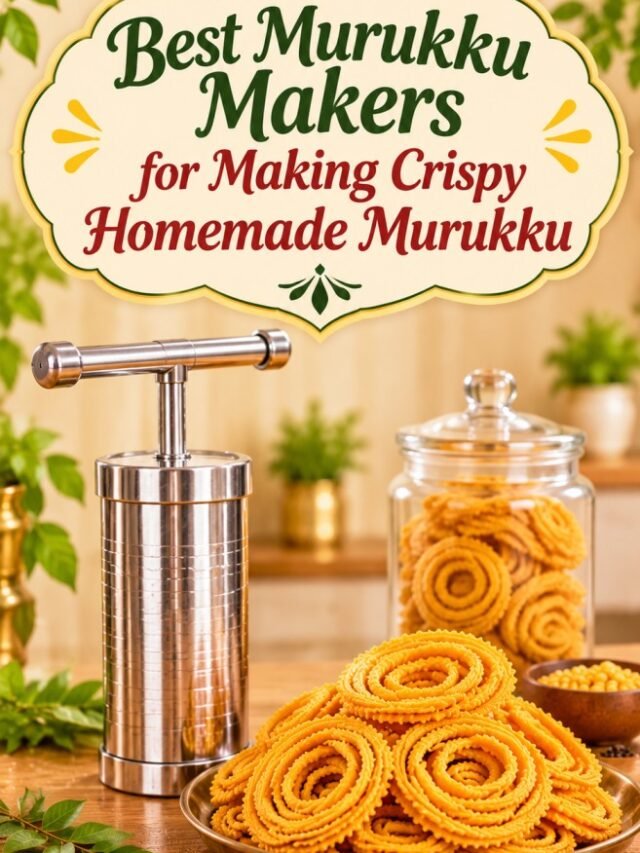


Who doesn’t love a plate of freshly fried, crunchy murukku with a cup of hot tea? Whether it’s Diwali, a family get-together or simply a weekend snack craving, homemade murukku has a charm that packaged snacks cannot quite replace.
But making murukku by hand can be a little tricky. You need the right dough consistency, a suitable mould and a press that lets you shape the dough without struggling with every batch.
That’s where a murukku maker comes in.
Also known as a murukku achu, murukku press, chakli maker or sev sancha in different parts of India, this traditional kitchen tool helps you press prepared dough into different shapes before frying.
Modern versions are available in stainless steel, brass, aluminium and wood-based designs. Some include multiple interchangeable discs, while others use traditional screw or lever mechanisms.
In this guide, we’ll explore different murukku maker options, compare their materials and designs, explain what to look for before buying, and share practical tips for making crispy homemade murukku.
Whether you’re preparing a small batch for your family or making festive snacks in larger quantities, there’s a suitable design worth considering.
Editorial note: We have compared manufacturer and seller specifications rather than claiming hands-on product testing. Product availability, package contents and prices can change. Always verify the current listing before ordering.
Quick Answer: Which Murukku Maker Should You Buy?
For most home kitchens, a stainless-steel manual murukku press with interchangeable discs is a practical starting point. It is reusable, doesn’t need electricity and can often be used for several pressed snacks.
If you prefer traditional kitchenware, a brass murukku achu is another option. A wooden press with brass plates offers a more traditional design, while a simple budget stainless-steel press can suit occasional snack preparation.
| Murukku maker type | Best for | Main advantage |
|---|---|---|
| Stainless-steel hand press | Regular home cooking | Reusable and versatile |
| Stainless-steel multi-jali press | Different snack shapes | Multiple interchangeable discs |
| Traditional brass press | Traditional snack preparation | Classic construction and design |
| Wooden murukku achu | Traditional-style preparation | Wooden body with metal shaping plates |
| Compact budget press | Occasional use | Affordable entry-level option |
What Is a Murukku Maker?
A murukku maker is a manual kitchen tool used to shape prepared dough into traditional Indian snacks.
The dough is placed inside a cylindrical chamber or press. A selected mould or perforated disc is fitted to the outlet, and pressure is applied using a screw mechanism, lever or handle.
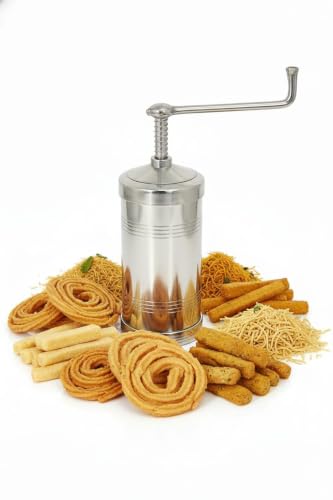
The dough passes through the openings and forms strands or patterns that can be shaped into spirals, coils or other snack designs.
Depending on the supplied attachments, some murukku makers can also prepare:
- Chakli
- Thenkuzhal
- Ribbon pakoda
- Sev
- Omapodi
- Gathiya
- Idiyappam
The exact uses depend on the disc pattern, the dough recipe and the manufacturer’s instructions.
Murukku Maker vs Achu Murukku Maker
These names can be confusing because they refer to different tools.
A conventional murukku maker presses dough through a shaped disc to create strands. The strands are then formed into spirals or other shapes before frying.
An achu murukku or rose-cookie maker is a different type of mould. It is dipped into prepared batter and then placed in hot oil to form a patterned fried snack.
If you want to prepare traditional spiral murukku, look for a dough press rather than a rose-cookie mould.
Best Murukku Makers to Consider
Here are five options covering different materials, pressing mechanisms and budgets.
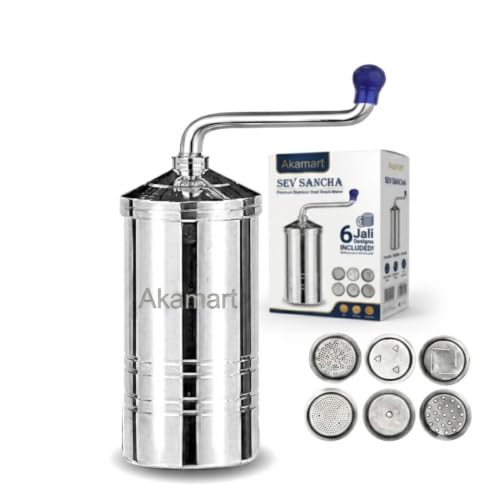
1. Stainless-Steel Hand-Press Murukku Maker
Best for: Regular home snack preparation
A stainless-steel hand press is a practical option for people who want a reusable murukku maker without depending on electricity.
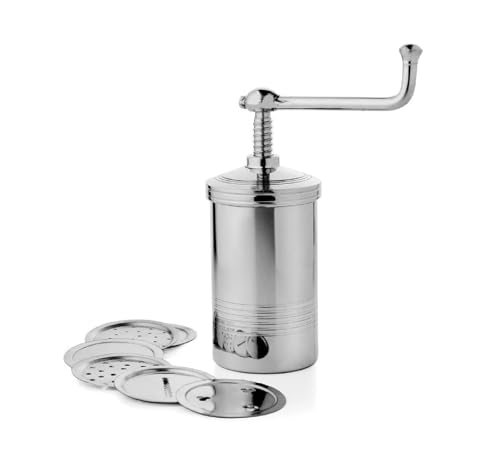
One example worth considering is the Nutristar Stainless Steel Hand Press Sev Sancha and Chakli Maker. The manufacturer’s product information describes a cylindrical stainless-steel body with a manual lever mechanism.
The product is also listed for preparing suitable sev, chakli, murukku and other traditional pressed snacks.
Key features to look for:
- Stainless-steel construction
- Manual lever-operated pressing mechanism
- Interchangeable shaping attachments
- No electricity requirement
- Removable components for cleaning
Why consider this design?
The lever mechanism is different from a basic screw-operated press. Instead of continuously rotating a handle, the user applies pressure through a lever.
This design may appeal to people who prefer a straightforward manual pressing action.
However, ease of operation depends on the lever length, chamber size, dough consistency and overall construction. A lever does not automatically guarantee effortless pressing.
What to check before buying:
- Confirm the number of included shaping discs.
- Check whether the handle is comfortable to grip.
- Ask whether the pressing chamber can be dismantled.
- Examine the manufacturer’s cleaning instructions.
- Check whether replacement attachments are available.
Pros and cons
| What we like | What to keep in mind |
|---|---|
| Reusable manual design | Requires physical effort |
| No electricity needed | Lever comfort varies |
| Stainless-steel construction | Disc selection may be limited |
| Suitable for several pressed snacks | Cleaning the outlet requires attention |
Our verdict: A stainless-steel hand press is a sensible option for home cooks who want a reusable tool for murukku and other traditional snacks. Check the exact attachment set before purchasing.



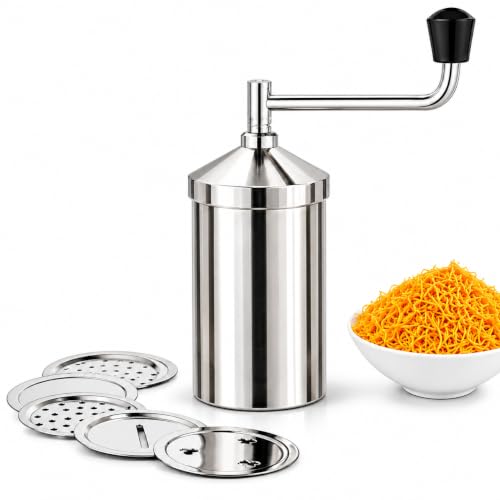

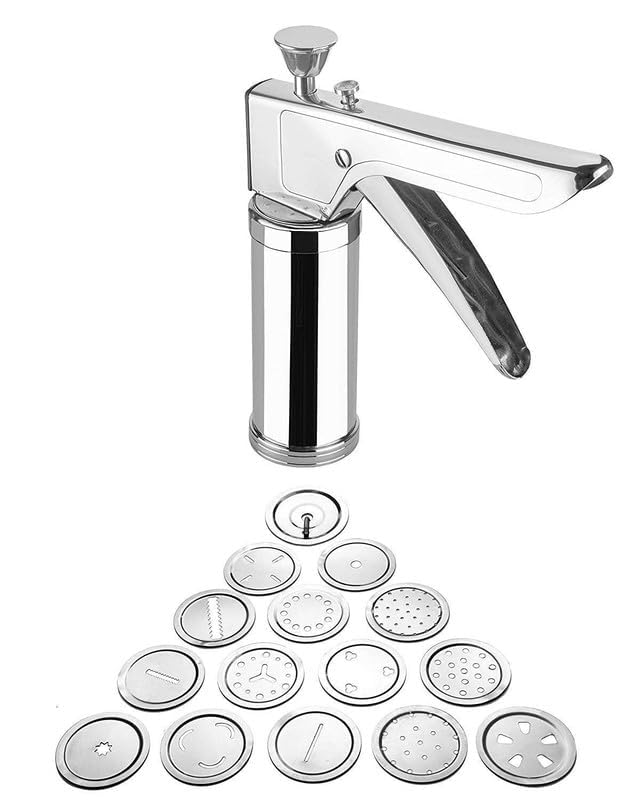
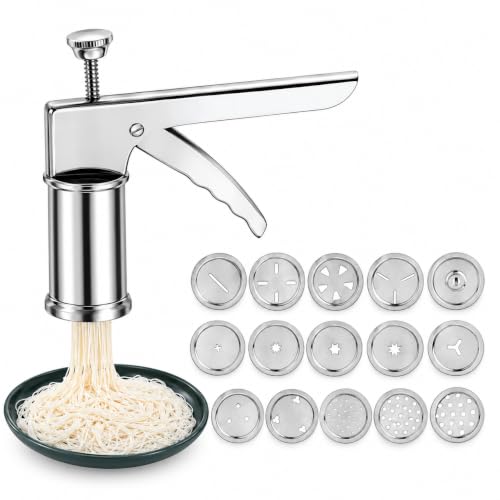
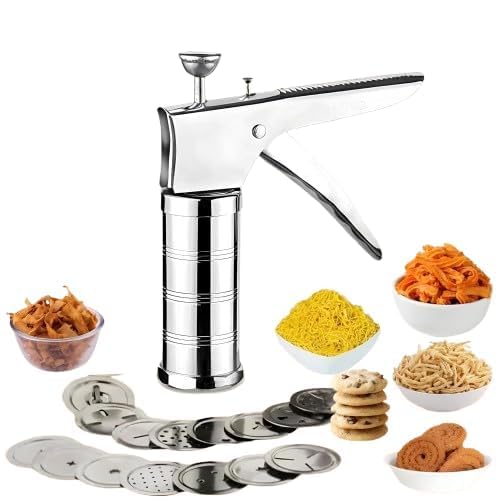
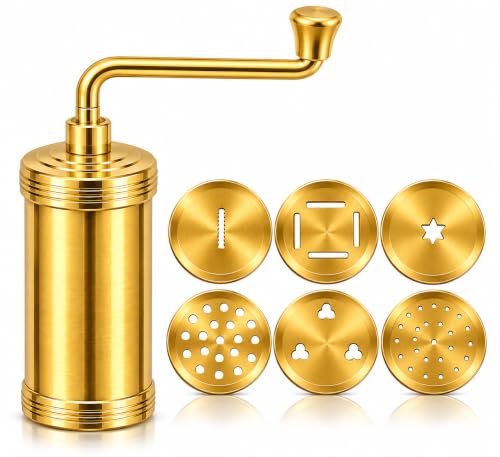
2. Stainless-Steel Multi-Jali Murukku Maker
Best for: Preparing different snack shapes
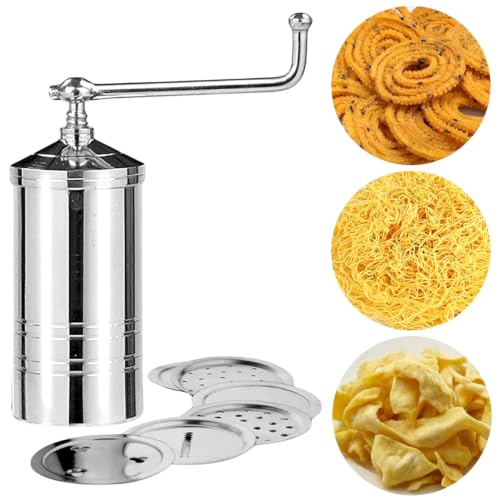
If you enjoy making more than one type of homemade snack, a multi-jali press is worth considering.
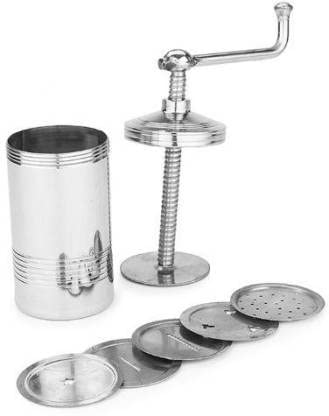
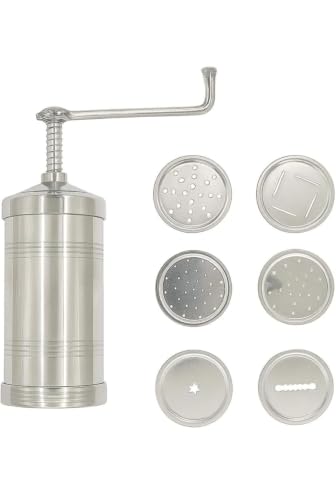
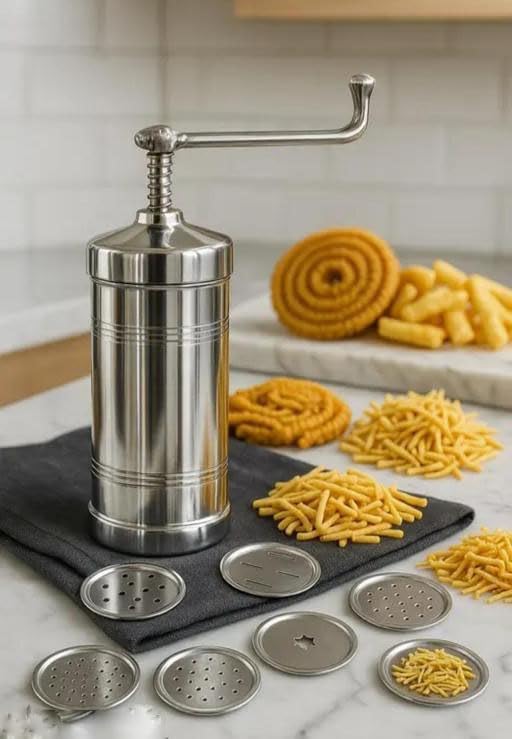
Some stainless-steel kitchen presses include several interchangeable discs with different hole patterns. This allows the same press body to be used for different snacks, provided the dough and attachment are suitable.
For example, ASHTOK lists a stainless-steel manual press with 12 interchangeable jalis. Its product information mentions murukku, chakli, sev, sevai and idiyappam among its intended uses.
Key features:
- Stainless-steel manual press
- Multiple interchangeable jalis
- Different shaping patterns
- Hand-operated mechanism
- No electricity required
Why consider this design?
Different murukku recipes and snack styles require different shapes and strand thicknesses.
A multi-jali press gives you more flexibility than a basic model supplied with only one or two shaping plates.
You can also use suitable attachments for other pressed snacks, making the tool useful beyond festive murukku preparation.
What to check before buying:
- Count the actual jalis included in the package.
- Check whether the discs fit securely.
- Look for smooth, properly finished edges.
- Confirm that the outlet and chamber can be cleaned thoroughly.
- Check whether the press has a comfortable handle.
Pros and cons
| What we like | What to keep in mind |
|---|---|
| Multiple shaping options | Extra discs need organised storage |
| Suitable for different snacks | Not every disc suits every recipe |
| Reusable construction | Manual effort is still required |
| No electricity required | More attachments mean more cleaning |
Our verdict: This is a useful choice for households that prepare murukku, sev and other traditional snacks regularly. The number of jalis is useful only when the patterns are practical for your recipes.




3. Budget Stainless-Steel Murukku and Sev Press
Best for: Occasional homemade snacks
You don’t necessarily need an elaborate kitchen press to make murukku.
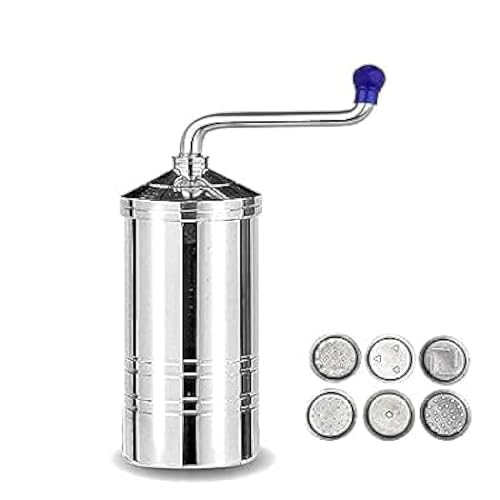
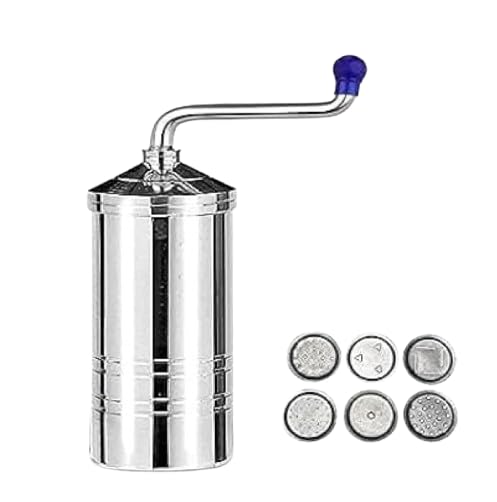
A basic stainless-steel press with a few interchangeable discs can be enough for someone who prepares snacks occasionally.
Budget models are commonly sold under names such as murukku maker, sev sancha, chakli press and kitchen press.
Some models include six jalis, while others advertise 12 or 15 attachments.
Key features to compare:
- Stainless-steel body
- Manual pressing mechanism
- Interchangeable discs
- Compact storage
- Basic snack-making functionality
Why consider this design?
If you only make murukku during festivals or family gatherings, spending extra on a heavy premium press may not be necessary.
A simple model can cover basic requirements, provided the construction is suitable and the pressing mechanism works properly.
What to check before buying:
- Is the body sufficiently sturdy?
- Does the handle move smoothly?
- Are the discs properly finished?
- Is the attachment size compatible with the chamber?
- Does the product include the required parts?
Pros and cons
| What we like | What to keep in mind |
|---|---|
| Generally affordable | Build quality varies |
| Suitable for basic preparations | May have fewer features |
| Compact storage | Handle comfort can vary |
| No electricity required | Very hard dough may be difficult to press |
Our verdict: A budget stainless-steel press can be a good starting point for occasional use. Don’t judge it only by the number of included discs; construction and pressing comfort matter more.
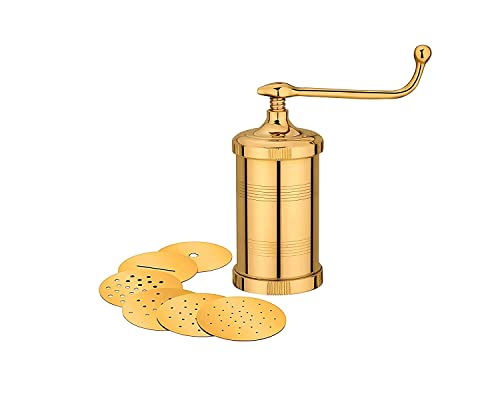
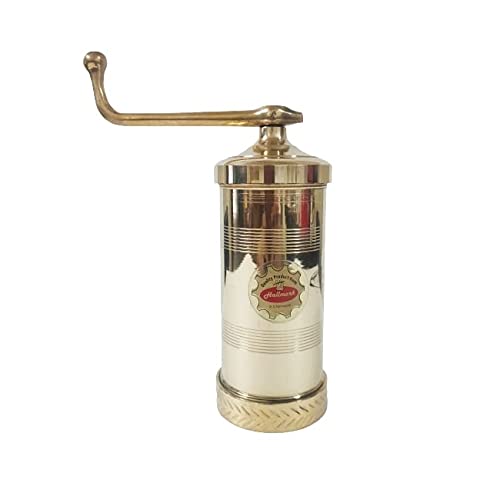
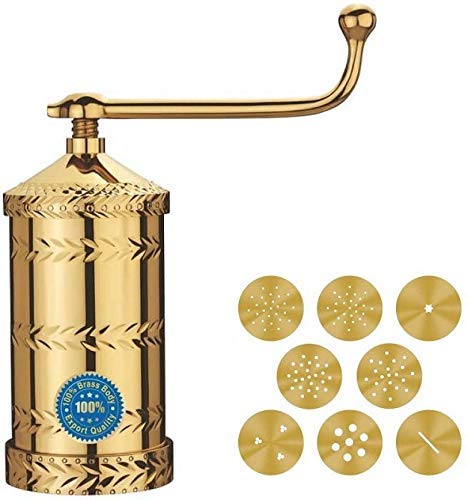
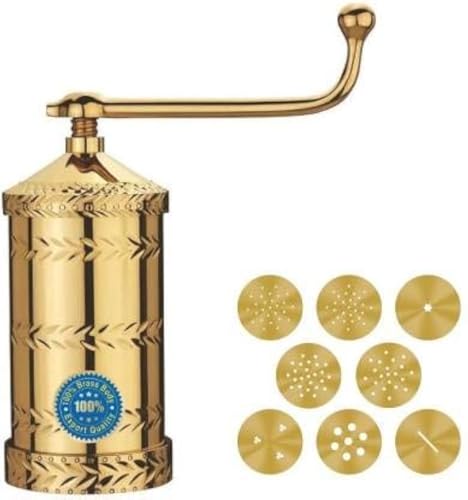
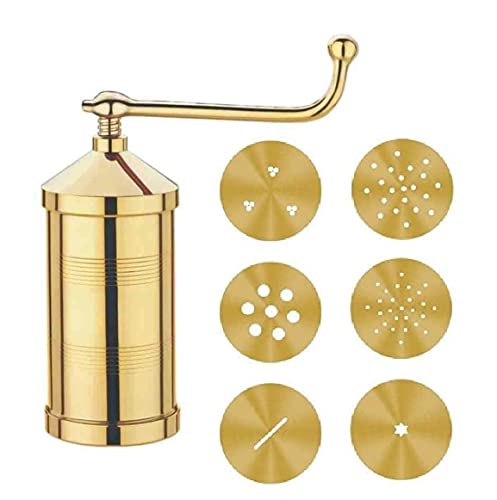
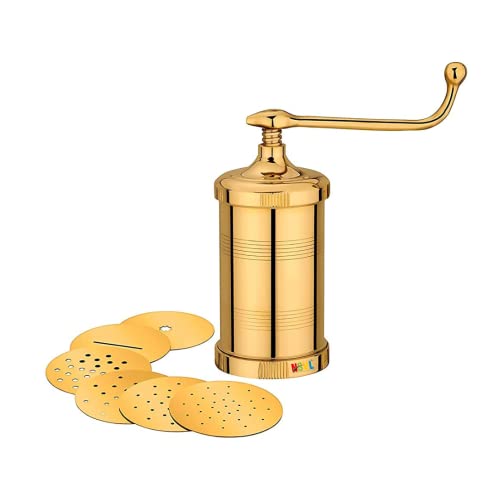
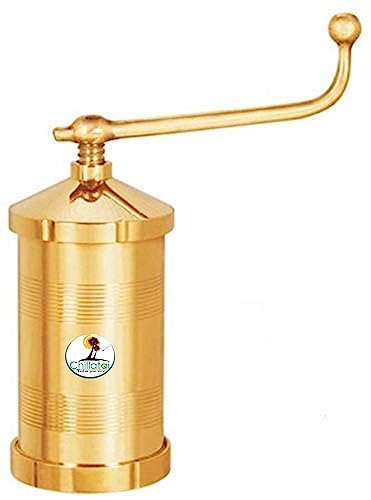
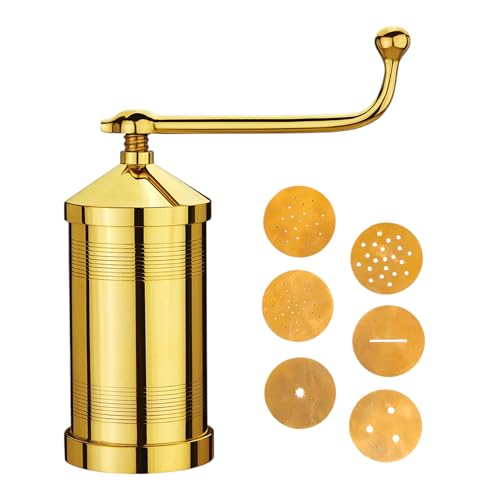
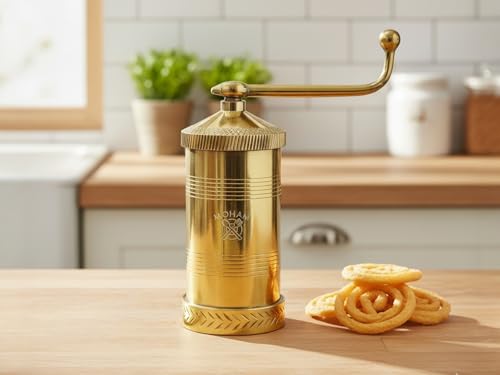
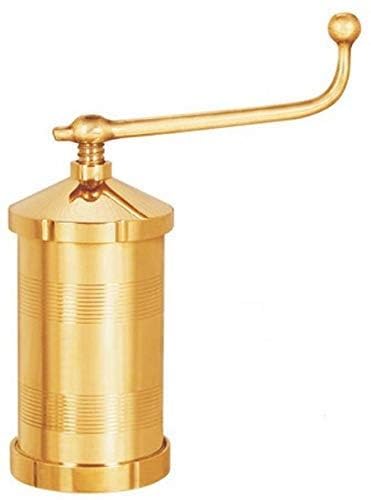
4. Traditional Brass Murukku Achu
Best for: Traditional kitchenware enthusiasts
Brass murukku presses are a classic choice for people who appreciate traditional Indian kitchen tools.
They are often sold under names such as brass murukku achu, sev sancha, chakli press and sevanazhi.
The ASHTOK brass press is one example of a manual model listed for murukku, chakli and sev preparation.
Another traditional brass option is available from Sri Swaminathan & Co, which lists a heavy brass press with five interchangeable shaping discs.
Key features to look for:
- Brass construction
- Manual screw or handle mechanism
- Interchangeable shaping discs
- Securely fitted components
- Appropriate cleaning and maintenance instructions
Why consider a brass press?
Brass presses have a traditional appearance and are often heavier than lightweight kitchen presses.
Some users prefer their traditional construction and feel.
However, brass is not automatically better than stainless steel. The actual quality depends on the alloy, workmanship, surface finish, design and care instructions.
What to check before buying:
- Ask for the exact material composition.
- Check whether the product has a food-contact-safe finish.
- Confirm the number and material of the supplied discs.
- Check the overall weight and handle design.
- Read the manufacturer’s cleaning instructions.
Pros and cons
| What we like | What to keep in mind |
|---|---|
| Traditional appearance | Can be heavier |
| Reusable construction | Requires appropriate care |
| Multiple shaping options on some models | Quality varies by manufacturer |
| Suitable for traditional snack preparation | Check the alloy and food-contact finish |
Our verdict: A brass murukku press can be a good choice if you prefer traditional kitchenware. Buy from a seller who clearly explains the material and maintenance requirements.




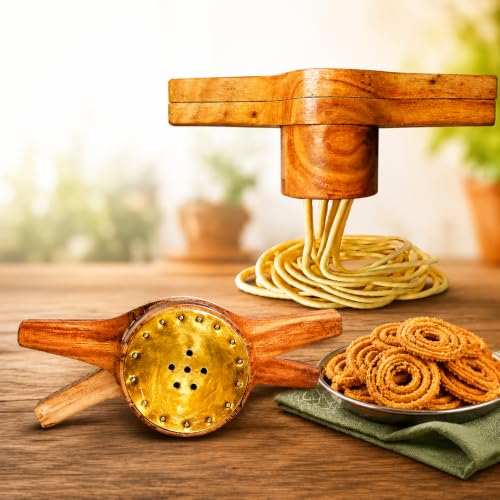
5. Traditional Wooden Murukku Achu
Best for: Traditional-style preparation
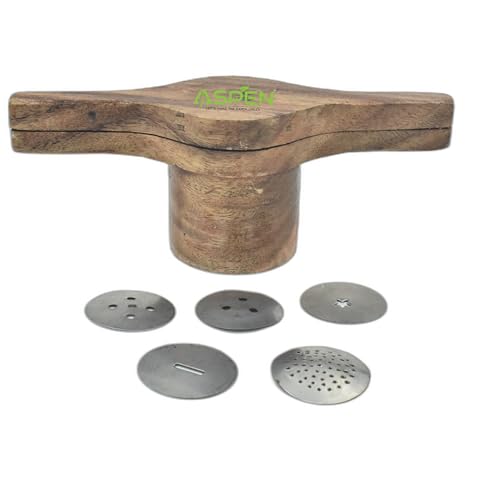
A wooden murukku achu offers a different experience from modern stainless-steel presses.
One example is the traditional wooden murukku press listed by Sri Swaminathan & Co. Its product information describes a wooden body with six interchangeable brass design plates.
The supplied patterns are intended for preparations such as thenkuzhal, kai murukku, ribbon pakoda, omapodi and idiyappam.
Key features:
- Traditional wooden body
- Brass shaping plates
- Manual operation
- Multiple snack patterns
- Classic kitchen-tool design
Why consider this design?
A wooden murukku achu may appeal to people who enjoy traditional cooking tools and want to explore different regional snack preparations.
It also offers a distinct appearance compared with modern stainless-steel presses.
What to check before buying:
- Check the quality and finish of the wood.
- Inspect the supplied brass plates.
- Confirm how the pressing mechanism works.
- Ask how the wooden body should be cleaned.
- Make sure the product is intended for your particular murukku recipe.
Pros and cons
| What we like | What to keep in mind |
|---|---|
| Traditional design | Requires careful maintenance |
| Brass shaping plates | Wooden body should not be soaked |
| Multiple snack patterns | May be less convenient than modern presses |
| No electricity needed | Confirm the operating method before purchase |
Our verdict: A wooden murukku achu is worth exploring if you enjoy traditional snack-making equipment. For frequent everyday use, compare its maintenance requirements with those of a stainless-steel press.




Murukku Maker Comparison Table
Here’s a quick comparison of the five designs.
| Type | Material | Mechanism | Best for | Main consideration |
|---|---|---|---|---|
| Stainless-steel hand press | Stainless steel | Lever | Regular home use | Handle comfort |
| Multi-jali press | Usually stainless steel | Manual press | Different snack shapes | Disc quality |
| Budget press | Varies | Manual | Occasional use | Construction quality |
| Traditional brass press | Brass | Screw or handle | Traditional preparation | Material and maintenance |
| Wooden murukku achu | Wood and brass plates | Traditional manual design | Traditional snack-making | Cleaning and care |
Which one should you choose?
- For everyday use, consider a well-made stainless-steel press.
- For different snack shapes, choose a multi-jali design.
- For occasional use, a simple budget press may be enough.
- For traditional kitchenware, consider brass or wood-based designs.
Types of Murukku Makers
Before buying, it helps to understand the different mechanisms available.
A. Screw-operated murukku press
This design uses a threaded handle or screw mechanism to push dough through the shaping disc.
The user rotates the handle to create pressure.
It can provide controlled pressing, although the effort required depends on the threading, handle length and dough consistency.
B. Lever-operated murukku press
A lever mechanism uses a handle to apply pressure to the dough.
Some people prefer this design because it offers a different gripping and pressing action.
Check the lever’s length and overall stability before purchasing.
C. Traditional wooden achu
Wooden designs use a traditional body and shaping plates.
They are worth considering for people interested in older snack-making methods, but cleaning and storage requirements should be checked carefully.
D. Electric murukku maker
Electric models use a powered mechanism to push dough through the selected attachment.
They may appeal to people who prepare larger quantities or want to reduce manual pressing.
However, electric models are a separate category. Check their power rating, capacity, cleaning requirements, attachments and availability of replacement parts.
What to Look for When Buying a Murukku Maker
A good murukku maker should be comfortable to operate, easy to clean and suitable for your recipes.
Here are the factors worth checking.
A. Material
The most common materials include stainless steel, brass, aluminium and wood.
| Material | Advantages | Considerations |
|---|---|---|
| Stainless steel | Reusable, widely available and easy to maintain | Quality and finish vary |
| Brass | Traditional appearance and sturdy construction | Alloy and food-contact finish need checking |
| Aluminium | Lightweight and often affordable | Check material quality and surface finish |
| Wood | Traditional design | Requires careful cleaning and drying |
Don’t assume that every product labelled stainless steel or brass is identical in quality.
Ask for material details when they are not clearly provided.
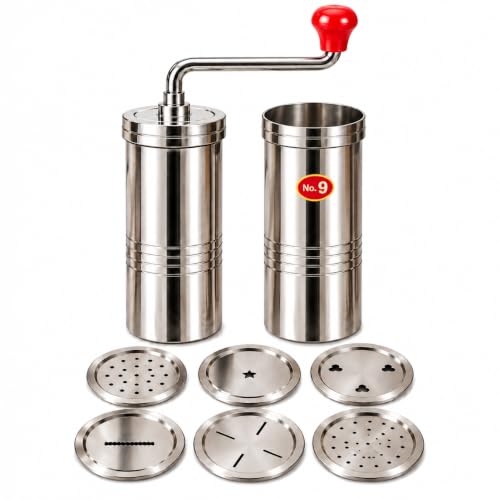
B. Number of jalis or discs
The jalis determine the shape and thickness of the pressed dough.
Common patterns include:
- Star-shaped openings for traditional spiral murukku.
- Round holes for thin or thicker strands.
- Fine perforations for sev and similar snacks.
- Flat openings for ribbon-style snacks.
More discs can offer greater versatility, but only if you actually use them.
C. Pressing mechanism
Check whether the model uses a screw, lever or another manual mechanism.
Look for a handle that is comfortable to grip and a chamber that stays secure during operation.
If possible, watch a demonstration of the exact model before purchasing.
D. Capacity
A larger chamber can reduce the number of times you need to refill the press.
However, a very large chamber may become difficult to handle, especially when filled with dense dough.
Choose a size suitable for your usual batch quantity.
E. Cleaning and maintenance
Murukku dough can stick inside the chamber and shaping discs.
Choose a model that can be dismantled easily enough for thorough cleaning.
Check whether the jalis can be removed without excessive force and whether the manufacturer recommends any particular cleaning method.
F. Grip and comfort
A poorly designed handle can make pressing tiring.
Look for:
- Comfortable handle shape.
- Secure grip.
- Smooth movement.
- Stable chamber.
- Properly fitting attachments.
A good grip matters more than a decorative finish.
G. Replacement parts
Check whether the seller offers replacement discs, handles or other components.
This is particularly important if you plan to use the press regularly.
How to Make Crispy Homemade Murukku
A good murukku maker helps with shaping, but crispy murukku also depends on the dough and frying process.
Here are some practical tips.
Step 1: Prepare the flour mixture
Traditional murukku recipes commonly use rice flour and urad dal flour, although ingredients and proportions vary by region and recipe.
Some recipes also use gram flour, butter, sesame seeds, cumin or ajwain.
Follow a tested recipe for the particular murukku variety you want to prepare.
Step 2: Prepare the dough
Combine the ingredients and add water gradually.
The dough should be smooth, soft and pliable enough to pass through the selected shaping disc.
If it is too dry, pressing becomes difficult and the strands may break.
If it is too wet, the dough may become sticky and difficult to shape.
Step 3: Select the right jali
Choose the disc that matches your recipe.
Fit it securely to the murukku maker and check that the openings are clear.
Step 4: Fill the press
Add a manageable amount of dough to the chamber.
Avoid overfilling it, particularly if you are using a smaller manual press.
Step 5: Shape the murukku
Press the dough onto a clean surface, greased parchment or another suitable preparation surface.
Create the spiral shape using steady pressure.
If the strands keep breaking, check the dough consistency before applying more force.
Step 6: Fry carefully
Heat oil in a suitable deep pan.
Fry the shaped murukku in batches, keeping the oil temperature appropriate for your recipe.
Avoid overcrowding the pan because this can affect cooking and crispness.
Step 7: Cool before storing
Allow the fried murukku to cool completely before transferring it to an airtight container.
Storing warm snacks can trap moisture and affect their crispness.
Common Murukku-Making Mistakes
Even with a good press, a few small mistakes can affect the final result.
1. Using dough that is too hard
Hard dough can make manual pressing difficult and may cause the strands to break.
Add water gradually while preparing the dough until it reaches a suitable consistency.
2. Choosing the wrong jali
Different murukku styles require different shaping patterns.
Always match the attachment to the recipe.
3. Overfilling the chamber
An overfilled press can be difficult to handle and may make pressing uneven.
Work with manageable quantities.
4. Applying uneven pressure
Uneven pressing can produce strands of different thicknesses.
Try to maintain steady pressure throughout the shaping process.
5. Frying at unsuitable oil temperature
Oil that is too hot can brown the outside quickly, while insufficiently heated oil can affect the texture.
Follow the temperature guidance in your chosen recipe and fry in manageable batches.
6. Storing murukku before it cools
Warm murukku can release moisture inside a closed container.
Let it cool completely before storage.
How to Clean and Maintain a Murukku Maker
Cleaning the press immediately after use makes the job much easier.
Follow these general maintenance steps, while prioritising the manufacturer’s instructions.
- Remove any leftover dough from the chamber and shaping disc.
- Dismantle removable parts where the design permits.
- Wash suitable metal components with mild dishwashing liquid.
- Use a small cleaning brush to remove dough from the jali openings.
- Rinse thoroughly.
- Dry the components completely before reassembly and storage.
Special care for different materials
Stainless steel: Use mild detergent and a soft sponge. Avoid harsh abrasive cleaning that can scratch the finish.
Brass: Follow the manufacturer’s care instructions. Avoid assuming that every brass product is suitable for the same cleaning method.
Wood: Do not soak wooden components in water. Clean carefully and allow them to dry completely.
Shaping discs: Check the openings for leftover dough before storage. Blocked holes can affect the next batch.
Keep all attachments together in a dry place so that you don’t end up searching for the right jali during your next cooking session!
In Case You Are Looking For –
- Best Sev Makers for Preparing Homemade Aloo Bhujia and Sev
- Best Chakla Belan Sets for Making Soft Rotis and Parathas
- Best Dhokla Plates and Steamers for Making Soft Khaman Dhokla
- Best Momos Steamers for Making Juicy Homemade Momos
Frequently Asked Questions About Murukku Makers
1. Which murukku maker is best for home use?
A reusable stainless-steel manual press with interchangeable shaping discs is a practical option for many home kitchens. Choose the pressing mechanism and capacity according to how often you prepare murukku. Murukku Maker
2. Is a stainless-steel murukku maker better than a brass one?
Both materials have advantages. Stainless steel is widely available and generally straightforward to maintain. Brass offers a traditional design and may be heavier. Compare the actual material quality, construction, food-contact finish and maintenance requirements before choosing. Murukku Maker
3. How many jalis should a murukku maker have?
There is no fixed number. A press with a few useful discs may be sufficient for someone who makes only one or two types of murukku. More discs can be useful if you regularly prepare different snacks. Murukku Maker
4. Can I use a murukku maker for chakli?
Yes. Many manual presses are marketed for both murukku and chakli. Choose the appropriate shaping disc and follow a recipe designed for that snack. Murukku Maker
5. Can a murukku maker be used for sev?
Many multi-purpose kitchen presses include fine-hole attachments for sev. Check that the supplied jali is suitable for the strand thickness required by your recipe. Murukku Maker
6. Why does murukku dough break while pressing?
The dough may be too dry, too firm or unsuitable for the selected disc. Adjust the dough consistency gradually and check that the attachment is fitted correctly.
7. Is an electric murukku maker worth buying?
An electric model may be useful for people who regularly prepare large quantities and want to reduce manual effort. For occasional home cooking, a manual press may be more affordable and easier to store.
8. Is a murukku maker the same as an achu murukku mould?
No. A conventional murukku press pushes prepared dough through a shaping disc. An achu murukku mould is dipped into batter and used to form a patterned fried snack.
Final Verdict: Which Murukku Maker Should You Buy?
A murukku maker is a useful addition to an Indian kitchen if you enjoy preparing traditional snacks at home.
The best choice depends on how often you cook, which snacks you prepare and how much manual effort you’re comfortable with.
Here’s our final recommendation:
| Your requirement | Suggested choice |
|---|---|
| Regular home preparation | Stainless-steel hand press |
| Different murukku and snack shapes | Multi-jali press |
| Occasional snack preparation | Basic budget press |
| Traditional kitchenware | Brass murukku achu |
| Traditional wooden design | Wooden murukku achu |
Our recommendation: Start with a well-made stainless-steel manual murukku press if you’re buying your first one. Look for a comfortable pressing mechanism, useful shaping discs, secure fittings and easy cleaning.
If you already enjoy making traditional snacks, a brass or wooden achu may be worth exploring.
And remember, the press is only one part of the process. Good dough consistency, the correct shaping disc and careful frying are what help turn homemade murukku into that satisfying, crunchy snack everyone reaches for.
Explore more practical kitchen tools, cooking accessories and buying guides at BestBuy93.IN.