
Finding the right face moisturizer can feel surprisingly difficult. One cream feels too heavy, another leaves your skin feeling tight, and a lightweight gel may not provide enough hydration.
The trick is to choose a moisturizer based on your skin type, your skin’s current needs, and the climate you live in. You do not necessarily need the most expensive cream or a complicated routine. You need a formula that helps your skin stay comfortable and hydrated.
In this guide, we’ll explore face moisturizers for oily, dry, combination, normal, and sensitive skin, along with practical tips for choosing and using them.
Also Read | 15 Best Monsoon Skincare Essentials (2026) | Moisturizer Mastery for Winter Skin
Quick Answer: Which Moisturizer Is Right for You?
| Skin type | What to look for | Example to consider |
|---|---|---|
| Oily | Lightweight gel or lotion | Simple Kind to Skin Hydrating Light Moisturiser |
| Dry | Richer cream with humectants and emollients | Cetaphil Moisturising Cream |
| Combination | Lightweight hydration; adjust by area | Re’equil Oil Free Moisturiser |
| Sensitive | Simple, gentle, fragrance-free formula where possible | Simple Kind to Skin Hydrating Light Moisturiser |
| Normal | Comfortable daily lotion or gel-cream | Re’equil Ceramide & Hyaluronic Acid Moisturiser |
These are starting points, not guaranteed matches. Always check the current ingredient list, label directions, and how your own skin responds.
Why Your Skin Needs Moisturizer
Moisturizer helps reduce water loss from the skin and supports the skin barrier the outer layer that helps keep moisture in and irritants out.
A suitable moisturizer can help:
- Reduce the feeling of tightness after cleansing.
- Keep skin feeling soft and comfortable.
- Support the skin’s moisture barrier.
- Improve the feel of dry or flaky patches.
- Make your skincare routine more comfortable.
Oily skin also needs hydration. Oiliness and hydration are not the same thing: skin can feel oily while still experiencing dehydration or irritation. A lightweight moisturizer may be more comfortable than skipping this step altogether.
How to Identify Your Skin Type
Your skin type can offer a useful starting point, but remember that it can change with weather, age, products, and other factors.
Oily skin
Your face may look shiny, especially around the forehead, nose, and chin. You may also notice visible pores or a tendency toward clogged pores.
Look for lightweight gels or lotions that feel comfortable and are labelled non-comedogenic when that is a concern.
Dry skin
Your skin may feel tight, rough, flaky, or uncomfortable after washing. It may need a richer cream that helps reduce moisture loss.
Look for formulas containing ingredients such as glycerin, ceramides, and emollients.
Combination skin
Your T-zone may become oily while your cheeks feel normal or dry.
A lightweight gel-cream can be a practical starting point. You can also apply a little more moisturizer to drier areas instead of using the same amount everywhere.
Normal skin
Your skin generally feels comfortable without persistent oiliness or dryness.
A simple daily moisturizer that maintains comfort without feeling too heavy may be sufficient.
Sensitive skin
Your skin may react easily to certain products, with symptoms such as stinging, redness, itching, or irritation.
Consider a gentle, fragrance-free moisturizer and introduce new products one at a time. If reactions are frequent or persistent, consult a dermatologist.
Best Moisturizers by Skin Type
The following products are examples to compare when shopping in India. Product formulations and availability can change, so check the current packaging and ingredient list before buying.
1. Simple Kind to Skin Hydrating Light Moisturiser

- Lightweight
- Non Comedo
- Hypoallergenic
Simple Kind to Skin Hydrating Light Moisturiser
Consider for lightweight daily hydration
A lightweight moisturizer option to compare for everyday use.
View product details
A lightweight moisturizer can be a convenient choice if rich creams tend to feel uncomfortable on your skin. This product is worth considering for readers looking for a straightforward daily moisturizer.
Best for: People who prefer a light moisturizer.
What to check: Review the current ingredient list and packaging directions, especially if your skin is sensitive or reactive.
2. Re’equil Oil Free Moisturiser
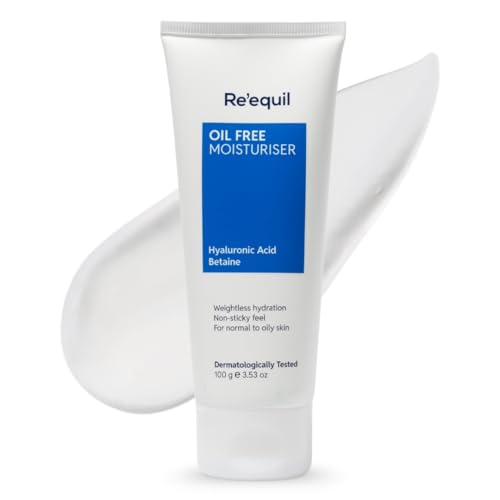
- Balanced hydration: Re’equil Oil Free Moisturiser is a lightweight everyday moisturiser that gives optimum hydration for…
- Oil free skin, all day long: It keeps the skin oil-free and reduces oily shine on T-zone.
- Fresh-looking skin: It promotes balanced moisture distribution and keeps the skin looking fresh.
Re’equil Oil Free Moisturiser
Consider for oily or combination skin
An oil-free option for readers who prefer a lighter feel.
View product details
If you dislike the feeling of a rich cream, an oil-free moisturizer may be worth comparing. The best choice still depends on whether the formula provides enough hydration for your skin.
Best for: Those seeking an oil-free moisturizer.
Keep in mind: “Oil-free” does not automatically mean non-comedogenic or suitable for every acne-prone person.
3. Cetaphil Moisturising Cream
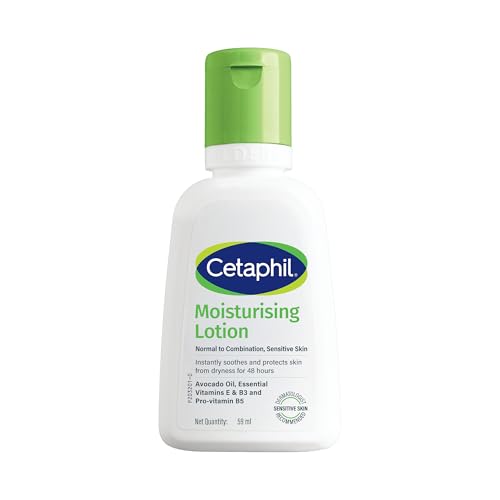
- MOISTURISING LOTION FOR DRY TO NORMAL, SENSITIVE SKIN: Non-greasy lotion with long-lasting moisturization for smooth and…
- 48 HOURS HYDRATION: Enriched with Niacinamide, Panthenol, Glycerin, Avocado and Sunflower Oil to provide a long-lasting …
- RETAINS SKIN’S MOISTURE: Special Formula designed to retain skin’s natural moisture barrier and protect skin
Cetaphil Moisturising Cream
Consider for dry skin
A richer cream format for skin that needs more substantial moisture.
View product details
Dry skin may feel more comfortable with a richer cream than with a very light gel. Cetaphil Moisturising Cream is an option to compare if your skin often feels tight or dry.
Best for: People who prefer a richer cream texture.
Keep in mind: If you have oily skin or dislike heavier textures, this may not be your preferred everyday option.
4. Re’equil Ceramide & Hyaluronic Acid Moisturiser
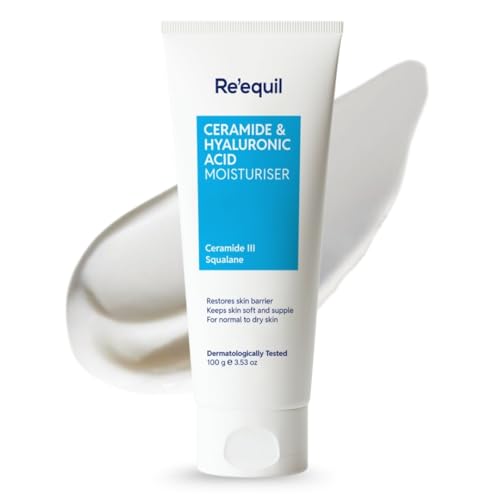
- Repairs skin barrier from within – Specially formulated for dry, dehydrated skin prone to tightness and roughness, this …
- Lasting hydration – Powered by Hyaluronic Acid and Ceramides 1, 3 & 6, it delivers sustained moisture and protects again…
- Calms irritation, soothes discomfort – Ideal for sensitive or stressed skin, this lightweight cream soothes redness and …
Re’equil Ceramide & Hyaluronic Acid Moisturiser
Consider for hydration and barrier support
Features ingredient categories commonly used in moisturizing formulas.
View product details
Ceramides are lipids found in the skin barrier, while hyaluronic acid is a humectant that helps attract and hold water. A moisturizer featuring these ingredients may be worth comparing if your priority is hydration.
Best for: Readers looking for a moisturizer featuring ceramides and hyaluronic acid.
Keep in mind: Ingredient names alone do not establish how well a finished formula will suit your skin.
5. Minimalist Vitamin B5 10% Moisturizer

- 1️⃣ 12-HOUR HYDRATION WITH 10% VITAMIN B5 Formulated with high-strength Vitamin B5 (Panthenol), this moisturizer deliver…
- 2️⃣ LIGHTWEIGHT OIL-FREE GEL MOISTURIZER FOR OILY SKIN A fast-absorbing gel moisturizer that hydrates without clogging p…
- 3️⃣ BARRIER REPAIR & SOOTHING FACE MOISTURISER Helps strengthen the skin barrier, reduce irritation, and calm redness. I…
Minimalist Vitamin B5 10% Moisturizer
Consider for a hydration-focused routine
A moisturizer option to compare for your preferred texture and skin needs.
View product details
If you are interested in a moisturizer featuring Vitamin B5, this is one product to investigate. Check the current formulation and directions to determine whether it suits your skin and routine.
Best for: Readers specifically comparing Vitamin B5 moisturizers.
Keep in mind: A higher stated percentage does not automatically mean better results for every skin type.
Key Ingredients to Look for in a Face Moisturizer
You do not need to memorize a full ingredient dictionary. Start with a few useful categories.
| Ingredient | What it generally does |
|---|---|
| Glycerin | Humectant that helps attract water |
| Hyaluronic acid | Humectant that helps hold water |
| Ceramides | Skin-barrier lipids that help support barrier function |
| Dimethicone | Emollient/occlusive ingredient that can help reduce moisture loss |
| Petrolatum | Occlusive ingredient that helps limit water loss |
| Panthenol (Vitamin B5) | Conditioning ingredient used in moisturizing formulas |
A formula can contain several of these ingredients, but the full formulation, concentration, and your individual skin response matter too.
How to Choose a Moisturizer in India
India’s climate varies significantly. Humidity, heat, air conditioning, and seasonal dryness can affect how a moisturizer feels.
In hot and humid weather
If your face feels sticky in humid weather, try a lightweight gel or lotion. Apply a modest amount and see whether your skin stays comfortable.
In cooler or dry weather
If your skin becomes tight or flaky, you may prefer a richer cream or a slightly more generous application of your usual moisturizer.
If you spend a lot of time in air conditioning
Air-conditioned environments may leave some people feeling dry. Keep an eye on how your skin feels rather than automatically switching to a heavy cream.
If you have acne-prone skin
Look for products labelled non-comedogenic where relevant, but remember that this label is not a guarantee against breakouts. Introduce new products gradually and stop using a product if it consistently causes irritation.
How to Apply Face Moisturizer
A simple routine is often enough. 🌿
Morning
- Cleanse gently, or rinse if that suits your skin.
- Apply your moisturizer.
- Finish with a broad-spectrum sunscreen of SPF 30 or higher.
Night
- Cleanse to remove sunscreen, makeup, and daily buildup.
- Apply any treatment products you already use and tolerate, following their directions.
- Apply moisturizer.
You generally do not need a large amount. Start with a small quantity, spread it evenly, and adjust according to your skin’s needs and the product label.
Common Moisturizer Mistakes
1. Skipping moisturizer because your skin is oily
Oily skin can still need hydration. Try a lightweight formula rather than assuming you should skip moisturizer.
2. Choosing a product only because it is trending
A viral product is not necessarily suited to your skin type. Check its texture, ingredients, directions, and price before buying.
3. Assuming expensive means better
A higher price does not guarantee that a product will suit your skin. Focus on the formula and how comfortably it fits your routine.
4. Applying too much at once
A thick layer may feel uncomfortable, especially in humid weather. Start with a modest amount and adjust if needed.
5. Changing several products simultaneously
If you introduce multiple new products at once, it can be difficult to work out which one caused irritation. Introduce products one at a time.
6. Expecting moisturizer to solve every skin concern
Moisturizers support hydration and skin comfort, but they are not a universal treatment for acne, pigmentation, or other skin conditions.
7. Ignoring persistent irritation
Stop using a product that repeatedly causes burning, itching, or redness. Seek professional advice if symptoms persist or are severe.
Frequently Asked Questions
1. Which moisturizer is best for every skin type?
There is no single moisturizer guaranteed to suit everyone. Choose based on your skin’s needs, preferred texture, and how you respond to the formula.
2. Should oily skin use moisturizer?
Yes, oily skin can still benefit from moisturizer. A lightweight gel or lotion may feel more comfortable than a rich cream.
3. Which moisturizer is suitable for dry skin?
Dry skin often benefits from a richer cream containing moisturizing ingredients such as glycerin, ceramides, or emollients. The right choice depends on your skin’s comfort and the formula.
4. Can I use the same moisturizer in summer and winter?
You can, if it remains comfortable and provides enough hydration. Some people prefer a lighter texture in humid weather and a richer one in dry or cooler conditions.
5. Is gel moisturizer better than cream?
Neither is universally better. Gels tend to feel lighter, while creams are often richer. Choose based on your skin’s needs and texture preference.
6. Can moisturizer help with skin glow?
Moisturizer can help skin look smoother and feel more comfortable by reducing dryness. It does not guarantee a particular glow or treat every cause of dullness.
7. Do I need moisturizer if I use serum?
Often, yes. A serum and moisturizer can serve different purposes. Whether you need both depends on your products and skin needs.
8. Should I apply moisturizer before sunscreen?
In a typical morning routine, apply moisturizer first and sunscreen afterward. Follow the instructions for your particular sunscreen.
9. How often should I moisturize my face?
Many people apply moisturizer in the morning and evening, but frequency depends on your skin and the product directions.
10. Can moisturizer cause pimples?
A product may not suit everyone and can sometimes contribute to clogged pores or irritation. If you notice a consistent problem after starting a moisturizer, stop using it and reassess.
11. Is fragrance-free moisturizer better for sensitive skin?
Fragrance-free products can be a useful starting point for people who react to fragrance. However, fragrance-free does not guarantee that a product will never irritate your skin.
12. Can I use body lotion on my face?
Some lotions are designed for both face and body, but not all are. Check the label and choose a product intended for facial use if you are unsure.
13. Can moisturizer remove dark spots?
Moisturizer alone generally does not remove dark spots. Persistent pigmentation may need a targeted skincare approach and professional advice.
14. Do I need a separate night moisturizer?
Not necessarily. You can use the same moisturizer morning and night if it suits your skin and works with the rest of your routine.
15. How long should I try a moisturizer before changing it?
Give a new product a fair trial if it feels comfortable and causes no irritation, while following its directions. Stop sooner if you experience a reaction. There is no need to keep using a product that consistently feels unsuitable.
Final Thoughts
The right face moisturizer should make your skincare routine feel simpler, not more complicated. 💧
- Oily skin: Start by comparing lightweight gels and lotions.
- Dry skin: Consider a richer cream.
- Combination skin: Try a lightweight formula and adjust application by area.
- Sensitive skin: Prioritize gentle formulas and introduce new products gradually.
- Normal skin: Choose a comfortable daily moisturizer that fits your routine.
Most importantly, choose based on your own skin’s response not just the packaging, trend, or price.