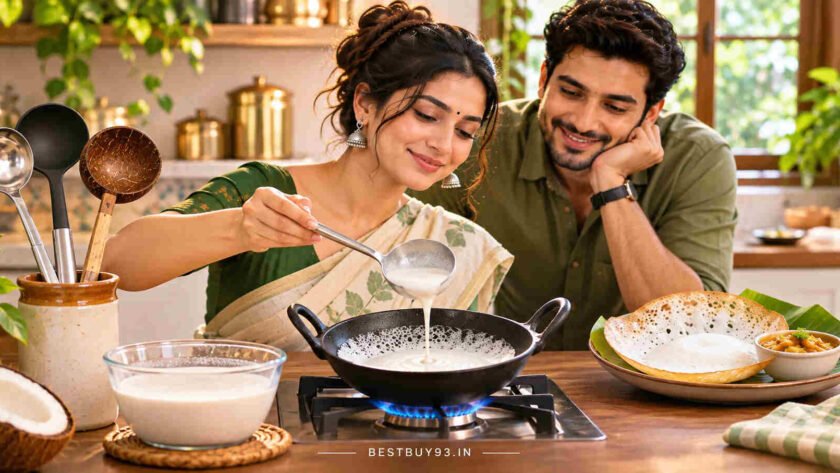

A beautifully made Kerala appam has that unmistakable contrast: thin, delicate, slightly crisp edges surrounding a soft, fluffy centre.
And while the appachatti deserves plenty of credit, there is another tiny kitchen tool doing important work before the swirling even begins the humble ladle.
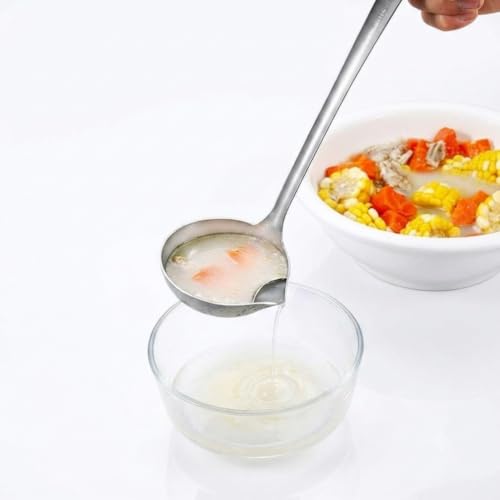
A good appam ladle helps you pick up a consistent amount of fermented batter and pour it cleanly into the centre of the hot appachatti. Once the batter lands in the pan, you lift and rotate the appachatti so the batter runs around its curved sides, creating the classic thin edge and thicker centre. Kerala Tourism describes essentially this technique: batter is poured into an appachatti and moved around the pan to create thin edges with a thicker middle.
Here is the important bit, though:
There is no single standardised utensil sold universally as an “appam ladle.”
In most home kitchens, a good deep stainless-steel ladle, short-pour dosa ladle, heat-safe nylon ladle or traditional coconut-shell ladle can do the job beautifully.
For this guide, we compared currently available options based on bowl capacity, pouring control, handle length, material, heat resistance, comfort, ease of cleaning and suitability for appam batter.
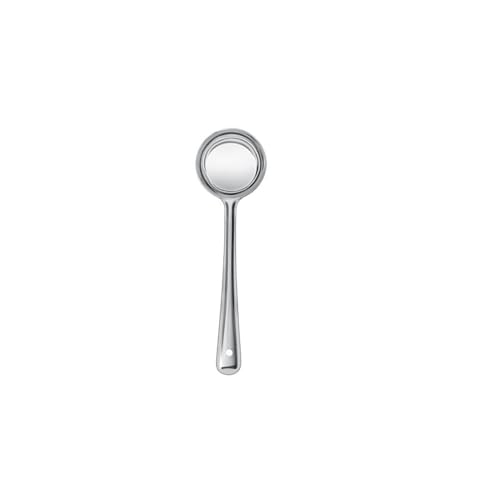
Our top overall recommendation is the Coconut Stainless Steel Dosa Ladle because its 80 ml capacity, compact handle and flat-bottom bowl give good portion control for batter-based recipes while keeping the design simple and easy to clean.
Quick Picks: Best Appam Ladles
| Ladle | Best For | Material | Key Advantage |
|---|---|---|---|
| Coconut Stainless Steel Dosa Ladle | Best Overall | Stainless steel | 80 ml measured batter capacity |
| Hawkins 80 ml Deep Ladle | Best Deep-Bowl Pick | Stainless steel | Deep bowl reduces spills |
| Sumeet Short Pour Ladle Set | Best for Batter Control | Stainless steel | Compact pour ladle + turner |
| Meyer Nylon Ladle | Best for Non-Stick Appachatti | Reinforced nylon | Heat resistant and dribble-resistant |
| Vinod 25 cm Basting Ladle | Best Everyday Steel Ladle | Stainless steel | Sturdy balanced design |
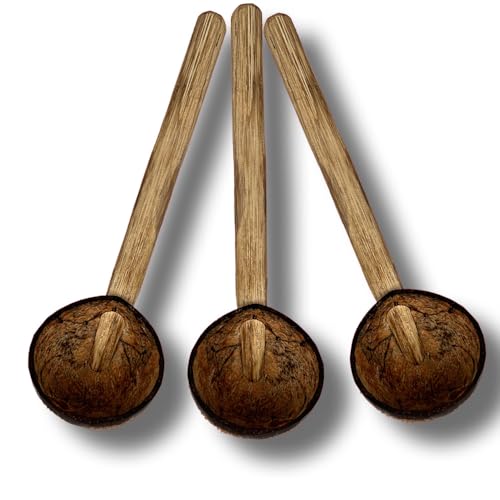
| Thenga Coconut Shell Ladle Set | Best Traditional Choice | Coconut shell + wood | Kerala-made, handmade design |
| Meyer Stainless Steel Ladle | Best Premium Steel Option | Stainless steel | Long ergonomic design |
Best Overall: Coconut Stainless Steel Dosa Ladle
Best Budget-Friendly Deep Ladle: Hawkins 80 ml Ladle
Best for Non-Stick Appachatti: Meyer Nylon Ladle
Best Traditional Pick: Thenga Coconut Shell Ladle
Best Premium Steel Pick: Meyer Stainless Steel Ladle
1. Coconut Stainless Steel Dosa Ladle — Best Overall
The Coconut Stainless Steel Dosa Ladle is our Best Overall pick because its design is unusually relevant to batter-based cooking.
Coconut specifies 1 mm food-grade stainless steel, an 80 ml capacity, approximately 20 cm overall height and a 7.5 cm-wide bowl. The manufacturer specifically positions it for dosa, uttapam and chilla batter as well as liquid serving.
Why We Recommend It for Appam
The 80 ml bowl gives you a reasonably repeatable amount of batter each time.
That matters because appam shape becomes easier to control when each batch starts with roughly the same quantity.
Too little batter and the centre can become overly thin.
Too much and you may end up with a thick pancake rather than that signature lacy-edged appam.
The short handle also gives good pouring control when you’re working close to an appachatti.
What We Like
- 80 ml capacity
- Food-grade stainless steel
- Rust-resistant construction
- Compact 20 cm design
- Dishwasher safe
- Easy to measure repeated portions
- Useful beyond appam
What We Don’t Like
Its flat-base design is marketed partly for spreading dosa batter. For traditional Kerala appam, you should not use the ladle to spread the batter like dosa.
Pour the batter into the centre and rotate the appachatti instead. Kerala Tourism’s preparation method relies on turning or lifting the pan to distribute the batter.
Best For
Home cooks wanting one simple batter ladle for appam, dosa, uttapam and chilla.
Verdict
For most kitchens, this provides the best combination of portion control, durability and batter-friendly design.

- This Set is made from High Food Grade Quality steel
- This product is highly durable and strong. This Spoon ladle used for daal, curry, veditable etc
- Laddle has a hole at the back that lets you hang it
2. Hawkins 80 ml Deep Stainless Steel Ladle — Best Deep-Bowl Pick
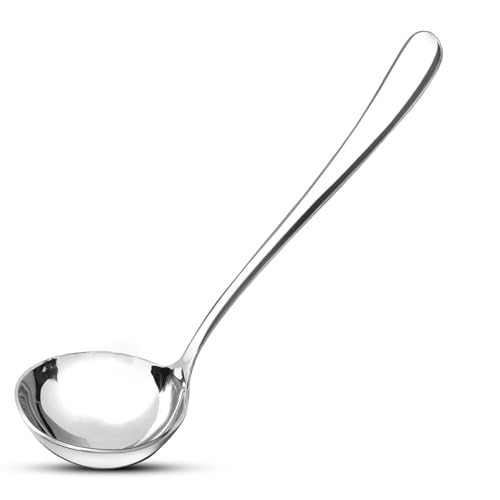
If you prefer a more conventional deep ladle, the Hawkins 80 ml Deep Stainless Steel Ladle is an excellent option.
Hawkins specifies an 80 ml deep bowl, food-grade stainless-steel construction and a long ergonomic handle. The full utensil measures roughly 30.9 cm long.
Why We Recommend It
The deeper bowl makes batter less likely to spill while you move from mixing vessel to appachatti.
That is especially useful with properly fermented appam batter, which should have a pourable consistency rather than behaving like thick dosa dough. Kerala Tourism specifically describes preparing appam batter to a pouring consistency before cooking.
The 80 ml capacity also gives you a useful reference point for repeatable portions.
Pros
- Deep bowl
- 80 ml capacity
- Food-grade stainless steel
- Rust-resistant
- One-piece construction
- Long handle
- Easy maintenance
Cons
- Longer than necessary for a small appachatti
- Deep round bowl gives slightly less precise directional pouring than a short-pour ladle
- Steel can scratch delicate non-stick surfaces if dragged against them
Best For
Anyone who wants a simple multipurpose ladle that can handle batter as well as dal, curry and soup.
Verdict
If you already trust basic Hawkins kitchen tools and want something unfussy, this is a very sensible pick.
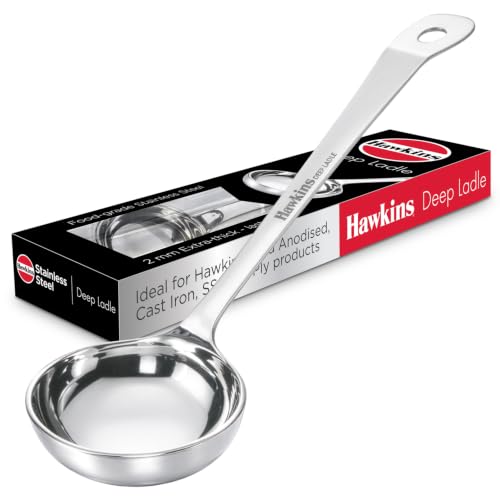
- High-Quality Stainless Steel – Durable, rust-resistant, and built for long-lasting everyday use
- 80 ml Deep Bowl Capacity – Ideal for serving dals, curries, soups, and gravies with ease
- Deep Ladle Design – Prevents spillage and allows convenient scooping of liquids
3. Sumeet Stainless Steel Short Pour Ladle Set — Best for Batter Control
The Sumeet Perfect Dosa Making Spoon/Ladle Set includes two pieces:
- one thin-edge turner
- one short-pour ladle with a flat base
Sumeet describes the ladle as designed for smooth, controlled batter pouring and spreading, with corrosion-resistant stainless-steel construction.
Why It Works for Appam
The compact handle gives you more control than an oversized soup ladle.
That can be useful when you want to deliver the batter right into the centre of the appachatti before immediately lifting the pan and rotating it.
The extra turner may also be useful for other South Indian breakfast recipes.
What We Like
- Compact short-pour design
- Stainless steel
- Two-piece set
- Easy to clean
- Multipurpose
- Useful for dosa and uttapam too
What We Don’t Like
The ladle is primarily designed around dosa preparation, so again, don’t copy the dosa spreading motion when making appam.
Appam gets its characteristic form from the curved appachatti and swirling motion, not from using the back of a ladle to spread the batter.
Verdict
A nice option for homes where appam, dosa, chilla and uttapam all regularly appear on the breakfast menu.

- Set of 2 Pcs – Thin Edge Turner & Short Pour Ladle.
- Set of 2 Pcs – Thin Edge Turner & Short Pour Ladle.
- Short Pour Ladle with Flat Base is useful to Spread Dosa Batter evenly and smoothly
4. Meyer Nylon Ladle — Best for Non-Stick Appachatti
If you use a non-stick appachatti, constantly touching the coating with steel utensils is unnecessary.
The Meyer Nylon Ladle is made from fiberglass-reinforced nylon and is heat resistant up to 225°C. Meyer describes it as having a deep rounded bowl and flared rim designed for dribble-free pouring, specifically mentioning pancake batter among its uses.
That makes it particularly relevant here.
Why We Recommend It
The nylon head is gentler on non-stick cookware than stainless steel.
The flared rim also helps direct batter rather than letting it run down the side of the bowl.
At approximately 32 cm long and 9 cm wide, it is larger than the Coconut or Sumeet options.
Pros
- Non-stick-friendly
- Heat resistant up to 225°C
- Deep rounded bowl
- Flared pouring rim
- Dishwasher safe
- Long handle
- Designed for liquid and batter pouring
Cons
- Longer than necessary for some small pans
- Bulkier than compact steel ladles
- Nylon is less traditional than stainless steel or coconut shell
Best For
Modern non-stick appachatti users.
Verdict
If protecting your cookware coating matters, this is probably the most thoughtfully designed option on the list.
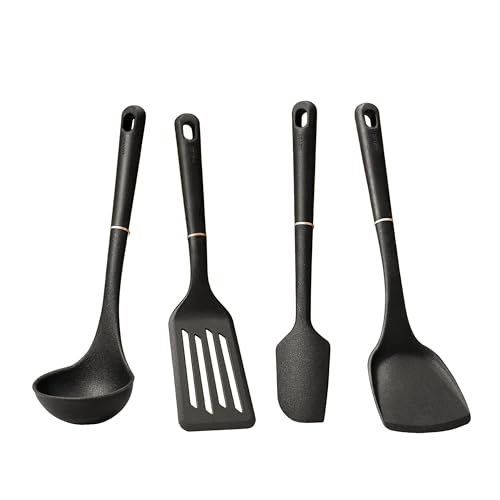
- WHAT YOU GET: Set of nonstick-suitable, dishwasher safe cooking utensils includes a 12.6-inch nylon flipper, 12.6-inch s…
- BEAUTIFUL YET FUNCTIONAL: Brains and beauty, packaged in a set of kitchen cooking utensils! Our incredibly tough nylon f…
- GIVE IT A REST: Melting handles are a thing of the past. The clever stainless steel stopper feature on these versatile k…
5. Vinod Stainless Steel 25 cm Basting Ladle — Best Everyday Steel Ladle
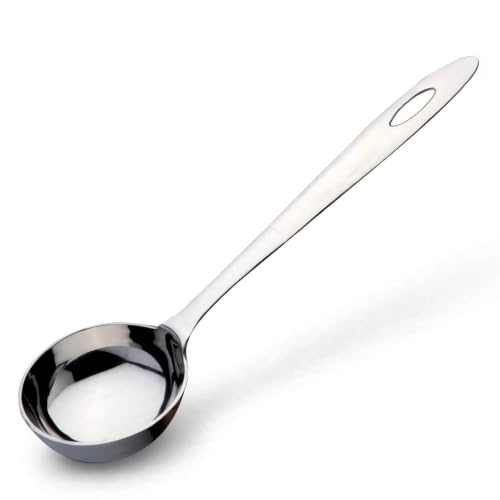
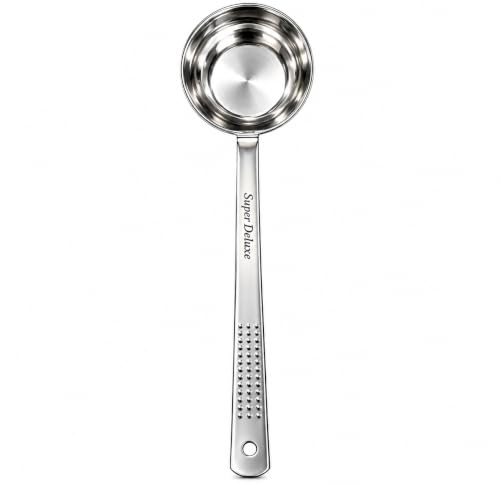
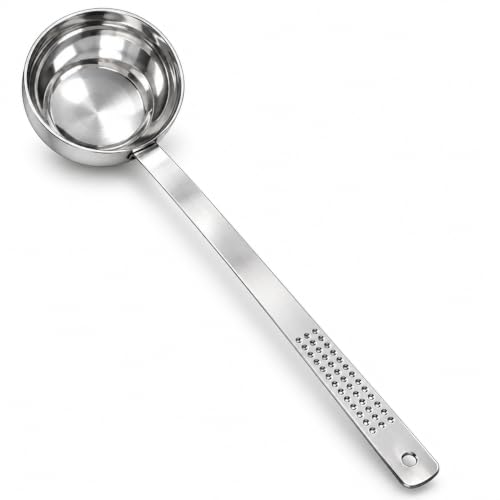
The Vinod Stainless Steel Basting Serving Ladle is a straightforward everyday kitchen tool.
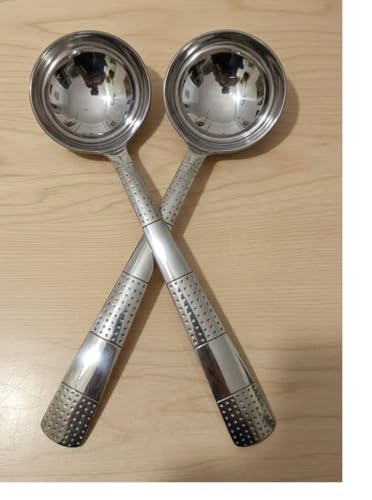
The 25 cm model comes as a set of two and uses polished stainless steel. Vinod describes it as rust-resistant, dishwasher safe and designed around a balanced grip.
Why We Recommend It
Sometimes you don’t need a specialised utensil.
You need a well-made ladle that:
scoops → pours → washes → goes back in the drawer.
At 25 cm, this model is long enough to keep your hand away from the hot appachatti but not absurdly oversized.
Pros
- Stainless-steel construction
- 25 cm length
- Dishwasher safe
- Balanced grip
- Two-piece set
- Multipurpose
Cons
- No specified batter-measuring capacity
- Less precise portioning than an 80 ml ladle
- Steel should be kept away from delicate non-stick surfaces
Verdict
Choose this if you want an everyday Indian kitchen ladle that also works comfortably for appam batter rather than buying a dedicated gadget.

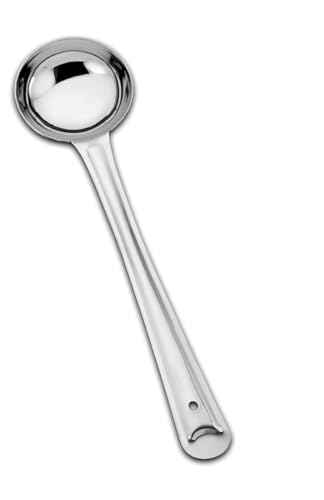

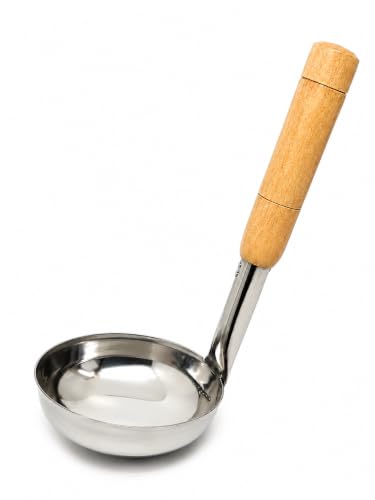

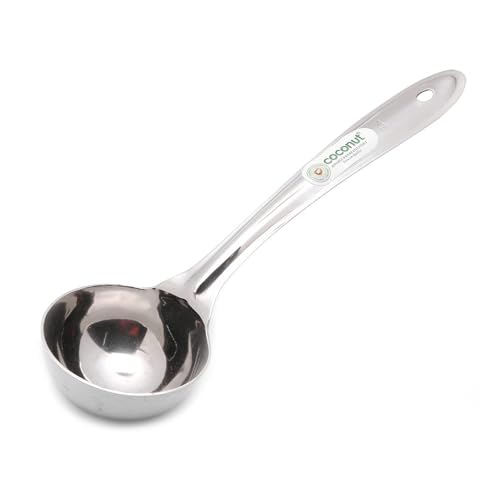
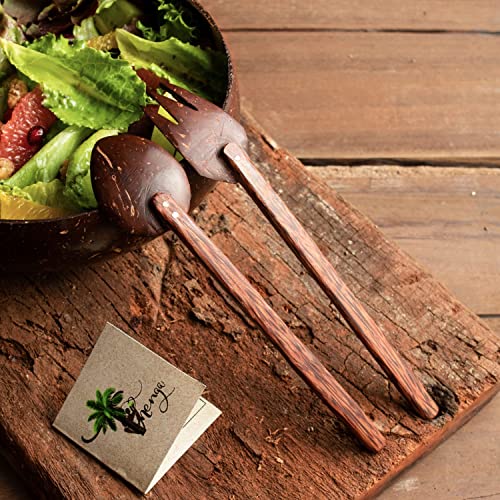
6. Thenga Coconut Shell Ladle Set — Best Traditional Choice
This one wins the charm award very easily.
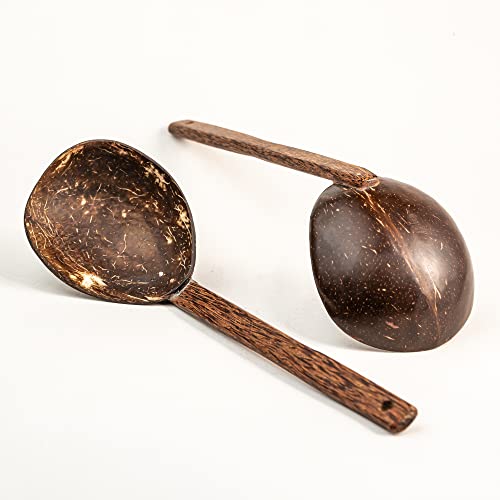
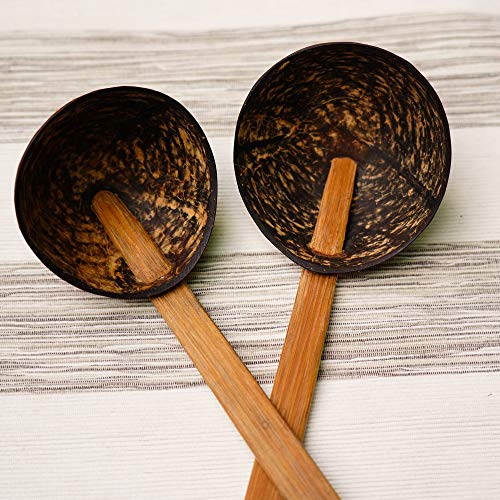
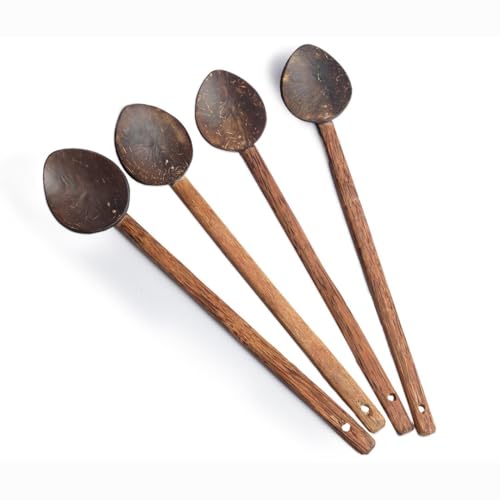
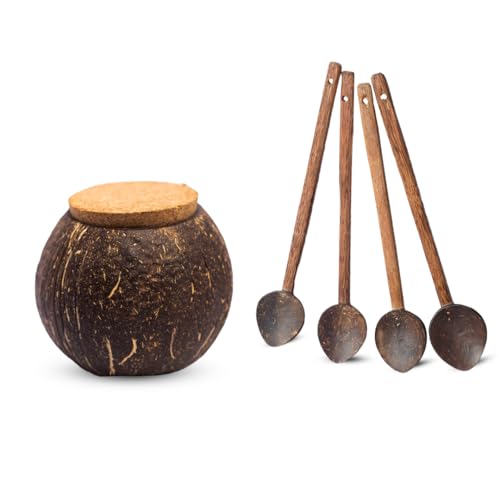
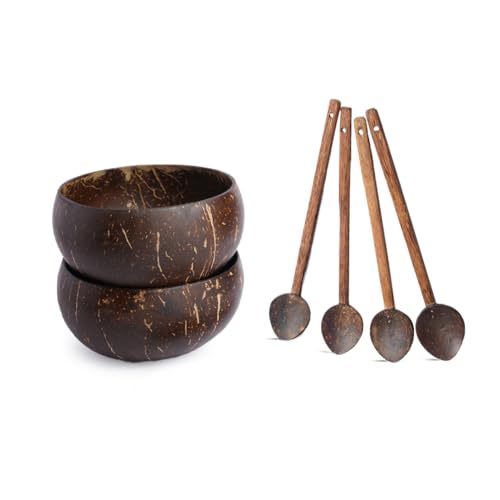
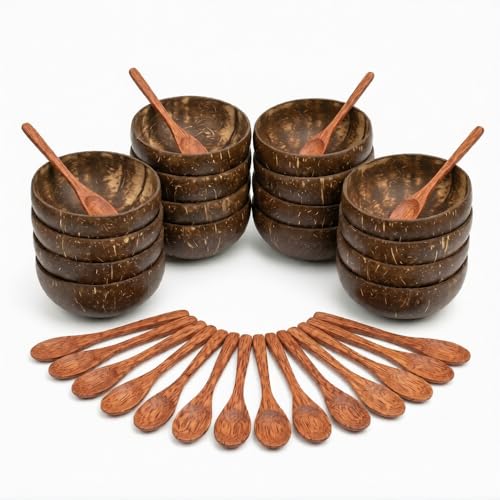
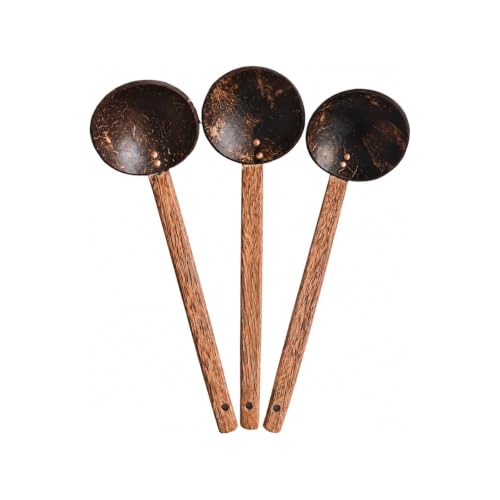
The Thenga Coconut Shell Ladle Set is handcrafted in Kerala using natural coconut shells and wood by rural artisans. The current three-piece set is sold as an eco-friendly cooking-utensil collection.
Thenga also offers larger coconut-shell cooking sets produced from coconut shell and coconut wood sourced in Kerala.
Why We Recommend It
Appam itself is deeply connected with Kerala’s food tradition, and there is something wonderfully appropriate about pairing it with a utensil produced from one of Kerala cooking’s most iconic ingredients: coconut.
It is also gentler on non-stick and traditional cookware than steel.
Best For
Traditional Kerala-style kitchens, natural-material lovers and people who enjoy handcrafted kitchenware.
Pros
- Handmade in Kerala
- Natural coconut shell and wood
- Eco-friendly design
- Non-stick-friendly
- Traditional aesthetic
- Supports artisan craftsmanship
Cons
- Natural products vary slightly in size and shape
- Requires more care than stainless steel
- Not intended for soaking indefinitely in water
- Less precise for repeatable batter measurement
Verdict
This is the option I’d pick for traditional feel and cultural character, not strict measuring precision.
And yes, it will look approximately 700% prettier hanging beside your appachatti. 🥥





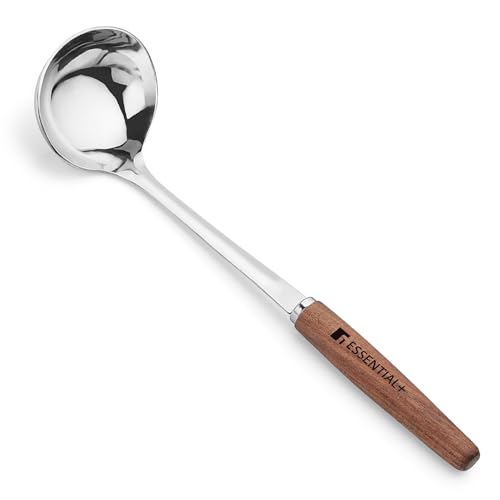
7. Meyer Stainless Steel Ladle — Best Premium Steel Option
The Meyer Stainless Steel Ladle is the more premium conventional-steel choice.
Meyer lists it at 30 cm long and 9 cm wide, with food-grade stainless steel, a mirror-polished finish, smooth edges and an ergonomic handle.
Why We Recommend It
Compared with small inexpensive ladles, the Meyer has a more substantial construction and longer handle.
That makes it useful if you prepare batter in a deep mixing vessel or want additional distance from the stove.
Pros
- Food-grade stainless steel
- 30 cm length
- Wide ladle head
- Ergonomic grip
- Mirror finish
- Rust- and stain-resistant design
Cons
- Significantly more expensive than basic ladles
- Heavy-duty construction is unnecessary if you only use it for batter
- Not the best choice for scraping around non-stick cookware
Verdict
A premium multipurpose utensil rather than an appam-only purchase.

- Exceptional Durability: Culinary precision meets enduring quality, as our utensils are forged for extra durability, ensu…
- Rust and Stain-Free: Constructed from food-grade stainless steel, bid farewell to rust and stains that can compromise th…
- Ergonomic Design: Each utensil features a beautifully curved shallow head and an ergonomic, easy-to-grip handle, making …
Appam Ladles Comparison Table
| Product | Material | Approx. Length | Portion Control | Non-Stick Friendly | Best For |
|---|---|---|---|---|---|
| Coconut Dosa Ladle | Stainless steel | 20 cm | Excellent – 80 ml | Use carefully | Best overall |
| Hawkins Deep Ladle | Stainless steel | 30.9 cm | Excellent – 80 ml | Use carefully | Deep-bowl pouring |
| Sumeet Short Pour | Stainless steel | Compact | Very good | Use carefully | Batter control |
| Meyer Nylon Ladle | Reinforced nylon | 32 cm | Good | Yes | Non-stick pans |
| Vinod Ladle | Stainless steel | 25 cm | Good | Use carefully | Everyday use |
| Thenga Coconut Ladle | Coconut/wood | Varies | Moderate | Yes | Traditional use |
| Meyer Steel Ladle | Stainless steel | 30 cm | Good | Use carefully | Premium multipurpose |
Does Appam Really Need a Special Ladle?
No.
This is one of those kitchen-product categories where marketing can make the process sound more complicated than it is.
Traditional appam primarily depends on:
- properly fermented batter
- pouring consistency
- a curved appachatti
- correct heat
- swirling the pan
Kerala Tourism instructs cooks to pour batter into the appachatti and turn it around so the batter forms thin edges with a thicker middle.
The ladle’s role is simply to get a controlled quantity of batter into the pan cleanly.
So don’t panic if Amazon doesn’t have a product called:
“Ultra Professional Traditional Kerala Appam Shape Perfection Ladle Pro Max.”
A normal deep batter ladle is perfectly fine. 😭
What Size Ladle Is Best for Appam?
There is no universal capacity because appachatti sizes differ.
However, a medium deep ladle around the 80 ml class is particularly practical for many home setups because products from both Coconut and Hawkins use this capacity and it allows relatively repeatable batter portions.
If your appachatti is large, you may need more batter.
If it is small, you may need less.
The real goal is consistency.
Once you find the amount that works in your pan, use the same ladle and fill level every time.
Stainless Steel vs Nylon vs Coconut Shell
Stainless Steel
Best for: durability and easy cleaning.
Advantages:
- long-lasting
- rust resistant
- dishwasher-friendly in many cases
- easy to wash
- precise shapes
Main drawback:
Avoid scraping steel across delicate non-stick coatings.
Nylon or Silicone
Best for: non-stick appachatti.
A heat-safe synthetic ladle is gentler on coated cookware.
Meyer’s reinforced nylon ladle, for example, is rated to 225°C and designed for batter and liquid pouring.
Coconut Shell and Wood
Best for: traditional feel and natural materials.
Coconut-shell utensils are particularly appropriate aesthetically for Kerala-style cooking.
They also won’t scratch non-stick cookware.
However, stainless steel remains easier to maintain and gives more repeatable sizing.
What to Look for When Buying an Appam Ladle
1. A Bowl Deep Enough to Hold Batter
A shallow spoon is messy.
You want enough depth that fermented batter doesn’t splash out while moving between bowl and stove.
2. Consistent Capacity
A defined capacity helps make similarly sized appams.
This is why the 80 ml Coconut and Hawkins designs are useful.
3. Comfortable Handle Length
Too short and your hand sits beside a hot pan.
Too long and a small appachatti feels awkward.
For most home kitchens, roughly 20–30 cm is a useful practical range, based on the models in this guide.
4. A Clean Pouring Edge
You want batter to leave the ladle cleanly rather than running underneath it.
Meyer’s nylon model uses a flared rim specifically to reduce drips.
5. Cookware Compatibility
Using non-stick?
Choose nylon, silicone, coconut shell or wood if the ladle may touch the coating.
Using cast iron?
Stainless steel becomes less concerning.
Tips for Perfectly Shaped Appams
Use Properly Fermented Batter
The batter should develop enough fermentation to produce a soft interior.
Kerala Tourism recipes commonly specify several hours or overnight fermentation depending on the preparation.
Keep the Batter Pourable
Appam batter needs to flow.
If it is too thick, it will refuse to travel up the curved sides when you rotate the pan.
Pour Into the Centre
Place your measured batter in the centre of the heated appachatti.
Then immediately lift the pan.
Swirl the Pan Not the Ladle
This is the key distinction from dosa.
With dosa, you may use the back of a ladle to spread batter.
With appam, rotate the pan itself.
The curved appachatti pulls some batter into a thin coating around the sides while leaving more batter in the middle.
Cover While Cooking
Traditional appam is usually covered so the thicker centre cooks through while the sides remain delicate.
Kerala Tourism’s appachatti method specifically instructs covering the pan and cooking over low heat.
Common Mistakes to Avoid
Using a Giant Soup Ladle
Too much batter makes controlling thickness harder.
Spreading Appam Like Dosa
Don’t drag the ladle around the appachatti.
Pour and swirl.
Using Steel Aggressively on Non-Stick
Steel itself is fine for scooping batter.
Scraping it across coated cookware is the problem.
Changing Batter Quantity Every Time
One appam becomes huge.
The next one becomes paper-thin.
Pick a consistent fill level.
Blaming the Ladle for Bad Appam
A beautiful ladle cannot rescue under-fermented or overly thick batter.
The utensil helps with portioning.
The batter still has to do its job. 😄
How We Selected These Appam Ladles
We reviewed currently available kitchen ladles that suit the actual technique of Kerala-style appam rather than searching only for products explicitly marketed with the word “appam.”
The main criteria were:
- bowl capacity
- bowl depth
- batter-pouring control
- handle length
- food-contact material
- heat resistance
- non-stick compatibility
- cleaning convenience
- versatility
- current India availability
- value
Specifications were checked primarily against manufacturer and retailer pages from Coconut, Hawkins, Sumeet, Meyer, Vinod and Thenga.
We also checked traditional appam preparation guidance from Kerala Tourism to make sure the buying recommendations matched the actual cooking technique.
BestBuy93.IN does not claim hands-on testing of these ladles unless explicitly stated.
Prices and availability can change.
In Case You Are Looking For –
- Best Puttu Makers for Preparing Traditional Kerala Puttu
- Best Idiyappam Presses for Making Soft String Hoppers
- Best Murukku Makers for Making Crispy Homemade Murukku
- Best Dhokla Plates and Steamers for Making Soft Khaman Dhokla
- Best Sev Makers for Preparing Homemade Aloo Bhujia and Sev
- Best Chakli Makers for Making Traditional Maharashtrian Chakli
- Best Ladoo Moulds and Scoops for Making Uniform Besan Ladoos
Frequently Asked Questions
Which ladle is best for making appam?
Our best overall recommendation is the Coconut Stainless Steel Dosa Ladle because its 80 ml bowl provides consistent portioning while its compact design gives good batter control.
Can I use a normal ladle for appam?
Absolutely.
You don’t need a specialised appam-only utensil.
A medium, deep ladle that pours batter cleanly is enough.
Is an 80 ml ladle good for appam?
An 80 ml ladle is a useful starting size for many home appachattis, but the correct amount ultimately depends on your pan diameter and preferred centre thickness.
Should I use steel with a non-stick appachatti?
You can scoop and pour with steel, but avoid dragging or scraping it across the non-stick coating.
A nylon or coconut-shell ladle is safer if the utensil frequently touches the pan.
Can I use a dosa ladle for appam?
Yes.
Just change the technique.
For dosa, the ladle may spread batter across the tawa.
For appam, pour the batter and rotate the appachatti itself.
Is a coconut-shell ladle good for appam?
Yes, especially if you prefer traditional natural utensils.
Thenga’s ladles are handmade in Kerala using coconut shell and wood.
Why aren’t my appams round?
The problem is more likely to be:
- uneven swirling
- batter consistency
- wrong quantity
- poorly heated pan
rather than the ladle itself.
Final Verdict
For most households, the Coconut Stainless Steel Dosa Ladle is our Best Overall appam ladle.
Its 80 ml capacity gives you repeatable portions, the stainless-steel construction is easy to maintain, and the compact design provides enough control for pouring batter directly into the centre of an appachatti.
The Hawkins 80 ml Deep Stainless Steel Ladle is our pick if you prefer a deeper bowl with a longer handle.
For non-stick appachattis, choose the Meyer Nylon Ladle. Its deep bowl, flared rim and 225°C heat resistance make it particularly suitable for controlled batter pouring without introducing a metal utensil near the coating.
If you want something with more Kerala character, the Thenga Coconut Shell Ladle Set is easily the most charming option and it is handcrafted in Kerala from coconut shell and wood.
But remember:
The ladle controls the batter portion. The appachatti creates the shape.
Once the batter hits the centre, put the spoon down and let your wrist and that curved pan do the magic. 🥥✨