


There is something special about a plate of freshly made Kerala-style appams: delicate, lacy edges with a lightly crisp texture, a soft and fluffy centre, and that lovely fermented-rice-and-coconut flavour. Pair them with vegetable stew, chicken stew or coconut milk, and you have a breakfast worth waking up for!
But making restaurant-style appams at home takes more than a good batter recipe. The pan matters too. A suitable appam pan, traditionally called an appachetty or appam chatti, helps you swirl the batter into its characteristic bowl-like shape while allowing the edges to cook thin and crisp.
If you are planning to buy one, you will find several choices online, including traditional cast-iron pans, non-stick appachetties and deep breakfast pans with lids. In this guide, we explore seven options worth comparing, explain what makes each one different, and share the important features to check before buying.
A quick clarification before we begin: Kerala-style palappam is different from appe, paniyaram or paddu. A traditional appachetty is a curved, bowl-shaped pan for swirling one appam at a time. A multi-cavity appe pan makes several small, round snacks and is not a direct substitute.
Quick Comparison: Best Appam Pans
| Appam Pan | Material / Type | Best For |
|---|---|---|
| Wonderchef Forza Cast-Iron Appachetty | Cast iron | Traditional-style cooking |
| Wonderchef Appachetty with Lid | Non-stick, deep pan | Everyday convenience |
| Hawkins Futura Appachatty | Hard-anodised aluminium with non-stick coating | Small batches and easy handling |
| Vinod Zest Appachetty with Lid | Non-stick appachetty | Buyers looking for a lidded pan |
| Premier Supreme Non-Stick Appam Pan | Non-stick | Budget-friendly appam cooking |
| Judge Appachatty with Lid | Appachatty with lid | Compact everyday cooking |
| Vinod Ferona Cast Iron Appachetty | Cast iron | Buyers considering a heavier traditional pan |
Product configurations, included lids, cooktop compatibility and prices can vary by model and seller. Check the exact listing before ordering.
7 Best Appam Pans for Making Soft-Centred, Crispy-Edged Appams
1. Wonderchef Forza Cast-Iron Appachetty – Best for Traditional-Style Cooking
If you enjoy traditional cookware and don’t mind a little maintenance, the Wonderchef Forza Cast-Iron Appachetty deserves a place on your shortlist.
It is made from heavy-duty cast iron and has a 20 cm design. Cast iron retains heat well once properly heated, which can be useful when you want consistent cooking temperatures. Its cooking surface develops a natural seasoning layer with regular use and appropriate care.
What we like
- Heavy-duty cast-iron construction.
- Traditional appachetty design.
- No factory-applied non-stick coating.
- Heat retention for steady cooking.
- Manufacturer-listed lifetime warranty, subject to terms.
What we don’t like
- Heavier than many aluminium alternatives.
- Requires seasoning and careful drying.
- Does not include a lid in the listed package.
Best for: Home cooks who prefer traditional cast iron and are comfortable maintaining it.
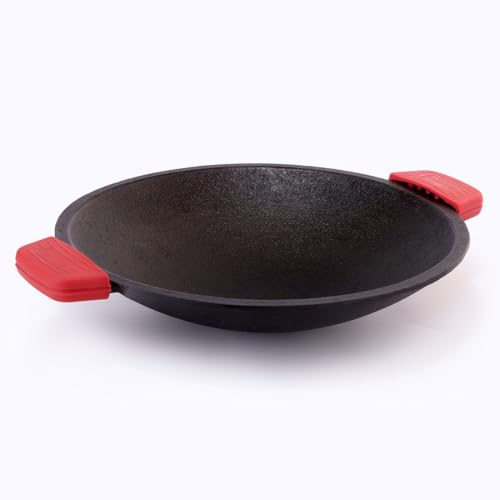
- Naturally Non-Stick: Develops a natural non-stick surface after every use, reducing oil usage for healthier cooking.
- Traditional Design, Sturdy Grip: Easy-to-hold handles provide a safe, firm and comfortable grip.
- Cooks Multiple Dishes: Ideal for appams, paniyarams, dosas, rotis, and deep-fried snacks.
2. Wonderchef Appachetty Breakfast Pan with Lid – Best Non-Stick Option
Want a more convenient option for regular home cooking? The Wonderchef Appachetty Breakfast Pan with Lid is worth considering.
This is a 22 cm deep appachetty with a non-stick cooking surface and an included lid. Its deeper, curved construction is designed for appam-style cooking, while the lid can help retain heat and steam during preparation.
The lighter construction compared with heavy cast iron may also make handling easier for everyday use.
What we like
- Traditional deep appachetty format.
- Non-stick cooking surface.
- Glass lid included in the listed configuration.
- Easier food release than an unseasoned iron pan.
- Manufacturer-listed one-year warranty.
What we don’t like
- Coating needs careful handling.
- Avoid metal utensils and abrasive scrubbers unless the manufacturer permits them.
- Non-stick cookware should not be overheated.
Best for: Beginners and families looking for a convenient everyday appam pan.
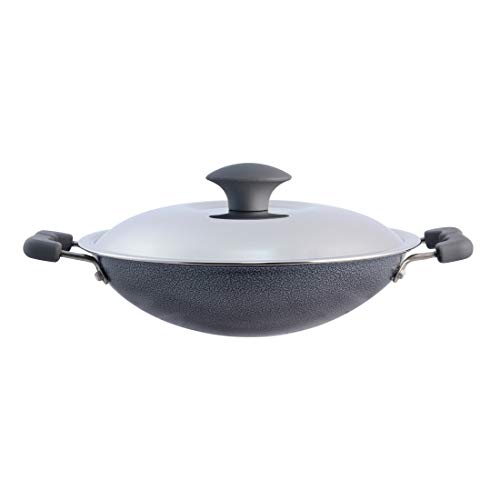
- Great Looks: Enjoy soft and hot appams at home with the Wonderchef Appachetty 220mm with Lid non-stick deep pan which he…
- Soft Touch Handle: Ergonomically designed soft touch handles and knob that do not heat up during cooking. Soft-touch han…
- Stainless steel lid and soft knob: Comes with stainless steel lid and the soft touch heat-resistant knob on the lid make…
3. Hawkins Futura 0.9-Litre Non-Stick Appachatty – Best for Small Batches
Hawkins is another brand worth checking when shopping for an appachatty. Its Futura 0.9-litre Non-Stick Appachatty with Glass Lid is a compact breakfast pan that can also be used for other suitable small-batch preparations.
The manufacturer lists a 22 cm diameter, 3.25 mm thickness and 0.9-litre capacity. Its non-stick coating is applied to hard-anodised aluminium, and the supplied glass lid helps retain heat and steam.
It also has rosewood handles attached to sturdy stainless-steel brackets.
What we like
- Hard-anodised aluminium construction.
- Non-stick interior.
- Glass lid included.
- Compact 0.9-litre capacity.
- Manufacturer-listed two-year guarantee.
What we don’t like
- Not designed for cooking several separate appams simultaneously.
- Check the handle and lid dimensions before storage.
- Non-stick coating requires appropriate care.
Best for: Small households and buyers who want a versatile breakfast pan.

- PFOA Free Non-stick coating locked into tough Hard Anodised Aluminium – lasts longer
- The Pan has a round bottom for greater convenience during stir-frying
- It is offered with stay-cool, natural, durable, elegant, comfortable Rosewood handles fixed on sturdy stainless steel br…
4. Vinod Zest Non-Stick Appachetty with Lid – Best for a Traditional Lidded Format
The Vinod Zest Non-Stick Appachetty with Lid is another option to compare if you prefer a traditional appachetty rather than a multi-cavity appe pan.
The available product listings describe it as a non-stick appachetty with a lid. Some listings identify a 20 cm version, so confirm the exact size and included accessories before purchasing.
A lidded design can be useful when preparing appams because it helps retain heat during cooking. The non-stick surface is also intended to make food release and cleaning easier.
What we like
- Appachetty-style cooking format.
- Non-stick cooking surface.
- Lid included in the listed version.
- A useful option to compare with other everyday pans.
What we don’t like
- Confirm the exact diameter and coating details with the seller.
- Check cooktop compatibility for the specific model.
- Coating requires gentle cleaning and suitable utensils.
Best for: Buyers looking for a non-stick appachetty with a lid.
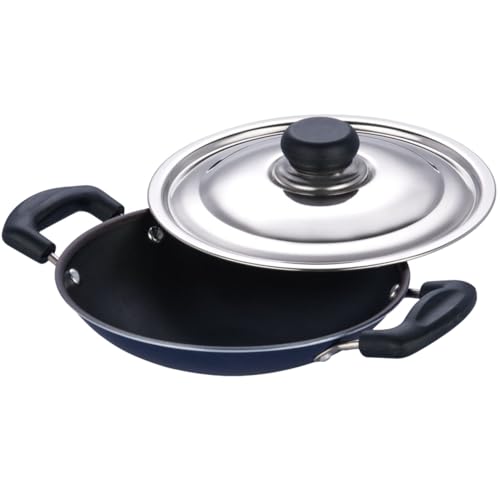
- 𝗘𝗫𝗣𝗘𝗥𝗜𝗘𝗡𝗖𝗘 𝗔𝗣𝗣𝗔𝗠 𝗣𝗘𝗥𝗙𝗘𝗖𝗧𝗜𝗢𝗡 – Craft delicious Appams effortlessly with our premium Non-Stick Appachetty. Stainless Steel…
- 𝗗𝗨𝗥𝗔𝗕𝗜𝗟𝗜𝗧𝗬 𝗠𝗘𝗘𝗧𝗦 𝗦𝗧𝗬𝗟𝗘 – Elevate your cooking game with a sturdy stainless steel lid that enhances heat retention. Our N…
- 𝗖𝗥𝗘𝗔𝗧𝗘 𝗙𝗟𝗔𝗪𝗟𝗘𝗦𝗦 𝗔𝗣𝗣𝗔𝗠𝗦 – The art of Appam making perfected in our Non-Stick Appachetty. Designed for even cooking and im…
5. Premier Supreme Non-Stick Appam Pan – Best Budget-Friendly Option
If you are trying to keep your cookware budget under control, the Premier Supreme Non-Stick Appam Pan is worth checking.
This model appears in retail listings as a traditional appam pan rather than a multi-cavity appe maker. Its non-stick surface is intended to make releasing cooked appams easier, while the included lid helps retain heat during cooking.
Some listings describe a 22 cm aluminium construction and an aluminium lid. However, confirm the exact version and compatibility information before placing an order.
What we like
- Traditional appam-pan format.
- Non-stick cooking surface.
- Lid included in the listed configuration.
- Worth comparing for budget-conscious buyers.
What we don’t like
- Exact specifications can differ between listings.
- Check the seller’s cooktop compatibility information.
- Follow the manufacturer’s coating-care instructions.
Best for: Buyers seeking a more affordable traditional appam pan.
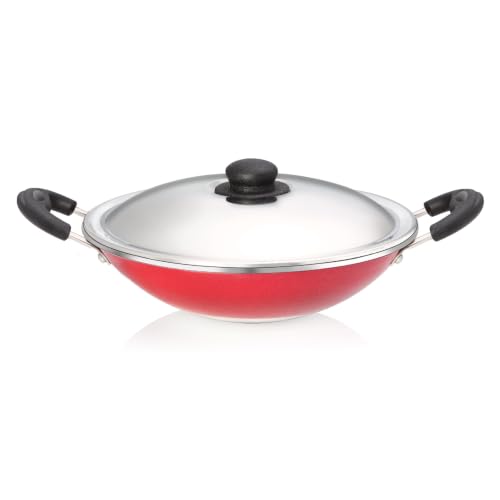
- PERFECTLY SIZED FOR SOFT, FLUFFY APPAMS: 22 cm diameter pan with 2.5mm thickness gives appams the ideal shape and consis…
- DURABLE 2 LAYER NON-STICK COATING: Made from food-grade aluminium with a dual-coat non-stick surface so appams slide out…
- STAINLESS STEEL LID: The fitted steel lid traps heat and steam inside, helping appams cook evenly and stay soft, just li…
6. Judge Appachatty with Lid – Best Compact Alternative
The Judge Appachatty with Lid is another compact option for people who want an appachatty-style pan for everyday cooking.
Retail listings describe a model with a 20 cm diameter and approximately 0.8-litre capacity. Its compact size may suit smaller kitchens and households that prepare appams in modest batches.
Before buying, check the exact construction material, coating, lid type and cooktop compatibility on the product page. These details are important because retailer listings do not always provide the same level of specification.
What we like
- Compact appachatty format.
- Lid included in the listed version.
- Suitable to compare for small-batch cooking.
- A practical alternative to larger breakfast pans.
What we don’t like
- Limited verified specification details across listings.
- Confirm the exact coating and material.
- Check whether the pan suits your cooktop.
Best for: Small households looking for a compact lidded appachatty.
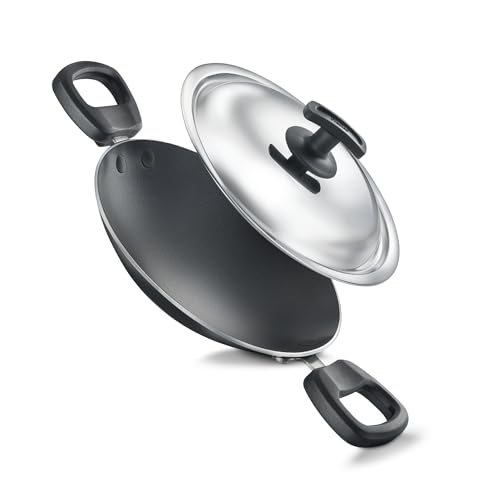
- Non-Stick 20 cm Appachatty is highly durable with elegant design
- Light weight stainless steel lid with handle for convenience
- Ergonomic design comes with cool touch bakelite handle, stays cool when cooking
7. Vinod Ferona Cast Iron Appachetty – Best Cast-Iron Alternative
If cast iron is your preferred cookware material, another model to compare is the Vinod Ferona Cast Iron Appachetty.
Cast iron is known for retaining heat after it has warmed up. That characteristic can be useful when cooking fermented batter, although the actual result still depends on preheating, batter consistency and technique.
As with any cast-iron pan, you should be prepared to dry it thoroughly after washing and maintain its seasoning. Check the manufacturer’s product page for the exact size, weight, included accessories and cooktop compatibility.
What we like
- Cast-iron construction.
- Traditional cookware option.
- Heat-retention characteristics.
- No conventional non-stick coating to wear away.
What we don’t like
- Cast iron can be heavy.
- Requires seasoning and rust-prevention care.
- Confirm whether a lid is included.
Best for: Buyers who want to compare another cast-iron appachetty.

- NEXT-GENERATION CAST IRON WITH ENDURIT TECHNOLOGY = Experience the evolution of cookware — Ferona combines the strength …
- NO SEASONING REQUIRED – READY TO USE = Say goodbye to tedious pre-seasoning. Ferona’s matte enamel interior provides nat…
- LIGHTWEIGHT YET INCREDIBLY DURABLE = Ferona is engineered to be up to 50% lighter than traditional cast iron frying pan,…
Cast Iron vs Non-Stick Appam Pans: Which Should You Buy?
This is one of the biggest decisions when choosing an appam pan. Both materials have their advantages, and the better option depends on how often you cook and how much maintenance you are comfortable with.
| Feature | Cast Iron | Non-Stick |
|---|---|---|
| Heat retention | Generally high | Depends on pan construction |
| Weight | Usually heavier | Usually lighter |
| Food release | Improves with seasoning | Easy when coating is in good condition |
| Maintenance | Requires drying and seasoning care | Requires gentle cleaning |
| Coating | No conventional non-stick coating | Has a manufactured coating |
| Best for | Regular traditional-style cooking | Convenient everyday use |
Choose cast iron if: You prefer durable traditional cookware, don’t mind seasoning and want a pan that retains heat well.
Choose non-stick if: You are a beginner, prefer easy food release and want simpler day-to-day maintenance.
Neither material guarantees perfect appams on its own. Batter fermentation, consistency, heat control and the swirling technique matter just as much.
What to Look for When Buying an Appam Pan
Before choosing an appachetty, consider these important features.
1. Choose the Correct Pan Shape
This is the most important buying decision.
For Kerala-style palappam, look for a curved, bowl-shaped appachetty that allows you to swirl batter around the sides. Do not confuse it with a flat appe or paniyaram pan containing several individual cavities.
2. Check the Cooking Surface
Cast iron, hard-anodised aluminium and non-stick aluminium are common choices to compare.
Cast iron needs seasoning and proper care. Non-stick surfaces are easier to use initially but need protection from scratches and excessive heat.
3. Consider the Pan Diameter
A 20–22 cm pan may be convenient for many home kitchens, but the ideal size depends on how much batter you prepare and the size of the appams you prefer.
Check the actual cooking area rather than relying only on the outer diameter.
4. Look for a Suitable Lid
A lid can help retain heat and steam while the thicker centre cooks.
A transparent glass lid is convenient because you can observe the cooking process without lifting it repeatedly. However, check whether the lid is included in the exact product variant you are purchasing.
5. Check Cooktop Compatibility
Do not assume every appachetty works on every stove.
- Gas: Many traditional appachetties are designed for gas cooking.
- Induction: Look for explicit induction compatibility.
- Electric cooktops: Check the manufacturer’s guidance for the particular model.
A plain aluminium pan will not automatically work on an induction cooktop.
6. Consider Weight and Handle Design
You may need to lift and swirl the pan while preparing appams. A very heavy pan can be difficult to handle, especially for beginners.
Look for comfortable handles with a secure grip and check whether the handles become hot during cooking.
7. Check Warranty and Care Instructions
Before ordering, review the warranty, coating details, cleaning instructions and seller information. These details can matter more over time than a small difference in purchase price.
Tips for Making Soft-Centred, Crispy-Edged Appams
Even an excellent appachetty cannot rescue poorly fermented batter. Here are a few practical tips to improve your results.
- Use properly fermented batter: Fermentation helps develop the characteristic flavour and airy texture. Follow your recipe’s fermentation instructions.
- Check batter consistency: It should be pourable enough to swirl around the curved surface without becoming excessively watery.
- Preheat the pan carefully: Start with moderate heat and adjust according to your pan and stove.
- Grease lightly: Use a small amount of oil where needed, especially when using a new or less-seasoned pan.
- Swirl the batter: Pour the batter into the centre and rotate the pan so a thin layer spreads towards the edges while more batter remains in the centre.
- Cover while cooking: A lid helps retain heat and steam so the centre cooks through.
- Avoid excessive heat: Very high heat can brown the edges too quickly while leaving the centre undercooked.
- Serve fresh: Appams are best enjoyed warm, when their edges are still delicate and crisp.
Common Mistakes to Avoid When Buying an Appam Pan
- Buying a multi-cavity appe pan when you actually want Kerala-style palappam.
- Assuming every aluminium pan is induction-compatible.
- Choosing a heavy cast-iron model without considering handling.
- Ignoring whether a lid is included.
- Assuming every non-stick coating has identical care requirements.
- Buying based only on the lowest price without checking dimensions and seller details.
In Case You Are Looking For –
- Best Paniyaram Pans for Crispy South Indian Snacks
- Best Dosa Tawa for Making Crispy Restaurant-Style Dosas
- Best Idli Moulds for Making Soft and Fluffy Idlis
Frequently Asked Questions
1. Which pan is best for making Kerala-style appam?
A traditional curved appachetty or appam chatti is the right type of pan. It allows you to swirl the batter into a thin outer layer and a thicker centre.
2. Is an appam pan the same as an appe pan?
No. A traditional appam pan has a curved bowl-like cooking surface. An appe pan has several small cavities for making individual round snacks such as paniyaram, paddu and appe.
3. Is cast iron better than non-stick for making appam?
Cast iron retains heat well and can be a durable option when maintained correctly. Non-stick is generally easier for beginners and requires less initial preparation. Your choice should depend on maintenance preferences and cooking habits.
4. Do I need a lid for an appam pan?
A lid is useful because it helps retain heat and steam while the thicker centre cooks. It is not the only factor in getting good results, though.
5. Can I use an appam pan on an induction cooktop?
Only if the exact pan is designed for induction. Check the manufacturer’s compatibility information before purchasing.
6. Why are my appams soft in the centre but not crispy around the edges?
This can happen because of batter consistency, pan temperature or swirling technique. The outer layer needs to be thin enough to cook and brown, while the centre remains thicker.
7. Why do appams stick to the pan?
Possible reasons include insufficient seasoning on cast iron, a damaged non-stick coating, inadequate preheating or using the wrong amount of oil. Follow the pan manufacturer’s instructions.
8. How do I maintain a cast-iron appam pan?
Wash it according to the manufacturer’s guidance, dry it thoroughly and apply a thin layer of cooking oil when needed. Store it in a dry place to help prevent rust.
9. Can I make dosa in an appachetty?
An appachetty is designed primarily for curved appam-style cooking. A flat dosa tawa is a better choice for making conventional dosa.
10. Which appam pan is suitable for beginners?
A non-stick appachetty with a lid can be a convenient starting point because food release and cleaning are generally easier. Choose a model that matches your stove.
Final Verdict: Which Appam Pan Should You Buy?
The best appam pan is the one that matches the type of appam you actually prepare, your cooktop and your comfort with cookware maintenance.
- Best traditional-style choice: Wonderchef Forza Cast-Iron Appachetty.
- Best non-stick choice: Wonderchef Appachetty Breakfast Pan with Lid.
- Best compact breakfast pan: Hawkins Futura 0.9-Litre Appachatty.
- Best alternative non-stick option: Vinod Zest Appachetty with Lid.
- Best budget option to compare: Premier Supreme Non-Stick Appam Pan.
If you enjoy traditional cookware and don’t mind seasoning, cast iron is worth considering. If convenience is your priority, a non-stick appachetty with a lid may be the more practical purchase.
And remember: the right pan is only half the story. Properly fermented batter, controlled heat and a confident swirl are what bring those beautiful crispy edges and soft centres together!