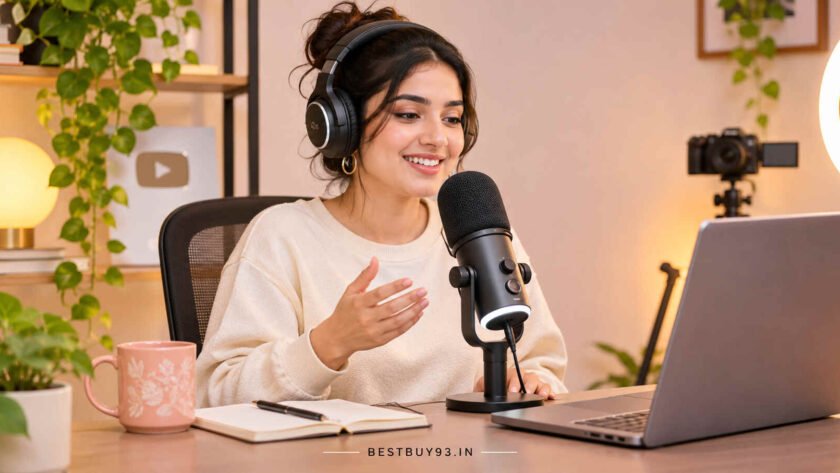

Good video with bad audio still feels like bad content.
That sounds unfair to the camera you spent a small fortune on, but viewers will often tolerate slightly imperfect video long before they tolerate echoey, distant or noisy speech. Whether you are recording YouTube talking-head videos, voiceovers, podcasts, online courses, gaming commentary or livestreams, a decent USB microphone is one of the easiest creator upgrades you can make.
The best part? You no longer need a mixer, complicated audio interface or a mini recording studio that looks like NASA Mission Control.
A good USB microphone connects directly to your computer, and several newer models can even work with smartphones and tablets.
For this guide, we compared USB microphones across different budgets and recording environments, paying particular attention to voice clarity, pickup pattern, background-noise behaviour, monitoring options, ease of setup, USB/XLR flexibility and suitability for Indian home recording setups.
Our top overall recommendation is the MAONO PD200X because its dynamic cardioid design is better suited to ordinary bedrooms and desk setups than many sensitive condenser microphones, while USB and XLR connectivity gives creators room to upgrade later. MAONO specifies 24-bit/48kHz USB recording, a 40Hz–16kHz response and cardioid pickup.
Quick Answer: Best USB Microphones at a Glance
| Microphone | Best For | Type | Connection | Main Advantage |
|---|---|---|---|---|
| MAONO PD200X | Best Overall | Dynamic | USB-C + XLR | Good noise rejection + upgrade path |
| HyperX SoloCast 2 | Beginners & YouTube | Condenser | USB-C | Simple setup and 24-bit/96kHz recording |
| RØDE NT-USB Mini | Voiceovers | Condenser | USB-C | Compact design, monitoring and built-in pop filter |
| FIFINE AM8 | Budget Podcasting | Dynamic | USB + XLR | Strong feature set for the price |
| RØDE PodMic USB | Premium Podcasting | Dynamic | USB-C + XLR | Broadcast-style speech recording |
| RØDE NT-USB+ | Premium Voiceovers | Condenser | USB-C | Detailed vocal recording and DSP |
| Blue Yeti | Multi-Person & Flexible Recording | Condenser | USB | Multiple pickup patterns |
Best overall: MAONO PD200X
Best for beginners: HyperX SoloCast 2
Best compact voiceover mic: RØDE NT-USB Mini
Best budget dynamic mic: FIFINE AM8
Best premium podcast mic: RØDE PodMic USB
Best premium condenser: RØDE NT-USB+
Best for multiple pickup patterns: Blue Yeti
1. MAONO PD200X — Best Overall USB Microphone
If you want one microphone that can start as a simple USB mic today and later become part of an XLR setup, the MAONO PD200X is one of the most practical options.
It is a dynamic cardioid microphone, which matters more than the RGB lighting and flashy marketing around it.
Dynamic microphones generally need you to speak closer to the capsule, but that can actually be an advantage in a normal bedroom or home office. The mic is less likely to make your ceiling fan, keyboard and room echo the supporting cast of your podcast.
MAONO lists a 40Hz–16kHz frequency response, 24-bit/48kHz USB recording, USB-C and XLR connectivity, plus headphone monitoring and software-based processing through MAONO Link.
Why We Recommend It
The PD200X hits a sweet spot for creators who are serious enough to care about audio but are not ready to spend ₹20,000+ on a microphone.
Its biggest advantage is flexibility.
Start with:
Mic → USB → Laptop
Later, if you build a more advanced studio:
Mic → XLR → Audio Interface
You do not need to replace the microphone just because your setup improves.
Best For
YouTube commentary, podcasts, voiceovers, streaming and creators recording in rooms without acoustic treatment.
Who Should Skip It
Skip it if you want to sit two feet away from your microphone. Dynamic microphones work best relatively close to your mouth.
Pros
- Dynamic capsule helps reduce unwanted room noise
- USB and XLR connectivity
- Headphone monitoring
- Gain and volume controls
- MAONO Link software support
- Suitable for future studio upgrades
Cons
- Needs closer microphone positioning
- RGB styling may not suit every professional desk
- A boom arm can make positioning easier
Verdict
For most new creators recording at home, this is the microphone I would start with before automatically buying a condenser mic.
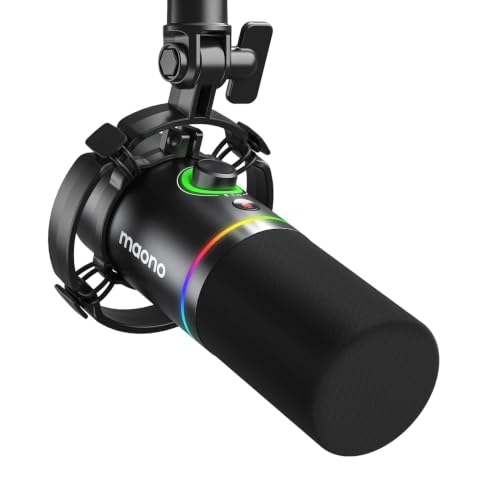
- 【Studio-Quality Sound & Deep Clarity】Experience crystal-clear audio with the PD200X dynamic microphone. Featuring a cust…
- 【Versatile USB & XLR Dual Connectivity】This dual-mode microphone grows with your studio. Use the USB-C plug-and-play for…
- 【Immersive RGB Lighting & Maono Link Software】Level up your aesthetic with 9 vibrant RGB lighting modes that match your …
2. HyperX SoloCast 2 — Best USB Microphone for Beginners
The HyperX SoloCast 2 is for the creator who wants something very simple:
Plug it in. Select it in OBS, Audacity, Premiere Pro or your recording software. Start speaking.
No mixer. No XLR cable. No doctorate in audio engineering.
The current SoloCast 2 uses a 14mm electret condenser capsule with a cardioid pickup pattern and supports recording up to 24-bit/96kHz. HyperX also includes a built-in shock mount, pop filtering, tap-to-mute and software-adjustable audio filters.
Why We Recommend It
For YouTubers recording tutorials, gaming commentary, desk videos or simple voiceovers, convenience is the SoloCast 2’s biggest strength.
The compact design also keeps it from dominating your camera frame.
Best For
Beginner YouTubers, gamers, streamers and creators who want plug-and-play USB recording.
Who Should Skip It
Because it is a condenser microphone, people recording beside a noisy fan, open window or echoey wall may find that it captures more environmental sound than a dynamic mic.
Pros
- Easy plug-and-play setup
- 24-bit/96kHz recording
- Tap-to-mute
- Built-in shock mount and pop filtering
- Compact desk footprint
- Boom-arm compatible
Cons
- Condenser capsule can capture room noise
- Current specifications list PC as the primary compatibility target for SoloCast 2
- No XLR upgrade path
Verdict
If simplicity matters more to you than studio expansion, the SoloCast 2 is an excellent first creator microphone.
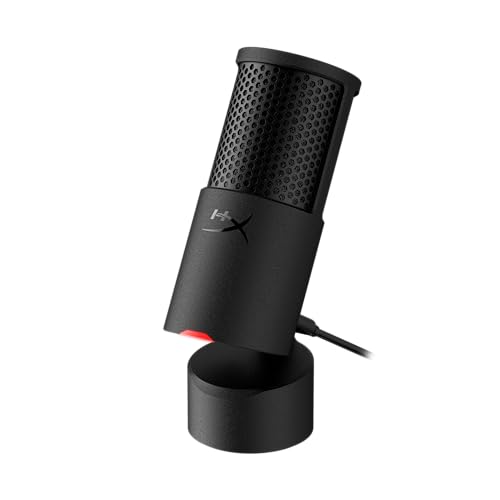
- Designed to capture less unwanted noise: Engineered from the inside to reduce vibrations from the outside, with a built-…
- An All-In-One mic that doesn’t ask for more : Everything you need is built in — foam pop filter, tiltable stand, and mic…
- Fits in any gaming setup : Tilt-adjustable with a weighted base for stability, ready to use out of the box. Built-in 3/8…
3. RØDE NT-USB Mini — Best Compact Microphone for Voiceovers
Voiceover work often benefits from a microphone that captures speech with clarity and detail.
The RØDE NT-USB Mini is a compact cardioid condenser microphone designed for podcasting, streaming, dialogue and content creation. It records at 24-bit/48kHz, offers a 20Hz–20kHz frequency response, includes a built-in pop filter and provides zero-latency headphone monitoring.
It also works with RØDE Connect, which gives creators access to processing such as compression and noise gating.
Why We Recommend It
The NT-USB Mini is a particularly nice match for creators making:
- narrated YouTube videos
- documentaries
- explainer videos
- recipe voiceovers
- tutorials
- podcasts
The magnetic desktop stand is also refreshingly compact.
Best For
Voiceover artists and creators recording in reasonably quiet rooms.
Who Should Skip It
If your room has heavy echo, traffic noise or a constantly running fan, a close-positioned dynamic microphone such as the PD200X or PodMic USB may be easier to manage.
Pros
- Detailed vocal capture
- Internal pop filter
- Zero-latency monitoring
- Compact design
- RØDE Connect integration
- Works with computers and compatible mobile setups
Cons
- Condenser design picks up more room ambience
- No XLR output
- More expensive than entry-level USB mics
Verdict
For a clean desk and voice-focused recording setup, the NT-USB Mini remains one of the most polished compact USB microphones.

- Directional cardioid pickup pattern optimised to reduce room sound and other extraneous noise.
- condenser capsule that delivers warmth and presence for a clear, professional sound.
- Studio-grade headphone amplifier with precision level control and switchable zero-latency monitoring for eliminating dis…
4. FIFINE AM8 — Best Budget Dynamic USB/XLR Microphone
The FIFINE AmpliGame AM8 is interesting because it gives budget creators something that used to be uncommon at this price level:
dynamic capsule + USB + XLR + headphone monitoring + physical controls.
FIFINE specifies a cardioid dynamic capsule, 50Hz–16kHz frequency response, USB and XLR connectivity, headphone monitoring and hardware mute functionality when using USB.
Why We Recommend It
The AM8 is a strong alternative to inexpensive condenser microphones.
If you record close to your computer keyboard, near a window or in a bedroom without acoustic panels, choosing a dynamic microphone can sometimes improve the recording more than chasing huge sample-rate numbers.
Best For
Budget podcasts, livestreams, gaming commentary and spoken YouTube content.
Who Should Skip It
The styling leans heavily toward gaming, including RGB lighting. Creators building a very minimalist professional studio may prefer something visually quieter.
Pros
- Dynamic cardioid capsule
- USB and XLR connectivity
- Headphone monitoring
- Tap-to-mute
- Physical gain controls
- Upgrade-friendly
Cons
- RGB aesthetic is not for everyone
- Some USB controls do not operate when using XLR
- Close microphone technique works best
Verdict
If you want a budget alternative to the PD200X, the AM8 makes plenty of sense.

- [Natural Audio Clarity] Operated with frequency response of 50Hz-16KHz, the podcasting XLR mic delivers balanced audio r…
- [XLR Connection Upgrade-Ability] Well-connected and noise-free operation, the podcasting microphone, studio recording mi…
- [USB Connection with Handy Mute] Skip the hassle of setting something up and plug the cable to play the dynamic USB micr…
5. RØDE PodMic USB — Best Premium Microphone for Podcasts
If your main priority is spoken-word content, the RØDE PodMic USB is where the list starts feeling noticeably more “studio”.
This is a dynamic end-address broadcast-style microphone with a tight cardioid pickup pattern, USB-C and XLR outputs, internal shock mounting, internal pop filtering and headphone monitoring. RØDE recommends positioning it roughly 5–10cm from your mouth.
Its USB output supports 24-bit/48kHz digital recording, and the microphone can use RØDE’s APHEX processing.
Why We Recommend It
The PodMic USB is purpose-built for speech.
That makes it particularly attractive for:
podcasts, interview shows, video essays, professional YouTube channels and voiceovers.
The USB/XLR design also means you can start simple and later connect it to an audio interface.
Best For
Serious podcasters, professional creators and home studios where reducing environmental noise is important.
Who Should Skip It
It is heavy and significantly more expensive than beginner USB mics. You should also budget for a suitable stand or boom arm if your setup requires one.
Pros
- Excellent spoken-word focus
- Dynamic cardioid design
- USB-C and XLR
- Headphone monitoring
- Internal shock mount and pop filter
- RØDE DSP ecosystem
Cons
- Premium pricing
- Heavy microphone
- Needs close placement
- Overkill for casual Zoom calls
Verdict
If podcasting or voiceover recording is becoming a serious part of your work, PodMic USB is the premium pick I would favour over buying an expensive condenser for an untreated room.

- Broadcast-quality dynamic microphone optimised for podcasting and streaming with a rich, balanced sound perfect for all …
- For ultimate versatility, PodMic USB features both XLR and USB-C connectivity, for compatibility with traditional audio …
- Unlock powerful internal DSP and effects via the RØDE Central companion app, including the legendary APHEX Aural Exciter…
6. RØDE NT-USB+ — Best Premium USB Microphone for Voiceovers
Now suppose your room is quiet—or better yet, acoustically treated—and you want more vocal detail.
That is where the RØDE NT-USB+ makes more sense.
It uses a studio-grade cardioid condenser capsule, USB-C connectivity, a high-gain Revolution Preamp and 24-bit/48kHz recording. RØDE also includes a pop filter and desktop tripod and supports onboard DSP through its software ecosystem.
Why We Recommend It
Compared with budget USB condensers, the NT-USB+ offers a much more complete creator package.
The DSP options include tools such as compression and noise gating, while the headphone output supports direct monitoring.
Best For
Voiceovers, narration, online courses, studio-style YouTube production and vocal recording.
Who Should Skip It
Do not spend premium money on a sensitive condenser and then place it in the middle of a tiled room with a ceiling fan running at speed five.
The microphone cannot repeal physics. 😭
Pros
- Detailed condenser sound
- USB-C
- Zero-latency monitoring
- Included pop filter
- DSP processing
- Smartphone and tablet compatibility
Cons
- Expensive
- Sensitive to poor room acoustics
- USB only; no XLR output
Verdict
For creators with a controlled recording environment, this is one of the strongest USB-first voiceover microphones in the group.

- Offers streamlined recording directly to your computer of mobile device
- Ultra-low-noise, high-gain Revolution Preamp supplies optimal sound on any source
- High-power headphones output features zero-latency monitoring
7. Blue Yeti — Best for Multiple Recording Patterns
The Blue Yeti has been around forever in creator terms, but there is one reason it keeps showing up:
flexibility.
Unlike many microphones in this list that primarily use cardioid pickup, the Yeti offers multiple pickup patterns, making it useful when your recording situation changes. Logitech also supports Blue VO!CE processing through G HUB.
Why We Recommend It
For solo YouTube videos, you can use cardioid mode.
For conversations around a desk, other patterns can become useful.
That versatility gives the Yeti an advantage if you do not always record the same type of content.
Best For
Creators who alternate between solo recording, interviews, streaming and collaborative podcast sessions.
Who Should Skip It
The Blue Yeti is a sensitive condenser microphone and can expose a bad room very quickly.
Put it beside a mechanical keyboard and suddenly your audience knows exactly how aggressively you type. 😅
Pros
- Multiple pickup patterns
- Direct USB recording
- Mature creator ecosystem
- Blue VO!CE effects
- Useful for varied recording formats
Cons
- Large desk footprint
- Sensitive to room noise
- Often unnecessary if you only record one person
- Dynamic alternatives may work better in untreated rooms
Verdict
Buy the Yeti because you genuinely need its pattern flexibility, not simply because it is famous.
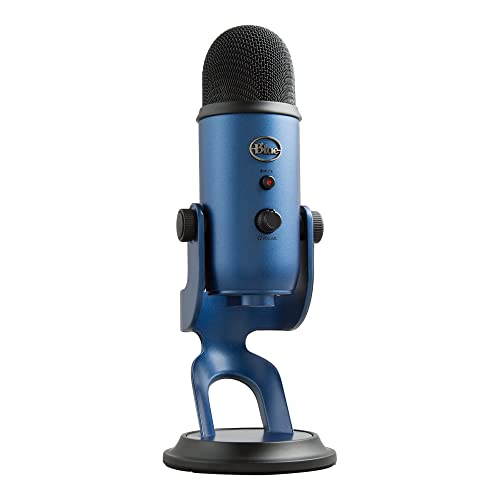
- Custom three-capsule array: This professional USB mic produces clear, powerful, broadcast-quality sound for YouTube vide…
- Blue VO!CE software: Elevate your streamings and recordings with clear broadcast vocal sound and entertain your audience…
- Four pickup patterns: Flexible cardioid, omni, bidirectional, and stereo pickup patterns allow you to record in ways tha…
Dynamic vs Condenser: Which USB Microphone Is Better?
This distinction matters more than many beginners realise.
| Feature | Dynamic Microphone | Condenser Microphone |
|---|---|---|
| Voice detail | Good | Excellent |
| Room-noise pickup | Usually lower | Usually higher |
| Ideal speaking distance | Close | Can work farther away |
| Untreated bedroom | Excellent choice | Can be challenging |
| Treated studio | Good | Excellent |
| Podcasting | Excellent | Good |
| Detailed voiceovers | Good | Excellent |
| Keyboard/fan rejection | Usually better | Usually worse |
For a typical home creator using a bedroom or study, I would generally favour a dynamic cardioid microphone.
For a quiet recording space where you want more detail and openness, a condenser can sound fantastic.
What Should You Look for When Buying a USB Microphone?
1. Start With Your Recording Room
This is the factor people ignore while obsessing over specifications.
If your room contains hard walls, fan noise, traffic noise and computer hum, buying an ultra-sensitive condenser can make all of those problems more obvious.
A dynamic microphone close to your mouth may produce cleaner usable speech.
2. Look for a Cardioid Pickup Pattern
For one-person recording, cardioid is generally the most useful pattern.
It focuses primarily on sound arriving from the front while reducing sound from other directions.
That is ideal for:
voiceovers, podcasts, streaming and YouTube narration.
3. Decide Whether You Need XLR Later
USB is perfect for simplicity.
But USB + XLR microphones such as the PD200X, FIFINE AM8 and PodMic USB provide a useful upgrade path.
You can use USB today and add an audio interface later.
4. Headphone Monitoring Is Surprisingly Useful
A headphone jack directly on the microphone lets you hear what the mic is actually capturing.
This helps identify:
background hum, clipping, mouth noise, excessive gain and poor positioning.
For regular podcast and voiceover work, monitoring is worth having.
5. Do Not Obsess Over 192kHz
You will see microphones proudly advertising:
48kHz, 96kHz and even 192kHz.
Higher numbers look fantastic on Amazon comparison charts.
But for spoken YouTube videos and podcasts, microphone placement, room acoustics, capsule quality and recording technique matter far more than chasing the highest sample-rate figure.
A well-positioned 24-bit/48kHz microphone can easily be the smarter purchase.
6. Check What Comes in the Box
Budget mics can become surprisingly expensive once you separately buy:
a boom arm, shock mount, pop filter, desk stand and cables.
A slightly more expensive kit may therefore offer better overall value.
Common USB Microphone Buying Mistakes
Buying a Condenser Mic for a Very Noisy Room
A sensitive microphone does not understand that your ceiling fan is “background noise”.
It just hears sound.
Keeping the Microphone Too Far Away
Your expensive microphone sitting 60cm away may sound worse than a budget microphone positioned correctly.
Recording With Gain Too High
More gain does not mean better quality.
Excessive gain increases room noise and can cause clipping.
Buying Based Only on Sample Rate
192kHz written in giant letters does not magically create a great voice recording.
Ignoring Microphone Position
Cardioid microphones have a correct speaking side or end.
Speaking into the wrong side is a surprisingly common beginner mistake.
Spending Everything on the Microphone
A ₹20,000 microphone plus terrible acoustics may not beat a ₹5,000 microphone plus sensible positioning, curtains, soft furnishings and basic acoustic control.
How We Selected These USB Microphones
We evaluated microphones based on information from manufacturer specifications, current product availability and creator-focused use cases.
The main factors included:
microphone type, polar pattern, USB/XLR connectivity, recording resolution, headphone monitoring, hardware controls, included accessories, software features, room-noise suitability, upgrade potential and overall value.
We also checked current Indian marketplace availability where possible. Prices fluctuate frequently, so readers should always compare the latest price before purchasing. Recent India-focused listings continue to show models including the MAONO PD200X, HyperX SoloCast, RØDE NT-USB Mini and Blue Yeti among currently available creator microphones.
BestBuy93.IN does not claim hands-on testing of these microphones unless explicitly stated. Recommendations are based on specifications, feature comparison, intended use and available market information.
In Case You Are Looking For –
- Best Cameras for Beginner YouTubers
- Best Vlogging Cameras with Flip Screens for Content Creators
- Best Smartphone Teleprompters for Recording Talking-Head Videos
- Best Webcam Privacy Shutters for Protecting Your Privacy
- Best Monitor Light Bars for Reducing Glare on Your Desk
- Best USB Hubs for Expanding Connectivity on Desktop PCs
Frequently Asked Questions
Which USB microphone is best for YouTube beginners?
The HyperX SoloCast 2 is one of the easiest options because it offers plug-and-play USB connectivity, a cardioid condenser capsule, tap-to-mute and 24-bit/96kHz recording without requiring an audio interface.
If your room is noisy, however, the MAONO PD200X may be a better choice.
Which microphone is best for podcasting in a bedroom?
A dynamic cardioid microphone is usually easier to manage in an untreated bedroom.
The MAONO PD200X, FIFINE AM8 and RØDE PodMic USB are particularly relevant because their dynamic designs work well when positioned close to the speaker.
Is a USB microphone good enough for professional voiceovers?
Yes.
Modern USB microphones can deliver excellent spoken-word recordings.
For professional voiceovers, the RØDE NT-USB+ is particularly attractive because it combines a studio-grade condenser capsule, USB-C, direct monitoring and DSP processing.
Room acoustics will still matter.
Do I need an audio interface with a USB microphone?
No.
That is the biggest advantage of USB microphones.
They contain the necessary digital audio conversion and connect directly to compatible computers or mobile devices.
An audio interface becomes relevant when you switch to XLR recording.
Is a dynamic or condenser mic better for YouTube?
Choose dynamic if your recording space is noisy or untreated.
Choose condenser if your space is quiet and you want detailed, open vocal recordings.
Neither technology is automatically “better”; they solve different problems.
Should I buy Blue Yeti or RØDE NT-USB Mini?
Choose Blue Yeti if you genuinely need multiple pickup patterns.
Choose the RØDE NT-USB Mini if you mainly record one person and prefer a compact cardioid setup with direct monitoring and an integrated pop filter.
Do I need a pop filter for YouTube voiceovers?
A pop filter helps reduce sudden bursts of air produced by sounds such as P and B.
Some microphones already include internal filtering, while others benefit from an external pop filter.
Correct microphone angle and speaking distance also help considerably.
Final Verdict
If you want the best all-round USB microphone for a typical home creator setup, the MAONO PD200X gets our top recommendation. Its dynamic cardioid capsule, USB/XLR flexibility and headphone monitoring make it particularly practical for YouTube, podcasts and voiceovers.
For a beginner who wants maximum simplicity, go with the HyperX SoloCast 2.
For detailed voiceovers in a quieter room, the RØDE NT-USB Mini is an excellent compact choice, while the RØDE NT-USB+ is the stronger premium step-up.
If podcasting is your primary profession or long-term focus, the RØDE PodMic USB is the premium dynamic option worth considering.
And if budget matters most, the FIFINE AM8 gives you a surprisingly capable dynamic USB/XLR setup without jumping into premium pricing.
The big lesson?
Do not buy a microphone based only on the biggest specification number. Buy the microphone that suits your room, your voice, your recording distance and the type of content you actually create.
That is what will make the bigger difference when you finally hit Record. 🎙️