
🍳☕🥪Mornings have one common enemy:
“Breakfast banana hai… but time nahi hai!” 😭
Between getting ready for work, getting kids ready for school, preparing lunch and somehow finding time for yourself, spending 30–40 minutes making breakfast every morning isn’t exactly ideal.
That’s where the right breakfast appliances can make a real difference.
But here’s the problem:
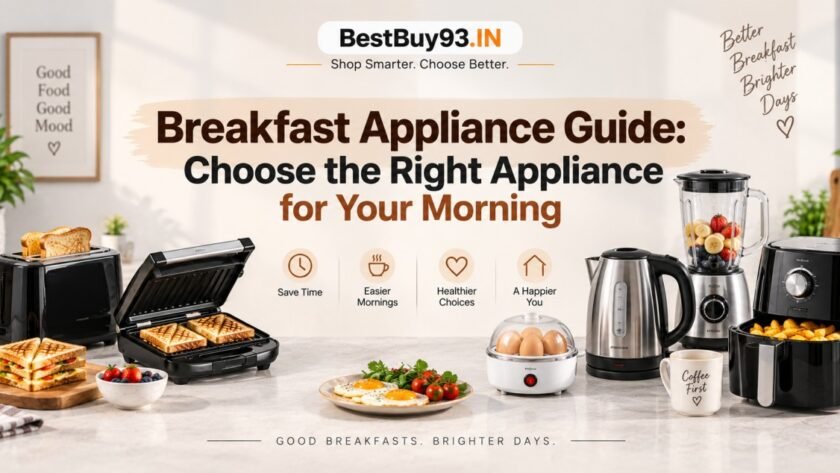
Walk into any online kitchen-appliance store and you’ll find toasters, sandwich makers, grills, electric kettles, egg boilers, coffee makers, blenders, air fryers and multi-cookers all claiming to make your mornings easier.
Do you actually need all of them?
Absolutely not.
The smartest approach is to choose an appliance based on what you regularly eat for breakfast, how many people you’re cooking for and how much counter space you have.
In this Breakfast Appliance Guide, we’ll break down the most useful breakfast appliances, what each one actually does, who needs it and where you should spend your money.
☀️ What Makes a Good Breakfast Appliance?
A useful breakfast appliance should solve at least one of these problems:
⚡ Reduce cooking time
🧹 Reduce cleanup
🍞 Make repetitive breakfast tasks easier
🔥 Reduce the need to monitor the stove
🏠 Save kitchen space
💰 Provide enough value for how often you use it
The goal isn’t to own the biggest collection of appliances.
The goal is to create a breakfast setup that fits your actual routine.
Recent 2026 appliance guides similarly emphasize choosing a small combination of appliances around your repeated breakfast tasks rather than filling the kitchen with gadgets you rarely use.
🥇 1. Pop-Up Toaster — Best for Simple Toast
If your breakfast is basically:
🍞 Bread
🧈 Butter
🍓 Jam
🥜 Peanut butter
☕ Tea/Coffee
then a pop-up toaster is probably the simplest appliance you can buy.
You put the bread in, select the browning level, press the lever and let the toaster do its thing.
Best for:
- Toast
- Sandwich bread
- Breakfast with spreads
- Quick snacks
- Kids’ breakfast
Modern toaster buying guides commonly recommend looking at slot size, browning controls, reheat/defrost functions and the toaster’s footprint before buying.
🏆 Choose a toaster if:
“Mujhe bas bread crispy chahiye.”
That’s it.
You don’t need a complicated appliance.
🥪 2. Sandwich Maker — Best for Stuffed Breakfasts
Now suppose plain toast isn’t enough.
You want:
🧀 Cheese
🥔 Aloo
🌽 Corn
🫑 Capsicum
🍅 Tomato
🥪 Chutney
🍞 Crispy bread
That’s where the sandwich maker becomes much more useful.
A sandwich maker can turn simple bread and leftovers into a hot breakfast without requiring a frying pan.
Current 2026 guides commonly position sandwich makers around the 750–1000W range, with plate design, coating, hinge construction and size being more important than simply chasing the highest wattage.
Best for:
- Grilled sandwiches
- Cheese sandwiches
- Stuffed sandwiches
- Panini-style sandwiches
- Quick snacks
- Leftover sabzi sandwiches
And yes, that leftover aloo sabzi sitting in the fridge?
It has a second career now. 😂
🔥 3. Grill / Grill Sandwich Maker — Best for More Than Sandwiches
A grill is where breakfast starts becoming more versatile.
Depending on the design, you can use it for:
- Sandwiches
- Paninis
- Paneer
- Vegetables
- Buns
- Patties
- Grilled wraps
A flat or ribbed grill plate generally gives you more flexibility than triangular pocket-style sandwich plates.
And models with 180° opening can provide a larger open grilling surface.
Best for:
👨👩👧👦 Families
🔥 People who grill frequently
🥪 Thick sandwiches
🧀 Paneer sandwiches
🥦 Grilled vegetables
If you want both sandwiches and grilling, this can be more useful than buying two separate appliances.
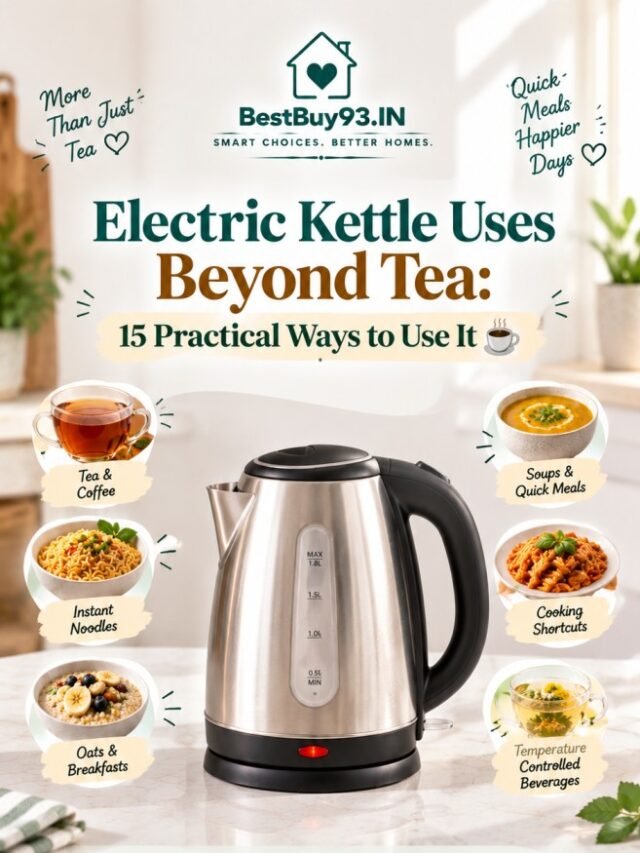
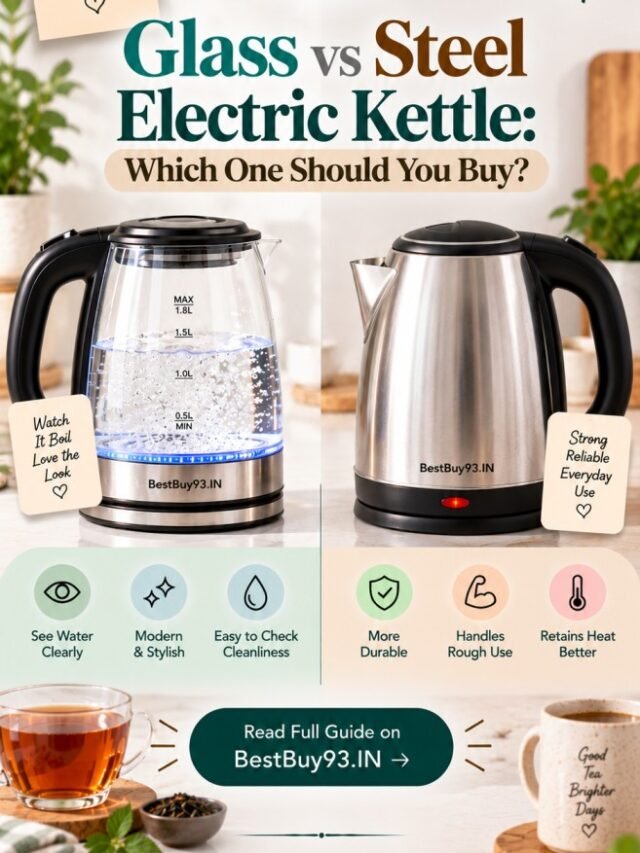
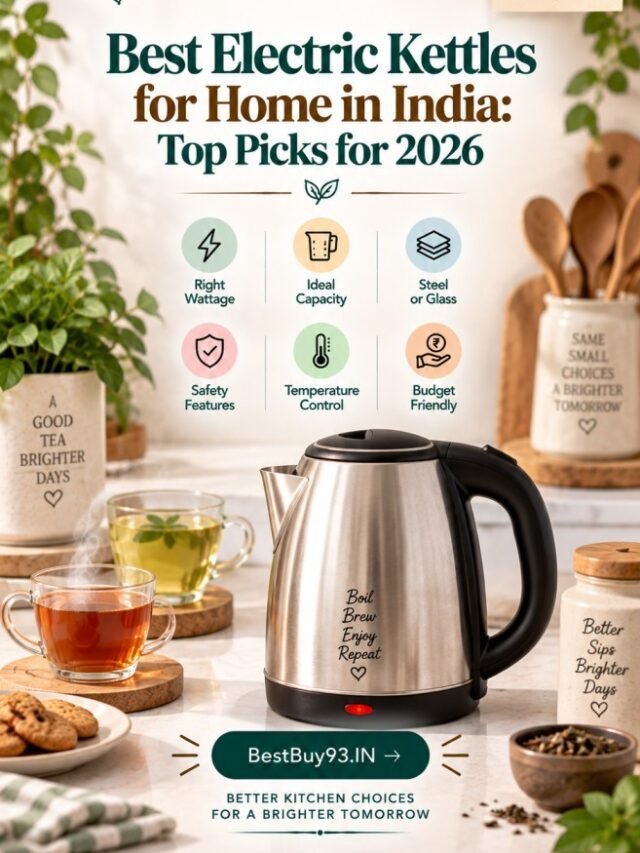
☕ 4. Electric Kettle — The Morning Speed Machine
If tea or coffee is part of your morning routine, an electric kettle can be one of the most useful small appliances in the kitchen.
It’s particularly useful for quickly heating water for:
☕ Tea
☕ Coffee
🥣 Oats
🍜 Instant noodles
💧 Hot water
🍵 Herbal drinks
Current Indian kettle buying guidance emphasizes features such as auto shut-off, boil-dry protection, 360° connectors, water-level indicators, filters and concealed heating elements.
For a typical home, you don’t necessarily need an expensive temperature-controlled kettle.
Basic user:
1–1.5L + auto shut-off
Family:
1.5–1.8L
Tea/coffee enthusiast:
Temperature control can be worth considering.
🥚 5. Egg Boiler — Best for Hands-Off Eggs
If boiled eggs are a regular part of your breakfast, an egg boiler is one of those appliances that sounds unnecessary…
until you actually use one.
😂
Instead of:
Boil water → wait → check → forget → panic → check again
you can use an egg boiler designed for automatic cooking.
Current 2026 egg boiler options commonly range from basic models for several eggs to models offering poaching or steaming functions.
Look for:
✅ Egg capacity
✅ Auto shut-off
✅ Water measuring cup
✅ Stainless-steel heating surface
✅ Poaching/steaming tray if needed
Prestige’s current breakfast-appliance range, for example, lists a 7-egg boiler with multiple boiling modes and automatic switch-off.
Best for:
- Egg eaters
- Fitness-focused breakfast routines
- Families
- Meal prep
If you eat eggs only once every two weeks, however…
You probably don’t need another appliance taking counter space. 😅
🥤 6. Blender — Best for Smoothies & Quick Breakfast Drinks
A blender becomes useful if your breakfast often includes:
🥤 Smoothies
🍌 Banana shakes
🥛 Protein drinks
🍓 Fruit blends
🥜 Nut-based drinks
🌾 Oats-based smoothies
It’s especially useful for people who don’t want a heavy breakfast first thing in the morning.
But here’s the important distinction:
Blender
Best for:
- Smoothies
- Shakes
- Soft ingredients
- Drinks
Mixer Grinder
Better for:
- Chutneys
- Spices
- Wet grinding
- Indian cooking
- Batter
- Harder ingredients
So don’t buy a blender expecting it to replace your mixer grinder.
☕ 7. Coffee Maker — For Serious Coffee People
If your morning starts only after coffee, a coffee maker can make sense.
But the right type depends completely on what you drink.
Instant coffee drinker
You may need nothing more than:
Kettle + mug
Filter coffee lover
Consider:
Filter coffee maker
Espresso/cappuccino lover
You may want:
Espresso machine
Want milk-based coffee automatically?
Look at machines designed around:
☕ Espresso
🥛 Milk frothing
🔥 Brewing control
But this category can get expensive quickly.
So don’t buy a ₹10,000+ coffee machine just because Instagram made you feel like your ₹20 instant coffee isn’t sophisticated enough. 😂
🍳 8. Air Fryer — Is It Really a Breakfast Appliance?
Technically, it’s not a breakfast-only appliance.
But it can be extremely useful for breakfast and morning snacks.
You can prepare things such as:
- Toasted sandwiches
- Hash browns
- Frozen snacks
- Potatoes
- Paneer
- Roasted vegetables
- Reheated food
- Some breakfast bakes
It makes more sense for households that want an appliance useful beyond breakfast.
Best for:
🏠 Families
🍟 Snack lovers
🔥 Multi-purpose cooking
🥔 Potato-based breakfasts
🥪 Reheating/crisping
If you’re buying one specifically for toast, though, a toaster is usually the simpler solution.
🥣 9. Multi-Cooker — For People Who Want One Appliance to Do More
A multi-cooker can combine functions such as:
- Boiling
- Steaming
- Cooking
- Reheating
- Preparing simple one-pot dishes
Current Indian breakfast-appliance ranges increasingly include multi-cookers alongside kettles, egg boilers and sandwich makers.
This can be useful for people who want one appliance to handle multiple tasks.
But there’s a catch:
More functions usually mean:
📦 More size
💰 More cost
🧽 More cleaning
🗄️ More storage requirements
If you’re only making toast and tea, a multi-cooker is probably overkill.
🏠 10. What About an OTG?
An OTG — Oven, Toaster, Griller — is much more versatile than a basic toaster.
You can use it for:
🔥 Toasting
🍕 Baking
🥪 Grilling
🍗 Roasting
🍪 Cookies
🧁 Cakes
But it also takes considerably more space than a basic breakfast appliance.
Choose an OTG if:
- You bake
- You grill regularly
- You roast food
- You want an appliance for more than breakfast
Don’t choose one just for:
Two slices of toast every morning.
That’s like buying a full gym because you wanted to do five squats. 😂
📊 Breakfast Appliance Comparison
| Appliance | Best For | Space | Versatility | Best User |
|---|---|---|---|---|
| 🍞 Toaster | Toast | Low | Low | Toast lovers |
| 🥪 Sandwich Maker | Sandwiches | Low | Medium | Quick breakfast |
| 🔥 Grill | Sandwiches + grilling | Medium | High | Families |
| ☕ Electric Kettle | Hot water/tea/coffee | Low | Medium | Tea/coffee drinkers |
| 🥚 Egg Boiler | Eggs | Very Low | Low–Medium | Regular egg eaters |
| 🥤 Blender | Smoothies/shakes | Low–Medium | Medium | Smoothie users |
| ☕ Coffee Maker | Coffee | Medium | Medium | Coffee lovers |
| 🍳 Air Fryer | Cooking/snacks | Medium | High | Multi-purpose users |
| 🍕 OTG | Baking/grilling | High | Very High | Bakers |
| 🍲 Multi-Cooker | Multi-purpose cooking | Medium | High | Small kitchens |
💡 11. You Don’t Need All of Them
This is probably the most important section of this entire guide.
You don’t need:
❌ Toaster
❌ Sandwich maker
❌ Grill
❌ Kettle
❌ Egg boiler
❌ Coffee maker
❌ Blender
❌ Air fryer
❌ OTG
…just because they exist.
Instead, build your setup around your breakfast routine.
🥇 Breakfast Setup #1: Minimalist
For:
Singles / students / small kitchens
Buy:
☕ Electric Kettle + 🥪 Sandwich Maker
You can handle:
- Tea
- Coffee
- Hot water
- Sandwiches
- Quick snacks
That’s already a surprisingly capable breakfast setup.
🥈 Breakfast Setup #2: Toast & Eggs
For:
People who regularly eat simple breakfasts
Buy:
🍞 Toaster + 🥚 Egg Boiler + ☕ Kettle
Perfect for:
- Toast
- Boiled eggs
- Tea
- Coffee
- Quick mornings
🥉 Breakfast Setup #3: Family Breakfast
For:
Families with multiple people
Consider:
🔥 Grill/Sandwich Maker + ☕ Kettle + 🥚 Egg Boiler
This combination can handle:
- Multiple sandwiches
- Grilled foods
- Tea/coffee
- Boiled eggs
- Quick snacks
🏆 Breakfast Setup #4: Fitness/Protein Breakfast
For:
People who regularly prepare protein-focused breakfasts
Consider:
🥚 Egg Boiler + 🥤 Blender + ☕ Kettle
Useful for:
- Eggs
- Smoothies
- Protein shakes
- Oats
- Hot beverages
🍳 Breakfast Setup #5: The All-Rounder Kitchen
If you want maximum flexibility:
🔥 Grill/Sandwich Maker
☕ Electric Kettle
🥚 Egg Boiler
🥤 Blender
🍳 Air Fryer
You can cover a huge range of quick breakfast and snack requirements without necessarily needing an OTG.
💰 12. Where Should You Spend Your Money?
Here’s a simple rule:
Spend more on the appliance you use every day.
If you drink tea three times a day:
☕ Invest in a good kettle.
If you make sandwiches every morning:
🥪 Invest in a better sandwich maker.
If you eat eggs daily:
🥚 An egg boiler can be worthwhile.
If you make smoothies every morning:
🥤 Invest in a reliable blender.
Don’t spend ₹5,000 on an appliance you use twice a month while buying a ₹500 appliance that you use every single morning.
📏 13. Don’t Forget Kitchen Space
This is where many online buying decisions go wrong.
A product can look tiny in a product photograph.
Then it arrives.
And suddenly your kitchen counter looks like:
“Welcome to the Small Appliance Exhibition 2026.” 😂
Before buying, consider:
📏 Counter space
📦 Storage space
🔌 Socket availability
🧹 Cleaning access
📐 Appliance dimensions
Compact appliances are particularly valuable in smaller kitchens.
⚡ 14. Think About Your Morning Time
Ask yourself:
Do I have 5 minutes?
A sandwich maker or toaster may be ideal.
Do I have 10–15 minutes?
A grill or air fryer gives you more possibilities.
Do I want something hands-off?
Egg boiler, kettle or automatic appliances can help.
Do I prepare breakfast for four people?
Prioritize capacity and batch cooking.
The fastest appliance isn’t always the best appliance.
The best one is the appliance that removes the most annoying step from your routine.
🚩 15. Common Breakfast Appliance Buying Mistakes
❌ Buying based only on wattage
Higher wattage doesn’t automatically mean better results.
❌ Buying too many single-purpose appliances
If you rarely eat eggs, an egg boiler may just become cupboard decoration.
❌ Ignoring capacity
A tiny appliance isn’t ideal for a family of five.
A huge appliance isn’t necessarily useful for one person.
❌ Ignoring cleaning
If an appliance is difficult to clean, you may eventually stop using it.
❌ Ignoring warranty/service
Especially for electrical appliances, after-sales support matters.
❌ Buying for the “ideal lifestyle”
Buy for your real lifestyle.
Not the version of yourself who apparently wakes up at 5 AM, makes sourdough, drinks green juice and meal-preps seven breakfasts every Sunday. 😭
🧠 BestBuy93.IN Breakfast Appliance Formula
Before buying any breakfast appliance, ask:
1️⃣ What do I eat most mornings?
Toast? Sandwiches? Eggs? Smoothies? Tea?
2️⃣ How many people am I feeding?
One? Two? Four?
3️⃣ How much time do I have?
5 minutes? 15 minutes?
4️⃣ How much counter space do I have?
Be realistic.
5️⃣ Will I use this appliance at least once a week?
If the answer is no, think twice.
🏆 Our Quick Recommendations
🍞 Mostly toast?
Buy a toaster.
🥪 Mostly sandwiches?
Buy a sandwich maker.
🔥 Sandwiches + paneer + vegetables?
Buy a grill/sandwich maker.
☕ Tea/coffee every morning?
Buy an electric kettle.
🥚 Eggs almost every day?
Consider an egg boiler.
🥤 Smoothies every morning?
Buy a blender.
🍳 Breakfast + snacks + wider cooking?
Consider an air fryer.
🍕 Baking + grilling + roasting?
Consider an OTG.
🏠 Want one appliance to perform multiple cooking tasks?
Look at a multi-cooker.
🔜 What’s Coming in Part 2?
Now that we know which breakfast appliance does what, the next question is:
What features actually matter when you’re buying one?
In Part 2, we’ll compare:
⚡ Wattage
📦 Capacity
🔥 Heating performance
🥪 Plate types
🌡️ Temperature control
🧼 Cleaning
🔒 Safety
🔄 Multi-function designs
🏠 Counter space
💰 Which features are worth paying extra for
And most importantly:
We’ll figure out when a multi-purpose appliance is actually better value and when it’s just an expensive gadget. 😎
Features That Actually Matter 🍳☕🥪
We looked at the major breakfast appliances and what each one is best suited for.
A quick recap:
🍞 Toaster → Toast
🥪 Sandwich Maker → Sandwiches
🔥 Grill → Sandwiches + grilling
☕ Electric Kettle → Hot water, tea & coffee
🥚 Egg Boiler → Boiled eggs
🥤 Blender → Smoothies & shakes
🍳 Air Fryer → Breakfast + snacks + cooking
🍕 OTG → Baking, grilling & roasting
🍲 Multi-Cooker → Multiple cooking tasks
But knowing which appliance you need is only half the battle.
The bigger question is:
Which features should you actually look for before buying one?
Because appliance listings love throwing around words like powerful, smart, premium, multifunctional, advanced, rapid heating and next-generation technology. 😅
Some of these features are genuinely useful.
Some are nice to have.
And some are basically there to make the product page look impressive.
So let’s separate the must-haves from the marketing fluff. 👇
⚡ 1. Wattage: Don’t Automatically Buy the Highest Number
Wattage is one of the first specifications you’ll see.
But higher wattage doesn’t automatically mean better performance.
Different breakfast appliances have different typical power requirements.
| Appliance | Common Home-Use Range |
|---|---|
| 🍞 Toaster | ~700–1500W |
| 🥪 Sandwich Maker | ~750–1000W |
| 🔥 Grill | ~1000–2000W+ |
| ☕ Electric Kettle | ~1000–2000W |
| 🥚 Egg Boiler | ~300–500W |
| 🥤 Blender | ~300–1000W |
| 🍳 Air Fryer | ~1200–2000W+ |
These are broad ranges, not rules.
The right wattage depends on:
- Appliance size
- Heating method
- Cooking surface
- Capacity
- Intended workload
- Control system
🏆 The Best Rule
Choose wattage according to the appliance’s job.
A 2000W appliance isn’t necessary just because it sounds more powerful.
🥪 2. Sandwich Maker: Plate Design Comes First
If you’re buying a sandwich maker, don’t start with wattage.
Start with the plates.
Triangle/Pocket Plates
Best for:
🥪 Classic sandwiches
🧀 Cheese sandwiches
🥔 Stuffed potato sandwiches
🌽 Vegetable sandwiches
They press and seal the sandwich into individual sections.
Flat/Ribbed Plates
Better for:
🔥 Paninis
🥪 Café-style sandwiches
🧀 Thick sandwiches
🫑 Vegetables
🧀 Paneer
🍔 Buns and patties
If you want your appliance to do more than sandwiches, these plates are usually the better choice.
🔄 3. Floating Hinge: A Hidden Upgrade
If you make thick sandwiches, floating hinge is a feature worth considering.
A floating upper plate can adjust to different food thicknesses instead of forcing everything into one fixed position.
This is useful for:
- Thick cheese sandwiches
- Club sandwiches
- Paneer sandwiches
- Multi-layer sandwiches
- Paninis
💰 Should you pay extra?
Yes, if you regularly make thick sandwiches.
If you only make thin bread + cheese sandwiches, it’s not essential.
🔥 4. 180° Opening: Who Actually Needs It?
A 180° opening allows the appliance to lie flat.
That can effectively turn a contact grill into a larger open grilling surface.
Useful for:
🥦 Vegetables
🧀 Paneer
🍔 Patties
🥯 Buns
🔥 Grilled sandwiches
🥪 Paninis
Worth paying extra?
For a sandwich-only user: ❌
For a regular grill user: ✅
🌡️ 5. Temperature Control
This is one of those features that depends heavily on what you’re cooking.
For basic toast or sandwiches, automatic temperature regulation may be enough.
But if you’re using the appliance for multiple foods, adjustable temperature control becomes much more useful.
Lower heat
Useful for:
- Melting cheese
- Reheating
- Gentle warming
Medium heat
Good for:
- Sandwiches
- Bread
- Buns
- Vegetables
Higher heat
Useful for:
- Paneer
- Patties
- Grilling
- Browning
🏆 Verdict
Sandwich maker: Nice to have
Multipurpose grill: Worth paying extra for
🍞 6. Toaster: Number of Slots Matters
If you’re buying a toaster, don’t just look at the brand.
Check:
2-slot toaster
Best for:
- Singles
- Couples
- Small kitchens
- Occasional use
4-slot toaster
Better for:
- Families
- Multiple people
- Faster breakfast preparation
But there’s another important specification:
Slot width.
If you regularly use thicker bread, check whether the slots can accommodate it comfortably.
A toaster that only works well with thin standard bread may become frustrating if you prefer thick slices.
🔢 7. Browning Levels
Most toasters offer multiple browning settings.
This allows you to choose between:
🍞 Lightly toasted
🥐 Medium
🔥 Dark/crispy
But don’t assume:
More settings = better toaster.
Six or seven meaningful settings can be useful.
Twenty different “levels” aren’t necessarily going to transform your breakfast.
What matters more is whether the toaster gives consistent browning.
🔄 8. Reheat & Defrost Functions
These are small features, but they can be genuinely useful.
Reheat
Useful when:
“Toast thoda thanda ho gaya yaar.” 😅
You can warm it again without necessarily running a full toast cycle.
Defrost
Useful for bread stored in the freezer.
Instead of waiting for it to thaw completely, a toaster with a defrost function can help handle frozen slices.
Worth paying extra?
Usually:
Yes, if you frequently freeze bread.
Otherwise, don’t make these features a deciding factor.
☕ 9. Electric Kettle: Capacity Is More Important Than Fancy Features
For kettles, start with capacity.
1L–1.2L
Good for:
- Singles
- Couples
- Small kitchens
- 1–3 cups
1.5L
A practical family size.
1.8L+
Better for:
- Larger families
- Multiple cups
- Cooking-related hot water
Don’t buy a 1.8L kettle if you’re heating one mug every morning.
You’re paying for capacity you’ll rarely use.
🔒 10. Kettle Safety Features You Shouldn’t Skip
For an electric kettle, safety features are much more important than decorative features.
Look for:
✅ Auto shut-off
✅ Boil-dry protection
✅ Stable 360° base
✅ Concealed heating element
✅ Secure lid
✅ Heat-resistant handle
✅ Appropriate electrical protection
Auto shut-off is particularly useful because nobody wants to stand beside a kettle watching water boil.
The whole point is:
Switch on → do something else → come back to hot water. ☕
🌡️ 11. Temperature Control on a Kettle
Temperature control can be extremely useful if you regularly prepare different beverages.
For example:
🍵 Green tea → lower temperature
☕ Coffee → moderate/high temperature depending on preparation
🫖 Black tea → near boiling
But if your routine is simply:
“Boil water for chai.”
you probably don’t need a fancy variable-temperature kettle.
Spend extra only if:
- You drink different types of tea
- You brew coffee
- You care about precise temperatures
- You use the kettle frequently
🥚 12. Egg Boiler: Capacity & Auto Shut-Off Matter Most
If you’re buying an egg boiler, don’t get distracted by unnecessary features.
The useful specifications are:
🥚 Egg capacity
💧 Water measuring system
🔒 Auto shut-off
🍳 Poaching tray if required
🧽 Easy cleaning
2–3 eggs
Good for one person.
6–7 eggs
Better for families or meal preparation.
If you’re cooking eggs for several people every morning, capacity becomes much more important than the number of cooking modes.
🥤 13. Blender: Don’t Confuse RPM With Real Performance
Blender marketing often highlights:
“20,000+ RPM!”
Sounds impressive.
But RPM alone doesn’t tell you everything.
Also consider:
- Motor power
- Blade design
- Jar shape
- Jar material
- Capacity
- Pulse function
- Overload protection
- Ease of cleaning
For smoothies, the interaction between the blades, jar design and ingredients matters just as much as headline RPM.
🍳 14. Air Fryer: Basket Size Matters
For breakfast and snack use, capacity can make a huge difference.
Small basket
Good for:
- Singles
- Couples
- Small portions
Medium basket
Good for:
- Small families
- Multiple snacks
- Regular cooking
Large basket
Better for:
- Families
- Batch cooking
- Larger portions
And remember:
A larger nominal capacity doesn’t automatically mean you can comfortably cook a large batch.
Basket shape and usable cooking area matter too.
🔥 15. Air Fryer Temperature Range
A wider temperature range can increase flexibility.
You may want lower temperatures for:
- Gentle reheating
- Certain baked foods
Higher temperatures can be useful for:
- Crisping
- Roasting
- Browning
But again:
Don’t buy 15 cooking presets just because the box says “15-in-1.”
If you only use:
Air Fry → Reheat → Roast
the other 12 buttons are basically decorative furniture. 😂
🧼 16. Cleaning Should Be a Buying Feature
This applies to almost every breakfast appliance.
Before buying, ask:
“How annoying will this be to clean?”
Because an appliance that saves 10 minutes of cooking but creates 20 minutes of cleaning isn’t exactly winning.
Look for:
✅ Smooth surfaces
✅ Removable components where appropriate
✅ Dishwasher-safe parts where manufacturer permits
✅ Easy-access corners
✅ Concealed heating elements in kettles
✅ Removable plates on suitable grills
✅ Removable baskets/trays in air fryers
🏠 17. Counter Space Is a Real Specification
Product dimensions deserve the same attention as wattage.
Especially if you have:
- Mixer grinder
- Rice cooker
- Kettle
- Air fryer
- Microwave
- OTG
- Coffee maker
Your kitchen can quickly become:
“Electronics showroom but make it breakfast.” 😂
Before buying, check:
📏 Width
📏 Depth
📏 Height
📦 Storage requirements
🔌 Cable length and socket location
🔌 18. Electrical Safety
Breakfast appliances are generally used around kitchens, which means water + electricity can be an important safety consideration.
Always:
- Use the appliance according to its manual.
- Keep electrical connections away from water.
- Don’t operate appliances with damaged cords/plugs.
- Don’t immerse electrical components in water.
- Don’t overload sockets or unsuitable extension boards.
- Allow appliances to cool where required before cleaning/storage.
For higher-powered appliances such as large grills, kettles and air fryers, pay particular attention to the manufacturer’s electrical requirements.
💰 19. Which Features Are Worth Paying Extra For?
Here’s the quick breakdown.
| Feature | Worth Paying Extra? |
|---|---|
| Higher wattage | ⭐ Depends on use |
| Better heating consistency | ⭐⭐⭐ Yes |
| Floating hinge | ⭐⭐⭐ For thick sandwiches |
| 180° opening | ⭐⭐⭐ For grilling |
| Temperature control | ⭐⭐⭐ For multipurpose use |
| Removable plates | ⭐⭐ Useful |
| Ceramic coating | ⭐⭐ Preference-based |
| Larger toaster slots | ⭐⭐⭐ If using thick bread |
| Extra browning levels | ⭐⭐ Useful |
| Defrost/reheat | ⭐⭐ Situation-dependent |
| Kettle auto shut-off | ⭐⭐⭐ Essential |
| Kettle boil-dry protection | ⭐⭐⭐ Essential |
| Kettle temperature control | ⭐⭐ For tea/coffee enthusiasts |
| Egg boiler capacity | ⭐⭐⭐ For families |
| Air fryer presets | ⭐ Don’t overpay |
| Digital display | ⭐⭐ Convenience |
| Wi-Fi/app control | ⭐ Usually unnecessary |
🧠 20. Single-Purpose vs Multi-Purpose Appliance
This is one of the biggest decisions in the breakfast-appliance category.
Single-purpose appliance
Example:
Toaster
Best when you want:
🍞 Toast
That’s it.
Multi-purpose appliance
Example:
3-in-1 grill
Can potentially handle:
🥪 Sandwiches
🔥 Grilling
🧇 Other plate-based foods depending on the model
Which is better?
It depends.
Single-purpose wins when:
- You want simplicity
- You have one specific need
- You have limited budget
- You don’t want extra cleaning
Multi-purpose wins when:
- You have multiple breakfast habits
- Kitchen space is limited
- You want fewer appliances
- You’ll genuinely use the extra functions
💡 21. The “Will I Actually Use It?” Test
Before buying any appliance, ask:
Question 1
Will I use this at least once a week?
If no → reconsider.
Question 2
Does it replace another appliance or cooking step?
If yes → more valuable.
Question 3
Will I actually use its extra functions?
If no → don’t pay for them.
Question 4
Is cleaning easy enough that I’ll continue using it?
If no → 🚩
Question 5
Do I have space for it?
If no → definitely reconsider.
👨👩👧👦 22. Best Features for Different Users
| User | Prioritize |
|---|---|
| 👨🎓 Student | Compact size, simple controls |
| 👤 Single | Small capacity, easy cleaning |
| 👩❤️👨 Couple | 2-slice/compact appliances |
| 👨👩👧 Family | Larger capacity, faster batch cooking |
| ☕ Tea lover | Good kettle, optional temperature control |
| 🥪 Sandwich lover | Good plates + hinge |
| 🥚 Egg eater | Egg capacity + auto shut-off |
| 🥤 Smoothie user | Blender motor + jar |
| 🔥 Grill lover | 180° opening + temperature control |
| 🍳 Snack lover | Medium/large air fryer |
| 🧁 Baker | OTG capacity + temperature control |
🚫 23. Features You Don’t Always Need
Let’s save some money. 💸
❌ Wi-Fi connectivity
Do you really need your toaster to connect to your phone?
“Alexa, please toast my bread.” 😭
Probably not.
❌ Too Many Presets
More buttons don’t automatically mean better cooking.
❌ Huge Digital Displays
Nice to look at, but not essential for most basic appliances.
❌ Excessively High Wattage
If your cooking needs are small, you don’t need a massive heating system.
❌ Oversized Capacity
More capacity can actually be less efficient for small portions.
🏆 BestBuy93.IN Feature Priority
If your budget is limited, follow this order:
🥇 Performance
Does it actually do the job well?
🥈 Safety
Does it have the essential protection features?
🥉 Ease of cleaning
Will you want to use it again tomorrow?
4️⃣ Capacity
Does it match your household?
5️⃣ Build quality
Will it survive regular use?
6️⃣ Convenience
Indicators, controls, cord storage and similar extras.
7️⃣ Smart features
Only after everything above is sorted.
📋 The 10-Point Breakfast Appliance Buying Test
Before clicking Buy Now, check:
☐ What breakfast task does it solve?
☐ How frequently will I use it?
☐ Is the capacity appropriate?
☐ Is the wattage suitable?
☐ Are the cooking/heating controls useful?
☐ Is it easy to clean?
☐ Does it fit my kitchen?
☐ Does it have the essential safety features?
☐ Is the warranty/service reasonable?
☐ Am I paying for features I won’t use?
If you can confidently answer all ten, you’re probably looking at the right type of appliance.
Budget, Maintenance & Final Checklist 🍳☕🥪
We’ve already covered which breakfast appliances are useful and which features actually matter.
Now comes the question that matters most before you spend your money:
How much should you actually spend on a breakfast appliance?
Because there’s a big difference between buying an appliance that makes your mornings easier and buying a kitchen gadget that looks exciting for two weeks before disappearing into the back of a cupboard. 😂
In this final part of our Breakfast Appliance Guide, we’ll look at:
💰 Budget
⚡ Running costs
🧽 Maintenance
🛠️ Warranty & service
🏠 Kitchen space
🛒 Online buying
🚩 Common mistakes
📋 Final checklist
🏆 BestBuy93.IN recommendations
Let’s get into it.
💰 1. How Much Should You Spend?
There’s no single “correct” breakfast-appliance budget.
Your spending should depend on frequency of use + complexity of the task + number of people you’re serving.
A simple way to think about it:
🟢 Budget Appliances
Best when you need one basic function.
Examples:
- Basic toaster
- Basic sandwich maker
- Simple egg boiler
- Basic electric kettle
These are ideal for:
👤 Singles
🎓 Students
🏠 Small kitchens
💰 Occasional users
You don’t necessarily need premium features if your requirements are simple.
🟡 Mid-Range Appliances
This is often the sweet spot for regular home users.
You can get:
- Better build quality
- Larger capacity
- Better controls
- More consistent heating
- Better cooking surfaces
- More useful safety features
- Greater versatility
This range makes sense when you’re using an appliance several times a week.
Best for:
👨👩👧 Small families
☕ Regular tea/coffee drinkers
🥪 Daily sandwich makers
🥚 Regular egg eaters
🥤 Frequent smoothie users
🔴 Premium Appliances
Premium makes sense when you genuinely need:
🔥 Higher performance
📦 Larger capacity
🌡️ Better temperature control
🔄 Multiple functions
🧱 Better construction
🛠️ More comprehensive features
Don’t pay premium prices simply because the appliance has a fancy display or a longer list of presets.
Remember:
Premium should solve a problem—not just look premium.
📊 2. A Simple Breakfast Appliance Budget Guide
| Appliance | Basic Budget | Mid-Range | Premium/Advanced |
|---|---|---|---|
| 🍞 Toaster | ₹500–₹1,000 | ₹1,000–₹2,000 | ₹2,000+ |
| 🥪 Sandwich Maker | ₹700–₹1,000 | ₹1,000–₹2,000 | ₹2,000+ |
| 🔥 Grill | ₹1,000–₹1,500 | ₹1,500–₹3,000 | ₹3,000+ |
| ☕ Kettle | ₹500–₹1,000 | ₹1,000–₹2,000 | ₹2,000+ |
| 🥚 Egg Boiler | ₹500–₹1,000 | ₹1,000–₹1,500 | ₹1,500+ |
| 🥤 Blender | ₹1,000–₹2,000 | ₹2,000–₹4,000 | ₹4,000+ |
| 🍳 Air Fryer | ₹2,000–₹4,000 | ₹4,000–₹8,000 | ₹8,000+ |
| 🍕 OTG | ₹2,500–₹5,000 | ₹5,000–₹10,000 | ₹10,000+ |
These are broad planning ranges, not fixed market prices. Prices vary by brand, capacity, promotions and features.
⚡ 3. What About Electricity Costs?
Don’t let wattage alone scare you.
An appliance’s electricity consumption depends on:
- Rated wattage
- Actual running time
- Thermostat/heating cycles
- Frequency of use
- Your electricity tariff
For example, a 1000W appliance running continuously for 10 minutes would consume approximately:
1 kW × 10/60 = 0.167 kWh
At ₹10 per unit, that’s approximately:
₹1.67
Actual usage can be lower if the appliance cycles its heating element.
The bigger question is:
How often do you use it?
A 1000W sandwich maker used for 10 minutes a day may be more practical than a lower-wattage appliance that takes considerably longer to perform the same task.
🧽 4. Maintenance: The Secret to Long-Term Value
A breakfast appliance is only good value if it continues working properly.
The biggest maintenance rule is simple:
Clean it according to the manufacturer’s instructions after regular use.
Different appliances require different care.
🍞 5. Toaster Maintenance
After the toaster has cooled and is unplugged:
✅ Remove crumbs regularly
✅ Empty the crumb tray if provided
✅ Keep slots free from food debris
✅ Wipe the exterior with an appropriate cloth
Never pour water into the toaster.
And please don’t start shaking an electrical toaster aggressively over the sink like you’re trying to wake it up. 😭
🥪 6. Sandwich Maker & Grill Maintenance
These appliances usually collect:
🧀 Melted cheese
🧈 Butter
🥫 Sauces
🫑 Vegetable residue
🛢️ Oil
Allow the appliance to cool before cleaning.
Then:
- Unplug it.
- Remove loose crumbs.
- Wipe the plates according to the manufacturer’s instructions.
- Use a soft sponge/cloth where appropriate.
- Dry completely before storing.
Avoid:
❌ Metal knives
❌ Steel scrubbers
❌ Abrasive cleaners
❌ Scraping the coating aggressively
❌ Immersing the electrical appliance in water
If the plates are removable, check whether the manufacturer permits washing or dishwasher use before doing so.
☕ 7. Electric Kettle Maintenance
Kettles have one major enemy:
Limescale.
If you live in an area with hard water, mineral deposits can build up inside the kettle.
Regular descaling can help maintain heating efficiency and cleanliness.
The exact cleaning method and frequency should follow the manufacturer’s instructions because recommendations vary by model and water conditions.
Basic habits:
✅ Don’t leave old water sitting inside unnecessarily
✅ Empty the kettle after use when practical
✅ Clean/descale periodically
✅ Keep the exterior and base dry
✅ Don’t immerse the electrical base in water
🥚 8. Egg Boiler Maintenance
Egg boilers are relatively simple, but food residue can still build up.
After use:
✅ Unplug
✅ Allow it to cool
✅ Wipe the heating surface
✅ Clean removable accessories
✅ Dry before storage
If the appliance uses a measuring cup or piercing pin, keep those accessories with the unit so you don’t end up searching the kitchen for them every morning. 😂
🥤 9. Blender Maintenance
This is where cleaning immediately after use can save you a lot of trouble.
Smoothie residue can quickly become:
“Why does my jar smell weird?” 😭
After use:
✅ Rinse the jar
✅ Clean blades carefully
✅ Wash removable components according to instructions
✅ Dry properly
✅ Clean around the jar base
✅ Don’t allow food residue to sit for hours unnecessarily
Be careful around sharp blades.
🍳 10. Air Fryer Maintenance
For an air fryer:
✅ Clean the basket regularly
✅ Remove food residue
✅ Wipe the interior when required
✅ Keep the heating area free from buildup
✅ Clean grease according to the manufacturer’s instructions
Don’t allow excessive grease or food residue to accumulate.
A clean basket also helps maintain more consistent cooking performance.
🛠️ 11. Warranty Matters More Than You Think
Before buying any electrical kitchen appliance, check:
☑ Warranty period
☑ What components are covered
☑ Service process
☑ Replacement policy
☑ Brand service availability
☑ Whether the warranty is carry-in or doorstep
☑ Whether registration is required
A slightly more expensive appliance with reliable after-sales support can be a better long-term purchase.
🏠 12. Kitchen Space Is Part of the Buying Decision
This deserves repeating.
Don’t buy an appliance based only on its product photograph.
Check:
📏 Width
📏 Depth
📏 Height
📦 Storage requirements
🔌 Cord length
🔌 Socket location
🧹 Cleaning access
A large air fryer, OTG or grill can take considerably more space than a kettle or toaster.
Ask yourself:
Where exactly will this live when I’m not using it?
If the answer is:
“Umm… I’ll figure it out later.”
😂
Measure first.
🧠 13. One Appliance vs Multiple Appliances
This is one of the most important decisions in a breakfast setup.
Option A — Multiple Single-Purpose Appliances
For example:
🍞 Toaster
🥚 Egg boiler
☕ Kettle
Advantages:
- Each appliance does one job well
- Simple operation
- Easy to replace individually
- You can choose the best appliance for each task
Disadvantages:
- More counter space
- More cables
- More appliances to clean/store
- Higher combined cost
Option B — Multi-Purpose Appliance
For example:
🔥 3-in-1 grill
🍳 Multi-cooker
🍳 Air fryer
Advantages:
- Multiple functions
- Potentially less equipment
- Useful for smaller kitchens
- Can provide better overall versatility
Disadvantages:
- More expensive
- Potentially more complicated
- May be larger
- You may never use some functions
🏆 Best rule:
Buy multifunctionality only when you’ll actually use it.
💸 14. Where Should You Spend More?
If your budget is limited, spend extra on the things you’ll notice every day.
🥇 Performance
Does the appliance do its primary job properly?
🥈 Safety
Does it have the appropriate protection features?
🥉 Build Quality
Does it feel capable of handling regular use?
4️⃣ Ease of Cleaning
Will you actually want to use it tomorrow?
5️⃣ Capacity
Does it suit your household?
6️⃣ Warranty & Service
Can you get help if something goes wrong?
7️⃣ Extra Features
Only after everything above is sorted.
🚩 15. Online Buying Red Flags
Before ordering, watch for these.
🚩 “20-in-1” with unclear functions
More functions don’t necessarily mean more value.
🚩 Huge wattage with tiny capacity
Higher wattage alone doesn’t tell you how useful the appliance will be.
🚩 No clear warranty
For electrical appliances, that’s worth investigating.
🚩 No model number
A proper model number makes it easier to verify specifications and support.
🚩 Repeated complaints
One negative review isn’t necessarily a problem.
But if dozens of buyers mention:
- Uneven heating
- Coating problems
- Poor durability
- Weak hinges
- Difficult cleaning
- Electrical failures
then pay attention.
🛒 16. Don’t Buy From the Product Title Alone
Always open the specifications.
Check:
Model number → capacity → wattage → material → dimensions → features → warranty
Then check customer reviews.
This takes a few extra minutes but can save you from buying the wrong appliance.
👨👩👧👦 17. Best Breakfast Setup by Household
👤 Single / Student
Recommended:
☕ Kettle
🥪 Compact sandwich maker OR toaster
Simple, affordable and space-friendly.
👩❤️👨 Couple
Recommended:
☕ Kettle
🥪 Sandwich maker/grill
Optional:
🥚 Egg boiler
👨👩👧 Family
Recommended:
🔥 Large grill/sandwich maker
☕ Kettle
🥚 Egg boiler
Optional:
🍳 Air fryer
🥚 Egg Breakfast Household
Recommended:
🥚 Egg boiler
🍞 Toaster
☕ Kettle
🥤 Smoothie Breakfast Household
Recommended:
🥤 Blender
☕ Kettle
Optional:
🥚 Egg boiler
☕ Tea/Coffee-Focused Household
Recommended:
☕ Good electric kettle
If coffee is a serious daily ritual:
☕ Coffee maker
🍳 Multi-Purpose Household
Recommended:
🔥 Grill/sandwich maker
🍳 Air fryer
☕ Kettle
This gives you much more cooking flexibility.
📋 18. The Ultimate Breakfast Appliance Checklist
Before buying anything, save this list. 📌
Basic Questions
☐ What breakfast do I actually eat?
☐ How often will I use the appliance?
☐ How many people will use it?
☐ Do I need one function or multiple functions?
Performance
☐ Is the wattage appropriate?
☐ Is heating/cooking consistent?
☐ Is the capacity sufficient?
☐ Are the controls practical?
Convenience
☐ Is it easy to clean?
☐ Does it fit my counter?
☐ Is storage easy?
☐ Is the cord practical?
Safety
☐ Auto shut-off where appropriate
☐ Boil-dry protection for kettles
☐ Stable base
☐ Appropriate electrical protection
☐ Manufacturer safety instructions available
Long-Term Value
☐ Warranty checked
☐ Service availability checked
☐ Model number verified
☐ Replacement parts considered
☐ Reviews checked
☐ Price compared
Final Question
☐ Will I genuinely use this appliance regularly?
If the answer is yes, you’re probably buying for the right reason.
🏆 BestBuy93.IN Final Breakfast Appliance Guide
After looking at the entire category, here’s the simplest way to decide.
🍞 If your breakfast is mostly toast
Get a toaster.
Don’t overcomplicate it.
🥪 If you love sandwiches
Get a sandwich maker.
Look for good plates, heating consistency and easy cleaning.
🔥 If you want sandwiches + grilling
Get a grill/sandwich maker.
Look for:
- Flat/ribbed plates
- Floating hinge
- 180° opening
- Temperature control
☕ If tea/coffee is your morning priority
Get an electric kettle.
Prioritize:
- Auto shut-off
- Boil-dry protection
- Appropriate capacity
- Good build quality
🥚 If eggs are a daily breakfast staple
Consider an egg boiler.
Prioritize capacity and automatic shut-off.
🥤 If smoothies are your breakfast
Get a blender.
Focus on motor performance, jar design and cleaning.
🍳 If you want breakfast + snacks + wider cooking
Consider an air fryer.
Choose the capacity according to your household rather than buying the biggest basket available.
🍕 If you bake and grill regularly
Consider an OTG.
It’s a much broader cooking appliance than a simple toaster.
🧠 The Golden Rule of Breakfast Appliances
Here’s the one rule I’d want you to remember from this entire three-part series:
Buy for your real breakfast routine—not your imaginary one.
If you currently make:
Toast + tea
you don’t need a kitchen full of appliances.
If you regularly make:
Sandwiches + eggs + smoothies + grilled foods
then a combination of appliances can genuinely save time.
And if you’re cooking for a family, capacity and batch cooking become much more important.
❤️ Final Takeaway
The best breakfast appliance isn’t the one with the most features.
It’s the one that makes your actual morning routine easier.
🥪 Sandwich maker for sandwich lovers.
🍞 Toaster for simple toast.
☕ Kettle for quick hot water.
🥚 Egg boiler for regular egg breakfasts.
🥤 Blender for smoothies and shakes.
🔥 Grill for more versatile cooking.
🍳 Air fryer for breakfast plus snacks.
🍕 OTG for baking and grilling.
And if one appliance can genuinely replace two or three others without becoming annoying to use, that’s where multifunctionality starts making sense.
But don’t buy an appliance because the product page says:
“15-in-1! 20-in-1! Smart! Revolutionary!”
Buy it because you can answer one simple question:
“Will this make my morning easier?”
If yes — it’s worth considering. ❤️
If no…
Save your money and your counter space. 😎
That’s the philosophy behind our appliance guides at BestBuy93.IN: practical choices, realistic budgets and products that actually fit the way you live.