

A beautiful serving tray can make even a simple cup of chai and a plate of biscuits feel special. Whether you are welcoming guests for an evening tea, arranging snacks for a family gathering or setting up a festive spread, the right tray combines practicality with attractive presentation.
But which should you choose: a warm wooden tray or an elegant metal one?
Wooden serving trays bring natural texture and a cosy, timeless look to your home. Metal serving trays can create a polished, traditional or contemporary appearance, depending on their finish and design. Both materials are available in simple everyday styles as well as decorative options for entertaining.
For Indian homes, a serving tray can be useful for carrying tea cups, serving namkeen and biscuits, presenting mithai, arranging dry fruits or styling a coffee table. The best option depends on how you plan to use it, how much maintenance you are comfortable with and the overall look of your home.
In this guide, we compare wooden and metal serving trays, explore styles worth considering, and share practical tips to help you choose the right tray for hosting guests.
Also Read | Best Cake Stands: Glass vs Wooden & Festive Hosting
Wooden vs Metal Serving Trays: Quick Comparison
| Feature | Wooden serving trays | Metal serving trays |
|---|---|---|
| Appearance | Warm, natural and rustic | Polished, contemporary or traditional |
| Best for | Tea, coffee, snacks and coffee-table styling | Tea service, dry snacks, sweets and decorative displays |
| Weight | Varies by wood, thickness and construction | Varies by metal, thickness and handles |
| Maintenance | Usually requires gentle cleaning and prompt drying | Depends on metal and finish; some finishes need extra care |
| Design choices | Natural grain, carved edges, painted finishes and handles | Stainless steel, gold-tone, black metal, hammered and decorative finishes |
| Hosting style | Cosy, casual, earthy or modern | Elegant, festive, traditional or minimalist |
| Direct food contact | Only when the finish and product are suitable for food contact | Only when the material and finish are suitable for food contact |
| Main buying priority | Construction, finish and handle strength | Material, finish, corrosion resistance and handle strength |
Our quick recommendation: Choose wood if you love warm, natural styling and want a tray that complements everyday home decor. Choose metal if you prefer a sleek, polished appearance or want a tray for traditional serving and decorative arrangements.
If you entertain frequently, having one of each can be more useful than expecting a single tray to suit every occasion.
Best Wooden Serving Trays for Everyday Hosting
Wooden serving trays are popular because they work across different home styles, from modern apartments to traditional Indian interiors. Their natural grain adds warmth without requiring elaborate decoration.
They are particularly useful for serving tea and coffee, carrying snacks and presenting small plates to guests.
Styles worth considering
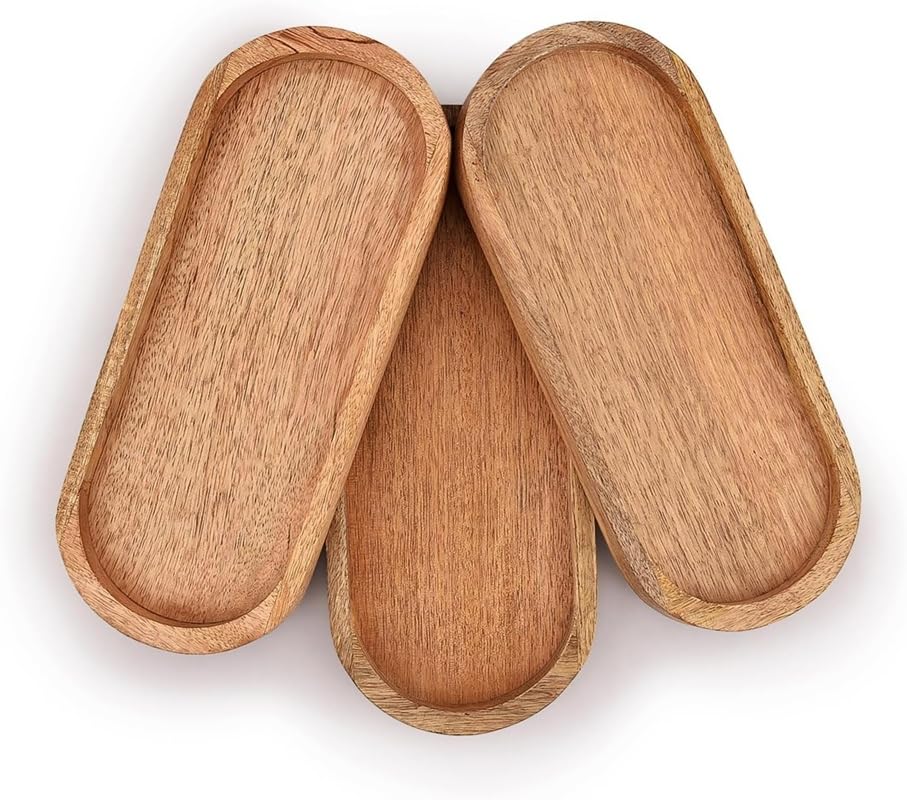
Natural mango wood tray
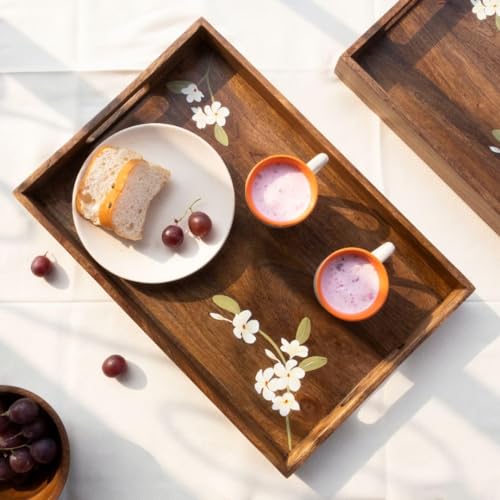
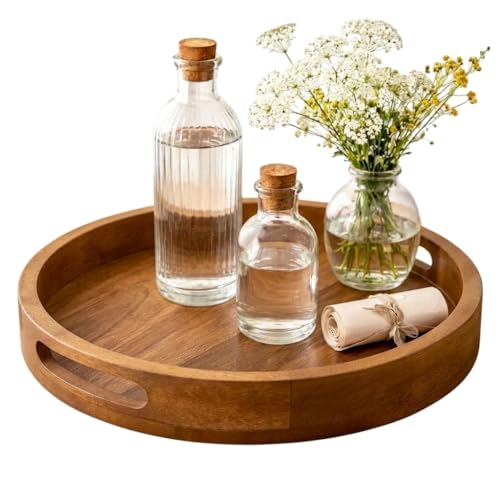
Mango wood trays often feature visible grain and warm brown tones. A rectangular design with raised edges can work well for carrying cups and small snack bowls.
Sheesham wood serving tray
Sheesham-style trays are often chosen for their rich grain and darker appearance. Carved edges or traditional detailing can complement classic wooden furniture.
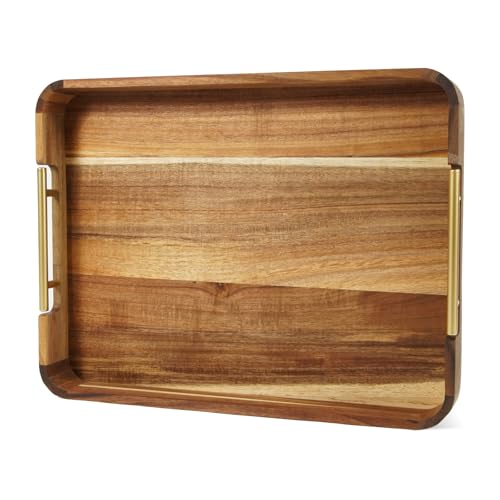
Acacia wood tray
Acacia trays can suit contemporary and rustic interiors. Look for smooth finishing, sturdy handles and a design that is comfortable to carry when loaded.
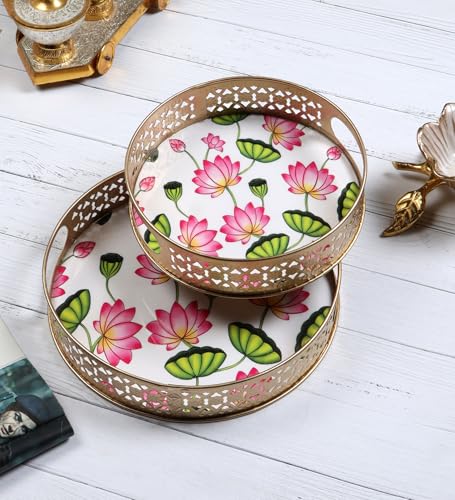
Wooden tray set
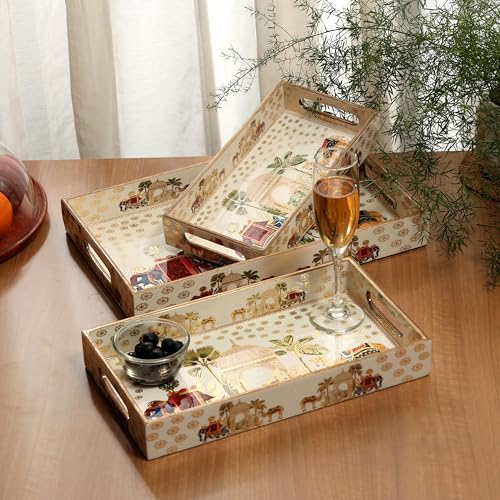
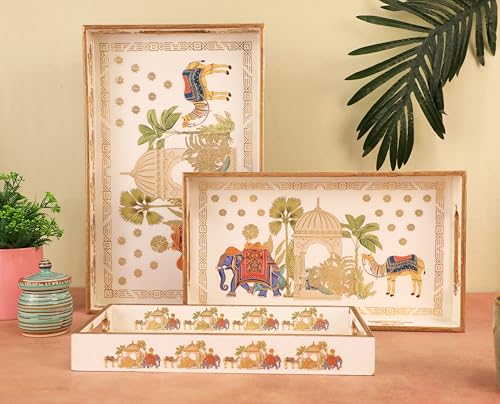
A set of two or three trays in different sizes can be useful when hosting several guests. Smaller trays can hold dry fruits or sweets, while a larger tray can carry tea cups and snacks.
Pros of wooden trays
- Add warmth and natural texture to your serving setup.
- Pair well with ceramic cups, white plates and neutral table linen.
- Work for everyday chai, coffee and snacks.
- Can double as decorative organisers when not in use.
- Available in rustic, minimalist and traditional designs.
Cons of wooden trays
- Prolonged moisture can damage some finishes or cause warping.
- They generally require more careful cleaning than basic stainless steel.
- Unknown finishes may not be suitable for direct food contact.
- Heavy construction can make a large tray difficult to carry.
Best for: Everyday serving, cosy coffee-table styling, casual get-togethers and homes that favour natural materials.






Best Metal Serving Trays for Hosting Guests
Metal serving trays offer a different look. Depending on their material and finish, they can feel sleek and modern, richly traditional or glamorous enough for festive occasions.
They are especially useful when you want a tray that coordinates with metal cutlery, glassware, brass accents or a formal dining setup.
Styles worth considering
Stainless steel serving tray
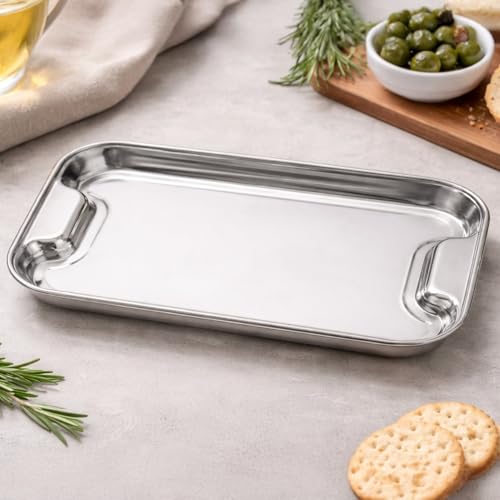
A simple stainless steel tray is a practical option for everyday serving. It can suit tea cups, bowls of snacks and family gatherings. Look for smooth edges and a suitable finish.
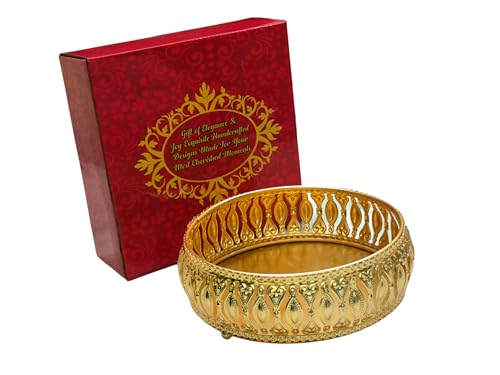
Gold-tone metal tray
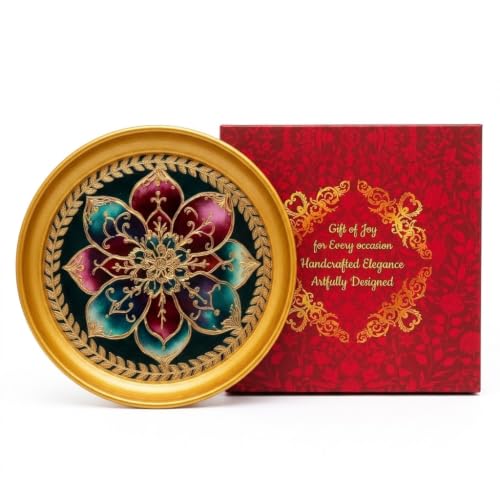
Gold-tone trays can complement festive decor, decorative bowls and elegant table settings. Check whether the gold colour is a coating or finish, and follow the care instructions to prevent scratches or tarnishing.
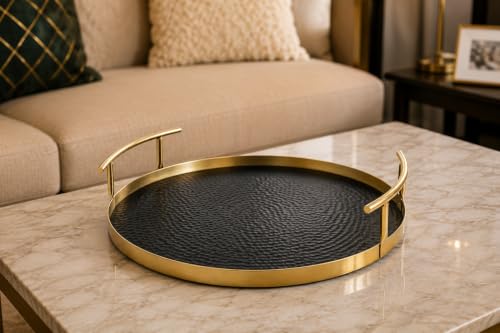
Black metal tray
A matte-black tray can work beautifully in a contemporary living room, particularly with light-coloured cups, white ceramics or neutral decor.
Hammered metal tray
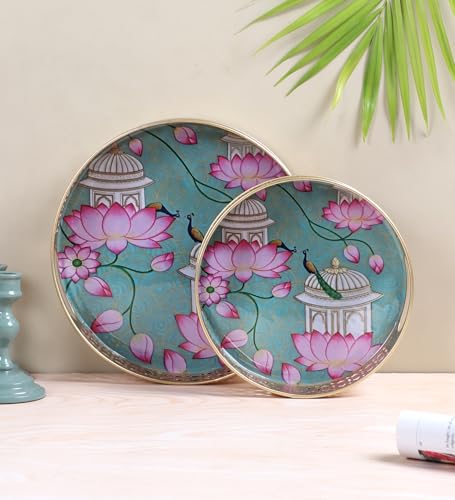
Hammered finishes add texture and visual interest. They are worth considering for traditional hosting, festive snacks or a decorative coffee-table arrangement.
Metal tray with handles
Handles can make a tray easier to lift and carry. Check that they are securely attached and comfortable to grip, especially if you intend to carry several cups.Product options to explore
Pros of metal trays
- Available in simple, polished and decorative designs.
- Stainless steel options can be convenient for routine serving when cared for according to the manufacturer’s instructions.
- Gold-tone and hammered designs can complement festive decor.
- Some models have handles and raised edges for easier carrying.
- Can coordinate with metal cutlery, glassware and traditional serveware.
Cons of metal trays
- Some metal trays can be heavy or uncomfortable to carry when loaded.
- Decorative coatings may scratch or tarnish.
- Some metals can become hot when exposed to hot cookware or hot liquids.
- Fingerprints and water spots may be visible on polished finishes.
- Not every decorative metal finish is suitable for direct food contact.
Best for: Formal guest serving, festive gatherings, tea service, traditional interiors and homes that favour polished accents.






Wooden vs Metal: Which Is Better for Your Home?
The right material depends on your daily routine as much as your decorating style.
| Your requirement | Better starting point |
|---|---|
| Everyday tea and coffee | A manageable wooden or stainless steel tray |
| Warm, natural home decor | Wooden tray |
| Minimalist contemporary styling | Plain wood or simple stainless steel |
| Festive mithai and dry-fruit presentation | Decorative metal or wooden tray |
| A polished, formal serving setup | Stainless steel or a suitable decorative metal tray |
| Coffee-table organisation | Wooden or decorative metal tray |
| Multiple guests | A larger tray with secure handles and raised edges |
| Easy everyday maintenance | A well-made stainless steel tray may be convenient |
| Traditional decor and gifting | Carved wood or decorative metal |
Neither material is automatically better for every household. A well-constructed tray in the right size and finish will usually be more useful than an attractive but awkward or poorly made one.
How to Choose the Right Serving Tray
Before buying, consider the following practical details.
1. Size and shape
The tray should fit the items you intend to carry without making the load difficult to balance.
- Small, round trays: Useful for dry fruits, biscuits, sweets and individual servings.
- Medium rectangular trays: Suitable for tea cups, snack bowls and everyday guest serving.
- Large rectangular trays: Useful for carrying several cups, plates or a larger assortment of snacks.
- Oval trays: Can offer a traditional serving appearance and work well for snacks or drinks.
- Tray sets: Provide flexibility when serving different items at the same gathering.
Measure the available storage space before buying a large tray, particularly if your kitchen cabinets are compact.
2. Handles and grip
Handles can make a big difference when carrying tea or coffee.
Check that the handles are firmly attached, comfortable to grip and positioned so the tray remains balanced. Avoid carrying a heavily loaded tray if the handles feel loose or the base flexes.
3. Raised edges
Raised edges help keep small objects from sliding off during movement. They are useful when carrying cups, bowls and plates, but they cannot prevent spills if the tray tilts.
For carrying several drinks, use a manageable load and keep the tray level.
4. Material and finish
For a wooden tray, inspect the surface, edges, joints and finish. For a metal tray, check the surface for sharp edges, coating defects and signs of corrosion.
If food will touch the tray directly, verify that the material and finish are intended for that use. A decorative tray is not automatically food-safe.
5. Weight
A tray can be sturdy without being excessively heavy. Think about how you will use it: carrying several cups from the kitchen, serving snacks to guests or displaying decorative objects.
Choose a size and weight that you can comfortably lift when the tray is loaded.
6. Cleaning requirements
Check the manufacturer’s care instructions before buying. Wooden trays often need gentle cleaning and immediate drying. Metal trays may be easier to maintain, but decorative finishes can have special requirements.
Do not assume a tray is dishwasher-safe simply because it is made of metal.
7. Storage
If you have limited kitchen space, choose a tray that fits a shelf or cabinet. Nested sets can be useful if you want several sizes without storing each tray separately.
How to Style Serving Trays When Hosting Guests
A serving tray can make your presentation look organised without adding unnecessary decoration. Here are some easy ideas for Indian homes.
Idea 1: Classic chai and snacks
Arrange two or four cups of chai with small bowls of namkeen, biscuits or roasted makhana. Keep the items grouped neatly so the tray remains easy to carry.
Best tray: Medium wooden tray or simple stainless steel tray.
Idea 2: Festive mithai and dry fruits
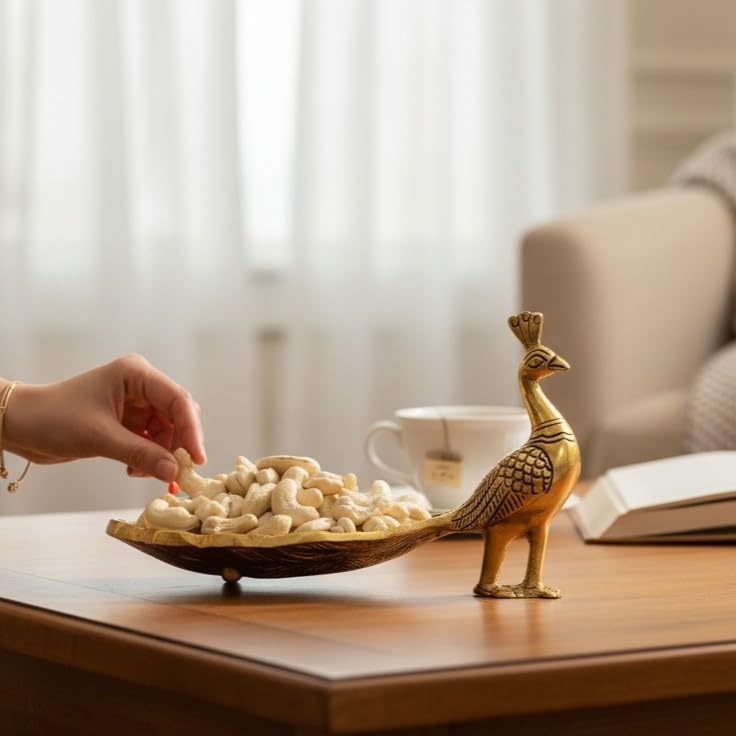
Use small bowls or food-safe serving dishes to arrange laddoos, kaju katli, dry fruits and other treats. A decorative metal tray can add a festive touch, while a wooden tray creates a warm, understated look.
Best tray: Decorative metal tray or wooden tray with a suitable food-safe finish.
Idea 3: Coffee-table refreshments
Place cups, coasters and a small snack bowl on a tray. If the tray is only being used to organise objects rather than serve food directly, it can also hold a small vase or another decorative accent.
Keep enough space around the tray so it does not overcrowd the coffee table.
Best tray: Wooden tray for a natural look or black metal for a contemporary interior.
Idea 4: Guests coming over for brunch
Arrange smaller plates, fruit bowls, toast or sandwiches so each item can be picked up easily. Use separate plates and bowls rather than placing food directly on a tray whose finish is not confirmed as food-safe.
Best tray: Large rectangular tray with a secure grip and raised edges.
Idea 5: A simple festive welcome setup
For a festive welcome, arrange dry fruits, wrapped sweets or small serving bowls on a decorative tray. Keep candles or diyas separate from flammable materials and follow appropriate fire-safety precautions.
Best tray: A decorative metal tray or a wooden tray used with suitable separate bowls.
Wooden Serving Tray Care Tips
Wood looks beautiful when maintained properly, but moisture and heat can affect its surface and construction.
- Wipe the tray with a soft, slightly damp cloth.
- Use mild cleaning methods recommended by the manufacturer.
- Dry it promptly after cleaning.
- Avoid prolonged soaking or dishwasher cleaning unless explicitly permitted.
- Keep it away from prolonged direct sunlight and excessive heat.
- Do not use abrasive scrubbers that can damage the finish.
- Use only a suitable food-safe finish or maintenance product if the manufacturer recommends one.
- Inspect the handles and joints regularly for looseness or damage.
If the tray is intended for direct food contact, check the manufacturer’s information about the finish. Do not assume that every varnished, painted or decorative wooden tray is suitable for placing food directly on its surface.
Metal Serving Tray Care Tips
Metal trays can be convenient for everyday serving, but care depends on the material and finish.
- Follow the product’s cleaning instructions.
- Use a soft cloth or a non-abrasive sponge.
- Dry the tray after cleaning to minimise water spots or corrosion.
- Avoid harsh chemicals and abrasive scrubbers on decorative finishes.
- Keep gold-tone or coated trays away from cleaning products that may damage their finish.
- Check handles and joints for looseness.
- Avoid placing extremely hot cookware on a decorative tray unless the manufacturer confirms it is suitable.
For stainless steel trays, use cleaning products appropriate for stainless steel and follow the product instructions. For gold-tone, painted or plated finishes, gentle cleaning is usually the safer approach.
Common Serving Tray Buying Mistakes
Choosing appearance over practicality
A beautiful tray may be too small for your cups or too heavy to carry.
Better approach: Check the dimensions and weight before ordering.
Ignoring the handles
Loose or uncomfortable handles can make serving guests difficult.
Better approach: Inspect handle attachments and look for a balanced design.
Using a decorative tray directly for food
Paint, lacquer, plating or other finishes may not be intended for direct food contact.
Better approach: Verify the product’s intended use and place food in suitable bowls or plates when necessary.
Overloading the tray
Carrying too many cups or heavy bowls increases the risk of spills.
Better approach: Use a larger, properly constructed tray or make two trips.
Forgetting storage space
Large tray sets can take up valuable cabinet space.
Better approach: Measure your available storage and consider nesting trays if you want multiple sizes.
Which Serving Tray Should You Buy for Different Budgets?
Instead of choosing solely by price, compare construction, finish, size and how frequently you will use the tray.
| Shopping priority | What to look for |
|---|---|
| Budget-friendly everyday use | A simple tray with smooth edges and a suitable load-bearing design |
| Daily chai and snacks | Medium size, comfortable grip and easy cleaning |
| Premium home decor | Better finishing, attractive materials and sturdy construction |
| Festive hosting | Decorative finish, enough space for bowls and sweets, easy handling |
| Frequent entertaining | Durable construction, secure handles and a practical size |
| Gifting | Versatile design, attractive presentation and convenient storage |
Prices vary substantially according to material, craftsmanship, size and brand. Compare current product listings and read the care instructions before purchasing.
Frequently Asked Questions
1. Which is better: wooden or metal serving trays?
Wooden trays offer a warm, natural look and suit everyday tea service and casual hosting. Metal trays offer a polished or decorative appearance and can work well for formal or festive serving. The better choice depends on your preferred style, cleaning routine and intended use.
2. Are wooden serving trays suitable for tea and coffee?
Yes, provided the tray is appropriately constructed and used according to its care instructions. Choose a design with sufficient space, raised edges and secure handles. Use coasters or separate cups and saucers to help protect the surface from spills and heat.
3. Are metal serving trays better for everyday use?
Some metal trays, particularly suitable stainless steel models, can be practical for routine serving. However, decorative finishes may need more careful maintenance. Check the material and cleaning instructions before buying.
4. Which tray is best for serving guests?
A medium or large rectangular tray with a comfortable grip and raised edges is a practical choice for many households. Choose a size that accommodates the cups, bowls and plates you plan to carry without making the tray difficult to balance.
5. Can I place food directly on a wooden serving tray?
Only if the tray’s material and finish are suitable for direct food contact. When this is unclear, serve food in suitable plates or bowls placed on the tray.
6. Can metal serving trays go in the dishwasher?
Not all metal trays are dishwasher-safe. Plain stainless steel, plated trays, painted trays and decorative metal trays may have different care requirements. Follow the manufacturer’s instructions.
7. Which serving tray is best for festive hosting?
A decorative metal tray can complement gold-tone cutlery, traditional decor and festive sweets. A wooden tray works well for a natural, understated presentation. Both can look beautiful when styled with suitable bowls and serving dishes.
8. What size serving tray should I buy?
A small tray suits a few snacks or individual servings, while a medium or large rectangular tray can carry several cups and bowls. Measure your storage space and consider the items you usually serve.
9. Can a serving tray double as home decor?
Yes. A tray can organise a coffee table, hold coasters or group decorative objects. If it is being used only for decor, you have more flexibility in choosing finishes that are not intended for direct food contact.
10. How do I prevent cups from slipping on a tray?
Use a tray with a stable base, raised edges and a balanced arrangement. Place cups on saucers or suitable non-slip coasters where appropriate. Carry the tray level and avoid overloading it.
Final Verdict: Wooden vs Metal Serving Trays
The best serving tray is one that fits your lifestyle, serving habits and home decor.
- Choose wooden trays for natural texture, cosy tea service and everyday home styling.
- Choose metal trays for polished serving, decorative presentation and festive occasions.
- Choose a tray with handles if you regularly carry several cups or bowls.
- Choose a tray set if you want different sizes for snacks, drinks and guest serving.
For many Indian homes, owning one practical everyday tray and one decorative tray is a flexible solution. You can use the wooden tray for relaxed chai sessions and the metal tray for festive sweets or special gatherings.
Before buying, check the dimensions, material, handle construction, intended food-contact use and care instructions. A thoughtfully chosen tray will make hosting guests easier while helping your serving setup look neat and inviting.