

Choosing a face wash sounds simple until you walk into a beauty store and find dozens of cleansers labelled hydrating, foaming, gel, brightening, acne-control, barrier-repair, salicylic acid, gentle, oil-control and more. 😅
But your cleanser doesn’t need to do everything.
A good face wash should primarily remove dirt, sweat, excess oil, sunscreen residue and other impurities without leaving your skin excessively dry, tight or irritated. Dermatologists recommend using a gentle, non-abrasive cleanser and avoiding aggressive scrubbing.
The important part is choosing a formula that matches your skin type and concerns.
In this guide, we’ll look at face washes for oily, dry, combination, sensitive, normal and acne-prone skin, explain which ingredients to look for, discuss how often you should wash your face, and compare popular options available in India. 🌿
🧴 Why Choosing the Right Face Wash Matters
Your cleanser is the first step in most skincare routines.
If it is too harsh, you may notice:
- Tightness after washing
- Dry or flaky patches
- Increased sensitivity
- Burning or stinging
- Excessive oiliness later
- Irritation around the nose and cheeks
On the other hand, a cleanser that is too rich or unsuitable for your skin can leave oily or acne-prone skin feeling heavy.
The American Academy of Dermatology recommends a gentle, non-abrasive cleanser without alcohol, applied with your fingertips and rinsed with lukewarm water. Scrubbing can irritate the skin.
So rather than asking:
“Which is the best face wash?”
a more useful question is:
“Which face wash is appropriate for my skin type?”
🔍 First: Identify Your Skin Type
Before choosing a cleanser, try to understand how your skin behaves.
Oily Skin
Your face may become shiny relatively quickly, particularly around the forehead, nose and chin.
Dry Skin
Your skin may feel tight, rough, flaky or uncomfortable after cleansing.
Combination Skin
Your T-zone may become oily while your cheeks feel normal or dry.
Sensitive Skin
Your skin may sting, burn, become red or react easily to skincare products.
Normal Skin
Your skin generally feels balanced without excessive oiliness or dryness.
Acne-Prone Skin
You may regularly experience pimples, blackheads, whiteheads or clogged pores.
The AAD describes oily skin as shiny/greasy, dry skin as flaky, itchy or rough, combination skin as dry in some areas and oily in others, and sensitive skin as skin that may sting or burn after product use.
🛍️ Popular Face Washes to Consider
These are examples of currently available products that represent different cleanser categories rather than an overall ranking.
Availability and prices can change by seller, pack size and location.
💧 Best Face Washes for Dry Skin
Dry skin generally needs a cleanser that removes impurities without aggressively stripping away moisture.
The AAD recommends gentle cleansing for dry skin and specifically advises choosing fragrance-free skincare products when possible.
What to Look For
Look for:
- Glycerin
- Ceramides
- Hyaluronic acid
- Panthenol
- Cream or lotion-like textures
- Low-foaming or non-foaming formulas
- Fragrance-free options
Cetaphil’s cleanser guidance similarly recommends cream or hydrating cleansers containing ingredients such as glycerin and ceramides for dry skin.
What to Avoid
If your skin is already dry, be cautious with:
- Very strong foaming cleansers
- Frequent exfoliating cleansers
- Alcohol-heavy formulas
- Harsh scrubbing
- Extremely hot water
A Suitable Option
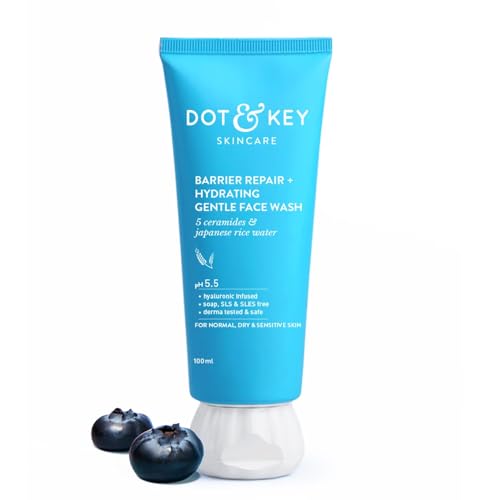
Dot & Key Barrier Repair Gentle Hydrating Face Wash is an example of a cleanser positioned around gentle, barrier-focused cleansing.
It can be considered when your priority is a more comfortable, moisturising cleansing experience rather than aggressive oil removal.
🌿 Best Face Washes for Sensitive Skin
Sensitive skin needs a particularly simple approach.
If your face frequently becomes irritated after using skincare products, introducing several active ingredients at once isn’t necessarily a good idea.
Look For:
- Fragrance-free formulas
- Gentle surfactants
- Minimal irritation potential
- Hydrating ingredients
- Soothing ingredients
- Non-abrasive textures
Cetaphil recommends fragrance-free, gentle formulas for sensitive skin and suggests avoiding harsh exfoliants and alcohol-based cleansers.
The AAD also recommends fragrance-free products for dry and sensitive skin because added fragrance can trigger irritation or allergic reactions in some people.
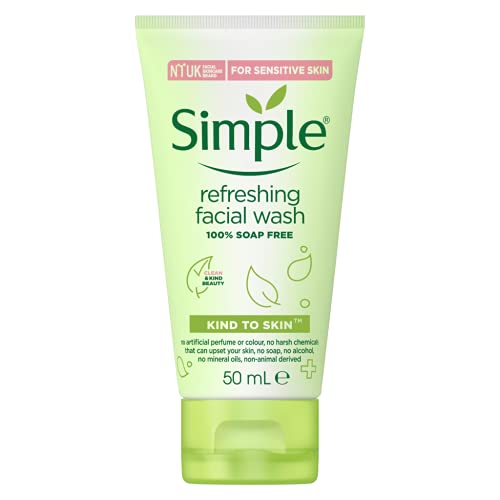
Simple Kind to Skin Refreshing Facial Wash
Simple’s facial wash is a popular example of a straightforward gel cleanser designed around gentle everyday cleansing.
It can be useful for someone who doesn’t want their cleanser to be loaded with multiple active ingredients.
✨ Best Face Washes for Normal Skin
Normal skin generally doesn’t need an aggressive or highly specialised cleanser.
The goal is simply to:
Clean → rinse → moisturise → protect
Look For:
- Gentle cleansing
- Non-comedogenic formulas
- Mild surfactants
- Hydrating ingredients
- Comfortable after-feel
A basic cleanser can be perfectly adequate if your skin is already balanced.
There’s no requirement to use a salicylic acid cleanser, brightening cleanser or exfoliating cleanser simply because it is trending.
🧴 Best Face Washes for Combination Skin
Combination skin can be slightly tricky.
Your forehead and nose might become oily while your cheeks remain comfortable or even dry.
A cleanser that aggressively removes oil from your entire face may leave your cheeks feeling tight.
What to Look For
Consider:
- Lightweight gel cleansers
- Mild foaming formulas
- Glycerin
- Niacinamide
- Non-comedogenic formulas
- Balanced cleansing
Cetaphil’s guidance recommends lightweight gel or foaming formulas for combination skin and notes that ingredients such as glycerin and niacinamide can help maintain hydration while addressing oiliness.
A Useful Approach
If your T-zone is particularly oily but your cheeks are dry, don’t automatically increase cleansing frequency.
Instead, consider a gentler cleanser overall and adjust the rest of your routine according to the different areas of your face.
🫧 Best Face Washes for Oily Skin
Oily skin doesn’t mean you need to use the strongest cleanser you can find.
In fact, the AAD specifically recommends a mild, gentle foaming face wash rather than an excessively harsh cleanser. Overly aggressive cleansing can irritate the skin and may make oil control more difficult.
Look For:
- Gel or foaming texture
- Oil-free formulation
- Non-comedogenic label
- Niacinamide
- Salicylic acid when appropriate
- Lightweight formula
The Derma Co Sali-Cinamide Anti-Acne Face Wash
This is an example of a cleanser aimed at oily/acne-prone skin using salicylic acid and niacinamide.
It may be relevant if excess oil and clogged pores are major concerns, but active cleansers shouldn’t automatically replace gentle cleansing for everyone.

- Fights Acne & Acne Marks: The power duo – 2% Salicylic Acid & 2% Niacinamide makes this face wash the 1st choice to figh…
- Unclogs Pores: Encapsulated Salicylic Acid penetrates deeper & gently exfoliates the skin, unclogging pores deeply.
- Anti-Dehydration Shield Action: Aquaxyl reinforces the synthesis of essential lipids & proteins to control dryness post-…
Plum Green Tea Pore Cleansing Face Wash
Another example of a cleanser positioned toward oily/combination skin and pore-focused cleansing.
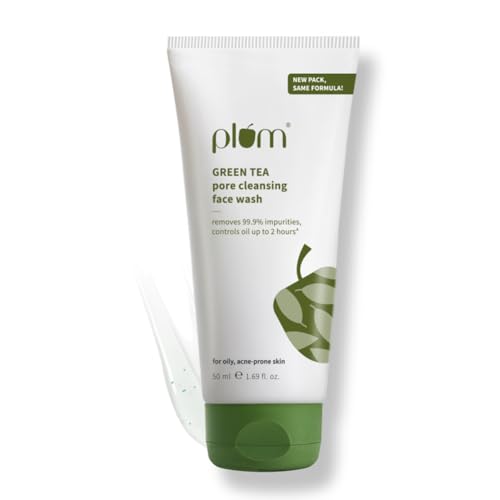
- Fights Pimples and Prevents Breakouts: Green tea, rich in antioxidants, powers this acne face wash, helping control exce…
- Deep Cleansing with Soft Cellulose Beads: The formula includes soft cellulose beads that gently exfoliate and unclog por…
- Exfoliates Gently with Glycolic Acid: This glycolic acid face wash offers gentle exfoliation, removing dead skin while i…
🧪 Best Face Washes for Acne-Prone Skin
Acne-prone skin requires a little more care than simply trying to “dry out” pimples.
The AAD advises people with acne to use a mild, non-comedogenic cleanser and wash gently rather than scrubbing.
Some acne cleansers contain active ingredients such as:
Salicylic Acid
Salicylic acid can help with clogged pores and is commonly used in acne-focused skincare.
Benzoyl Peroxide
Benzoyl peroxide is another acne-treatment ingredient. The AAD notes that benzoyl peroxide washes can be useful for certain acne presentations.
Important
More active ingredients don’t necessarily mean better results.
If an acne cleanser causes significant dryness, burning or irritation, using it more frequently may make the situation worse.
🧼 Minimalist 2% Salicylic Acid + LHA Face Cleanser
This is another example of an active cleanser aimed at oily, congested or acne-prone skin.
It contains salicylic acid and LHA, making it more treatment-oriented than a basic everyday cleanser.
Consider this type of cleanser if your primary concern is:
- Excess oil
- Clogged pores
- Blackheads
- Occasional breakouts
But if your skin is dry or sensitive, a gentler cleanser may be more appropriate.
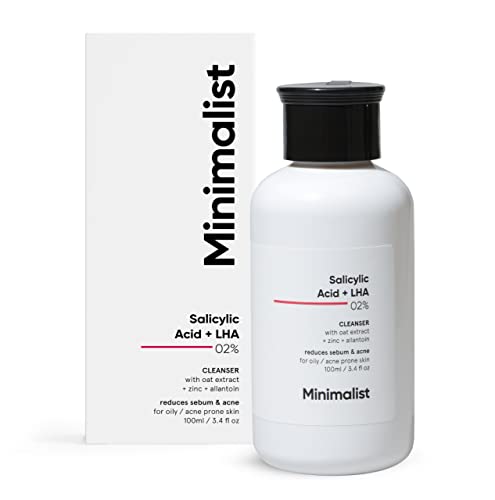
- ✅ MULTI-LEVEL DEEP PORE CLEANSING (SALICYLIC ACID + LHA) Advanced dual-exfoliation formula powered by Salicylic Acid (BH…
- ✅ TARGETS ACNE, PIMPLES & BLACKHEADS A powerful anti acne face wash boosted with antibacterial Zinc and Salicylic Acid t…
- ✅ CONTROLS EXCESS OIL & SEBUM Specially formulated for oily and combination skin, this salicylic acid cleanser regulates…
🧴 CeraVe Blemish Control Cleanser
CeraVe Blemish Control Cleanser is another acne-focused option available in India.
It belongs in the active/acne-care cleanser category rather than the basic gentle-cleanser category.
That distinction matters because someone with acne-prone oily skin may have different cleansing needs from someone with dry, sensitive skin.
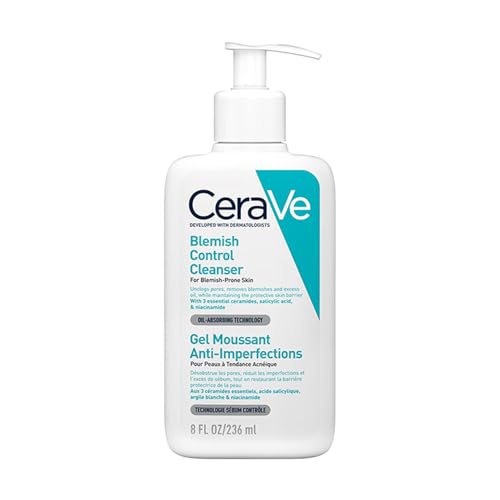
- REDUCE BREAKOUTS IN 1 WEEK*: The 2% salicylic acid + niacinamide + 3 essential ceramides + hyaluronic acid formula helps…
- CORRECTS BLEMISHES & BLACKHEADS: This cleanser tackles blackheads and acne, reduces the appearance of blemishes, acne an…
- GENTLE EXFOLIATING CLEANSER: It gently exfoliates dead skin cells to prevent clogged pores – the primary cause of blemis…
🌸 What About Brightening Face Washes?
You’ll find many face washes marketed for:
- Brightening
- Glow
- Tan removal
- Uneven skin tone
- Dullness
But don’t expect a cleanser to dramatically transform pigmentation.
A face wash spends a relatively short amount of time on your skin before being rinsed off.
If pigmentation, acne marks or persistent uneven tone are your main concern, the overall routine including sunscreen and appropriate leave-on products is generally more important than choosing an extremely aggressive cleanser.
🧪 Important Face Wash Ingredients Explained
Ceramides
Ceramides are lipids naturally found in the skin barrier.
They’re commonly included in products designed for dry or barrier-compromised skin.
Glycerin
Glycerin is a humectant that helps attract and retain water.
It’s commonly used in hydrating cleansers.
Hyaluronic Acid
Hyaluronic acid is another humectant frequently included in moisturising skincare formulas.
It can make a cleanser feel more hydrating.
Niacinamide
Niacinamide is a versatile skincare ingredient often used in products aimed at supporting the skin barrier and managing oil-related concerns.
Salicylic Acid
Salicylic acid is a beta-hydroxy acid frequently used in acne and pore-focused products.
It may be particularly relevant to oily or congested skin.
Panthenol
Panthenol, also known as provitamin B5, is commonly used in skincare for its moisturising and soothing properties.
🚿 How Often Should You Wash Your Face?
For many people, twice daily is a reasonable starting point: morning and evening.
The AAD recommends limiting face washing to twice a day and after sweating heavily.
However, skin type matters.
If you have very dry or sensitive skin, washing twice daily with an active cleanser may feel excessive.
AAD guidance notes that people with dry or sensitive skin may find that cleansing once in the evening is sufficient in some circumstances.
🫧 How to Wash Your Face Correctly
Your technique matters almost as much as your cleanser.
Step 1: Wet Your Face
Use lukewarm water rather than very hot water.
Step 2: Apply Cleanser
Use your fingertips.
Step 3: Massage Gently
Don’t aggressively scrub.
Step 4: Rinse
Remove the cleanser thoroughly with lukewarm water.
Step 5: Pat Dry
Use a soft, clean towel.
Step 6: Moisturise
Apply moisturiser while the skin is still comfortable and slightly damp.
These steps closely follow AAD recommendations for gentle face washing.
❌ Face-Washing Mistakes to Avoid
1. Washing Your Face Too Many Times
More washing isn’t automatically better.
Overwashing can irritate your skin.
2. Using Very Hot Water
Hot water can contribute to dryness and irritation.
3. Scrubbing Aggressively
Physical scrubbing can irritate acne-prone and sensitive skin.
The AAD specifically advises against scrubbing during cleansing.
4. Using Strong Cleansers on Dry Skin
If your skin already feels tight after washing, your cleanser may be too aggressive for your routine.
5. Skipping Moisturiser Because You Have Oily Skin
Oily skin still needs hydration.
The AAD specifically recommends moisturising even when you have oily skin.
6. Using Several Active Cleansers Together
You don’t need a salicylic acid cleanser, exfoliating cleanser and brightening cleanser all in the same routine.
Keep things simple.
🧴 Face Wash vs Facial Cleanser
The terms are often used interchangeably.
Generally:
Face wash often refers to gel or foaming formulas.
Facial cleanser is a broader term that includes gels, creams, milks, balms and other cleansing formulations.
A creamy cleanser isn’t necessarily less effective than a foaming face wash.
The important question is whether it cleans your skin effectively without causing unnecessary irritation or dryness.
🧖♀️ Which Face Wash Should You Choose?
| Skin Type | Cleanser Style to Consider | Ingredients/Features |
|---|---|---|
| Dry | Creamy/hydrating | Glycerin, ceramides, HA |
| Sensitive | Gentle/non-foaming | Fragrance-free, soothing |
| Normal | Mild daily cleanser | Hydrating, non-comedogenic |
| Combination | Lightweight gel | Glycerin, niacinamide |
| Oily | Gentle gel/foam | Niacinamide, salicylic acid |
| Acne-prone | Mild active cleanser | Salicylic acid or benzoyl peroxide |
| Congested | Active gel cleanser | Salicylic acid/LHA |
This is a starting framework rather than a strict rule. Skin can be both oily and sensitive, or dry and acne-prone, for example.
💡 What If Your Skin Type Changes?
Your skin doesn’t necessarily behave exactly the same throughout the year.
Factors such as:
- Weather
- Humidity
- Air conditioning
- Sun exposure
- Hormonal changes
- New skincare products
- Stress
- Medications
- Age
can affect how your skin feels.
For example, a cleanser that feels comfortable during humid weather may feel too drying during a colder or drier period.
Instead of remaining loyal to a cleanser forever, pay attention to how your skin actually responds.
🛍️ How Much Should You Spend on a Face Wash?
You don’t necessarily need an expensive cleanser.
Because cleanser is a rinse-off product, a reasonably formulated affordable cleanser can be perfectly adequate.
Spend more attention on:
- Whether it suits your skin
- Ingredient profile
- Irritation potential
- Texture
- Fragrance
- Whether your skin feels comfortable after washing
A ₹200 cleanser that suits you can be more useful than a ₹1,500 cleanser that leaves your skin irritated.
🧴 Should You Double Cleanse?
Double cleansing generally involves using an oil/balm-based cleanser first and a water-based cleanser second.
It can be useful for removing makeup or certain water-resistant products.
But you don’t necessarily need to double cleanse every night if you’re simply at home without heavy makeup or water-resistant sunscreen.
Avoid turning cleansing into an unnecessarily complicated process.
🌿 A Simple Routine for Each Skin Type
Dry Skin
Morning:
Gentle cleanser → moisturiser → sunscreen
Night:
Hydrating cleanser → moisturiser
Oily Skin
Morning:
Gentle cleanser → lightweight moisturiser → sunscreen
Night:
Cleanser → lightweight moisturiser
If using an active cleanser, introduce it according to the product instructions and your skin’s tolerance.
Combination Skin
Morning:
Gentle cleanser → moisturiser → sunscreen
Night:
Gentle cleanser → moisturiser
Sensitive Skin
Morning:
Gentle cleanser or water rinse → fragrance-free moisturiser → sunscreen
Night:
Gentle cleanser → moisturiser
Acne-Prone Skin
Morning:
Gentle cleanser → moisturiser → sunscreen
Night:
Appropriate cleanser → acne treatment if recommended/appropriate → moisturiser
Persistent or significant acne is better addressed with a dermatologist rather than repeatedly switching face washes.
⚠️ When You Should See a Dermatologist
A face wash is not a substitute for medical treatment.
Consider professional advice if you have:
- Persistent acne
- Painful or deep breakouts
- Significant redness
- Burning or persistent itching
- Severe dryness or cracking
- Repeated allergic reactions
- Sudden unexplained skin changes
- Acne that isn’t improving with basic care
AAD guidance recommends seeking dermatological advice when skin concerns persist or when you’re unsure about appropriate skincare.
Also Read | Which Face Wash Suits You Best?
❓ Frequently Asked Questions
Which face wash is best for oily skin?
A gentle gel or foaming cleanser can work well for oily skin. Look for oil-free/non-comedogenic options, with ingredients such as niacinamide or salicylic acid when appropriate. The AAD recommends gentle cleansing rather than harshly stripping oil from the skin.
Which face wash is best for dry skin?
Choose a gentle, hydrating cleanser containing ingredients such as glycerin or ceramides. Avoid formulas that leave your face feeling tight or uncomfortable.
Which face wash is best for sensitive skin?
A gentle, fragrance-free cleanser with a simple formulation is generally a sensible starting point. Avoid harsh exfoliating or alcohol-based cleansers if they irritate your skin.
Can oily skin use a hydrating face wash?
Yes. Oily skin still needs hydration. Over-cleansing in an attempt to remove every trace of oil can irritate the skin.
Is salicylic acid face wash good for acne?
Salicylic acid is commonly used in acne and pore-focused products and can help with certain types of acne. However, it may be irritating for some people, particularly if overused.
How many times should I wash my face?
For many people, morning and evening is sufficient, plus cleansing after heavy sweating. Excessive washing can irritate the skin.
Should I use face wash before or after sunscreen?
Face wash is used before applying your skincare and sunscreen. At night, cleanse to remove sunscreen, makeup, sweat and daily buildup.
Can I use the same face wash throughout the year?
You can if your skin remains comfortable with it. However, changing weather and skin conditions may make a different cleanser more suitable at different times.
Is expensive face wash better?
Not necessarily. A cleanser should primarily cleanse effectively while respecting your skin barrier. Price alone doesn’t determine suitability.
🧴 Final Thoughts
There is no single best face wash for everyone.
The right cleanser depends on whether your skin is oily, dry, combination, sensitive, normal or acne-prone, and whether you have additional concerns such as clogged pores or breakouts.
For dry and sensitive skin, prioritise gentle, hydrating and fragrance-free formulas.
For oily or combination skin, consider lightweight gel or foaming cleansers without trying to strip away every trace of oil.
For acne-prone skin, salicylic acid or benzoyl peroxide cleansers can be useful for appropriate concerns, but irritation should never be ignored.
And regardless of skin type, one rule remains important:
Cleanse gently don’t scrub your skin into submission. 🧴✨
A simple, consistent skincare routine is usually more useful than constantly switching between trendy products.