

Who doesn’t love a perfectly crispy dosa? That golden-brown exterior, thin crunchy edges and soft, flavourful centre make a restaurant-style dosa one of the most satisfying breakfast options. But getting that same texture at home isn’t always easy. Sometimes the batter sticks, sometimes the dosa turns out too soft, and sometimes you end up with a beautifully browned centre and pale, undercooked edges!
While dosa batter, fermentation and cooking technique play important roles, choosing the right dosa tawa can make a noticeable difference.
A good dosa tawa should offer a sufficiently wide cooking surface, consistent heat distribution and a suitable finish for spreading batter evenly. Whether you prefer traditional cast iron cookware or modern non-stick tawas, the right choice can make preparing masala dosa, plain dosa, rava dosa and uttapam much easier.
In this guide, we’re exploring some of the best dosa tawas available in India in 2026, including options from Hawkins, Prestige, The Indus Valley and Solara. We’ll compare cast iron and non-stick models, discuss their advantages and limitations, and explain what to look for before purchasing.
We’ll also cover the ideal tawa size, induction compatibility, seasoning, cleaning and practical tips for making crispy restaurant-style dosas at home.
Let’s find your next kitchen favourite!
Quick Answer: Which Is the Best Dosa Tawa to Buy?
Here is a quick overview of our shortlisted recommendations.
| Category | Recommended Product | Why Consider It? |
|---|---|---|
| Best Overall | Hawkins Futura Dosa Tawa | Thick base and non-stick cooking surface |
| Best Traditional Cast Iron | Hawkins Futura Cast Iron Dosa Tava | 5mm base and pre-seasoned surface |
| Best for Crispy Dosas | The Indus Valley Super Smooth Cast Iron Tawa | Traditional cast iron cooking |
| Best Budget Cast Iron | Solara Cast Iron Tawa | Value-oriented cast iron option |
| Best for Everyday Cooking | Prestige Cast Iron Dosa Tawa | Traditional cookware construction |
| Best Alternative Non-Stick | Prestige Durastone Non-Stick Dosa Tawa | Convenient non-stick cooking |
Our recommendation: Choose Hawkins Futura Non-Stick if you prioritise convenience and easier dosa release. If you enjoy traditional cookware and don’t mind seasoning and maintenance, consider a quality cast iron tawa.
Best Dosa Tawa for Making Crispy Restaurant-Style Dosas at Home
The Indian cookware market offers several types of dosa tawas, ranging from lightweight non-stick aluminium models to traditional cast iron cookware.
The best option depends on your cooking habits, preferred dosa texture, maintenance expectations and budget.
Here are our shortlisted recommendations.
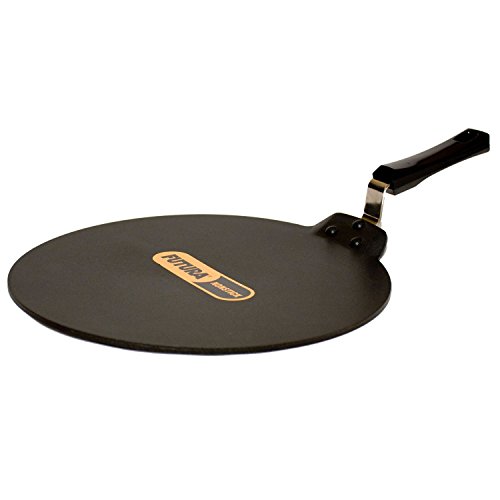
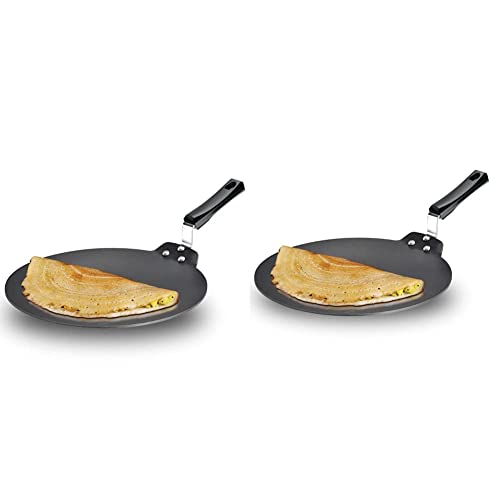
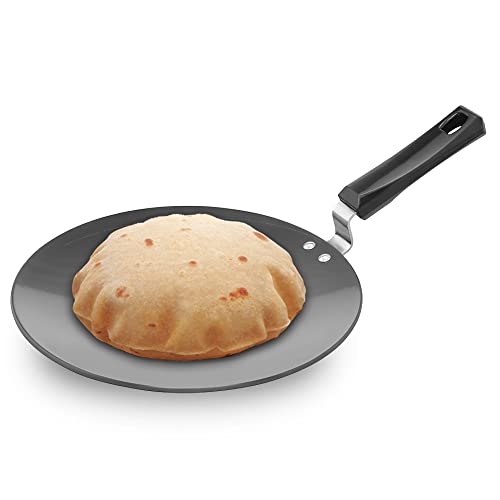
1. Hawkins Futura Dosa Tawa – Best Overall
Best for: Everyday dosa preparation, easy food release and convenient cooking.
The Hawkins Futura Dosa Tawa is an interesting option for households that regularly prepare dosas and want a combination of convenience and substantial cookware construction.
Unlike some lightweight non-stick tawas, the Futura model features a relatively thick base designed to distribute heat efficiently and retain it during cooking.
The manufacturer specifies a 4.88mm thick heavy-gauge base, PFOA-free non-stick coating and a design intended specifically for preparing dosas.
It is available in different sizes, including 28cm, 30cm and 33cm variants.
Key Features
- Non-stick cooking surface.
- Hard-anodised aluminium construction.
- 4.88mm thick base.
- Available in multiple sizes.
- Designed for dosa preparation.
- Stainless steel handle rivets.
- Suitable for domestic gas and radiant electric cooktops.
- Manufacturer guarantee of two years.
Why We Recommend It
One of the biggest challenges when making dosas is preventing the batter from sticking to the cooking surface.
A good non-stick coating makes spreading and releasing the dosa easier, particularly when you’re still learning the correct technique.
The thick base is another advantage. A tawa that retains heat reasonably well can help maintain a more consistent cooking temperature once the batter is spread.
This is useful when preparing several dosas consecutively.
The cooking surface also offers sufficient room for making large dosas, depending on the selected size.
Best For
- Beginners learning to make dosas.
- Families preparing breakfast regularly.
- People who prefer easier cleaning.
- Users who want a thicker non-stick tawa.
- Households that prepare dosas, uttapams and similar dishes.
Who Should Skip It?
- People who specifically want uncoated traditional cast iron.
- Buyers who need induction compatibility without verifying the exact model.
- Users who prefer dishwasher-free cookware maintenance with no coating considerations.
Pros and Cons
| Pros | Cons |
|---|---|
| Thick 4.88mm base | Non-stick coating requires careful handling |
| Hard-anodised construction | Not designed for metal utensils |
| Convenient food release | Requires avoiding excessive overheating |
| Available in different sizes | Not suitable for every induction cooktop |
| Designed specifically for dosa preparation | Costs more than some basic tawas |
Our Verdict
The Hawkins Futura is our best overall recommendation for people who want a convenient everyday dosa tawa.
Its thick construction and non-stick surface make it particularly suitable for households that prepare dosas frequently but don’t want the additional maintenance associated with traditional cast iron cookware.




2. Hawkins Futura Cast Iron Dosa Tava – Best Traditional Cast Iron Option
Best for: People who prefer traditional cookware and better heat retention.
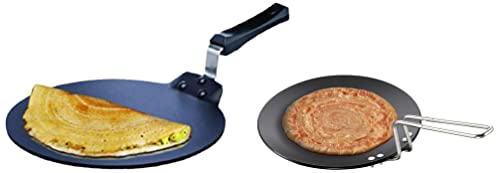
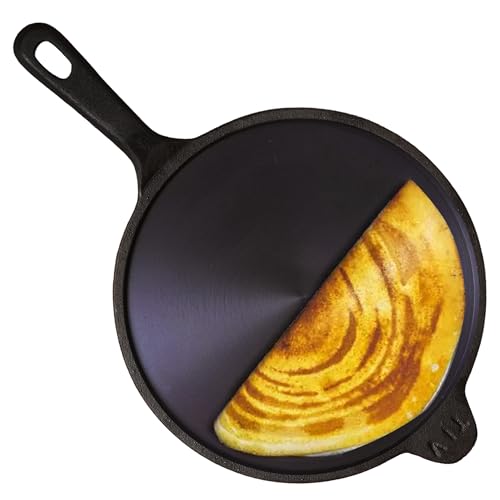
If you enjoy cooking with traditional iron cookware, the Hawkins Futura Cast Iron Dosa Tava deserves attention.
This model combines traditional cast iron construction with a pre-seasoned cooking surface.
Unlike conventional non-stick tawas, it does not depend on a synthetic non-stick coating. Instead, its cooking surface develops and maintains a seasoning layer through proper use and maintenance.
According to Hawkins, the model features a 5mm thick base and is pre-seasoned with vegetable oil.
Key Features
- Cast iron construction.
- 27cm diameter.
- 5mm thickness.
- Pre-seasoned with vegetable oil.
- No synthetic non-stick coating.
- Designed for high-heat cooking.
- Suitable for gas, oven, grill and chulha.
- Manufacturer guarantee of ten years.
Why We Recommend It
Cast iron is known for its ability to retain heat.
This can be useful when preparing dosas that need consistent cooking temperatures and deeper browning.
The absence of a synthetic non-stick coating is another advantage for people who prefer traditional cookware.
With proper seasoning, cast iron can develop a naturally stick-resistant cooking surface.
However, it needs more attention than conventional non-stick cookware. You must dry it properly after washing and apply a thin layer of oil when necessary to prevent rust.
It is also heavier than many aluminium alternatives.
Best For
- Traditional cookware enthusiasts.
- People who regularly prepare dosas.
- Users who prefer uncoated cooking surfaces.
- Households that enjoy cast iron cookware.
- People willing to maintain and season their cookware.
Who Should Skip It?
- Anyone looking for lightweight cookware.
- People who prefer completely effortless cleaning.
- Users unwilling to maintain a seasoning layer.
- Those who need a flat tawa specifically compatible with induction without checking the manufacturer’s instructions.
Pros and Cons
| Pros | Cons |
|---|---|
| No synthetic non-stick coating | Heavy construction |
| 5mm thick base | Requires seasoning maintenance |
| Pre-seasoned surface | Needs proper drying |
| Good heat retention | Takes practice to prevent sticking |
| Long manufacturer guarantee | Smaller 27cm cooking diameter |
Our Verdict
The Hawkins Futura Cast Iron Dosa Tava is a worthwhile option if you prefer traditional cookware and want a durable alternative to coated non-stick pans.
It is particularly suitable for people who enjoy cooking with cast iron and don’t mind spending a little extra time maintaining it.
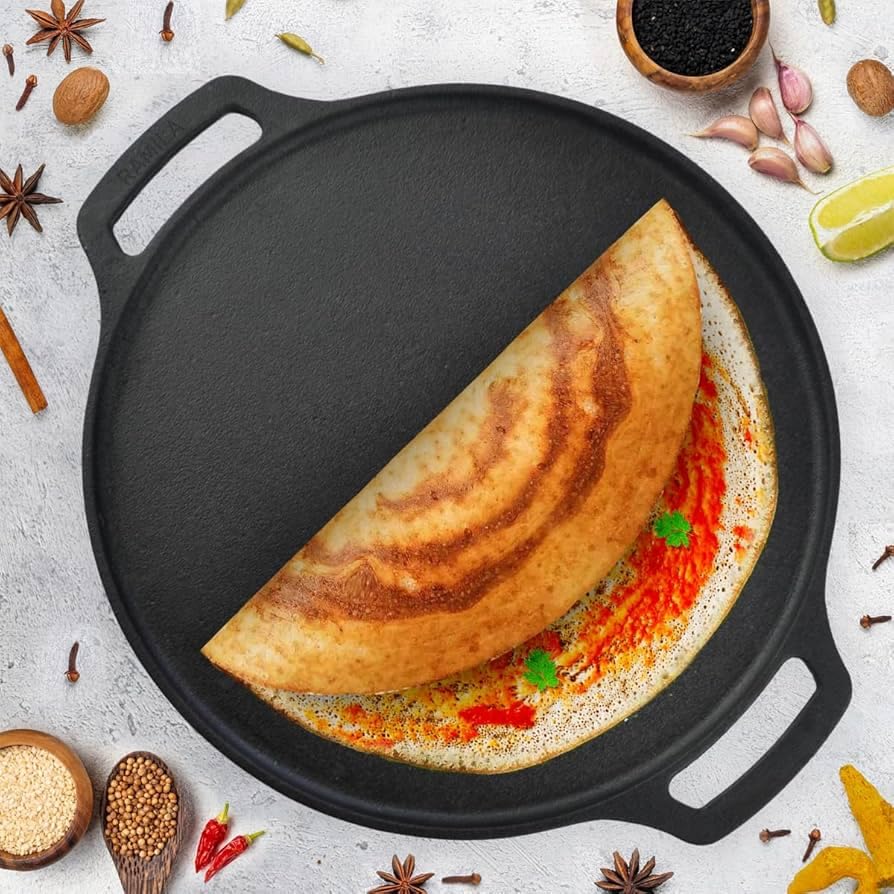
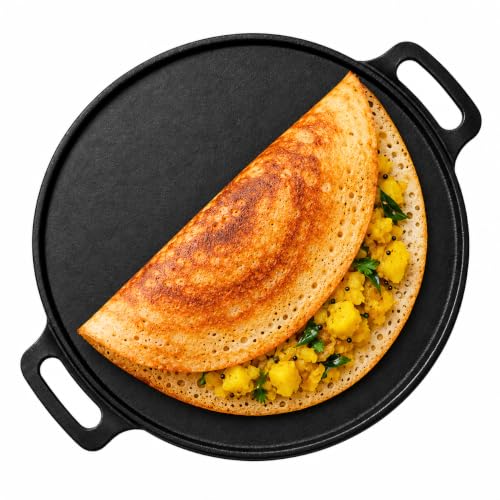
3. The Indus Valley Super Smooth Cast Iron Tawa – Best for Traditional Crispy Dosas
Best for: Home cooks who prefer cast iron and traditional dosa preparation.
Cast iron cookware has remained popular in Indian kitchens for generations, and for good reason.
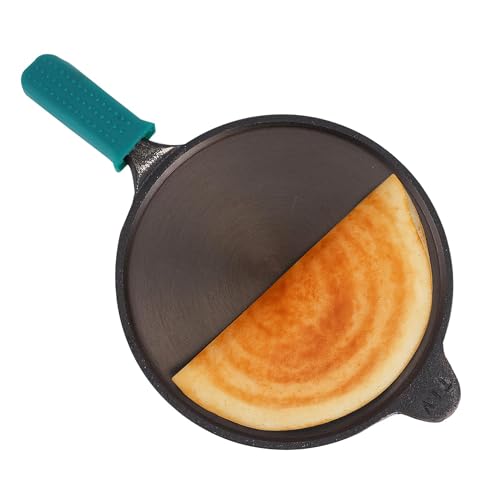
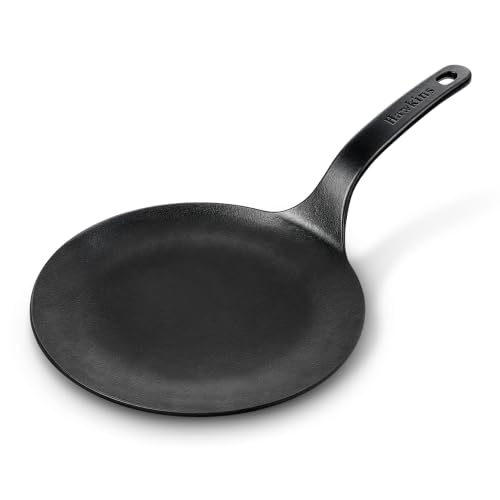
The Indus Valley Super Smooth Cast Iron Tawa is designed for people who want the traditional cooking experience without choosing a conventional non-stick pan.
Its smooth-finish cooking surface and cast iron construction make it an interesting option for preparing dosas, chapatis and other Indian flatbreads.
Key Features
- Cast iron construction.
- Smooth-finish cooking surface.
- Designed for dosa and chapati preparation.
- Traditional uncoated cookware.
- Wooden spatula included with certain listings.
- Available through Indian retail platforms.
Why We Recommend It
The biggest reason to consider this tawa is its traditional construction.
Cast iron heats up gradually and retains heat well. Once properly preheated, it can provide a useful cooking surface for preparing dosas with deeper browning.
Its smooth surface is also an important consideration.
While cast iron does not provide the effortless food release of a new non-stick pan, a properly seasoned surface can become increasingly stick-resistant with regular use.
For someone who enjoys traditional cooking methods, this can be a satisfying addition to the kitchen.
However, remember that cast iron requires proper seasoning. The first few cooking sessions may involve some experimentation with batter consistency, temperature and oil.
Best For
- Traditional Indian cooking.
- People who prefer cast iron cookware.
- Users who regularly prepare dosas and chapatis.
- Households looking for an uncoated alternative.
- People willing to maintain cookware properly.
Who Should Skip It?
- Beginners who want immediate non-stick convenience.
- People who prefer lightweight pans.
- Users who don’t want to season their cookware.
- Anyone who needs confirmed induction compatibility without checking the exact listing.
Pros and Cons
| Pros | Cons |
|---|---|
| Traditional cast iron construction | Heavier than aluminium |
| Smooth cooking surface | Requires seasoning |
| Good heat retention | Needs proper cleaning and drying |
| No synthetic non-stick coating | Food release depends on seasoning and technique |
| Useful for multiple Indian dishes | Cooking requires temperature control |
Our Verdict
The Indus Valley Super Smooth Cast Iron Tawa is worth considering if you enjoy traditional cookware and want a tawa that can be used for more than just dosa preparation.
Its appeal lies in its simple construction and the cooking characteristics of cast iron.
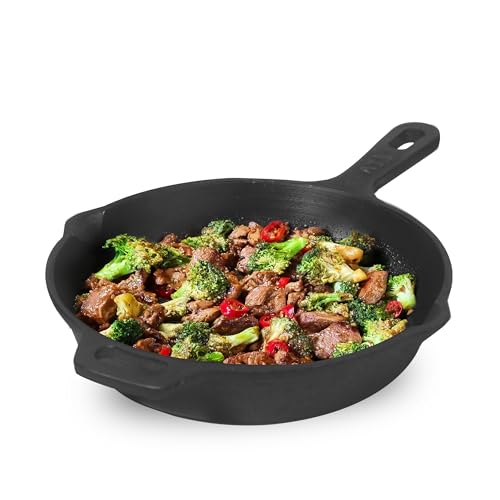
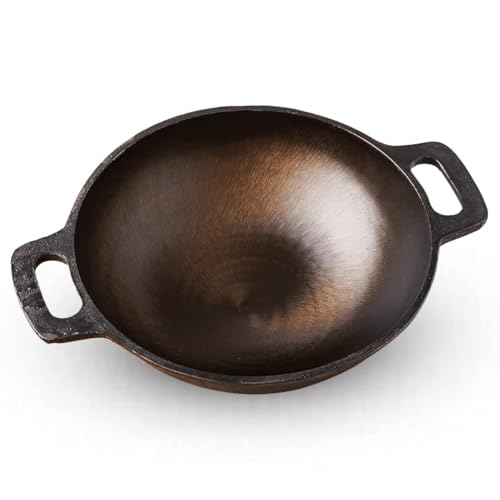
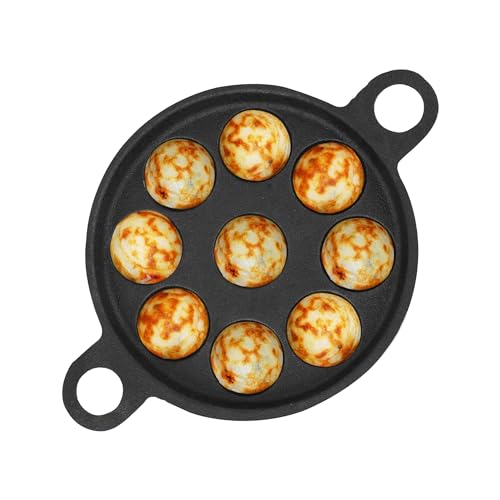


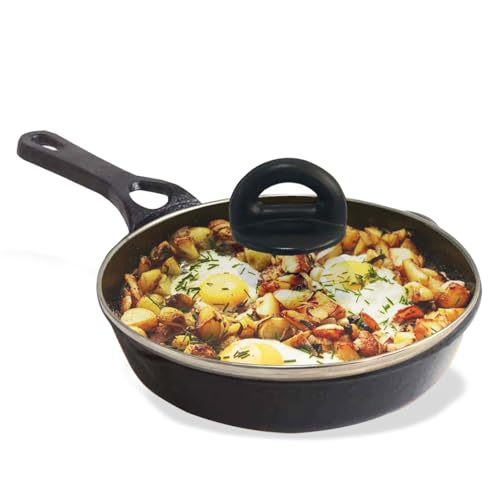
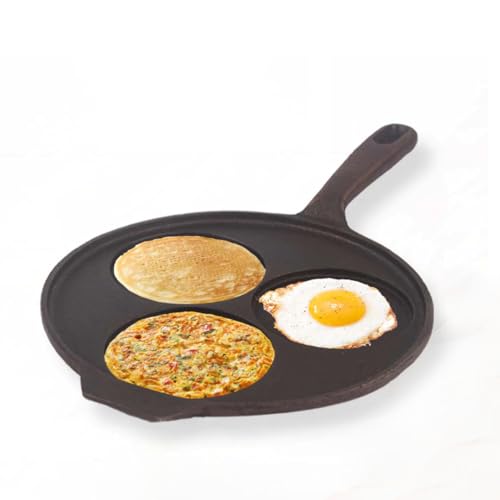

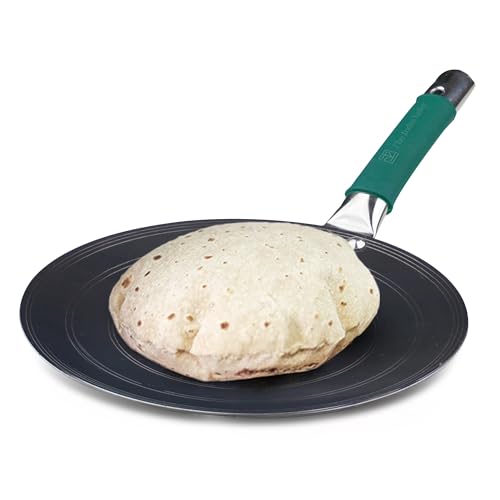
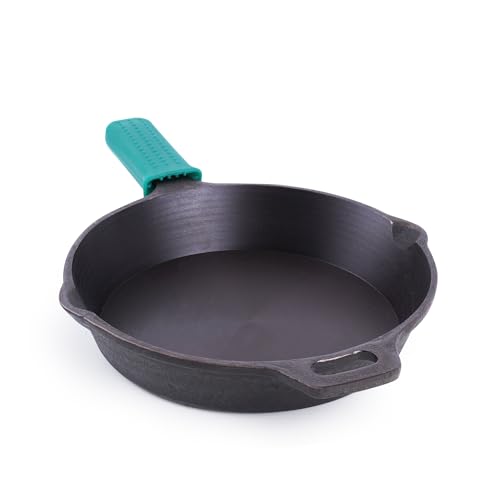
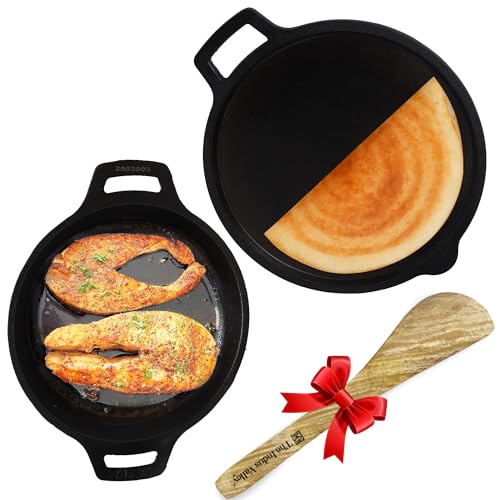
4. Solara Cast Iron Tawa – Best Budget Cast Iron Option
Best for: First-time cast iron buyers and budget-conscious households.
Want to try traditional cast iron cooking without spending too much?
The Solara Cast Iron Tawa is an option worth exploring.
It is listed as a 12-inch cast iron tawa suitable for preparing dosas and uttapams.
The larger cooking surface can be useful when you want to prepare regular-sized dosas for breakfast or dinner.
Key Features
- Cast iron construction.
- Approximately 12-inch cooking diameter.
- Suitable for dosa and uttapam preparation.
- Traditional cooking surface.
- Value-oriented pricing.
- Available through Indian online retailers.
Why We Recommend It
Cast iron cookware can be a long-term kitchen investment when maintained properly.
The Solara tawa offers a relatively accessible way to explore this type of cookware.
Its 12-inch size is practical for people who want enough room to spread batter without choosing an excessively large pan.
It can also be useful for preparing other Indian flatbreads and savoury pancakes.
Before purchasing, check whether the selected listing includes pre-seasoning, a spatula and care instructions.
Also confirm the exact weight and stove compatibility, as these details can vary across product variants.
Best For
- Budget-conscious buyers.
- People trying cast iron for the first time.
- Households preparing dosas regularly.
- Users who prefer traditional cookware.
Who Should Skip It?
- People who prefer lightweight non-stick pans.
- Users unwilling to maintain cast iron.
- Buyers who require a confirmed induction-compatible model without checking the listing.
Pros and Cons
| Pros | Cons |
|---|---|
| Traditional cast iron construction | Requires seasoning and maintenance |
| 12-inch size | Heavier than non-stick alternatives |
| Useful for dosas and uttapams | Weight should be checked before buying |
| Budget-oriented option | Cooking surface requires proper care |
| No conventional non-stick coating | Pre-seasoning details should be verified |
Our Verdict
The Solara Cast Iron Tawa is worth considering if you want to explore traditional cookware at a more accessible price.
It may be particularly useful for households that prepare dosas regularly and are comfortable with cast iron maintenance.
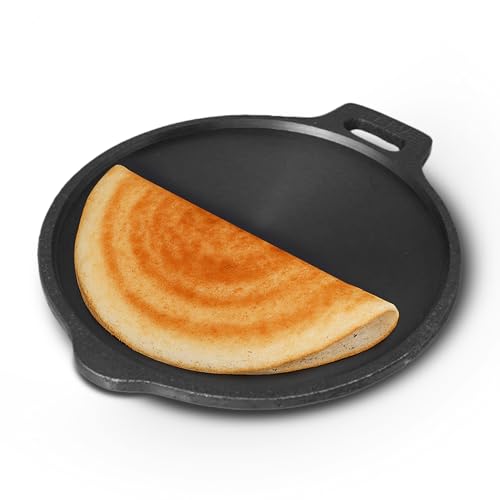
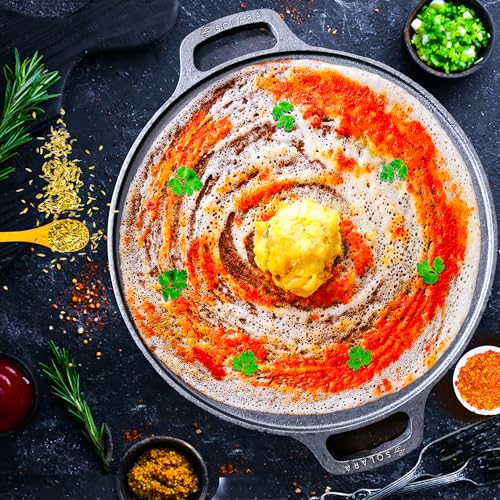
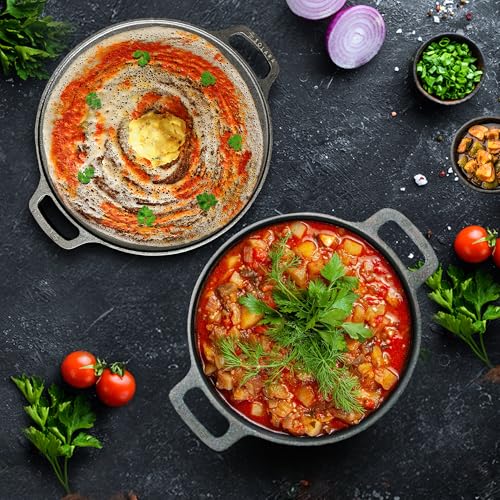
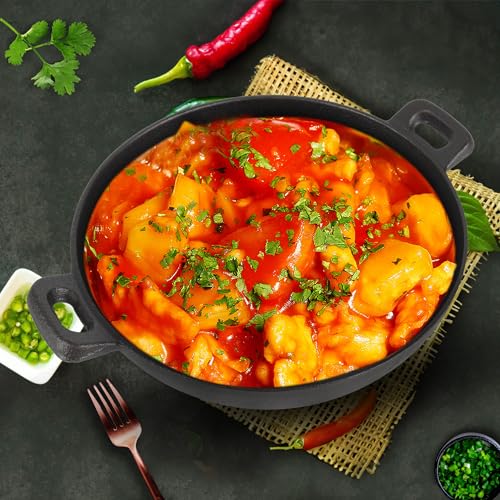
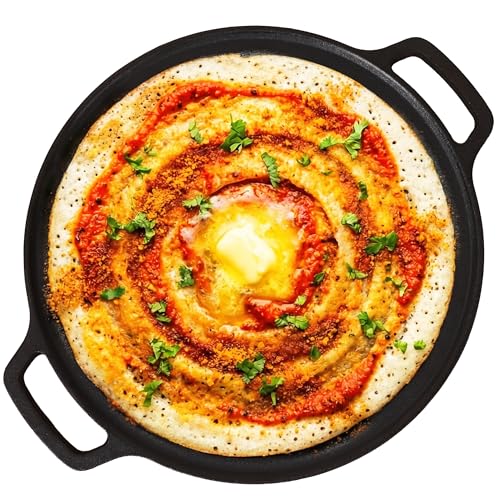


5. Prestige Cast Iron Dosa Tawa – Best for Traditional Everyday Cooking
Best for: People who prefer conventional cast iron cookware from an established Indian kitchen brand.
Prestige is a familiar name in Indian kitchens, with a wide range of cookware and appliances.
The Prestige Cast Iron Dosa Tawa is worth considering if you want a traditional iron cooking surface for preparing dosas and other Indian dishes.
Key Features
- Cast iron construction.
- Approximately 30cm cooking diameter for the listed model.
- Traditional cooking surface.
- Designed for dosa preparation.
- Suitable for users who prefer uncoated cookware.
Why We Recommend It
The main attraction is its traditional cast iron construction.
Unlike a coated aluminium tawa, cast iron does not depend on a synthetic non-stick layer.
With proper seasoning and cooking technique, it can provide a stick-resistant surface suitable for regular dosa preparation.
Its approximately 30cm diameter also offers a useful cooking area for larger dosas.
Cast iron does require more maintenance, though. You should avoid leaving it wet after washing and maintain the seasoning layer with appropriate care.
Best For
- Traditional Indian cooking.
- People who prefer cast iron cookware.
- Users who want a larger cooking surface.
- Households preparing dosas and other flatbreads.
Who Should Skip It?
- People who want a lightweight tawa.
- Beginners who prioritise effortless food release.
- Users who don’t want to maintain seasoning.
- Buyers who need dishwasher-friendly cookware.
Pros and Cons
| Pros | Cons |
|---|---|
| Traditional cast iron construction | Heavy cookware |
| Approximately 30cm cooking diameter | Requires seasoning |
| No synthetic non-stick coating | Needs proper drying |
| Suitable for several Indian dishes | Requires temperature control |
| Established cookware brand | Induction compatibility must be checked for the exact model |
Our Verdict
The Prestige Cast Iron Dosa Tawa is a suitable option for people who prefer traditional cookware and want a larger cooking surface.
If you already enjoy using cast iron cookware, it is worth comparing with the Hawkins and Indus Valley alternatives.


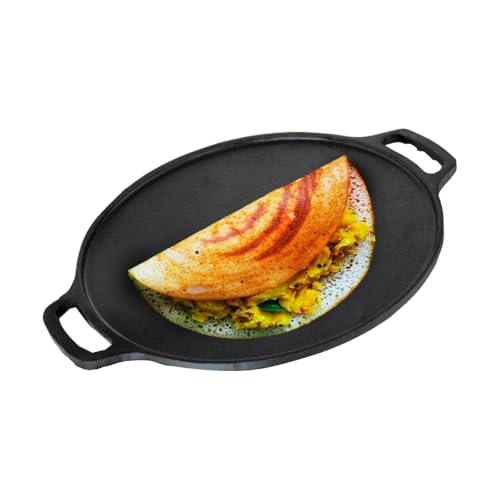


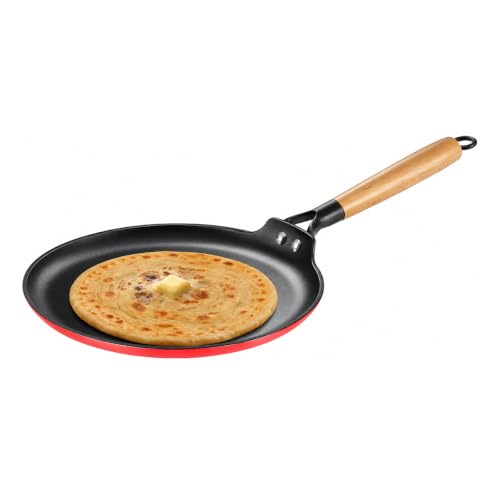
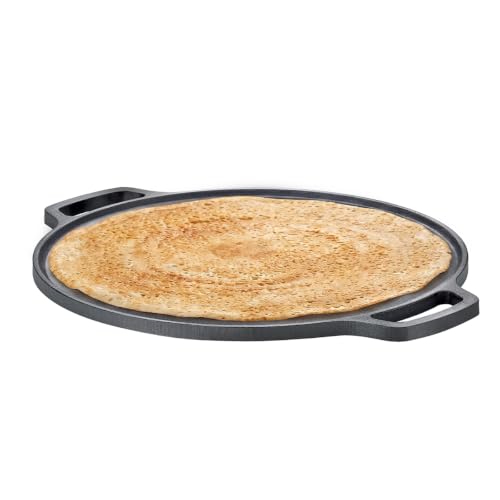
6. Prestige Durastone Non-Stick Dosa Tawa – Best Alternative Non-Stick Option
Best for: People who prefer convenient non-stick cooking.
If you don’t want to deal with cast iron seasoning and maintenance, a non-stick dosa tawa is often the more convenient choice.
Prestige offers Durastone cookware with a non-stick coating and hard-anodised construction in selected models.
The Prestige Durastone Non-Stick Dosa Tawa is worth comparing with other modern non-stick options when shopping for convenient everyday cookware.
Key Features
- Non-stick cooking surface.
- Hard-anodised construction.
- Designed for convenient cooking.
- Suitable for dosa and other flat preparations, subject to the exact model.
- Retail availability through Indian shopping platforms.
Why We Recommend It
A non-stick tawa is particularly useful when preparing thin dosas that need to release easily from the cooking surface.
It can also be convenient for people who prepare pancakes, chillas and uttapams.
The non-stick surface generally requires less oil than traditional unseasoned cookware and makes cleaning easier.
However, always verify the exact product dimensions, coating information and induction compatibility before ordering. The Prestige Durastone product range includes different cookware configurations, so specifications should not be assumed across every model.
Best For
- Everyday home cooking.
- People who prefer easy cleaning.
- Beginners making dosas.
- Users who want convenient non-stick cookware.
Who Should Skip It?
- People who specifically want uncoated cast iron.
- Users who prefer high-heat cooking with metal utensils.
- Buyers who want a particular size without verifying the listing.
Pros and Cons
| Pros | Cons |
|---|---|
| Convenient non-stick cooking | Coating requires careful maintenance |
| Easier cleaning | Avoid metal utensils |
| Useful for multiple recipes | Exact model specifications need verification |
| Suitable for everyday cooking | Not the same traditional experience as cast iron |
Our Verdict
The Prestige Durastone is worth comparing if your priority is convenient everyday non-stick cooking.
Before purchasing, confirm that the exact variant is a dosa tawa rather than a differently shaped omni or multipurpose tawa.
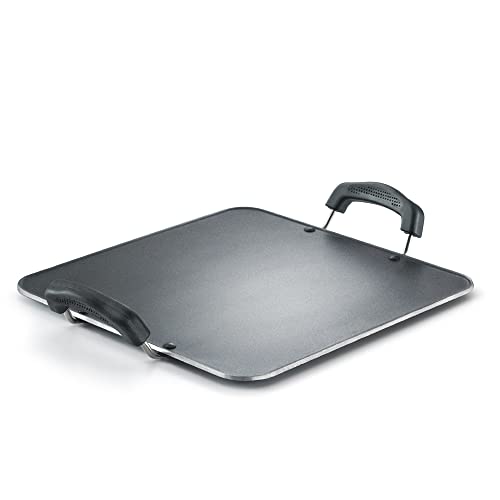

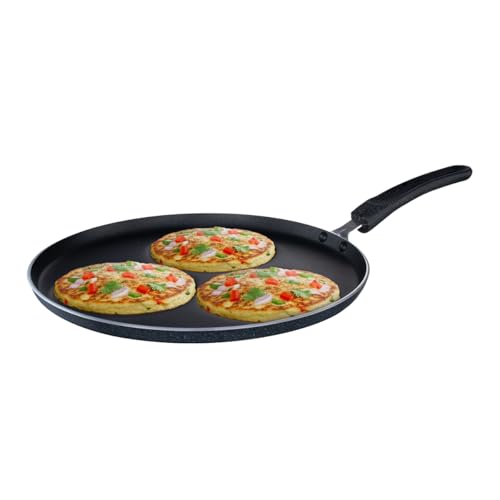
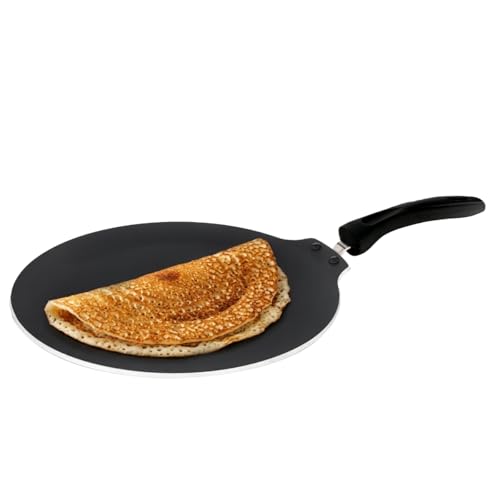


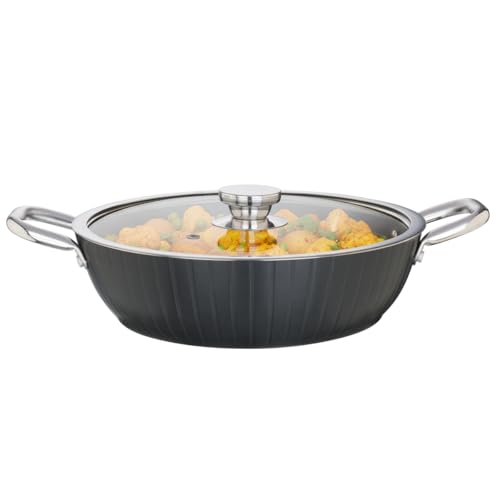
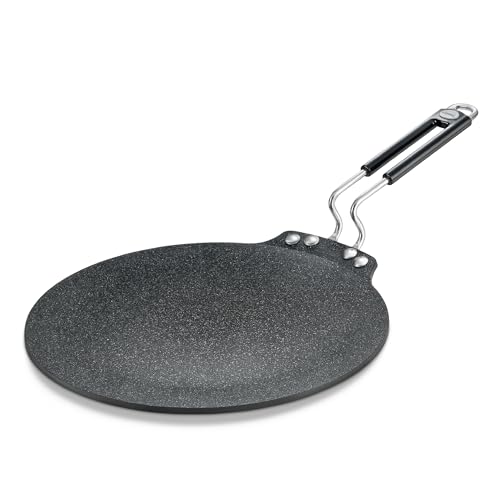
Best Dosa Tawa Comparison Table
Choosing between cast iron and non-stick cookware becomes easier when you compare the main features.
| Product | Material | Cooking Surface | Best For | Maintenance |
|---|---|---|---|---|
| Hawkins Futura Dosa Tawa | Hard-anodised aluminium | Non-stick | Everyday use | Easy |
| Hawkins Futura Cast Iron | Cast iron | Seasoned iron | Traditional cooking | Moderate |
| Indus Valley Super Smooth | Cast iron | Smooth iron | Traditional dosas | Moderate |
| Solara Cast Iron | Cast iron | Traditional iron | Budget cast iron | Moderate |
| Prestige Cast Iron | Cast iron | Traditional iron | Everyday traditional cooking | Moderate |
| Prestige Durastone | Hard-anodised cookware | Non-stick | Convenient cooking | Easy |
Exact dimensions, stove compatibility and accessories should be confirmed against the selected product listing.
Consolidated Pros and Cons
| Product | Reasons to Buy | What We Like | What We Don’t Like |
|---|---|---|---|
| Hawkins Futura | Thick non-stick base | Convenient and easy to use | Coating needs care |
| Hawkins Cast Iron | Traditional construction | 5mm base and pre-seasoning | Heavy |
| Indus Valley | Smooth cast iron | Traditional cooking experience | Requires seasoning |
| Solara | Budget-friendly cast iron | Accessible entry into cast iron | Maintenance required |
| Prestige Cast Iron | Established cookware brand | Traditional cooking surface | Heavy and needs care |
| Prestige Durastone | Convenient non-stick | Easy cleaning | Exact variant specifications matter |
Cast Iron vs Non-Stick Dosa Tawa: Which Is Better?
This is probably the biggest question when shopping for a dosa tawa.
Both materials have their advantages, but they offer different cooking experiences.
Cast Iron Dosa Tawa
Cast iron cookware has been used in Indian kitchens for generations.
It is known for its heat retention and ability to develop a seasoned cooking surface over time.
Advantages
- Good heat retention.
- No conventional synthetic non-stick coating.
- Can develop a naturally stick-resistant surface through seasoning.
- Suitable for traditional cooking.
- Can last for years with proper care.
Disadvantages
- Heavy construction.
- Requires seasoning.
- Can rust if not dried properly.
- Takes time to preheat.
- Needs some practice to achieve consistent food release.
Non-Stick Dosa Tawa
Non-stick tawas are designed to make everyday cooking easier.
They are particularly useful for beginners who struggle with batter sticking to the surface.
Advantages
- Easier food release.
- Convenient cleaning.
- Usually lighter than cast iron.
- Requires less oil.
- Suitable for everyday breakfast preparation.
Disadvantages
- Coating can wear out over time.
- Requires careful handling.
- Metal utensils can damage the coating.
- Should not be overheated.
- Generally has a shorter useful coating life than properly maintained uncoated cast iron.
Cast Iron vs Non-Stick: Quick Comparison
| Feature | Cast Iron | Non-Stick |
|---|---|---|
| Heat retention | High | Depends on construction |
| Food release | Depends on seasoning | Generally easier |
| Weight | Heavy | Usually lighter |
| Maintenance | Requires seasoning | Easier cleaning |
| Oil requirement | Depends on seasoning and technique | Usually lower |
| Metal utensils | Generally suitable | Avoid |
| Durability | Long-lasting with care | Coating eventually wears |
| Beginner-friendly | Requires practice | Generally easier |
| Traditional cooking | Excellent option | Less traditional |
Our recommendation: Choose cast iron if you enjoy traditional cooking and don’t mind maintenance. Choose non-stick if convenience, easy cleaning and effortless dosa release are your priorities.
What to Look for When Buying a Dosa Tawa
A good dosa tawa should do more than simply provide a flat cooking surface.
Here are the important factors to consider before purchasing.
1. Choose the Right Diameter
The cooking diameter determines how large a dosa you can prepare.
| Tawa Diameter | Suitable For |
|---|---|
| 20–24cm | Small dosas and individual portions |
| 25–28cm | Everyday family cooking |
| 29–30cm | Larger restaurant-style dosas |
| 31–33cm | Large dosas and bigger portions |
For most households, a 28–30cm tawa is a practical choice.
If you frequently prepare large masala dosas, consider a bigger cooking surface, provided your burner and kitchen space can accommodate it.
2. Check the Base Thickness
Base thickness plays an important role in how the tawa heats up and retains heat.
A thin tawa can heat up quickly but may develop hot spots.
A thicker tawa generally takes longer to preheat but can provide more stable heat retention.
For example, the Hawkins Futura non-stick dosa tawa has a published 4.88mm base thickness, while its cast iron dosa tawa has a 5mm base.
These are useful specifications to compare when choosing cookware.
However, thickness alone does not guarantee uniform heating. Material, construction and burner size matter too.
3. Consider Heat Distribution
Dosas need a reasonably consistent cooking temperature across the surface.
Uneven heating can result in:
- Dark centres.
- Pale edges.
- Uneven browning.
- Inconsistent crispiness.
Choose a well-constructed tawa that suits your burner size.
Also avoid using a very small flame with an excessively large tawa or a very high flame concentrated beneath its centre.
4. Check the Surface Finish
A smooth cooking surface makes it easier to spread batter evenly.
Cast iron tawas may have different surface finishes depending on their manufacturing and finishing process.
Non-stick tawas, meanwhile, should have an intact coating without visible scratches, peeling or damage.
If you’re purchasing cast iron, look for a surface that is suitable for dosa preparation and can be seasoned properly.
5. Check Induction Compatibility
Not every dosa tawa works on an induction cooktop.
If you use induction, look for:
- An induction-compatible base.
- A magnetic material.
- Manufacturer confirmation.
- Suitable base dimensions for your cooktop.
Many traditional cast iron tawas work on induction, but don’t assume every model is compatible without checking.
Similarly, not every aluminium non-stick tawa is induction-compatible.
6. Consider the Handle Design
A tawa should be comfortable to handle, especially when preparing multiple dosas.
Look for:
- Strongly attached handles.
- Heat-resistant handle materials.
- Comfortable grip.
- Proper handle positioning.
- Balanced weight distribution.
Cast iron tawas can be particularly heavy, so handle design matters.
7. Check the Non-Stick Coating
If you choose non-stick cookware, inspect the coating specifications.
Look for:
- Manufacturer-disclosed coating information.
- Clear care instructions.
- A suitable warranty.
- A smooth, undamaged cooking surface.
Avoid overheating empty non-stick cookware. Use low-to-medium heat and follow the manufacturer’s instructions.
Replace a pan if the coating is significantly damaged or peeling.
8. Consider Weight and Storage
A heavy cast iron tawa may be excellent for someone who cooks regularly, but it can become inconvenient if you frequently move cookware between shelves and burners.
A lightweight non-stick model may be easier to handle.
Think about who will use the tawa most often and how much storage space you have.
How to Make Crispy Restaurant-Style Dosas at Home
Even the best dosa tawa cannot compensate for poor batter or incorrect cooking technique.
If you want crispy, golden dosas, follow these practical tips.
Step 1: Prepare Properly Fermented Batter
Good dosa batter is the foundation of a crispy dosa.
A typical homemade batter uses rice, urad dal and fenugreek seeds.
The batter should be properly fermented and have a consistency that spreads easily on the tawa.
If the batter is too thick, the dosa may turn out dense.
If it is too watery, spreading and browning can become difficult.
Step 2: Preheat the Tawa
Preheating is important.
A tawa that is too cold may cause the batter to stick or cook unevenly.
A tawa that is excessively hot can make spreading difficult and cause the batter to cook too quickly.
Use medium heat initially and adjust according to your cookware.
Step 3: Check the Temperature
One traditional technique is to sprinkle a few drops of water onto the tawa.
If the water evaporates quickly, the tawa is heating up.
Wipe away excess moisture before spreading the batter.
Be careful while handling hot cookware.
Step 4: Spread the Batter Evenly
Pour a ladleful of batter in the centre.
Using the back of the ladle, spread it in circular motions from the centre towards the outside.
Apply gentle, consistent pressure.
The thinner the dosa, the easier it is to achieve crisp edges, provided the batter and temperature are suitable.
Step 5: Add Oil or Ghee
Apply a little oil or ghee around the edges.
This helps with browning and gives the dosa a richer flavour.
You can adjust the amount depending on your preference.
Step 6: Allow the Dosa to Cook
Avoid repeatedly moving or scraping the dosa.
Allow it to cook until the edges begin lifting and the surface develops a golden-brown appearance.
Use a suitable spatula to release the edges gently.
Step 7: Serve Immediately
Crispy dosas are best served immediately.
Pair them with:
- Coconut chutney.
- Tomato chutney.
- Sambar.
- Potato masala.
- Onion chutney.
A perfectly cooked dosa deserves equally good accompaniments!
How to Season and Maintain a Cast Iron Dosa Tawa
If you choose cast iron, proper seasoning and maintenance are essential.
Seasoning helps develop a protective layer of polymerised oil on the cooking surface.
It also improves food release over time.
How to Season a Cast Iron Tawa
- Wash the tawa with warm water and a little mild dishwashing liquid.
- Dry it completely.
- Apply a very thin layer of cooking oil over the cooking surface.
- Remove excess oil using a clean cloth.
- Heat the tawa carefully according to the manufacturer’s seasoning instructions.
- Allow it to cool safely.
- Repeat if necessary.
Follow the specific care instructions supplied with your product, especially if it comes pre-seasoned.
How to Clean a Cast Iron Tawa
- Clean it after cooking.
- Use warm water and a suitable cleaning brush.
- Avoid leaving it submerged in water.
- Dry it thoroughly.
- Apply a very thin layer of oil if required.
- Store it in a dry place.
How to Maintain a Non-Stick Dosa Tawa
Non-stick cookware requires a different approach.
- Avoid metal spatulas.
- Use wooden or silicone utensils.
- Avoid heating an empty pan for long periods.
- Use low-to-medium heat.
- Allow the pan to cool before washing.
- Avoid abrasive scrubbers.
- Follow the manufacturer’s cleaning instructions.
Common Dosa Tawa Buying Mistakes to Avoid
Before purchasing, keep these mistakes in mind.
Mistake 1: Choosing a Tawa Only Because It Is Cheap
A very inexpensive tawa may have a thin base or inconsistent construction.
Compare the material, dimensions and thickness before deciding.
Mistake 2: Ignoring the Tawa Diameter
A small tawa may not provide enough room for restaurant-style large dosas.
Choose a size according to your household’s requirements.
Mistake 3: Buying Cast Iron Without Understanding Seasoning
Cast iron is not completely maintenance-free.
If you don’t want to season, dry and care for cookware, non-stick may be a better choice.
Mistake 4: Assuming Every Tawa Is Induction-Compatible
Check the exact model’s specifications.
A tawa designed for gas cooking may not work on an induction cooktop.
Mistake 5: Overheating Non-Stick Cookware
Excessive heat can damage non-stick coatings.
Follow the manufacturer’s instructions and avoid prolonged empty heating.
Mistake 6: Expecting the Tawa to Fix Poor Batter
Even premium cookware cannot turn poorly fermented or incorrectly prepared batter into a perfect crispy dosa.
Batter consistency, fermentation and cooking temperature are equally important.
How We Selected These Dosa Tawas
At BestBuy93.IN, we aim to make product recommendations useful for real household requirements rather than simply listing popular products.
For this guide, we considered the following factors:
1. Material and construction: We compared cast iron, hard-anodised aluminium and non-stick options to understand their cooking characteristics.
2. Cooking surface: We considered the surface finish and its suitability for spreading dosa batter.
3. Base thickness: We reviewed manufacturer-published thickness specifications wherever available.
4. Size: We considered different cooking diameters to identify options for individual portions and family-sized dosas.
5. Ease of maintenance: We compared the cleaning and seasoning requirements of cast iron and non-stick cookware.
6. Stove compatibility: We considered published information about gas and induction use, while highlighting the importance of checking exact model specifications.
7. Product availability: We reviewed manufacturer product pages and Indian retail listings.
Research transparency: This is a specification-based buying guide, not a claim of independent laboratory testing or hands-on cooking tests by BestBuy93.IN. Product prices, ratings and availability can change. Verify the latest specifications and seller information before purchasing.
Frequently Asked Questions About Dosa Tawas
1. Which is the best dosa tawa for making crispy dosas?
A well-constructed cast iron tawa or a thick-base non-stick dosa tawa can work well. Cast iron offers good heat retention, while non-stick cookware provides easier food release. Your batter consistency and temperature control are equally important.
2. Is cast iron better than non-stick for making dosas?
Cast iron is a good choice for traditional cooking and heat retention. Non-stick is generally easier for beginners because batter releases more easily and cleaning requires less effort. The better option depends on your cooking preferences.
3. What size dosa tawa is best for home use?
A 28–30cm tawa is a practical size for most households. If you regularly prepare larger restaurant-style dosas, consider a 30–33cm model, provided it fits your stove and kitchen space.
4. Can I use a dosa tawa on an induction cooktop?
Yes, provided the specific tawa is induction-compatible. Cast iron models are often suitable for induction, while aluminium non-stick models require a compatible magnetic base. Always check the manufacturer’s specifications.
5. Why does dosa batter stick to my tawa?
Several factors can cause sticking, including insufficient preheating, incorrect temperature, poor seasoning, unsuitable surface condition and batter consistency. Make sure your tawa is properly prepared before spreading batter.
6. How do I make restaurant-style crispy dosas at home?
Use properly fermented batter, preheat the tawa, spread the batter thinly and cook at a suitable temperature. Add a little oil or ghee around the edges and allow the dosa to brown properly before removing it.
7. Do cast iron dosa tawas need seasoning?
Yes. Cast iron tawas benefit from seasoning, which develops a protective layer and improves food release. Some models come pre-seasoned, but they still require regular care.
8. Can I use a metal spatula on a non-stick dosa tawa?
It is better to avoid metal utensils because they can scratch and damage the coating. Use wooden, silicone or other manufacturer-approved utensils.
9. Which dosa tawa is easiest to clean?
A good-quality non-stick tawa is generally easier to clean because food releases more easily. Cast iron requires proper drying and occasional oiling to maintain its seasoning.
10. Can I make uttapam and pancakes on a dosa tawa?
Yes. Most dosa tawas can also be used for uttapam, pancakes, chillas and similar preparations. Check the cooking surface dimensions and manufacturer’s instructions.
Final Verdict: Which Dosa Tawa Should You Buy?
The right dosa tawa can make everyday breakfast preparation easier, but choosing between cast iron and non-stick cookware depends on your expectations.
If you prefer convenience, easy cleaning and effortless food release, the Hawkins Futura Non-Stick Dosa Tawa is our overall recommendation.
If you enjoy traditional cookware and want a thick, uncoated cooking surface, the Hawkins Futura Cast Iron Dosa Tava is worth considering.
For people interested in smooth-finish traditional cookware, The Indus Valley is another option. Budget-conscious buyers can explore Solara, while Prestige offers an alternative for people who prefer established cookware brands.
Here is our final selection:
| Your Requirement | Our Recommendation |
|---|---|
| Best Overall | Hawkins Futura Dosa Tawa |
| Traditional Cast Iron | Hawkins Futura Cast Iron |
| Smooth Cast Iron Surface | The Indus Valley Super Smooth |
| Budget Cast Iron | Solara Cast Iron |
| Traditional Everyday Cooking | Prestige Cast Iron |
| Alternative Non-Stick | Prestige Durastone |
Our final advice: Don’t choose a dosa tawa based only on its brand or price. Consider the cooking diameter, base thickness, material, stove compatibility and maintenance requirements.
And remember, the secret to a beautifully crispy dosa isn’t just the tawa. Good fermentation, correct batter consistency, the right temperature and a little patience make all the difference.
Now that’s a breakfast worth waking up for! 🥞
Explore more blogs on BestBuy93.IN across Home, Food, Beauty, Lifestyle & Tech!