

☕ Buying an electric kettle sounds easy.
You search for “best electric kettle“, see hundreds of options, compare the wattage, check the price and… wait.
Glass or stainless steel? 🤔
That’s where things get interesting.
Glass kettles look sleek and modern. You can actually watch the water boil, see the water level and immediately notice any limescale buildup. Stainless steel kettles, on the other hand, are generally tougher, more forgiving and better suited to everyday handling.
So which one should you choose?
The honest answer is:
Neither is automatically better.
The right choice depends on how you use your kettle, how careful you are with appliances, how hard your water is, how much you want to spend and whether you prioritise durability or visibility.
In this guide, we’ll compare Glass vs Steel Electric Kettles across heating, durability, safety, cleaning, appearance, capacity, hard-water use, price and everyday convenience.
Also Read | Best Electric Kettles for Home in India
Let’s settle this once and for all. ☕⚡
🔥 Glass vs Steel Electric Kettle: Quick Comparison
| Feature | 🪟 Glass Kettle | 🥇 Stainless Steel Kettle |
|---|---|---|
| Appearance | ⭐⭐⭐⭐⭐ | ⭐⭐⭐⭐ |
| Visibility | ⭐⭐⭐⭐⭐ | ⭐⭐ |
| Durability | ⭐⭐⭐ | ⭐⭐⭐⭐⭐ |
| Everyday handling | Moderate | Excellent |
| Heat visibility | Excellent | Poor |
| Cleaning visibility | Excellent | Moderate |
| Limescale visibility | High | Lower |
| Scratch/crack resistance | Lower | Higher |
| Exterior heat | Depends on design | Can get very hot |
| Weight | Moderate | Moderate |
| Long-term toughness | Good with care | Usually better |
| Best for | Aesthetic + visibility | Durability + daily use |
Both materials can work well for boiling water. The major difference is how they behave outside the heating task—especially during handling, cleaning and long-term use.
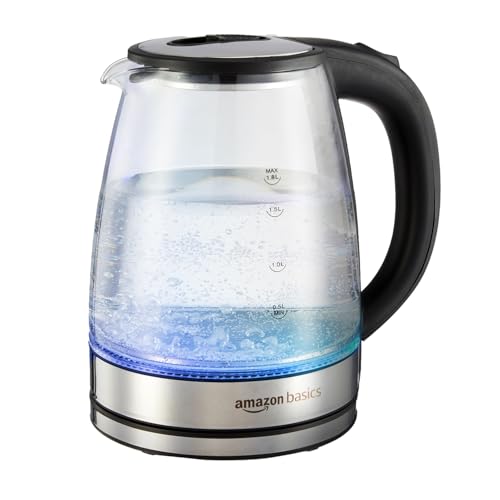
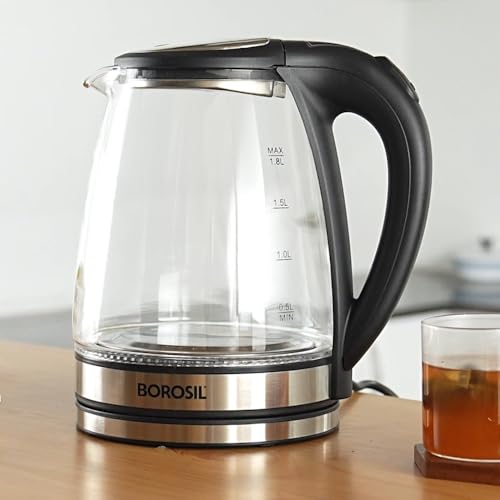
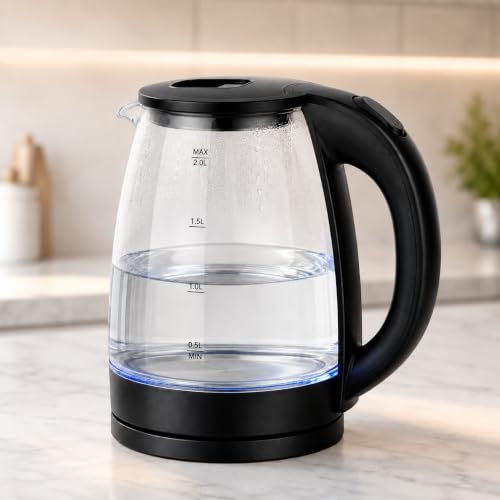
🪟 1. What Is a Glass Electric Kettle?
A glass electric kettle typically uses heat-resistant glass, commonly borosilicate glass, for the main water chamber.
The heating element is generally concealed underneath the base rather than sitting directly in the water.
Some models combine the glass body with:
- Stainless-steel heating base
- Plastic or heat-resistant handle
- Plastic lid
- 360° rotating power base
- LED illumination
- Auto shut-off
- Boil-dry protection
For example, current glass-kettle models from brands such as Glen and Aisen specify borosilicate/heat-resistant glass, concealed heating elements and automatic safety features.
The biggest attraction?
You can see everything. 👀
You can see:
💧 Water level
🔥 Boiling activity
⚪ Limescale
🫖 Any visible residue
That makes glass particularly appealing if you like being able to visually monitor your kettle.



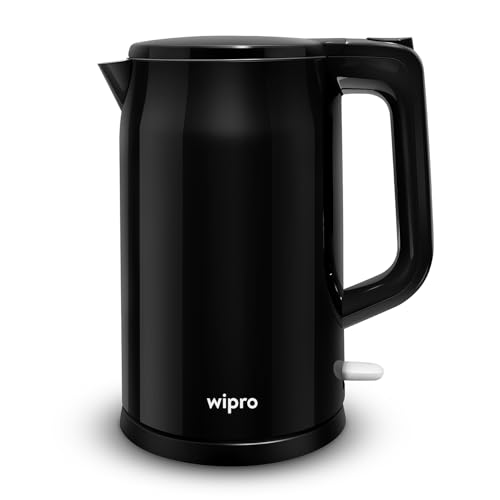
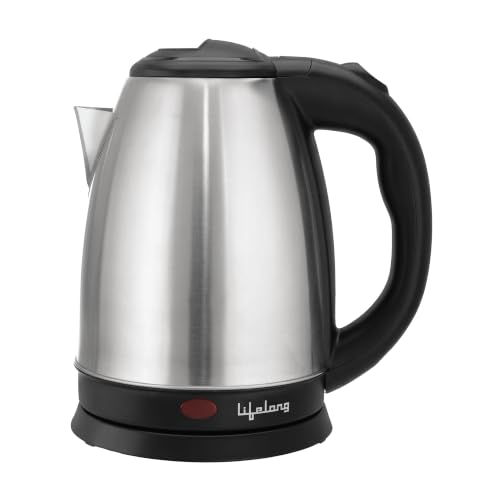
🥇 2. What Is a Stainless Steel Electric Kettle?
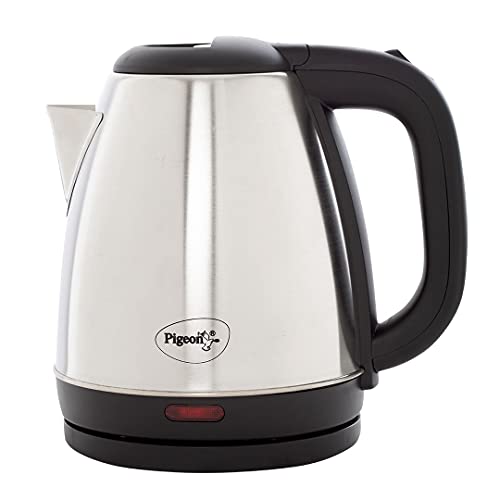
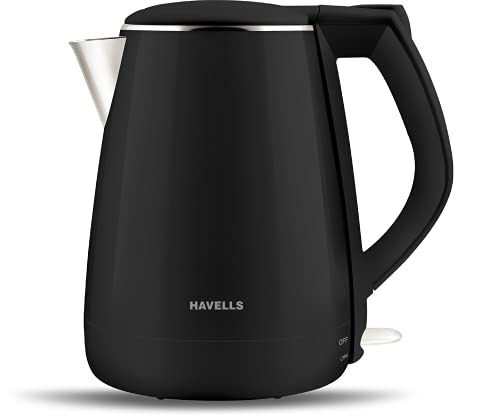
A stainless steel kettle uses a metal body or water-contact chamber, often combined with a concealed heating element.
Stainless steel kettles are popular because they can handle the general knocks and movement of a busy kitchen better than glass.
A current 2026 Glen stainless-steel model, for example, uses a stainless-steel body, concealed heating element, 360° rotational base and automatic shut-off.
The biggest advantage?
Durability.
You don’t have to worry about accidentally bumping the kettle against the counter and immediately wondering whether you’ve cracked it.
That’s why steel is often the safer practical choice for:
- Busy kitchens
- Families
- Students
- Hostels
- Frequent daily use
- People who aren’t particularly gentle with appliances 😂





⚡ 3. Which Kettle Boils Water Faster?
Here’s where marketing can become confusing.
Glass vs steel doesn’t automatically determine boiling speed.
Heating speed depends much more on:
- Wattage
- Water quantity
- Starting water temperature
- Heating-element design
- Kettle efficiency
- Ambient conditions
A 1500W glass kettle and a 1500W steel kettle can have broadly similar heating performance if their heating systems and water quantities are comparable.
So don’t assume:
Glass = slow
or
Steel = fast.
That’s an oversimplification.
🔥 4. Does Stainless Steel Retain Heat Better?
Steel can retain heat differently from glass because the materials have different thermal properties, but the kettle’s overall construction matters considerably.
For example:
Single-wall steel
The outer body can become hot and the kettle may transfer heat to the surrounding air.
Double-wall steel
The insulation can help keep the outer surface cooler and reduce heat loss.
Glass
A glass kettle can also have different performance depending on its thickness and whether it has insulation.
So when comparing two kettles, don’t judge only by:
“Steel vs glass.”
Also check:
single-wall vs double-wall construction.
🛡️ 5. Which Is Safer: Glass or Steel?
This needs a slightly more nuanced answer.
Glass
Quality heat-resistant or borosilicate glass is designed for high-temperature use.
But:
Glass is still more vulnerable to impact.
A fall or sharp impact can crack or break it.
Stainless Steel
Steel is much more resistant to impact and doesn’t shatter when dropped.
However, a conventional single-wall steel kettle can become extremely hot externally.
So:
Glass
More fragile, but visibility is excellent.
Steel
More impact-resistant, but the outside can get hot.
A double-wall steel kettle can address some of the exterior-heat concern.
👶 6. What If You Have Children at Home?
This is where kettle design matters more than material alone.
Don’t simply think:
“Glass is safer.”
or
“Steel is safer.”
Instead, look for:
- Cool-touch exterior
- Double-wall construction
- Secure handle
- Locking lid
- Stable base
- Auto shut-off
- Boil-dry protection
A double-wall steel kettle may be more practical than a thin single-wall steel model.
Similarly, a glass kettle should be positioned where it is unlikely to be knocked over.
And remember:
The handle, lid and steam outlet can still be hot.
💧 7. Which One Is Better for Hard Water?
If you live in an area with hard water, this becomes an important question.
Hard water can leave limescale deposits inside your kettle.
With glass, there’s one major advantage:
You can SEE the buildup.
That white layer appears against the transparent surface, making it difficult to ignore.
With stainless steel, buildup may be less visually obvious.
So:
Glass
Better for spotting limescale early.
Steel
Better at hiding the evidence. 😂
But hiding limescale doesn’t mean it’s not there.
Both types still need appropriate descaling and cleaning.
🧼 8. Which Is Easier to Clean?
This depends on the design.
Glass
The transparent body makes it easy to visually inspect the inside.
You can immediately see:
- Scale
- Water marks
- Residue
- Discolouration
That’s useful.
Stainless Steel
The surface can be easy to wipe and generally tolerates everyday handling well.
But the inside isn’t always as easy to inspect.
The real winner?
The kettle with a wide opening and concealed heating element.
Material matters, but design matters too.
⚪ 9. What About Limescale?
Neither glass nor steel magically prevents limescale.
If your water has a high mineral content, deposits can build up on the heating area.
Over time you may notice:
- White flakes
- Chalky marks
- Reduced visual clarity
- Slower heating
- Unpleasant appearance
Don’t wait until your kettle looks like it has its own geological formation. 😂
Descale according to the manufacturer’s instructions.
☕ 10. Which Gives Better-Tasting Water?
For normal good-quality drinking water, the difference between a well-made glass kettle and a good stainless-steel kettle may be small.
However, water-contact material and build quality matter.
Glass is generally inert and doesn’t contribute a metallic character to water.
Good-quality stainless steel is also widely used for food and beverage contact.
The important thing is to avoid making broad assumptions based purely on price.
A ₹700 kettle isn’t automatically unsafe.
A ₹2,500 kettle isn’t automatically perfect.
Look at:
manufacturer + materials + water-contact surfaces + maintenance.
🪟 11. Glass Wins on Visibility
This is probably the biggest reason people choose glass.
You can see:
How much water is inside
No guessing.
Whether it’s boiling
You can literally watch it.
Whether there is limescale
Very obvious.
Whether the kettle is clean
Much easier to inspect.
For people who enjoy visual control, this is genuinely useful.
🥇 12. Steel Wins on Durability
Now the other side.
Imagine:
You’re half asleep.
You pick up the kettle.
It bumps against the counter.
With glass, you immediately think:
“Oh God, please don’t crack.” 😭
With steel:
“Okay.”
That’s the difference.
Steel generally handles everyday knocks much better.
This makes it especially useful for:
- Hostel rooms
- PGs
- Students
- Busy family kitchens
- Office pantries
- Frequent handling
🏠 13. Which One Looks Better?
This is completely subjective.
Glass
Looks:
✨ Modern
✨ Minimal
✨ Sleek
✨ Premium
✨ Visually interesting
The LED illumination found on some models can also make the boiling process look quite attractive.
Steel
Looks:
🥇 Classic
🥇 Professional
🥇 Minimal
🥇 Premium
🥇 Kitchen-friendly
A brushed stainless-steel kettle can fit beautifully into modern kitchens.
So ask yourself:
Do you want the kettle to be visible as part of your kitchen décor?
If yes:
Glass may appeal more.
If you prefer:
“Keep it simple and durable.”
Steel makes more sense.
🧳 14. Which Is Better for Students and Hostel Rooms?
Stainless steel wins.
Why?
Because hostel life isn’t exactly known for gentle appliance handling. 😂
A steel kettle is generally more forgiving when:
- Moving rooms
- Packing/unpacking
- Sharing appliances
- Using small counters
- Carrying it around
Glass can absolutely work in a hostel, but it requires more care.
👨👩👧 15. Which Is Better for Families?
For a family kitchen, I’d generally lean toward:
Stainless steel
especially if the kettle is going to be used frequently.
Why?
- More durable
- Easier to handle
- Better resistance to accidental knocks
- Available in larger capacities
- Plenty of affordable options
But if you have a stable kitchen setup and love seeing the water boil, glass can still be a great choice.
☕ 16. Which Is Better for Tea and Coffee?
Both.
Seriously. 😄
For normal:
☕ Chai
☕ Coffee
💧 Hot water
both materials can do the job.
The more important factors are:
Temperature control + wattage + capacity + heating system.
If you’re a specialty tea drinker, a temperature-control kettle may be more useful than choosing between glass and steel.
🍵 17. What About Green Tea?
Green tea can be more sensitive to water temperature than regular boiling-water beverages.
So if you’re choosing a kettle specifically for green tea, don’t obsess only over:
Glass vs steel.
Instead, consider:
Temperature control.
That can allow you to heat water to a selected temperature rather than simply boiling it.
🍜 18. What About Maggi and Cooking?
Again:
Material isn’t the main question.
The question is:
Is the kettle designed for cooking?
A standard glass or steel kettle may be designed primarily for boiling water.
Some multipurpose electric kettles are designed for:
- Noodles
- Eggs
- Soup
- Tea
- Small cooking tasks
If the manufacturer says water only, don’t turn it into your personal electric saucepan. 😂
🔌 19. What Safety Features Matter More Than Material?
Whether you choose glass or steel, prioritise these:
🛑 Automatic Shut-Off
The kettle switches off after boiling.
🔥 Boil-Dry Protection
Helps protect the appliance when there isn’t enough water.
🌀 360° Swivel Base
Convenient cordless handling.
🔒 Secure Lid
Helps reduce accidental opening or spills.
🧼 Concealed Heating Element
Easier to clean.
🛡️ Cool-Touch / Double Wall
Particularly useful if exterior temperature is a concern.
Current glass and steel models from manufacturers such as Glen and iBELL demonstrate that these safety features are available across both material categories.
💰 20. Is Glass More Expensive Than Steel?
Not necessarily.
Both categories cover a wide range of prices.
You can find:
Budget glass kettles
Often with:
- Basic glass body
- 1.5–1.8L capacity
- Auto shut-off
- LED illumination
Budget steel kettles
Often with:
- Stainless-steel body
- 1.2–1.8L capacity
- Auto shut-off
- Concealed heating element
Premium pricing usually comes from build quality and additional features, not simply because the kettle is made from glass or steel.
For example, current manufacturer listings show glass models with 1.8L capacity and 2000W power around ₹1,395, while steel models with 1.8L/1350W specifications are also available in the current market.
🧠 21. Which One Should You Choose?
Let’s make it ridiculously simple.
Choose Glass if you want:
🪟 Visible water level
🔥 Watch the water boil
✨ Modern appearance
⚪ Easy visual inspection of limescale
🏠 A stylish kitchen appliance
Choose Steel if you want:
🥇 Durability
💪 Better impact resistance
🏠 Frequent everyday use
👨👩👧 Family-friendly practicality
🧳 Easier handling
💰 Plenty of budget options
📊 22. Glass vs Steel: Real-Life Scenarios
| Situation | Better Choice |
|---|---|
| Student/hostel | 🥇 Steel |
| Busy family kitchen | 🥇 Steel |
| Modern kitchen aesthetics | 🪟 Glass |
| Want to see water level | 🪟 Glass |
| Hard water | 🤝 Either + regular descaling |
| Frequent handling | 🥇 Steel |
| Careful home user | 🪟 Glass |
| Children around | 🤝 Depends on cool-touch/safety design |
| Specialty tea | 🤝 Either + temperature control |
| Basic chai/coffee | 🤝 Either |
| Want maximum durability | 🥇 Steel |
| Want visual appeal | 🪟 Glass |
🏆 23. Our Simple Recommendation
If you’re still confused, here’s the easiest answer:
🥇 Choose Stainless Steel if:
You want a durable everyday workhorse.
It’s the better default for people who don’t want to worry too much about handling.
🪟 Choose Glass if:
You want a stylish kettle where you can see the water clearly and you’re comfortable handling it carefully.
Neither choice is wrong.
You’re simply choosing between two different priorities:
Steel = Durability
Glass = Visibility + Aesthetics
⚠️ 24. One Important Thing: Don’t Judge Only by Body Material
This is perhaps the most important takeaway.
A badly designed stainless-steel kettle can be worse than a well-designed glass kettle.
And a poorly made glass kettle can be worse than a good stainless-steel model.
Before buying, check:
☐ Heating element
☐ Wattage
☐ Capacity
☐ Auto shut-off
☐ Boil-dry protection
☐ Lid design
☐ Handle
☐ Base
☐ Water-contact material
☐ Warranty
☐ Cleaning access
Material is only one part of the equation.
🛒 25. Quick Buying Checklist
If choosing Glass:
☐ Heat-resistant/borosilicate glass
☐ Strong handle
☐ Stable base
☐ Concealed heating element
☐ Auto shut-off
☐ Boil-dry protection
☐ Easy-to-clean opening
☐ Good warranty
If choosing Steel:
☐ Good-quality stainless steel
☐ Suitable water-contact surface
☐ Concealed heating element
☐ Auto shut-off
☐ Boil-dry protection
☐ Comfortable handle
☐ Stable base
☐ Easy cleaning
☐ Good warranty
❤️ Glass or Steel?
So, Glass vs Steel Electric Kettle — which one should you buy?
If you want our simplest answer:
🥇 For most Indian households → Stainless Steel
It’s durable, practical and forgiving.
🪟 For style-conscious users → Glass
It’s attractive, transparent and makes it easy to monitor the water.
👨👩👧 For busy families → Steel
Especially if the kettle will be handled frequently.
🧑🎓 For students/hostels → Steel
Because durability matters more than aesthetics.
☕ For tea/coffee enthusiasts → Either
But consider temperature control before obsessing over body material.
💧 For hard-water areas → Either
Just make sure you can clean and descale it easily.
☕ The Bottom Line
Don’t ask:
“Is glass better than steel?”
Ask:
“Which material fits the way I use my kettle?”
If you want something you can use every day without worrying about accidental knocks:
Go steel. 🥇
If you want a stylish kettle where you can watch the water boil and easily see buildup:
Go glass. 🪟
And if you’re still confused?
Choose a good-quality model with the right safety features, capacity and warranty.
Because the body material matters—but good design matters even more. ❤️⚡
Material, Durability & Real-World Performance ☕⚡
If you’ve already read our Glass vs Steel Electric Kettle: Which One Should You Buy? guide, you already know the basic difference.
But here’s where things get interesting. 👀
Two kettles can both be advertised as “glass” or “stainless steel” and still perform very differently.
The grade of steel, type of glass, heating element, insulation, lid design, safety features and maintenance can have a much bigger impact on your everyday experience than the material name printed on the box.
So in Part 2, we’re going deeper.
We’ll look at 304 stainless steel vs ordinary steel, borosilicate glass, heat retention, exterior temperature, hard-water scaling, taste and odour, cleaning, durability, safety and actual day-to-day use.
🥇 1. 304 Stainless Steel vs Ordinary Stainless Steel
Not all stainless-steel kettles are necessarily equal.
For an everyday electric kettle, you’ll often see 304 stainless steel mentioned in the specifications. It is widely used for food-contact applications and is a useful specification to look for when comparing models.
For example, KENT’s current Bliss kettle specifies a 304-grade stainless-steel inner body, while some other current kettles use 304 stainless steel in the base or heating plate.
Why does this matter?
Because the cheapest steel kettle isn’t always the best long-term purchase.
A good-quality stainless-steel interior should:
- Resist corrosion better
- Handle repeated heating cycles well
- Be easier to maintain
- Avoid the fragile nature of glass
- Work well for everyday boiling
However, don’t assume that simply seeing the word “stainless steel” means everything is premium.
When buying online, check whether the manufacturer actually specifies the steel grade.
💡 Best practice
If you’re choosing between:
Unspecified stainless steel vs clearly specified SS 304
I’d generally prefer the SS 304 option, assuming the rest of the kettle is comparable.
🔬 2. Why Borosilicate Glass Is Different
When buying a glass electric kettle, don’t just look for “glass.”
Look for borosilicate glass.
Borosilicate glass is designed to handle temperature changes better than ordinary glass because of its relatively low thermal expansion.
Prestige, for example, specifically describes its electric kettle glass as borosilicate and highlights its resistance to higher temperatures.
Current glass kettles from brands such as Borosil and KENT also specify borosilicate glass construction.
Why is that important?
An electric kettle repeatedly goes through:
Room temperature → heating → boiling → cooling → heating again
That’s a lot of thermal cycling.
Borosilicate glass is better suited to this type of temperature change than ordinary glass.
But here’s the important part:
Borosilicate does NOT mean unbreakable.
A glass kettle can still crack or break if:
- It falls
- It receives a hard impact
- It’s handled roughly
- It’s subjected to inappropriate thermal shock
- The manufacturer instructions are ignored
So yes, borosilicate glass is tougher than ordinary glass—but steel remains the more forgiving option for rough everyday handling.
🌡️ 3. Heat Retention: Does Steel Actually Stay Hot Longer?
This is one area where stainless steel can have an advantage.
A typical single-wall stainless-steel kettle can retain heat relatively well after boiling compared with a thin glass body.
That doesn’t mean your kettle becomes a thermos. 😄
The difference is more noticeable when you’re comparing similar single-wall constructions.
But there’s a catch…
Modern kettles can have double-wall insulation.
A double-wall kettle essentially creates an insulating layer between the hot inner chamber and the outside body.
This can dramatically change the experience.
For example, current double-wall stainless-steel kettles are designed to keep the outer surface cooler while improving heat retention. KENT’s Bliss kettle uses a double-layer exterior specifically for this purpose.
So when comparing kettles, don’t ask only:
“Glass or steel?”
Also ask:
“Single-wall or double-wall?”
That can be just as important.
🔥 4. Which One Gets Hotter Outside?
Single-wall stainless steel
The outer steel body can become very hot.
That’s because the heat from the boiling water is transferred through the metal body.
So you need to use the handle rather than grabbing the main body.
Glass
Glass also becomes hot.
The assumption that “glass means cool-touch” isn’t automatically correct.
A normal single-wall glass kettle can have a hot glass surface.
Double-wall design
This is where things change.
A properly designed double-wall kettle can keep the exterior significantly cooler.
Some current glass kettles also use cool-touch construction, while stainless-steel models can combine a 304 steel inner body with an insulated outer layer.
🏆 Winner for exterior safety?
Don’t choose based purely on material.
Choose based on:
Double-wall + cool-touch design + insulated handle + secure lid
That’s a much better safety combination.
💧 5. Hard Water: Glass vs Steel
Now we come to a very important topic for Indian homes.
Hard water.
If your water contains a lot of dissolved minerals, your kettle can develop white or chalky deposits over time.
These are generally known as limescale/mineral deposits.
And yes…
You will eventually notice them. 😅
Glass Kettle + Hard Water
The biggest advantage is also the biggest disadvantage:
You can SEE everything.
White mineral deposits become visible on the glass surface.
At first:
“Wow, beautiful transparent kettle!” ✨
After some time:
“Why is my kettle looking like a science experiment?” 😂
The good thing is that you can immediately see when cleaning is required.
Steel Kettle + Hard Water
Steel hides mineral deposits much better.
That sounds convenient—but it can also mean you don’t notice buildup immediately.
The deposits can accumulate around the heating area and other internal surfaces.
So even if your kettle looks perfectly clean from outside, it may still need descaling.
🏆 Winner?
For visibility of limescale: Glass
For hiding everyday stains: Steel
For hard-water homes: Neither is maintenance-free.
🧼 6. Cleaning: Which Kettle Is Easier?
Both can be easy to clean if the design is good.
The most important feature is actually:
A concealed heating element
Instead of having an exposed coil sitting inside the water, the heating element is hidden beneath the base.
This gives you a smoother interior and makes cleaning easier.
Many current kettles from Prestige, Borosil and other manufacturers use concealed heating systems.
Glass advantage
You can visually inspect almost the entire interior.
You immediately know:
- Whether there is limescale
- Whether the kettle needs cleaning
- Whether residue is present
Steel advantage
Minor stains aren’t as visually obvious.
This can make the kettle look cleaner between deep-cleaning sessions.
Important!
Don’t aggressively scrub the inside with abrasive materials.
And don’t immerse the electrical base in water.
Always follow the manufacturer’s cleaning instructions.
☕ 7. Does Glass Give Better-Tasting Water?
This is a slightly tricky question.
People often assume:
Glass = better taste
and
Steel = metallic taste
But the real-world result depends heavily on the quality and construction of the kettle.
A good food-contact stainless-steel interior should not normally make your drinking water taste metallic simply because it is stainless steel.
On the other hand, glass is naturally non-reactive and doesn’t have the same concern about metal contact with the water.
Borosilicate glass is therefore attractive to people who want a neutral material for the water chamber.
My practical recommendation
If you are particularly sensitive to:
- Smell
- Taste
- Previous plastic odours
then a good-quality glass kettle or a kettle with a high-quality SS 304 water-contact interior is a sensible choice.
Don’t choose a cheap unknown kettle simply because it says “stainless steel.”
👀 8. Glass Wins the Visibility Battle
This isn’t even close. 😂
With a glass kettle, you can see:
💧 Water level
🔥 Boiling activity
🫧 Bubbles
🧼 Mineral buildup
✨ Interior cleanliness
This is particularly useful if you frequently heat small quantities.
For example:
You need 300–400 ml for one cup of tea.
With a transparent kettle, it’s easy to judge the amount visually.
Many glass models also include water-level markings, making this even easier.
🛡️ 9. Safety Features Matter More Than Material
Here’s something I really want you to remember:
A good safety system is more important than whether the kettle is glass or steel.
Look for these features:
✅ Auto Shut-Off
The kettle should switch off automatically when the water reaches boiling temperature.
✅ Boil-Dry Protection
If the kettle is switched on with little or no water, it should automatically cut power.
This helps protect the heating element.
✅ Overheat Protection
Useful as another layer of protection against excessive temperature.
✅ 360° Swivel Base
Makes the cordless kettle easier to lift and place.
✅ Secure Lid
The lid shouldn’t feel loose or flimsy.
✅ Heat-Resistant Handle
Especially important when pouring boiling water.
Current steel and glass models commonly combine auto shut-off and dry-boil/overheat protection.
👶 10. What About Homes With Children?
If you have young children at home, I’d lean toward safety-oriented design rather than material preference.
A single-wall steel kettle can have a very hot exterior.
A glass kettle can be more vulnerable to accidental impact.
So look for:
- Cool-touch exterior
- Insulated handle
- Stable base
- Secure lid
- Automatic shut-off
- Boil-dry protection
- Short, well-managed power cord
- Stable countertop placement
🏆 Best choice?
A double-wall insulated kettle can be particularly attractive because the outside surface can remain cooler than a conventional single-wall design.
But always check the actual manufacturer’s specifications rather than assuming every “double-wall” model behaves identically.
💪 11. Durability: Steel Takes the Lead
Let’s be honest.
If your kettle gets knocked off the kitchen counter…
I’d rather have a steel kettle on the floor. 😅
Stainless steel is generally much more forgiving when it comes to:
- Minor knocks
- Daily handling
- Transport
- Hostel rooms
- Shared kitchens
- Frequent movement
Glass requires more care.
Even borosilicate glass can break under sufficient impact.
Steel is especially practical for:
🎓 Students
🏠 Hostels/PGs
👨👩👧👦 Busy families
🏢 Office kitchens
🚚 People who move appliances frequently
🎓 12. Student or Hostel Use: Steel vs Glass
If you’re buying a kettle for a hostel or PG, I’d usually choose steel.
Why?
Because hostel life isn’t exactly a five-star appliance showroom. 😂
Your kettle might get:
- Moved around
- Stored in cupboards
- Shared with roommates
- Transported during relocation
- Accidentally knocked over
Steel simply gives you more peace of mind.
A compact 1–1.5L stainless-steel kettle with auto shut-off and boil-dry protection is usually a sensible setup.
👨👩👧👦 13. Family Use: Steel Is the Practical Choice
For a family using the kettle multiple times every day, stainless steel makes a strong case.
You can boil:
☕ Tea water
☕ Coffee water
💧 Drinking water
🍜 Water for instant noodles
🥣 Hot water for cooking preparation
A 1.5–1.8L model can make sense if several people use it.
For example, current 1.5–1.8L glass and steel kettles are widely available with 1350–1800W power and automatic safety systems.
🍵 14. Tea & Coffee Lovers: Glass Has One Big Advantage
If you love watching the brewing process, glass is genuinely fun.
You can see:
💧 Water heating
🫧 Bubbles forming
🔥 Boiling
🌿 Tea ingredients moving around
And if you use the kettle for tea or similar beverages, transparency makes it easier to monitor what’s happening.
Some glass models also combine the transparent body with LED illumination, making the kettle look particularly attractive on a modern kitchen counter.
But if you’re buying specifically for green tea, specialty tea or coffee brewing, don’t automatically buy glass.
A temperature-control kettle may be more useful than simply having a transparent body.
⚡ 15. Does Glass Boil Faster Than Steel?
Not necessarily.
This is one of the biggest myths.
Material alone does not determine boiling speed.
Boiling speed depends on factors such as:
- Wattage
- Amount of water
- Starting water temperature
- Heating-element design
- Kettle efficiency
- Ambient conditions
A 1500W glass kettle can easily boil faster than a 1200W steel kettle.
Likewise, a powerful steel kettle can beat a lower-powered glass kettle.
For example, current models are available with ratings ranging from around 1200W to 1800W and beyond, across both materials.
So don’t buy:
❌ “Glass because it boils faster.”
Instead buy:
✅ “The kettle with the right wattage and heating design for my usage.”
💰 16. Does a More Expensive Kettle Last Longer?
Not automatically.
A ₹3,000 kettle isn’t guaranteed to last longer than a ₹1,200 kettle.
You’re often paying for:
- Better materials
- Better insulation
- Temperature control
- Digital controls
- Premium design
- Larger capacity
- Better warranty
- Better build quality
The trick is identifying which features you will actually use.
For basic boiling
You probably don’t need:
❌ Wi-Fi
❌ Fancy displays
❌ Ten temperature presets
❌ Overcomplicated controls
A reliable kettle with:
✅ Good material
✅ Correct capacity
✅ Suitable wattage
✅ Auto shut-off
✅ Boil-dry protection
✅ Concealed element
can be enough.
📊 Glass vs Steel: Real-World Comparison
| Feature | Glass Kettle | Stainless Steel Kettle |
|---|---|---|
| Visibility | ⭐⭐⭐⭐⭐ | ⭐⭐ |
| Durability | ⭐⭐⭐ | ⭐⭐⭐⭐⭐ |
| Impact resistance | ⭐⭐ | ⭐⭐⭐⭐⭐ |
| Looks | ⭐⭐⭐⭐⭐ | ⭐⭐⭐⭐ |
| Limescale visibility | ⭐⭐⭐⭐⭐ | ⭐⭐ |
| Easy inspection | ⭐⭐⭐⭐⭐ | ⭐⭐⭐ |
| Rough daily use | ⭐⭐⭐ | ⭐⭐⭐⭐⭐ |
| Hostel/PG | ⭐⭐⭐ | ⭐⭐⭐⭐⭐ |
| Family use | ⭐⭐⭐⭐ | ⭐⭐⭐⭐⭐ |
| Water-level visibility | ⭐⭐⭐⭐⭐ | ⭐⭐⭐ |
| Heat retention | Depends on design | Generally strong |
| Cool-touch potential | Depends on design | Excellent with double wall |
| Maintenance | Moderate | Moderate |
| Eco-conscious material preference | Depends on construction | Depends on grade/design |
🧠 17. Common Myths You Should Ignore
❌ Myth 1: Glass is always safer than steel
Not necessarily.
Safety depends on the kettle’s construction and features.
❌ Myth 2: Steel kettles always give water a metallic taste
A good-quality food-contact stainless-steel interior should not automatically cause this problem.
❌ Myth 3: Borosilicate glass cannot break
Wrong.
It is more resistant to thermal stress than ordinary glass, but it is still glass.
❌ Myth 4: Higher wattage always means better kettle
No.
A 2000W kettle isn’t automatically the right choice for everyone.
Capacity, heating design, safety and your actual usage matter too.
❌ Myth 5: Glass kettles don’t need cleaning
Actually, glass makes limescale more visible.
You’ll probably notice the buildup sooner.
❌ Myth 6: Stainless steel means no maintenance
Nope. 😄
Steel kettles still need regular descaling, particularly in hard-water areas.
🛒 18. The 7-Point Buying Test
Before buying your Glass or Steel Electric Kettle, check these seven things:
1️⃣ Material
Glass → Borosilicate
Steel → Prefer clearly specified SS 304
2️⃣ Capacity
1–1.2L → Single/couple
1.5L → Most households
1.7–1.8L → Family/multiple cups
3️⃣ Wattage
Around 1200–1500W can work well for many everyday kettles, while higher-powered models can reduce boiling time depending on capacity and design.
4️⃣ Safety
Look for:
- Auto shut-off
- Boil-dry protection
- Overheat protection
5️⃣ Heating Element
Prefer:
Concealed heating element
6️⃣ Handling
Check:
- Handle
- Lid
- Spout
- Base stability
- Cord arrangement
7️⃣ Warranty & Service
Don’t ignore this.
An electric kettle is an electrical appliance. A clear warranty and accessible customer support can make ownership much easier.
🏆 Glass or Steel?
After going beyond the basic comparison, here’s my practical conclusion:
🥇 Choose Stainless Steel if:
✔ You want maximum durability
✔ You live in a busy household
✔ You have children around
✔ You use the kettle several times a day
✔ You want something forgiving
✔ You’re buying for a hostel/PG
✔ You don’t care about seeing the water boil
🥇 Choose Glass if:
✔ You love the transparent design
✔ You want to see the water level clearly
✔ You enjoy watching the boiling process
✔ Kitchen aesthetics matter to you
✔ You don’t mind handling it carefully
✔ You want borosilicate glass construction
⭐ And if you’re confused?
For most Indian homes, I’d still give stainless steel a slight practical advantage because of its durability and forgiving nature.
But if you choose a good borosilicate glass kettle with proper safety features, there’s absolutely nothing wrong with going for glass.
The smartest choice isn’t simply:
Glass vs Steel.
It’s:
Good material + good heating system + proper safety + right capacity + easy maintenance.
That’s the combination that makes a kettle worth buying. ☕⚡
🔥 Quick Recommendation
| Your Situation | Better Choice |
|---|---|
| Everyday family use | 🥇 Stainless Steel |
| Hostel/PG | 🥇 Stainless Steel |
| Rough handling | 🥇 Stainless Steel |
| Modern kitchen aesthetics | 🥇 Glass |
| Want to see water level | 🥇 Glass |
| Tea/coffee enthusiast | 🥇 Glass or Temperature-Control |
| Children at home | 🥇 Double-wall design |
| Hard-water area | ⭐ 304 Steel or Borosilicate Glass |
| Maximum durability | 🥇 Stainless Steel |
| Best overall for practicality | 🥇 Stainless Steel |
🛍️ Final Buying Checklist
Before clicking Buy Now, ask yourself:
☐ Is the glass borosilicate?
☐ Is the steel grade clearly mentioned?
☐ Is the capacity right for my household?
☐ Is the wattage suitable?
☐ Does it have auto shut-off?
☐ Does it have boil-dry protection?
☐ Is the heating element concealed?
☐ Is the handle comfortable?
☐ Is the lid secure?
☐ Is the base stable?
☐ Is cleaning easy?
☐ Is warranty/service available?
☐ Am I paying for features I’ll actually use?
If most answers are YES, you’re probably looking at a sensible purchase.
Budget, Maintenance & Final Buying Guide ☕⚡
Choosing between a glass electric kettle and a stainless-steel electric kettle isn’t only about which one looks better.
By now, we’ve already compared their materials, durability, heat behaviour, safety, cleaning, hard-water performance and everyday usability.
But there’s one final question:
Which one actually makes more sense for your money? 💰
A kettle may look like a small purchase, but if you’re using it every day for years, the difference between a well-designed model and a cheap one can become very noticeable.
So in this final part, we’re covering budget, maintenance, warranty, long-term value, features worth paying for, features you can skip, common mistakes and a final buying checklist.
💰 1. How Much Should You Spend on an Electric Kettle?
You don’t necessarily need to spend ₹3,000–₹5,000 to get a good electric kettle.
For most homes, the sweet spot depends on how frequently you’ll use it and which features actually matter.
🪙 Under ₹1,000 — Basic Everyday Kettles
This is the budget category.
You can find simple models with:
- 1–1.5L capacity
- Stainless-steel interiors
- Basic power ratings
- Auto shut-off
- Boil-dry protection
- 360° swivel base
This range can make sense for:
🎓 Students
🏠 PG/hostel users
👤 Singles
☕ Occasional users
But don’t choose purely based on the lowest price.
At this price point, pay particular attention to safety features, build quality, warranty and seller/manufacturer credibility.
💵 ₹1,000–₹1,800 — The Practical Sweet Spot
For many Indian households, this is a very sensible range to start looking at.
You can often get:
✅ Better build quality
✅ 1.5–1.8L capacity
✅ Stainless steel or borosilicate glass
✅ Concealed heating element
✅ Auto shut-off
✅ Boil-dry protection
✅ Better handles and lids
✅ More established brands
If you’re buying your first proper electric kettle for home, this is the range I’d investigate first.
You don’t need to jump straight into premium territory.
💎 ₹1,800–₹3,000+ — Premium Features
At this level, you’re more likely to see features such as:
- Double-wall construction
- Cool-touch exterior
- Temperature control
- Multiple temperature presets
- Better insulation
- Premium materials
- Digital controls
- Specialty tea/coffee functions
These can be worthwhile—but only if you’ll actually use them.
Example:
If you only boil water for chai twice a day…
A ₹2,800 temperature-control kettle might be unnecessary.
But if you’re regularly preparing different types of tea or coffee that benefit from controlled temperatures, it can make more sense.
🥇 2. Glass vs Steel: Where Should Your Money Go?
Here’s a simple rule:
If your priority is durability:
Spend on better stainless steel + safety + build quality.
If your priority is aesthetics:
Spend on good borosilicate glass + safety + sturdy construction.
If your priority is safety:
Spend on insulation + handle design + automatic protection.
If your priority is convenience:
Spend on temperature control or useful controls.
Don’t spend ₹1,000 extra simply because the kettle has a fancy digital display. 😂
🛠️ 3. Maintenance: The Secret to a Longer-Lasting Kettle
Even an expensive kettle won’t last forever if you treat it badly.
One of the biggest problems electric kettles face is:
Mineral buildup.
Especially in hard-water areas.
Over time, minerals can accumulate around the heating area.
This can affect:
- Heating efficiency
- Boiling time
- Interior appearance
- Cleaning
- Overall usability
So regular maintenance matters.
🧼 4. How Often Should You Descale?
There’s no universal schedule because it depends on your water quality and how frequently you use the kettle.
A household using hard water every day may need to descale more frequently than someone using relatively soft water.
A simple rule:
Inspect the kettle regularly.
If you notice:
⚪ White deposits
⚪ Chalky patches
⚪ Reduced heating performance
⚪ Mineral buildup around the base
it’s probably time for cleaning/descaling.
Glass kettles make this particularly obvious because you can see the buildup.
With steel, you may need to inspect the inside more deliberately.
🍋 5. Can You Use Vinegar or Lemon to Clean It?
Many people use household descaling methods such as diluted vinegar or lemon/citric-acid solutions.
However, always check the manufacturer’s cleaning instructions first.
Different kettles can have different recommendations.
Avoid:
❌ Harsh chemical cleaners
❌ Abrasive scrubbers
❌ Aggressive scraping
❌ Immersing the electrical base in water
And after descaling, rinse thoroughly before using the kettle again.
💧 6. Don’t Keep Water Sitting Inside Forever
Here’s another simple habit that can help.
If you’ve finished using the kettle and don’t need the remaining water, empty it.
Don’t routinely leave old water sitting inside for long periods.
This is particularly useful if you live in a hard-water area because repeated heating and evaporation can contribute to mineral deposits.
Better habit:
Boil → use → empty → let it dry.
Simple. 👍
🚫 7. Don’t Overfill the Kettle
Every kettle has a maximum fill line.
Respect it.
When water boils, it needs space for movement and steam.
Overfilling can increase the risk of hot water escaping through the lid or spout.
At the same time, don’t operate the kettle below the manufacturer’s minimum fill level.
Best practice:
Stay between the minimum and maximum markings.
🔥 8. Never Ignore the Boil-Dry Protection
Boil-dry protection is one of those features that doesn’t sound exciting…
until you accidentally switch on an empty kettle. 😅
This protection is designed to cut power if the kettle is operated without sufficient water.
It’s especially useful in:
- Busy homes
- Shared kitchens
- Offices
- Hostels
- Homes where multiple people use the kettle
I’d consider it one of the must-have safety features.
⚡ 9. What About Electricity Consumption?
A kettle can have a relatively high power rating, but remember:
Power rating ≠ electricity consumed continuously.
A 1500W kettle doesn’t consume 1500W for an entire hour just because its label says 1500W.
If it operates for only a few minutes, the actual energy consumption is much lower.
Simple example
Suppose a kettle is rated at 1500W and runs for 5 minutes.
That’s:
1.5 kW × 5/60 hour = 0.125 kWh
So if your electricity tariff were ₹8 per kWh, that particular five-minute run would cost roughly:
₹1
Actual cost depends on your electricity tariff and how long the kettle operates.
💡 The practical lesson
Don’t choose a lower-powered kettle purely to save electricity if it takes substantially longer to heat the same amount of water.
Instead:
Heat only the amount of water you actually need.
That can make a bigger difference in everyday use.
🌡️ 10. Is Temperature Control Worth Paying Extra For?
For most people:
No.
For some people:
Absolutely.
Temperature control can be useful if you regularly prepare:
🍵 Green tea
🍵 Specialty teas
☕ Certain coffee preparations
🍼 Other temperature-sensitive preparations where the manufacturer’s guidance specifically supports kettle use
For basic boiling:
You don’t need it.
If your routine is:
“I press the button → water boils → I make chai.”
Then a simple kettle is perfectly adequate.
🥛 11. Should You Buy a Kettle for Milk?
This is where you need to be careful.
Many standard electric kettles are primarily designed for heating/boiling water, not cooking milk.
Milk can foam, overflow and leave residue that is harder to clean.
It can also create a mess around the lid and interior.
So before heating milk:
Check the manufacturer’s instructions.
Don’t assume that because the kettle can boil water, it’s automatically suitable for milk.
The same applies to cooking foods such as:
🍜 Maggi
🥚 Eggs
🥣 Oats
🍲 Soups
Some multipurpose kettles are specifically designed for such uses, while ordinary water kettles may not be.
🏠 12. Glass vs Steel for Long-Term Value
Now let’s look beyond the initial price.
Stainless Steel
Long-term advantages:
✅ High durability
✅ Better resistance to accidental knocks
✅ Practical for frequent use
✅ Usually easier to live with in busy households
Potential downside:
❌ Exterior can become hot in single-wall models
❌ Water level isn’t always visible
❌ Internal mineral buildup isn’t as obvious
Glass
Long-term advantages:
✅ Attractive appearance
✅ Easy water-level visibility
✅ Easy visual inspection
✅ Great for modern kitchens
Potential downside:
❌ More vulnerable to impact
❌ Requires more careful handling
❌ Mineral buildup is highly visible
❌ Glass body can become hot unless insulated
🏆 Long-term practicality winner:
Stainless steel
🏆 Design/visibility winner:
Glass
🛡️ 13. Warranty Matters More Than You Think
A kettle contains:
- Heating elements
- Electrical connections
- Temperature controls
- Automatic cut-off systems
- A power base
So warranty isn’t something I’d completely ignore.
Before buying, check:
✅ Warranty duration
Is it one year? Two years? Something else?
✅ What is covered?
Does the warranty cover the complete appliance or specific components?
✅ Service availability
Is there customer support in your area?
✅ Replacement policy
What happens if the kettle develops a manufacturing defect?
A slightly more expensive kettle from a reliable manufacturer can sometimes be a better purchase than an unknown model with little support.
🛒 14. Online Shopping: Don’t Trust the Product Title Alone
This is especially important when shopping online.
A product title may say:
“Premium Stainless Steel Electric Kettle 2000W”
Sounds amazing. 😂
But open the specifications.
Check:
- Actual capacity
- Material
- Heating element
- Safety features
- Warranty
- Manufacturer
- Dimensions
- Weight
- Included accessories
And don’t forget to read recent customer reviews.
Look specifically for repeated complaints about:
❌ Leakage
❌ Lid problems
❌ Switch failure
❌ Heating issues
❌ Plastic smell
❌ Loose base
❌ Poor customer service
One negative review doesn’t mean the product is bad.
But if the same problem appears repeatedly, pay attention.
💡 15. Features Worth Paying For
If you’re trying to control your budget, prioritize features in this order:
🥇 Must Have
✔ Auto shut-off
✔ Boil-dry protection
✔ Good-quality water-contact material
✔ Stable base
✔ Secure lid
✔ Reliable manufacturer
🥈 Very Useful
✔ Concealed heating element
✔ 360° swivel base
✔ Water-level indicator
✔ Wide opening
✔ Comfortable handle
🥉 Situational
✔ Double-wall insulation
✔ Cool-touch body
✔ Temperature control
✔ Keep-warm function
🤷 Nice But Not Essential
❌ Fancy LED effects
❌ Decorative lighting
❌ Complicated displays
❌ Features you’ll never use
❌ 16. Common Buying Mistakes
Let’s save you some money. 💰
Mistake 1: Buying the Biggest Kettle
A 1.8L kettle sounds better than 1.2L.
But if you’re the only person using it, you may routinely heat far more water than necessary.
Mistake 2: Choosing Only by Wattage
2000W doesn’t automatically mean “best.”
Look at capacity, heating system and safety features together.
Mistake 3: Buying Glass Only for Looks
Glass looks beautiful.
But if you’re careless with appliances, steel may be a more practical choice.
Mistake 4: Buying Steel Without Checking the Construction
“Stainless steel” isn’t enough information.
Look for the actual material specifications and overall build quality.
Mistake 5: Ignoring Hard Water
If your water is hard, plan for regular descaling.
Mistake 6: Ignoring the Lid
A kettle with an awkward or loose lid can become irritating very quickly.
Mistake 7: Forgetting the Spout
A good spout helps you pour hot water more precisely.
This matters when you’re making tea or coffee.
Mistake 8: Buying Features You Don’t Need
Temperature control sounds cool.
But if you only boil water, it may not justify the extra cost.
Mistake 9: Ignoring Warranty
A ₹1,500 kettle with reliable support can be a better purchase than a ₹900 kettle with questionable after-sales service.
Mistake 10: Using an Ordinary Kettle for Everything
A standard water kettle isn’t automatically a cooking appliance.
Always follow the intended use specified by the manufacturer.
🧠 17. The 5-Question Decision Test
Still confused?
Answer these five questions:
1️⃣ Do I want maximum durability?
Yes → Steel
2️⃣ Do I care about seeing the water and boiling process?
Yes → Glass
3️⃣ Will the kettle be handled roughly?
Yes → Steel
4️⃣ Do I need temperature control?
Yes → Look for a suitable temperature-control model in either material
5️⃣ Do I want the safest everyday setup?
Look beyond material and prioritize:
Auto shut-off + boil-dry protection + stable base + insulated handle/body.
And if children are around, consider double-wall/cool-touch construction.
📊 18. Which Kettle Is Best for Different Users?
| User | Recommended Choice |
|---|---|
| Single person | 1–1.2L Steel/Glass |
| Couple | 1.2–1.5L |
| Family | 1.5–1.8L Steel |
| Student | Compact Steel |
| Hostel/PG | Steel |
| Heavy daily use | Steel |
| Modern kitchen | Glass |
| Tea enthusiast | Glass or Temperature-Control |
| Coffee enthusiast | Glass or Temperature-Control |
| Hard-water home | Either + regular descaling |
| Children at home | Double-wall/Cool-touch design |
| Rough handling | Steel |
| Occasional use | Basic Steel/Glass |
| Premium user | Double-wall or Temperature-Control |
🏆 19. The Ultimate Glass vs Steel Buying Checklist
Before you purchase, save this checklist. 📌
Material
☐ Borosilicate glass if choosing glass
☐ Clearly specified stainless steel if choosing steel
☐ Good-quality water-contact construction
Capacity
☐ 1–1.2L for single/couple use
☐ 1.5L for many everyday households
☐ 1.7–1.8L for larger requirements
Power
☐ Suitable wattage for capacity
☐ Don’t choose solely by the highest number
Safety
☐ Auto shut-off
☐ Boil-dry protection
☐ Overheat protection where specified
☐ Stable base
☐ Secure lid
☐ Heat-resistant/insulated handle
Convenience
☐ 360° swivel base
☐ Concealed heating element
☐ Water-level indicator
☐ Comfortable pouring
☐ Easy cleaning
Long-Term Ownership
☐ Warranty checked
☐ Service availability checked
☐ Replacement/spares information checked
☐ Recent reviews checked
☐ Descaling requirements understood
Final Question
☐ Am I buying features I actually need?
If the answer is yes, you’re ready to buy. 🛒
🥇 Final Verdict: Glass vs Steel Electric Kettle
After looking at the comparison from every angle, here’s the simplest answer:
🥇 Stainless Steel — Best for Practicality
Choose stainless steel if you want:
Durability + frequent use + easier everyday handling + long-term practicality.
It’s particularly suitable for:
- Families
- Students
- Hostels
- PGs
- Offices
- Busy kitchens
- Frequent users
🥇 Glass — Best for Visibility & Aesthetics
Choose glass if you want:
Beautiful design + visible water level + easy visual inspection + modern kitchen appeal.
It’s particularly attractive for:
- Modern kitchens
- Tea lovers
- People who enjoy transparent designs
- Users who don’t mind careful handling
Just make sure it’s good-quality borosilicate glass and has proper safety features.
❤️ So, Which One Would I Buy?
If I had to choose one kettle for a typical Indian family kitchen, I’d lean towards:
👉 A good-quality stainless-steel kettle with auto shut-off, boil-dry protection and a concealed heating element.
And if the budget allows, I’d look for:
⭐ Double-wall + cool-touch construction
That combination gives you a very practical balance of durability, safety and everyday convenience.
But if aesthetics matter more to you and you love seeing the water boil, a borosilicate glass kettle is absolutely worth considering.
At the end of the day, there isn’t one universal winner.
Steel wins on practicality.
Glass wins on visibility and aesthetics.
And the best kettle is the one that matches your actual routine. ☕❤️
📌 Quick Final Decision
Choose STEEL if:
👉 You want durability.
Choose GLASS if:
👉 You want visibility and style.
Choose DOUBLE-WALL if:
👉 Exterior heat is a major concern.
Choose TEMPERATURE CONTROL if:
👉 You regularly need specific water temperatures.
Choose BASIC if:
👉 You simply want hot water quickly.
Choose PREMIUM if:
👉 You’ll genuinely use the additional features.
🌟 Final Takeaway
You don’t need the most expensive electric kettle.
You don’t need the highest wattage.
You don’t need 15 fancy presets.
And you definitely don’t need to buy a kettle simply because it looks amazing in a product photo. 😂
Instead, focus on the things you’ll notice every single day:
Material → Capacity → Heating → Safety → Handling → Cleaning → Warranty → Price
Get those right, and you’ll have a kettle that does exactly what it should:
Boil your water quickly, safely and reliably. ☕⚡
And honestly, that’s all we really want from our kettle.