
Keeping indoor plants healthy sounds easy until you forget to water them, overwater them, or discover that the soil is still wet days after the last watering. 😅
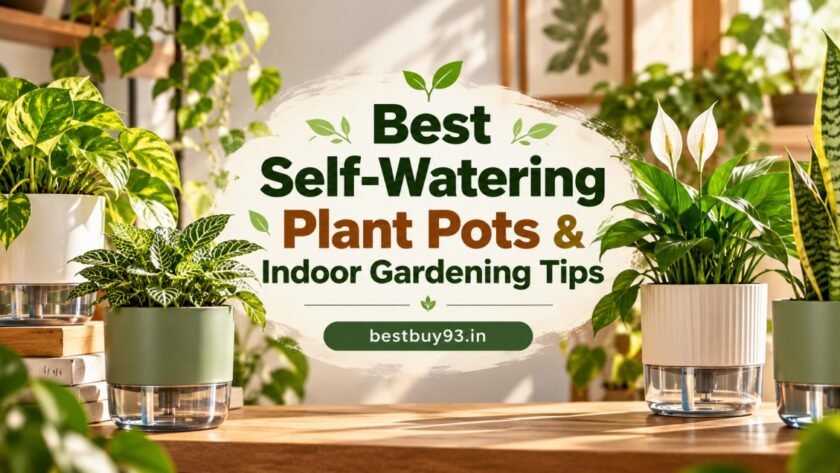
That is where self-watering plant pots can make indoor gardening considerably easier.
Unlike a traditional pot where you usually water from the top, a self-watering planter typically has a separate water reservoir and a wick or similar mechanism that moves moisture toward the growing medium. This creates a more controlled supply of water for the plant.
But there is an important catch: self-watering does not mean maintenance-free.
You still need to choose the right plant, use a suitable potting mix, monitor the reservoir and make sure the plant isn’t sitting in constantly saturated soil.
So, if you’re thinking about creating a low-maintenance indoor garden, here’s everything you need to know. 🌱
Also Read | 10 Best Indoor Plants for Monsoon in India
🌱 What Is a Self-Watering Plant Pot?
A self-watering plant pot is designed with a water reservoir underneath the main growing area.
Instead of pouring water directly onto the soil every time, you fill the reservoir. A wick or similar system then allows moisture to move upward toward the roots.
A typical setup looks something like this:
Plant → Potting Mix → Wick → Water Reservoir
The exact mechanism differs between products, but the basic idea is to provide a more consistent moisture supply.
For example, Ugaoo’s Atlantis self-watering planter uses a wick system and built-in reservoir, while the company states that the design also includes a drainage system.
Why people like them
Self-watering planters can be particularly useful for:
- Busy households
- People who occasionally forget watering
- Beginners learning indoor gardening
- Desk plants
- Small apartment gardens
- People who travel occasionally
- Plants that prefer more consistent moisture
However, they aren’t automatically suitable for every plant.
💧 How Do Self-Watering Pots Work?
The easiest way to understand them is to imagine the pot divided into two sections.
1. The upper section
This contains:
- Plant
- Roots
- Potting mix
2. The lower section
This acts as the:
- Water reservoir
- Moisture source
3. The wick
The wick connects the growing area with the reservoir.
As the growing medium needs moisture, water can move upward through the wick.
This is why self-watering pots are sometimes described as sub-irrigated containers.
The advantage is that you’re not repeatedly soaking the top layer of soil.
Garden Design similarly describes self-watering containers as having an upper planting area and lower reservoir, with water wicked upward into the soil. It also notes that the reservoir still needs to be refilled periodically.
Important: Don’t interpret “self-watering” as “never check the plant.”
You still need to inspect the plant and soil regularly.
🪴 Best Self-Watering Plant Pots to Consider
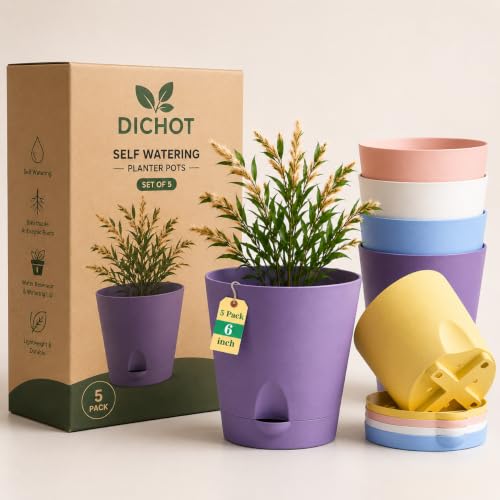
There are several different styles available, from small individual planters to multi-pot sets.
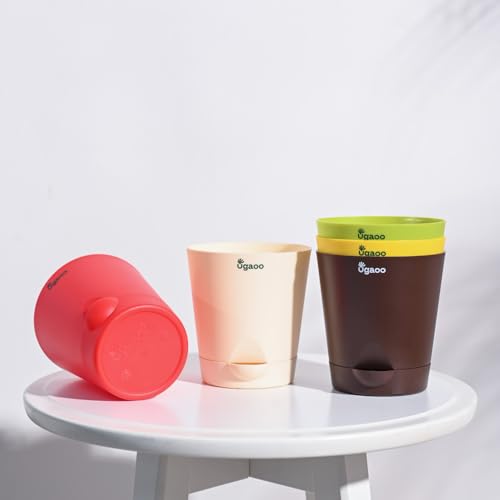
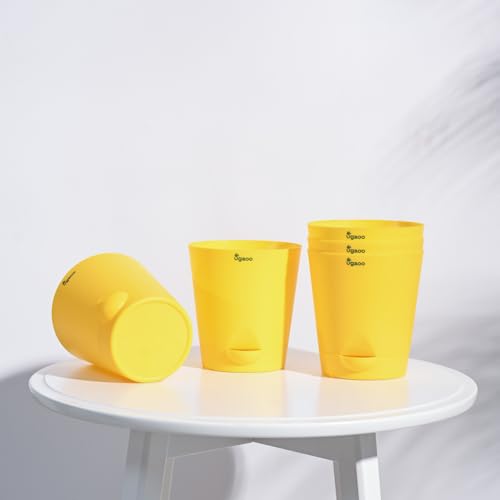
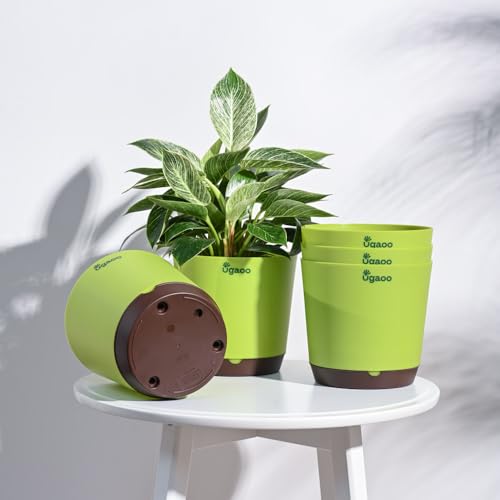
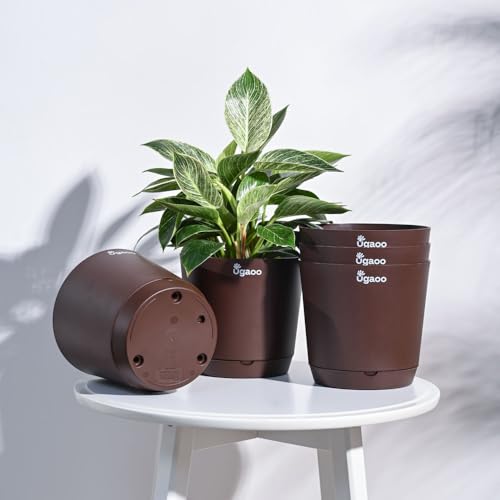
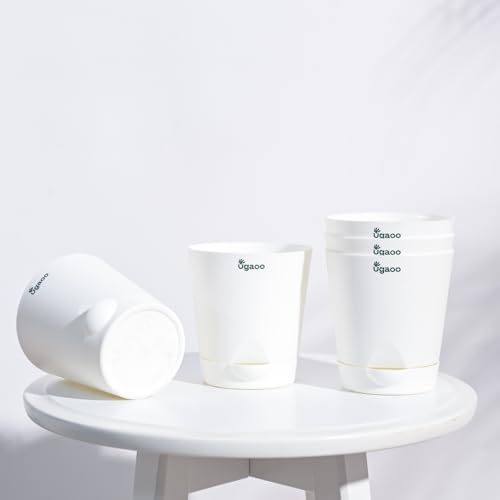
1. Ugaoo Krish Self-Watering Planter — Set of 5
This is a useful option if you want several small planters for an indoor plant collection.
Ugaoo currently lists the Krish set in different sizes, including 4-inch, 5-inch and 7-inch variants, depending on the selected option. Its current listing shows the set of five from around ₹399, although prices can change.
Best for:
- Small indoor plants
- Desk plants
- Plant cuttings
- Beginners
- Creating a small plant collection
The compact size makes it more appropriate for smaller plants rather than mature plants with extensive root systems.
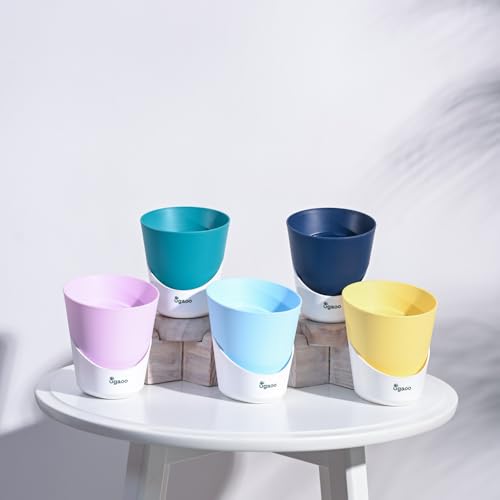
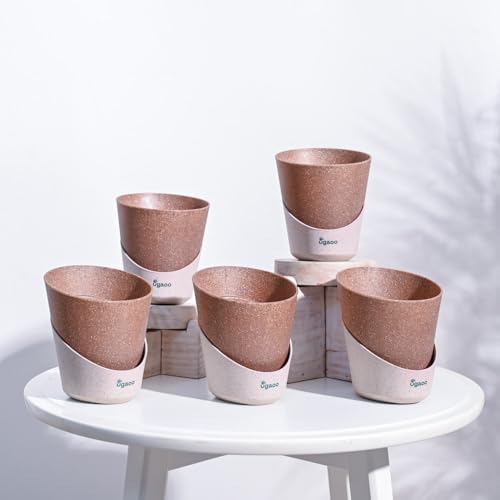
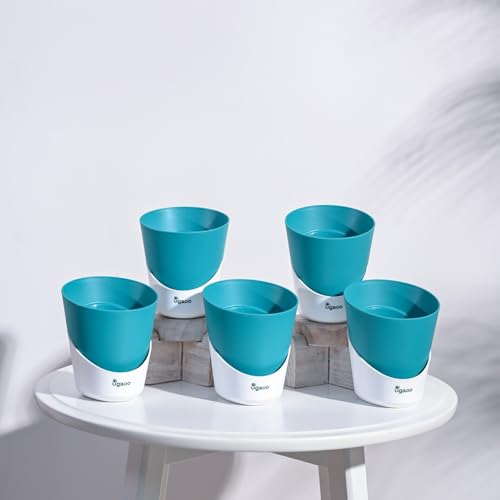
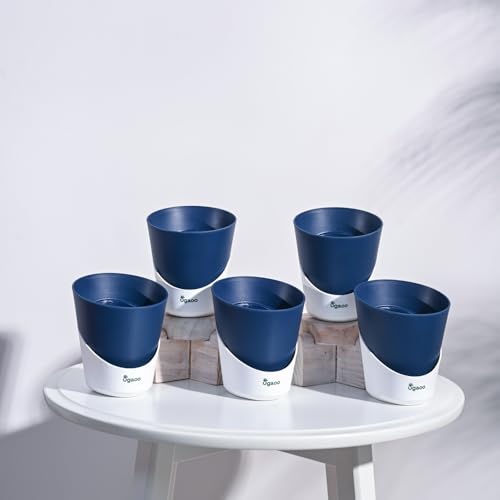
2. Ugaoo Atlantis Self-Watering Planter — Set of 5
The Atlantis range is another option for people who want multiple matching planters.
The currently listed 4-inch set contains five plastic self-watering planters and uses a reservoir-and-wick design. Ugaoo lists the set at ₹699 at the time of research.
Best for:
- Indoor plant shelves
- Window areas
- Small plants
- Uniform home décor
- Beginners
The built-in drainage design is also worth noting when comparing self-watering pots.
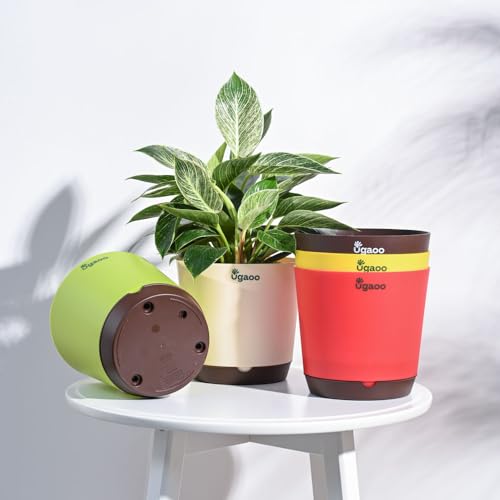
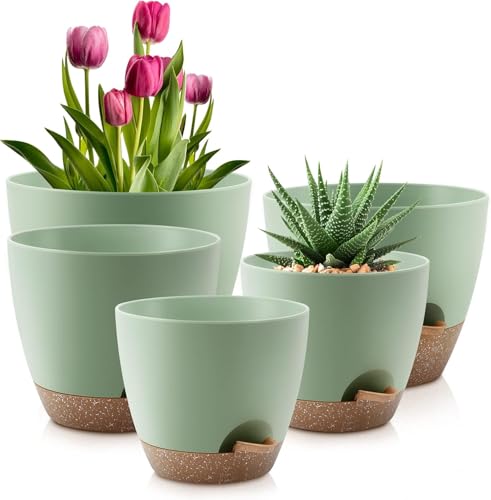
3. Ugaoo Self-Watering Pots — 7.5-Inch Set of 5
If you need somewhat larger containers, a 7.5-inch set can give plants more room than the smallest starter pots.
A current Amazon India price-history listing showed this Ugaoo 7.5-inch set at around ₹799, but prices and availability can change by seller and location.
Best for:
- Medium indoor plants
- Larger foliage plants
- Home-office corners
- Window-side greenery
Always check the actual pot dimensions before ordering because “large” can mean very different things between sellers.
4. Ugaoo Self-Watering Pots — 4-Inch Set of 5
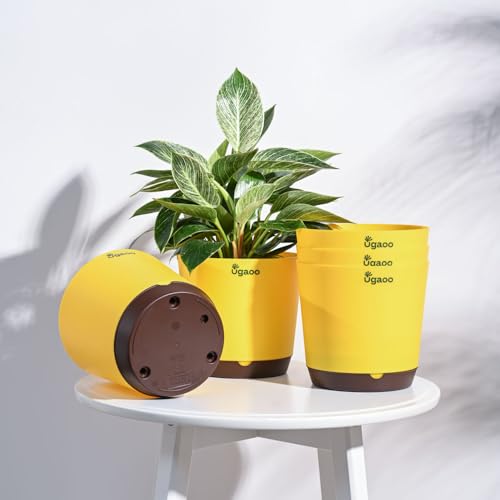
For a compact indoor garden, the 4-inch Ugaoo set is another option.
A recent Amazon India price-history listing showed it around ₹299, with prices varying over time.
Best for:
- Small plants
- Propagation
- Kitchen-window plants
- Desk gardening
- Small apartments
One limitation is obvious: a small pot isn’t going to be suitable indefinitely for a fast-growing plant.
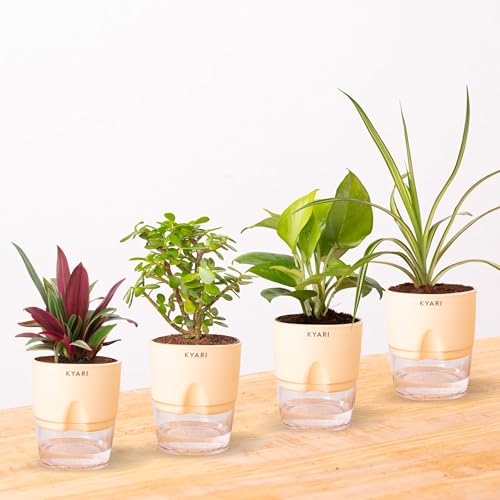
5. Self-Watering Planters With Plants Included 🌱
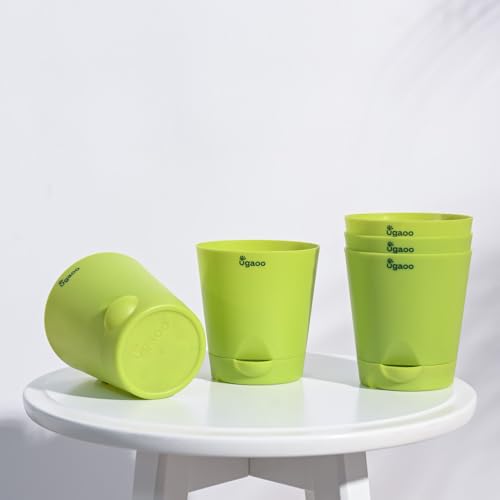
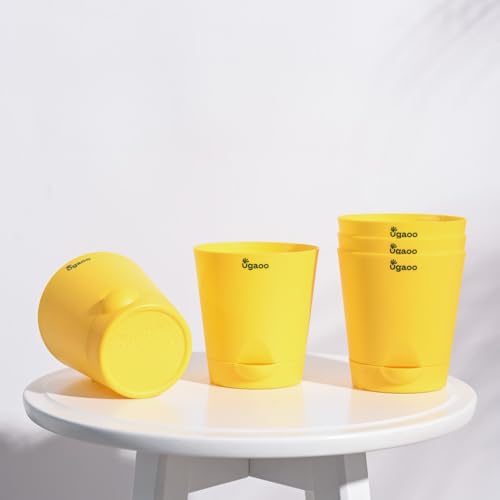
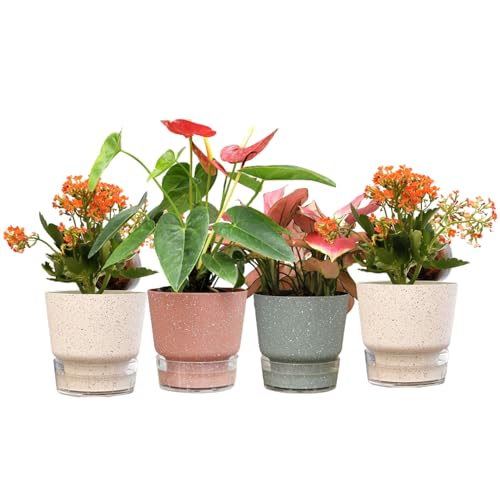
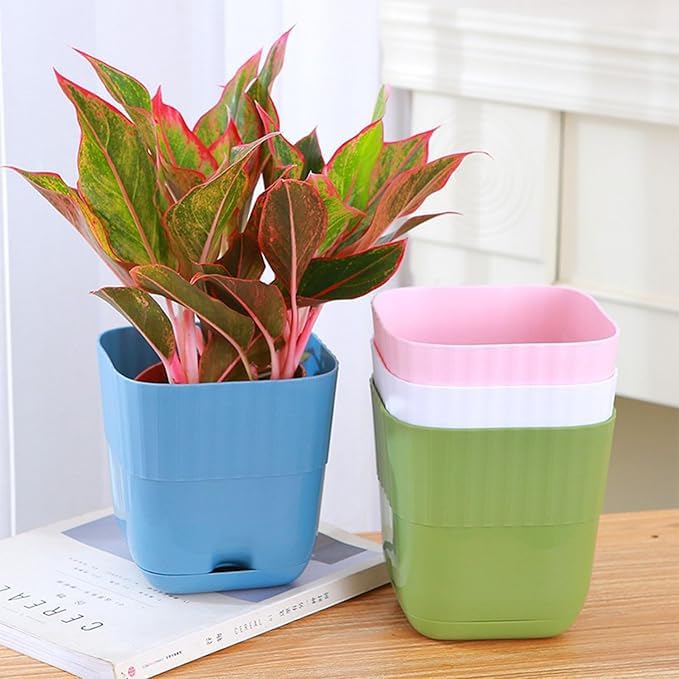
If you’re completely new to indoor gardening, you can also purchase a plant already paired with a self-watering pot.
For example, Ugaoo currently lists options such as:
- Golden Money Plant with Self-Watering Pot
- Variegated Money Plant with Self-Watering Pot
- Fittonia with Self-Watering Pot
- Aglaonema with Self-Watering Pot
- ZZ Plant with Self-Watering Pot
The listed pot sizes for several of these options are around 4 inches.
Availability varies, so check the product page before purchasing.
🌿 Which Indoor Plants Work Well With Self-Watering Pots?
The most important thing is to match the watering system to the plant.
Some plants appreciate relatively consistent moisture, while others prefer the growing medium to dry more between waterings.
Plants worth considering
🌱 Money Plant
Money plants are popular indoor choices and can work well with a consistent moisture setup.
But don’t keep the soil permanently soggy.
🌿 Fittonia
Fittonia generally appreciates moisture and humidity, making it a natural candidate for a self-watering setup.
However, even Fittonia should not be treated as a plant that can tolerate permanently waterlogged soil. Ugaoo’s care information specifically warns that overwatering can be a problem.
🌿 Aglaonema
Aglaonema can be a good indoor option, particularly where bright indirect light is available.
A self-watering planter can be useful if you tend to let the soil become excessively dry between waterings.
🌿 Peace Lily
Peace lilies appreciate moisture, although they still need appropriate drainage and light.
A self-watering setup can be convenient, but don’t use the reservoir as an excuse to keep the root zone permanently saturated.
🌿 Ferns
Many indoor ferns prefer consistent moisture and humidity.
A self-watering system may therefore be convenient, particularly in dry indoor environments.
⚠️ Plants That May Not Be Ideal for Self-Watering Pots
Not every plant needs continuous access to moisture.
Be more cautious with plants such as:
- Many succulents
- Cacti
- Some drought-tolerant plants
- Plants that prefer a pronounced dry period
For these plants, excessive moisture can create problems.
For example, Ugaoo’s ZZ plant care guidance recommends checking the soil and watering when the topsoil is dry, rather than following a fixed daily watering schedule.
Rule of thumb: If a plant naturally prefers drying out between waterings, a constantly active reservoir may not be the best match.
💧 Self-Watering Pots vs Traditional Pots
| Feature | Self-Watering Pot | Traditional Pot |
|---|---|---|
| Water reservoir | Usually included | Usually no |
| Watering method | Reservoir/wick | Top watering |
| Maintenance | Lower, but still required | More hands-on |
| Beginner friendly | Yes, for suitable plants | Yes |
| Travel convenience | Helpful | Limited |
| Water monitoring | Reservoir + plant | Soil |
| Suitable for succulents | Usually less suitable | Often easier |
| Design options | Many plastic styles | Ceramic, terracotta, plastic etc. |
| Risk of overwatering | Still possible | Still possible |
| Cost | Usually higher | Wide range |
The biggest misconception is that self-watering pots completely eliminate overwatering.
They don’t.
If the growing medium stays excessively wet, roots can still suffer.
🏠 Indoor Gardening Tips for Beginners
Buying a good pot is only one part of successful indoor gardening.
Your light, soil, pot size, watering habits and placement all matter.
☀️ 1. Give Plants Enough Light
“Indoor” doesn’t mean “no sunlight.”
Most indoor plants still need appropriate light.
A bright area near a window with indirect sunlight can be a good starting point for many foliage plants.
Avoid assuming that a dark corner is suitable simply because a plant is marketed as a “low-light plant.”
Try this:
Place plants:
- Near bright windows
- Near balconies
- In naturally bright rooms
- Away from harsh direct afternoon sun when the species is sensitive to it
🌱 2. Use the Right Potting Mix
A self-watering pot can’t compensate for unsuitable soil.
You want a growing medium that provides:
- Moisture retention
- Air spaces
- Good root development
- Adequate drainage
A very dense, compact mix can stay wet for too long.
A very loose mix may dry too quickly.
For many indoor foliage plants, a mix containing combinations of coco peat, coco chips, soil and other aerating components can be useful. Ugaoo, for example, lists soil + coco peat + coco chips in several of its indoor plants sold with self-watering pots.
💦 3. Don’t Automatically Fill the Reservoir Every Day
This is one of the biggest mistakes beginners make.
The presence of a water reservoir doesn’t mean you should keep topping it up.
Instead:
Check → Observe → Refill when required.
Your watering frequency will depend on:
- Plant species
- Pot size
- Temperature
- Humidity
- Light
- Growing medium
- Season
Even self-watering containers need periodic refilling.
👆 4. Check the Soil
Don’t rely exclusively on a calendar.
Put your finger into the upper layer of the potting mix and check its condition.
You can also observe:
- Leaf drooping
- Yellowing
- Soil smell
- Excess moisture
- Reservoir level
A watering schedule that works in winter may not work in summer.
🌧️ 5. Be Extra Careful During Monsoon
This is particularly important for Indian homes.
During humid or rainy weather:
- Evaporation can slow down
- Soil may remain moist longer
- Indoor humidity can increase
- Plants near windows may receive less direct sunlight
Therefore, don’t assume your plants need the same amount of water throughout the year.
Monsoon = check before watering. 🌧️🌿
🪴 6. Choose the Correct Pot Size
Bigger isn’t always better.
A huge pot around a tiny plant can hold more moisture than the roots can use.
Instead, choose a pot appropriate for the plant’s current root system and growth stage.
When repotting, increase the size gradually rather than jumping from a tiny pot to a giant container.
🧼 7. Clean the Reservoir
Water reservoirs can collect:
- Dust
- Algae
- Mineral deposits
- Organic debris
Clean the reservoir periodically according to the manufacturer’s instructions.
A clean reservoir also makes it easier to see the water level.
🌿 8. Rotate Your Plants
If your plant sits beside a window, rotate the pot occasionally.
This can help prevent the plant from leaning heavily toward one direction of light.
It also keeps the plant looking more balanced.
🪟 Best Places for Indoor Plants
You don’t need a huge home to create an indoor garden.
🛋️ Living Room
Try:
- Money plant
- Aglaonema
- ZZ plant
- Peace lily
Use matching planters to create a clean visual arrangement.
💻 Home Office
Small self-watering planters are particularly useful here.
Try:
- Fittonia
- Money plant
- Small foliage plants
Place one or two plants near your workspace rather than filling every surface.
🍳 Kitchen Window
Small planters can work well near a naturally bright kitchen window.
You can experiment with:
- Herbs
- Small foliage plants
- Propagation jars
Just keep plants away from excessive heat and cooking fumes.
🛏️ Bedroom
Choose plants based primarily on the actual light and environmental conditions rather than simply choosing something because it is marketed as a “bedroom plant.”
Keep the arrangement simple:
One larger plant + one small planter can look more polished than ten tiny pots.
🌿 Self-Watering Pots for Small Apartments
If you’re working with limited space, use vertical thinking.
Idea 1: Window Garden
Place 3–5 matching small self-watering pots along a bright window.
Idea 2: Desk Garden
Use one small planter beside your monitor.
Idea 3: Floating Shelf
Combine small plants with books and décor.
Idea 4: Kitchen Green Corner
Use a narrow shelf for herbs and compact plants.
Idea 5: Balcony-to-Indoor Transition
Keep moisture-loving indoor plants inside while using suitable outdoor planters for balcony plants.
💡 How to Create a Low-Maintenance Indoor Garden
You don’t need 20 different plants.
Start with 3–5 plants.
Beginner setup:
1 × Money Plant
1 × Aglaonema
1 × ZZ Plant
1 × Fittonia
1 × Peace Lily
Then group them according to their light and watering preferences.
This is much easier to manage than buying a large collection immediately.
🚫 Common Self-Watering Pot Mistakes
❌ Mistake 1: Treating every plant the same
Different plants have different moisture requirements.
❌ Mistake 2: Keeping the reservoir permanently full
More water doesn’t automatically mean healthier roots.
❌ Mistake 3: Ignoring drainage
A self-watering system should still be designed appropriately for the plant and growing medium.
❌ Mistake 4: Buying a pot that’s too large
Excess growing medium can retain moisture around a small root system.
❌ Mistake 5: Putting plants in dark corners
A self-watering pot can’t replace adequate light.
❌ Mistake 6: Never checking the plant
Look at the leaves, soil and reservoir regularly.
Your plant will often tell you more than a fixed watering schedule.
🪴 How to Choose the Best Self-Watering Plant Pot
Before buying, check these features:
✅ Water reservoir
Look for a clearly designed reservoir rather than a decorative pot that simply happens to hold water.
✅ Wick system
Understand how water moves from the reservoir to the growing medium.
✅ Drainage
Check how excess moisture is handled.
✅ Pot size
Match the pot to the plant.
✅ Water-level visibility
A visible indicator or accessible reservoir can make maintenance easier.
✅ Material
Plastic is lightweight and practical, while ceramic or decorative materials may better suit certain interiors.
✅ Replacement parts
For some designs, check whether wicks or inserts can be replaced.
✅ Cleaning
Choose a design that doesn’t make cleaning the reservoir unnecessarily difficult.
🌱 Self-Watering Pots: Who Should Buy Them?
They’re particularly useful if you:
✔️ Forget to water occasionally
✔️ Travel for a few days
✔️ Have several small indoor plants
✔️ Want consistent moisture for suitable plants
✔️ Are new to gardening
✔️ Prefer low-maintenance plant care
But they’re not a substitute for understanding your plant.
🏡 Simple Indoor Gardening Routine
Here’s an easy routine you can follow.
Every few days
👀 Check the plants.
Once a week
🌱 Check soil moisture and leaves.
When required
💧 Refill the reservoir.
Monthly
🧼 Inspect and clean the pot/reservoir.
Occasionally
✂️ Remove damaged leaves and rotate plants.
As the plant grows
🪴 Check whether it needs repotting.
This simple routine can make indoor gardening much less overwhelming.
Also Read | Boost Productivity with Desk Plants
❓ Frequently Asked Questions
Are self-watering pots good for indoor plants?
Yes, they can be very useful for indoor plants that prefer relatively consistent moisture. However, they’re not suitable for every species, particularly plants that prefer drying out between waterings.
Do self-watering pots prevent overwatering?
Not completely. They can provide a more controlled watering system, but excessive moisture can still become a problem if the reservoir, growing medium or plant choice isn’t appropriate.
How often should you fill a self-watering pot?
There isn’t one universal schedule. Check the reservoir and the plant’s moisture requirements. Temperature, humidity, light and plant size all affect how quickly water is used.
Can I use self-watering pots for succulents?
Usually, you should be cautious. Many succulents prefer the growing medium to dry substantially between watering, so a constantly available reservoir may not be ideal.
Are self-watering pots good for beginners?
They can be. They reduce some of the guesswork around watering, but beginners still need to learn the plant’s light and moisture requirements.
Can I use normal soil in a self-watering pot?
It’s better to use a suitable potting medium rather than heavy, compact garden soil. The growing medium needs to work properly with the pot’s moisture-wicking system.
Are self-watering pots useful when travelling?
They can be helpful for short periods because the reservoir provides an additional water source. However, how long a plant can go unattended depends on the plant, pot size, reservoir capacity and environmental conditions.
Do self-watering pots need drainage?
The exact design varies. Look for a planter specifically designed to manage both reservoir water and excess moisture. Some self-watering designs incorporate a drainage system alongside the wick and reservoir.
🌿 Final Thoughts
Self-watering plant pots can make indoor gardening easier, but they’re not magic pots. 🪴✨
The best results come from combining the right planter with:
- The right plant
- Suitable potting mix
- Adequate light
- Appropriate moisture
- Regular observation
- Occasional cleaning and maintenance
For beginners, a small collection of money plants, Aglaonema, Fittonia, Peace Lily and other suitable foliage plants can be a practical place to start.
And remember the golden rule of indoor gardening:
Don’t water because the calendar says so check what your plant actually needs. 🌱
A simple self-watering setup, a bright location and a little regular attention can turn even a small apartment corner into a beautiful indoor garden.