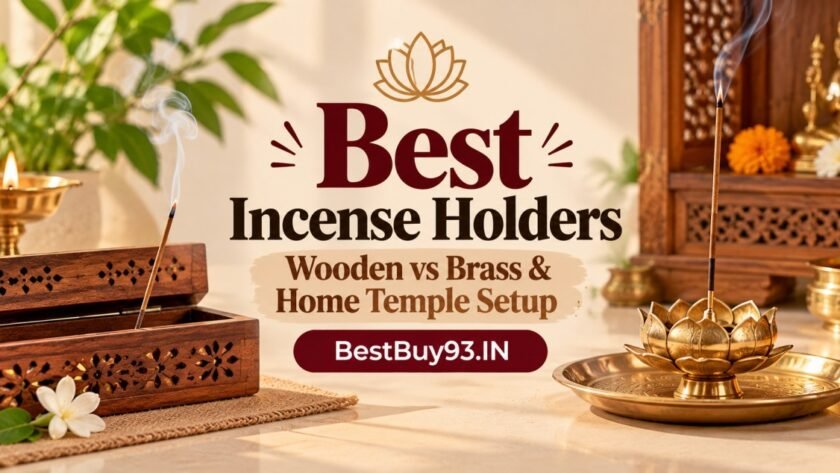

A thoughtfully arranged home temple does not need dozens of decorative accessories. Sometimes, a beautiful incense holder, a clean puja thali and a well-organised mandir shelf are enough to create a peaceful and inviting prayer corner.
An incense holder is both a functional accessory and a small part of your home decor. It keeps incense sticks in position, collects ash and helps you maintain a cleaner puja space. The right design can complement a traditional wooden mandir, a modern wall-mounted temple or a simple prayer shelf in a small apartment.
However, choosing one can be confusing. Should you buy a carved wooden agarbatti holder or a traditional brass stand? Is a long ash-catching tray better than a compact holder? Can the same holder accommodate incense sticks, dhoop cones and sambrani?
The answer depends on how you use incense, the space available in your home and the amount of maintenance you prefer.
In this guide, we compare wooden and brass incense holders, explore useful designs, explain what to check before buying and share practical ideas for creating a clean, organised home temple.
What Is an Incense Holder?
An incense holder is a stand, tray, bowl or enclosed container designed to hold incense while it burns. In Indian homes, it is commonly called an agarbatti holder or agarbatti stand when used for incense sticks.
Depending on its design, it may have a hole for holding a stick, a long tray for catching falling ash, a bowl for containing residue or a heat-resistant chamber for particular types of incense.
Different incense products require different holders:
- Agarbatti: Usually needs a stable stand with a correctly sized hole and enough space to catch falling ash.
- Dhoop sticks: Need a holder specifically designed for their shape and burning method.
- Dhoop cones: Need a suitable heat-resistant dish or burner.
- Sambrani or loose incense: Requires an appropriate heat-resistant burner designed for the material and method of use.
Do not assume that a holder designed for thin incense sticks is suitable for every type of incense. Check the product instructions before using it with cones, charcoal or loose dhoop.
Wooden vs Brass Incense Holders: Which Is Better?
Wooden and brass incense holders are popular choices for home temples, but they have different practical advantages.
Wooden incense holders
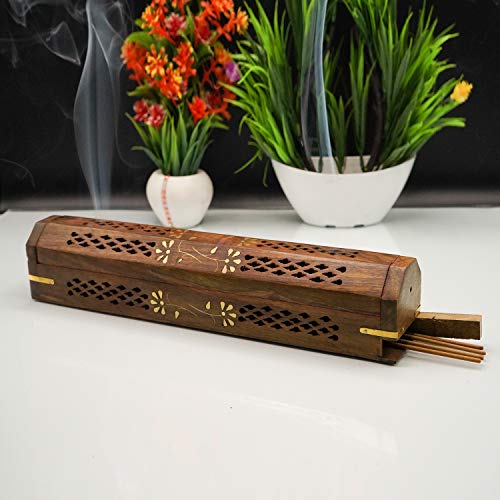
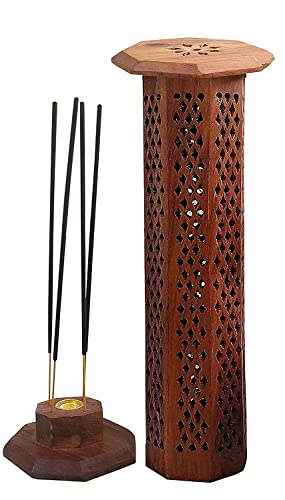
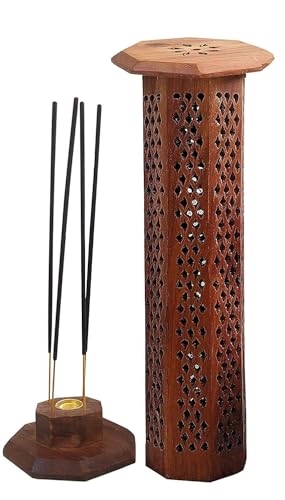
Wooden incense holders are popular because they complement traditional Indian interiors and natural materials. They are available in carved designs, long boat-shaped trays, box-style holders and decorative incense towers.
A wooden holder may suit a mandir with a wooden finish, a compact prayer shelf or a home with warm, earthy decor.
Advantages
- Natural appearance that pairs well with wood and neutral interiors.
- Available in traditional carved and contemporary designs.
- Often lightweight and easy to reposition when completely cool.
- Can be an affordable option for everyday incense-stick use.
Disadvantages
- Wood is combustible and can scorch if the burning end or embers contact it.
- Smoke and fragrance residue may accumulate over time.
- Excess moisture can damage the finish.
- Cleaning may require more care than cleaning a simple metal holder.
Best for: Decorative home temples and incense-stick use when the holder has a suitable design that safely separates the ember from combustible wood.
Important: Never assume that every wooden holder is safe for dhoop cones or loose incense. Use those products only with a purpose-built heat-resistant insert or burner specified for that use.
Brass incense holders
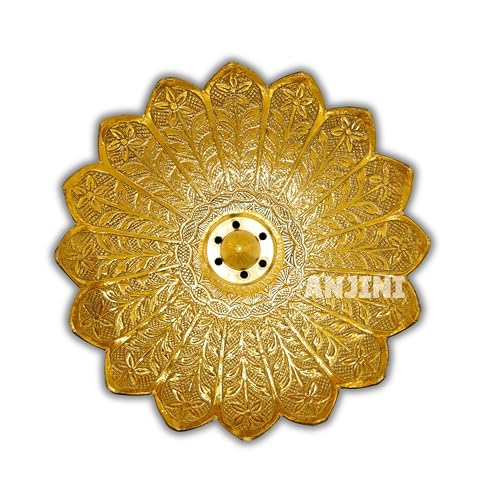
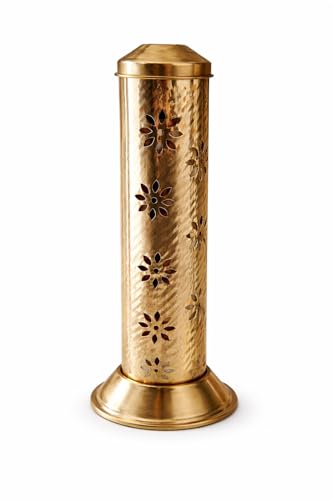
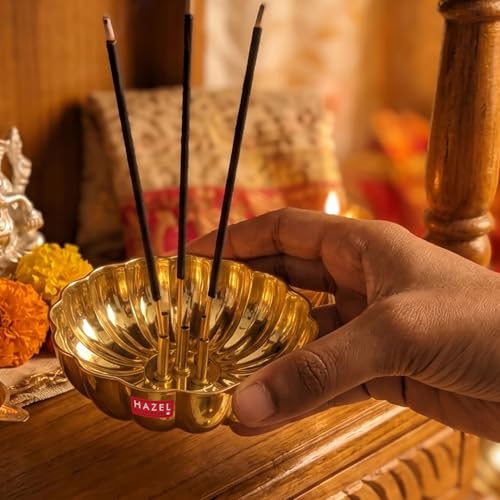
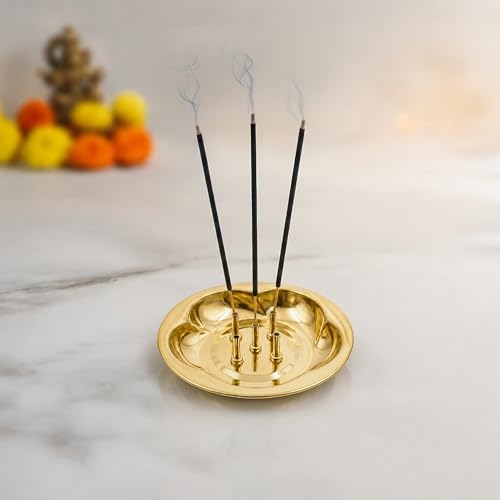
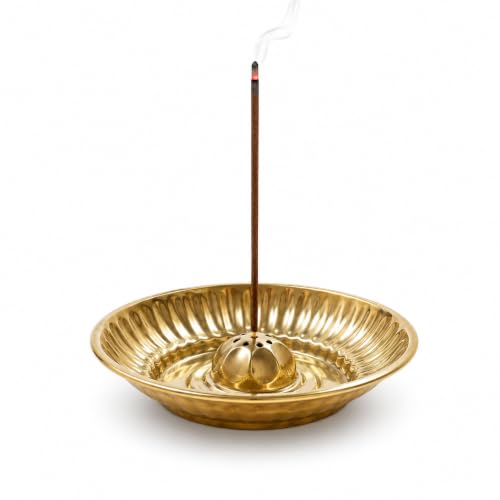
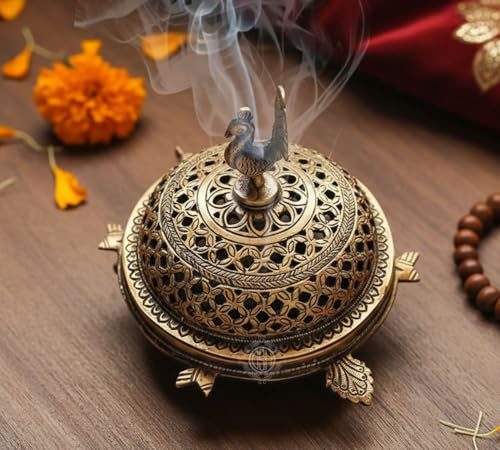
Brass holders bring a traditional metallic finish to a puja space. They are available in simple stands, lotus-shaped designs, small bowls, decorative plates and elaborate temple-style accessories.
Brass is generally durable and can last for years with appropriate care. Its weight can also help some designs remain stable during use.
Advantages
- Classic golden appearance that complements traditional puja accessories.
- Durable construction when made well.
- Available in compact and decorative designs.
- Generally easy to wipe clean with an appropriate method.
- Can complement brass diyas, bells and puja thalis.
Disadvantages
- Brass can tarnish and develop surface discolouration.
- Solid brass may cost more than basic wooden or lightweight holders.
- Small, lightweight designs can still tip over if poorly balanced.
- Brass can become hot near a burning incense end or when used in a burner designed for hotter materials.
Best for: People who want a traditional metallic look, durable everyday accessories and a coordinated home temple.
Wooden vs brass: Comparison table
| Feature | Wooden holder | Brass holder |
|---|---|---|
| Appearance | Warm, natural and traditional | Classic, metallic and ornate |
| Durability | Depends on wood and finish | Generally durable with care |
| Maintenance | Keep dry; clean gently | Wipe and manage tarnish |
| Weight | Usually lightweight | Often heavier, depending on design |
| Heat considerations | Combustible; design is critical | Metal can transfer heat |
| Typical style | Carved, boat-shaped or box-style | Lotus, bowl, plate or traditional stand |
| Best use | Suitable incense-stick designs | Suitable incense-stick designs and purpose-built metal burners |
| Styling match | Wooden mandir and earthy decor | Brass diyas, bells and traditional puja sets |
Our recommendation: Choose a well-designed brass holder if you prioritise a traditional metallic appearance and straightforward surface cleaning. Choose wood if its natural finish suits your mandir and the design provides appropriate protection from the burning incense. In either case, safety and compatibility matter more than appearance alone.
Best Incense Holder Styles for Your Home Temple
Rather than choosing by material alone, consider the design and how it will work with your daily puja routine.
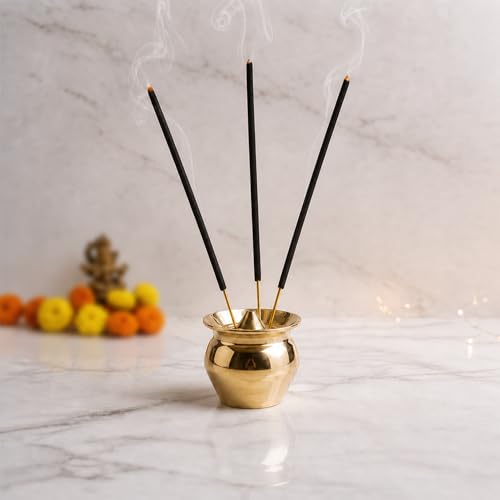
1. Traditional brass agarbatti stand
A small brass stand is a classic choice for a home temple. It usually has one or more openings for incense sticks and a compact base.
Why consider it?
- Takes up little space.
- Coordinates with brass diyas and bells.
- Works well for a simple daily puja setup.
What to check: Confirm that the stick fits securely and that falling ash lands on a suitable heat-resistant surface. A tiny stand without an ash-catching plate may leave residue on the shelf.



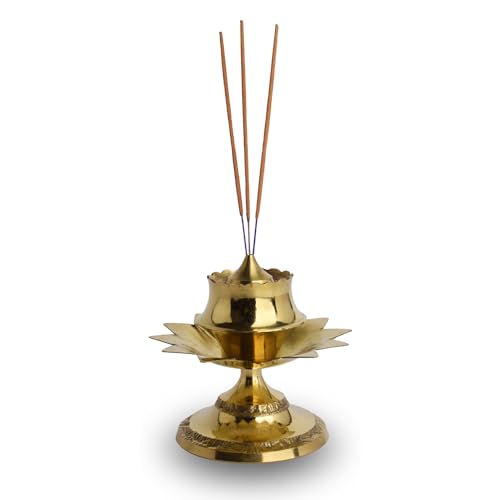
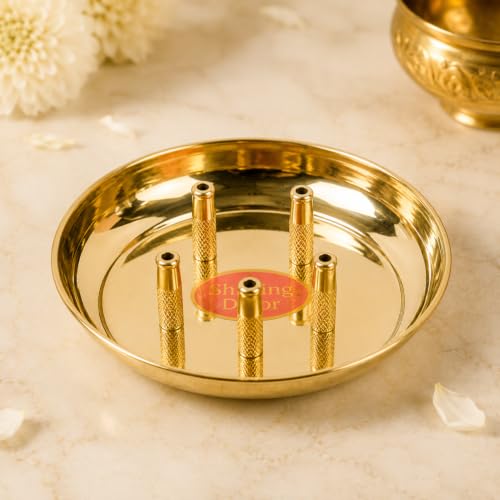
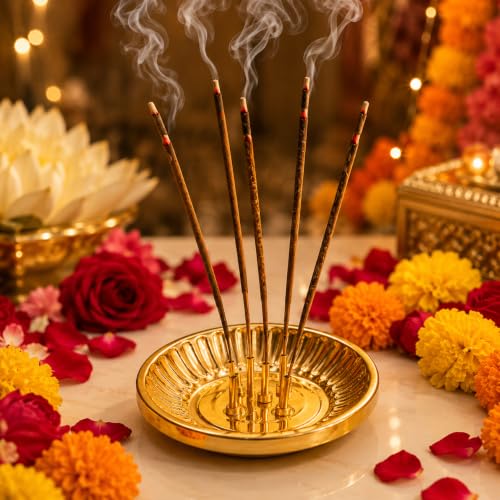
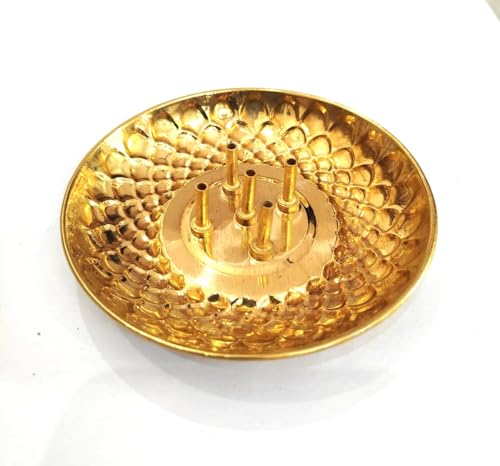
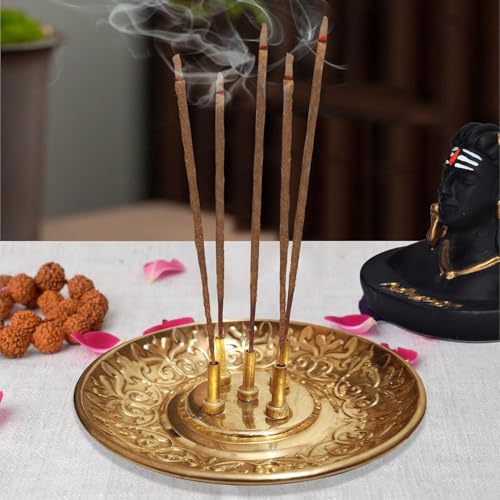
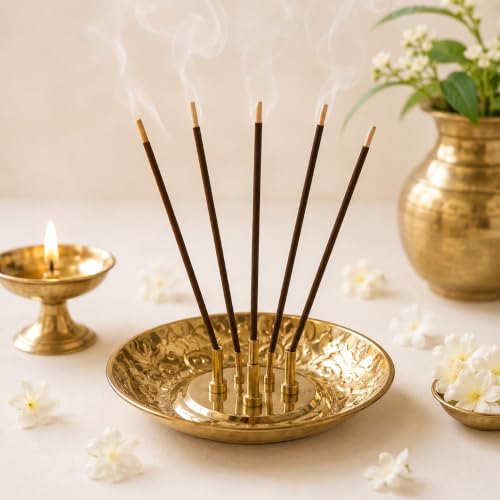
2. Brass incense holder with an ash-catching plate
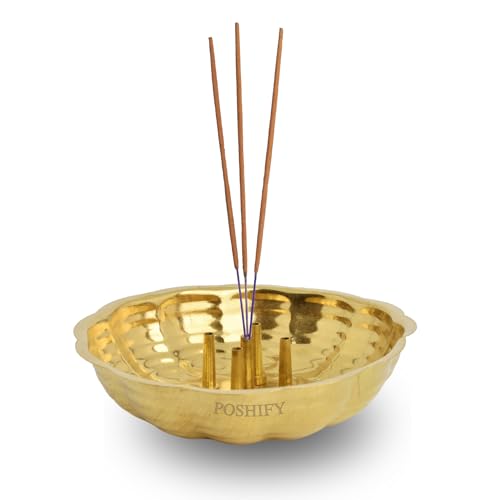
This style combines a stick holder with a plate or tray to collect ash.
Why consider it?
- Helps keep the mandir shelf cleaner.
- Can be practical for regular use.
- Provides a more substantial base than some tiny stands.
What to check: The plate should extend far enough to catch ash from the burning stick. Check the dimensions and ensure the complete assembly is stable.
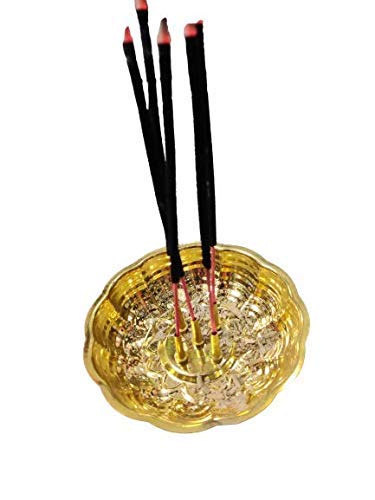


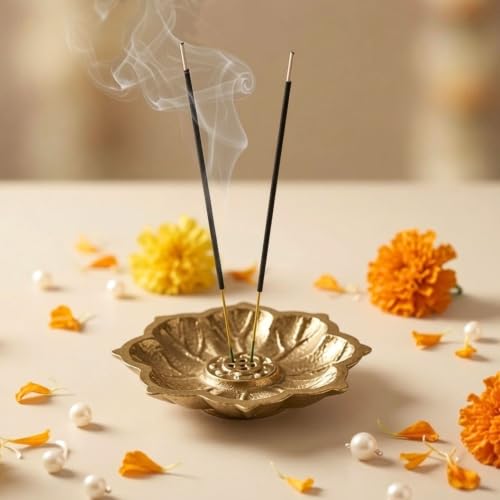

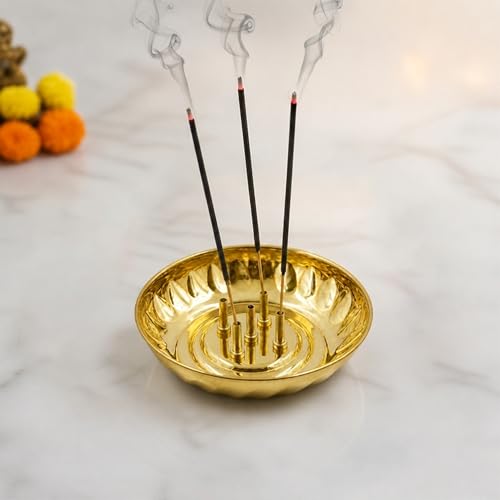


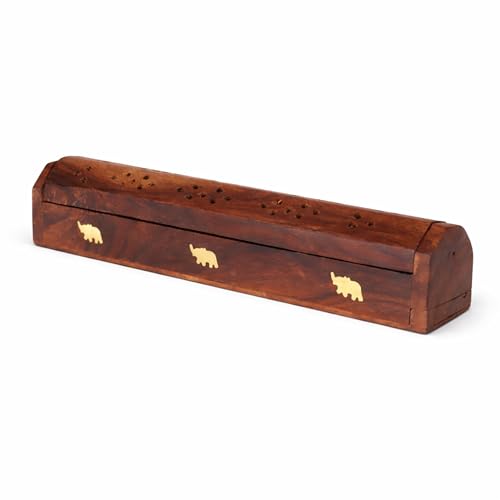
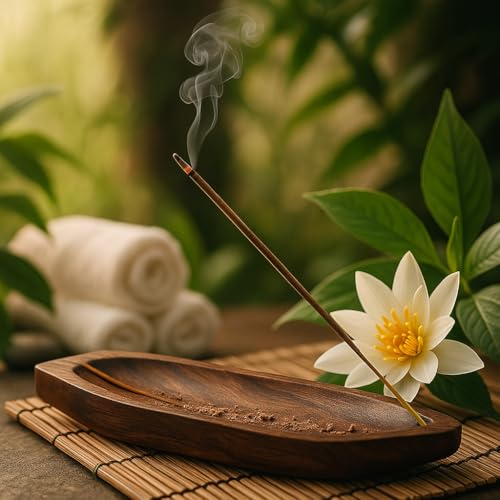
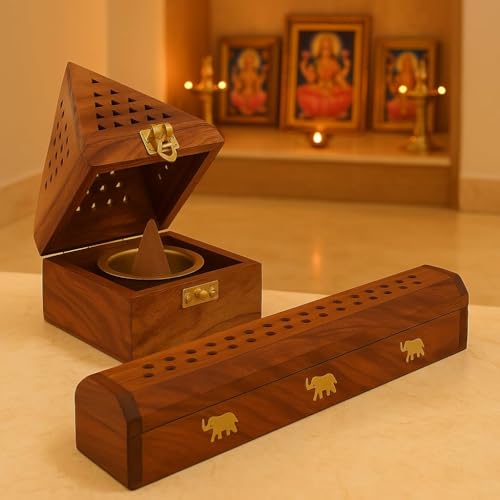
3. Wooden boat-shaped agarbatti holder
A long wooden tray with a hole at one end is a familiar design for incense sticks.
Why consider it?
- Complements wooden mandirs.
- Offers an elongated area for catching ash.
- Comes in plain, carved and inlaid designs.
What to check: The burning end must remain safely separated from combustible wood. Follow the manufacturer’s instructions and never use an ordinary wooden tray as a substitute for a heat-resistant burner.
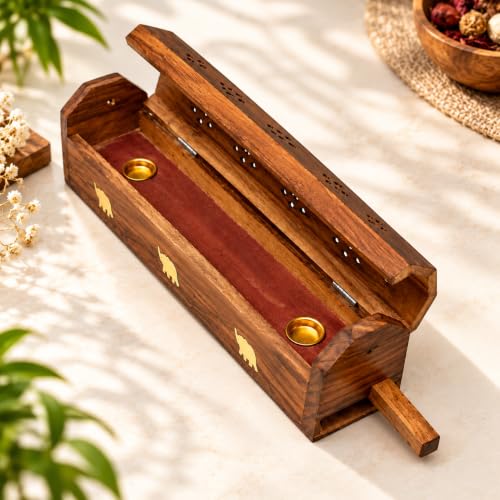
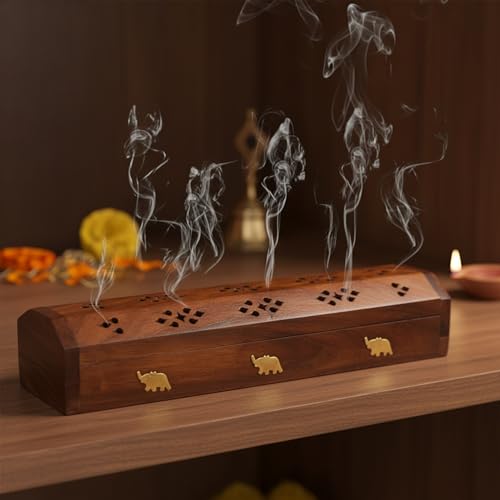
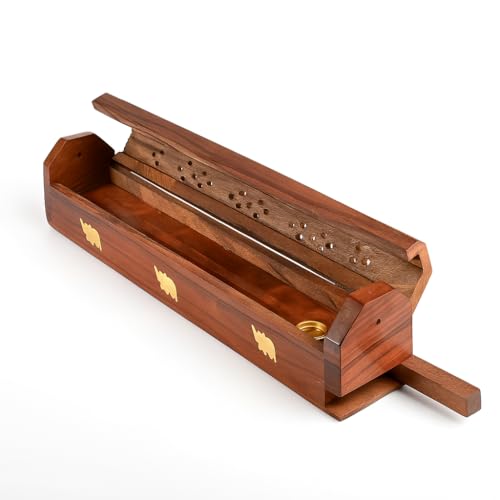
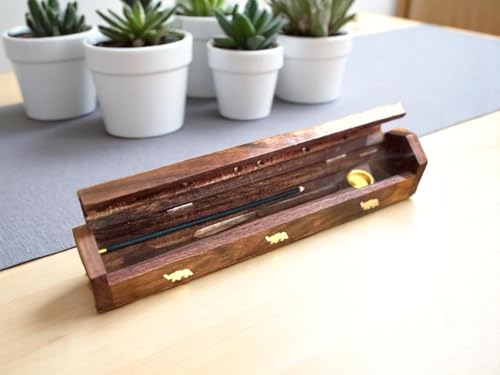
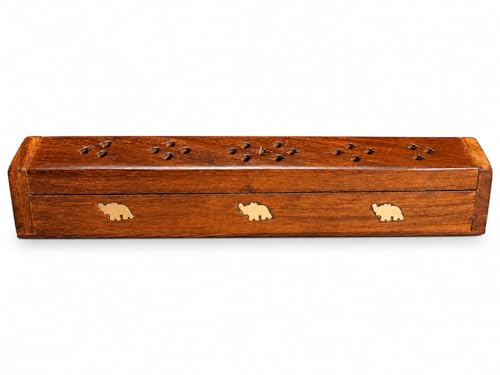
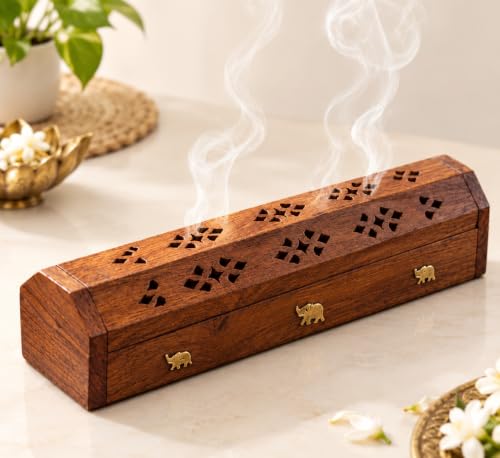
4. Wooden incense box with a lid
An enclosed incense box can provide a decorative way to hold a stick and collect ash. Some models include cut-outs and internal supports.
Why consider it?
- Creates a neat, decorative appearance.
- Can help contain ash within the designated chamber.
- Often suits traditional interiors.
What to check: Make sure the model is specifically designed for burning incense and has appropriate ventilation. The lid does not make it fireproof. Never use it for cones, charcoal or loose incense unless the manufacturer explicitly permits that use.


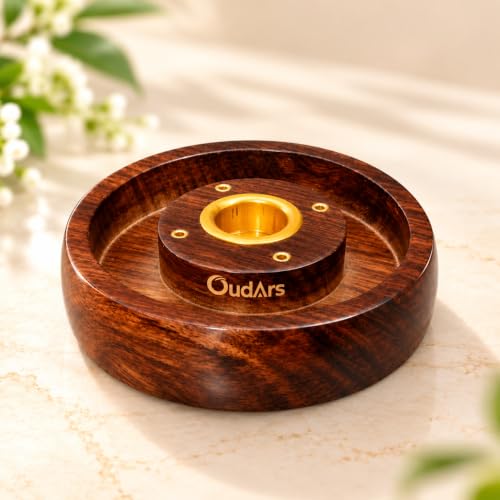
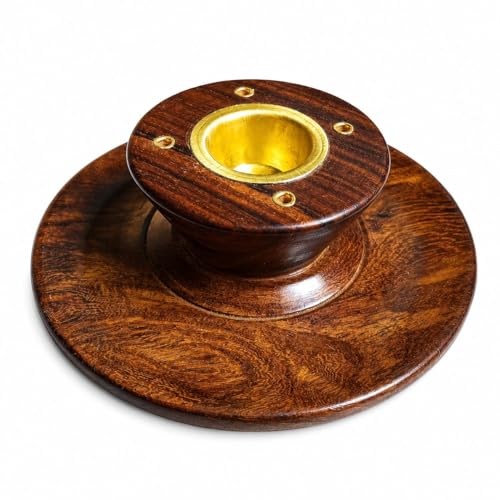
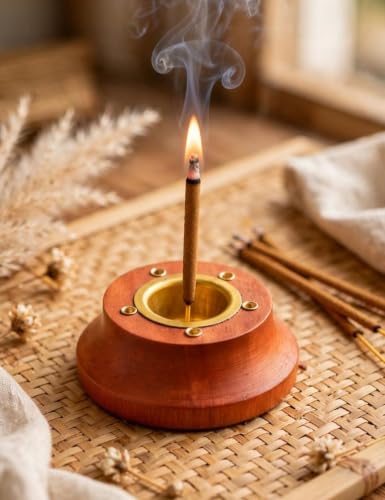
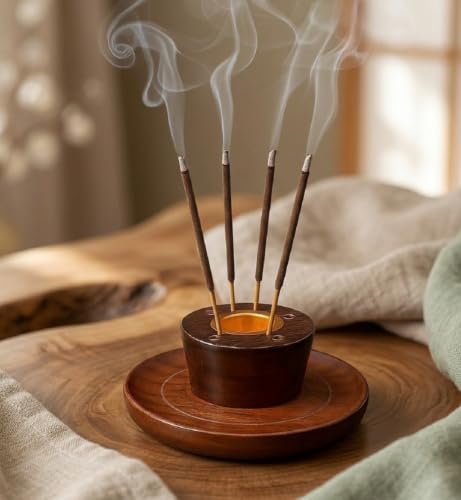
5. Wooden holder with a brass insert
This design combines a wooden exterior with a metal component where the incense stick is placed.
Why consider it?
- Offers a mix of warm wood and metallic detail.
- Can complement both traditional and contemporary mandirs.
- May provide a dedicated metal contact point for the incense stick.
What to check: A small brass insert does not automatically protect the entire wooden holder from heat. Check how the burning end and ash are managed.




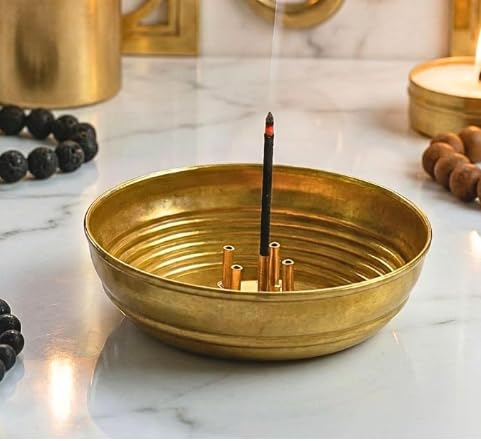
6. Brass bowl-style incense holder
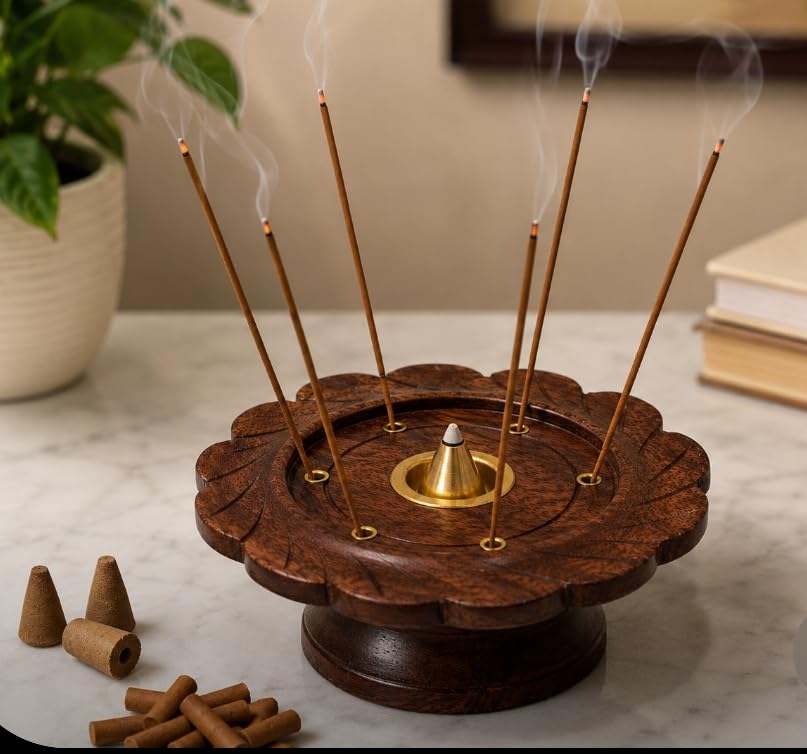
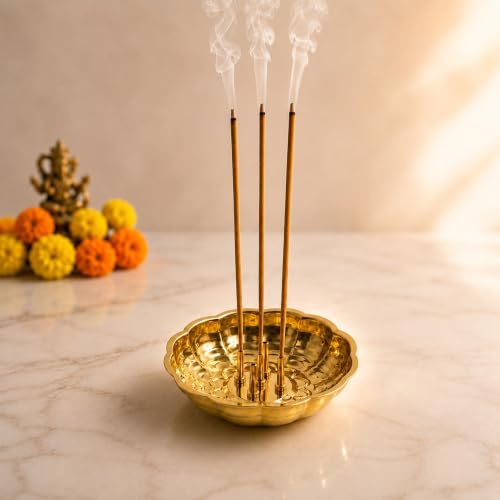
A bowl-shaped holder offers a contained area for ash and may suit particular incense formats when the product is designed for them.
Why consider it?
- Compact and visually substantial.
- May help contain ash in a suitable design.
- Coordinates with other brass puja accessories.
What to check: Confirm the intended incense type. A bowl intended for sticks is not automatically suitable for burning charcoal or loose dhoop.

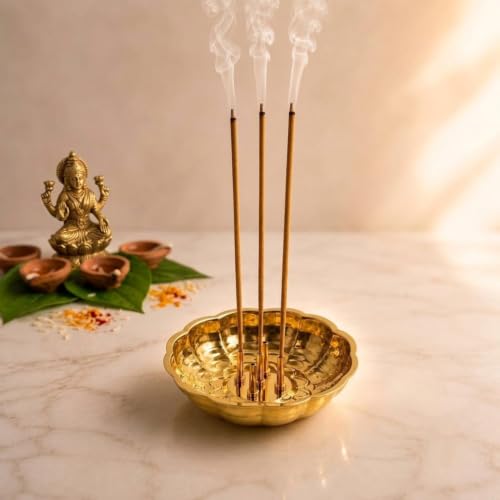
7. Minimal incense holder for a modern mandir
A simple holder in a clean shape can look elegant in a modern apartment or on a wall-mounted prayer shelf.
Why consider it?
- Keeps the visual arrangement uncluttered.
- Pairs well with neutral colours and simple decor.
- Can be easier to clean than heavily ornamented designs.
What to check: Minimal styling should not mean sacrificing stability, ash collection or heat protection.
Incense Holders Worth Comparing Before You Buy
The following product listings illustrate different styles available to Indian shoppers. They are examples to research rather than a verified ranking of performance.
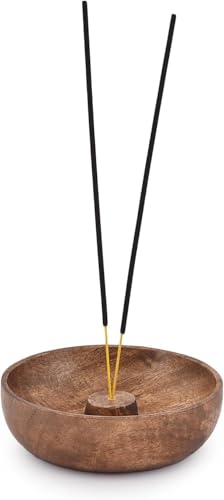
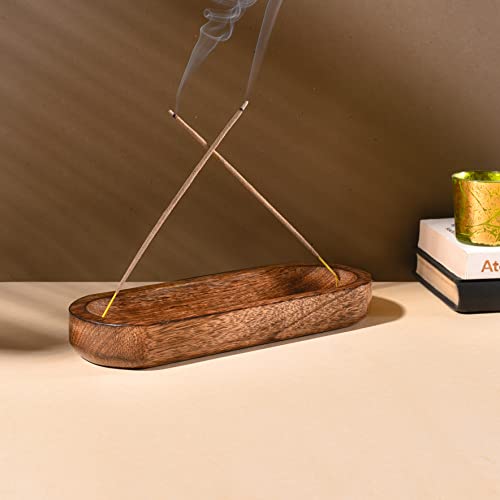
A. Budget-friendly wooden holders
A basic wooden agarbatti stand can be suitable for shoppers who want a simple decorative accessory.
Best for: Simple decor and basic incense-stick use.
Before buying: Check the length, ash-catching design, wood finish and instructions for separating the burning ember from combustible material.


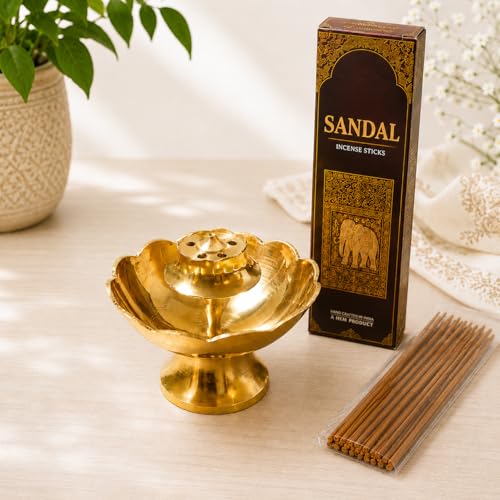
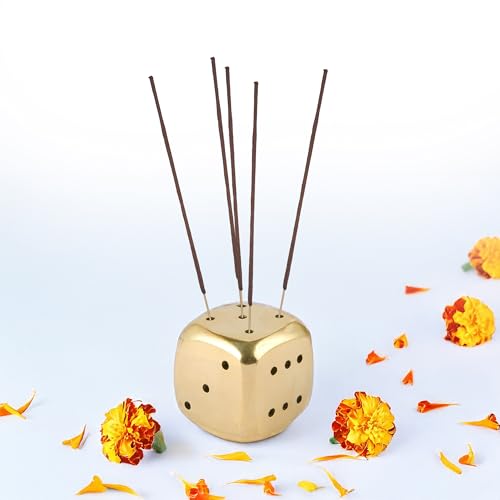
B. Traditional brass holders
Brass holders suit shoppers who want a metallic accent for their home temple.
Best for: Traditional home temples and coordinated brass accessories.
Before buying: Verify the actual material, weight, base stability and whether the ash-catching area suits your incense-stick length.
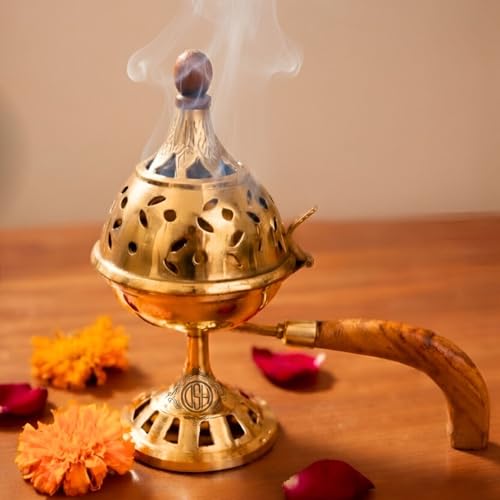
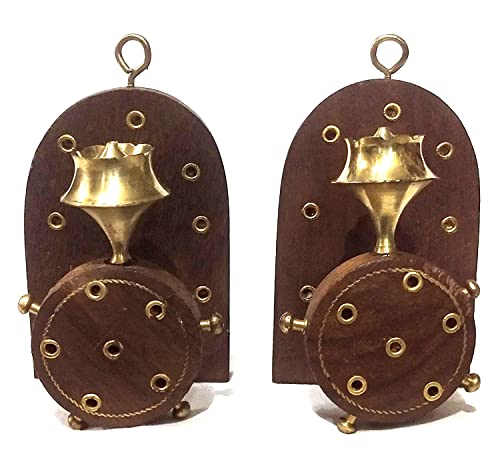
C. Wooden-and-brass combination holders
Combination holders can offer the appearance of carved wood with metallic details.
Best for: People who want a coordinated, decorative accessory.
Before buying: Confirm whether the brass component is solid brass, plated metal or simply a decorative insert. Do not infer material quality from the colour of the finish.


How to Choose the Right Incense Holder
A holder can look beautiful online and still be inconvenient in everyday use. Check these factors before placing an order.
1. Match the holder to the incense
This is the first decision to make.
- Thin incense sticks need a correctly sized opening.
- Thick sticks may not fit standard holders.
- Cones require a purpose-built heat-resistant base.
- Loose incense and charcoal require a suitable burner designed for those materials.
Do not force a thick stick into a small opening or use an unsuitable decorative bowl as a burner.
2. Check the ash-catching area
A good ash catcher should accommodate the length and angle of the incense stick.
A long tray may be practical for standard incense sticks. A deeper, purpose-built bowl can be useful for compatible incense formats when its design safely contains the residue.
3. Look for stability
Choose a holder that sits firmly on a flat surface. A narrow base, uneven bottom or top-heavy design may tip over.
This is particularly important if the mandir is on a high shelf or in an area where people frequently walk past.
4. Consider the material and finish
For wood, inspect the finish and heat-protection design. For brass, check whether the product is solid brass, brass-plated metal or another material with a brass-coloured finish.
A brass-coloured product is not necessarily solid brass.
5. Consider cleaning access
Ash and incense residue can accumulate around small openings and decorative details.
Choose a holder that can be emptied and cleaned without difficulty. If the design has a lid or removable tray, check how those components are removed and cleaned.
6. Measure your mandir shelf
Measure the available depth and width before buying. Allow enough room for the holder and for safe clearance around the burning incense.
Avoid placing a burning stick directly beneath a shelf, curtain, hanging decoration or low-hanging plant.
7. Check the seller and return policy
Read the dimensions, material description, product instructions and return policy. For online purchases, look for clear photos of the actual product and useful details about its intended incense type.
Home Temple Setup: How to Arrange Your Incense Holder
A home temple can look organised and welcoming without being crowded. The goal is to create a practical space where daily puja items are easy to access and the incense holder has a safe place to stand.
Step 1: Start with a clean base
Wipe the mandir shelf or tabletop and remove accumulated dust and ash. Use a clean, dry surface before arranging accessories.
If you use a decorative cloth, keep it away from burning incense and open flames.
Step 2: Keep the main devotional focus clear
Arrange your idols, photographs or other devotional objects according to your family’s traditions. Leave enough open space around them for daily use.
Avoid filling every available corner with decorative objects.
Step 3: Create a designated incense area
Place the incense holder on a stable, heat-resistant surface with sufficient clearance from the mandir structure, curtains, paper, flowers and other combustible materials.
Do not place a burning incense stick inside a closed cupboard or in a space without appropriate ventilation.
Step 4: Coordinate materials
A few coordinated accessories can create a balanced look:
- A wooden mandir with a simple wooden holder and restrained brass accents.
- A brass-accented temple with a matching brass holder and diya.
- A modern prayer shelf with a minimal holder and a small storage tray.
The goal is coordination rather than matching every object exactly.
Step 5: Keep daily puja essentials together
Use a small tray or storage compartment for items such as incense sticks, matches or a lighter, a bell and other regularly used accessories.
Store matches and lighters safely, away from children and away from hot surfaces.
Step 6: Keep the shelf uncluttered
Leave enough space to clean the shelf and remove ash safely. Avoid placing unnecessary decorative objects close to the burning incense.
A compact mandir often looks better with a few carefully selected items than with a crowded collection of accessories.
Step 7: Add decoration thoughtfully
If you want a decorative touch, consider fresh flowers, a small rangoli on a separate tray or a restrained fabric accent. Keep all decorations away from the burning incense and any open flame.
How to Clean and Maintain Wooden and Brass Incense Holders
Regular cleaning helps prevent ash buildup, lingering residue and discolouration.
Cleaning a wooden incense holder
- Allow the incense to burn out completely and the holder to cool.
- Remove loose ash with a dry, soft brush or cloth.
- Follow the manufacturer’s cleaning instructions.
- Wipe the exterior gently with a slightly damp cloth only if the finish permits it.
- Dry the holder completely before storing or using it again.
Avoid soaking wooden holders or using harsh cleaners that may damage the finish. If the wood is scorched, cracked or otherwise damaged, stop using it for burning incense.
Cleaning a brass incense holder
- Let the holder cool completely.
- Empty the ash into a suitable waste container.
- Wipe the surface with a soft, dry cloth.
- If needed, use a gentle cleaning method compatible with the finish.
- Rinse only if the product instructions permit it, and dry thoroughly.
Avoid aggressive scrubbing, particularly on lacquered, plated or antique finishes. Abrasive cleaning can damage the surface.
For a brass holder with stubborn residue, consult the manufacturer’s care guidance before using acidic cleaners or commercial polish.
Incense Safety: Important Tips for Every Home
Incense creates smoke and involves a burning ember. A decorative holder does not remove those risks.
Follow these precautions whenever you burn incense:
- Place the holder on a stable, heat-resistant surface.
- Keep burning incense away from curtains, paper, bedding, wooden decorations and other combustible items.
- Never leave burning incense unattended.
- Keep incense away from children and pets.
- Do not place a burning holder where it can be knocked over.
- Allow the incense and holder to cool before handling or cleaning.
- Maintain appropriate ventilation and avoid prolonged exposure to incense smoke.
- Stop using any holder that is cracked, unstable, scorched or damaged.
If anyone in the household is sensitive to smoke or fragrance, consider reducing or avoiding incense use. A decorative setup can still be beautiful without a burning product.
In Case You Are Looking For:
- Best Brass Diyas: Brass vs Clay & Puja Essentials
- Best Pooja Room Shelves: Wall Mounted vs Floor Units
- Best Aroma Diffusers for Home in India
Common Mistakes to Avoid When Buying an Incense Holder
Choosing only by appearance: A decorative holder may not fit your incense or collect ash properly. Check its function before buying.
Assuming wood is safe for every incense type: Wood is combustible. Use it only in a design appropriate for the specific incense product.
Buying a holder with a tiny ash tray: A short tray may allow ash to fall onto the mandir shelf. Check the dimensions and stick angle.
Assuming brass-coloured means solid brass: Read the material description carefully.
Placing incense near decorations: Flowers, paper garlands and fabric can catch fire if they contact the burning end.
Overcrowding the mandir: Too many accessories make cleaning harder and can reduce safe clearance around incense.
Ignoring maintenance: Regularly remove ash and inspect the holder for damage.
Using one holder for everything: Incense sticks, cones and loose dhoop may require different designs. Follow the manufacturer’s instructions.
Frequently Asked Questions
1. Which is better: a wooden or brass incense holder?
A brass holder is often a good choice for a traditional metallic appearance and easy surface cleaning. A wooden holder suits natural interiors, provided its design safely accommodates the incense. The best option depends on your incense type, decor and maintenance preferences.
2. Is a wooden agarbatti holder safe for daily puja?
It can be suitable when it is specifically designed for the incense being used and keeps the burning end and embers safely separated from combustible wood. Follow the manufacturer’s instructions and never leave burning incense unattended.
3. Which incense holder is best for a small home temple?
A compact, stable holder with an effective ash-catching area is a practical option. Measure the shelf first and leave enough room for safe clearance and easy cleaning.
4. What is an ash-catching incense holder?
It is a holder with a tray, plate or suitable chamber designed to collect ash as the incense burns. The size and shape should match the length and angle of the incense stick.
5. Can I use a wooden incense holder for dhoop cones?
Only if the manufacturer explicitly states that the holder is designed for cones and includes an appropriate heat-resistant arrangement. Do not place a burning cone directly on ordinary wood.
6. Does a brass incense holder need polishing?
Not necessarily. Regular wiping may be enough for routine maintenance. If the brass tarnishes, use a cleaning method suitable for the product’s actual finish and follow the manufacturer’s guidance.
7. How do I keep my home temple clean when burning incense?
Use a holder with a suitable ash-catching area, remove ash after the holder cools and wipe the surrounding surface regularly. Keep the holder away from drafts that scatter ash.
8. Can I place an incense holder on a wooden mandir shelf?
Use a stable, heat-resistant base and follow the holder’s instructions. Keep the burning end away from the wooden structure and any nearby decorations. Do not rely on the holder’s material alone to protect the shelf.
9. What should I look for in a brass agarbatti stand?
Check the material, base stability, stick-opening size, ash-catching area, dimensions and ease of cleaning. Confirm that the design suits the type of incense you use.
10. Are wooden-and-brass incense holders worth buying?
They can be a good decorative option if you like the combination of natural wood and metallic detail. Check the heat-protection design and verify which parts are actually made from brass.
11. Can an incense holder be used as home decor when it is not in use?
Yes. A clean, unused holder can complement a mandir shelf or meditation corner. Keep it away from children and store loose incense separately in a dry place.
12. How often should I clean my incense holder?
Remove ash after each use once the holder has cooled. Clean more thoroughly whenever residue accumulates, following the care instructions for the material and finish.
Final Verdict
The best incense holder is one that works with your incense, suits your home temple and remains easy to maintain.
Choose a brass incense holder if you prefer a traditional metallic look and a durable accessory. Choose a wooden incense holder if you like natural finishes and find a design with appropriate heat protection. A wooden-and-brass combination can offer a balanced decorative look, but its safety depends on the complete construction rather than the materials alone.
Before purchasing, check the incense compatibility, ash-catching area, stability, material, dimensions and cleaning instructions. Then arrange the holder in a designated space away from combustible materials and keep the mandir shelf simple and organised.
A thoughtfully chosen incense holder can make your daily puja setup more practical and visually harmonious without adding unnecessary clutter.