

A diya is one of the most meaningful additions to a home mandir. Whether you light one during your daily morning prayers, evening aarti or festive celebrations, choosing the right diya can make your puja setup more convenient, beautiful and easy to maintain.
But should you buy a traditional brass diya or a simple clay diya? Are long-stemmed brass lamps better for a dedicated pooja room? Which cotton wicks should you use, and what other puja essentials are worth keeping nearby?
This guide to the best brass diyas answers these questions with a practical comparison of brass and clay lamps, popular diya styles, essential puja accessories, cleaning methods and safety tips.
Whether you are setting up a new mandir, upgrading your existing pooja shelf or preparing for Diwali, you will find useful ideas for choosing diyas that suit your space, routine and budget.
Quick Answer: Brass Diya vs Clay Diya
| Feature | Brass diya | Clay diya |
|---|---|---|
| Best for | Regular puja and long-term use | Festivals and traditional decorative arrangements |
| Durability | Generally durable when properly maintained | Fragile and can crack |
| Reusability | Designed for repeated use | Reusable if intact, but many are used for a limited period |
| Maintenance | Requires cleaning and occasional finish-appropriate care | Usually simple to clean or replace |
| Storage | Store dry after cleaning | Store carefully to avoid breakage |
| Initial cost | Usually higher | Usually lower |
| Design options | Traditional, engraved, lotus-shaped and standing styles | Simple bowls, painted designs and decorative shapes |
| Best overall use | Everyday mandir lighting | Rows of diyas for festivals and special occasions |
Our recommendation: Choose a brass diya for regular use if you want a durable, reusable lamp. Choose clay diyas when you want a traditional, budget-friendly option for festive arrangements. Many households benefit from keeping both.
Best Brass Diyas for Home Puja
The best diya is not necessarily the largest or most ornate one. Consider where you will place it, how frequently you will light it and how much cleaning it requires.
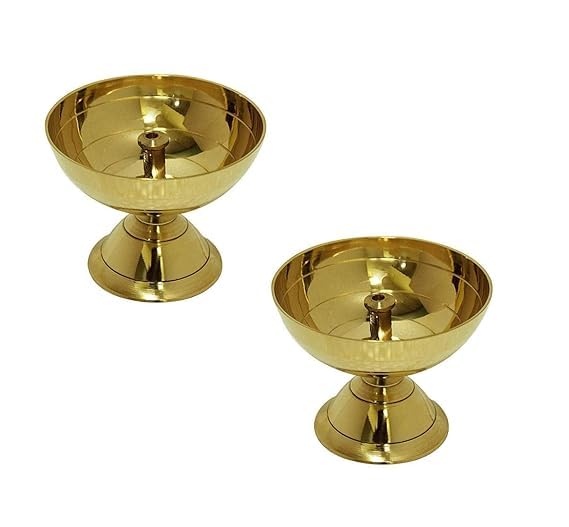
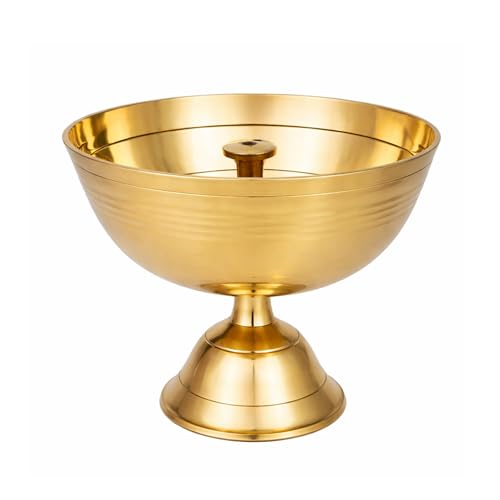
1. Traditional Brass Diya — Best for Daily Puja
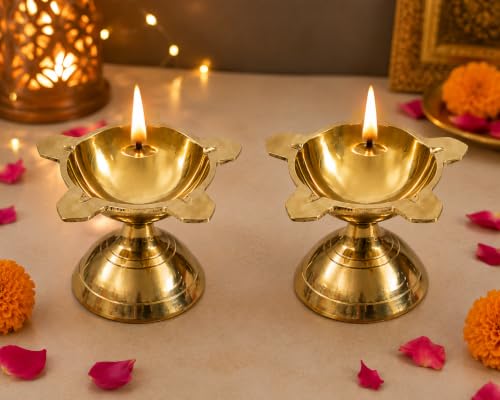
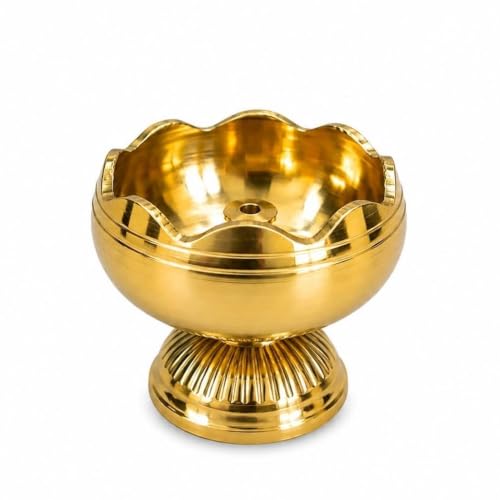
A traditional brass diya with a stable base and a simple bowl is one of the most versatile options for a home pooja room.
Its straightforward design makes it easy to place on a suitable heat-resistant tray, and it can complement wooden mandirs, marble shelves and traditional brass puja accessories.
What to look for
- A stable, flat base
- A bowl deep enough for your intended wick and fuel
- A smooth, easy-to-clean interior
- A comfortable size for your puja shelf
- Clear material and care information
Pros
- Reusable for regular worship
- Works with traditional cotton wicks and suitable lamp fuel
- Easy to pair with other puja essentials
- Available in many sizes and finishes
Cons
- Requires regular removal of oil residue.
- The lamp becomes hot during use.
- Some decorative finishes need special care.
Our verdict: A simple brass diya is the most practical starting point for a daily puja setup. Choose stability and ease of cleaning over unnecessary decoration.



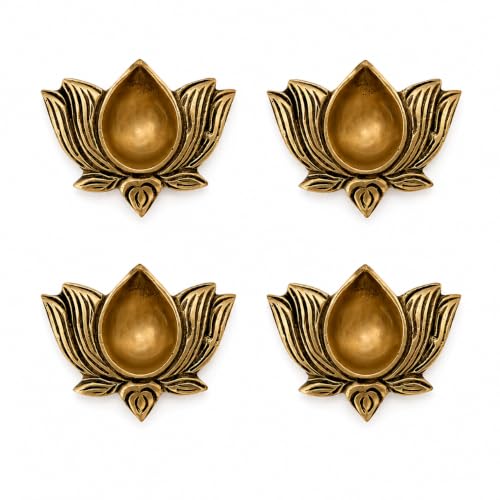
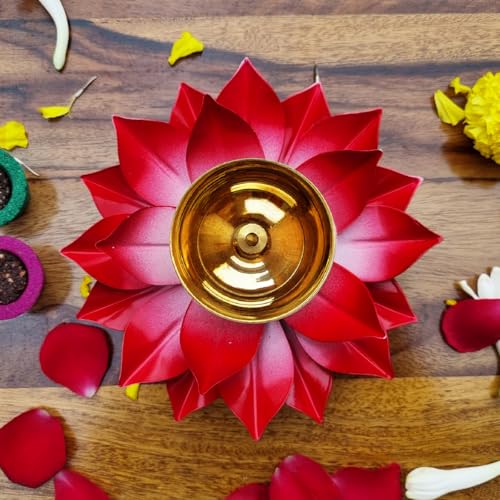
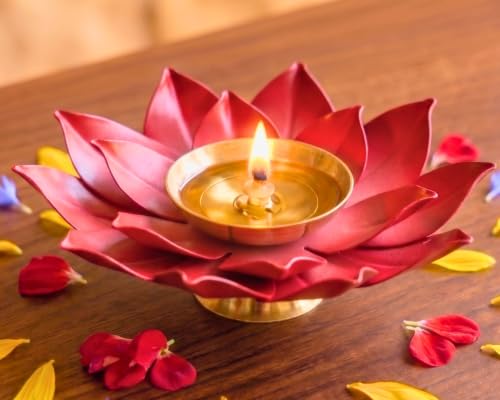
2. Lotus-Shaped Brass Diya — Best for Decorative Mandirs
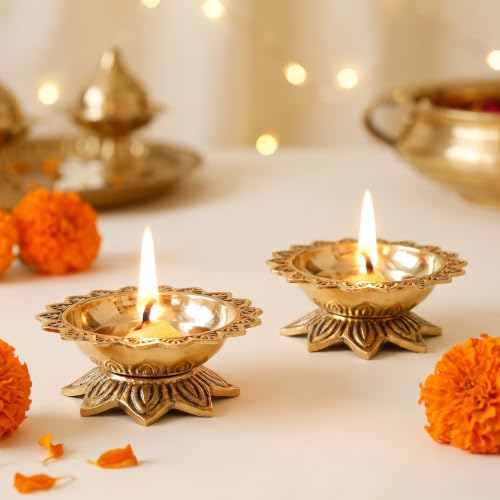
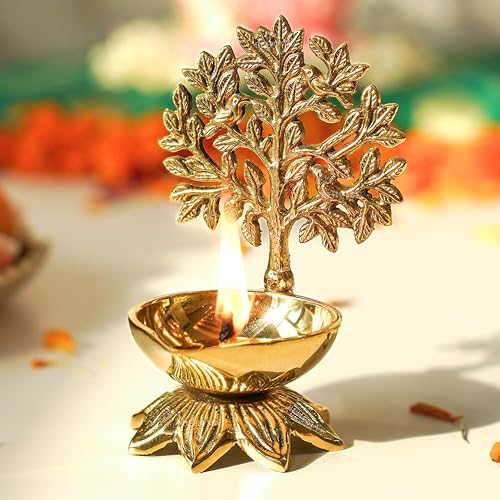
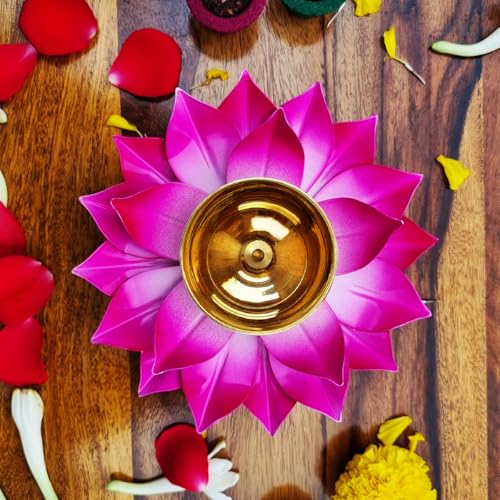
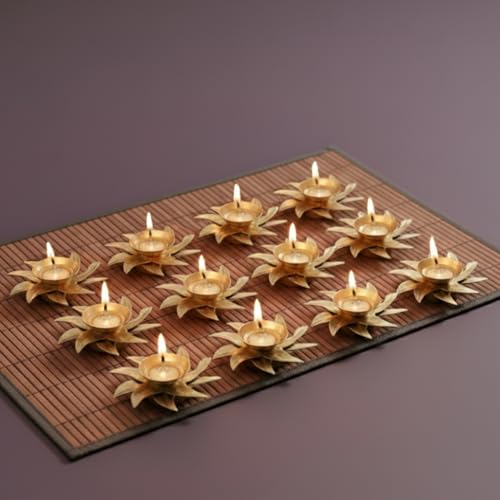
Lotus-shaped brass diyas feature petal-inspired designs that add decorative detail to a prayer space. They can look particularly attractive on a clean marble shelf, a wooden temple unit or a traditional puja thali.
What to look for
- A stable central bowl
- Smooth edges and a secure base
- A design that leaves enough room for the wick
- A finish that matches your existing puja accessories
Pros
- Decorative without requiring additional embellishments
- Complements traditional Indian interiors
- Available in compact and larger formats
- Can be a thoughtful housewarming gift
Cons
- Deep carvings may collect soot and residue.
- Some ornate finishes need gentle cleaning.
- Petal-shaped projections can make certain designs less convenient to store.
Our verdict: Choose a lotus diya when you want a decorative focal point for your mandir. For everyday use, ensure the design remains easy to light and clean.



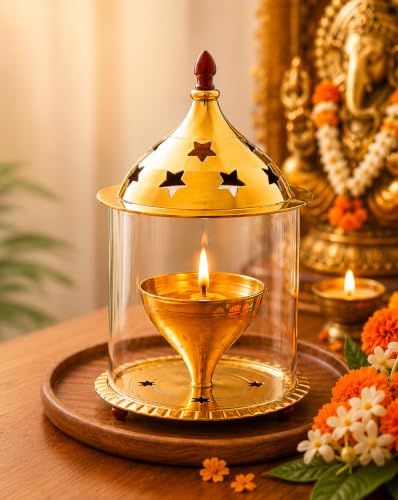
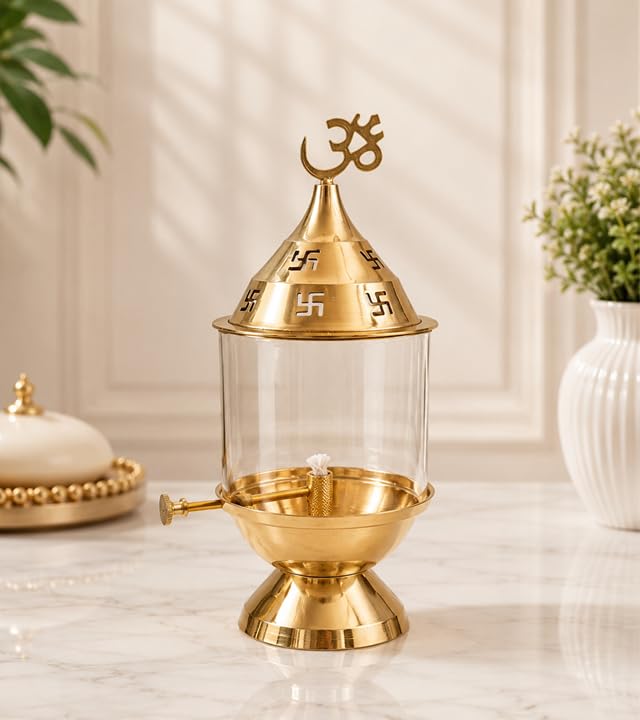
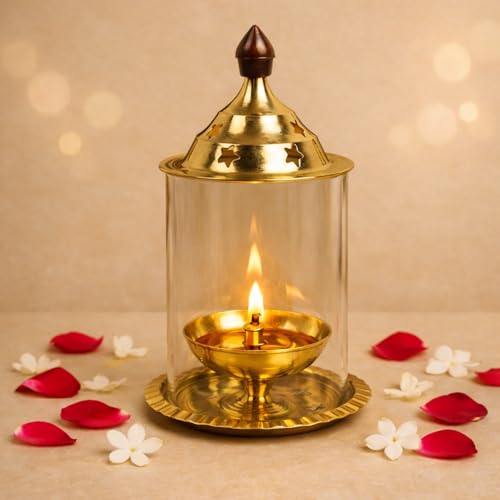
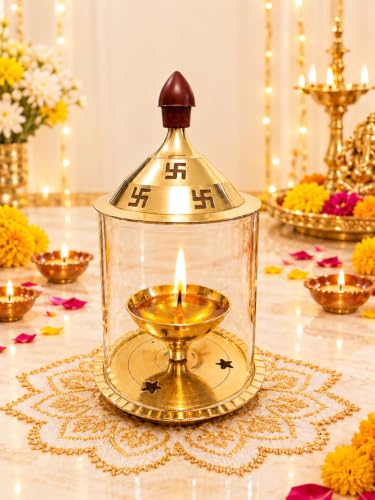
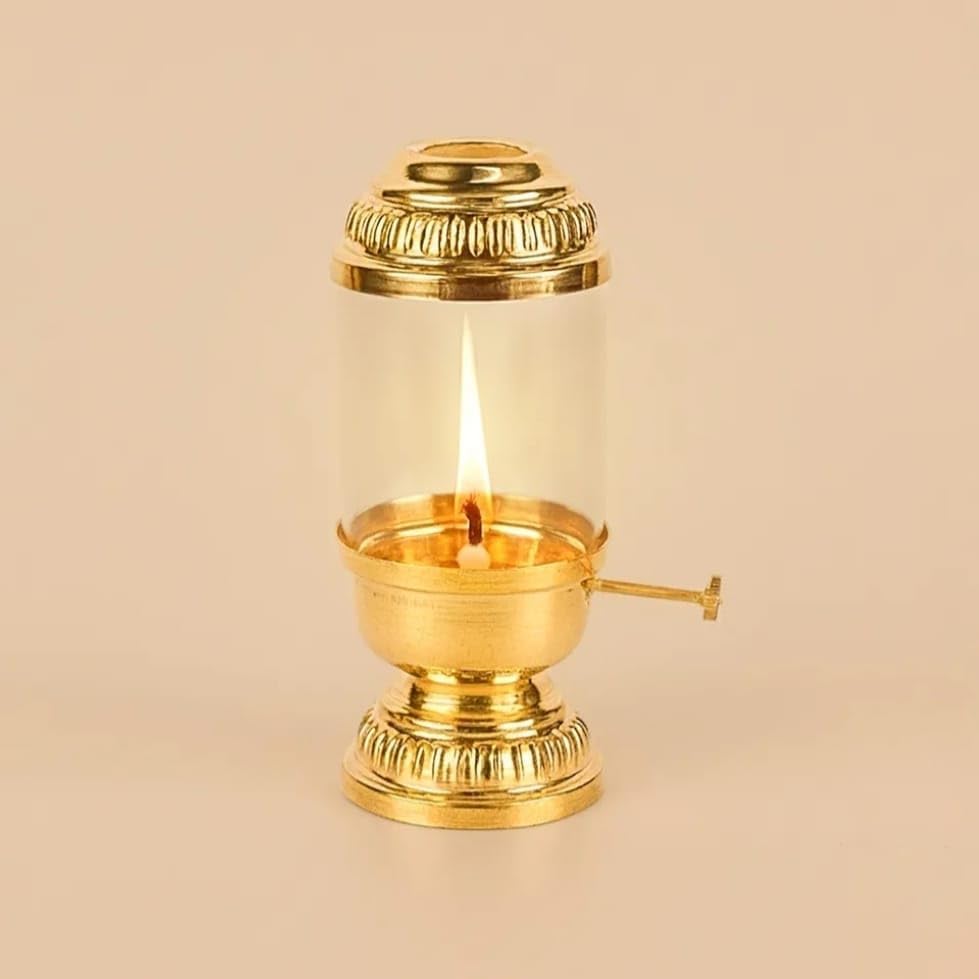
3. Brass Akhand Jyot Diya — Best for a Dedicated Ritual Setup
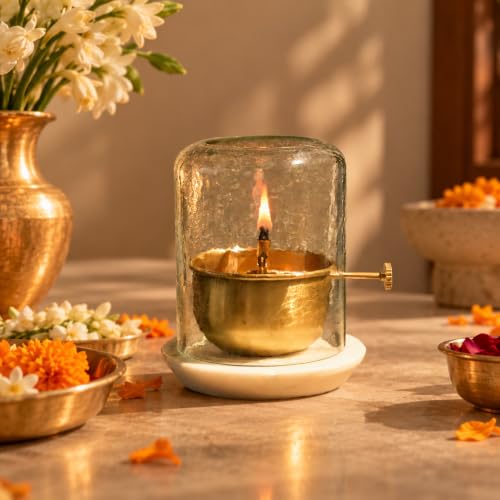
An akhand jyot is intended for a continuous or extended lighting ritual according to the household’s or tradition’s practice. Specialised designs may include a reservoir, cover or glass chimney.
A regular open brass diya should not automatically be treated as an akhand jyot lamp. If you need one for a particular ritual, select a purpose-designed model with clear instructions.
What to look for
- A design specifically intended for extended burning
- A stable base and suitable heat-resistant placement
- Clear instructions for fuel, wick and refilling
- A protective arrangement where appropriate
- Easy access for safe extinguishing and cleaning
Pros
- Designed for a specific longer-duration lighting purpose
- Some models include a chimney or protective cover
- Can suit a dedicated prayer space
Cons
- Requires careful supervision and maintenance.
- Not every design is suitable for every ritual.
- Extended burning increases the importance of safe placement and fuel management.
Our verdict: Buy a purpose-built model only when it suits your intended ritual. Never assume that a covered lamp can be left unattended.




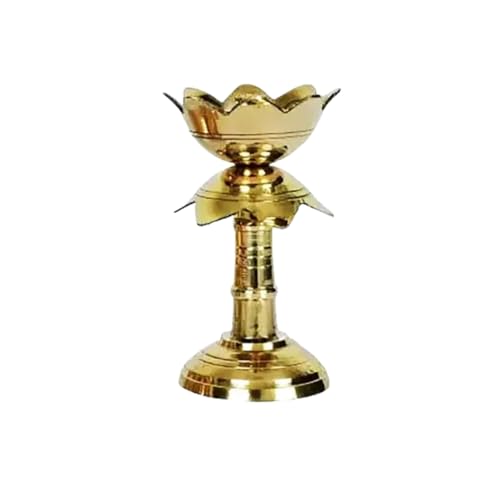
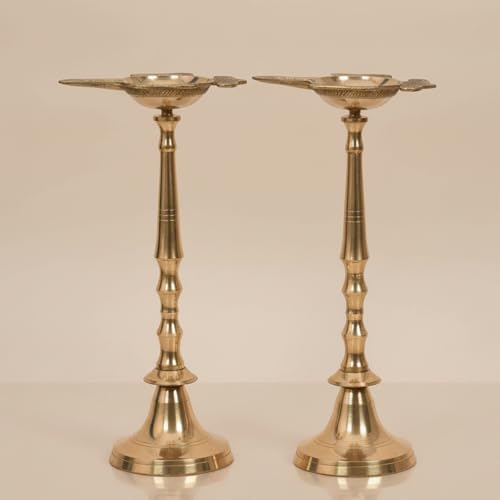
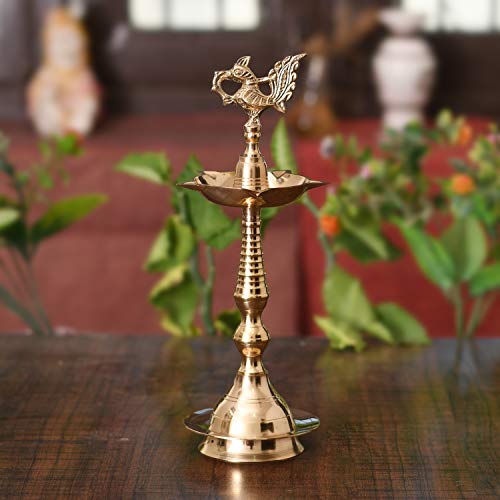
4. Tall Brass Diya Stand — Best for Spacious Pooja Rooms
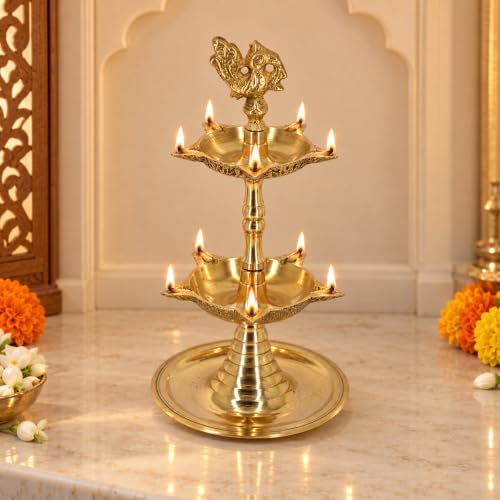
A tall brass diya stand creates a vertical focal point and can complement a dedicated prayer room. Depending on the design, it may feature a single lamp bowl or several tiers.
Before buying, measure the available floor or shelf space and the height of nearby furniture.
What to look for
- A wide, stable base
- Secure joints and a balanced structure
- A height appropriate for the room
- A design that allows safe access to the lamp
- A finish that suits your maintenance preferences
Pros
- Creates a traditional visual focal point
- Suitable for larger prayer spaces
- Some designs accommodate multiple lamps
Cons
- Requires more space than a small diya.
- Tall structures may be easier to knock over.
- Multiple flames require careful supervision.
Our verdict: A standing diya is best when you have sufficient room and a stable location away from curtains, hanging decorations and busy walkways.
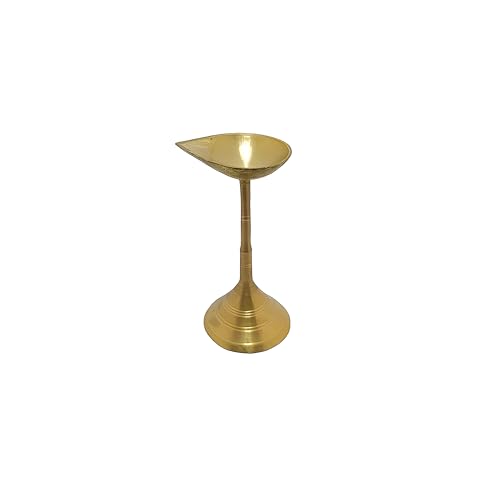

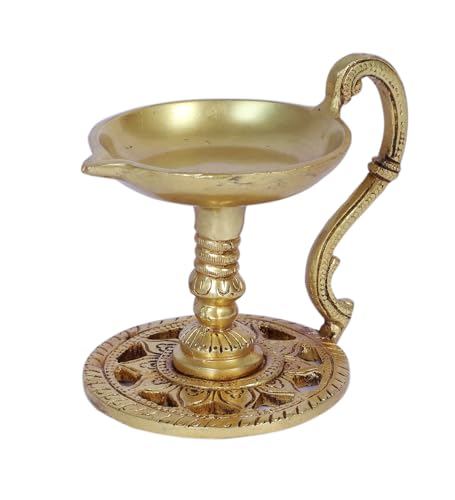



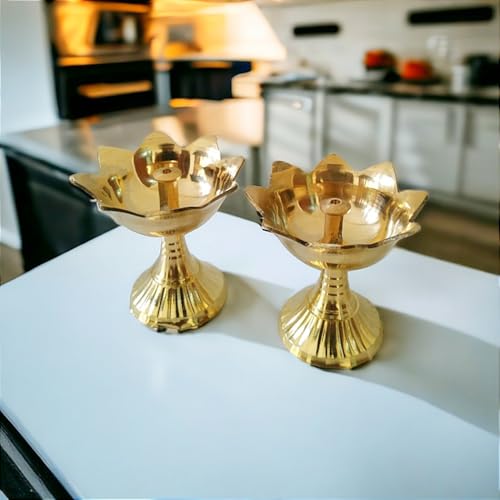
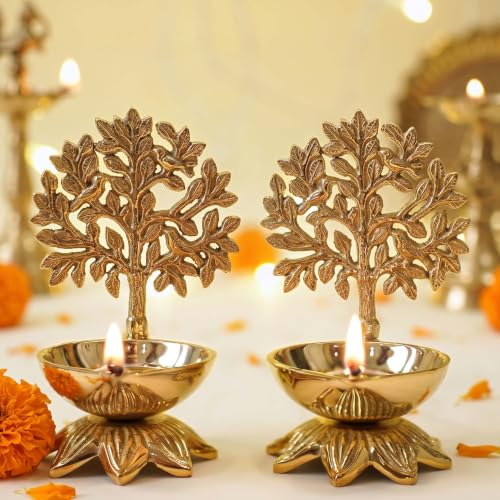
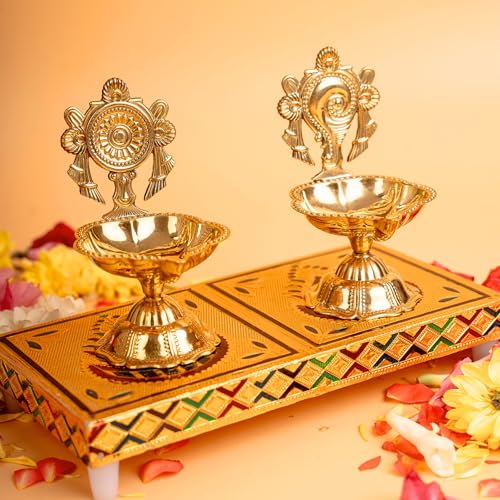
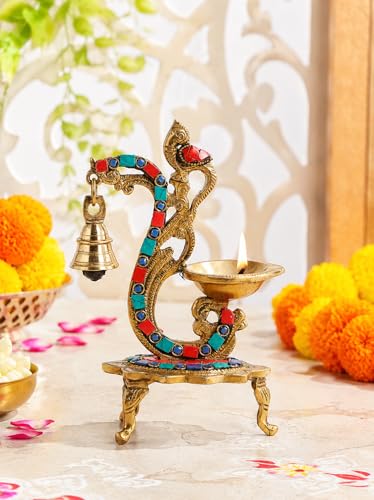
5. Brass Diya Set — Best for Coordinated Puja Styling
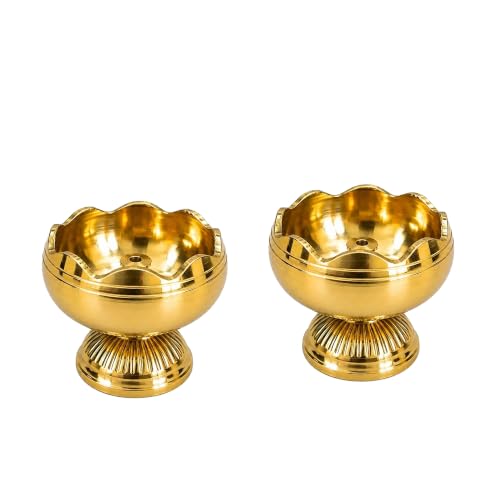
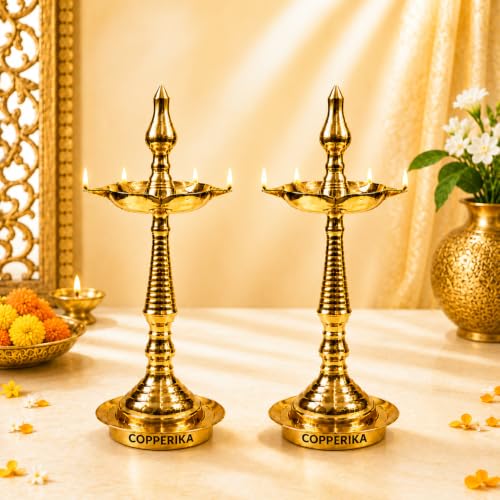
A brass diya set may include a pair of lamps or several matching pieces. Sets can make it easier to create a coordinated appearance across a mandir shelf or puja thali.
What to check
- Whether all pieces are actually brass or have mixed materials
- The dimensions and weight of each diya
- Whether the finish matches your existing accessories
- Whether the price is for one piece, a pair or a complete set
- Whether the lamps are intended for functional use or decoration
Pros
- Creates a coordinated look
- Useful for gifting
- Offers flexibility for arranging matching pieces
Cons
- A set may include pieces you do not need.
- Matching finishes can vary between manufacturers.
- Multiple lamps require more cleaning and safe storage.
Our verdict: Buy a set when you will use the pieces regularly. For a small mandir, one well-made diya may be more practical than a large collection.


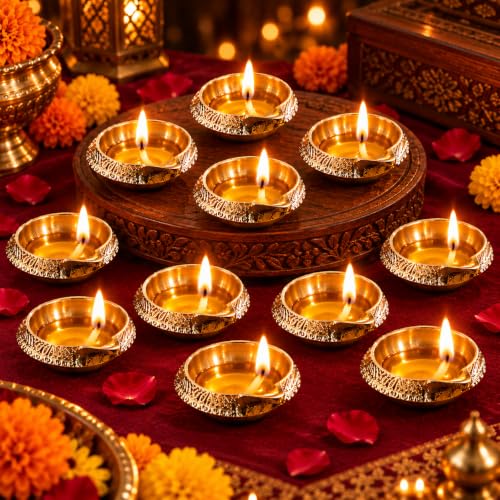

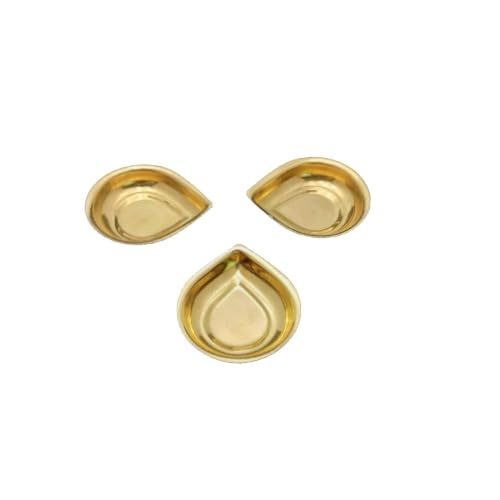
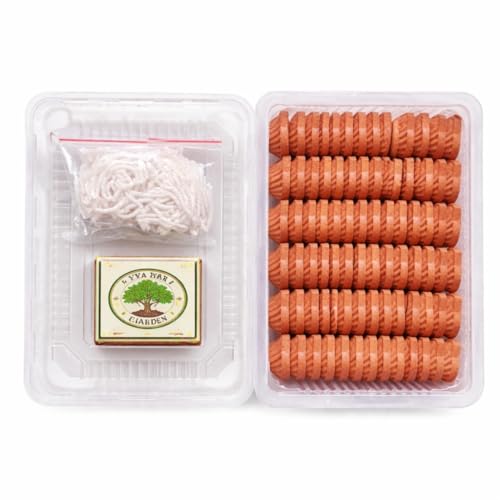
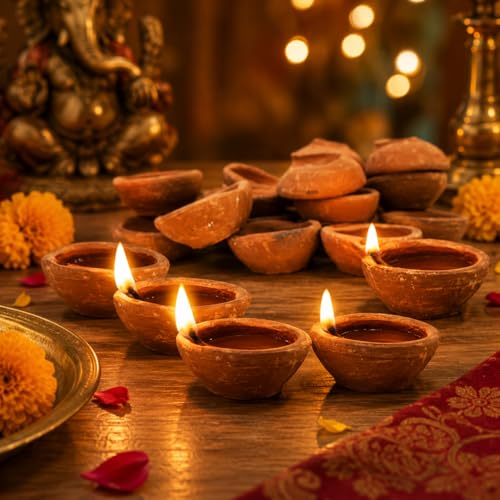
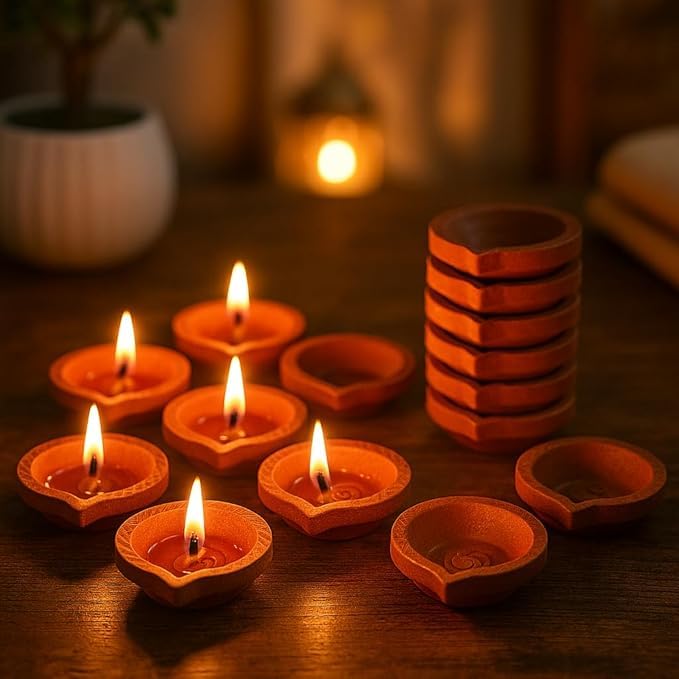
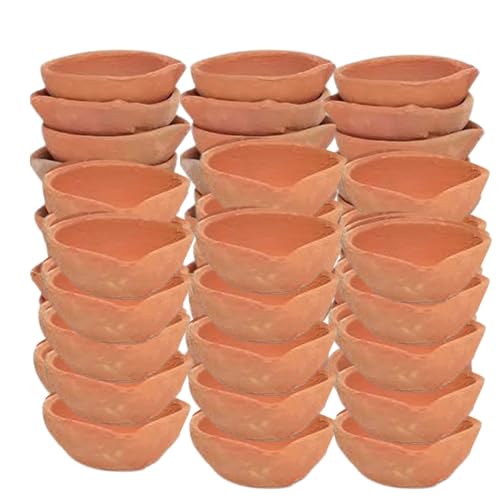
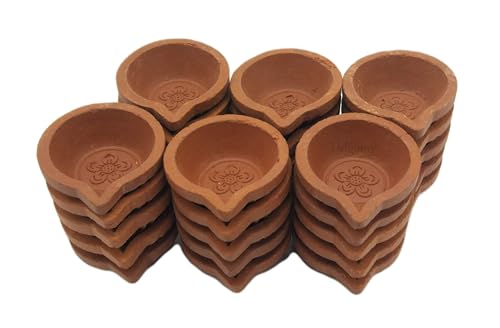
6. Simple Clay Diya Set — Best for Diwali and Festive Displays
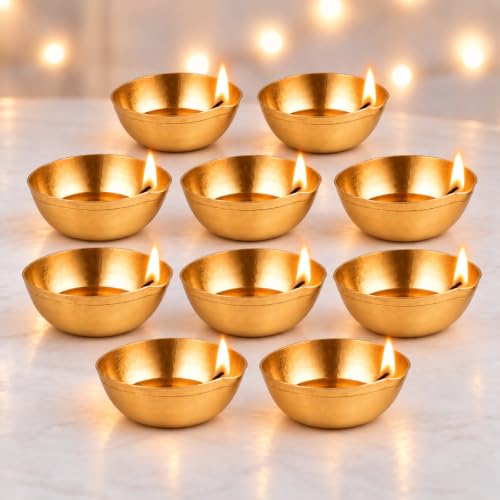
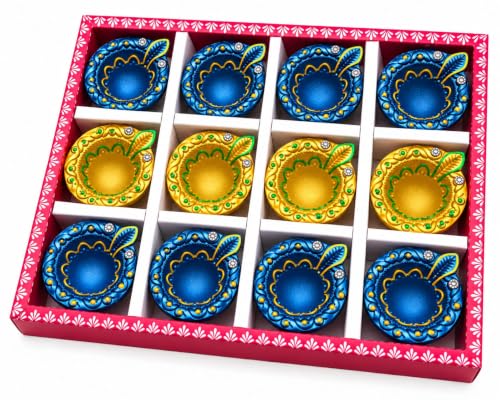
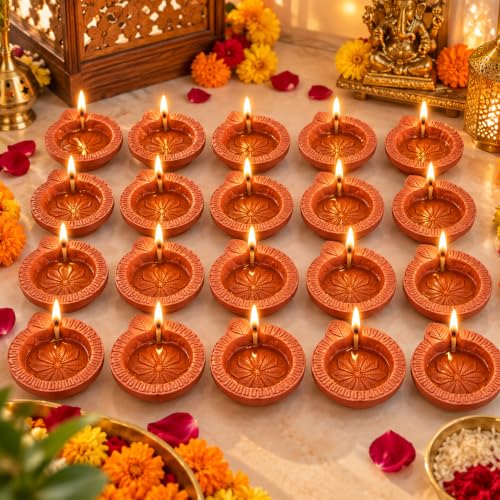
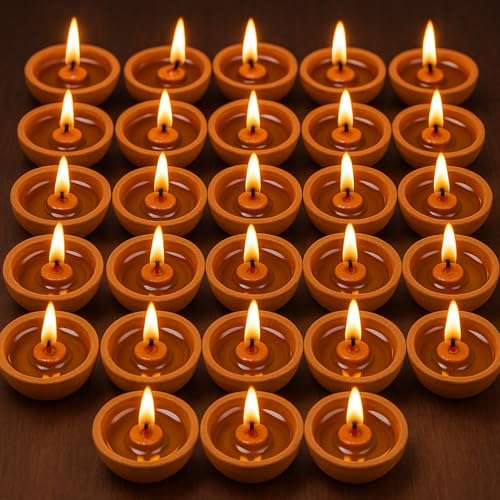
Clay diyas are traditional, affordable and widely used for festive lighting. Their simple appearance works well in rows along a suitable outdoor or indoor arrangement, provided the location is safe for an open flame.
What to look for
- Intact bowls without cracks
- A flat base that sits securely
- Consistent sizes if arranging a row
- No unsuitable paint or coating near the flame area
- Enough space for the wick and fuel
Pros
- Generally budget-friendly
- Traditional festive appearance
- Easy to arrange in groups
- Useful for occasions when several lamps are needed
Cons
- Can crack or break during handling.
- Porous clay may absorb oil.
- Uneven bases can make lamps unstable.
Our verdict: Clay diyas are an excellent choice for festive arrangements. Inspect each one before filling and lighting it.





Brass vs Clay Diyas: Which Is Better?
Both materials have a place in a traditional home. The right choice depends on how you intend to use the lamp.
Durability and Reusability
Brass is generally a more durable option for a diya that will be used repeatedly. With appropriate care, it can serve for many years.
Clay is more fragile and can break if dropped or stored carelessly. However, it is often an economical choice when you need multiple diyas for an occasion.
Winner for repeated use: Brass.
Cost and Value
Clay diyas typically have a lower initial cost, making them practical for large festive displays. Brass usually costs more because of its material, weight, design and manufacturing.
When comparing brass options, look at the actual material, dimensions, weight and construction rather than choosing by appearance alone.
Winner for a low initial budget: Clay.
Cleaning and Maintenance
Brass can develop tarnish, while oil residue and soot may accumulate around the bowl and wick area. The appropriate cleaning method depends on whether the brass is bare, lacquered, plated or given an antique finish.
Clay is simpler to replace if it becomes heavily stained or damaged, although porous clay can absorb oil and may not return to its original appearance after use.
Winner for repeated, long-term use: Brass, provided you are comfortable maintaining it.
Decorative Appearance
Brass offers a warm metallic finish that pairs well with wooden mandirs, marble shelves, bells and puja thalis. Clay provides a natural, earthy appearance that works particularly well with rangoli and festive decorations.
Neither material is universally more beautiful; choose the look that suits your prayer space.
Environmental Considerations
Clay is a natural material, but the overall environmental impact also depends on sourcing, manufacturing, transport, coatings and disposal. Brass can be reused for many years, which may reduce the need for repeated replacements.
Do not assume that every product marketed as traditional or natural is automatically the most sustainable choice.
Quick Decision Guide
| If you want… | Choose |
|---|---|
| A reusable lamp for daily puja | Brass |
| Several lamps for Diwali | Clay |
| A decorative mandir centrepiece | Brass |
| An affordable festive arrangement | Clay |
| A traditional gift for a new home | Brass |
| A simple, earthy festive look | Clay |
| A lamp you can keep and reuse year after year | Brass |
Best overall approach: Keep a brass diya for everyday puja and a small collection of clay diyas for festive occasions.
How to Choose the Right Brass Diya
Check the Material
Product descriptions can use terms such as brass, brass finish, antique brass and gold finish. These terms do not necessarily describe the same construction.
Look for a clear material declaration. If the listing does not specify whether the diya is solid brass, brass-plated or made from another metal with a brass-coloured finish, ask the seller before purchasing.
Choose the Right Size
A large diya is not automatically better. Consider the width of your puja shelf, the space needed for the flame and the amount of fuel you intend to use.
A compact diya is often more convenient for daily lighting. Larger or taller lamps are better suited to spacious areas where they can be positioned securely.
Check the Base
A diya should sit securely on a level surface. Avoid pieces that wobble, have sharp unfinished edges or tip easily when a wick is placed inside.
For a standing lamp, check the stability of the base and the security of any joined sections.
Inspect the Wick Area
The bowl should allow the wick to rest securely without slipping into the fuel. The lip should be shaped so the wick can be positioned appropriately for the intended use.
A practical design is usually easier to light and maintain than a highly ornate lamp with awkward access.
Consider the Finish
Brass diyas may have polished, antique, lacquered or plated finishes. Some are designed to remain darkened in the recessed details.
Check the manufacturer’s cleaning instructions before using lemon, tamarind, vinegar or commercial metal polish. These can damage certain coatings or alter the intended appearance.
Compare Weight and Construction
Weight alone does not prove quality, but a very lightweight product may not be as stable as a heavier, well-designed piece. Compare dimensions, base construction, material claims and product photographs.
Review the Seller and Return Policy
Before ordering online, check:
- Material description
- Dimensions and product weight
- Number of pieces included
- Finish and care instructions
- Shipping and return conditions
- Seller reviews and product photographs
- Whether the diya is functional or decorative
Essential Puja Items to Keep with Your Diya
A diya is only one part of a useful home puja setup. You do not need to buy an elaborate kit if you already have the basics.
Cotton Wicks
Cotton wicks are commonly used with traditional oil or ghee lamps. Choose a size that fits your diya and the type of lighting practice you follow.
Keep unused wicks in a clean, dry container.
Suitable Lamp Oil or Ghee
Use the fuel appropriate for your diya and household practice. Check the manufacturer’s instructions for any specialised lamp.
Do not overfill the bowl, mix incompatible products or add perfume and other substances to lamp fuel.
Puja Thali
A puja thali provides an organised place for selected ritual items. Choose one with enough room for the diya and other accessories, while leaving a safe area around the flame.
A heat-resistant surface is important when using a lit lamp.
Bell
A small puja bell can be kept with the regular prayer accessories. Choose a comfortable size that is easy to hold and store.
Incense Holder
If you use incense, place it in a stable, heat-resistant holder. Keep it separate from the diya so that both flames or embers have adequate clearance.
Matchbox or Long-Reach Lighter
Keep a suitable ignition tool in a designated place, away from children. A long-reach lighter may be easier to use for certain lamp designs, but it must still be handled carefully.
Small Containers for Puja Supplies
Covered containers can help organise cotton wicks, kumkum, haldi and other small supplies. Keep combustible items away from any lit lamp.
Cleaning Cloth
A dedicated soft cotton or microfibre cloth is useful for wiping the diya after it has cooled. Store it separately from items that could contaminate it with cleaning chemicals.
Heat-Resistant Tray
A stable, heat-resistant tray or plate helps protect the surface beneath the diya from heat and minor oil drips. Make sure the tray itself is appropriate for the heat generated.
Optional Decorative Accessories
Depending on your mandir, you might also consider:
- A matching brass bell
- A small puja thali
- A brass or metal incense holder
- A compact oil container
- A diya stand
- A covered storage box for dry accessories
Buy accessories according to your actual routine. A simple, organised setup is often easier to maintain than an overcrowded shelf.
Cotton Wicks and Lamp Oils: What Should You Choose?
Cotton Wicks
Choose clean cotton wicks that fit the diya’s bowl and wick rest. The wick should not be so long that it creates an unnecessarily large flame or becomes unstable.
For a small lamp, a suitable small wick may be more practical than a thick wick intended for a larger diya.
Ghee
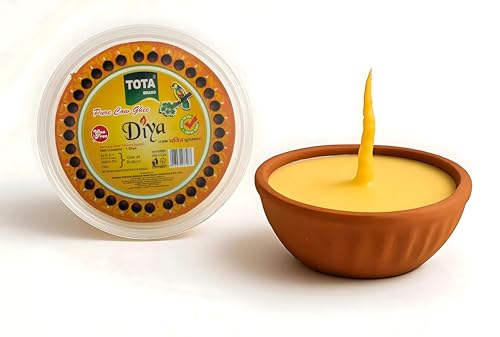
Some households prefer ghee for particular rituals. If that is part of your practice, use a diya suitable for the amount and type of fuel you intend to use.
Traditional Lamp Oils
Some households use oils such as sesame oil for traditional lamp lighting. Practices vary by family, region and ritual, so follow the custom you observe and the lamp manufacturer’s guidance.
Avoid Overfilling
Fill only to a suitable level that leaves room for the wick and reduces the chance of spills. Never add fuel to a burning or hot diya.
Keep Fuel Away from Flames
Store lamp fuel in a closed container away from the diya, incense, heat sources and children. Do not pour fuel near a lit lamp.
How to Clean and Maintain Brass Diyas
Proper maintenance helps keep a brass diya presentable and makes it easier to reuse.
Step 1: Let the Diya Cool Completely
Extinguish the flame and allow the lamp to cool before touching or cleaning it. Brass can retain heat even after the flame has gone out.
Step 2: Remove the Wick and Residue
Once cool, remove the used wick and loose residue carefully. Avoid scraping the bowl with a knife or another hard metal tool.
Step 3: Clean According to the Finish
For routine care, begin with a soft cloth and the manufacturer’s recommended method.
Bare brass may tolerate cleaning methods that are unsuitable for lacquered, plated or antique-finish pieces. Do not apply acidic cleaners or abrasive polish unless the product’s care instructions permit them.
Step 4: Rinse Only When Appropriate
If the care instructions permit washing, remove all cleaning residue thoroughly. Avoid soaking coated or decorative pieces when the manufacturer advises against it.
Step 5: Dry Completely
Dry the diya carefully, including the base and any detailed areas. Moisture left in crevices can cause spotting or discolouration.
Step 6: Store It Properly
Store the diya in a dry place once it is completely cool and dry. If the finish is delicate, wrap it in a soft cloth that will not scratch the surface.
Important: Avoid steel wool and rough scouring pads. They can scratch brass and damage decorative finishes.
In Case You Are Looking For:
- Best Pooja Room Shelves: Wall Mounted vs Floor Units & Temple Organization
- Best Decorative Urlis: Brass vs Ceramic & Festive Decor
- Best Homemade Snacks for Puja Gatherings
- Best Decorative Torans
Safe Diya Placement and Lighting Tips
A beautiful diya should also be placed safely.
- Place it on a stable, level and heat-resistant surface.
- Keep it away from curtains, paper, flowers, hanging decorations and other combustible materials.
- Do not place it where clothing or sleeves may brush against the flame.
- Keep children and pets away from the lamp.
- Never leave an open flame unattended.
- Do not carry a lit diya across the room.
- Extinguish the flame before leaving the room or going to sleep.
- Do not refill or adjust the wick while the diya is burning or hot.
- Keep incense and other burning items at a safe distance.
- Follow any additional instructions supplied with a covered or specialised lamp.
If an open flame is not suitable for your home, consider an electric diya for decorative lighting. It provides a visual alternative without a live flame, though it does not function like a traditional oil lamp.
Common Mistakes to Avoid When Buying Brass Diyas
Buying only for appearance: A beautiful diya may still be difficult to light, clean or position safely.
Ignoring the material description: Brass-coloured finish does not necessarily mean solid brass.
Choosing an unstable design: A diya that wobbles is unsuitable for regular use.
Using the wrong cleaning product: Acidic cleaners and polish can damage certain finishes.
Overcrowding the puja shelf: Keep enough space around the flame and between accessories.
Buying too many accessories: Choose items you will actually use rather than purchasing a large set simply because it looks coordinated.
Assuming every brass diya can burn for hours: Burn duration depends on design, fuel, wick and conditions. A standard open diya should not be treated as a lamp intended for unattended continuous burning.
Frequently Asked Questions
Which brass diya is best for daily puja?
A simple brass diya with a stable base and easy-to-clean bowl is a practical choice for daily puja. Choose a size appropriate for your mandir and intended fuel.
Is a brass diya better than a clay diya?
Brass is generally better for repeated use and long-term durability. Clay is usually more affordable and is particularly useful for festive arrangements. The better choice depends on your needs.
Can brass diyas be used every day?
Yes, provided the diya is suitable for its intended use and is handled safely. Allow it to cool before cleaning and remove oil residue as needed.
Which wick is best for a brass diya?
A clean cotton wick of an appropriate size is a common choice. The best size depends on the lamp’s bowl, fuel and intended use.
How do I clean a brass diya without damaging it?
Start by following the manufacturer’s care instructions. Use a soft cloth for routine cleaning, and avoid acidic cleaners or abrasives on coated, plated or antique-finish pieces unless specifically permitted.
Can I use a brass diya on a wooden mandir shelf?
Only if the setup provides a suitable heat-resistant base and adequate clearance from combustible materials. A heat-resistant tray can help protect the surface, but it does not eliminate the fire risk. Keep the lamp stable and never leave it unattended.
What should I buy with a new brass diya?
Useful essentials include cotton wicks, suitable lamp fuel, a heat-resistant tray, a matchbox or suitable lighter, and a soft cleaning cloth. A puja thali or incense holder can be added if you use one.
Is a tall brass diya stand suitable for a small home?
It depends on the available space and the stand’s stability. For a compact mandir, a small tabletop diya may be easier to place and maintain.
Are electric diyas a good alternative?
Electric diyas can be useful for decorative lighting where an open flame is unsuitable. They do not replace a traditional flame for rituals that specifically require one.
Final Verdict: Which Diya Should You Choose?
The best diya for your home depends on whether you prioritise everyday use, festive decoration, traditional styling or low maintenance.
- For daily puja: Choose a simple, stable brass diya.
- For a decorative mandir: Consider a lotus-shaped brass diya.
- For a spacious prayer room: A stable brass diya stand can create a focal point.
- For Diwali arrangements: Choose a set of intact clay diyas.
- For gifting: Consider a well-made brass diya or a coordinated set.
- For homes where open flames are unsuitable: Choose an electric diya for decorative use.
For most households, a small brass diya for regular worship and a collection of clay diyas for festivals provide a practical balance. Pair them with a few useful puja essentials, keep the arrangement uncluttered, and prioritise safe placement and finish-appropriate care.