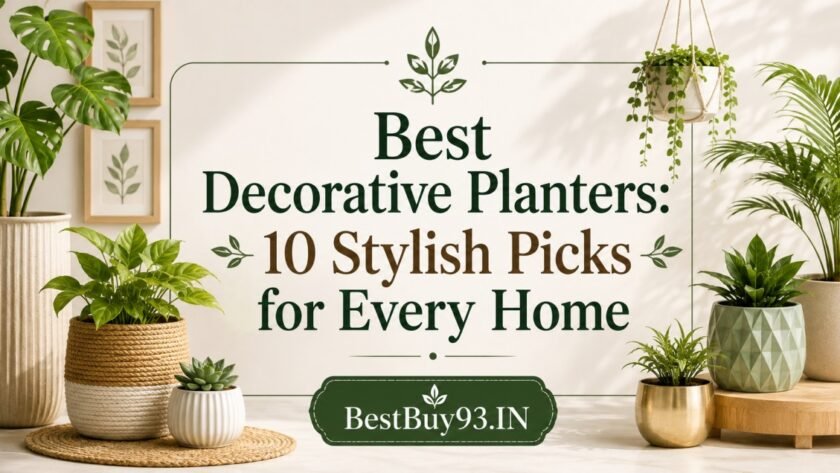

A beautiful plant can instantly make a room feel fresher, but here’s the thing: the planter matters almost as much as the plant itself. You can have the most gorgeous Monstera, Pothos or artificial Olive Tree, but put it in the wrong pot and the whole arrangement can feel… slightly off. 😅
That’s where decorative planters come in.
Today’s planters aren’t just containers for keeping plants upright. They have become an important part of home décor, helping introduce colour, texture, shape and personality into living rooms, bedrooms, balconies, entryways and even home offices.
From understated ceramic pots and woven baskets to tall statement planters and modern geometric designs, there are plenty of styles to choose from.
In this guide, we’ll look at 10 stylish decorative planter styles for different homes and decorating preferences, followed by practical tips on choosing the right size, material, shape and placement.
Also Read | Best Artificial Hanging Plants for Your Home
🏆 Best Decorative Planters at a Glance
| Rank | Decorative Planter Style | Best For | Décor Style |
|---|---|---|---|
| 1 | Ceramic Planter | Overall use | Modern & timeless |
| 2 | Ribbed Planter | Contemporary homes | Textured & elegant |
| 3 | Woven Basket Planter | Natural interiors | Boho & earthy |
| 4 | Tall Floor Planter | Large plants | Modern & spacious |
| 5 | Geometric Planter | Statement décor | Contemporary |
| 6 | Concrete-Style Planter | Minimalist homes | Industrial & modern |
| 7 | Terracotta Planter | Natural décor | Rustic & traditional |
| 8 | Metallic Planter | Accent décor | Glam & contemporary |
| 9 | Hanging Planter | Small spaces | Modern & boho |
| 10 | Small Decorative Pot | Desks & shelves | Minimalist |
🪴 What Are Decorative Planters?
A decorative planter is a plant container designed to combine functionality with visual appeal.
Unlike basic nursery pots, decorative planters are intended to be part of the overall décor.
They can feature:
- Decorative textures
- Sculptural shapes
- Patterned surfaces
- Neutral colours
- Metallic finishes
- Natural materials
- Geometric designs
- Raised stands
- Woven exteriors
You can use them with both real and artificial plants, although the practical requirements can be different.
For real plants, drainage and root space are important.
For artificial plants, you can focus more heavily on:
Appearance + proportion + stability.
🌿 Why Do Decorative Planters Matter?
Think of the planter as the frame around a piece of artwork.
The plant may be the star, but the planter helps complete the composition.
A plain green plant can look completely different when placed inside:
A warm terracotta pot
versus
A sleek white ceramic planter.
The greenery hasn’t changed.
The mood has.
🏠 1. Ceramic Planters — Best Overall
If you want a planter that works with almost any decorating style, ceramic planters are one of the safest choices.
They’re available in countless:
- Colours
- Shapes
- Sizes
- Finishes
- Patterns
Why We Like Them
Ceramic has a naturally finished appearance that can work beautifully in both modern and traditional homes.
Best For
- Living rooms
- Bedrooms
- Entryways
- Home offices
- Shelves
- Side tables
Best Styles
Try:
Matte cream
Warm white
Beige
Muted green
Soft grey
These shades are particularly easy to coordinate with different interiors.
⭐ Best For
Versatile everyday décor
🌿 2. Ribbed Planters — Best Textured Look
Ribbed planters have vertical grooves or raised textures running across their surface.
They’re simple, but the texture gives them more visual character than a completely smooth pot.
Why We Like Them
Texture is particularly useful when you’re working with a neutral colour palette.
A beige ribbed planter can look much more interesting than a plain beige planter without introducing another strong colour.
Best For
- Modern homes
- Contemporary interiors
- Living rooms
- Bedrooms
- Entryways
Styling Tip
Pair a ribbed planter with a plant featuring broad leaves.
The contrast between textured pot + smooth foliage creates a nice visual balance.
⭐ Best For
Modern textured décor
🧺 3. Woven Basket Planters — Best for Natural Interiors
If you like earthy textures and relaxed interiors, a woven basket planter is a fantastic option.
Common materials and finishes include:
- Jute
- Rattan
- Seagrass-style weaving
- Natural fibre
- Rope
Best For
- Boho interiors
- Natural homes
- Scandinavian-inspired spaces
- Bedrooms
- Living rooms
- Balconies
Why We Like Them
Woven planters introduce texture without making the space feel overly decorated.
They work particularly well with greenery because both elements have a natural visual character.
Best Plant Pairings
Try them with:
Areca Palm
Fern
Pothos
Artificial Olive Tree
⭐ Best For
Boho and earthy interiors
🌿 4. Tall Floor Planters — Best for Large Plants
If you have a large artificial or real plant, a tiny planter can make the entire arrangement look disproportionate.
That’s where tall floor planters come in.
They are designed to add height and create a stronger vertical presence.
Best For
- Empty corners
- Living rooms
- Entryways
- Large bedrooms
- Balconies
- Open-plan interiors
Popular Pairings
Tall planter + Artificial Palm
Tall planter + Olive Tree
Tall planter + Fiddle Leaf Fig
Tall planter + Areca Palm
Styling Tip
Don’t place a large floor planter in the middle of a walkway.
Use corners and unused vertical space instead.
⭐ Best For
Large plants and empty corners
🔷 5. Geometric Planters — Best Statement Style
Want something more visually interesting?
Geometric planters use shapes such as:
- Hexagons
- Diamonds
- Faceted surfaces
- Angular designs
- Sculptural forms
They can act almost like decorative objects even when the plant isn’t particularly dramatic.
Best For
- Modern interiors
- Contemporary homes
- Creative workspaces
- Living rooms
- Entryways
Why We Like Them
They introduce structure and shape into a room.
If your furniture is mostly soft and rounded, an angular planter can provide contrast.
Styling Tip
Don’t surround a statement planter with too many other decorative objects.
Let it have some breathing room.
⭐ Best For
Statement décor
🪨 6. Concrete-Style Planters — Best for Minimalist Homes
Concrete and cement-style planters have a naturally understated appearance.
Their muted surfaces work particularly well with minimalist interiors.
Best Colours
- Grey
- Off-white
- Stone
- Greige
- Charcoal
Best For
- Minimalist homes
- Industrial interiors
- Contemporary spaces
- Balconies
- Home offices
Why We Like Them
They add visual weight without relying on bright colours or elaborate patterns.
Pairing a simple green plant with a stone-look planter can create a very clean arrangement.
⭐ Best For
Minimalist and industrial décor
🏺 7. Terracotta Planters — Best Natural & Traditional Look
Terracotta has been used for plants for generations, and honestly, there’s a reason the old-school option still works. 🌿
Its warm earthy colour creates an instantly natural feel.
Best For
- Traditional homes
- Rustic interiors
- Balconies
- Outdoor spaces
- Kitchens
- Natural décor
Why We Like It
The warm orange-brown colour pairs beautifully with greenery.
It can also introduce warmth into an otherwise neutral room.
Best Pairings
Terracotta + Herbs
Terracotta + Fern
Terracotta + Succulents
Terracotta + Pothos
⭐ Best For
Earthy and traditional décor
✨ 8. Metallic Planters — Best Accent Piece
Metallic planters can add a touch of glamour without requiring a complete décor makeover.
Popular finishes include:
- Gold
- Brass
- Copper
- Silver
- Antique metal
Best For
- Contemporary interiors
- Glam décor
- Living rooms
- Entryways
- Dining areas
Styling Tip
Use metallic planters as accent pieces, rather than placing them everywhere.
A single brass planter can have more impact than five metallic accessories fighting for attention.
⭐ Best For
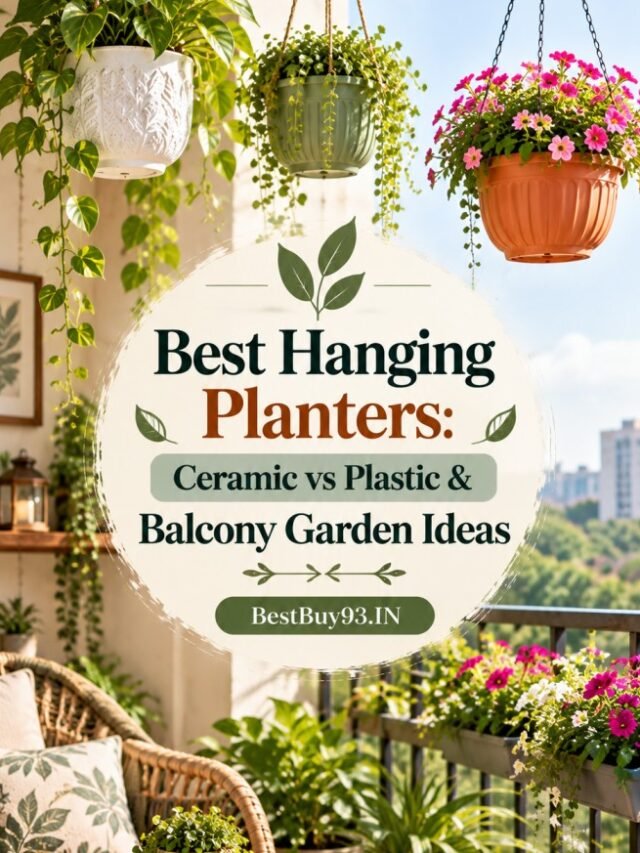
Glamorous accent décor
🌿 9. Hanging Planters — Best for Small Spaces
Hanging planters are brilliant when floor space is limited.
Instead of placing your greenery on:
The floor → table → shelf
you can use vertical space.
Best For
- Small apartments
- Balconies
- Bedrooms
- Kitchens
- Home offices
- Shelves
Good Plant Pairings
Pothos
Spider Plant
String of Hearts
String of Pearls
Artificial trailing plants
Important Safety Note
Make sure the hook, bracket or mounting system is appropriate for the combined weight of the planter and plant.
A hanging planter should be decorative—not a surprise falling object. 😅
⭐ Best For
Small homes and vertical décor
🌱 10. Small Decorative Pots — Best for Shelves & Desks
Not every plant needs a giant statement planter.
Small decorative pots are perfect for:
- Desks
- Bookshelves
- Bedside tables
- Coffee tables
- Kitchen shelves
- Windowsills
Best Plant Pairings
Succulents
Small Pothos
Artificial herbs
Mini Ferns
Small Snake Plants
Styling Tip
Instead of lining up three identical pots, vary the:
- Height
- Shape
- Texture
while keeping the colour palette coordinated.
⭐ Best For
Small plants and compact spaces
🌿 Best Decorative Planter by Décor Style
| Décor Style | Recommended Planter |
|---|---|
| Modern | Ribbed or ceramic |
| Minimalist | Concrete-style or matte ceramic |
| Boho | Woven basket |
| Traditional | Terracotta |
| Industrial | Concrete-style |
| Glam | Metallic |
| Scandinavian | Neutral ceramic |
| Contemporary | Geometric |
| Natural | Terracotta or woven |
| Small-space décor | Hanging or compact pots |
🪴 What Makes a Good Decorative Planter?
Before buying a planter simply because it looks cute online, consider a few practical details.
1. Proportion
The planter should be appropriately sized for the plant.
A huge plant in a tiny pot looks unstable.
A tiny plant in a massive planter can look lost.
2. Material
Choose based on where you’ll use it.
Indoor
You have plenty of freedom.
Outdoor
Consider:
- Weather exposure
- UV exposure
- Weight
- Durability
- Stability
3. Drainage
For real plants, drainage is extremely important.
Excess water needs somewhere to go.
If the decorative planter doesn’t have drainage holes, consider using a suitable nursery pot inside it rather than planting directly into a sealed container.
For artificial plants, drainage is obviously not required for the plant itself, but the planter still needs to be appropriate for its location.
4. Weight
Weight matters particularly for outdoor and floor planters.
A lightweight planter may be convenient indoors but could become unstable on a windy balcony.
5. Finish
Consider whether you want:
Matte
Glossy
Textured
Natural
Metallic
Stone-look
The finish should complement the surrounding décor.
🏡 Why Planter Colour Matters
You don’t always need to match your planter to your furniture.
Sometimes contrast works better.
Neutral Room
Try:
Muted green planter
Warm Interior
Try:
Terracotta
White Interior
Try:
Natural wood or earthy ceramic
Dark Interior
Try:
Cream or warm beige planter
Colourful Room
Choose a more understated planter so the room doesn’t become visually chaotic.
Choosing a decorative planter isn’t just about finding a pot that looks good. The right planter should match the plant’s size, the location, your décor style and the practical needs of the plant.
A beautiful planter that’s too small can make a large plant look unstable, while a massive planter around a tiny plant can make the whole arrangement feel oddly disproportionate. And yes, we’ve all seen the classic “tiny plant drowning in a giant pot” situation. 😅
So before buying, here’s what you should actually consider.
🪴 How to Choose the Right Decorative Planter
There are six major things to check:
- Size
- Shape
- Material
- Drainage
- Location
- Style
Let’s look at each one.
📏 1. Choose the Right Planter Size
Size is probably the first thing you should consider.
The planter needs to be proportional to the plant.
Small Plants
For:
- Succulents
- Small Pothos
- Mini Ferns
- Artificial desk plants
choose compact planters.
Medium Plants
For:
- Snake Plants
- Medium Pothos
- Ferns
- Artificial palms
choose a medium-sized container that provides enough visual support.
Large Plants
For:
- Artificial Olive Trees
- Monstera
- Areca Palm
- Fiddle Leaf Fig
- Bamboo
look for larger, more stable planters.
🌿 2. Consider Plant-to-Pot Proportion
A good rule is to look at the overall visual balance, not just measurements.
Too Small
The plant may look top-heavy.
Too Large
The plant may look lost inside the container.
Just Right
The planter supports the plant visually and physically.
For artificial plants, you have more flexibility because there are no roots to accommodate. You can therefore use decorative planters primarily based on scale, appearance and stability.
For real plants, root space and drainage requirements must also be considered.
🔷 3. Choose the Right Shape
Planters come in more shapes than most people realize.
Round
Classic and versatile.
Square
Works well with modern furniture and structured interiors.
Rectangular
Useful for balconies, windows and long surfaces.
Tall
Excellent for large plants and empty corners.
Bowl-Shaped
Great for compact plants and arrangements.
Geometric
Best when the planter itself is intended to become a decorative statement.
🪴 Round vs Square Planters
This is less about functionality and more about visual language.
Round Planters
They feel:
- Softer
- More organic
- Traditional
- Relaxed
They’re particularly good for plants with flowing foliage.
Square Planters
They feel:
- Structured
- Modern
- Architectural
- Contemporary
They work well alongside furniture with strong straight lines.
Simple Styling Rule
Curved furniture + round planter
can create a softer look.
Straight-lined furniture + square planter
can create a more structured appearance.
Of course, mixing the two can work beautifully too.
🪨 4. Choose the Right Material
Material affects both appearance and practicality.
Ceramic
Best For:
Indoor décor
Advantages:
- Elegant appearance
- Huge variety of finishes
- Easy to coordinate
- Works with many décor styles
Consideration:
Can be heavier and more fragile than lightweight alternatives.
🌿 Woven Planters
Common materials include:
- Jute
- Rattan
- Seagrass
- Rope
- Natural fibres
Best For:
- Boho décor
- Natural interiors
- Bedrooms
- Living rooms
- Covered balconies
Why Choose Them?
They introduce warmth and texture without relying on strong colours.
🪨 Concrete & Cement-Style Planters
Best For:
- Minimalist interiors
- Industrial homes
- Modern balconies
- Contemporary décor
Why Choose Them?
Their muted finish works well with both bright and dark greenery.
Consideration
Actual concrete can be quite heavy, so check the total weight before using it on balconies or elevated surfaces.
🏺 Terracotta
Terracotta is a classic.
Its warm earthy colour works particularly well with greenery.
Best For:
- Traditional homes
- Rustic interiors
- Balconies
- Kitchens
- Outdoor spaces
It’s particularly lovely when paired with herbs, succulents and Ferns.
✨ Metallic Planters
Metallic finishes can introduce a little glamour.
Popular Choices
- Brass
- Gold
- Copper
- Silver
Best For:
- Contemporary homes
- Glam décor
- Living rooms
- Entryways
Use them as accents rather than covering every available surface in gold.
Unless that’s your thing. No judgment. 😂
☀️ Indoor vs Outdoor Decorative Planters
This is another important distinction.
A planter designed for a living room doesn’t necessarily make sense outdoors.
Indoor Planters
Prioritise:
- Appearance
- Colour
- Texture
- Weight
- Furniture compatibility
Outdoor Planters
Prioritise:
- Stability
- Durability
- Weather suitability
- Sun exposure
- Wind resistance
- Appropriate material
If the planter is going on an exposed balcony or terrace, don’t choose purely based on aesthetics.
🌧️ 5. Consider Weather Exposure
Outdoor decorative planters can face:
☀️ Sunlight
🌧️ Rain
💨 Wind
💧 Humidity
🌡️ Temperature changes
Choose materials suitable for the conditions.
For particularly sunny areas, check whether the planter is designed to handle prolonged outdoor exposure.
💧 6. Don’t Forget Drainage
Drainage is crucial when using real plants.
Excess water needs somewhere to escape.
A planter without drainage can potentially leave roots sitting in water, depending on the plant and growing medium.
Practical Solution
If you love a decorative planter without drainage holes, consider placing the actual plant in a suitable nursery pot inside it.
This allows you to combine:
Practical plant care + decorative styling
without sacrificing either.
🌱 What About Artificial Plants?
Artificial plants don’t need drainage.
That gives you much more freedom.
You can choose a decorative planter based primarily on:
- Appearance
- Size
- Weight
- Stability
- Location
You can also use suitable decorative fillers around the base to secure or conceal the artificial plant.
🏠 Best Decorative Planters by Room
🛋️ Living Room
The living room is where you can make a planter part of the overall design.
Try:
Large Olive Tree + tall neutral planter
or
Monstera + textured ceramic planter
For shelves:
Pothos + small ribbed pot
🛏️ Bedroom
Keep things softer.
Try:
Eucalyptus + cream ceramic planter
or
Small Fern + woven basket
Neutral colours tend to work especially well here.
💻 Home Office
Avoid planters that take up too much workspace.
Try:
Small succulent + geometric planter
or
Small Pothos + matte ceramic pot
Place larger plants beside the desk instead of directly on it.
🚪 Entryway
An entryway benefits from height.
Try:
Artificial Bamboo + tall planter
or
Olive Tree + textured floor planter
Make sure the arrangement doesn’t obstruct the walking path.
🍳 Kitchen
Small decorative planters can work beautifully on kitchen shelves and windowsills.
Try:
- Herb-style plants
- Small Pothos
- Artificial Eucalyptus
- Succulents
Choose washable or easy-to-clean planter surfaces where possible.
🌿 Balcony
The balcony gives you more room to experiment with texture.
Try:
Terracotta + Fern
Woven planter + trailing greenery
Large neutral planter + Palm
For exposed balconies, stability is particularly important.
🏡 Best Decorative Planters for Small Spaces
Small homes don’t need fewer plants.
They just need smarter placement.
Use:
Hanging planters
Wall-mounted planters
Narrow floor planters
Small shelf planters
Window planters
Vertical placement is particularly useful because it adds greenery without consuming valuable floor space.
🎨 How to Match Planters With Your Interior
Instead of trying to match everything exactly, think about colour relationships.
Neutral Interior
Try:
Beige + cream + muted green
Warm Interior
Try:
Terracotta + wood + green
Cool Modern Interior
Try:
Grey + white + deep green
Boho Interior
Try:
Rattan + jute + earthy green
Glam Interior
Try:
Brass + cream + dark green
🌿 Should All Your Planters Match?
Not necessarily.
A home can look much more interesting when planters share a visual connection without being identical.
For example:
Living Room
Ribbed beige planter
Bedroom
Smooth cream ceramic
Balcony
Terracotta
They’re different, but the neutral and earthy colour palette keeps them visually connected.
🪴 How to Style Multiple Planters
If you’re grouping plants together, use different heights.
Example:
Tall: Artificial Palm
Medium: Fern
Small: Succulent
This creates a layered arrangement.
You can also mix textures:
Smooth ceramic + woven basket + stone-look planter
The result feels more collected and less like everything came from the same shelf in a store.
🌿 How to Choose a Planter for Artificial Plants
Artificial plants give you additional flexibility.
Because you don’t have to worry about root growth, you can focus on:
1. Visual Proportion
Does the pot suit the plant?
2. Stability
Can the planter support the arrangement?
3. Weight
Is it appropriate for the location?
4. Appearance
Does it complement your décor?
5. Base
Can decorative filler help secure the plant?
🚫 Common Decorative Planter Buying Mistakes
❌ Choosing a Planter That’s Too Small
The plant looks unstable and cramped.
❌ Choosing One That’s Too Large
The plant loses visual impact.
❌ Ignoring the Location
A delicate indoor planter may not work outdoors.
❌ Forgetting Drainage
Especially problematic for real plants.
❌ Prioritising Looks Over Stability
Particularly important for tall floor plants.
❌ Using Too Many Colours
The planter should complement the plant rather than compete with it.
❌ Ignoring Weight
A heavy planter may not be suitable for every shelf, table or balcony.
❌ Buying Without Measuring
Always check the planter’s dimensions.
📏 Measure Before You Buy
Before ordering online, check:
Planter height
Planter diameter/width
Plant height
Plant width
Available floor or shelf space
Door and walkway clearance
For balconies, also consider:
Railing clearance + wind exposure + usable floor area
Five minutes of measuring can save you the classic “this looked smaller online” moment. 😭
A decorative planter does much more than simply hold a plant. The right planter can transform a basic plant into a beautiful design feature, adding texture, colour, shape and personality to your home.
Whether you’re styling a modern living room, a cozy bedroom, a productive home office or a relaxing balcony, choosing the right planter can make your greenery feel intentional and polished.
The best decorative planters balance style, size, durability and practicality, creating harmony between the plant, the container and the surrounding space.
🏆 Decorative Planter Comparison Table
| Planter Type | Best For | Style | Indoor/Outdoor |
|---|---|---|---|
| Ceramic Planter | Everyday use | Timeless | Indoor |
| Ribbed Planter | Modern décor | Contemporary | Indoor |
| Woven Basket Planter | Natural interiors | Boho | Indoor/Covered Outdoor |
| Tall Floor Planter | Large plants | Modern | Indoor/Outdoor |
| Geometric Planter | Statement décor | Contemporary | Indoor |
| Concrete-Style Planter | Minimalist spaces | Industrial | Indoor/Outdoor |
| Terracotta Planter | Traditional décor | Rustic | Indoor/Outdoor |
| Metallic Planter | Accent styling | Glam | Indoor |
| Hanging Planter | Small spaces | Modern | Indoor/Outdoor |
| Small Decorative Pot | Desks & shelves | Versatile | Indoor |
🥇 Best Decorative Planters by Use Case
Best Overall
Ceramic Planter
Ceramic planters are incredibly versatile and work with almost every decorating style.
Best For
- Living rooms
- Bedrooms
- Home offices
- Entryways
Why It Wins
✔ Timeless appearance
✔ Easy to style
✔ Available in many colours and sizes
✔ Suitable for modern and traditional homes
Best for Modern Homes
Ribbed Planter
The subtle texture adds visual interest without overwhelming the space.
Best For
- Modern living rooms
- Contemporary bedrooms
- Minimalist interiors
Why We Like It
The vertical texture creates depth while maintaining a clean appearance.
Best for Natural Décor
Woven Basket Planter
Natural fibres bring warmth and texture into a room.
Best For
- Boho interiors
- Scandinavian spaces
- Relaxed home décor
Best Plant Pairings
- Ferns
- Pothos
- Areca Palm
- Olive Tree
Best for Large Plants
Tall Floor Planter
Large plants need visual balance.
Tall floor planters provide the scale needed for larger greenery.
Best For
- Olive Trees
- Bamboo
- Fiddle Leaf Fig
- Monstera
- Artificial Palms
Best for Small Spaces
Hanging Planter
A hanging planter allows you to add greenery without using floor space.
Best For
- Apartments
- Bedrooms
- Balconies
- Home offices
Why It Works
It uses vertical space efficiently while creating visual interest.
🪴 Decorative Planter Pros & Cons
| Pros | Cons |
|---|---|
| Enhances overall décor | Quality options can be expensive |
| Adds colour and texture | Some materials are fragile |
| Improves plant presentation | Outdoor options need durability |
| Creates focal points | Wrong size affects appearance |
| Available in many styles | Heavy planters can be difficult to move |
| Suitable for real and artificial plants | Some materials require extra care |
🏠 Best Decorative Planters by Room
🛋️ Living Room
Recommended
- Tall floor planter
- Ceramic planter
- Ribbed planter
Ideal Plants
- Olive Tree
- Monstera
- Areca Palm
- Fiddle Leaf Fig
🛏️ Bedroom
Recommended
- Ceramic planter
- Woven basket
- Small decorative pot
Ideal Plants
- Fern
- Eucalyptus
- Pothos
- Snake Plant
💻 Home Office
Recommended
- Geometric planter
- Small ceramic planter
- Minimalist concrete-style planter
Ideal Plants
- Succulents
- Small Pothos
- Artificial desk plants
🚪 Entryway
Recommended
- Tall floor planter
- Textured planter
- Statement planter
Ideal Plants
- Bamboo
- Palm
- Olive Tree
🌿 Balcony
Recommended
- Terracotta planter
- Concrete-style planter
- Hanging planter
Ideal Plants
- Fern
- Palm
- Pothos
- Ivy
🎨 Decorative Planter Colour Guide
Warm Interiors
Choose:
- Terracotta
- Beige
- Warm cream
- Natural brown
Modern Neutral Homes
Choose:
- White
- Greige
- Stone
- Light grey
Minimalist Spaces
Choose:
- Matte white
- Concrete grey
- Off-white
Boho Homes
Choose:
- Natural fibre
- Sand tones
- Earthy brown
- Terracotta
Contemporary Interiors
Choose:
- Charcoal
- Black
- Textured neutral tones
🌱 Decorative Planters for Real Plants vs Artificial Plants
Real Plants
Prioritize:
✔ Drainage
✔ Root space
✔ Material suitability
✔ Plant health
Important
Drainage holes are highly recommended for most real plants.
Artificial Plants
Prioritize:
✔ Appearance
✔ Stability
✔ Scale
✔ Styling
Good News
Artificial plants give you much more flexibility because root growth and watering aren’t factors.
📋 Decorative Planter Buying Checklist
Before purchasing a decorative planter, ask yourself:
📏 Size
☐ Is it proportionate to the plant?
☐ Does it fit the available space?
🪴 Material
☐ Ceramic?
☐ Terracotta?
☐ Concrete-style?
☐ Woven?
☐ Metal?
🏠 Placement
☐ Living room?
☐ Bedroom?
☐ Balcony?
☐ Home office?
☐ Entryway?
☀️ Indoor or Outdoor
☐ Indoor only?
☐ Outdoor suitable?
☐ Weather resistant?
💧 Drainage
☐ Real plant?
☐ Drainage hole available?
☐ Nursery pot required?
🎨 Style
☐ Matches décor?
☐ Matches furniture?
☐ Complements the plant?
🌿 Decorative Planter Styling Ideas
Idea 1
Olive Tree + Tall Neutral Planter
Creates a sophisticated living-room corner.
Idea 2
Fern + Woven Basket
Perfect for relaxed natural interiors.
Idea 3
Monstera + Ribbed Ceramic Planter
Works beautifully in modern homes.
Idea 4
Succulent + Small Geometric Pot
Ideal for desks and shelves.
Idea 5
Palm + Concrete-Style Planter
Excellent for contemporary interiors.
Idea 6
Pothos + Hanging Planter
Adds greenery without using floor space.
🚫 Common Decorative Planter Mistakes
❌ Buying the Wrong Size
Always measure before ordering.
❌ Ignoring Drainage
Particularly important for real plants.
❌ Using Lightweight Pots Outdoors
Wind can become a problem.
❌ Choosing Style Over Function
A planter should look good and work well.
❌ Using Too Many Colours
Planters should complement the room rather than compete with it.
❌ Overcrowding a Space
One well-chosen planter often looks better than several random ones.
🧪 Our Research Methodology
For this guide, we evaluated decorative planters based on:
- Style versatility
- Material quality
- Durability
- Indoor suitability
- Outdoor suitability
- Size options
- Décor compatibility
- Ease of styling
- Practicality
- Popular home décor trends
We also considered how different planter styles perform across living rooms, bedrooms, balconies, entryways and home offices.
The goal was to identify decorative planters that combine visual appeal, functionality and long-term usability.
🏆 Final Verdict
The best decorative planter is the one that complements both the plant and the room.
If you’re unsure where to start:
🥇 Best Overall Choice
Ceramic Planter
It works with nearly every décor style and remains one of the most versatile planter options available.
🥈 Best for Modern Homes
Ribbed Planter
Adds subtle texture and sophistication.
🥉 Best for Natural Interiors
Woven Basket Planter
Brings warmth and organic texture to a space.
Best for Large Plants
Tall Floor Planter
Perfect for creating a focal point.
Best for Small Homes
Hanging Planter
Adds greenery without taking up valuable floor space.
Ultimately, the most successful decorative planter creates balance between:
🌿 The Plant
🪴 The Planter
🏠 The Room
When those three elements work together, even a simple plant arrangement can look beautifully designed.
❓ Frequently Asked Questions
What is the best material for decorative planters?
Ceramic is one of the most versatile materials because it works with many décor styles and is available in numerous finishes.
Are decorative planters good for indoor plants?
Yes. Decorative planters can enhance the appearance of indoor plants while complementing your interior design.
Which decorative planter is best for a living room?
Tall ceramic, ribbed and floor planters are among the best options for living rooms.
Can decorative planters be used outdoors?
Some can. Always check whether the planter is suitable for outdoor conditions and weather exposure.
Do decorative planters need drainage holes?
For real plants, drainage is generally important. Decorative planters without drainage can often be used as cachepots with nursery pots inside.
Which planter style is best for modern homes?
Ribbed, geometric and concrete-style planters are popular choices for modern interiors.
Are hanging planters good for small apartments?
Yes. Hanging planters help maximize vertical space while keeping floors clear.
What colour planter goes with everything?
Neutral colours such as cream, beige, white and soft grey are among the easiest to style.
Can artificial plants be used in decorative planters?
Absolutely. Decorative planters work beautifully with artificial plants and offer more styling flexibility.
How do I choose the right planter size?
Choose a planter that looks proportionate to the plant and fits comfortably within the available space.