
Decorative lanterns can transform an ordinary corner into a warm, inviting space. Whether you are decorating your entrance for Diwali, styling a balcony for a cosy evening, or adding a soft glow to your living room, the right lantern can make your home feel more welcoming without requiring a complete makeover.
But which type should you choose? LED lanterns are convenient and generally easier to manage, while candle lanterns offer the natural flicker and ambience of a real flame. The best option depends on where you plan to use it, your decorating style, and how much maintenance you are comfortable with.
In this guide, we compare LED and candle lanterns, explore decorative styles for Indian homes, share festive lighting ideas, and explain what to look for before buying.
Also Read | Festive Drinks: 12 Refreshing Recipes for Celebration
Quick Answer: Are LED or Candle Lanterns Better?
- Best for everyday use: LED lanterns with warm-white lighting.
- Best for traditional festive decor: Metal or glass candle lanterns.
- Best for homes with children or pets: Battery-operated LED lanterns, placed securely out of reach.
- Best for balconies: LED lanterns for convenience; candle lanterns only in suitable, sheltered locations with careful supervision.
- Best for elegant living-room decor: Gold, black or antique-brass lanterns with warm lighting.
- Best for colourful festive styling: Decorative hanging lanterns and traditional Indian kandils.
- Best for a cosy evening atmosphere: Warm LED candles or real candles inside appropriately designed lanterns.
Our recommendation: Choose warm-white LED lanterns for regular use and keep one or two beautiful candle lanterns for occasions when you can supervise them. This gives you flexibility without relying on an open flame every evening.
LED vs Candle Lanterns: Which Should You Choose?
Both types can look beautiful, but they serve slightly different purposes.
LED Lanterns
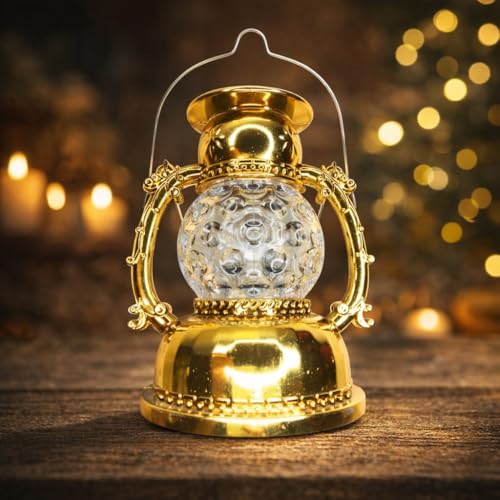
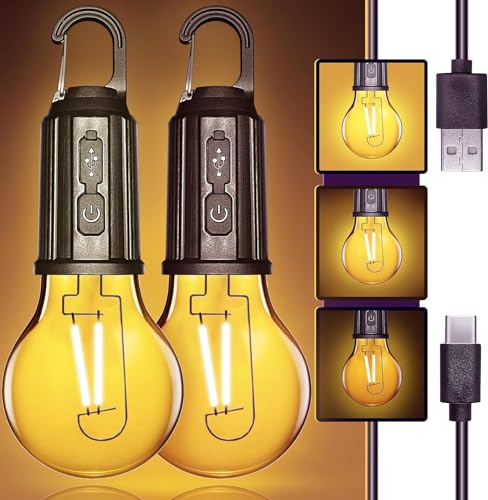
LED lanterns use battery-powered, rechargeable or plug-in lighting, depending on the design. Some decorative models use a flickering effect to imitate candlelight, while others provide a steady glow.
They are convenient for everyday decorating because you can switch them on and off without handling a flame. Battery-operated models are also useful where electrical sockets are not easily accessible.
Advantages
- No open flame during normal operation.
- Convenient for daily use and longer decorating sessions.
- Available in traditional, contemporary and rustic designs.
- Some models offer timers, dimming or rechargeable batteries.
- Useful for creating a consistent lighting arrangement across several rooms.
Things to consider
- Batteries need replacing or recharging.
- Cheap models may have harsh, overly bright or cool-toned lighting.
- Battery-powered lanterns still need sensible placement and supervision.
- Rechargeable and plug-in models need charging or cable management.
Best for: Entryways, living rooms, covered balconies, everyday ambience and festive displays that remain switched on for extended periods.




Candle Lanterns
Candle lanterns typically have a metal, glass or other suitable housing designed to hold a candle or tealight. Their appeal comes from the natural movement and warmth of the flame.
They are especially attractive for traditional decor, intimate dinners and festive arrangements where atmospheric lighting matters more than convenience.
Advantages
- Natural flickering light creates a distinctive atmosphere.
- Traditional metal and glass designs can look timeless.
- Works well with festive table settings and decorative groupings.
- Can complement traditional, rustic and vintage-inspired interiors.
Things to consider
- An open flame introduces fire and burn risks.
- The lantern must be designed for candle use.
- Wax residue and soot may require cleaning.
- Wind, curtains, decorations and unstable surfaces can create hazards.
- Candles should never be left burning unattended.
Best for: Supervised festive displays, dinner settings and occasional decorative use in suitable locations.




LED vs Candle Lanterns: Comparison Table
| Feature | LED lanterns | Candle lanterns |
|---|---|---|
| Light source | Battery, rechargeable or mains-powered LED | Real candle or tealight |
| Light effect | Steady or simulated flicker | Natural flickering flame |
| Convenience | Usually higher | Requires candle handling |
| Open-flame risk | No open flame from the LED itself | Yes |
| Maintenance | Charging, batteries or occasional cleaning | Replacing candles and removing wax |
| Everyday use | Very suitable | Requires extra care |
| Festive styling | Excellent | Excellent |
| Outdoor suitability | Depends on weather protection and rating | Requires a suitable location and close supervision |
| Best aesthetic | Modern, versatile and practical | Traditional, atmospheric and intimate |
Which is better overall? For most households, LED lanterns are the more practical everyday choice. Candle lanterns are worth considering when the natural flame is an important part of the look and you can supervise them safely.
Best Decorative Lantern Styles for Your Home
You do not need an expensive collection. Start with a style that complements your existing furniture, wall colours and decorative accessories.
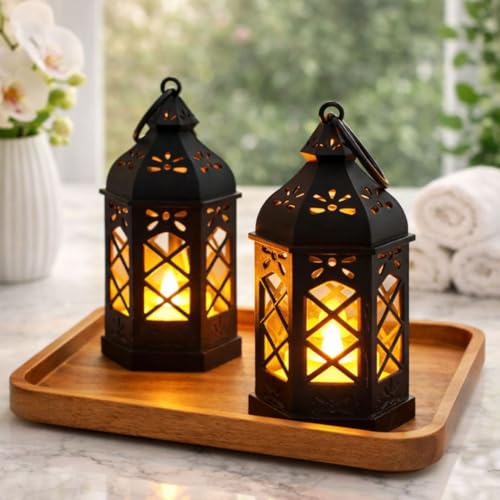
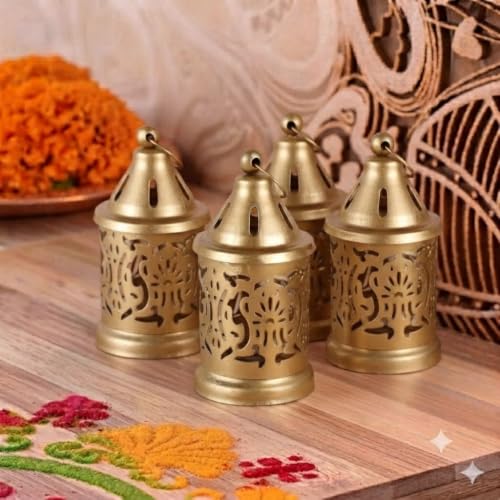
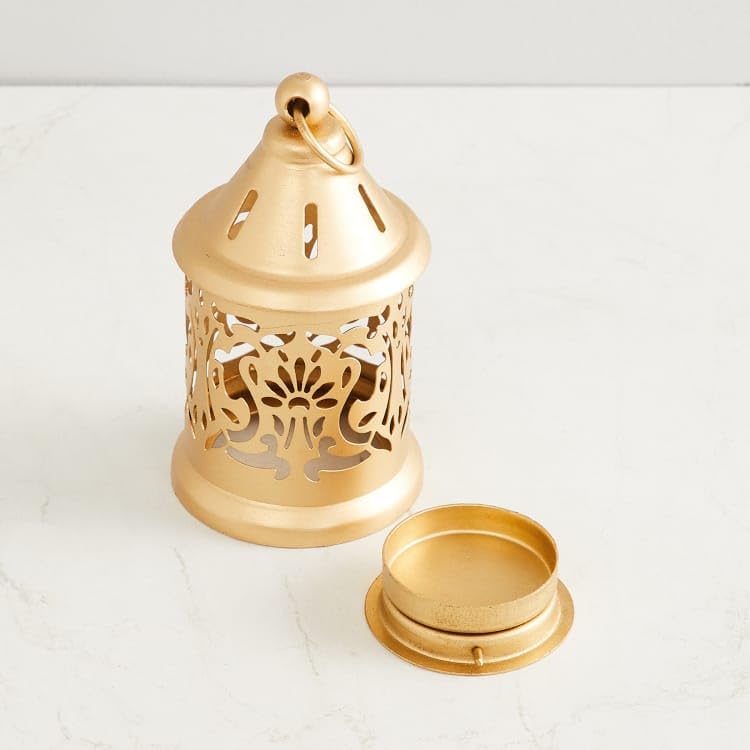
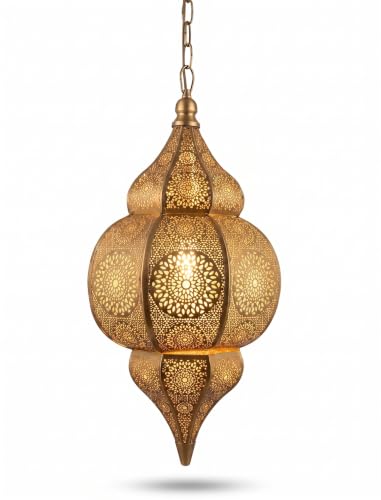
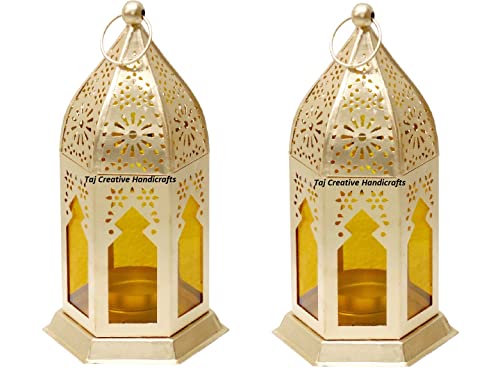
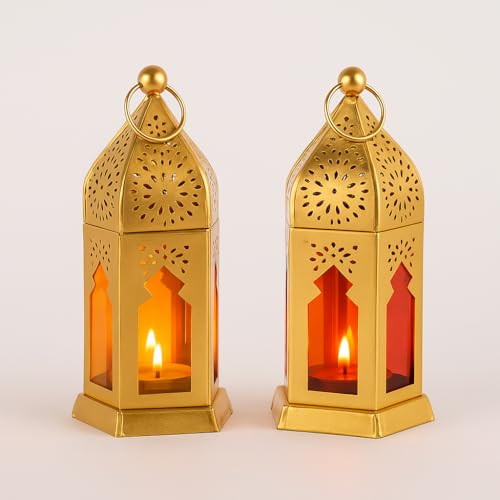
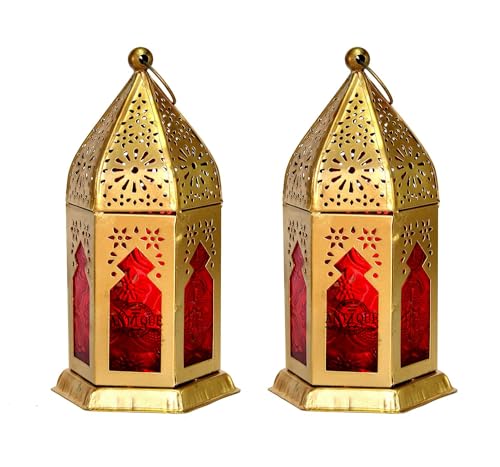
1. Moroccan Metal Lanterns
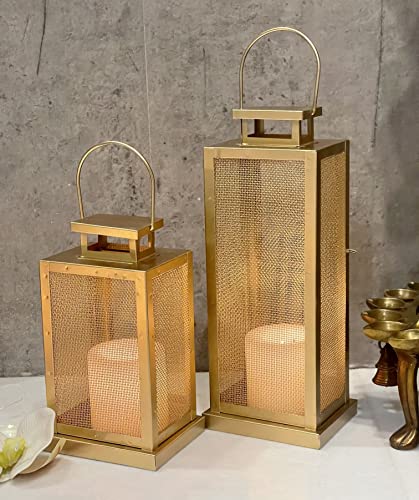
Moroccan-inspired lanterns often feature intricate cutwork, geometric patterns and warm metallic finishes. When illuminated, their openings can cast decorative shadows on nearby surfaces.
Choose gold or antique-brass finishes for a warm, traditional appearance. Black metal versions can work beautifully in modern or industrial-style rooms.
Where to use them
- Entryway consoles
- Living-room corners
- Covered balconies
- Festive floor arrangements
Styling tip: A pair of lanterns in different sizes often looks more intentional than several unrelated designs scattered around the room.



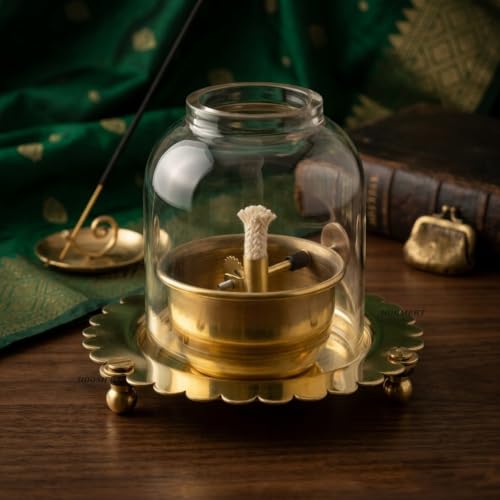
2. Gold and Brass-Finish Lanterns
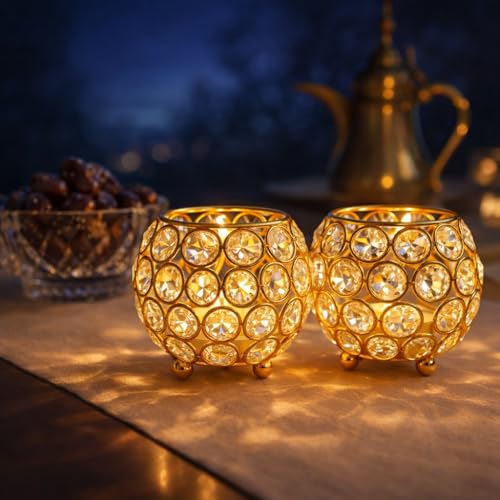
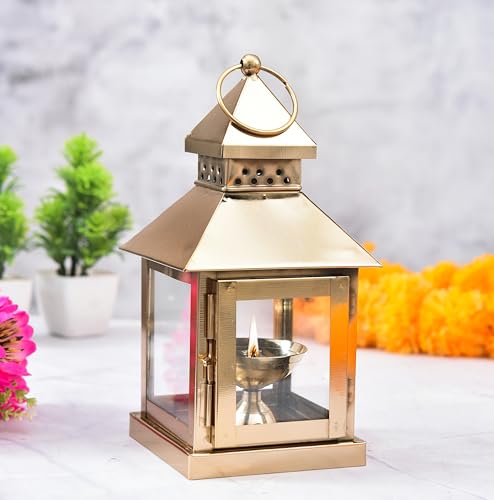
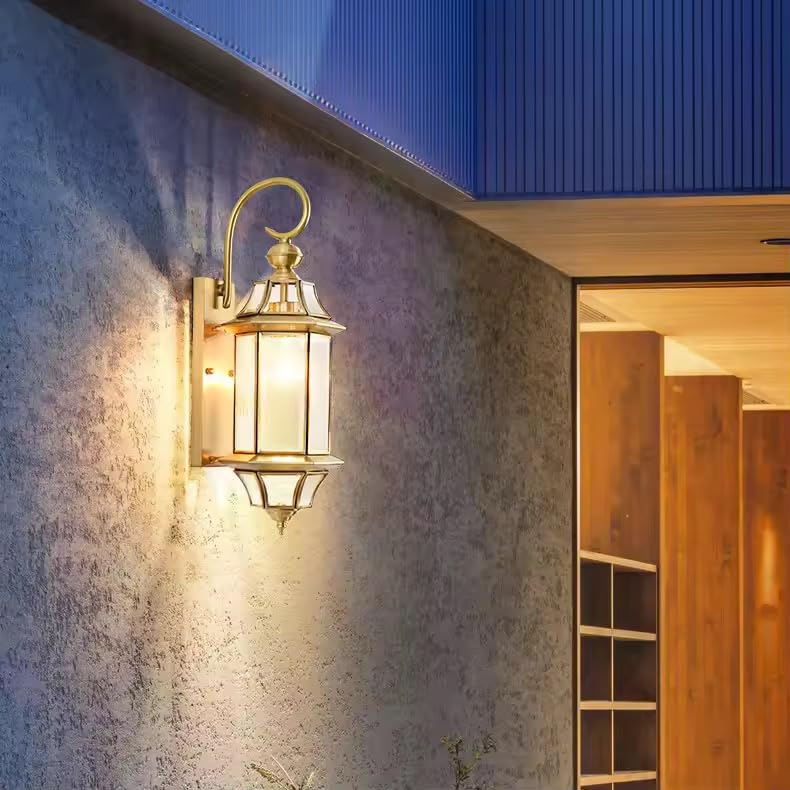
Gold-toned lanterns are particularly useful for festive decorating because they pair easily with cream, maroon, green, terracotta and wooden finishes.
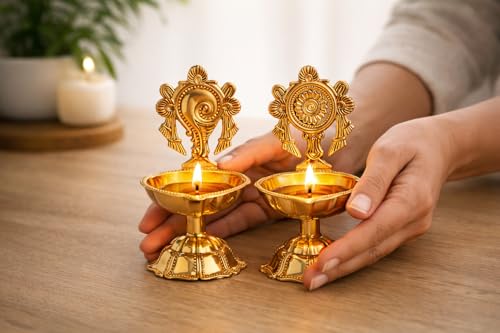
They can complement brass diyas, decorative trays and traditional festive accessories without requiring the entire room to follow a traditional theme.
Best for: Diwali decor, pooja-area surroundings where appropriate, console tables and festive dining arrangements.
Styling tip: Repeat the gold finish in just one or two nearby accessories. Too many shiny objects can make a small arrangement feel busy.




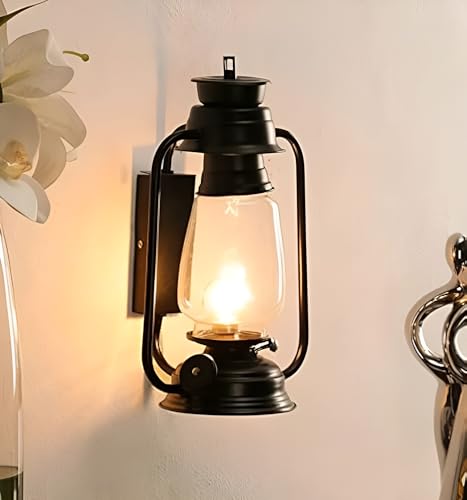
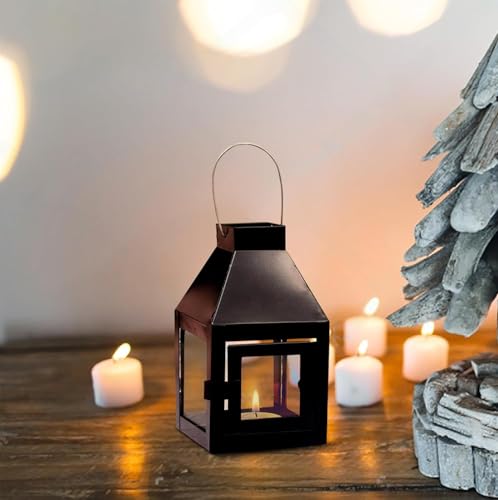
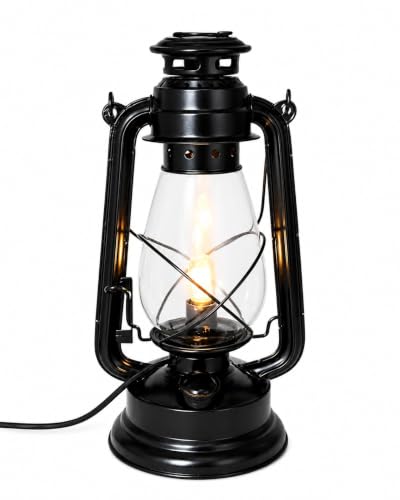
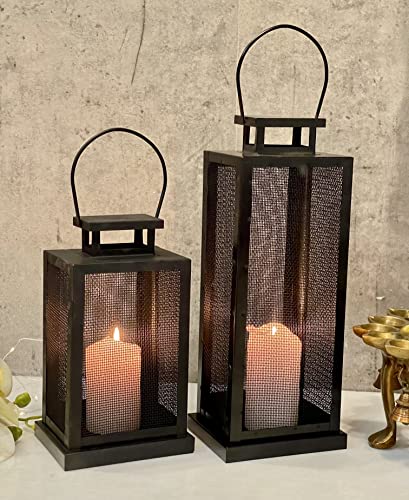
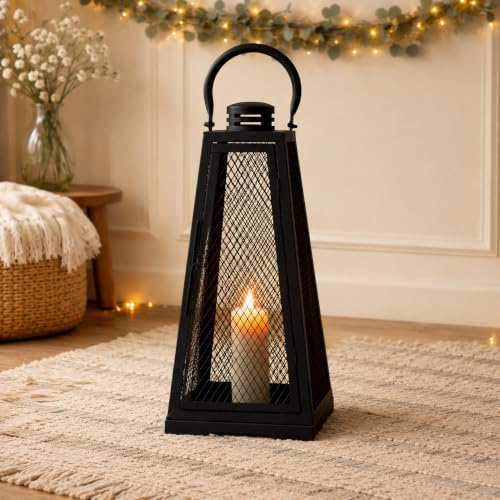
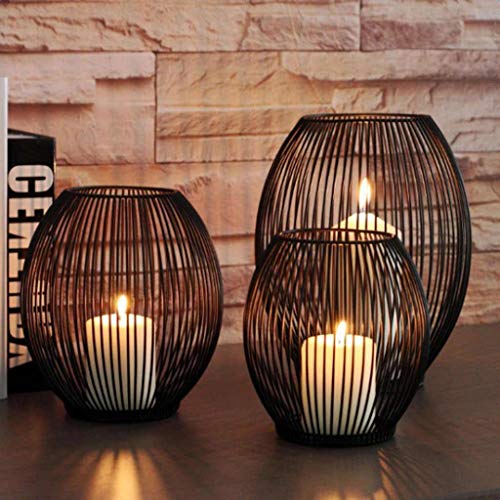
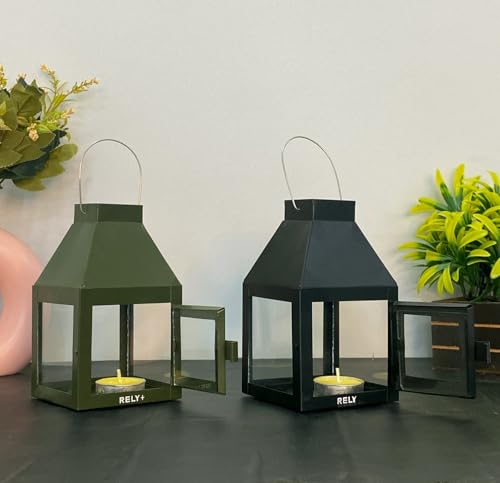
3. Black Metal Lanterns
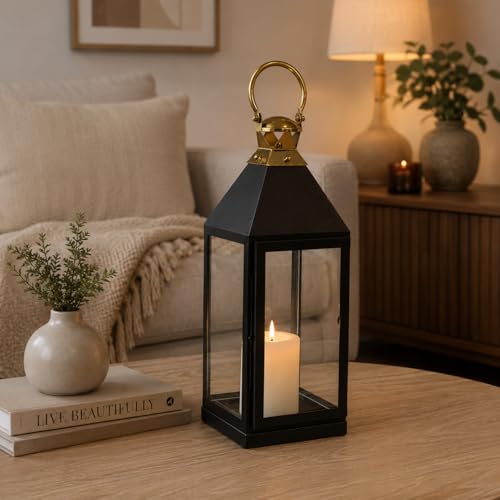
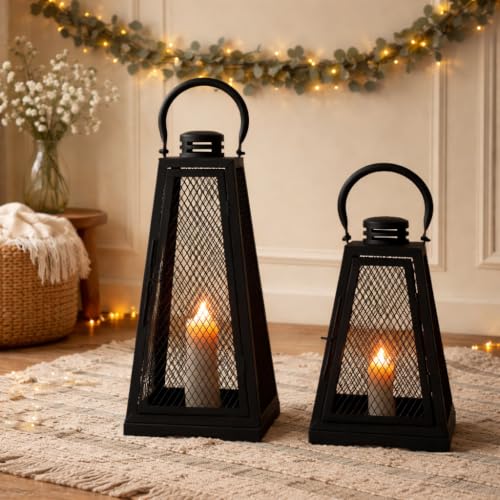
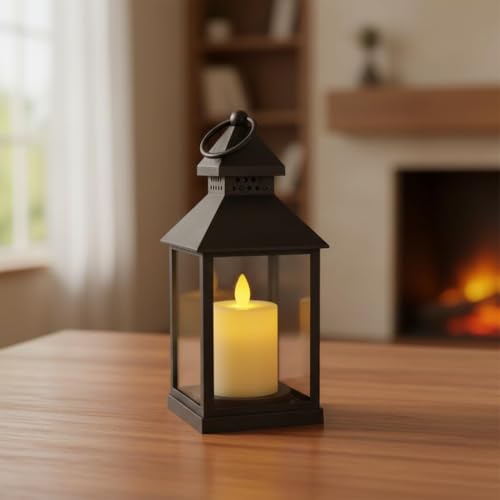
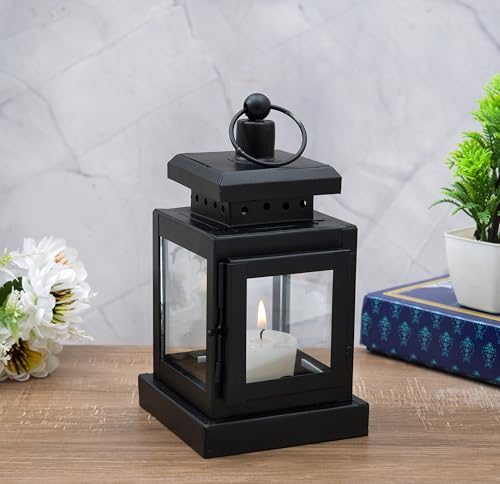
Black lanterns are a good choice for contemporary homes. Their darker frames create contrast against pale walls, light wood, beige upholstery and neutral floors.
They can also balance colourful decor, allowing flowers or festive textiles to provide the main accent.
Best for: Modern living rooms, minimalist interiors and monochrome decor.
Styling tip: Use a warm LED candle inside a candle-compatible lantern to soften the contrast of a black frame.



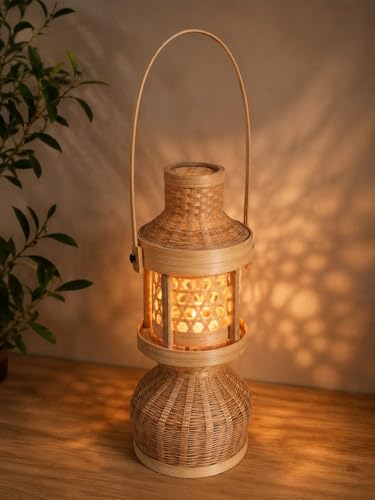
4. Wooden Lanterns
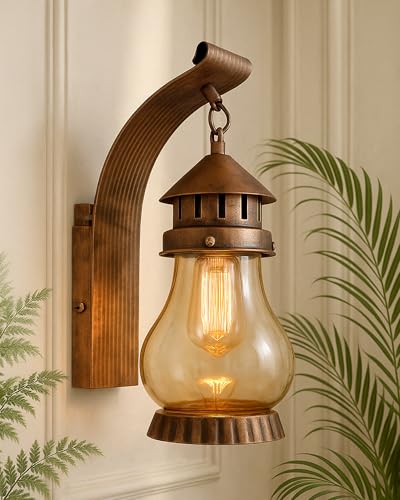
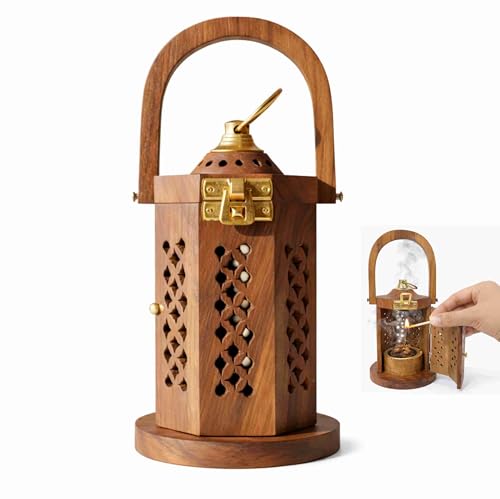
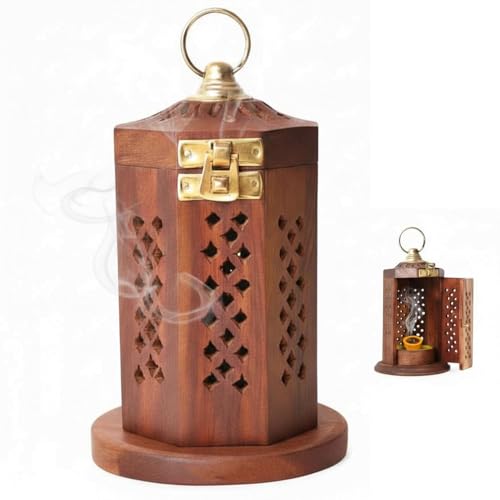
Wooden lanterns can introduce texture and a natural feel to a room. Designs with glass panels often suit Scandinavian, rustic, earthy and contemporary interiors.
Before buying, check whether the lantern is designed for an LED light source or a real candle. Do not assume a wooden decorative lantern is safe for open-flame use.
Best for: Wooden console tables, reading corners, covered verandas and natural-toned interiors.
Styling tip: Combine one wooden lantern with a small plant and a neutral decorative tray. Keep the arrangement simple.



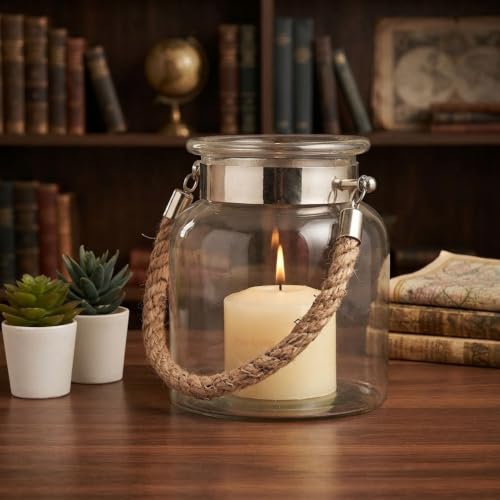
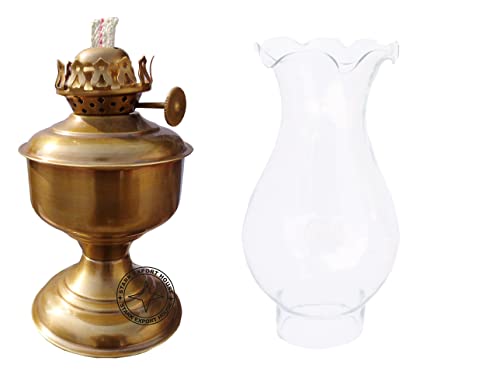
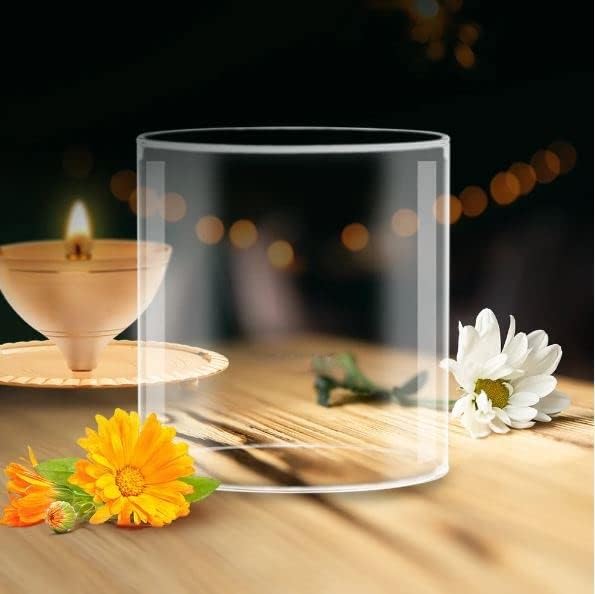
5. Glass Lanterns
Glass lanterns can create a lighter visual effect than solid metal designs. Clear glass lets the light source remain visible, while coloured or textured glass can change the appearance of the glow.
Best for: Dining tables, side tables, console arrangements and elegant festive decor.
Styling tip: Clear glass works particularly well when you want the lantern to blend into the decor rather than become the main attraction.


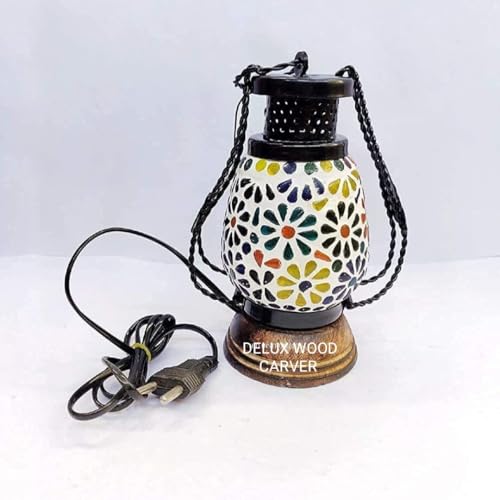

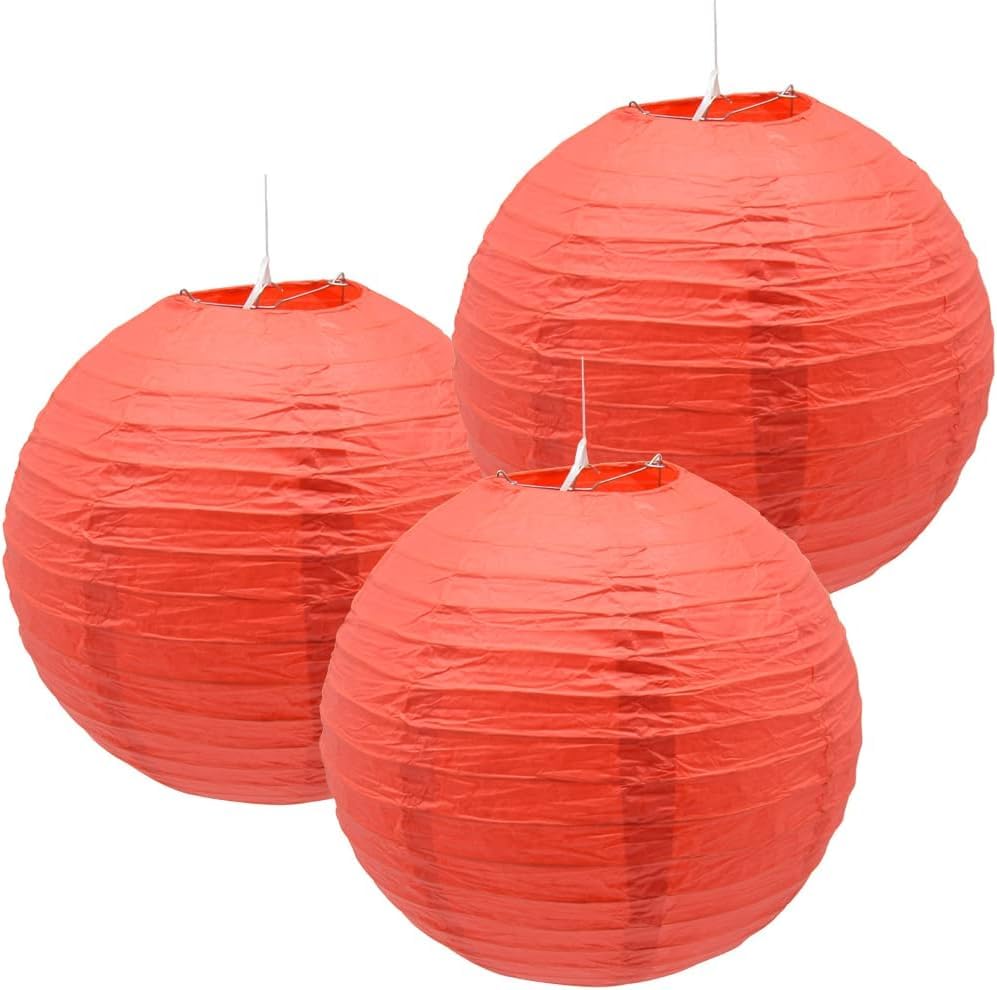
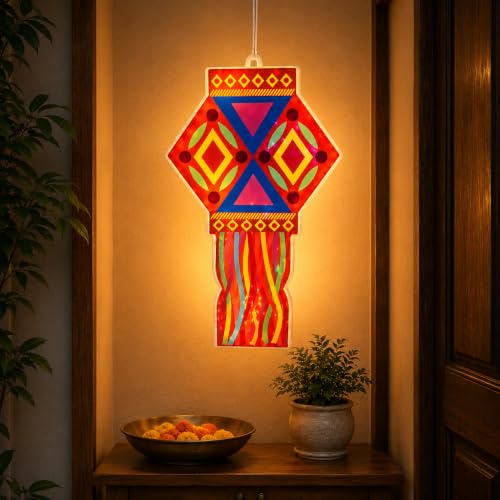
6. Traditional Indian Hanging Lanterns and Kandils
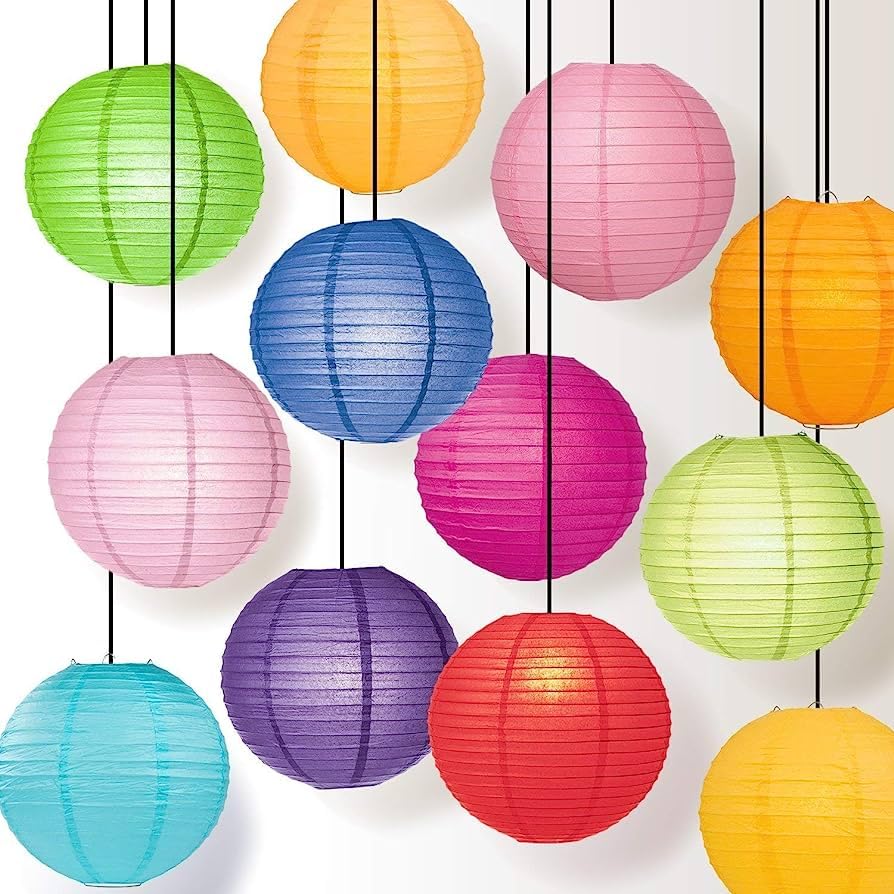
Hanging kandils bring colour, pattern and a festive feel to Indian homes. Depending on the design, they may use paper, fabric or other decorative materials.
They are especially suitable for Diwali and other celebrations when you want to add colour above an entrance, near a balcony or around a suitable covered outdoor area.
Best for: Festive entrances, windows, balconies and seasonal decorations.
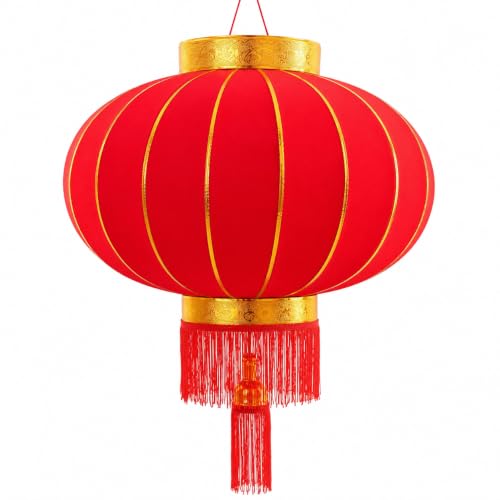
Styling tip: Select one main colour scheme, such as red and gold, orange and cream, or multicolour accents against a neutral background.
Always check the material and lighting instructions. Keep paper and fabric decorations away from candles, hot bulbs and other heat sources.
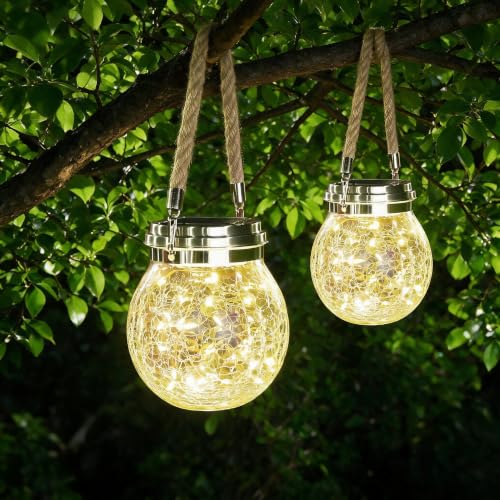
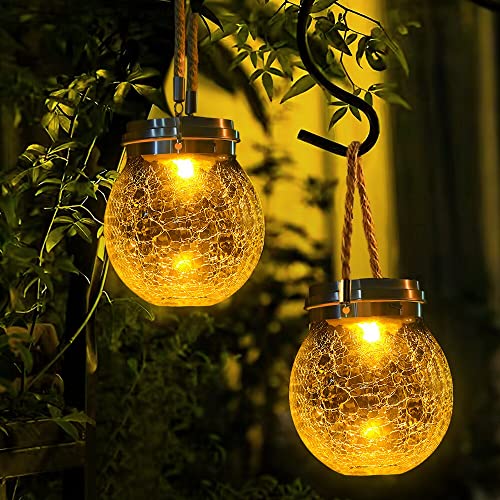
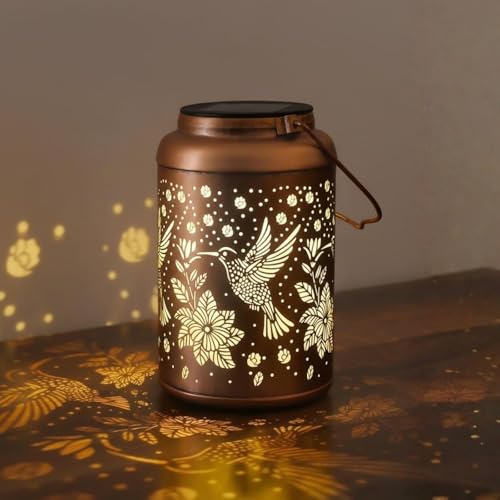
7. Solar Decorative Lanterns
Solar lanterns use energy collected from sunlight and can be convenient for suitable outdoor spaces. Their actual performance depends on the solar panel, battery, available sunlight and product design.
Best for: Gardens, terraces and outdoor areas that receive adequate sunlight.
Styling tip: Check whether the solar panel receives enough direct sunlight during the day. A lantern kept in a shaded corner may not charge effectively.


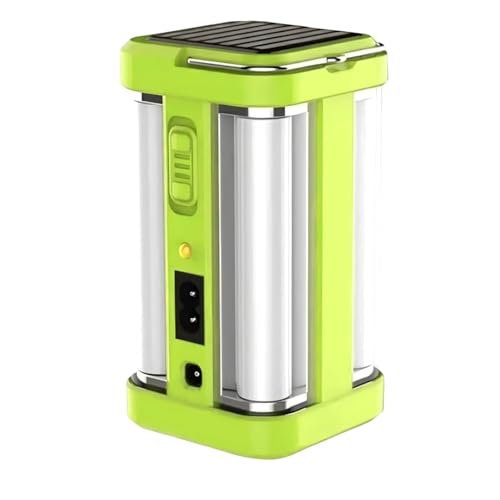
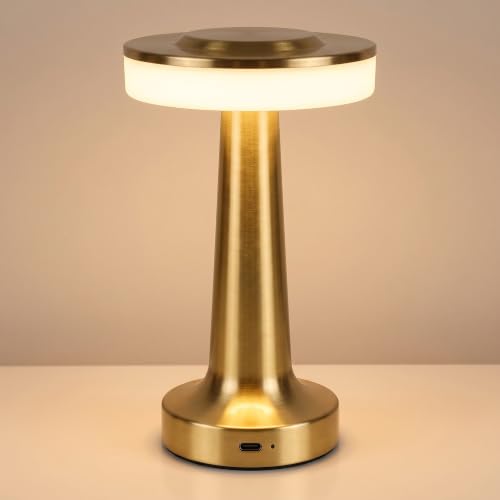
8. Rechargeable LED Lanterns
Rechargeable models can be convenient if you prefer not to replace disposable batteries. They are available in different designs, from functional portable lanterns to decorative styles.
Check whether the light colour and shape suit home decor rather than assuming every rechargeable lantern is designed for ambience.
Best for: Regular evening use, flexible placement and households that prefer rechargeable lighting.
Styling tip: Look for a warm-white setting or a candle-like effect if the lantern is intended for a living room or festive display.
Festive Lighting Ideas for Indian Homes
The secret to beautiful festive lighting is not adding as many lights as possible. It is choosing a few well-placed sources that work together.
1. Create a Welcoming Entrance
Place one or two decorative lanterns on a stable console or beside the entrance, provided the area is not obstructed.
A gold lantern with a warm LED light can work with a simple floral arrangement, a small decorative bowl or a festive toran. For a more contemporary look, choose black metal lanterns against a neutral wall.
Keep it balanced: Leave enough clear space for people to enter and exit comfortably.
2. Style a Living-Room Corner
A lantern can make an unused corner feel more intentional. Place it on a stable, level surface or use a floor lantern designed for that purpose.
Pair it with a plant, a side table or a small stack of decorative books. Keep the arrangement low enough that it does not obstruct movement.
For everyday use, a warm LED lantern is an easy way to add ambience without needing to light a candle.
3. Decorate a Balcony
A balcony can benefit from a small group of lanterns, especially when combined with plants and comfortable seating.
Choose weather-suitable LED lanterns if the area is exposed to rain, wind or moisture. Look for a clearly stated weather-resistance rating rather than assuming a product is outdoor-safe because it is described as a lantern.
Avoid placing real candles where wind can destabilise the flame or where curtains, plants and other materials could come into contact with it.
4. Add Lanterns to a Festive Dining Table
A small lantern can become a decorative centrepiece during a festive meal. Keep it low enough for guests to see each other across the table.
Use LED candles for an easy-care setup. If you use a real candle, choose a candle-safe lantern, keep it well away from napkins and decorations, and never leave it unattended.
Avoid crowding the table with multiple large accessories. The food, serving dishes and guests should remain the focus.
5. Build a Festive Floor Arrangement
For a more traditional festive look, arrange two or three lanterns in different heights beside a wall or in a clear corner.
Repeat one finish—such as gold, black or wood—to keep the arrangement cohesive. A small floral accent or a simple decorative tray can complete the display.
Do not block walkways, staircases or exits, and make sure the lanterns cannot be easily knocked over.
6. Combine Lanterns with Fairy Lights
Lanterns and fairy lights can work well together when each has a distinct role. Use lanterns as visual focal points and fairy lights as a softer background layer.
For example, warm-white fairy lights can frame a balcony railing while two lanterns anchor the seating area.
Try to use similar colour temperatures. Mixing cool white, blue and warm amber lighting in a small space can make the overall arrangement feel inconsistent.
7. Create a Traditional Yet Modern Diwali Look
You do not need to choose between traditional diyas and contemporary decor.
Try a combination of:
- One or two gold-finish decorative lanterns
- Warm LED lights around the entrance
- A simple rangoli or floral arrangement
- Traditional diyas in a suitable, supervised location
Keep the colours coordinated and avoid placing flames near paper decorations, fabrics or electrical wires.
How to Choose the Right Decorative Lantern
Before ordering online, consider these points.
1. Choose the Right Size
A tiny lantern may disappear beside a large sofa, while an oversized lantern can overwhelm a narrow console.
Measure the surface or floor area where you plan to place it. Check both the product’s height and width, including its handle if it has one.
2. Match the Finish to Your Decor
- Gold or brass: Traditional, warm and festive.
- Black: Contemporary and high contrast.
- Wood: Natural, earthy and relaxed.
- Clear glass: Light and understated.
- Coloured glass: Decorative and atmospheric.
- Paper or fabric: Colourful and seasonal.
Choose a finish that complements your existing room rather than purchasing a lantern simply because it looks attractive in a product photograph.
3. Check the Light Source
Read the listing carefully. A decorative lantern may be sold without a candle, bulb or LED insert.
Confirm whether it requires:
- A tealight candle
- A pillar candle
- A battery-operated LED candle
- Replaceable batteries
- USB charging
- A plug-in light source
Also check the dimensions of the candle compartment before purchasing a replacement candle.
4. Consider the Material and Build Quality
Check the frame, joints, base and glass panels. A lantern intended for regular use should sit securely on a flat surface.
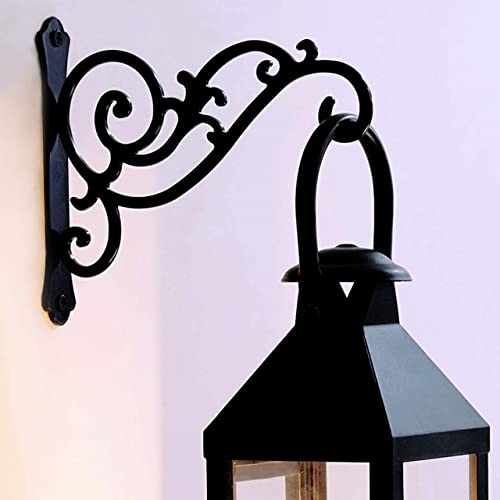
For hanging lanterns, inspect how the product is designed to be suspended and whether the mounting method is appropriate for its weight.
5. Think About Indoor and Outdoor Use
Indoor decorative lanterns are not automatically suitable for outdoor conditions. Rain, humidity, direct sunlight and wind can affect materials and electronic components.
For outdoor use, look for the manufacturer’s stated suitability and any relevant weather-resistance rating.
6. Set a Budget
Decorative lanterns are available at a wide range of prices. Marketplace listings in India show simple metal and tealight lanterns at relatively low prices, with more elaborate decorative pieces costing considerably more. <Cite refs={[“turn554289search1″,”turn554289search3”]}/>
Rather than choosing solely by discount percentage, compare dimensions, material, finish, lighting compatibility and customer photographs.
Common Decorative Lantern Mistakes to Avoid
1. Buying too many lanterns
A few well-chosen pieces can create more impact than a crowded collection. Start with one focal lantern and add another only if the arrangement needs balance.
2. Mixing too many finishes
Gold, silver, black, bright red and several wood tones can compete for attention. Repeat one or two finishes to make the display feel coordinated.
3. Choosing harsh lighting
Very bright cool-white light can make a cosy decorative corner feel more functional than atmospheric. For relaxed spaces, consider a warm-white LED option.
4. Ignoring stability
A tall lantern on a narrow table can be easy to knock over. Choose a stable base and keep decorations away from busy walkways.
5. Using candles in lanterns not designed for them
A decorative housing is not automatically a candle holder. Use a real flame only when the lantern is specifically designed for candle use, and follow its safety instructions.
6. Leaving candles unattended
Never leave a burning candle unattended. Keep flames away from curtains, paper, plants, fabrics, children and pets. Extinguish candles before leaving the room or going to sleep.
7. Forgetting about charging and batteries
LED lanterns need maintenance too. Check the charging port, battery type and replacement availability before buying, especially if you plan to use the lantern regularly.
Frequently Asked Questions
Are LED lanterns better than candle lanterns?
LED lanterns are generally more convenient for daily use because they do not require an open flame. Candle lanterns provide a natural flicker that some people prefer for occasional festive or atmospheric lighting. The best choice depends on your priorities and where the lantern will be used.
Which lanterns are best for Diwali decoration?
Gold-finish metal lanterns, Moroccan-style lanterns, glass candle lanterns and traditional hanging kandils are all worth considering. Choose a style that complements your existing decor, and use LED lighting where you want a convenient option for longer displays.
Can I use decorative lanterns on a balcony?
Yes, if the lantern is suitable for the location. For exposed balconies, choose products designed for outdoor conditions and secure them properly. LED lanterns are generally more practical where wind, moisture or nearby fabrics make open flames unsuitable.
What colour lanterns look best in a modern home?
Black metal, neutral wood, clear glass and understated brass finishes can complement modern interiors. Choose one or two finishes that work with your furniture and existing accessories.
How many decorative lanterns should I use together?
There is no fixed rule, but a small group of two or three lanterns in different heights can create a balanced display. In a compact home, one statement lantern may be enough.
Are candle lanterns safe indoors?
They can introduce fire and burn hazards even when enclosed. Use only lanterns specifically designed for candles, place them on stable, heat-resistant surfaces, keep them away from combustible materials, and never leave them burning unattended. If the location is crowded or close to curtains and decorations, choose an LED alternative.
Can I leave LED lanterns on overnight?
It depends on the product and its instructions. Use a model intended for the required duration, follow charging and battery guidance, and avoid damaged cables or batteries. Do not assume every decorative LED lantern is designed for continuous overnight use.
Are solar lanterns worth buying?
They can be useful for outdoor spaces with adequate sunlight. Their value depends on charging conditions, battery performance, light output and build quality. Check the manufacturer’s specifications and customer feedback before buying.
How do I clean a decorative lantern?
Follow the manufacturer’s care instructions. For a non-electrical metal or glass lantern, use a suitable soft cloth and avoid abrasive cleaners that may damage the finish. Remove batteries or disconnect power before cleaning electronic components, and never immerse a product unless the manufacturer specifically permits it.
Where should I place a decorative lantern in the living room?
An entryway console, side table or clear corner can work well. Choose a location where the lantern is visible but does not obstruct movement or compete with the main seating area.
Final Verdict: Which Decorative Lantern Should You Buy?
The best decorative lantern is one that suits your room, lighting needs and everyday routine.
- For everyday convenience: Choose a warm-white LED lantern.
- For traditional festive styling: Consider a gold or brass-finish metal lantern.
- For a contemporary living room: Look at black metal or clear-glass designs.
- For balconies and outdoor areas: Choose a lantern specifically suitable for the conditions.
- For natural candlelight: Buy a candle-safe lantern and use it only with proper supervision.
- For colourful festive decorating: Explore traditional hanging kandils and decorative paper lanterns, keeping them away from heat and flames.
Our preferred approach is to invest in one or two decorative lanterns that complement your existing decor, then layer in other lighting sparingly. A little warm light, a coordinated finish and thoughtful placement can make a bigger difference than filling every corner with decorations.