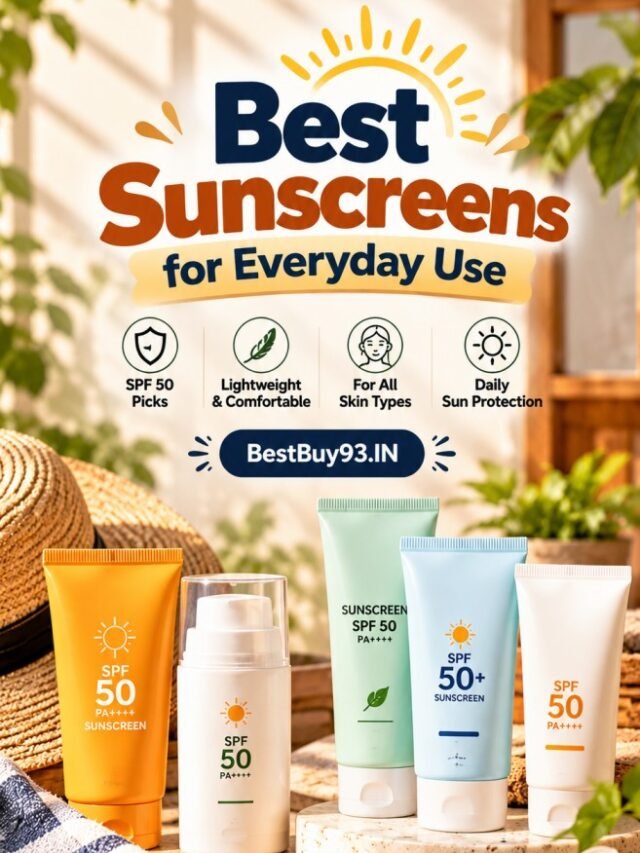

Sunscreen is one of those skincare products that makes the most sense when it becomes a daily habit rather than an occasional step. Whether you’re heading to work, college, shopping, travelling, walking outside, or simply spending time near windows, choosing a sunscreen that feels comfortable enough to use regularly matters.
For everyday use, dermatologists generally recommend a broad-spectrum sunscreen with SPF 30 or higher; water resistance is particularly useful when you’re outdoors, sweating, or swimming.
But with so many gels, creams, fluids, matte sunscreens and moisturising formulas available, choosing the right one can get confusing.
Also Read | Best Sunscreens for Indian Skin: No White Cast, Full Protection, Total Slay
So, let’s break it down. 👇
🌞 Why Should You Wear Sunscreen Every Day?
Sun exposure can contribute to sunburn, premature skin aging, uneven pigmentation and skin cancer. Broad-spectrum sunscreen is designed to protect against both UVA and UVB radiation.
UVA rays are particularly associated with photoaging and can pass through window glass, while UVB rays are a major cause of sunburn.
A simple everyday routine can therefore be:
Cleanser → Moisturiser → Sunscreen → Makeup, if required
For daytime skincare, sunscreen should generally be your final skincare step before makeup.
🧴 What Makes a Good Everyday Sunscreen?
Before looking at individual products, check these features on the label:
1. Broad-spectrum protection
Look for protection against UVA + UVB rather than focusing only on the SPF number.
2. SPF 30 or higher
The American Academy of Dermatology recommends SPF 30 or higher. SPF 30 filters approximately 97% of UVB radiation under testing conditions.
For an Indian everyday skincare routine, many people prefer SPF 50 because it provides a higher labelled SPF margin when applied imperfectly.
3. Comfortable texture
The sunscreen you actually enjoy applying consistently can be more practical than one that feels greasy, heavy or uncomfortable.
4. Water resistance for outdoor use
If you sweat heavily, exercise outdoors or spend time around water, look for a sunscreen specifically labelled water resistant. No sunscreen is completely waterproof.
5. Skin-type compatibility
Oily skin may prefer lightweight gels or fluids, while dry skin may appreciate more moisturising textures.
🏆 Best Sunscreens for Everyday Use
Here are some popular options to consider when shopping in India. Product formulations and availability can change, so always check the current product label before buying.
☀️ 1. Minimalist Cream Sunscreen SPF 50

- 1️⃣ Broad Spectrum SPF 50 Protection Formulated with 4 highly effective UV filters — Uvinul T150, Avobenzone, Octocrylen…
- 2️⃣ Boosted with Skin-Repairing Multi-Vitamins Enriched with Vitamins A, B3, B5, E & F to help repair post-sun damage, s…
- 3️⃣ Clinically Tested & Verified SPF 50 Thoroughly tested by an independent lab to confirm SPF 50 protection, ensuring r…
Minimalist’s SPF 50 cream sunscreen is designed as a daily-use formula with multiple UV filters and a moisturising ingredient profile.
Amazon India itself has featured this sunscreen among its summer skincare recommendations, describing it as lightweight and easy to spread.
Good for: Everyday skincare, normal to combination skin
Texture: Cream
SPF: 50
Consider if: You prefer a straightforward daily sunscreen rather than an extremely matte finish.
🌤️ 2. Re’equil Ultra Matte Dry Touch Sunscreen Gel SPF 50 PA++++
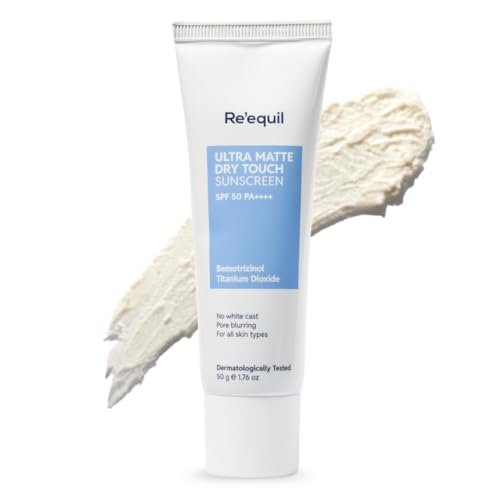
- “Broad spectrum sun protection – Re’equil Ultra Matte Dry Touch Sunscreen with SPF 50 and PA++++ rating offers broad spe…
- Matte finish – It has a lightweight, velvety texture that spreads easily on the skin and gives a matte finish.
- Minimal to no white cast – It leaves minimal to no white cast, and gets absorbed & blended easily on the skin.
If you dislike a shiny finish, a dry-touch sunscreen can be worth considering.
Re’equil Ultra Matte Dry Touch SPF 50 PA++++ as an oil-free, water-resistant sunscreen with a matte finish.
Good for: Oily and combination skin
Texture: Gel
SPF: 50
PA rating: PA++++
Consider if: You prefer a matte-feeling sunscreen.
💧 3. The Derma Co 1% Hyaluronic Sunscreen Aqua Ultra Light Gel SPF 50
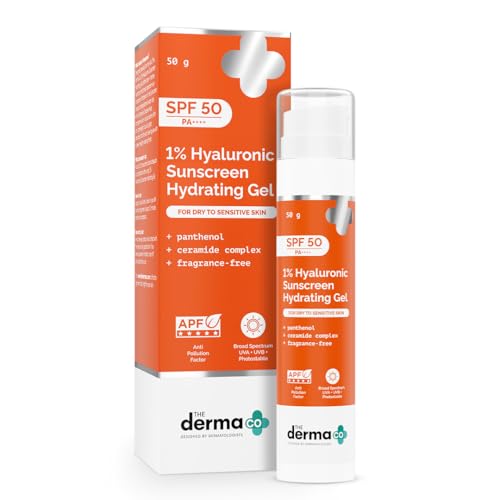
- Hydrating Sunscreen for Dry & Sensitive Skin What if we told you that we formulated a sunscreen, specially for dull & se…
- SPF 50 & PA++++ Protection Hydration, check! Broad spectrum protection, double check! With SPF 50 & PA++++, the 1% Hyalu…
- Safe & Effective Formulated & approved by Dermatologists, this Sunscreen Gel is absolutely safe to use and works the bes…
This is another lightweight gel-style option aimed at people who don’t enjoy traditional heavy sunscreen textures.
Amazon India lists the product as an SPF 50 aqua-light gel formulated with hyaluronic acid and vitamin E.
Good for: Everyday lightweight application
Texture: Gel
SPF: 50
Consider if: You prefer a more fluid, lightweight sunscreen.
🧴 4. Neutrogena Ultra Sheer Dry Touch Sunscreen SPF 50+
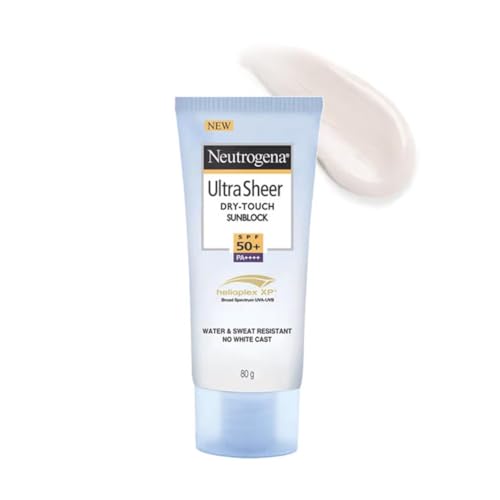
- Neutrogena Ultra Sheer Dry Touch Sunblock, SPF 50+ sunscreen for men and women
- Broad spectrum SPF 50+ protection against UVA UVB rays
- Dermatologist Tested, Oil-free and Non-Comedogenic
Neutrogena Ultra Sheer has long been positioned around a lightweight dry-touch texture.
Amazon’s India business site describes the sunscreen as lightweight, non-greasy and non-comedogenic.
Good for: Everyday outdoor use
Texture: Dry-touch sunscreen
SPF: 50+
Consider if: You prefer a familiar sunscreen texture with a less greasy feel.
🌿 5. La Shield Sunscreen Gel SPF 40 PA+++
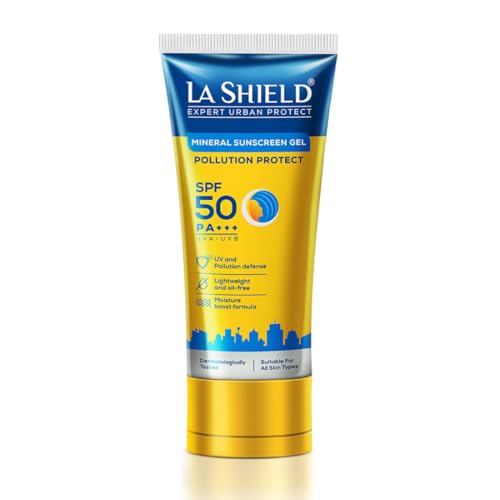
- Phytovie Defense Technology which provides dual protection from UV rays and micro-particulate pollutants and urban aggre…
- Enriched with Mineral Filters : Key ingredients such as Zinc Oxide and Titanium Dioxide helps deflect UV Rays instead of…
- Moisture Boost Formula : This is a hydrating sunscreen which helps boost skin moisture and makes your skin soft and supp…
La Shield offers another gel-based option for people who prefer a relatively lightweight sunscreen.
Its SPF 40 PA+++ mineral-based sunscreen gel as having a matte finish and being non-comedogenic.
Good for: People who prefer gel formulations
Texture: Gel
SPF: 40
PA rating: PA+++
Consider if: You want something below SPF 50 and prefer a gel format.
🔎 Quick Comparison
| Sunscreen | SPF | Texture | Consider For |
|---|---|---|---|
| Minimalist Cream Sunscreen | 50 | Cream | Everyday use |
| Re’equil Ultra Matte | 50 | Gel | Oily/combination skin |
| The Derma Co Aqua Gel | 50 | Gel | Lightweight routine |
| Neutrogena Ultra Sheer | 50+ | Dry touch | Outdoor/everyday use |
| La Shield | 40 | Gel | Gel-texture preference |
Important: This table is a practical comparison, not a ranking. Your ideal sunscreen depends on your skin type, tolerance, routine and how much time you spend outdoors.
💧 Best Sunscreen for Oily Skin
If your face becomes shiny quickly, look for:
- Gel or fluid textures
- Matte or dry-touch finishes
- Lightweight formulations
- Non-comedogenic claims where relevant
- Minimal heavy occlusive feel
A sunscreen such as Re’equil Ultra Matte or a lightweight gel formula may feel more comfortable than a rich cream.
But remember: oily skin can still become dehydrated, so don’t automatically avoid every moisturising ingredient.
🌸 Best Sunscreen for Dry Skin
Dry skin generally benefits from a sunscreen that doesn’t leave the face feeling tight.
Look for:
- Cream or moisturising textures
- Hydrating ingredients
- Comfortable finish
- Broad-spectrum protection
- SPF 30+
A cream sunscreen such as Minimalist Cream Sunscreen SPF 50 can be worth considering if you prefer a more moisturising texture.
🌿 Best Sunscreen for Combination Skin
Combination skin can be tricky because the T-zone may become oily while the cheeks feel relatively normal or dry.
Try looking for:
- Lightweight creams
- Gel-creams
- Fluid formulas
- Semi-matte finishes
You don’t necessarily need a very strong matte sunscreen across your entire face.
💦 Best Sunscreen for Outdoor Activities
If you’re walking, travelling, exercising or spending extended periods outdoors, prioritise:
Broad spectrum + SPF 30 or higher + water resistance
The American Academy of Dermatology recommends reapplying approximately every two hours when outdoors and after swimming or sweating.
Also consider a hat, sunglasses and shade rather than relying entirely on sunscreen.
🎨 What About Tinted Sunscreens?
Tinted sunscreens can be useful if pigmentation or dark spots are one of your concerns.
According to the AAD, tinted sunscreens containing iron oxide can provide additional protection against visible light, which can contribute to skin darkening/hyperpigmentation.
They can also be useful cosmetically because the tint can reduce the appearance of a white cast.
However, a tinted sunscreen isn’t automatically better for everyone. The most important thing is finding one you can apply adequately and consistently.
🧪 SPF 30 vs SPF 50: Which Should You Choose?
This is one of the most common sunscreen questions.
SPF 30
SPF 30 filters approximately 97% of UVB radiation under test conditions.
SPF 50
SPF 50 provides a higher labelled level of UVB protection.
However, SPF 50 does not mean you can stay in the sun for 50 times longer.
Higher SPF also doesn’t eliminate the need for reapplication.
For everyday Indian conditions, choosing an SPF 50 sunscreen can be a practical option, particularly if you spend substantial time outdoors.
🧴 How Much Sunscreen Should You Apply?
This is where many sunscreen routines go wrong.
Well, we would like to recommend using enough sunscreen to adequately cover exposed skin. For the entire body of an average adult, that’s around one ounce, approximately the amount that fills a shot glass.
For the face, neck and other exposed areas, use a generous amount rather than applying an extremely thin layer.
A commonly used practical method for facial sunscreen is the two-finger method, although the exact amount needed varies with the product, face size and areas being covered.
⏰ When Should You Apply Sunscreen?
Apply sunscreen before going outdoors.
The AAD recommends applying it approximately 15 minutes before sun exposure.
For a morning routine:
7:30 AM — Cleanser
7:35 AM — Moisturiser
7:40 AM — Sunscreen
8:00 AM — Makeup / leave home
The exact timings don’t need to be this rigid—the important part is applying sunscreen properly before exposure.
🔄 How Often Should You Reapply Sunscreen?
If you’re outdoors, reapply approximately every two hours.
Reapply sooner when you’re:
- Sweating heavily
- Swimming
- Exercising
- Wiping your face frequently
- Towel-drying your skin
The AAD specifically recommends reapplication every two hours when outdoors and after swimming or sweating.
🏠 Do You Need Sunscreen Indoors?
It depends on your environment and exposure.
If you’re indoors all day away from direct sunlight, your UV exposure may be considerably lower than someone spending hours outside.
However, UVA can pass through window glass, so people who spend substantial time near windows or frequently move between indoors and outdoors may still benefit from regular sun protection.
💄 Can You Wear Sunscreen Under Makeup?
Absolutely.
For a makeup-friendly routine:
Moisturiser → Sunscreen → Allow it to settle → Primer → Foundation/BB cream
Choose a sunscreen that doesn’t pill when layered with your existing skincare and makeup.
If your sunscreen constantly rolls into little flakes, experiment with:
- Using less product underneath
- Allowing moisturiser to settle
- Changing the order of products
- Switching sunscreen texture
❌ Common Sunscreen Mistakes to Avoid
1. Applying too little
A thin smear isn’t necessarily enough.
2. Forgetting the neck
Your face isn’t the only exposed area.
3. Forgetting the ears
They’re easy to miss but remain sun-exposed.
4. Applying only on sunny days
UV exposure isn’t limited to obviously sunny weather.
5. Not reapplying outdoors
A morning application isn’t necessarily enough for an entire day outside.
6. Treating SPF as an excuse to stay in direct sun
Sunscreen works best as one part of a broader sun-protection strategy, alongside shade, clothing and sunglasses.
🛍️ What to Look for Before Buying Sunscreen
Use this quick checklist:
☑️ Broad-spectrum protection
☑️ SPF 30 or higher
☑️ Comfortable texture
☑️ Suitable for your skin type
☑️ Water resistance if needed
☑️ Reasonable size for daily use
☑️ Expiry date checked
☑️ Packaging intact
☑️ No known ingredient sensitivity for you
And don’t buy sunscreen solely because an influencer calls it “the best.”
Your skin and routine matter more than hype.
🌞 Everyday Sunscreen Routine
Here’s a simple routine you can actually follow:
Morning
🧼 Cleanse
⬇️
💧 Moisturiser
⬇️
☀️ Sunscreen
⬇️
💄 Makeup, if required
During the day
If you’re outdoors for extended periods:
Reapply approximately every 2 hours.
If you’ve been sweating or swimming, reapply according to the sunscreen’s water-resistance directions.
💡 How to Choose Based on Your Lifestyle
| Lifestyle | What to Look For |
|---|---|
| Office/Work From Home | Comfortable everyday sunscreen |
| College | Lightweight, easy-to-reapply formula |
| Oily Skin | Gel, fluid or matte texture |
| Dry Skin | Creamier, moisturising formula |
| Travel | Broad-spectrum + water resistance |
| Sports | Water-resistant sunscreen |
| Makeup User | Lightweight, low-pilling formula |
| Pigmentation Concerns | Consider tinted sunscreen with iron oxide |
❓ FAQs About Everyday Sunscreen
Is SPF 50 necessary every day?
SPF 30 or higher is recommended by dermatologists. SPF 50 is a popular everyday choice, particularly for people who spend meaningful time outdoors.
Can oily skin use sunscreen?
Yes. Look for lightweight gel, fluid or matte formulations that feel comfortable on your skin.
Should sunscreen be applied before makeup?
Yes. Sunscreen generally goes after your skincare products and before makeup.
How often should sunscreen be reapplied?
When outdoors, approximately every two hours, and after swimming or sweating.
Does sunscreen prevent tanning completely?
No sunscreen blocks all UV radiation. Sun protection also includes shade, protective clothing, hats and sunglasses.
Is SPF 50 the same as PA++++?
No.
SPF primarily describes protection against UVB-related sunburn, while PA is a UVA protection grading system used on many Asian sunscreens.
Can I use sunscreen during monsoon?
Yes. UV exposure doesn’t disappear simply because the sky is cloudy or it’s raining.
Can sunscreen replace a moisturiser?
Some sunscreens have moisturising properties, but whether you can skip a separate moisturiser depends on your skin type and the specific product.
☀️ Final Thoughts
The best everyday sunscreen isn’t necessarily the most expensive or the most viral one.
It’s the sunscreen that gives you appropriate broad-spectrum protection, suits your skin, feels comfortable and makes you willing to use enough of it consistently.
For most everyday routines, start with SPF 30 or higher, consider SPF 50 if that suits your needs, and pay attention to texture, water resistance and UVA protection. Most importantly, remember that sunscreen is only one part of sun protection—shade, clothing and sunglasses matter too.