


Making fresh rotis every day is part of everyday cooking in many Indian households. Whether you are preparing breakfast, packing lunch boxes, or getting dinner ready after a long day, rolling and cooking rotis can take up a surprising amount of time.
And let’s be honest: not everyone enjoys standing in the kitchen with a chakla, belan, and hot tawa every single day!
This is where electric roti makers enter the picture. Designed to simplify the process of preparing chapatis, these appliances promise quicker cooking, less manual effort, and more convenience. Some models even claim to prepare rotis, parathas, khakhras, and other flatbreads.
But are they really worth buying?
Do electric roti makers prepare soft, round rotis like the traditional tawa method? Can beginners use them easily? And are they practical enough for everyday Indian cooking?
In this guide, we explore popular roti makers available in India, compare their features, discuss their advantages and limitations, and explain what you should consider before purchasing one.
The goal is simple: help you decide whether an electric roti maker deserves a place in your kitchen or whether your traditional tawa is still the better choice.
Best Roti Makers at a Glance
If you are exploring electric roti makers for your kitchen, these are some models worth comparing.
| Roti Maker | Best For | Key Feature |
|---|---|---|
| Prestige PRM 3.0 | Brand-conscious buyers | Adjustable temperature control |
| Bajaj Vacco Go-Ezzee C-02 | Everyday home use | Compact electric design |
| Longway Multi Master 1000W | Larger cooking surface | 8.5-inch plates |
| Premier Multi Maker 900W | Multi-purpose cooking | Dual heating plates |
| Prestige PRM 5.0 | Alternative Prestige model | Updated plate design |
A quick reality check: Most affordable electric roti makers are press-style appliances. They do not automatically knead dough, divide it into portions, roll it, and cook it. You generally need to prepare the dough, make balls, position them, and operate the press yourself.
What Is an Electric Roti Maker?
An electric roti maker is a kitchen appliance designed to press and cook flatbreads using heated cooking plates.
Unlike traditional cooking, where you roll the dough using a rolling pin and cook it on a tawa, an electric roti maker combines pressing and heating in one appliance.
Most household models include:
- Two heated cooking plates.
- A non-stick cooking surface.
- An insulated or heat-resistant handle.
- Power and heating indicator lights.
- Automatic temperature regulation on supported models.
- A compact body designed for countertop use.
The basic process involves preparing wheat dough, dividing it into small portions, placing a dough ball between the heated plates, and pressing the handle to flatten it.
Depending on the appliance and technique, you may need to turn or reposition the roti to cook it evenly.
It is important to understand that a press-style roti maker is different from a fully automatic roti-making machine. Fully automatic models can incorporate several stages of the process, but they are generally larger, more complicated, and considerably more expensive.
Best Roti Makers for Home Use
Let’s look at some popular models and what they offer.
1. Prestige PRM 3.0 Roti Maker – Best for Brand-Conscious Buyers
Prestige is a familiar name in Indian kitchens, particularly when it comes to pressure cookers, cookware, and kitchen appliances.
The Prestige PRM 3.0 is an electric roti maker designed for preparing chapatis and other flatbreads at home.
Its key attraction is the temperature-control feature, which gives users more control over the cooking process compared with basic fixed-temperature models.
Key Features:
- 900W heating capacity.
- Adjustable temperature control.
- Non-stick cooking plates.
- Power and heating indicators.
- Designed for household use.
What We Like:
- Recognisable kitchen-appliance brand.
- Temperature adjustment is useful when experimenting with dough and cooking times.
- Compact countertop design.
- Brand service availability is worth considering.
What We Don’t Like:
- Requires practice to achieve consistent results.
- Does not automatically prepare or roll dough.
- Non-stick coating needs careful maintenance.
- Customer feedback on this category is mixed.
Best For: Buyers who prefer an established kitchen-appliance brand and want a basic electric roti press.

- NON-STICK COATING: Features premium non-stick coating on the plain plate surface for easy roti making and effortless cle…
- AUTHENTIC ROTI MAKER: Specially designed plain plate griddle for making traditional Indian rotis, chapatis, parathas, an…
- COUNTERTOP DESIGN: Compact and convenient countertop appliance that saves kitchen space whilst providing efficient cooki…
2. Bajaj Vacco Go-Ezzee C-02 – Best for Everyday Home Cooking
The Bajaj Vacco Go-Ezzee C-02 is another model worth exploring if you are considering an electric chapati maker.
It is designed for preparing rotis and chapatis, with additional advertised uses including khakhra preparation.
Its compact construction makes it suitable for households looking for a dedicated countertop appliance.
Key Features:
- 900W power rating.
- Stainless-steel exterior.
- Electric heating plates.
- Handle-based pressing mechanism.
- Advertised multi-purpose flatbread use.
What We Like:
- Compact appliance design.
- Suitable for small household kitchens.
- Can be considered for different flatbread preparations.
- Established product presence in the Indian market.
What We Don’t Like:
- The cooking technique requires practice.
- Results can vary depending on dough consistency.
- It cannot replace a traditional tawa for every type of roti.
- Warranty terms and service arrangements should be checked before purchasing.
Best For: Buyers interested in a compact electric roti maker for occasional home use.

- BAJAJ VACCO Electricals Over 70 years old National Company with Tradition of High Quality Products and Un-conditional Af…
- Automatic Electric Chapati/Roti/Khakra Maker : The Product from BAJAJ VACCO has been crafted with utmost engineering pre…
- High quality components : The roti / chapati – maker has been made of superior quality tubular element. The tawa has bee…
3. Longway Multi Master 1000W – Best for a Larger Cooking Surface
The Longway Multi Master 1000W is an option to consider if you prefer a larger cooking surface.
It features an advertised 8.5-inch plate size and is marketed for preparing rotis, chapatis, parathas, and other flatbreads.
Its higher wattage compared with some 900W alternatives may be appealing to buyers looking for a higher-powered appliance, although wattage alone does not guarantee better cooking results.
Key Features:
- 1000W power rating.
- 8.5-inch cooking plates.
- Non-stick surface.
- Stainless-steel body as advertised.
- Multi-purpose flatbread use.
What We Like:
- Larger advertised plate diameter.
- Useful for buyers who prefer bigger rotis.
- Multiple advertised cooking applications.
- Compact electric design.
What We Don’t Like:
- Requires attention during cooking.
- Results depend heavily on dough preparation.
- Warranty and service support need verification.
- A higher wattage does not automatically mean softer rotis.
Best For: Buyers looking for a larger-plate electric roti maker at a relatively accessible price.

- Easy to Use: Effortlessly create perfect rotis/chapatis/parathas with our intuitive design and powerful 1000 W heating e…
- Non-Stick Surface: The high quality non-stick coating ensures your rotis won’t stick, making cleanup a breeze.
- Consistent Results: Achieve uniform thickness and even cooking every time, ensuring soft and fluffy rotis that everyone …
4. Premier Multi Maker 900W – Best for a Multi-Purpose Kitchen Appliance
The Premier Multi Maker is another option for people exploring electric flatbread-making appliances.
It features dual heating plates and an advertised 8.5-inch non-stick cooking surface. Its design also includes storage-friendly features, making it worth considering for kitchens where countertop space matters.
Key Features:
- 900W power rating.
- 8.5-inch non-stick plates.
- Dual heating plates.
- Stainless-steel body as advertised.
- Cord storage and vertical storage features on the listed configuration.
What We Like:
- Practical storage-oriented design.
- Dual heating plates.
- Larger advertised cooking surface.
- Suitable for people exploring multi-purpose cooking appliances.
What We Don’t Like:
- Requires manual dough preparation.
- Needs practice for consistent cooking.
- Check the exact included accessories and warranty.
- Not a substitute for a fully automatic roti-making machine.
Best For: Buyers who value a compact appliance with convenient storage features.
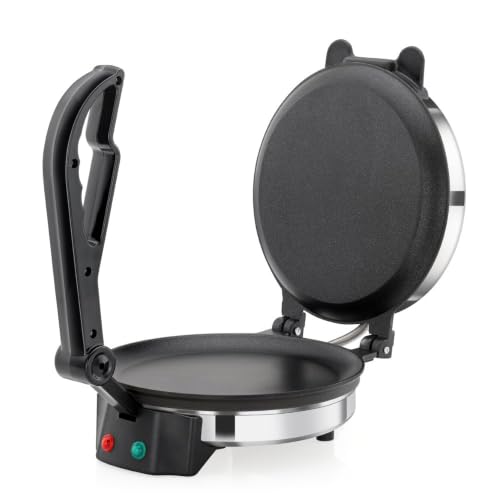
- 900W Powerful Heating Ensures quick heating and faster cooking performance
- 8.5-Inch Non-Stick Plates Prevents sticking and enables smooth, hassle-free cooking
- Multipurpose Cooking Appliance Suitable for roti, chapati, paratha, dosa, tortilla, omelette, chilla, pancake, and more
5. Prestige PRM 5.0 – Another Model to Compare
The Prestige PRM 5.0 is another option to investigate if you are comparing different Prestige roti makers.
It is advertised with a different cooking-plate design, including a granite-style non-stick surface in certain listings.
Before choosing it, check the exact model number, plate specifications, temperature settings, and warranty coverage. Do not assume that every listing uses identical specifications.
What We Like:
- Alternative plate design.
- Familiar appliance brand.
- Useful comparison option for Prestige buyers.
What We Don’t Like:
- Availability and listing details can vary.
- Actual cooking performance should be checked through recent buyer feedback.
- A different plate finish does not automatically guarantee better rotis.
Best For: Buyers comparing newer Prestige roti-maker configurations.
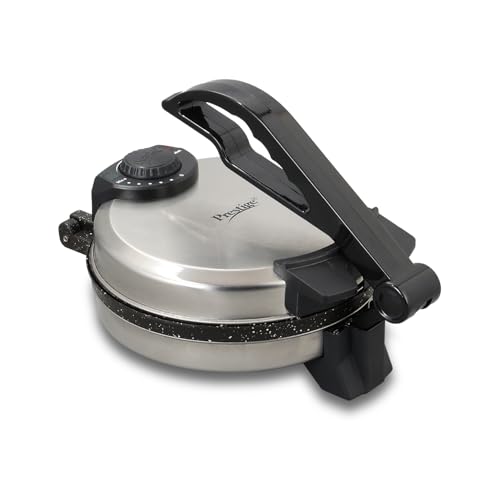
- GRANITE NON-STICK COATING: The granite spatter coated surface offers long lasting non-stick performance and an elegant f…
- UNIQUE CURVED SURFACE : The concave curved base with elevated edges ensures that the roti stays in the centre and makes …
- DURABLE STAINLESS STEEL BODY: The Roti Maker is tough and extremely safe. The body is reinforced with stainless steel wh…
Electric Roti Maker Comparison Table
Here is a quick comparison of the models discussed above.
| Model | Power | Plate Size | Main Highlight |
|---|---|---|---|
| Prestige PRM 3.0 | 900W | Verify listing | Temperature control |
| Bajaj Vacco C-02 | 900W | Approx. 8 inches | Compact design |
| Longway Multi Master | 1000W | 8.5 inches | Larger plate |
| Premier Multi Maker | 900W | 8.5 inches | Dual heating plates |
| Prestige PRM 5.0 | 900W | Verify listing | Alternative plate design |
Specifications are based on advertised product configurations. Confirm the exact model specifications and warranty with the seller before ordering.
Are Electric Roti Makers Worth Buying?
Now comes the most important question.
The answer depends on your cooking habits and expectations.
An electric roti maker can be convenient, but it is not necessarily an upgrade over traditional cooking.
When an Electric Roti Maker Makes Sense
1. You Have Difficulty Rolling Rotis
If rolling dough manually is uncomfortable or physically difficult, a press-style roti maker may reduce some of the effort involved.
You still need to prepare the dough and shape portions, but the appliance helps with flattening and cooking.
2. You Want a Dedicated Countertop Appliance
If you regularly prepare flatbreads and want an additional cooking appliance, an electric roti maker may fit your kitchen routine.
3. You Prefer Experimenting with Kitchen Gadgets
For people who enjoy trying different kitchen appliances, a roti maker can be an interesting addition.
4. You Need an Alternative Cooking Method
An electric appliance can be useful where the cooking arrangement or available space makes traditional stovetop preparation inconvenient, provided you have a suitable electrical connection and safe setup.
When You Should Skip an Electric Roti Maker
1. You Expect Perfectly Soft, Puffy Rotis
This is where expectations need to be realistic.
Traditional rotis are rolled thin and cooked using a tawa and, when appropriate, direct heat to encourage puffing. A press-style electric roti maker uses a different cooking method.
The texture, thickness, and puffing can vary considerably.
2. You Already Make Good Rotis on a Tawa
If your traditional method works well, purchasing another appliance may not offer enough additional value.
3. You Cook for a Large Family
Press-style models generally require individual preparation and handling of each dough portion. They may not be the most practical choice when you need to prepare many rotis quickly.
4. You Have Limited Storage Space
Even compact appliances occupy storage space and require cleaning and maintenance.
Pros and Cons of Electric Roti Makers
| Reasons to Buy | Reasons to Think Twice |
|---|---|
| Reduces some manual rolling effort | Requires practice |
| Compact countertop design | Takes up storage space |
| Electric heating | Needs a suitable power supply |
| Non-stick cooking plates | Coating needs careful maintenance |
| Can prepare different flatbreads on supported models | Results may not match traditional rotis |
| Useful for people who struggle with manual rolling | Does not usually knead or portion dough |
What to Look for When Buying a Roti Maker
Before spending money on an electric roti maker, pay attention to these features.
A. Wattage
Most household electric roti makers in this category are advertised around 900W to 1000W.
Higher wattage can influence heating performance, but it does not automatically produce softer or better-cooked rotis.
Consider the heating design and temperature control alongside the wattage.
B. Cooking Plate Size
Plate diameter determines the maximum working surface.
An 8-inch plate may suit smaller chapatis, while an 8.5-inch or larger plate offers more room for larger flatbreads.
Choose according to the size of rotis your household normally eats.
C. Non-Stick Coating
A non-stick cooking surface helps with handling and cleaning.
However, coating quality and durability matter. Avoid metal utensils, abrasive scrubbers, and harsh cleaning methods that can damage the surface.
D. Temperature Control
Adjustable temperature settings can offer more flexibility than a basic fixed-temperature appliance.
This is useful when you are experimenting with different dough consistencies and cooking requirements.
E. Handle and Body Construction
Look for a sturdy handle, stable base, and heat-resistant exterior components.
The hinge should feel secure, and the appliance should remain stable during operation.
F. Safety Features
Check for clear operating instructions, insulated handles, stable feet, appropriate electrical ratings, and recognised safety compliance where applicable.
Avoid appliances with damaged cords, loose plugs, or unclear manufacturer details.
G. Warranty and After-Sales Service
Do not overlook the warranty.
A roti maker contains electrical heating elements and moving mechanical components, so accessible service support matters.
Check the warranty duration, exclusions, service contact details, and replacement policy before purchasing.
Electric Roti Maker vs Traditional Tawa: Which Is Better?
Both methods have advantages, but they serve different requirements.
| Feature | Electric Roti Maker | Traditional Tawa |
|---|---|---|
| Operation | Electric pressing and heating | Manual rolling and stovetop cooking |
| Skill Required | Practice needed | Rolling and cooking skills needed |
| Texture | Can vary | Greater control over texture |
| Puffing | Not consistently guaranteed | Easier to achieve with the right technique |
| Storage | Requires appliance storage | Generally easier to store |
| Power Requirement | Electricity required | Depends on the stovetop |
| Cooking Flexibility | Depends on the model | Highly versatile |
| Maintenance | Electrical and plate care | Basic cookware maintenance |
Our take: A traditional tawa remains the more versatile option for most Indian households. An electric roti maker is better viewed as a convenience appliance for people who have a specific need for it.
Tips for Making Better Rotis in an Electric Roti Maker
If you decide to purchase one, your dough preparation will make a noticeable difference.
Here are some practical tips:
1. Prepare Soft Dough: Follow the manufacturer’s recommended dough consistency. Many press-style machines require softer dough than the dough you might normally use for hand-rolled rotis.
2. Allow the Dough to Rest: Resting the dough helps with hydration and makes it easier to handle.
3. Make Even Dough Portions: Consistent dough balls help produce more uniform results.
4. Follow the Preheating Instructions: Do not guess the heating time. Follow the manufacturer’s guidance.
5. Avoid Excessive Pressure: Use the recommended pressing technique instead of forcing the handle.
6. Monitor the Cooking Process: Different models have different heating characteristics. Watch the first few rotis carefully and adjust your technique according to the instructions.
7. Clean After Cooling: Switch off and unplug the appliance. Allow it to cool completely before cleaning the plates according to the manufacturer’s instructions.
Also Read | Best Paratha Tawas for Making Crispy Aloo Parathas
Frequently Asked Questions
1. Are electric roti makers worth buying?
They can be worth buying if you struggle with manual rolling or want an alternative cooking method. However, they may disappoint buyers expecting perfectly soft, puffed, traditional-style rotis.
2. Which roti maker is best for home use?
Prestige, Bajaj Vacco, Longway, and Premier are among the models worth comparing. Your choice should depend on plate size, temperature control, warranty, service availability, and recent customer feedback.
3. Can an electric roti maker make soft rotis?
It can produce soft rotis with suitable dough preparation and technique, but results vary by model and user experience. Consistently achieving the texture of a traditional tawa roti is not guaranteed.
4. Can I make parathas in a roti maker?
Some manufacturers advertise their appliances for parathas and other flatbreads. However, results depend on the model and its operating instructions. Check the manufacturer’s guidance before using additional recipes.
5. Does a roti maker automatically knead dough?
No. Most affordable electric roti makers are press-style appliances. You must prepare and portion the dough separately.
6. How much electricity does an electric roti maker consume?
A 900W appliance running continuously for 10 minutes would theoretically consume approximately 0.15 kWh of electricity. Actual consumption depends on heating cycles and usage.
7. Is a roti maker better than a tawa?
Not necessarily. A tawa provides more cooking flexibility and greater control over traditional roti preparation. A roti maker offers an alternative pressing and heating method.
8. Can I make dosa or pancakes in an electric roti maker?
Some manufacturers advertise multi-purpose use, but the cooking surface and instructions vary. Check the product manual before trying recipes other than those specifically supported.
Final Verdict: Should You Buy an Electric Roti Maker?
An electric roti maker sounds like a dream kitchen appliance, especially when you want to reduce the effort involved in everyday cooking.
However, convenience and cooking performance are two different things.
For someone who struggles with manual rolling, an electric roti maker may be a useful addition. For someone who already prepares soft, round rotis using a traditional tawa, the benefits may be limited.
Our recommendation is to compare the Prestige PRM 3.0, Bajaj Vacco Go-Ezzee C-02, Longway Multi Master, and Premier Multi Maker before deciding.
Pay particular attention to recent customer reviews, warranty coverage, cooking plate quality, and safety information.
And remember, a more expensive appliance does not automatically make better rotis.
Final takeaway: If convenience is your priority, explore electric roti makers. If traditional texture, versatility, and cooking control matter more, your trusty tawa may still be the best kitchen companion.
Sometimes, the old-school method really does win!