


There is something special about freshly made rotis served straight from the tawa. Soft, warm and slightly puffed, they are a staple in many Indian households. And when it comes to making perfectly round rotis and delicious parathas, having the right chakla belan set can make everyday cooking a little easier.
A chakla belan is one of those traditional kitchen tools that has stood the test of time. Whether you prefer a classic wooden set, a heavy marble rolling board or a modern stainless-steel option, the right combination of material, size, weight and stability can improve your rolling experience.
But which one should you buy? Is a marble chakla better than a wooden one? Does a larger rolling board make a difference when preparing stuffed parathas? And what should you check before purchasing a set online?
In this guide, we explore some of the best chakla belan sets to consider in 2026, compare different materials, discuss useful features and share practical buying tips for Indian kitchens.
Best Chakla Belan Sets: Quick Roundup
| Chakla Belan Type | Best For | Main Advantage |
|---|---|---|
| Traditional wooden set | Everyday rotis | Lightweight and familiar handling |
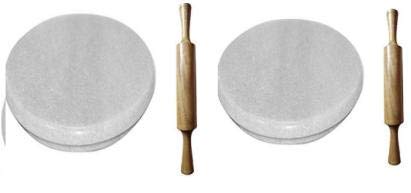
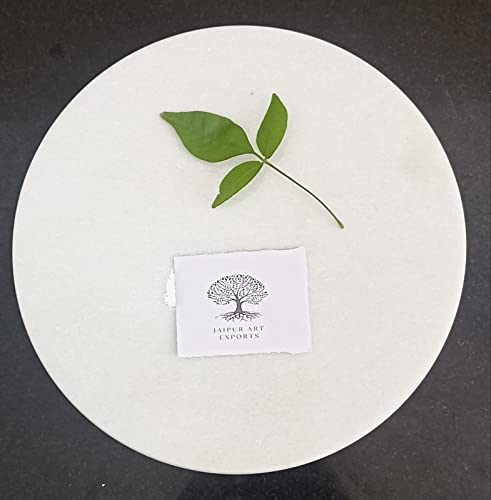
| White marble chakla with wooden belan | Daily rolling and easy cleaning | Heavy, stable board |
| Green marble chakla set | Traditional and decorative kitchens | Solid marble appearance |
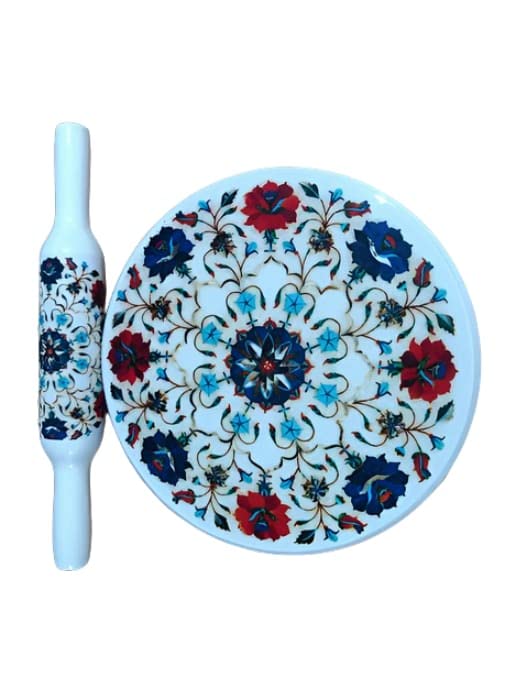
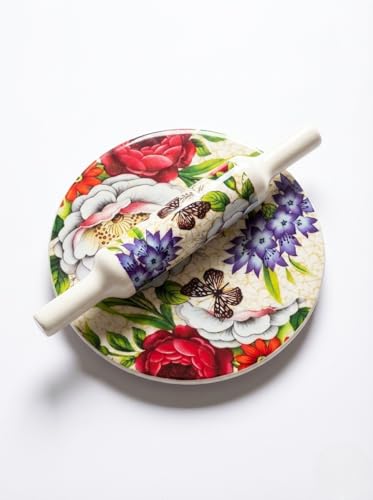
| Printed marble chakla set | Style-conscious kitchens | Decorative finish |
| Stainless-steel chakla set | Low-maintenance kitchens | Easy surface cleaning |
| Marble set with stand | Organised kitchen storage | Dedicated storage arrangement |
| Large marble board with wooden belan | Larger rotis and parathas | More rolling space |
These are product styles and shopping options rather than a hands-on performance ranking. Check the exact product dimensions, material, weight and included accessories before ordering.
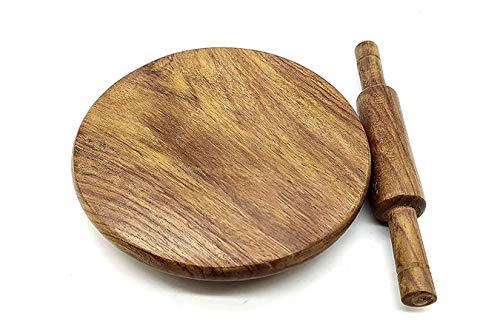
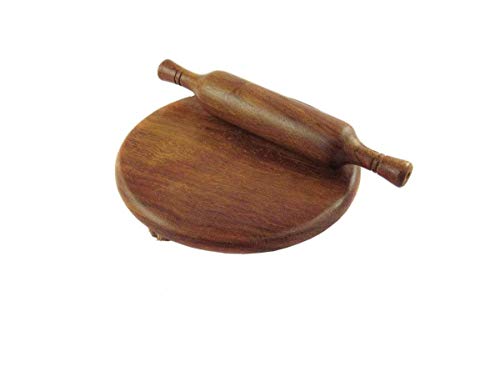
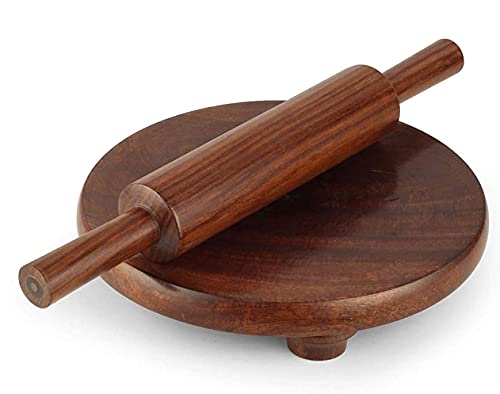
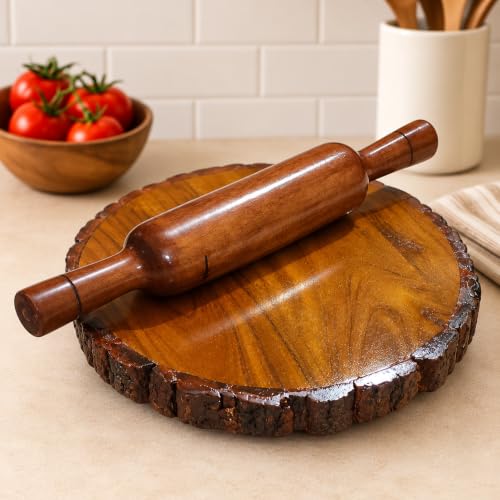
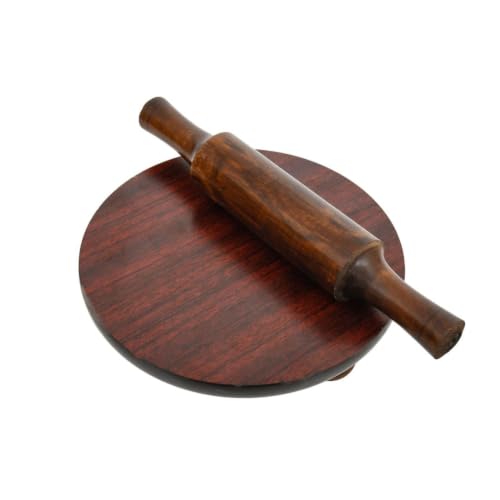
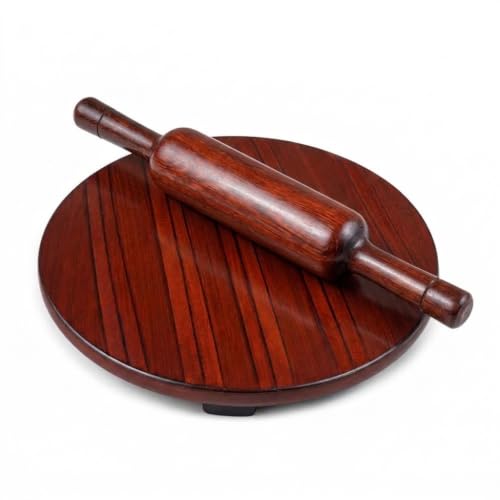
Traditional Wooden Chakla Belan Set – Best for Everyday Roti Making
Sometimes, the traditional option is still the most practical one.
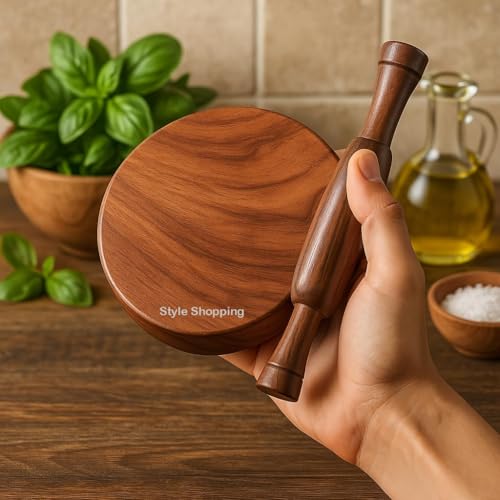
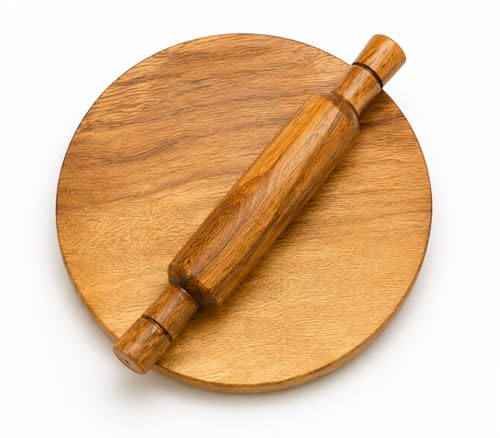
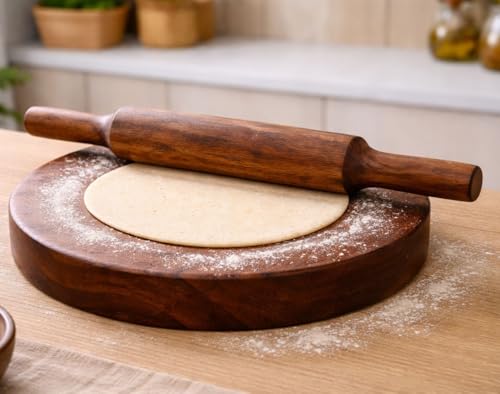
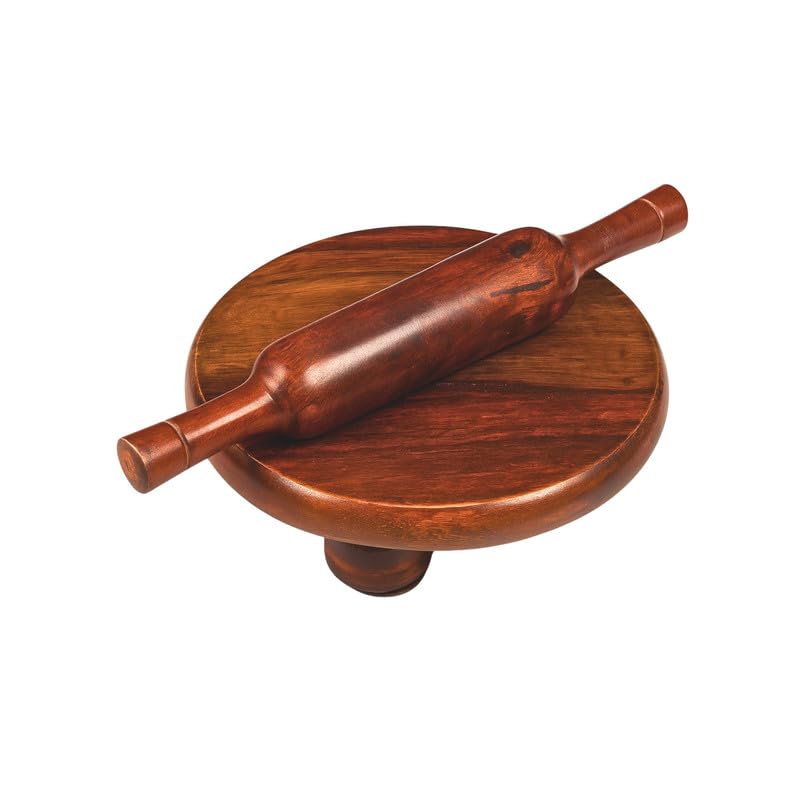
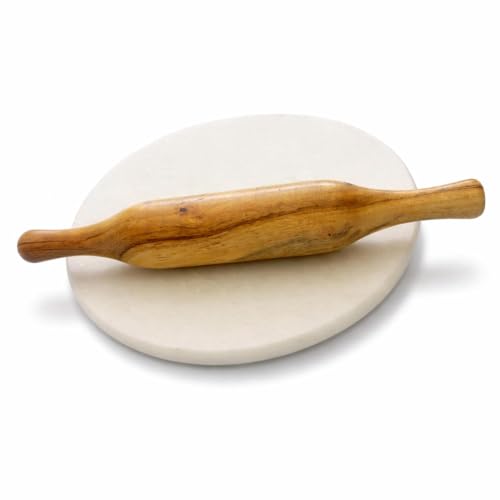
A wooden chakla belan set is a familiar choice in Indian kitchens. It usually consists of a round wooden rolling board and a tapered wooden rolling pin. The lightweight construction makes it convenient to move, lift and store.
Wooden surfaces also offer a familiar feel when handling atta dough. Many home cooks prefer the grip and control of a wooden belan, especially when rolling regular chapatis and phulkas.
When shopping, look for a well-finished wooden board with a smooth rolling surface and a sturdy construction. Check whether the wood is properly seasoned and whether the surface has a food-safe finish.
What we like
- Traditional design suitable for everyday cooking.
- Lightweight and easy to handle.
- Comfortable rolling-pin grip.
- Easy to store in smaller kitchens.
- Often available at affordable prices.
What we don’t like
- Requires careful cleaning and drying.
- Poor-quality wood may crack or splinter.
- Can absorb moisture and odours if neglected.
- Some lightweight boards may slide during rolling.
Best for: Families that make rotis and chapatis regularly and prefer traditional kitchen tools.



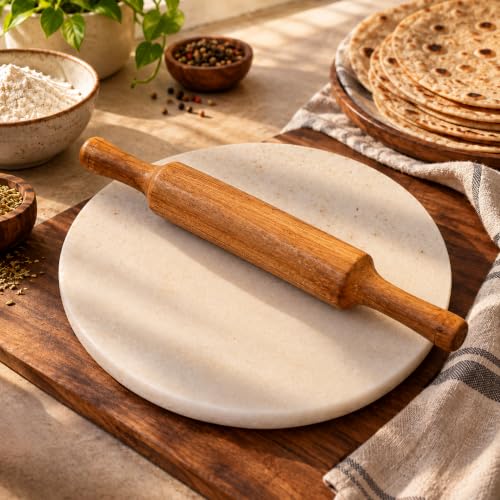
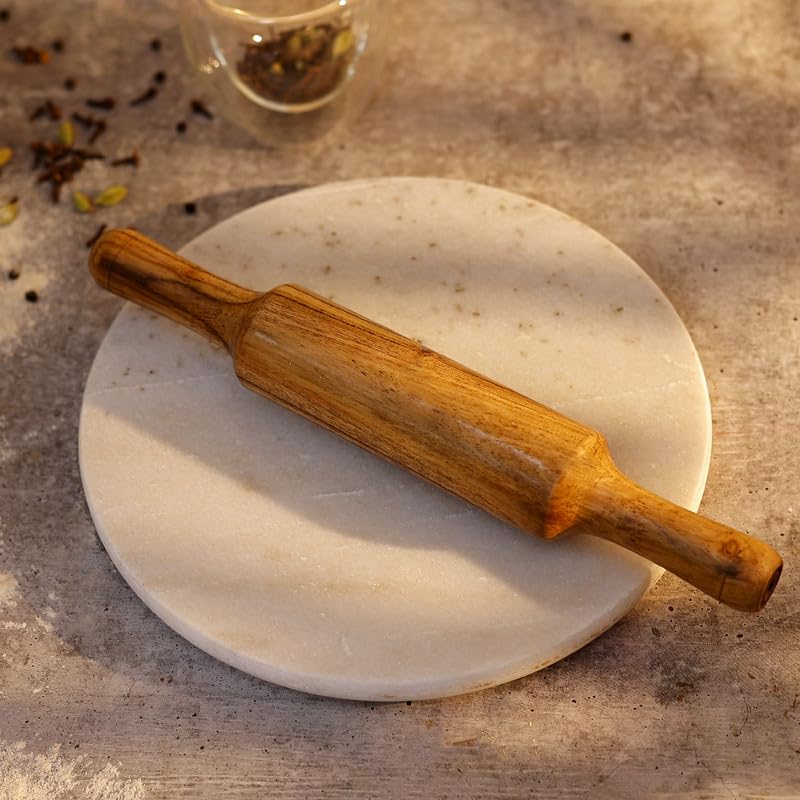
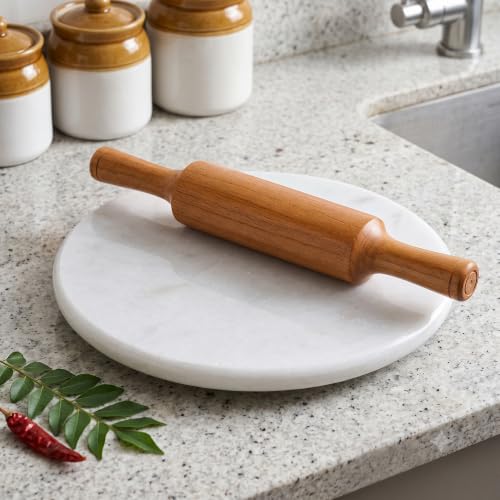
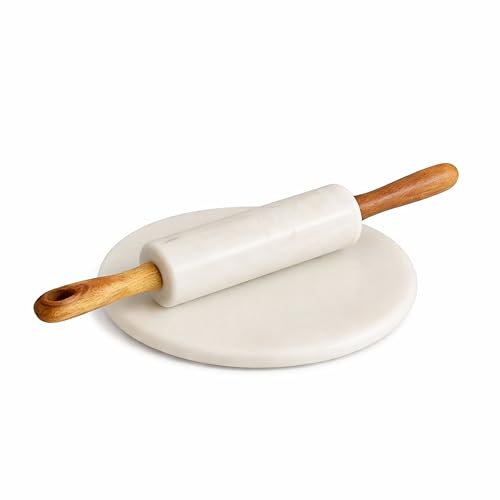
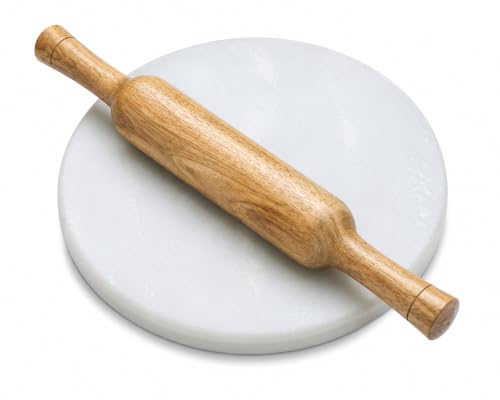
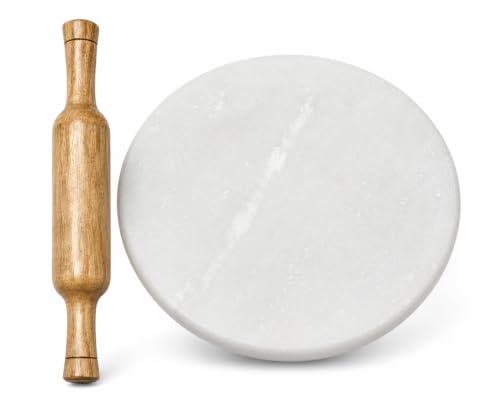
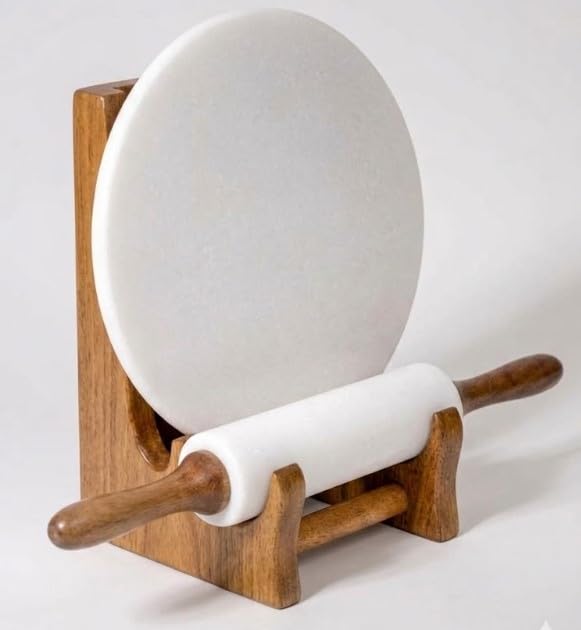
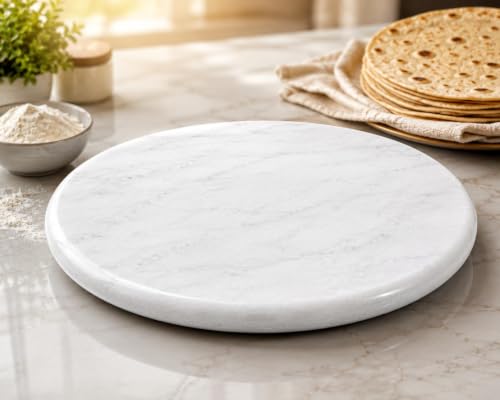
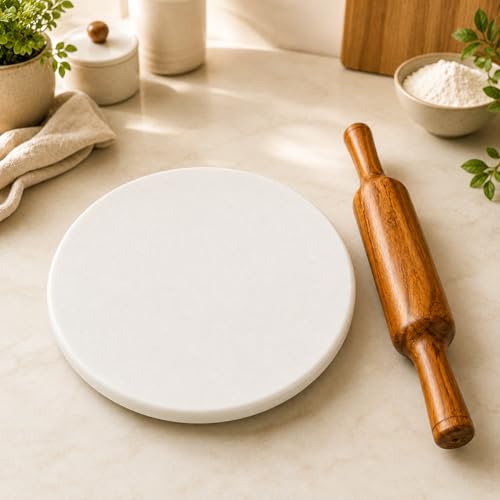
White Marble Chakla with Wooden Belan – Best for a Stable Rolling Surface
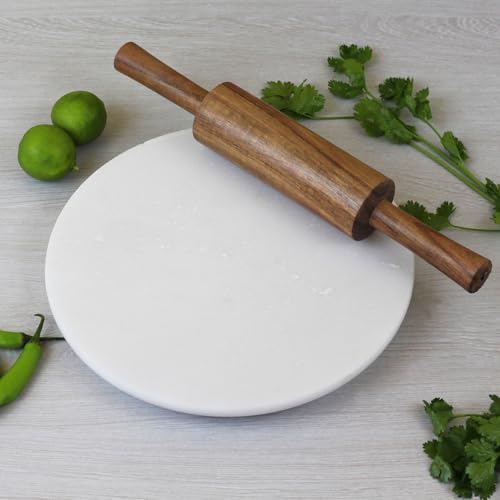
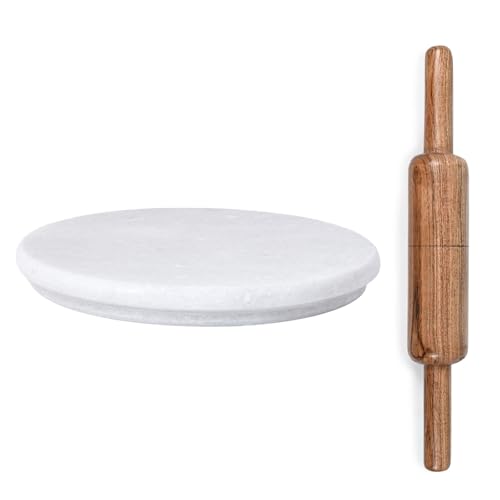
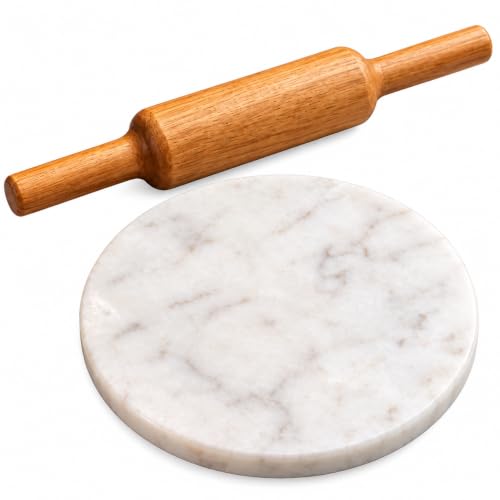
If you prefer a heavier rolling board, a white marble chakla with a wooden belan is worth considering.
Marble boards are generally heavier than wooden ones. Their weight can help them stay in position while rolling dough, provided the base is properly finished and the countertop is stable.
The smooth surface is also convenient to wipe clean after preparing rotis and parathas. A wooden belan provides the familiar grip that many Indian cooks prefer.
However, marble is heavy, and the board needs careful handling. It can chip or crack if dropped.
What we like
- Heavy board for a more stable working surface.
- Smooth surface that is easy to wipe.
- Traditional wooden rolling pin.
- Attractive appearance.
- Suitable for regular kitchen use when handled carefully.
What we don’t like
- Heavy to lift and move.
- Can crack or chip if dropped.
- Needs adequate storage space.
- Quality and finish vary between sellers.
Best for: Home cooks who prefer a heavier board and a traditional wooden rolling pin.


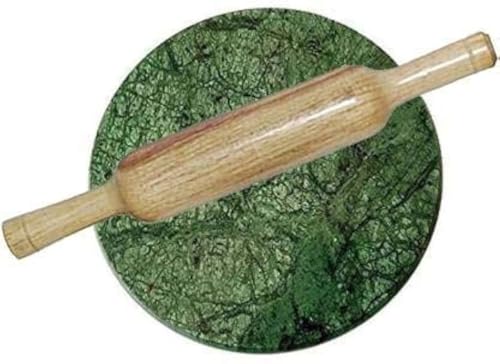
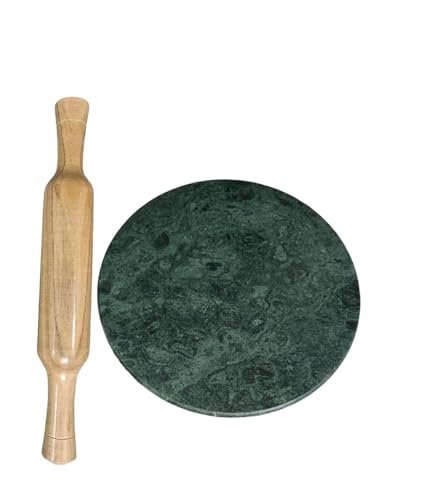
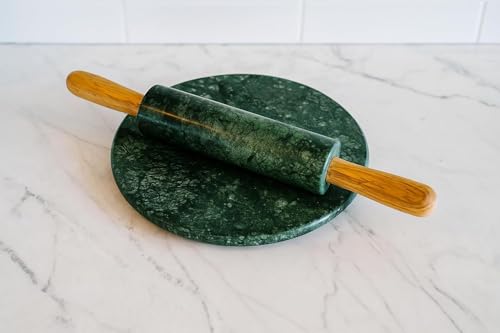
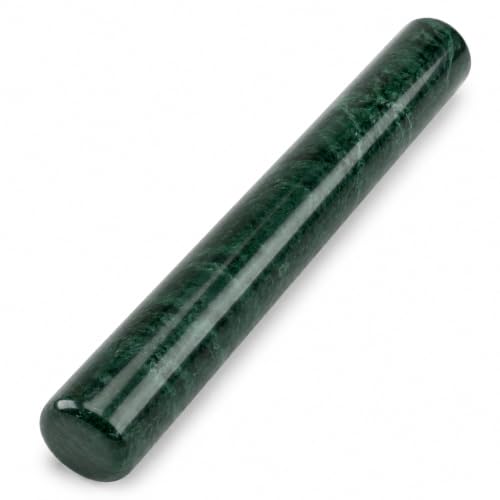
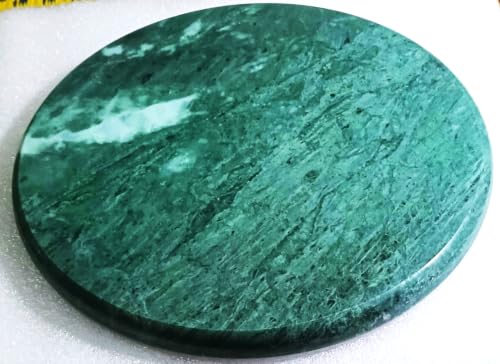
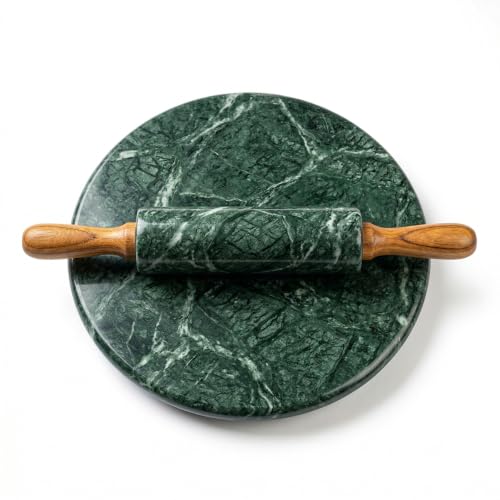
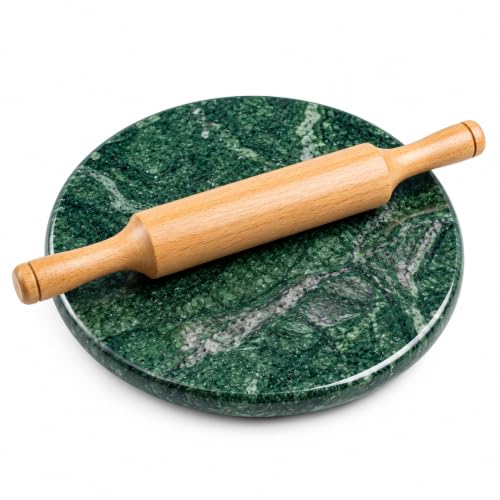
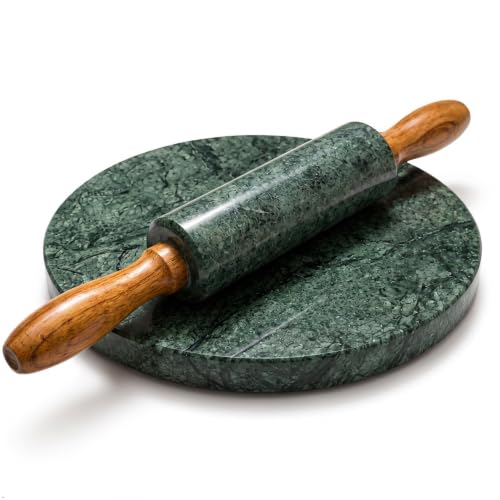
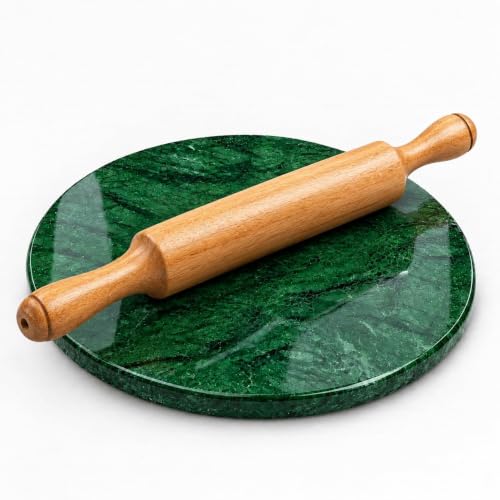
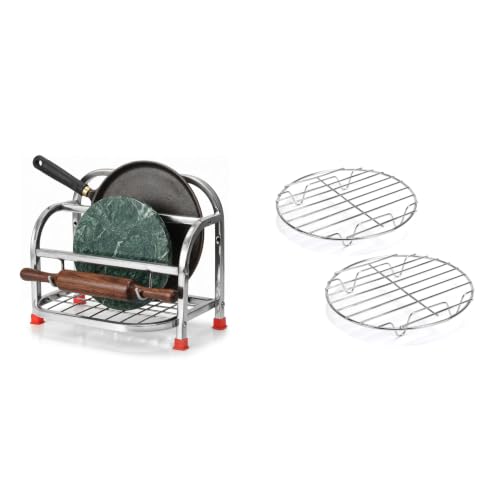
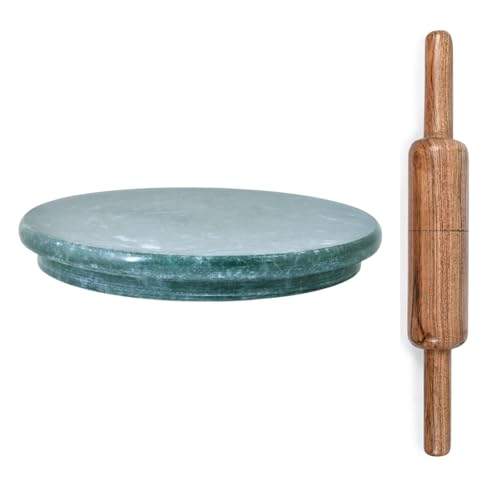
Green Marble Chakla Belan Set – Best for a Premium Traditional Look
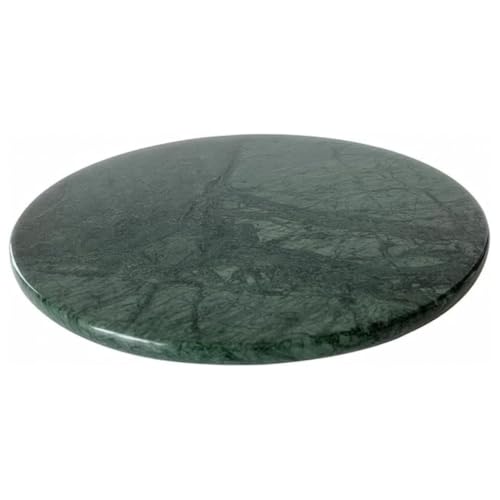
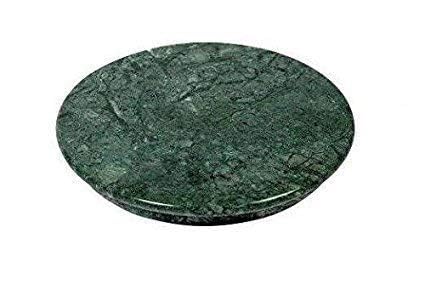
Green marble chakla belan sets are popular among buyers who want something that looks a little different from the usual wooden or white marble options.
The rich green finish gives the board a distinctive appearance, while its marble construction provides the weight associated with stone rolling boards.
Depending on the listing, these sets may come with a wooden belan in a matching or contrasting finish. Some options also include decorative detailing.
Before purchasing, pay attention to the board’s actual diameter and thickness. A beautiful-looking board is not particularly useful if the available rolling area is too small for your regular rotis.
What we like
- Distinctive green marble appearance.
- Heavy rolling-board construction.
- Pairs with a traditional wooden belan.
- Can complement a traditional kitchen.
- Available in different designs and sizes.
What we don’t like
- Heavy and less convenient to transport.
- Decorative finishes need careful handling.
- Natural stone can have variations.
- Exact dimensions should be checked before ordering.
Best for: Buyers who prefer a marble rolling board with a traditional yet distinctive appearance.




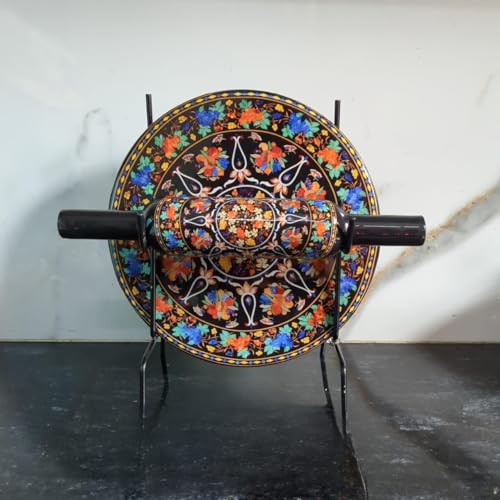
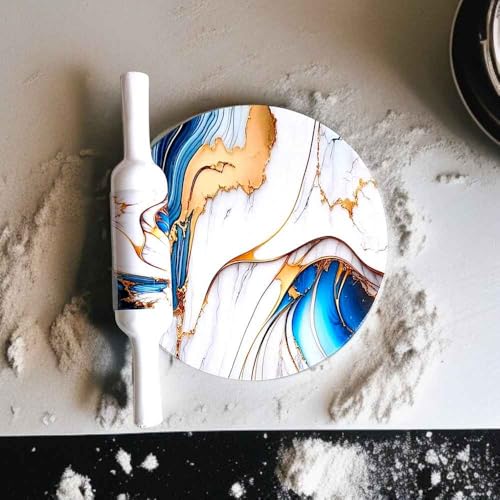
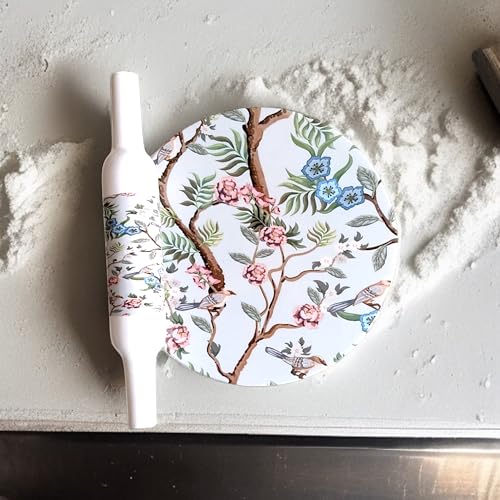
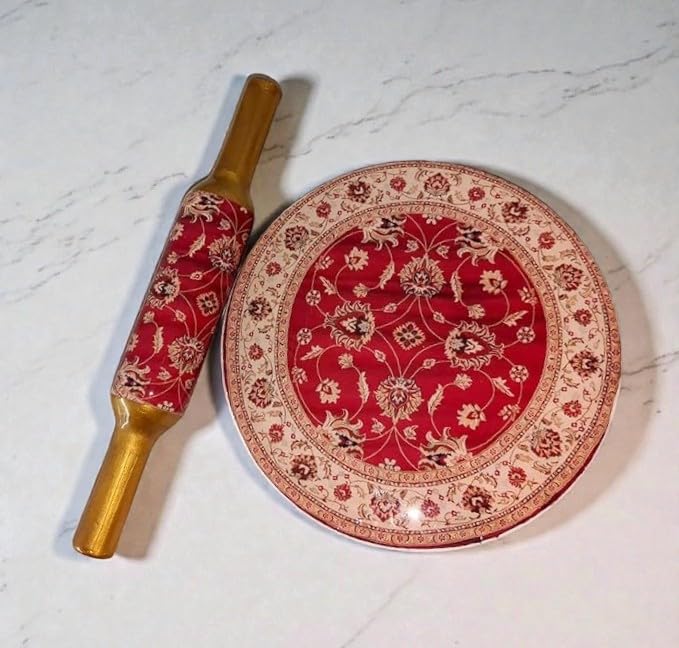
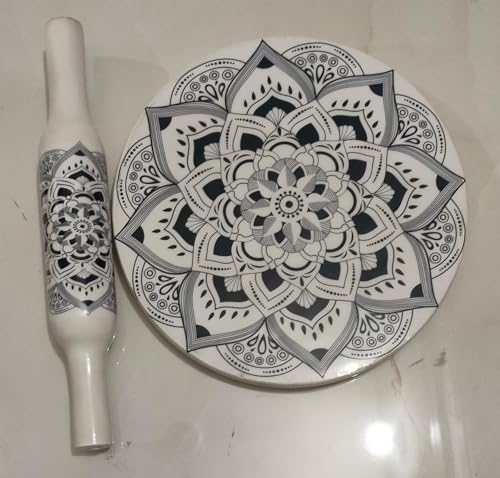
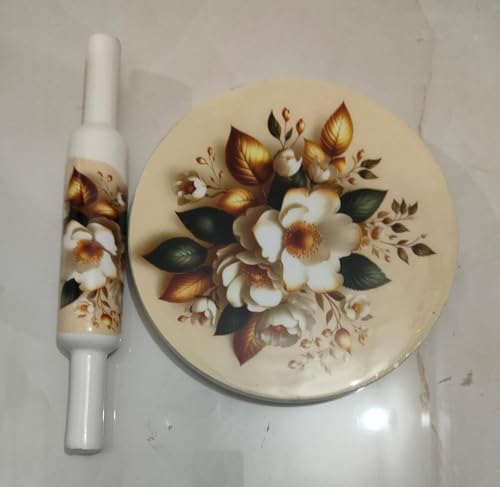
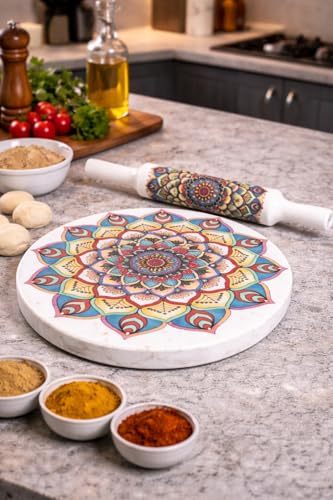
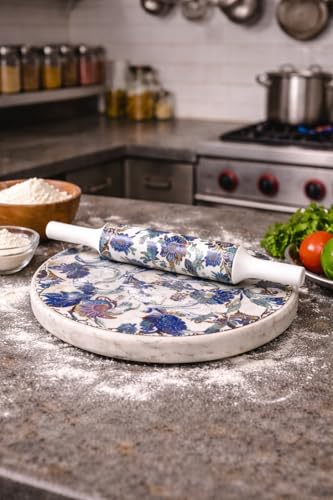
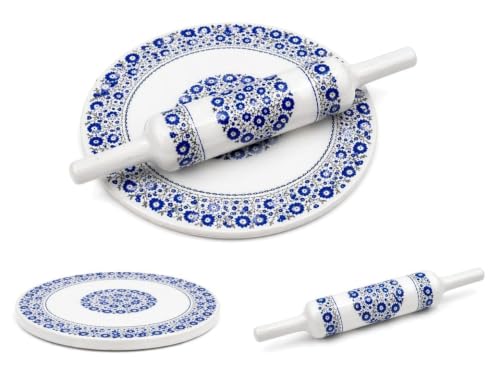
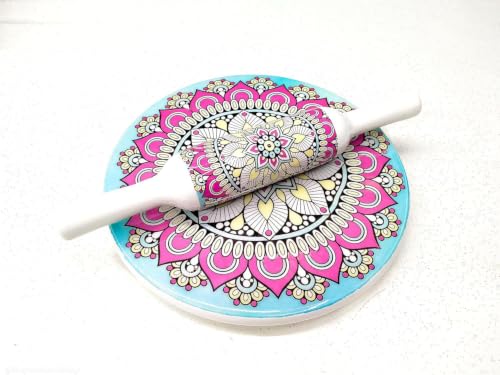
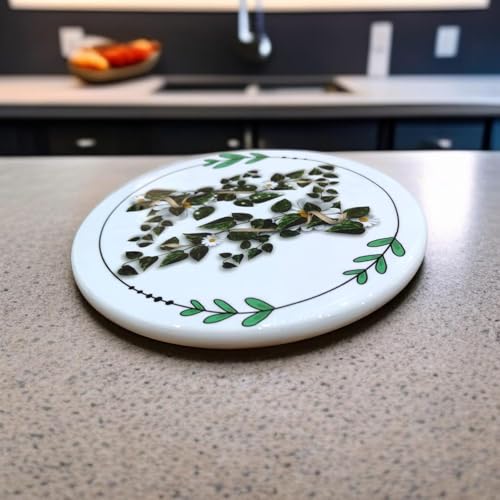
Printed Marble Chakla Belan Set – Best for Decorative Kitchen Styling
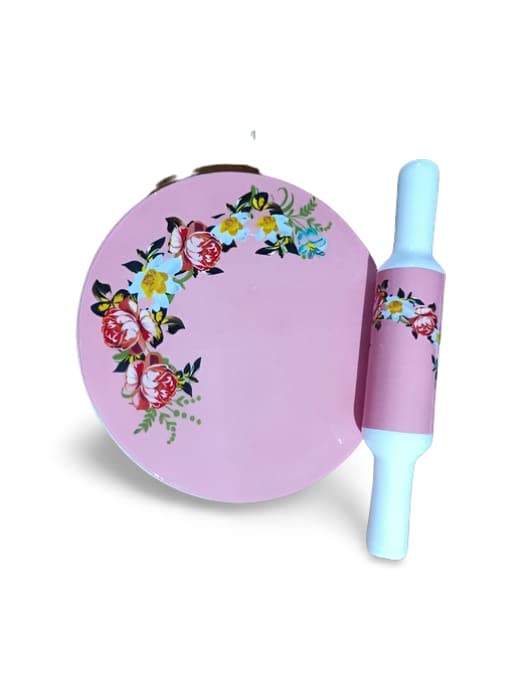
Want a chakla belan set that looks attractive on your kitchen counter? Printed marble options offer a decorative alternative to plain stone boards.
These sets may feature floral patterns, coloured designs or enamel-style detailing. They generally combine a marble or stone board with a wooden belan.
The important thing is to distinguish decorative appeal from practical performance. A printed design does not automatically mean the board is more durable, stable or easier to use.
Check whether the actual rolling surface is smooth, food-safe and suitable for direct contact with dough. Also inspect the product photographs carefully to understand whether the printed finish covers the working surface or only the decorative outer area.
What we like
- Attractive designs.
- Can make a traditional kitchen look more colourful.
- Often sold as coordinated sets.
- Available in different colours and patterns.
What we don’t like
- Decorative finishes may wear with poor maintenance.
- Quality differs between sellers.
- Some designs may make scratches harder to notice.
- Practical specifications matter more than appearance.
Best for: Buyers who want a decorative marble chakla without compromising on the basic rolling requirements.



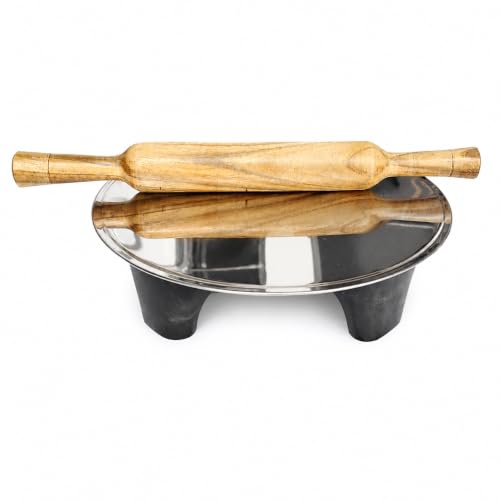
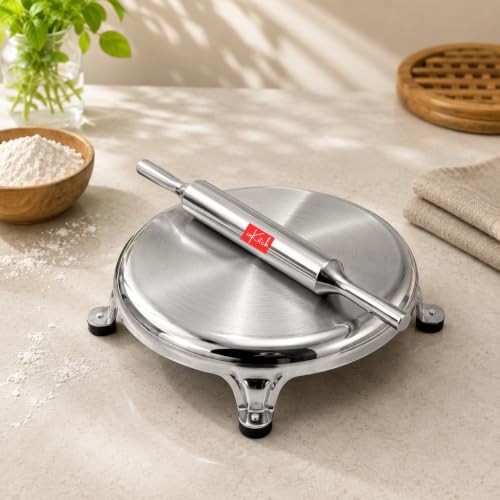
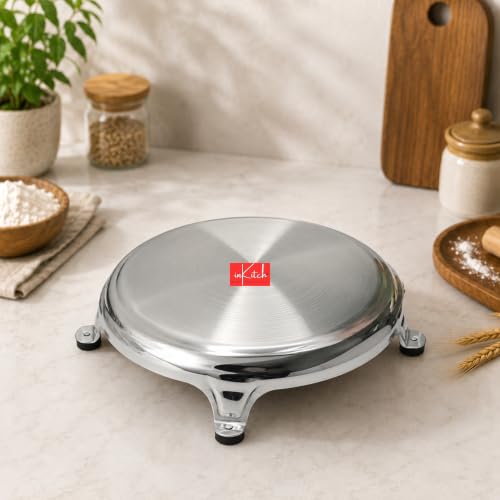
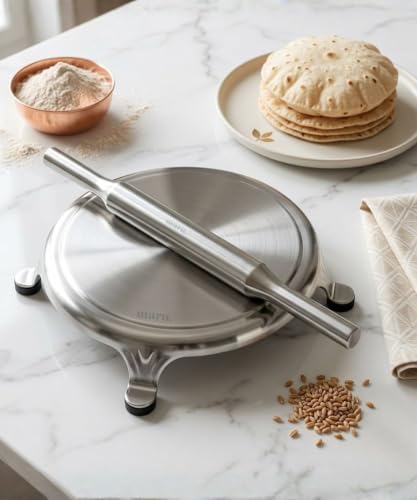
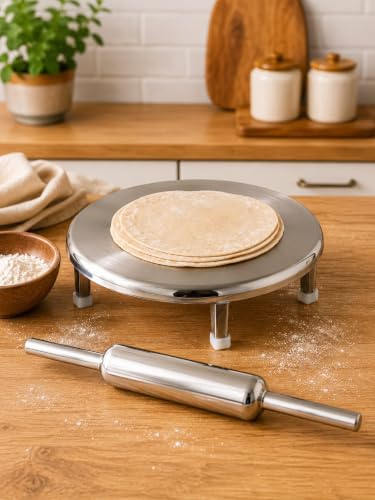
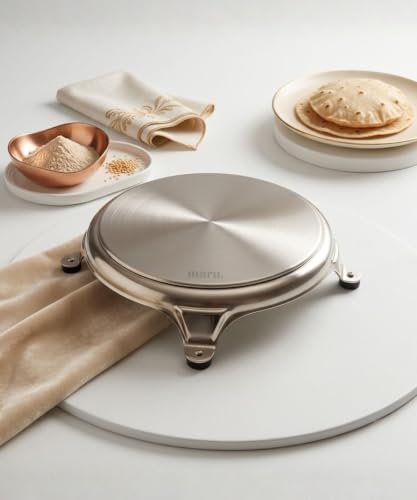
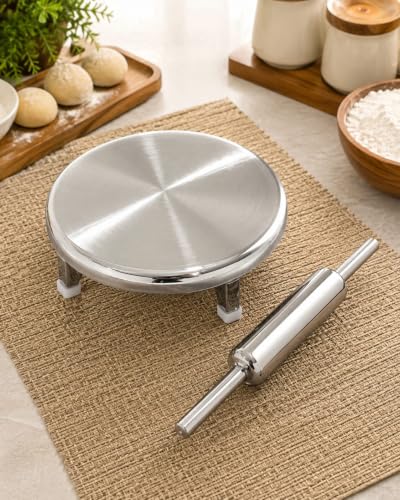
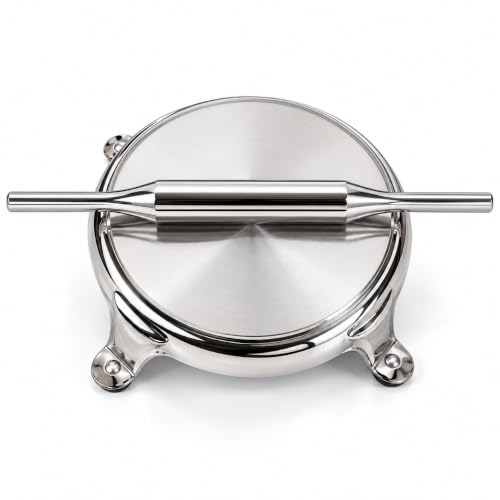
Stainless-Steel Chakla Belan Set – Best for Low-Maintenance Cleaning
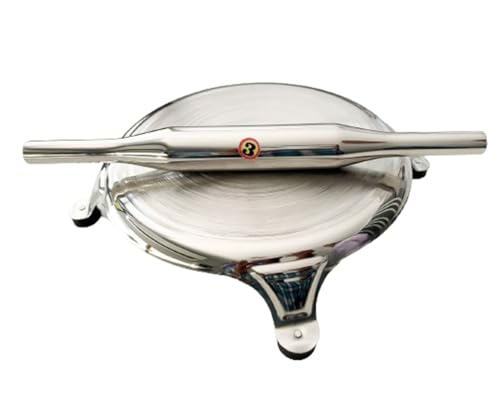
Stainless-steel chakla sets are an alternative for people who prefer metal kitchen accessories.
Unlike untreated wooden boards, stainless steel does not absorb moisture in the same way and can be wiped clean easily. It is also less likely to develop wood-related cracks or splinters.
However, stainless steel is not automatically the best material for rolling dough. A smooth metal surface may feel slippery, and the board needs a stable base to prevent movement.
Check the grade of stainless steel, thickness, edge finishing and the quality of the anti-slip base, if included.
What we like
- Easy to wipe clean.
- Does not absorb food odours like untreated wood.
- Modern kitchen appearance.
- Convenient for buyers who prefer metal accessories.
What we don’t like
- Smooth surfaces may feel slippery.
- Lightweight boards may move during rolling.
- Thin metal construction may bend.
- Product descriptions may not clearly identify steel grade.
Best for: Buyers who prioritise easy cleaning and prefer stainless-steel kitchen accessories.






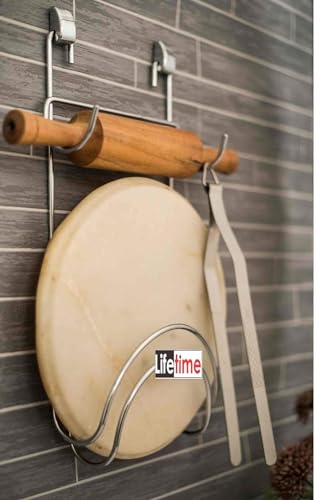
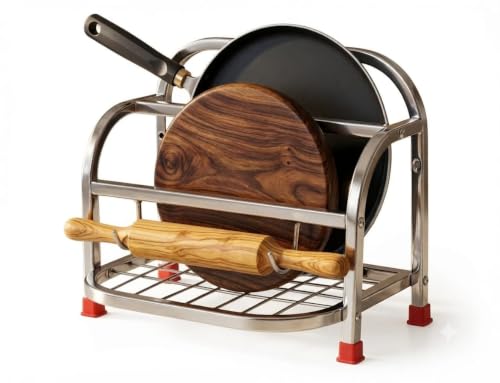
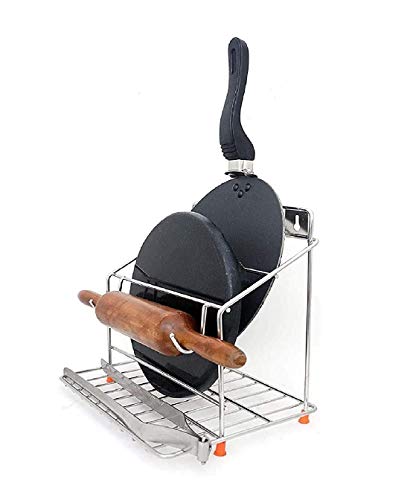
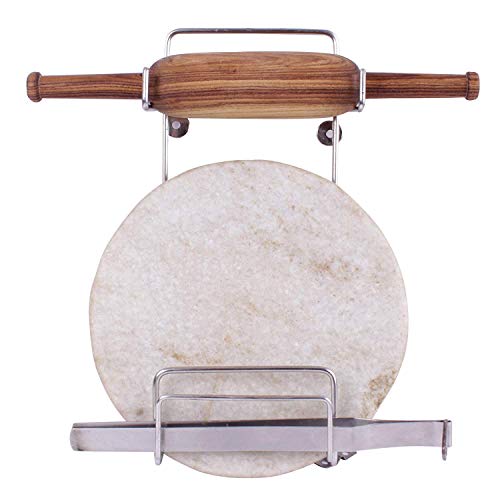
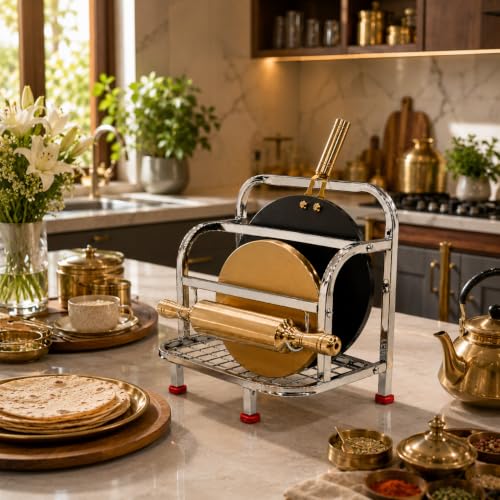
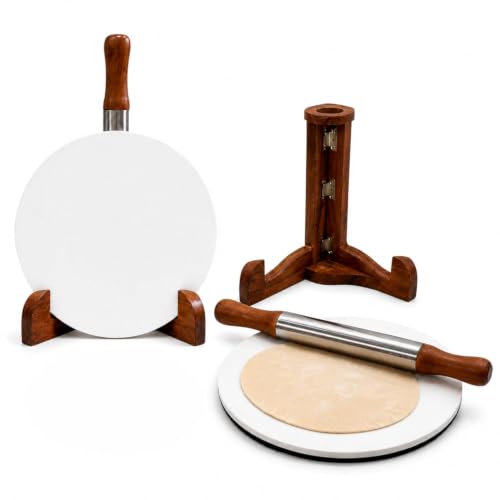
Marble Chakla Belan Set with Stand – Best for Organised Storage
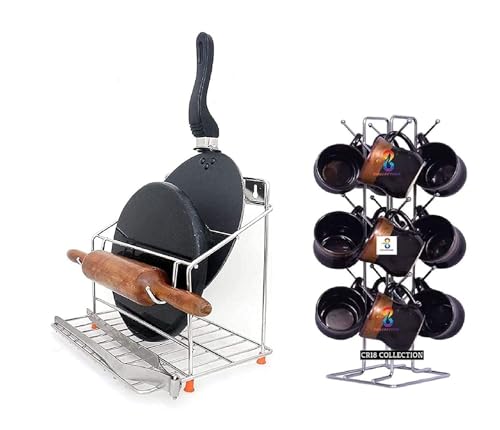
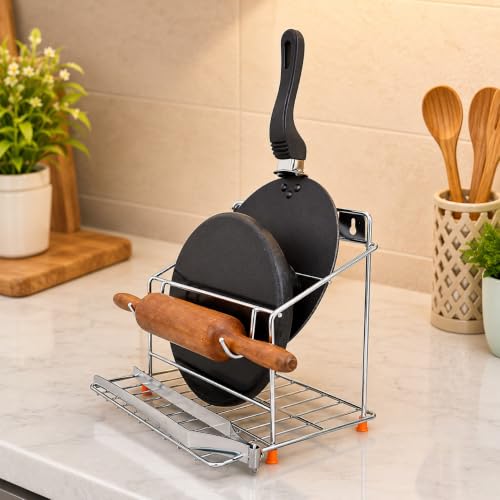
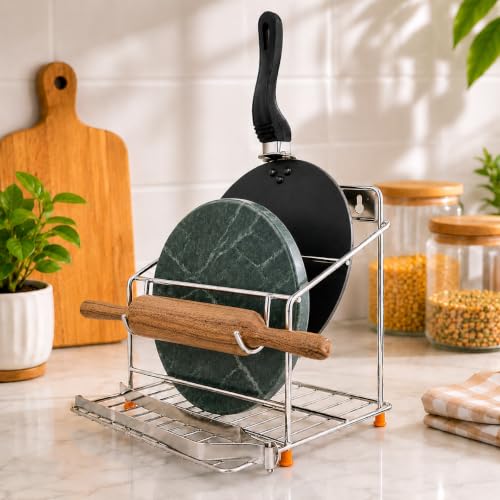
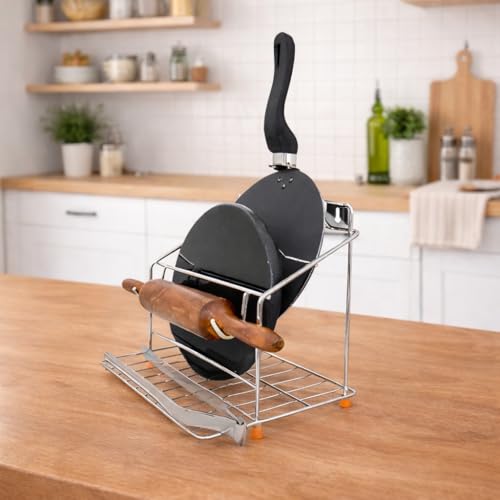
A chakla belan set with a stand can be a useful option if you want to keep your rolling pin and board organised.
Instead of placing the belan separately in a kitchen drawer, a dedicated stand provides a designated storage arrangement. Depending on the design, it may also make the set easier to access.
These products can be particularly useful in kitchens where traditional cooking tools are used frequently.
Before ordering, check whether the stand is actually included, how much counter space it occupies and whether the board sits securely in the holder.
What we like
- Organised storage arrangement.
- Keeps the rolling pin and board together.
- Convenient for frequently used kitchen tools.
- Can look attractive on a kitchen counter.
What we don’t like
- Requires additional counter or cabinet space.
- Stand quality varies.
- Some designs may be awkward to clean.
- The set may cost more than a basic combination.
Best for: Buyers who prefer organised storage and want their chakla belan set easily accessible.

Large Marble Chakla with Wooden Belan – Best for Larger Rotis and Parathas
If you regularly make larger rotis, stuffed parathas or multiple flatbreads, a larger rolling board may be worth considering.
A bigger working area gives you more room to move the dough without repeatedly adjusting its position. This can be helpful when preparing larger stuffed parathas, where the dough needs to be rolled carefully to avoid filling leakage.
A larger board does not automatically produce better rotis, though. You still need a suitable belan, comfortable working height and a stable rolling surface.
Look for a board with enough usable area for your preferred flatbread size, while keeping your kitchen counter and storage space in mind.
What we like
- More rolling space.
- Convenient for larger parathas.
- Less need to reposition larger dough portions.
- Marble construction provides substantial weight.
What we don’t like
- Takes up more storage space.
- Can be difficult to lift.
- Requires a sufficiently large countertop.
- Larger size may not be necessary for everyday small chapatis.
Best for: Families that frequently prepare large rotis and stuffed parathas.


Chakla Belan Material Comparison: Wood vs Marble vs Stainless Steel
The material is one of the most important decisions when buying a chakla belan set. Each option has its own advantages and maintenance requirements.
| Feature | Wood | Marble | Stainless Steel |
|---|---|---|---|
| Weight | Usually light to medium | Usually heavy | Varies by thickness |
| Surface feel | Traditional, familiar | Smooth and cool | Smooth and cool |
| Cleaning | Wipe and dry immediately | Wipe carefully | Easy to wipe |
| Water exposure | Avoid soaking | Dry after cleaning | Generally more tolerant |
| Stability | Depends on weight and base | Weight can help stability | Depends on base and construction |
| Storage | Generally easy | Needs careful handling | Generally easy |
| Main concern | Moisture and cracking | Chipping and weight | Slipperiness and thin construction |
Our takeaway: A well-made wooden chakla is a sensible everyday option for traditional roti making. Marble is worth considering if you prefer a heavier board and easy surface cleaning. Stainless steel suits buyers who want a low-maintenance metal surface, provided the board has sufficient stability.
What to Look for When Buying a Chakla Belan Set
Before adding a chakla belan set to your shopping cart, consider these practical features.
1. Board Diameter
The diameter determines how much room you have to roll the dough.
| Approximate Board Diameter | Suitable Use |
|---|---|
| 7–8 inches | Small rotis and compact kitchens |
| 9–10 inches | Everyday chapatis and standard rotis |
| 11–12 inches | Larger rotis and stuffed parathas |
These are practical shopping categories, not strict rules. Check the actual usable rolling area rather than relying only on the product’s advertised outer diameter.
2. Belan Length and Shape
The rolling pin should feel comfortable in your hands.
Look for:
- A smooth, splinter-free surface.
- A comfortable thickness.
- A shape that allows controlled rolling.
- A length suited to your working area.
- No rough edges or uneven finishing.
Some belans are slim and tapered, while others are thicker. Personal comfort matters more than choosing the heaviest available option.
3. Board Thickness and Stability
A rolling board that moves every time you apply pressure can make cooking frustrating.
Look for:
- A flat bottom.
- A stable base.
- Non-slip feet or a suitable stand, if included.
- A sufficiently thick construction.
- No visible cracks or uneven edges.
You can also place a clean, slightly damp kitchen towel underneath a board if it slides on the countertop. Make sure the towel is positioned securely.
4. Food-Safe Finish
For wooden products, inspect the finish carefully. Avoid boards with strong chemical smells, peeling varnish or rough splinters on the rolling surface.
For marble products, look for a smooth, properly finished surface without visible cracks or sharp chips.
For stainless steel, check the grade and finish instead of relying on a generic claim such as premium steel.
5. Ease of Cleaning and Storage
A kitchen tool should be easy to maintain.
Consider where you will store the board, whether the belan comes with a holder and whether the set can be dried properly after cleaning.
If your kitchen has limited storage, a lightweight wooden set may be more practical than a heavy marble board.
How to Keep Your Chakla Belan Clean and Long-Lasting
A little care can help your chakla belan set remain useful for years.
Wooden chakla and belan
- Remove leftover flour after use.
- Wipe with a slightly damp cloth.
- Dry immediately with a clean towel.
- Never soak wooden components in water.
- Store in a dry, ventilated place.
- Use a suitable food-safe wood conditioner when recommended by the manufacturer.
Marble chakla
- Remove dough and flour after use.
- Wipe with a soft damp cloth.
- Use mild soap if needed.
- Avoid harsh acidic or abrasive cleaners.
- Dry before storing.
- Handle carefully to prevent chips and cracks.
Stainless-steel chakla
- Wipe away flour and dough residue.
- Wash according to the manufacturer’s instructions.
- Dry the surface to avoid water marks.
- Check the underside and joints for trapped moisture.
- Store in a clean, dry place.
Tips for Rolling Soft Rotis and Parathas
A good chakla belan makes rolling convenient, but the dough itself plays a major role in the final result.
Here are some simple tips:
- Knead properly: Prepare a smooth, pliable dough rather than a stiff one.
- Rest the dough: Allow it to rest, covered, before rolling.
- Use even pressure: Roll gently from the centre towards the edges.
- Rotate the dough: Turn it slightly as you roll to maintain a round shape.
- Avoid excessive dry flour: Too much flour can make the finished roti dry.
- Cook on a properly heated tawa: Follow the appropriate cooking method for the type of flatbread.
- Store cooked rotis properly: Keep them covered in a clean container or cloth to retain warmth and moisture.
For stuffed parathas, seal the filling properly and roll gradually to reduce the chances of tearing.
Pros and Cons of Buying a Chakla Belan Set
| Reasons to Buy | What to Keep in Mind |
|---|---|
| Essential for traditional roti and paratha preparation | Requires practice for consistent results |
| Available in wood, marble and steel | Each material has different care requirements |
| Many sizes and designs available | Product dimensions can be misleading |
| Easy to use without electricity | Needs a suitable countertop |
| Can last for years with proper care | Poor-quality products may crack or wear |
| Useful for several types of flatbread | Does not guarantee soft rotis by itself |
Also Read | Best Puri Presses in India for Perfectly Round Pooris
Frequently Asked Questions
1. Which chakla belan is best for making soft rotis?
A well-made wooden or marble chakla with a comfortable wooden belan can work well for everyday roti making. Choose a stable board with a smooth surface and a rolling pin that feels comfortable in your hands.
2. Is a wooden chakla better than a marble chakla?
Both have advantages. Wooden boards are generally lighter and offer a familiar traditional feel. Marble boards are heavier and have smooth surfaces that are easy to wipe. Your preferred handling experience and storage space should guide the decision.
3. What size chakla is best for everyday rotis?
A 9–10-inch board is a practical starting point for many households. If you regularly make larger rotis or stuffed parathas, consider an 11–12-inch board.
4. Is a marble chakla difficult to maintain?
Not particularly. Wipe it with a soft damp cloth, use mild cleaning products when necessary and dry it before storing. The bigger concern is its weight and the risk of chipping if dropped.
5. Can I use the same chakla belan for puris and parathas?
Yes. A chakla belan can be used for rolling dough for rotis, chapatis, puris and parathas. Choose a board size that comfortably accommodates the portions you prepare.
6. Why does my chakla slide while rolling?
A lightweight or uneven board may move when you apply pressure. Check the bottom surface, use a non-slip base or place a securely positioned damp kitchen towel underneath it.
7. How do I prevent a wooden chakla from cracking?
Avoid soaking it in water, dry it immediately after cleaning and store it away from excessive heat and dampness. Follow the manufacturer’s care instructions for any recommended food-safe conditioning.
8. Does a heavier belan make softer rotis?
Not necessarily. Belan weight can influence how much pressure you apply while rolling, but softness depends on several factors, including dough preparation, resting time, thickness and cooking technique.
Final Verdict: Which Chakla Belan Set Should You Buy?
The best chakla belan set is the one that feels comfortable, stays stable while rolling and fits your everyday cooking routine.
Here is our buying recommendation:
- For everyday traditional cooking: Choose a good-quality wooden chakla belan set.
- For a heavier rolling board: Consider a white marble chakla with a wooden belan.
- For a distinctive traditional look: Explore green marble options.
- For decorative styling: Consider printed marble sets with a properly finished working surface.
- For easy surface cleaning: Look at stainless-steel options with a stable base.
- For organised storage: Choose a set with a dedicated stand.
- For larger parathas: Consider a larger rolling board with sufficient usable space.
For most Indian households, a well-finished wooden set or a stable marble chakla with a wooden belan is a sensible place to start. You do not need the most expensive designer set to make delicious homemade rotis.
Choose the right size, check the finish and take care of the material. With a little practice, your everyday roti-making routine can become much more comfortable!