
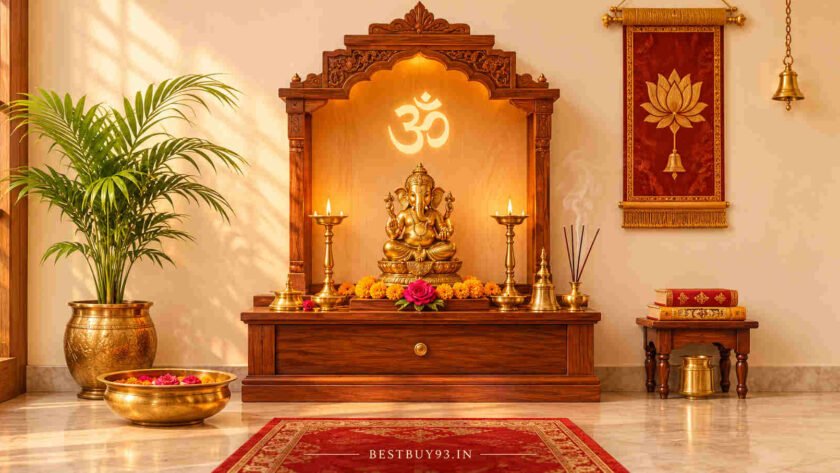

A puja corner is more than just a place to keep idols and light a diya. For many Indian households, it is a peaceful little space dedicated to prayer, gratitude and daily rituals. Whether you live in a spacious house or a compact apartment, you can create a beautiful mandir that feels organised, welcoming and connected to your traditions.
Traditional Vastu Shastra offers several suggestions for arranging a home temple, including its direction, placement of idols, lighting, colours and cleanliness. While these ideas are rooted in traditional beliefs rather than scientifically established rules, they can provide a thoughtful starting point when designing your prayer space.
In this guide, we’ll explore how to arrange a puja corner using traditional Vastu ideas, what to keep in your mandir, which mistakes to avoid and how to create a devotional space without making your home feel cluttered.
Choose the Right Direction for Your Puja Corner
Direction is one of the most commonly discussed aspects of Vastu Shastra. Traditionally, the northeast direction, also known as Ishan Kon, is considered particularly auspicious for a puja room or mandir.
Here are some traditional placement suggestions:
- Northeast: Often considered the preferred direction for a home temple.
- East: Another commonly recommended direction for a puja corner.
- North: Sometimes suggested as an alternative when northeast placement is not practical.
If you live in an apartment where the northeast corner is occupied or unavailable, don’t worry. You can choose a clean, peaceful and relatively quiet area for your mandir rather than disrupting the entire home.
Select a Clean and Peaceful Location
Your puja corner should feel calm and separate from everyday household clutter. Ideally, choose a location where you can sit comfortably and perform your daily prayers without frequent interruptions.
Traditional Vastu recommendations generally suggest avoiding the following locations:
- Directly beside or inside a bathroom.
- Under a staircase.
- Inside a bedroom, if another suitable location is available.
- Near a shoe rack or storage area containing footwear.
- In a frequently disturbed passageway.
For smaller homes, a dedicated wall-mounted mandir or compact wooden temple can work beautifully. The idea is to create a designated prayer area, even if it occupies only a small section of your living room.
Place Idols and Pictures Thoughtfully
Idols and religious pictures are usually the main focus of a home mandir. Traditional practices often recommend keeping them organised, clean and positioned respectfully.
Consider these suggestions:
- Place idols on a stable platform or raised wooden mandir.
- Keep enough space between different idols and pictures.
- Avoid overcrowding the prayer shelf.
- Position the idols so that they face the appropriate direction according to your household tradition.
- Keep damaged or broken idols out of the regular worship arrangement and follow your family’s customary way of respectfully handling them.
Some Vastu traditions suggest that devotees should face east or north while praying. The exact placement of idols can vary across regional customs and religious traditions, so follow the practices familiar to your family.
Choose Traditional and Peaceful Colours
Colours can make a big difference to the overall appearance of your puja corner. Traditional Indian prayer spaces often use warm, light and soothing shades.
Some popular choices include:
| Colour | Traditional association | How to use it |
|---|---|---|
| White | Peace and simplicity | Walls, shelves and backdrops |
| Yellow | Auspiciousness and positivity | Decorative accents and cloth |
| Saffron | Devotion and spirituality | Fabrics and festive decorations |
| Cream | Warmth and elegance | Mandir furniture and walls |
| Light wood | Natural and traditional appearance | Wooden temple and shelves |
You can also introduce small touches of red or gold through decorative fabrics, bells and traditional borders. Avoid using too many competing colours in a small space.
Arrange Diyas, Incense and Prayer Essentials
A well-organised mandir should have enough room for everyday prayer essentials. Instead of placing everything together, create separate areas for lighting, incense and पूजा सामग्री.
Some useful items include:
- Brass or stainless-steel diya.
- Incense holder or agarbatti stand.
- Small bell.
- Pooja thali.
- Kumkum and haldi containers.
- Small water vessel.
- Cotton wicks and a safe oil container.
- A clean cloth for maintaining the mandir.
Keep flammable items away from curtains, paper decorations and electrical wires. Never leave a burning diya or incense unattended.
Use Natural Light and Gentle Lighting
Lighting plays an important role in creating a welcoming prayer space. If possible, place your mandir in an area that receives natural daylight.
For evenings, warm-white LED lighting can create a soft and peaceful atmosphere. You can install:
- Small LED strip lights around the mandir.
- Warm-white spotlights.
- Decorative brass or metal lamps.
- Battery-operated candles for areas where an open flame is unsuitable.
Traditional oil or ghee diyas can also be part of daily worship, provided they are placed on a stable, heat-resistant surface and monitored carefully.
Keep the Puja Corner Clean and Clutter-Free
Cleanliness is an important part of traditional worship practices. A neat mandir also makes the space more visually appealing and easier to maintain.
Make it a habit to:
- Dust the mandir and shelves regularly.
- Replace wilted flowers.
- Remove used incense sticks and ash safely.
- Wash the puja utensils periodically.
- Keep fresh prayer cloths.
- Store extra पूजा सामग्री in a separate drawer or box.
Avoid turning the mandir into a general-purpose storage shelf. Keep only the items you actually use for prayer.
Add Traditional Decorations Without Overdoing Them
You don’t need an elaborate temple to create a beautiful puja corner. A few thoughtful decorations can make even a compact mandir feel special.
Consider these traditional decorative elements:
- Brass bells: A classic addition to many Indian prayer spaces.
- Torans: Decorative door hangings made with fabric, beads or artificial flowers.
- Rangoli: A small rangoli design near the mandir during festivals or special occasions.
- Fresh flowers: Marigolds, roses and other flowers used in household worship.
- Decorative backdrops: Traditional motifs, carved wooden panels or simple printed designs.
- Brass accessories: Small kalash, diya stands and pooja thalis.
Choose decorations that complement the size of your mandir. A small space looks better with a few meaningful details than with too many decorative pieces.
Make the Most of Small Apartment Spaces
Not every home has a separate prayer room, and that’s perfectly fine. You can create a functional puja corner in a small apartment with smart furniture and storage.
Here are some practical ideas:
- Wall-mounted mandir: Saves floor space and works well in compact homes.
- Wooden cabinet mandir: Offers concealed storage for पूजा सामग्री.
- Corner temple unit: Makes use of an otherwise unused corner.
- Open floating shelves: Suitable for a minimal arrangement with a few idols and essentials.
- Foldable mandir: A practical option when you need to use the same area for multiple purposes.
Try to keep the prayer area away from everyday clutter and choose a design that allows you to sit comfortably during पूजा.
Common Puja Corner Arrangement Mistakes to Avoid
While arranging your home mandir, a few simple mistakes can make the space inconvenient or difficult to maintain.
| Common mistake | Better approach |
|---|---|
| Overcrowding the mandir with idols | Keep a simple, organised arrangement |
| Placing पूजा items randomly | Use a dedicated tray or storage box |
| Ignoring regular cleaning | Maintain a simple daily cleaning routine |
| Using harsh lighting | Choose gentle, warm lighting |
| Keeping the mandir near footwear | Select a cleaner, quieter location |
| Placing a diya near curtains | Use a stable, fire-safe surface |
| Choosing an oversized temple for a small home | Select a compact wall-mounted or corner design |
Remember that the purpose of a home temple is to create a peaceful environment for worship, not to follow every decorative trend.
What to Look for When Choosing a Home Mandir
Before purchasing a mandir, consider the available space, storage requirements and the overall design of your home.
| Buying factor | What to consider |
|---|---|
| Size | Measure the available wall or floor space before buying |
| Material | Solid wood, engineered wood, marble and metal are common options |
| Storage | Look for drawers or cabinets if you have several prayer essentials |
| Design | Choose traditional carving or a minimal contemporary style |
| Maintenance | Consider how easily the material can be cleaned |
| Lighting | Check whether the mandir supports integrated lighting |
| Stability | Ensure the unit can safely support the idols and accessories |
A good mandir should be practical, stable and easy to maintain. Don’t purchase a large temple simply because it looks impressive in a product photograph.
Frequently Asked Questions
1. Which direction is considered best for a puja corner according to Vastu?
The northeast direction, traditionally called Ishan Kon, is commonly considered the preferred location for a home temple. East and north are also suggested in various Vastu traditions.
2. Can I keep a mandir in my living room?
Yes. A living room can be a practical location for a home mandir, particularly in apartments without a separate prayer room. Choose a clean and relatively quiet corner.
3. Can I create a puja corner in a small apartment?
Absolutely! A wall-mounted mandir, compact wooden temple or dedicated floating shelf can help create a functional prayer space without occupying too much room. Puja Corner with Vastu
4. Which colours are traditionally preferred for a puja room?
White, cream, yellow and saffron are commonly used in traditional prayer spaces. You can introduce red and gold through smaller decorative elements. Puja Corner with Vastu
5. Can I keep multiple Hindu deities in one mandir?
Many Indian households worship multiple deities in the same home temple. Keep the arrangement organised and follow your family’s religious customs regarding idol placement. Puja Corner with Vastu
6. Is it necessary to have a separate puja room?
No. A separate room is not essential for creating a home temple. A clean, dedicated corner can serve as a comfortable place for daily prayers. Puja Corner with Vastu
7. Can I use an artificial diya in my puja corner?
Yes. An LED diya can be a convenient alternative when an open flame is unsuitable, particularly in homes with children, pets or limited space. Puja Corner with Vastu
Final Thoughts
Creating a puja corner using traditional Vastu ideas doesn’t require a grand temple or a complete home makeover. A thoughtfully chosen location, a clean mandir, well-arranged idols, gentle lighting and a few traditional decorations can make a meaningful difference.
Start with the space you already have. Whether it’s a beautiful wooden mandir in a dedicated room or a small wall-mounted temple in your apartment, focus on keeping it peaceful, organised and comfortable for daily worship.
After all, a home temple should reflect devotion and simplicity not become another complicated home-design project!