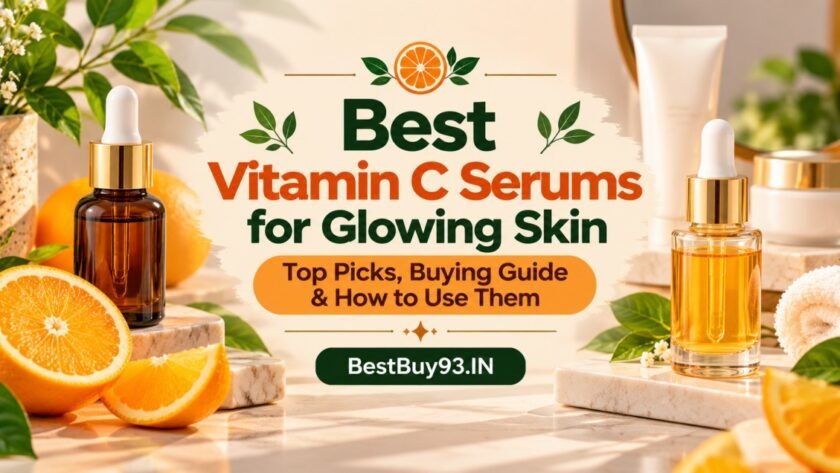

🍊✨If your skin looks dull, uneven or tired even after moisturising, vitamin C serum may be worth adding to your routine.
But choosing one isn’t as simple as picking the bottle with the biggest “20% Vitamin C” written on the front.
Vitamin C comes in different forms and concentrations, and the formula around it matters too. Some serums use L-ascorbic acid, the best-studied form, while others use derivatives such as 3-O-ethyl ascorbic acid that are generally formulated for greater stability. Some combine vitamin C with vitamin E, ferulic acid, niacinamide or other brightening ingredients.
So which one should you actually buy?
In this guide, we’ve rounded up some of the best vitamin C serums for glowing skin available in India, compared their formulations and use cases, and explained what to look for before spending your money.
We’ll also cover which vitamin C serum is best for beginners, oily skin, pigmentation, sensitive skin and experienced users, plus how to use vitamin C without turning your skincare routine into a chemistry practical.
Also Read | Best Night Serums for Glowing Skin | Vitamin C vs Niacinamide Serum
Quick Answer: Which Vitamin C Serum Is Best?
If you want the shortlist first:
- 🏆 Best Overall: Foxtale Vitamin C Serum 15% L-Ascorbic Acid + Vitamin E
- 🌿 Best for Beginners: Minimalist Vitamin C 10% Face Serum
- 💰 Best Value: Deconstruct 10% Vitamin C + 0.5% Ferulic Acid
- ✨ Best for a Stable Vitamin C Formula: Plum 15% Vitamin C & Mandarin Glow Boost Serum
- 🧴 Best Combination Formula: Dot & Key 10% Vitamin C + E + 5% Niacinamide
- 🎯 Best for Brightening + Pigmentation: The Derma Co 10% Vitamin C + 5% Niacinamide + Hyaluronic Acid
Our overall pick: Foxtale if you specifically want a 15% L-ascorbic acid formula with vitamin E.
Our beginner pick: Minimalist’s 10% ethyl ascorbic acid formula is the more conservative starting point if you don’t want to jump straight into a stronger L-ascorbic acid serum.
Best Vitamin C Serums for Glowing Skin
1. Foxtale Vitamin C Serum — Best Overall 🏆
Best for: Experienced beginners to regular vitamin C users who want L-ascorbic acid
Foxtale’s Vitamin C Serum is one of the more straightforward formulas in this roundup.
It uses 15% L-ascorbic acid, along with 1% vitamin E. Foxtale describes it as suitable for all skin types and positions it for dullness, pigmentation, tanning and uneven skin tone. Vitamin C Serum
The important thing here is the form.
L-ascorbic acid is the direct, clinically well-studied form of vitamin C, but it is also harder to formulate and keep stable than many derivatives. A recent systematic review of vitamin C in dermatology found L-ascorbic acid among the most clinically validated formulations, particularly when used in appropriately stabilised systems.
Key Features
- 15% L-ascorbic acid
- 1% vitamin E
- 30 ml
- Designed for brightening and pigmentation concerns
- Lightweight texture
- Suitable for all skin types according to the manufacturer
- Patch testing recommended
Why We Recommend It
If you’re specifically looking for pure L-ascorbic acid rather than a vitamin C derivative, this is the strongest all-rounder in our list.
The addition of vitamin E is also relevant because antioxidant combinations are commonly used in topical vitamin C formulations.
Best For
- Dull skin
- Uneven-looking skin tone
- Sun-related pigmentation
- People already comfortable with active skincare
- Users specifically looking for L-ascorbic acid
Who Should Skip It
If your skin is highly reactive or you’ve never used vitamin C before, starting with 15% L-ascorbic acid may not be the most comfortable option.
A gentler derivative-based formula may make more sense.
Pros
- Uses clinically well-studied L-ascorbic acid
- 15% concentration
- Includes vitamin E
- Lightweight texture
- Strong option for pigmentation and dullness
Cons
- More active than some beginner formulas
- Requires careful storage
- Sensitive skin may prefer a gentler derivative
Our Verdict
Our top pick if you specifically want a 15% L-ascorbic acid serum.
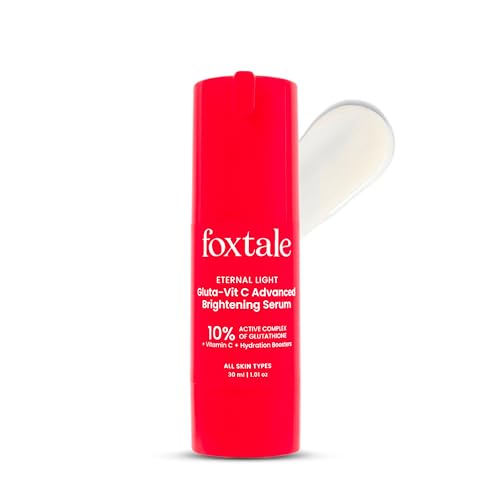
- BEGINNER FRIENDLY BRIGHTENING SERUM FOR GLOWING SKIN : Delivers a visible Brighter & glowing skin in 3 days, this lightw…
- VITAMIN C & GLUTATHIONE AS A GLOW BOOSTER : Powered by 10% stable Vitamin C (3-O-Ethyl Ascorbic Acid) and Glutathione co…
- TARGETS PIGMENTATION, DARK SPOTS & MELASMA : Works at the root causes to reduce pigmentation, melasma, dark spots & acne…
2. Minimalist Vitamin C 10% Face Serum — Best for Beginners 🌿
Best for: First-time vitamin C users and people who prefer a derivative
Minimalist’s Vitamin C 10% Face Serum uses 10% ethyl ascorbic acid, along with 1% acetyl glucosamine and PHA-based brightening support. The brand positions it as a daily glow-focused serum for dullness and sun-damaged-looking skin.
This is an important distinction from the Foxtale product.
You’re not getting 10% L-ascorbic acid.
You’re getting 10% ethyl ascorbic acid, a vitamin C derivative designed with stability and usability in mind.
Why We Recommend It
For someone saying:
“I’ve never used vitamin C before. What should I start with?”
I’d rather see you begin with a sensible formula that you can use consistently than buy an aggressive serum, irritate your skin and abandon vitamin C entirely.
Best For
- Beginners
- Dull skin
- Uneven-looking tone
- People who prefer vitamin C derivatives
- Daily skincare routines
Who Should Skip It
If you’re specifically looking for high-strength L-ascorbic acid, this isn’t the product for you.
Pros
- 10% ethyl ascorbic acid
- Beginner-friendly positioning
- Includes acetyl glucosamine
- Suitable for a simple brightening routine
- Good starting point
Cons
- Not L-ascorbic acid
- May feel too mild for users accustomed to stronger vitamin C products
Our Verdict
A sensible starting point if you’re new to vitamin C and don’t want to begin with a high-strength L-ascorbic acid serum.
Check Minimalist Vitamin C 10% Serum

- A POTENT STABLE VITAMIN C FACE SERUM: Not all Vit C serums are made equal! This serum is is made with a stable Vitamin C…
- NATURAL GLOW BOOSTER: This glow serum ensures high delivery of Vit C directly into your skin. Vit C reduces melanin prod…
- SOOTHING & HYDRATING: Formulated with Centella water that soothes and calms skin making this formula non-irritating and …
3. Deconstruct 10% Vitamin C + 0.5% Ferulic Acid — Best Value 💰
Best for: Budget-conscious shoppers who want vitamin C + ferulic acid
Deconstruct’s serum combines 10% liposomal vitamin C with 0.5% ferulic acid.
The brand says the liposomal delivery system is designed for stability and penetration, while ferulic acid provides antioxidant support and helps stabilise vitamin C. The current official listing also identifies the product as fragrance-free and vegan.
Why We Recommend It
This is where the ingredient list becomes more interesting than simply looking at the vitamin C percentage.
You’re getting a formula built around vitamin C + ferulic acid, rather than treating vitamin C concentration as the only thing that matters.
Best For
- Dull skin
- Uneven tone
- Budget-conscious buyers
- People interested in antioxidant combinations
Pros
- 10% vitamin C
- 0.5% ferulic acid
- Liposomal formulation
- Fragrance-free according to the manufacturer
- Vegan
- Generally accessible price point
Cons
- Not a high-strength L-ascorbic acid serum
- Individual tolerance can vary
- Claims around penetration should be interpreted as formulation claims rather than guarantees of results
Our Verdict
One of the most interesting value choices if you want a vitamin C + ferulic acid combination without moving into premium pricing.
Check Deconstruct Vitamin C + Ferulic Acid Serum
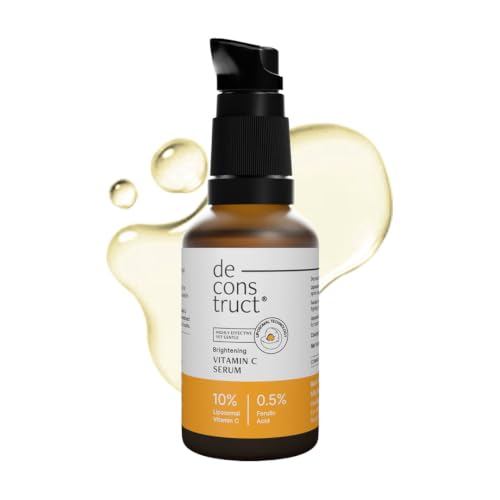
- 10% Liposomal Vitamin C penetrates effectively into the skin to help brighten complexion, reduce dullness, target pigmen…
- 0.5% Ferulic Acid works as a powerful antioxidant that boosts Vitamin C performance and helps protect skin from oxidativ…
- 0.5% Centella Asiatica Extract helps calm the skin and reduce redness.
4. Plum 15% Vitamin C & Mandarin Glow Boost Serum — Best Stable Derivative Formula ✨
Best for: People who want a higher-percentage vitamin C derivative
Plum’s 15% Vitamin C & Mandarin Glow Boost Serum uses 3-O-ethyl ascorbic acid, rather than L-ascorbic acid, along with Japanese mandarin and Kakadu plum extracts.
The current product listing identifies it as a 15% vitamin C serum designed for all skin types and lists a 30 ml version. Plum also says the formula is fragrance-free, vegan and designed for stability throughout its shelf life.
Why We Recommend It
This is a good example of why 15% doesn’t automatically mean “stronger” than 10%.
The form of vitamin C matters.
A 15% derivative and a 15% L-ascorbic acid serum aren’t interchangeable simply because both bottles say 15%.
Best For
- Dullness
- Uneven-looking tone
- People who prefer derivatives
- Users looking for a higher-percentage derivative
- Sensitive-skin users who don’t tolerate stronger L-ascorbic acid well
Pros
- 15% vitamin C derivative
- Includes mandarin and Kakadu plum
- Fragrance-free according to the manufacturer
- Lightweight formula
- Suitable for all skin types according to the brand
Cons
- Not L-ascorbic acid
- Botanical extracts aren’t automatically beneficial for everyone
- “15%” shouldn’t be compared directly with 15% L-ascorbic acid
Our Verdict
A compelling option if you want a stable vitamin C derivative rather than pure L-ascorbic acid.
Check Plum 15% Vitamin C & Mandarin Serum
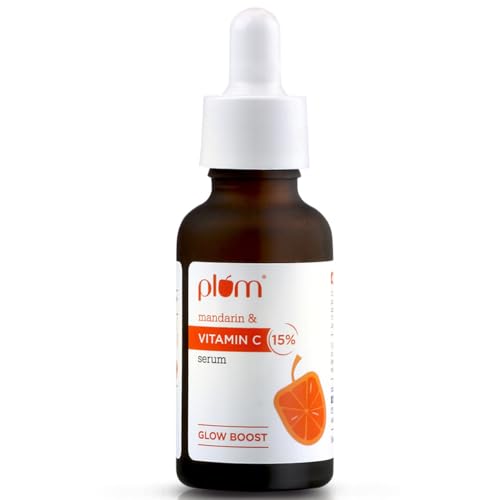
- Boosts Glow & Evens Skin Tone: This vitamin C serum for combination skin contains 15% ethyl ascorbic acid that helps boo…
- Targets Pigmentation and Dark Spots: If you’re looking for a serum for pigmentation and dark spots, this is a clinically…
- Hydrating and Soothing Formula for All Skin Types: Infused with betaine and rose extracts, this vitamin C serum for dry …
5. Dot & Key 10% Vitamin C + E + 5% Niacinamide — Best Combination Formula
Best for: Beginners who want vitamin C plus additional brightening support
Dot & Key’s formula combines 10% triple vitamin C, vitamin E and 5% niacinamide.
The brand describes it as beginner-friendly and suitable for all skin types, with current official pricing of ₹695 for 30 ml before promotions.
Why We Recommend It
If you don’t want to build a skincare routine with six different bottles, combination formulas can be convenient.
Here you’re getting:
Vitamin C + Vitamin E + Niacinamide
in one serum.
Best For
- Beginners
- Dullness
- Uneven-looking skin
- People who want a simplified routine
- Combination/oily skin users interested in niacinamide
Pros
- 10% vitamin C
- Vitamin E
- 5% niacinamide
- Beginner-friendly positioning
- All-skin-type positioning
- Convenient multi-active formula
Cons
- More ingredients aren’t automatically better
- If your skin already uses several actives, layering becomes more complicated
- Not the best pick if you specifically want pure L-ascorbic acid
Our Verdict
A convenient choice for someone who wants vitamin C and niacinamide in the same step.
Check Dot & Key Vitamin C + E Serum
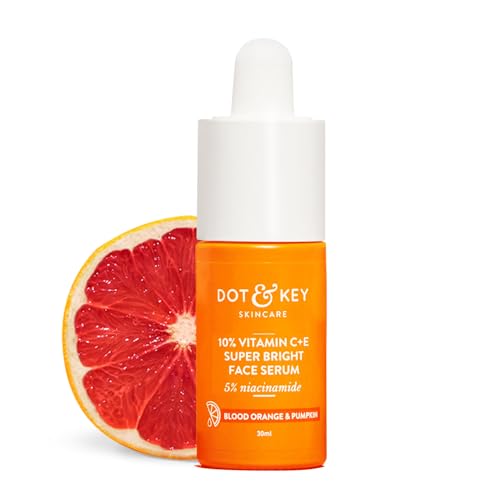
- Triple Vitamin C Brilliance: Our 10% Vitamin C serum contains Triple Vitamin C boost glow which effectively treats dulln…
- Sicilian Blood Orange Revitalization: Infused with the rejuvenating essence of Sicilian Blood Orange, our serum not only…
- Niacinamide Brilliance: With 5% Niacinamide, our serum helps fade dark spots and evens out skin tone. Being both AM/PM u…
6. The Derma Co 10% Vitamin C + 5% Niacinamide + Hyaluronic Acid — Best for Brightening + Hydration
Best for: Dull skin with pigmentation concerns and a preference for a multi-active serum
The Derma Co currently lists a 10% Vitamin C Face Serum with 5% Niacinamide and Hyaluronic Acid.
The product is positioned for dullness, dark spots and uneven pigmentation and is listed in a 30 ml format, with larger sizes also available.
Why We Recommend It
The interesting part here is the combination.
Vitamin C provides antioxidant and brightening support, while niacinamide is another well-established skincare ingredient used for pigmentation, barrier support and overall tone.
Hyaluronic acid adds a hydration-focused component.
Best For
- Dull skin
- Uneven-looking skin
- People who prefer combination formulas
- Normal/combination/oily skin routines
Pros
- 10% vitamin C
- 5% niacinamide
- Hyaluronic acid
- Multi-benefit formula
- Widely available in India
Cons
- Multi-active formulas aren’t necessarily ideal for very sensitive skin
- Not intended to replace sunscreen
- Not the best choice if you’re specifically seeking L-ascorbic acid
Our Verdict
A practical choice for people who want brightening and hydration in one serum.
Check The Derma Co Vitamin C Serum
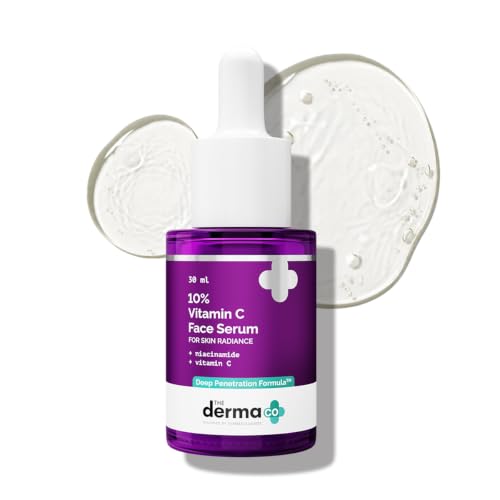
- Fades Dark Spots & Reduces Pigmentation The 10% Vitamin C Serum fades dark spots and reduces pigmentation by blocking me…
- Boosts Collagen for Youthful Skin Formulated with Vitamin C, Niacinamide and Ferulic Acid, this super serum stimulates c…
- Brightens Skin & Enhances Glow Safe and effective, the 10% Vitamin C Serum brightens your complexion by fading dark spot…
Vitamin C Serum Comparison
| Product | Vitamin C Type | Concentration | Best For | Key Supporting Ingredients |
|---|---|---|---|---|
| Foxtale Vitamin C Serum | L-Ascorbic Acid | 15% | Experienced users | 1% Vitamin E |
| Minimalist Vitamin C | Ethyl Ascorbic Acid | 10% | Beginners | Acetyl Glucosamine, PHA |
| Deconstruct Vitamin C | Liposomal Vitamin C | 10% | Value | 0.5% Ferulic Acid |
| Plum Vitamin C | Ethyl Ascorbic Acid | 15% | Stable derivative | Mandarin, Kakadu Plum |
| Dot & Key Vitamin C | Triple Vitamin C | 10% | Combination routine | Vitamin E, 5% Niacinamide |
| The Derma Co Vitamin C | Vitamin C | 10% | Brightening + hydration | 5% Niacinamide, HA |
Price note: Prices are indicative and can change with sales, sizes, coupons and marketplace offers. Always check the current selling price before purchasing.
Which Vitamin C Serum Should You Buy?
This is where the list becomes much more useful.
If you’re completely new to vitamin C:
Choose Minimalist 10%.
You don’t need to begin with the strongest formula you can find.
If you want L-ascorbic acid:
Choose Foxtale 15%.
It’s the clear choice in this list for shoppers specifically looking for L-ascorbic acid.
If you’re on a budget:
Choose Deconstruct 10%.
The vitamin C + ferulic acid combination makes it particularly interesting for the price.
If you prefer a vitamin C derivative:
Choose Plum 15%.
It gives you a relatively high percentage of a vitamin C derivative without choosing L-ascorbic acid.
If you want vitamin C + niacinamide:
Choose Dot & Key or The Derma Co.
Both make sense if you prefer a multi-active serum.
What Does Vitamin C Serum Actually Do?
Vitamin C is best known as an antioxidant.
Topical vitamin C has been studied for several skin concerns, including:
- Uneven pigmentation
- Photoaging
- Dull-looking skin
- Fine lines
- Collagen-related skin changes
- Oxidative stress
A systematic review published in the Journal of Cosmetic Dermatology found evidence that topical vitamin C can improve aspects of photoaging and pigmentation, although the authors noted that longer-term studies and more research into ideal concentrations are still needed.
Another dermatology review describes topical vitamin C as having evidence for supporting collagen synthesis, photoprotection and reducing hyperpigmentation.
But here’s the part skincare marketing sometimes conveniently skips:
Vitamin C isn’t an overnight skin filter.
Consistency matters.
What Is the Best Vitamin C Percentage?
There is no universal rule that says:
20% = better than 10%.
The formula, vitamin C form, stability, packaging and your skin’s tolerance all matter.
Around 5–10%
Often a sensible starting range for beginners, especially when using a derivative.
Around 10–15%
A useful middle ground for many regular users.
15–20%+
Can be appropriate for experienced users, particularly with L-ascorbic acid, but higher concentration can also mean more irritation for some people.
The goal isn’t to find the strongest serum.
The goal is to find the strongest formula your skin can comfortably use consistently.
L-Ascorbic Acid vs Vitamin C Derivatives
This is one of the most important things to understand before buying.
L-Ascorbic Acid
This is the direct form of vitamin C and one of the most studied topical forms.
Advantages
- Strong clinical evidence
- Directly active
- Excellent choice for experienced users
Disadvantages
- More difficult to formulate
- Can be irritating for some people
- More sensitive to formulation and storage conditions
Vitamin C Derivatives
Examples include:
- 3-O-Ethyl Ascorbic Acid
- Ascorbyl Glucoside
- Sodium Ascorbyl Phosphate
- Tetrahexyldecyl Ascorbate
These are modified forms designed to improve properties such as stability, tolerability or formulation flexibility.
The trade-off is that they shouldn’t be treated as chemically identical to L-ascorbic acid.
For example, Plum’s current serum uses ethyl ascorbic acid, while Minimalist’s uses ethyl ascorbic acid as well. Foxtale’s 15% serum, by contrast, uses L-ascorbic acid.
How to Use Vitamin C Serum Correctly
A simple morning routine looks like this:
Step 1: Cleanse
Wash your face with a gentle cleanser.
Step 2: Vitamin C
Apply a few drops to clean, dry skin.
Step 3: Moisturiser
Use a moisturiser appropriate for your skin type.
Step 4: Sunscreen ☀️
Finish with a broad-spectrum sunscreen.
This is important.
Vitamin C does not replace sunscreen.
Dot & Key explicitly states that its vitamin C serum does not replace sunscreen, despite providing antioxidant protection.
Should You Use Vitamin C Every Day?
Eventually, many people can use vitamin C regularly.
But if you’re new to the ingredient, don’t assume you need to apply it twice every day from day one.
A more conservative approach is:
2–3 times per week → every other day → daily if comfortable.
Foxtale specifically recommends starting its 15% L-ascorbic acid serum 2–3 times weekly for new users, while Plum says its product can be used once or twice daily but suggests sensitive or new users start more cautiously.
Your skin’s response matters more than following an arbitrary schedule.
What to Look for When Buying Vitamin C Serum
1. The Form of Vitamin C
This should be your first question.
Is it:
L-ascorbic acid?
Or:
A derivative?
Don’t compare two products solely by the percentage printed on the front.
2. Concentration
For most people, you don’t need to chase the highest percentage.
Start where your skin can tolerate it.
3. Supporting Ingredients
Look for useful combinations such as:
- Vitamin E
- Ferulic acid
- Niacinamide
- Hydrating ingredients
For example, Foxtale combines 15% L-ascorbic acid with 1% vitamin E, while Deconstruct combines vitamin C with 0.5% ferulic acid.
4. Packaging
Vitamin C is sensitive to environmental conditions, particularly oxygen and light.
Look for packaging that limits unnecessary exposure.
Foxtale says its serums are packaged in airtight bottles as part of its approach to reducing oxidation and improving product longevity.
5. Texture
If a serum feels sticky, heavy or uncomfortable, you’re less likely to use it consistently.
A technically impressive formula is useless if it spends six months sitting unopened in your cupboard.
6. Your Skin Type
Oily Skin
Look for:
- Lightweight textures
- Non-greasy formulas
- Niacinamide-containing options if appropriate
Dry Skin
Look for:
- Vitamin E
- Hydrating ingredients
- Comfortable emollient bases
Sensitive Skin
Consider:
- Lower-strength formulas
- Vitamin C derivatives
- Fragrance-free options
And always patch test.
Common Vitamin C Serum Mistakes
❌ Starting with the strongest formula
More isn’t automatically better.
❌ Using too many actives together
If your routine already contains retinoids, exfoliating acids and multiple brightening actives, adding another strong serum without considering the overall routine can increase irritation.
❌ Skipping sunscreen
Vitamin C isn’t a sunscreen.
Don’t treat it like one.
❌ Storing the serum in direct sunlight
Keep it according to the manufacturer’s storage instructions and away from unnecessary heat/light exposure.
❌ Continuing to use a visibly degraded product
If the appearance, smell or texture has changed significantly, check the manufacturer’s guidance and consider replacing it rather than assuming it is still performing normally.
❌ Expecting instant pigmentation removal
Pigmentation is stubborn.
Even clinical evidence suggests that noticeable changes may require long-term, consistent use.
Can Vitamin C Remove Dark Spots?
It can help reduce the appearance of pigmentation, but “remove” is too strong a word.
Topical vitamin C has evidence for improving pigmentation and uneven skin tone, but results vary by the cause, depth and persistence of pigmentation.
For stubborn melasma or persistent pigmentation, a dermatologist may be able to identify whether vitamin C is appropriate or whether another treatment is more suitable.
And please don’t replace your skincare routine with lemon juice.
Your skin does not need a kitchen chemistry experiment.
Who Should Buy a Vitamin C Serum?
Vitamin C may be worth considering if you want to target:
- Dull-looking skin
- Uneven-looking skin tone
- Mild pigmentation
- Post-acne marks
- Signs of photoaging
- Loss of radiance
It’s particularly useful as part of a broader morning antioxidant + sunscreen routine.
Who Should Skip or Pause Vitamin C?
Consider holding off if:
- Your skin barrier is currently irritated
- You’re experiencing significant redness or burning
- You recently introduced several other strong actives
- You have an active skin condition that needs medical assessment
If you have persistent irritation, severe pigmentation or a diagnosed skin condition, a dermatologist is a better source of personalised advice than adding another serum. Vitamin C Serum
Can You Use Vitamin C With Other Skincare Ingredients?
Usually, yes but your entire routine matters.
Vitamin C can be combined with ingredients such as:
- Hyaluronic acid
- Niacinamide
- Vitamin E
- Moisturisers
- Sunscreen
The bigger concern is piling multiple potentially irritating actives into the same routine.
If you’re using a strong retinoid, exfoliating acids, benzoyl peroxide or other treatment products, introduce changes one at a time rather than throwing everything at your face on Monday morning.
Your skin is not a group project. Vitamin C Serum
How We Selected These Vitamin C Serums
We evaluated current India-market products based on:
- Vitamin C form
- Vitamin C concentration
- Supporting ingredients
- Formula positioning
- Packaging considerations
- Skin-type suitability
- Beginner-friendliness
- Current manufacturer information
- Value for money
- Brand availability
- Current customer ratings where available
We prioritised official manufacturer information for specifications and formulations rather than copying marketplace descriptions.
We also considered the difference between L-ascorbic acid and vitamin C derivatives rather than ranking products purely by percentage.
We have not claimed personal hands-on testing of these products. Vitamin C Serum
Frequently Asked Questions
Which vitamin C serum is best for glowing skin?
For a strong L-ascorbic acid option, Foxtale 15% Vitamin C Serum is our top pick. If you’re new to vitamin C, Minimalist 10% Ethyl Ascorbic Acid is a more conservative starting point. For a vitamin C derivative with a higher stated concentration, Plum’s 15% formula is another option. Vitamin C Serum
Is 10% vitamin C enough for glowing skin?
Yes. You don’t need 20% vitamin C to see benefits. A well-formulated 10% serum can be a sensible starting point, especially for beginners. The vitamin C form, formulation stability, supporting ingredients, consistency and sunscreen use all matter more than chasing the biggest percentage on the label. Vitamin C Serum
Is 15% vitamin C better than 10%?
Not automatically. A 15% L-ascorbic acid serum and a 15% vitamin C derivative are not directly equivalent. Higher concentration may offer stronger activity but can also increase irritation. Choose based on your skin tolerance and the type of vitamin C used.
Can beginners use 15% vitamin C?
Yes, but beginners don’t necessarily need to start there. If you’re using a 15% L-ascorbic acid serum, introducing it gradually can be more sensible. Foxtale recommends new users start its 15% L-ascorbic acid serum 2–3 times a week. Vitamin C Serum
Can I use vitamin C serum every day?
Many people can eventually use vitamin C daily, particularly when their skin tolerates the product well. However, beginners can start several times a week and gradually increase frequency. If you experience persistent burning, redness or irritation, reduce use or stop and reassess the routine. Vitamin C Serum
Should vitamin C serum be used in the morning or at night?
Vitamin C is commonly used in the morning because of its antioxidant properties and its compatibility with sunscreen. It can also be used at night depending on the product and the rest of your routine. The most important thing is consistency and avoiding unnecessary irritation. Vitamin C Serum
Does vitamin C serum replace sunscreen?
No. Vitamin C may provide antioxidant support, but it does not replace a broad-spectrum sunscreen. Use sunscreen as the final step of your morning skincare routine. Dot & Key explicitly advises that its vitamin C serum should not be treated as a sunscreen replacement. Vitamin C Serum
How long does vitamin C take to show results?
There is no single timeline because results depend on the formula, concentration, skin concern and consistency. Some brands report visible changes within a few weeks, but clinical evidence suggests pigmentation and photoaging improvements can require longer-term use. Don’t judge a serum after three applications. Vitamin C Serum
Final Verdict
The best vitamin C serum isn’t necessarily the strongest one.
It’s the one whose formula matches your skin, tolerance and actual skincare goals.
🏆 Best Overall: Foxtale 15% Vitamin C Serum
Choose it if you specifically want 15% L-ascorbic acid + vitamin E and are comfortable introducing an active serum gradually.
🌿 Best for Beginners: Minimalist 10% Vitamin C
A good starting point if you prefer ethyl ascorbic acid and don’t want to begin with a stronger L-ascorbic acid formula.
💰 Best Value: Deconstruct 10% Vitamin C + Ferulic Acid
A compelling option for shoppers who want vitamin C + ferulic acid without spending heavily.
✨ Best Vitamin C Derivative: Plum 15% Vitamin C & Mandarin
A good choice if you prefer a stable vitamin C derivative and want a higher stated concentration.
🧴 Best Combination Formula: Dot & Key 10% Vitamin C + E + 5% Niacinamide
Great if you want multiple brightening-support ingredients in one serum.
🎯 Best for Brightening + Hydration: The Derma Co 10% Vitamin C
A practical choice if you want vitamin C alongside niacinamide and hyaluronic acid.
The Bottom Line 🍊
If you’re starting vitamin C for the first time, don’t fall into the trap of buying the strongest serum you can find.
Start sensibly.
Use it consistently.
Keep your skin barrier happy.
And wear sunscreen every morning.
Because spending ₹700 on a fancy serum and then skipping sunscreen is basically asking your skincare routine to fight with one hand tied behind its back.
For most people, 10–15% is a perfectly reasonable place to start, and the choice between L-ascorbic acid and a derivative is just as important as the percentage printed on the bottle.
The glow is a process, not a filter. ✨