


🥣🔥A good mixer grinder is basically one of those kitchen appliances you don’t fully appreciate until you have a bad one.
One day it’s grinding coconut.
Then it’s making chutney.
Then comes the masala.
Then the dosa or idli batter.
Then someone suddenly wants a smoothie.
And somehow this poor little machine is expected to do everything. 😂
That’s why choosing the best mixer grinder for your home isn’t simply about buying the model with the highest wattage.
You need to consider the motor, jars, blades, grinding performance, capacity, noise, cleaning, warranty and the type of food you regularly prepare.
For Indian kitchens in particular, a mixer grinder may need to handle everything from soft fruits and chutneys to harder spices, coconut and wet masalas.
Current 2026 comparisons include everything from budget 500W models to 750W mainstream options, 900W–1000W heavy-duty machines and newer BLDC models.
So let’s look at the best options for different types of users.
Also Read | Best Air Fryers for Home in India
🏆 Best Mixer Grinders at a Glance
| Mixer Grinder | Power | Best For |
|---|---|---|
| Sujata Dynamix | 900W | Heavy everyday grinding |
| Bosch TrueMixx Pro | 1000W | Powerful grinding & larger households |
| Philips HL7756/00 | 750W | Everyday value |
| Preethi Zodiac MG 218 | 750W | Versatile family use |
| Atomberg Zenova | BLDC / 550W | Energy-conscious premium users |
| Bajaj Rex Dlx | 750W | Budget-friendly everyday use |
| Prestige Endura | 1000W | Heavy-duty use |
These recommendations are based on current specifications, market comparisons and different usage scenarios rather than assuming that the highest wattage is automatically the best.
🥇 1. Sujata Dynamix 900W — Best for Heavy Everyday Grinding
If your kitchen regularly deals with wet masalas, chutneys, coconut, spices and batter, Sujata Dynamix is one of the models worth considering.
Current listings put the model around the ₹7,000 range, although prices can vary by seller and offer.
Why Consider It?
The 900W motor puts it between conventional 750W household models and heavier 1000W machines.
It can make sense for users who want more grinding headroom without immediately moving to a 1000W model.
Best For:
- 🌶️ Masalas
- 🥥 Coconut grinding
- 🥣 Chutneys
- 🍚 Batter
- 🧄 Garlic & ginger
- 🫘 Harder ingredients
Best For You If:
You cook frequently and don’t want your mixer grinder to struggle every time you prepare something slightly heavy.
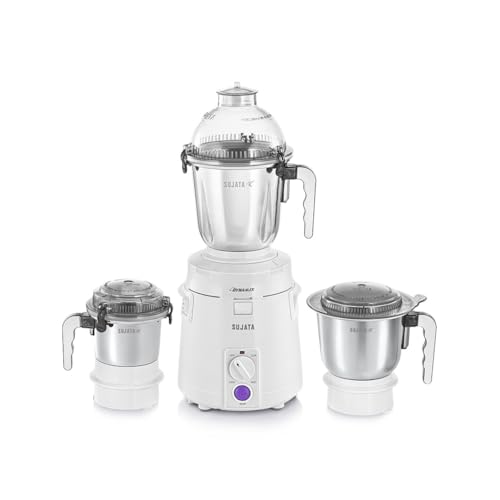
- India’s Trusted Mixer Grinder: The Sujata Dynamix, is a kitchen essential known for efficiently handling heavy-duty task…
🥈 2. Bosch TrueMixx Pro 1000W — Best for Powerful Grinding
If you’re specifically looking for a 1000W mixer grinder, Bosch TrueMixx Pro is a strong option to consider.
Current listings show it around the ₹6,500–₹7,000 range depending on the seller and offer.
The higher motor rating can be useful when you’re regularly working with tougher ingredients or larger quantities.
Best For:
- 🌶️ Dry spices
- 🥥 Coconut
- 🫘 Hard ingredients
- 🍛 Wet masalas
- 🥣 Larger batches
Why Choose It?
A 1000W model can make more sense for households that regularly perform demanding grinding tasks rather than just occasional chutney or smoothie preparation.
But remember:
1000W doesn’t automatically mean better than every 750W mixer.
Motor design, jar design, blades and sustained performance matter too.
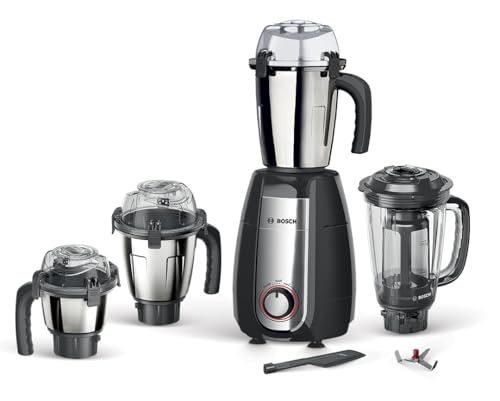
- Uniquely designed blunt PoundingBlade with thick edges which replicates pounding effect on dry ingredients, thus giving …
- Completely hands free operation with unique lid-locks and strong suction feet for added stability
- Stainless steel blades for high performance wet, dry and chutney grinding, Cable management for easy handling and storag…
🥉 3. Philips HL7756/00 750W — Best Everyday Value
Philips has several mixer grinder models in the mainstream 750W segment.
The HL7756/00 is frequently listed among affordable 750W choices in current Indian comparisons, with prices around the ₹3,000–₹4,000 range depending on the listing.
A 750W mixer grinder can be a practical sweet spot for many households.
Suitable For:
- 🥣 Chutneys
- 🌶️ Masalas
- 🥤 Smoothies
- 🧄 Ginger-garlic paste
- 🥥 Coconut
- 🍲 Everyday kitchen preparation
Best For:
Small to medium households looking for a straightforward mixer grinder without moving into premium pricing.
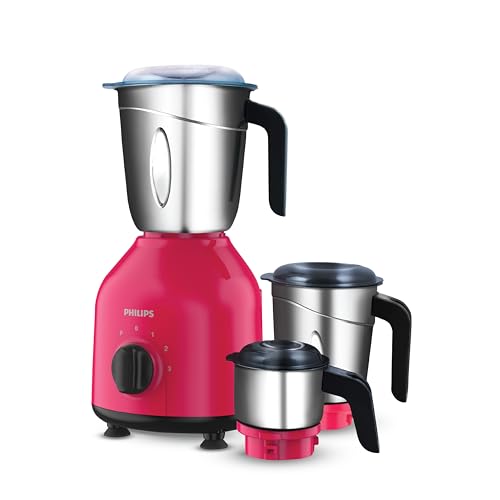
- Motor Warranty: 5 Years; Product Warranty: 2 Years
- No of Jars: 3; Jar Size: Wet Jar (1.5 Litres), Multipurpose Jar (1 Litre), Chutney Jar (0.3 Litres); Jar Material: Stain…
- Wattage: 750 W; Voltage: 230 V
⭐ 4. Preethi Zodiac MG 218 750W — Best for Versatility
Preethi is another major name in the Indian mixer-grinder market.
The Preethi Zodiac MG 218 is a 750W model aimed at households looking for more versatility.
Current listings show it around ₹9,000, although pricing varies significantly with sellers and offers.
Why Consider It?
It’s designed as more than just a basic grinding machine.
Depending on the configuration, the Zodiac range can provide additional food-preparation functionality alongside regular mixing and grinding.
Best For:
- 👨👩👧👦 Families
- 🥣 Regular cooking
- 🍹 Blending
- 🌶️ Grinding
- 🥕 Food preparation
Worth Considering If:
You want a more feature-rich mixer grinder and are comfortable spending more than you would on a basic 750W model.
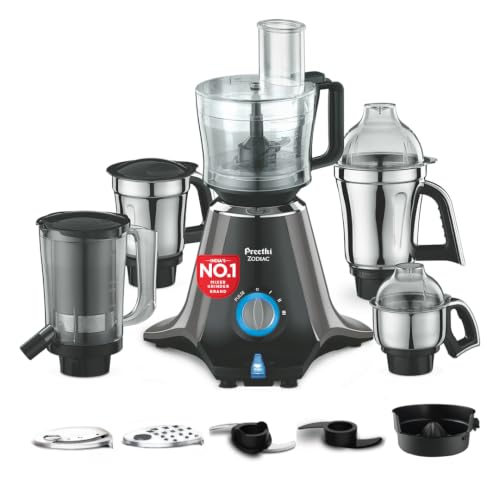
- India’s No 1 Mixer-Grinder Brand(as per Francis Kanoi) ; Performance Features: This Preethi mixer grinder has a powerful…
- 3-In-1 Insta fresh Fruit Juicer Jar – Centrifugal juicing for instant juice, Super Extraction for coconut and tamarind e…
- Motor Warranty: 5 Years, Product Warranty: 2 Years ; Safety Indictor: In case of any overload the colour of indicator li…
⚡ 5. Atomberg Zenova — Best for Energy-Conscious Premium Buyers
Atomberg takes a different approach with its BLDC motor technology.
The Zenova is rated at 550W, but current comparisons position it as a premium alternative that focuses on motor efficiency and lower power consumption rather than simply competing on conventional wattage.
This is important because:
550W doesn’t necessarily mean weak performance.
Motor technology and torque characteristics matter.
Best For:
- 💡 Energy-conscious users
- 🤫 People looking for a different motor approach
- 🏠 Premium home kitchens
- 🔄 Frequent everyday use
The Catch?
It’s more expensive than many conventional 750W models.
So you’re paying for the motor technology and overall design, not simply raw wattage.
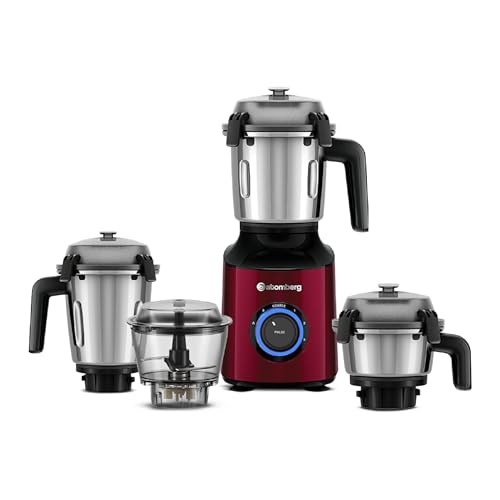
- Powered by an Intelligent BLDC Motor Atomberg Zenova Mixer Grinder grinds every ingredient that a 1000W Mixer can like t…
- Unique Coarse Mode for sil-batta/ammikallu like texture – perfect for coarse chutneys, dips, and masalas with authentic …
- Includes 4 high quality, multifunctional jars – 1.5L liquidizing, 1L multipurpose, 0.5L chutney jar & spice grinding jar…
💰 6. Bajaj Rex Dlx 750W — Budget-Friendly Choice
If your priority is keeping the budget under control, Bajaj has several affordable mixer grinder options.
The Rex Dlx 750W series is a straightforward choice for regular household grinding.
Current listings show models in this range around ₹3,500, though prices vary.
Best For:
- 👤 Singles
- 👩❤️👨 Couples
- 🏠 Small households
- 🌶️ Everyday masalas
- 🥣 Chutneys
- 🥤 Basic blending
Why Consider It?
You don’t necessarily need a premium mixer grinder if your requirements are basic.
Sometimes:
Simple + affordable + functional is exactly what you need.
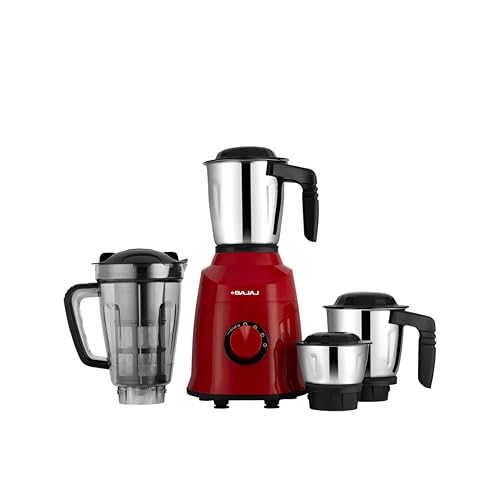
- ✅ Military Grade Jars DuraCut Blades with Lifetime warranty
- ✅ Powerful 750W Titan Motor 1.5L Juicer Jar
- ✅ 2-in-1 function blade in dry jar
🔥 7. Prestige Endura 1000W — Heavy-Duty Alternative
For people looking for a powerful 1000W option, Prestige Endura is another model worth considering.
Current product listings show it around ₹6,500.
Suitable For:
- 🌶️ Hard spices
- 🥥 Coconut
- 🫘 Tough ingredients
- 🍛 Wet grinding
- 👨👩👧👦 Larger households
If you regularly put your mixer grinder through demanding jobs, a 1000W model can provide more headroom than entry-level machines.
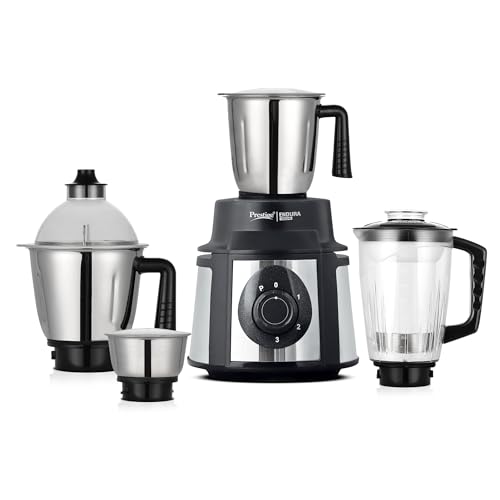
- 𝗛𝗘𝗔𝗩𝗬-𝗗𝗨𝗧𝗬 𝟭𝟬𝟬𝟬𝗪 𝗕𝗔𝗟𝗟 𝗕𝗘𝗔𝗥𝗜𝗡𝗚 𝗠𝗢𝗧𝗢𝗥: Built with a robust 1000-watt copper motor enhanced with ball bearing technology fo…
- 𝟰 𝗠𝗨𝗟𝗧𝗜-𝗣𝗨𝗥𝗣𝗢𝗦𝗘 𝗝𝗔𝗥𝗦: Comes with 3 Stainless Steel jars (1.5L wet, 1L dry, 450ml chutney), and a 1.5L transparent juicer…
- 𝗦𝗨𝗣𝗘𝗥-𝗘𝗙𝗙𝗜𝗖𝗜𝗘𝗡𝗧 𝗦𝗧𝗔𝗜𝗡𝗟𝗘𝗦𝗦 𝗦𝗧𝗘𝗘𝗟 𝗕𝗟𝗔𝗗𝗘𝗦: Features 4 precision-engineered SS blades for fine grinding, smooth blending, an…
⚡ 750W vs 900W vs 1000W: Which One Should You Buy?
This is probably the biggest question people ask.
And the answer isn’t simply:
1000W = Best
🟢 500W–600W
Good for:
- Basic chutneys
- Smoothies
- Shakes
- Light grinding
- Small households
Best when your usage is relatively light.
🟡 750W
This is a very practical category for many Indian households.
Good for:
- Chutneys
- Masalas
- Wet grinding
- Coconut
- Batter
- Everyday cooking
Several current 2026 guides describe 750W as the mainstream or “sweet spot” for many households.
🟠 900W
Useful when:
- You grind frequently
- You prepare heavier mixtures
- You want more motor headroom
- You regularly make batter or tough pastes
Sujata’s 900W Dynamix is a good example of this category.
🔴 1000W+
Makes more sense when:
- You cook in larger quantities
- You frequently grind hard ingredients
- You want a heavy-duty machine
- Your mixer gets significant daily use
But don’t buy 1000W simply because the number looks impressive.
🧠 Wattage Isn’t Everything
This deserves repeating.
A mixer grinder’s performance depends on more than the wattage printed on the box.
Also consider:
Motor Design
The motor determines how the appliance handles load.
Torque
High torque can be important for tougher grinding tasks.
Continuous Use Rating
How long the motor can operate before overheating or needing a break can matter significantly for Indian cooking.
Blade Design
Different blade shapes are designed for different grinding and mixing tasks.
Jar Design
Jar shape affects how ingredients circulate while grinding.
This is why a well-designed 750W mixer can sometimes be a better purchase than a poorly designed 1000W model. Current consumer guides also caution against using wattage as the only performance metric.
🫙 How Many Jars Do You Actually Need?
Most mixer grinders come with multiple jars.
A typical setup may include:
🥤 Large Liquidising Jar
Useful for:
- Smoothies
- Juices
- Lassi
- Milkshakes
- Larger wet mixtures
🌶️ Medium Multi-Purpose Jar
Useful for:
- Masala
- Spices
- Purees
- Wet grinding
🧄 Small Chutney Jar
Useful for:
- Green chutney
- Garlic
- Ginger
- Small quantities of spices
Some models come with additional jars or specialised accessories.
But again:
More jars don’t automatically mean better value.
Choose the jar configuration that matches your cooking.
🔪 Blade Quality Matters
A mixer grinder is only as useful as its grinding system.
Look for durable stainless-steel blades designed for the tasks you regularly perform.
Different blades may be optimised for:
- Wet grinding
- Dry grinding
- Blending
- Chutneys
Don’t assume that a bigger blade automatically performs better.
The interaction between:
Blade + jar + motor + ingredient
determines the final result.
🥥 What Can a Good Mixer Grinder Handle?
A good household mixer grinder should be useful for a wide range of everyday tasks.
Wet Grinding
🥥 Coconut
🌶️ Masala
🧄 Ginger-garlic paste
🥣 Chutney
🍛 Curry paste
Dry Grinding
🌶️ Spices
☕ Coffee
🥜 Nuts
🌾 Certain grains or dry ingredients
Blending
🥤 Smoothies
🥛 Milkshakes
🍹 Drinks
🍅 Purees
Always check the manufacturer’s instructions before grinding ingredients that may be unsuitable for a particular model.
🧽 Don’t Ignore Cleaning
This is one of the most important everyday considerations.
A mixer grinder can become annoying if:
- Food gets stuck around the blade
- The jar has difficult corners
- The lid traps residue
- The base gets messy
- Components are difficult to wash
Before buying, look at:
✅ Removable parts
✅ Jar design
✅ Lid design
✅ Blade accessibility
✅ Ease of washing
Because the appliance you can clean quickly is the one you’re more likely to use every day.
🔊 What About Noise?
Let’s be honest.
Mixer grinders aren’t silent.
The motor, blades and ingredients can create considerable noise, especially during hard grinding.
Some newer motor technologies focus on reducing noise, while conventional high-power models can be noticeably louder.
If noise matters to you, don’t judge it from the specification sheet alone.
Look for real-world reviews.
🛡️ Safety Features to Check
A mixer grinder should also have appropriate safety mechanisms.
Look for features such as:
- Overload protection
- Secure jar locking
- Stable base
- Proper electrical protection
- Durable power cord
- Appropriate ventilation
Overload protection is particularly useful because hard ingredients can put significant stress on the motor.
Never force the machine to grind something beyond the manufacturer’s recommendations.
🏠 Which Mixer Grinder Is Best for Your Household?
👤 Bachelor
A 500W–750W model can be sufficient for basic cooking.
Focus on:
Price + compactness + easy cleaning
👩❤️👨 Couple
A 600W–750W mixer grinder is usually a practical starting point for everyday use.
👨👩👧 Small Family
A 750W model offers a good balance for many households.
👨👩👧👦 Large Family
Consider:
750W–1000W
depending on your cooking quantity and how frequently you grind.
🍛 Heavy Indian Cooking
If your kitchen regularly handles:
- Coconut
- Hard spices
- Large quantities
- Batter
- Frequent wet grinding
consider a 900W–1000W class model or a well-designed high-torque alternative.
💰 What Budget Should You Keep?
Current Indian listings show a broad range:
💸 Around ₹2,500–₹4,000
Good for:
- Basic household use
- Small families
- Simple grinding
- Budget buyers
💰 Around ₹4,000–₹7,000
A strong range for:
- Better 750W models
- 900W options
- Some 1000W models
- Better features
💎 ₹7,000+
Consider this range if you specifically want:
- Premium models
- More versatility
- Advanced motor technology
- Higher power
- Better accessories
Current market listings show models ranging from roughly ₹2,000 to ₹10,000+ depending on wattage, brand and features, so there is no need to assume that the most expensive model is automatically the best.
🏆 Our Quick Recommendations
🥇 Best for Heavy Everyday Grinding
Sujata Dynamix 900W
🥈 Best 1000W Option
Bosch TrueMixx Pro 1000W
💰 Best Everyday Value
Philips 750W
👨👩👧👦 Best for Versatile Family Use
Preethi Zodiac MG 218
⚡ Best Premium Energy-Conscious Option
Atomberg Zenova
💸 Best Budget-Friendly Option
Bajaj Rex Dlx 750W
🔥 Best Heavy-Duty Alternative
Prestige Endura 1000W
🛒 What to Check Before Buying
Before you click Buy Now, check these:
☐ Motor wattage
☐ Motor type
☐ Torque / grinding capability
☐ Continuous-use rating where available
☐ Number of jars
☐ Jar capacity
☐ Blade material
☐ Overload protection
☐ Noise level
☐ Ease of cleaning
☐ Warranty
☐ Service availability
☐ Replacement jars and parts
☐ Counter space
☐ Actual price
Best Mixer Grinders: Performance, Motor Power & Everyday Use 🥣⚡
Choosing a mixer grinder is easy until you actually start comparing the specifications.
One model says 750W, another says 900W, another proudly says 1000W and suddenly every product page starts looking like a power-station comparison. 😄
But here’s the important part: higher wattage doesn’t automatically mean a better mixer grinder.
For an Indian kitchen, what matters is how well the mixer handles dry spices, chutneys, coconut, ginger-garlic paste, wet masala, nuts, soaked dal, dosa batter and everyday blending without excessive heating or struggling.
In this part of our Best Mixer Grinders for Home in India guide, we’ll go deeper into the things that actually affect everyday performance.
⚡ 750W vs 1000W Mixer Grinder: What’s the Real Difference?
This is probably the biggest question buyers have.
A 750W mixer grinder is already capable of handling most everyday Indian cooking tasks. A 1000W model becomes more useful when you regularly work with hard ingredients, larger quantities or longer grinding sessions.
| Feature | 750W Mixer Grinder | 1000W Mixer Grinder |
|---|---|---|
| Everyday chutneys | ⭐⭐⭐⭐⭐ | ⭐⭐⭐⭐⭐ |
| Ginger-garlic paste | ⭐⭐⭐⭐⭐ | ⭐⭐⭐⭐⭐ |
| Regular masala | ⭐⭐⭐⭐⭐ | ⭐⭐⭐⭐⭐ |
| Hard spices | ⭐⭐⭐⭐ | ⭐⭐⭐⭐⭐ |
| Coconut | ⭐⭐⭐⭐ | ⭐⭐⭐⭐⭐ |
| Nuts & harder ingredients | ⭐⭐⭐⭐ | ⭐⭐⭐⭐⭐ |
| Large wet-grinding batches | ⭐⭐⭐⭐ | ⭐⭐⭐⭐⭐ |
| Frequent dosa/idli batter | ⭐⭐⭐⭐ | ⭐⭐⭐⭐⭐ |
| Electricity consumption | Lower | Higher |
| Typical noise | More manageable | Can be louder |
| Best suited for | Most homes | Heavy-duty users |
So, should you simply buy 1000W?
Not necessarily.
If your daily cooking consists of chutney, tomato puree, masala, shakes and normal grinding, spending extra for a 1000W motor may not give you a dramatic improvement.
But if you’re regularly grinding large batches of batter, tough spices, nuts, coconut or other hard ingredients, the extra power can make the process easier and faster.
The latest comparisons also point out that motor design, blade quality, jar design, RPM, overload protection and build quality matter alongside wattage.
🔥 What Does Motor Power Actually Change?
Think of wattage as the motor’s power capacity but don’t treat it as the entire performance story.
A good mixer grinder needs to maintain performance when the ingredients become difficult to process.
For example:
🟢 Soft ingredients
Tomatoes, cooked vegetables, fruits and soaked ingredients are relatively easy.
A good 500–750W mixer grinder can usually handle these without much trouble.
🟡 Medium grinding
Coconut, peanuts, coriander, cumin, ginger-garlic, dry masalas and chutneys put more load on the motor.
This is where 750W becomes a very practical sweet spot for many Indian households.
🔴 Heavy grinding
Raw turmeric, hard spices, large quantities of soaked dal or frequent batter preparation can place significantly more load on the motor.
For these jobs, a 900–1000W mixer grinder can make more sense.
The key isn’t simply “1000W = better.” It’s:
Choose enough motor power for the hardest job you regularly perform.
🥥 Dry Grinding vs Wet Grinding
A mixer grinder doesn’t perform exactly the same way across different tasks.
🌶️ Dry Grinding
Dry grinding includes:
- Cumin
- Coriander seeds
- Black pepper
- Garam masala
- Dry chillies
- Roasted spices
- Nuts
- Seeds
For dry grinding, the jar shape and blade design become particularly important.
A narrow jar can help keep ingredients closer to the blades instead of allowing them to constantly fly up the sides.
For occasional dry masala grinding, 750W is generally sufficient.
If you’re grinding hard spices frequently or preparing large quantities, stepping up to 900W–1000W can be worthwhile.
🥣 Wet Grinding
Wet grinding is a completely different workload.
Typical examples include:
- Dosa batter
- Idli batter
- Coconut chutney
- Wet masala
- Dal paste
- Curry paste
Here, you need to consider motor strength + jar capacity + blade design + continuous operating limits.
A 750W model can handle moderate quantities, but if you’re regularly preparing larger batches, a more powerful motor can provide additional headroom. Current 2026 buying guides generally place 750–1000W as the practical range for most Indian kitchens, with 1000W+ aimed more toward heavy-duty use.
🧠 Don’t Ignore Continuous Running Time
This is one specification buyers often overlook.
You might see:
750W motor ✔️
and immediately think:
“Bas, ye toh powerful hai.”
But how long can it actually operate continuously?
That’s another question.
Some mixer grinders are designed for short grinding cycles with breaks between operations, while heavy-duty machines are better suited to longer workloads.
If you regularly prepare batter or perform extended grinding, check the manufacturer’s recommended operating time and rest intervals instead of assuming that a higher wattage automatically means unlimited running.
Some current buying guides specifically recommend checking the stated continuous-running time because it can vary considerably between models.
💡 Simple rule
Don’t run the mixer continuously just because the motor is powerful.
Follow the manufacturer’s instructions.
Your mixer grinder doesn’t need a gym membership. 😄
🌡️ Heat Build-Up: Why It Matters
Heat is one of the biggest enemies of any motor-driven kitchen appliance.
During heavy grinding, both the motor and the ingredients can become warm.
This can affect:
- Motor stress
- Ingredient texture
- Aroma of spices
- Long-term durability
- Overall grinding consistency
A 1000W motor can handle heavier workloads better, but that doesn’t mean it won’t generate heat. In fact, higher-powered models can also produce more heat and noise depending on their motor design and workload.
For better results:
- Don’t overload the jar.
- Cut large ingredients into smaller pieces.
- Add enough liquid for wet grinding.
- Use pulse mode when appropriate.
- Give the motor rest periods.
- Follow the manufacturer’s recommended operating cycle.
🔪 Blade Design Matters More Than You Think
Here’s another common mistake:
People compare only wattage.
But imagine two machines:
Machine A: 1000W motor + average blade + poor jar geometry
Machine B: 750W motor + well-designed jar + efficient blade system
Machine B can still deliver excellent everyday grinding.
That’s why the blade needs to work together with the jar and motor.
Look for:
- Food-grade stainless-steel blades
- Properly secured blade assembly
- Suitable blade geometry for the intended jar
- Good circulation of ingredients
- Durable blade construction
Different jars can also use different blade configurations depending on whether they’re intended for liquidising, wet grinding or dry grinding.
🫙 Jar Design: Bigger Isn’t Always Better
A giant jar might look impressive, but bigger capacity isn’t automatically better for every task.
Large liquidising jar
Useful for:
- Shakes
- Smoothies
- Soups
- Purees
- Larger liquid quantities
Medium multipurpose jar
Useful for:
- Wet masala
- Chutney
- Cooking pastes
- Moderate grinding
Small chutney/dry jar
Useful for:
- Dry spices
- Small chutney portions
- Coffee/spice grinding
- Small quantities of nuts
This is why a 3-jar setup is often more practical than buying a mixer with one enormous jar.
You’re using the right tool for the right quantity.
🔊 What About Mixer Grinder Noise?
Let’s be honest.
Almost every mixer grinder makes noise.
The question is how much noise you can tolerate.
Higher-powered motors can be louder, although actual noise depends on motor design, construction and the specific appliance.
If you live in a small apartment or usually grind early in the morning, noise can become surprisingly important.
Before buying, check:
- Motor design
- Build quality
- Reviews mentioning noise
- Whether the machine vibrates excessively
- Stability of the base
A mixer that walks across your kitchen counter while grinding is not exactly the kind of “smart kitchen appliance” anyone asked for. 😂
🧄 Which Mixer Grinder Is Best for Which Kitchen?
Instead of asking “What’s the best mixer grinder?”, ask:
“What’s the best mixer grinder for MY cooking?”
👤 For 1–2 people
A good 500–750W model can be sufficient if your grinding needs are basic.
Ideal for:
- Chutneys
- Smoothies
- Masalas
- Ginger-garlic paste
- Small quantities
👨👩👧 For a typical family
For a family of around 3–4 people, 750W is the sweet spot for most everyday cooking.
You get enough power for:
- Daily chutneys
- Masalas
- Coconut
- Purees
- Wet grinding
- Regular blending
- Moderate batter preparation
This is also why 750W models remain such a popular category in India.
👨👩👧👦 For large families
If you’re cooking large quantities every day, consider:
900W–1000W
Especially if you regularly prepare:
- Large batches of batter
- Heavy masalas
- Tough ingredients
- Multiple grinding cycles
🍛 For serious Indian cooking
If your kitchen regularly involves heavy grinding, don’t compromise simply because a lower-wattage model is cheaper.
A 900W or 1000W mixer grinder can be a sensible investment.
Models such as the Sujata Dynamix 900W and Bosch TrueMixx Pro 1000W are commonly positioned for heavier grinding workloads.
⚙️ What About BLDC Mixer Grinders?
BLDC technology is becoming another interesting category in mixer grinders.
Instead of focusing only on traditional wattage numbers, BLDC motors can offer a different approach to motor efficiency, torque delivery and power consumption.
For example, the Atomberg Zenova has attracted attention because of its BLDC motor technology.
But don’t buy a BLDC mixer simply because the term sounds futuristic. 😄
Compare:
- Actual grinding performance
- Jar design
- Warranty
- Service network
- Replacement parts
- Noise
- Price
- Your cooking requirements
Technology is useful only when it improves the way you actually use the appliance.
🛡️ Safety Features You Shouldn’t Skip
A good mixer grinder should have basic safety mechanisms.
Look for:
Overload protection
Helps protect the motor when the appliance is overloaded.
Secure jar locking
The jar should sit firmly on the motor base.
Anti-slip feet
Helps keep the machine stable during operation.
Proper lid locking
Especially important during wet grinding.
Good-quality coupler
The coupler transfers motor power to the jar. Its construction matters particularly for people who regularly perform heavy grinding.
And, as always, follow the manufacturer’s instructions for maximum fill level, operating time and suitable ingredients.
💰 Is a 1000W Mixer Grinder Worth Paying More For?
It depends.
Choose 750W if:
✅ You cook everyday Indian meals
✅ You make regular chutneys and masalas
✅ You prepare shakes and purees
✅ You grind moderate quantities
✅ You want a balanced price/performance option
Choose 900–1000W if:
🔥 You grind tough ingredients frequently
🔥 You prepare large batches
🔥 You make batter regularly
🔥 You cook for a larger family
🔥 You want more headroom for heavy workloads
Don’t upgrade just for the number.
If your actual requirement is light-to-medium grinding, a good 750W mixer grinder can be a smarter purchase than an unnecessarily expensive 1000W model.
🧾 Quick Performance Checklist
Before buying, ask yourself these 8 questions:
- What is the hardest ingredient I regularly grind?
- How many people am I cooking for?
- Do I make idli/dosa batter?
- How frequently do I use the mixer?
- Do I need a juicer or food-processing attachment?
- How many jars do I actually need?
- Can I easily get service and spare parts locally?
- Does the manufacturer provide clear overload and operating instructions?
Answer these honestly and you’ll narrow down your choices much faster than simply sorting products by wattage.
Best Mixer Grinders: Budget, Maintenance & Final Buying Guide 🥣🛒
By now, you probably know that choosing a mixer grinder isn’t simply about picking the model with the biggest wattage number.
A 750W mixer grinder can be perfectly adequate for one household, while someone else may genuinely benefit from a 900W or 1000W model.
The real question is:
How much should you spend, what features actually matter, and how do you avoid buying a mixer grinder you’ll regret later? 🤔
This is the final part of our Best Mixer Grinders for Home in India guide on BestBuy93.IN.
Let’s make that decision much easier.
💰 How Much Should You Spend on a Mixer Grinder?
Mixer grinders are available across a huge price range, but spending more doesn’t automatically mean getting a better appliance for your kitchen.
Here’s a practical way to look at the market:
| Budget | What You Can Expect | Best For |
|---|---|---|
| ₹2,000–₹3,500 | Basic 500–750W models | Students, singles, light use |
| ₹3,500–₹5,500 | Better 750W options | Everyday household use |
| ₹5,500–₹8,000 | 750–1000W, better build/features | Families & frequent users |
| ₹8,000–₹12,000+ | Premium models, advanced features | Heavy users & feature seekers |
Prices can vary significantly depending on the brand, retailer, offers and model.
💡 Our advice
For most families, the ₹3,500–₹8,000 range is where you can find a strong balance of:
- Motor power
- Jar quality
- Build
- Features
- Brand support
- Long-term usability
You don’t necessarily need a ₹10,000+ mixer grinder just to make chutney and masala.
And you definitely don’t need a ₹2,000 model if you’re planning to run a mini restaurant from your kitchen. 😂
🏠 Choose Your Mixer Grinder Based on Your Kitchen
Instead of choosing according to your budget alone, start with your workload.
👤 If You Live Alone
You probably don’t need a massive 1000W machine with four jars and every attachment known to humanity.
A good 500W–750W mixer grinder should be enough for:
- Chutneys
- Smoothies
- Shakes
- Small masala batches
- Ginger-garlic paste
- Basic blending
👨👩👧 For a Small Family
For around 3–4 people, 750W is usually the sweet spot.
It offers enough power for most Indian cooking while keeping the purchase reasonably practical.
👨👩👧👦 For a Large Family
If you’re regularly preparing larger quantities, consider:
900W–1000W
This becomes especially useful for frequent:
- Wet grinding
- Batter preparation
- Coconut grinding
- Hard spice grinding
- Large masala batches
👩🍳 For Heavy Kitchen Use
If the mixer grinder is practically your kitchen’s second employee, don’t cheap out on it. 😄
Look for:
- 900W–1000W motor
- Strong coupling system
- Good-quality jars
- Durable blades
- Overload protection
- Reliable service network
- Easily available spare parts
⚠️ 7 Common Mixer Grinder Buying Mistakes
This is where many buyers go wrong.
1. Buying Only Based on Wattage
1000W doesn’t automatically mean better.
Motor design, torque, blade construction, jar geometry and build quality all influence actual performance.
A well-designed 750W mixer can be a better purchase for everyday use than a mediocre 1000W model.
2. Buying Too Many Attachments
Some models come with:
- Multiple jars
- Juicer
- Food processor
- Chopper
- Slicer
- Kneader
- Special blades
- Additional accessories
Sounds amazing.
Until you realise you use two jars and one blade. 😂
Before paying extra, ask:
Will I actually use these attachments?
If not, spend the money on better motor quality and build instead.
3. Ignoring Jar Quality
The motor gets all the attention, but jars take a lot of abuse.
Check:
- Stainless-steel quality
- Lid fit
- Handle strength
- Jar thickness
- Blade assembly
- Coupler construction
- Ease of cleaning
A powerful motor paired with flimsy jars isn’t a great combination.
4. Ignoring Service Availability
This is especially important in India.
Before buying an unfamiliar brand, check whether you can easily get:
- Replacement jars
- Couplers
- Blades
- Lids
- Service support
A slightly more expensive mixer grinder from a brand with accessible service can be a better long-term purchase than a cheaper model with difficult-to-find parts.
5. Overloading the Jar
This is one of the easiest ways to put unnecessary stress on the motor.
Don’t fill the jar simply because there’s physical space available.
Different ingredients behave differently during grinding.
Hard ingredients, thick mixtures and large quantities can place much more load on the motor.
Follow the manufacturer’s recommended capacity.
6. Running It Continuously
Mixer grinders aren’t designed to run endlessly.
If you’re grinding a large quantity:
Grind → stop → allow the motor to rest → continue.
The exact operating and rest time varies by model, so follow the manufacturer’s instructions.
This is particularly important during heavy grinding.
7. Buying a Model That’s Too Powerful for Your Needs
This is the opposite mistake.
If you mostly make:
- Shakes
- Chutney
- Purees
- Small masala batches
you don’t necessarily need a premium 1000W machine.
Sometimes 750W + good build quality is simply the smarter choice.
🧼 How to Maintain Your Mixer Grinder
Want your mixer grinder to stay useful for years?
Treat it like an appliance, not a kitchen punching bag. 😄
🧽 1. Clean the Jar Soon After Use
Don’t let masala or batter dry inside the jar.
It makes cleaning harder and can leave behind odours.
💧 2. Don’t Immerse the Motor Base
The motor housing should never be treated like a normal kitchen utensil.
Wipe the exterior with a suitable damp cloth according to the manufacturer’s instructions.
Keep water away from electrical components.
🔪 3. Take Care of the Blades
Avoid using inappropriate ingredients that the manufacturer doesn’t recommend.
Also, don’t attempt to touch or clean sharp blades carelessly.
🫙 4. Check the Coupler
If the jar starts slipping, rotating irregularly or making unusual noises, inspect the coupling system.
A worn coupler can affect performance and should be replaced when necessary.
🔊 5. Pay Attention to New Sounds
A sudden change in sound can sometimes indicate:
- Worn coupling
- Loose components
- Blade problems
- Motor stress
- Foreign objects
Don’t ignore unusual sounds.
📦 6. Store the Jars Properly
Avoid stacking jars carelessly or storing heavy objects on their lids.
Small components such as lids and couplers are easy to lose, so keeping the accessories organised can save you trouble later.
🥤 Do You Need a Juicer Mixer Grinder?
This depends entirely on your lifestyle.
A mixer grinder is primarily useful for grinding and blending.
A juicer mixer grinder adds juice-extraction functionality.
If you regularly prepare fresh juices, the additional functionality may be useful.
But if your main requirements are:
Masala + chutney + batter + smoothies
then you may get better value from a dedicated mixer grinder rather than paying extra for a juicing mechanism you rarely use.
Our rule:
Buy functionality, not decoration.
If an attachment isn’t going to be used, don’t let it decide your purchase.
🥣 Mixer Grinder vs Food Processor
These appliances overlap, but they’re not identical.
| Task | Mixer Grinder | Food Processor |
|---|---|---|
| Chutney | ⭐⭐⭐⭐⭐ | ⭐⭐⭐ |
| Masala | ⭐⭐⭐⭐⭐ | ⭐⭐⭐ |
| Smoothies | ⭐⭐⭐⭐⭐ | ⭐⭐⭐ |
| Purees | ⭐⭐⭐⭐⭐ | ⭐⭐⭐⭐ |
| Shredding | ⭐⭐ | ⭐⭐⭐⭐⭐ |
| Slicing | ⭐ | ⭐⭐⭐⭐⭐ |
| Kneading | ⭐ | ⭐⭐⭐⭐⭐ |
| Large food-prep jobs | ⭐⭐ | ⭐⭐⭐⭐⭐ |
If your priority is Indian grinding and blending, a mixer grinder makes more sense.
If you’re looking for an appliance that can also help with slicing, shredding, chopping and kneading, a food processor may be worth considering.
🏆 Our Mixer Grinder Recommendations by User Type
Based on the different use cases discussed throughout this guide:
🥇 Best for Heavy Everyday Grinding
Sujata Dynamix 900W
A strong option for users who prioritise grinding performance and frequently work with tougher ingredients.
⚡ Best for Maximum Motor Power
Bosch TrueMixx Pro 1000W
A good choice for buyers who regularly need additional motor power for demanding kitchen tasks.
👨👩👧 Best All-Round Family Category
750W mixer grinders
Rather than obsessing over one specific model, this is the category we’d recommend most broadly for a typical Indian household.
💎 Best Premium/Technology-Focused Option
Atomberg Zenova
Interesting for buyers who want a more modern motor approach and are willing to pay more for premium positioning.
💰 Best Budget Direction
Bajaj / Philips / Butterfly 500–750W models
These brands offer several models aimed at buyers who primarily need everyday grinding and blending without moving into premium pricing.
🔥 Best for Heavy Users
Look toward:
900W–1000W
especially if you regularly prepare large batches or grind hard ingredients.
🛒 Final Mixer Grinder Buying Checklist
Before you press Buy Now, run through this list:
Motor
☐ Is 500W enough for my usage?
☐ Would 750W be a better sweet spot?
☐ Do I genuinely need 900W–1000W?
Jars
☐ Do I get the jar sizes I actually need?
☐ Is the jar construction sturdy?
☐ Is the lid secure?
Blades
☐ Are they suitable for my typical ingredients?
☐ Is the blade assembly durable?
Performance
☐ Can it handle my hardest regular ingredient?
☐ Is the operating cycle suitable for my usage?
Safety
☐ Overload protection
☐ Stable base
☐ Secure jar locking
☐ Proper electrical safety
Ownership
☐ Warranty
☐ Service availability
☐ Spare parts
☐ Replacement jars/couplers/blades
Value
☐ Am I paying for features I’ll actually use?
☐ Is there a cheaper model that does everything I need?
❓ Frequently Asked Questions
Is 750W enough for an Indian kitchen?
For most households, yes.
A good 750W mixer grinder can handle common tasks such as chutney, masala, smoothies, purees and moderate wet/dry grinding.
If you frequently perform heavy grinding or prepare large quantities, consider 900W–1000W.
Is 1000W better than 750W?
Not automatically.
A 1000W model provides more power headroom, but actual performance also depends on the motor, blades, jars, torque, construction and operating design.
Choose 1000W when your workload actually benefits from it.
Which wattage is best for a family of four?
For a typical family of four, 750W is a very practical starting point.
If your household regularly prepares heavy batter or large quantities of difficult-to-grind ingredients, moving toward 900W–1000W can make sense.
Can I grind turmeric in a mixer grinder?
Some mixer grinders are designed to handle hard ingredients, but you should always check the manufacturer’s instructions before grinding particularly hard items.
Don’t assume that a powerful motor means every ingredient is suitable.
Why does my mixer grinder become hot?
Heat can build up during heavy or prolonged grinding.
Possible causes include:
- Overloading
- Long continuous operation
- Very thick mixtures
- Hard ingredients
- Insufficient rest between cycles
Stop the appliance and allow it to cool according to the manufacturer’s instructions.
How many jars do I actually need?
For most homes, three useful jars are enough:
🥤 Large liquidising jar
🥣 Medium multipurpose jar
🌶️ Small chutney/dry-grinding jar
More jars are useful only if you regularly use the additional capacities or attachments.
Is an expensive mixer grinder worth it?
It can be if you use the extra features or need better performance and build quality.
But premium pricing isn’t automatically justified.
For many households, a well-built 750W or 900W mixer grinder can offer excellent value without entering the premium segment.
🎯 Final Verdict: Which Mixer Grinder Should You Buy?
After looking at motor power, grinding performance, jars, blades, safety, budget and maintenance, the decision becomes much simpler.
Go for 500W–600W if:
You have basic requirements and mostly make small quantities.
Go for 750W if:
You want the best balance for normal Indian household cooking.
Go for 900W if:
You regularly grind tougher ingredients and want additional performance headroom.
Go for 1000W if:
You frequently perform heavy grinding, prepare larger quantities or simply want a more powerful machine for demanding workloads.
❤️ Our Final Recommendation
For the majority of Indian households, we’d start with a good-quality 750W mixer grinder.
It sits in the sweet spot between price, performance and everyday practicality.
If your kitchen workload is more demanding, step up to 900W–1000W.
But don’t make the classic mistake of thinking:
1000W = automatically the best.
Instead, think:
Right motor + right jars + good blades + reliable build + suitable workload = the right mixer grinder. ✅
And that’s ultimately what matters.