


Does your bedroom feel sticky even when the fan is running? Do your clothes take forever to dry, your cupboards smell musty, or your windows develop condensation during the rainy season? These are common signs that excess moisture may be building up inside your home.
Indian monsoons bring much-needed rain, but they can also make indoor spaces uncomfortable. When humidity remains high, towels take longer to dry, bedding may feel damp, and poorly ventilated corners can become vulnerable to mould growth. If you live in a humid coastal area or a flat that receives little sunlight, you may notice these problems more frequently.
A dehumidifier for damp rooms during monsoon can help by extracting excess moisture from indoor air. However, choosing one is not as simple as buying the smallest or cheapest machine available. A compact moisture absorber designed for a wardrobe cannot do the same job as a compressor dehumidifier designed for a bedroom.
In this guide, we compare dehumidifiers worth considering for Indian homes, explain which types suit different spaces, and cover the features that matter most before you spend your money.
Whether you want to make your bedroom more comfortable, manage dampness in a ground-floor room or dry laundry indoors, this guide will help you choose more confidently.
Also Read | Best Moisture Absorbers for Home During Monsoon
Best Dehumidifiers for Damp Rooms During Monsoon: Quick Picks
If you want to shortlist your options quickly, start here.
- Best overall for serious room dampness: HINISO 16L Smart WiFi Compressor Dehumidifier
- Best value-oriented room option: Lifelong 12L Dehumidifier
- Best for larger or persistently damp rooms: HINISO 22L Smart WiFi Dehumidifier
- Best to compare for humidity control and air purification: Sharp DW-J20FM-W
- Alternative 12L compressor option: HANNEA 12L/Day Dehumidifier
- Best for very small storage spaces: Eva-Dry E-333 or a comparable compact moisture absorber
Our main advice: If your entire bedroom feels damp, prioritise a compressor dehumidifier with a clearly stated daily extraction capacity. If the problem is limited to a shoe cabinet or wardrobe, a small moisture absorber may be sufficient. These are different jobs, so the products should not be compared as if they were interchangeable.
Best Dehumidifiers for Damp Rooms During Monsoon
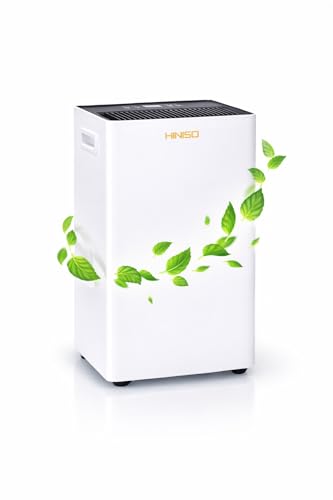
1. HINISO 16L Smart WiFi Compressor Dehumidifier — Best Overall Pick
If your bedroom feels damp for hours after the rain stops, a compressor dehumidifier is worth considering. The HINISO 16L Smart WiFi Compressor Dehumidifier is one option to investigate for regular monsoon moisture control.
Its advertised extraction capacity is 16 litres per day under specified test conditions. It is also listed with a water tank, continuous-drainage support, a humidity control function and smart features. The exact features supplied should be checked against the current listing.
Best for: Bedrooms and other individual rooms with persistent dampness.
Features to check before buying:
- Advertised extraction capacity of 16L/day
- Water tank and automatic shut-off
- Continuous drainage hose
- Adjustable humidity settings
- Timer and operating modes
- Warranty and local after-sales support
Why consider it?
A compressor unit offers substantially more moisture-removal capacity than most small thermoelectric devices. This matters when the goal is to control the humidity of an actual room rather than simply collect a small amount of moisture from a cabinet.
The Wi-Fi feature may be convenient if you want to check settings or control operation remotely. However, smart controls should be treated as a bonus, not a substitute for extraction capacity and reliable drainage.
Potential drawbacks: It is relatively heavy compared with a mini dehumidifier, takes up floor space and costs considerably more than passive moisture absorbers. The stated daily extraction figure is not a guarantee of how much water it will collect in every home.
Our verdict: A sensible first model to compare if your main concern is persistent dampness in one room and you want a full-size compressor unit.
Buy Now on Amazon India

- High-Capacity Dehumidifier – 3200 Sq.ft. Coverage: Removes up to 16L/day excess moisture, keeping bedrooms, basements, a…
- Smart WiFi App Control: Connect to WiFi and operate through your mobile app. Adjust humidity, set timers, and power ON/O…
- Built-in Ionizer for Fresher Air: Negative ion generator reduces dust, allergens, smoke, and odors, ensuring cleaner, he…
2. Lifelong 12L Dehumidifier — Best Value-Oriented Option
Not every damp bedroom requires the highest-capacity machine in the catalogue. The Lifelong 12L Dehumidifier is an alternative for shoppers looking for a room-scale compressor model without immediately moving to a more expensive, higher-capacity unit.
Its listed daily extraction capacity is 12 litres. Depending on the exact variant, features may include humidity controls, a timer, a water tank and drainage support.
Best for: Small to medium rooms where humidity is a regular concern.
What to look for:
- A clearly stated 12L/day extraction rating
- Automatic shut-off when the tank is full
- Easy-to-empty tank
- Continuous drainage support, if needed
- Suitable operating temperature range
- Clear warranty terms
Why consider it?
A 12L/day model may be a practical starting point for a single bedroom or home office, provided the moisture load and room conditions suit its capacity. It can be a better fit than an oversized model if you only need to manage one modestly sized space.
Potential drawbacks: A smaller-capacity model may take longer to manage persistent dampness in a large room. Check the tank capacity and drainage arrangement carefully because a smaller tank can require frequent emptying during humid weather.
Our verdict: Compare this model with other 10–12L/day compressor dehumidifiers if value and room-scale use are your priorities.
Buy Now on Amazon India

- Multi-Mode Dehumidification Settings – Easily switch between Normal, Continuous, Strong, and Fast Drying modes using the…
- Automatic Shut-Off & Safety Features – Includes a built-in water tank sensor that halts operation when full, plus a chil…
- Sleep Mode & Child Lock – Short press to activate quiet sleep mode; long press to enable child lock, preventing accident…
3. HINISO 22L Smart WiFi Dehumidifier — Best for Larger or Very Damp Rooms
Some rooms are much harder to keep dry than others. A large bedroom, a room used for indoor laundry or a poorly ventilated space may need greater moisture-removal capacity.
The HINISO 22L Smart WiFi Dehumidifier is a higher-capacity option advertised at 22 litres per day. Listings for this model also describe a larger water tank and continuous-drainage support. Some versions include additional air-cleaning features, so verify the exact model before purchasing.
Best for: Larger individual rooms or spaces with a high moisture load.
Features to compare:
- Advertised 22L/day extraction
- Water tank capacity
- Continuous-drainage hose
- Adjustable humidity control
- Automatic defrost and tank-full protection
- Noise level and power consumption
- Warranty and service arrangements
Why consider it?
Higher extraction capacity gives you more headroom when a room receives a lot of moisture. A larger tank can also reduce the frequency of manual emptying, although continuous drainage is often more convenient for regular monsoon operation.
Potential drawbacks: A higher-capacity machine generally costs more, uses floor space and may consume more electricity. Do not assume that a claim such as “covers thousands of square feet” means one unit will effectively control humidity throughout an entire home. Room layout, airflow, doors, walls and moisture sources all matter.
Our verdict: Worth comparing when a smaller unit struggles to keep up or when your intended space has a substantial moisture load. Choose based on the room you need to control, not the biggest coverage number printed on the box.
Buy Now on Amazon India
- Covers up to 4500 Sq.ft – Whole Home Moisture Control – This 22L/day dehumidifier is designed for large rooms, basements…
- Compressor-Based High Efficiency – Powered by a strong compressor, it delivers consistent and powerful dehumidification,…
- Smart WiFi Remote Control – Anytime, Anywhere – Stay connected even when you’re not at home. Using the mobile app, you c…
4. Sharp DW-J20FM-W Dehumidifier and Air Purifier — Best for Combined Features
If you want to compare humidity control with air-purification features, the Sharp DW-J20FM-W is another option to investigate.
This model is marketed as a dehumidifier and air purifier, with Sharp’s Plasmacluster technology. It is worth considering if you want to evaluate both functions in one appliance instead of buying two separate machines.
Best for: Buyers who want to compare dehumidification with additional air-cleaning features.
Features to verify:
- Daily moisture extraction capacity
- Water tank and drainage options
- Air-purification technology and filter details
- Filter replacement costs
- Operating noise
- Warranty and service availability
Why consider it?
A combination appliance may be attractive when floor space is limited. However, humidity control and air purification solve different problems. A dehumidifier removes moisture, while an air purifier is designed to remove certain airborne particles, depending on its filtration system.
Potential drawbacks: Combination models can cost more than a basic dehumidifier. You should also check filter availability and replacement costs. Do not assume that air-purification features will remove moisture from walls or fix a leak.
Our verdict: Compare this model if both functions matter to you, but prioritise the dehumidification specification if dampness is your main problem.
Buy Now on Amazon India

- The Only Air Purifier-cum-Dehumidifier with Plasmacluster and True HEPA & Active Charcoal & Pre-filter
- Extraction Capacity: 20 Liters/Day | Tank Capacity: 4.6 Liters | Modes: Auto, Dehumidifying, Laundry, Deodorizing, Auto,…
- Clean Air Delivery Rate (CADR) : 258 m3/Hr | Recommended Coverage Area : Upto 550 Sq. Ft. (50 Sq. Mtrs.) | Sensors: Odou…
5. HANNEA 12L/Day Compressor Dehumidifier — Alternative Room-Scale Option
The HANNEA 12L/Day Compressor Dehumidifier is another model to compare when shopping for a full-size dehumidifier for a bedroom.
It is listed as a compressor unit, with features such as operating modes and automatic shut-off described in the product listing. Confirm the current specifications, room-size guidance and supplied accessories before ordering.
Best for: Buyers comparing 12L/day compressor units.
Why consider it?
- A room-scale extraction rating to compare with other models
- Potentially useful operating modes for different situations
- An alternative when comparing availability and price
What to check carefully:
Look beyond the advertised coverage area. Confirm the tank capacity, whether a drainage hose is included, the warranty provider and how repairs are handled in India. These practical details become important when the machine needs to run regularly during a long monsoon.
Potential drawbacks: Specifications and after-sales support can vary by seller and model. Check the return policy and verify the appliance’s electrical specifications before purchase.
Our verdict: Keep it on your shortlist if its current price and warranty compare favourably with established alternatives.
Buy Now on Amazon India

- HIGH EFFICIENT DEHUMIDIFIERS FOR HOME: This powerful dehumidifier for home efficiently removes up to 12L of moisture per…
- INTELLIGENT HUMIDITY CONTROL: Our dehumidifiers for home offer three different dehumidification modes for you to choose …
- CONTINUOUS DRAIN & AUTO SHUT-OFF: This Portable Dehumidifier offers two draining choices: use the 2L tank with auto-stop…
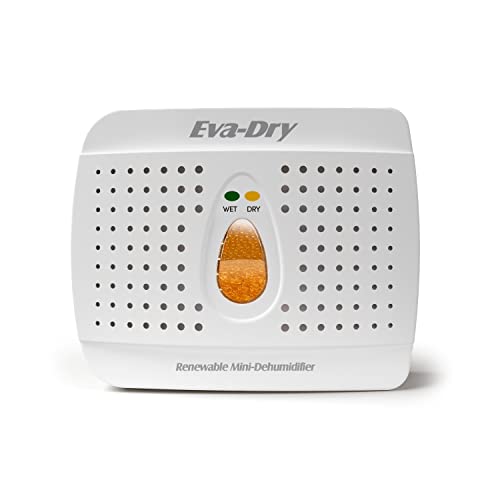
6. Eva-Dry E-333 Renewable Dehumidifier — Best for Small Storage Spaces
Not every moisture problem requires an electric compressor appliance. If the issue is limited to a cupboard, shoe cabinet or other small enclosed space, the Eva-Dry E-333 Renewable Dehumidifier is a compact option to investigate.
This type of product is designed for small-scale moisture absorption rather than actively drying a whole room.
Best for: Small cupboards, cabinets and enclosed storage areas.
Why consider it?
- Compact design
- No large compressor unit occupying floor space
- A potential option for localised storage concerns
Potential drawbacks: Its moisture-absorption capacity is not comparable with a room dehumidifier rated in litres per day. It should not be expected to control humidity throughout a damp bedroom or living room.
Our verdict: Consider it for small enclosed spaces only. If your walls, bedding and clothes feel damp, choose a room-scale appliance instead.
Buy Now on Amazon India | Flipkart
- COMPACT DESIGN FOR SMALL SPACES: This mini dehumidifier fits easily in closets, bathrooms, bedrooms, or RVs. Its slim pr…
- RENEWABLE AND RECHARGEABLE: The E 333 renewable mini dehumidifier requires no batteries or cords. Simply recharge to reu…
- COVERS UP TO 500 SQ FT: Designed for areas up to 500 sq ft, this small space dehumidifier helps protect valuables and pr…
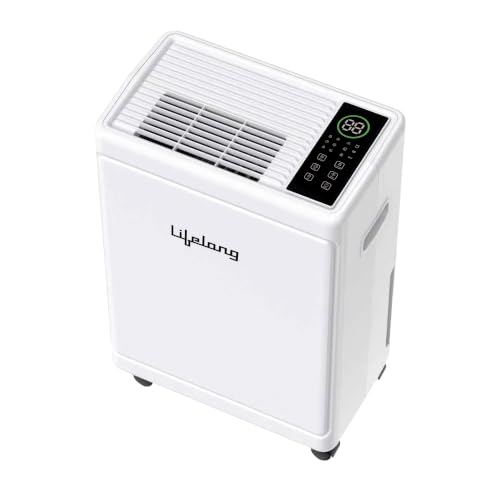
7. Lifelong DrySense 12L Smart Compressor Dehumidifier — Another Model to Compare
The Lifelong DrySense 12L Smart Compressor Dehumidifier is another listed option for people who want a room-scale unit with humidity control.
When comparing it with the Lifelong 12L model above, confirm whether the product listings refer to different variants. Do not assume that similarly named products have identical extraction capacity, tank size, controls or accessories.
Best for: Buyers who want to compare smart controls and room-scale extraction.
Features to investigate:
- Rated daily extraction
- Humidity sensor and adjustable settings
- Tank capacity
- Laundry-drying mode, if included
- Power consumption
- Continuous drainage and warranty
Potential drawbacks: Smart features do not necessarily improve moisture removal. Compare the core specifications and service terms before paying extra for additional controls.
Our verdict: A useful alternative to compare, especially if the current listing offers a suitable combination of capacity, controls and warranty.
Buy Now on Amazon India
- 💧 12L Daily Moisture Extraction: Removes up to 12 liters of excess water per day. Fast action clears dampness in rooms u…
- 🎛️ Smart Humidistat Control: Customize your room’s comfort with a target humidity setting from 30% to 80% RH. Easily mon…
- 👕 Specialized Laundry Mode: Locks the compressor at peak performance and runs the fan at max speed. Dries wet clothes ra…
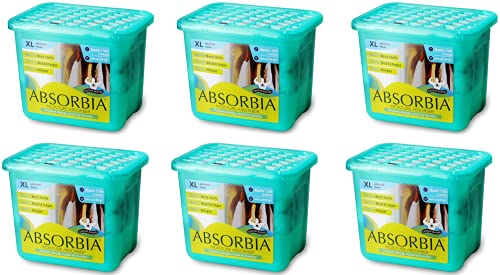
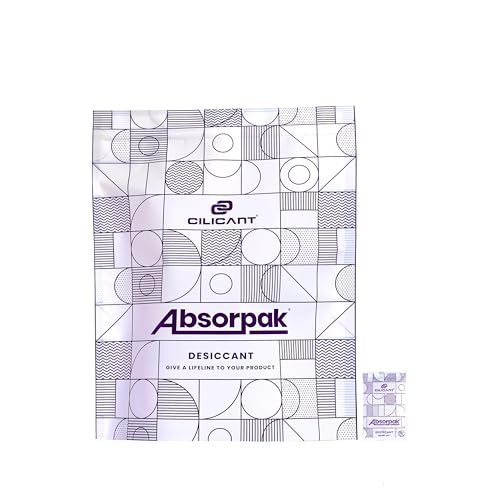
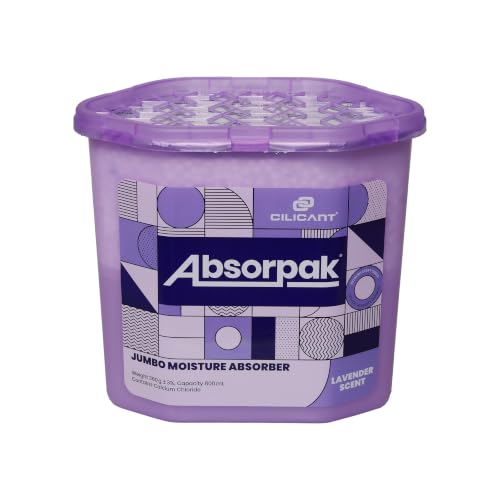
8. Passive Moisture Absorbers — Best for Wardrobes on a Tight Budget
For a cupboard that smells musty or a shoe rack that becomes damp during the rains, a passive moisture absorber may be sufficient.
These products commonly use moisture-absorbing materials in a container or hanging pouch. They do not need to operate like an electric room dehumidifier.
Best for: Wardrobes, shoe cabinets, storage boxes and other small enclosed areas.
Why consider them?
- Usually inexpensive
- Simple to place in enclosed storage areas
- No compressor noise
- Useful as a localised moisture-management measure
Potential drawbacks: Their capacity is limited, and the absorbing material may need replacing or recharging. They will not provide the same room-wide humidity control as a compressor dehumidifier.
Our verdict: A practical add-on for cupboards, but not a replacement for a proper room dehumidifier when an entire room feels damp.
Buy Now on Amazon India | Flipkart






Comparison Table: Which Dehumidifier Should You Choose?
| Product | Best suited for | Type | Main consideration |
|---|---|---|---|
| HINISO 16L Smart WiFi | Persistent room dampness | Compressor | 16L/day advertised extraction |
| Lifelong 12L | Small to medium rooms | Compressor | Balance capacity with price |
| HINISO 22L Smart WiFi | Larger or very damp rooms | Compressor | Higher capacity and drainage |
| Sharp DW-J20FM-W | Humidity control plus air cleaning | Dehumidifier and air purifier | Filter costs and extraction rating |
| HANNEA 12L/Day | Room-scale moisture control | Compressor | Verify warranty and accessories |
| Lifelong DrySense 12L | Smart room-scale control | Compressor | Compare exact variant |
| Eva-Dry E-333 | Small enclosed storage | Compact moisture absorber | Limited moisture capacity |
| Passive moisture absorber | Wardrobes and shoe cabinets | Non-electric absorber | Low cost, localised use |
Why Do Indian Homes Become Damp During Monsoon?
Understanding the cause of dampness helps you choose the right solution.
High Outdoor Humidity
During the monsoon, the air outside can contain a large amount of moisture. When humid air enters a home and ventilation is limited, indoor humidity can remain elevated.
Even when the rain stops, your room may not dry quickly because the air, furnishings and fabrics can continue to hold moisture.
Poor Ventilation
Bedrooms with closed windows, bathrooms without effective exhaust fans and rooms with limited airflow can trap moisture.
However, opening windows is not always helpful during humid weather. If the outside air is more humid than the inside air, bringing it indoors can make the problem worse.
Damp Walls and Water Leakage
A dehumidifier can help manage excess moisture in the air, but it cannot repair a leaking roof, damaged plumbing, rising damp or water entering through exterior walls.
If you notice peeling paint, persistent wet patches, water stains or recurring mould, identify and address the source of moisture.
Indoor Laundry
Drying wet clothes indoors releases moisture into the surrounding air. During rainy weeks, that moisture can accumulate in a bedroom or living room, especially if the room is closed.
A dehumidifier with a suitable laundry mode may help manage the moisture released by drying clothes, but the room still needs sensible airflow and safe appliance placement.
Condensation on Cold Surfaces
Moist air can condense on cooler surfaces such as windows, metal fittings and certain walls. If condensation keeps returning, check indoor humidity, ventilation and the temperature of the affected surfaces.
Benefits of Using a Dehumidifier During Monsoon
Helps Control Excess Indoor Moisture
The primary purpose of a dehumidifier is to extract moisture from the air. This can help make a humid room more comfortable when the appliance is appropriately sized and used correctly.
Helps Manage Musty Smells
Musty odours can be associated with damp fabrics, mould or moisture trapped in enclosed spaces. Reducing humidity may help, but it will not eliminate the underlying cause if mould or a leak remains.
Supports Faster Indoor Laundry Drying
A dehumidifier may help indoor clothes dry more effectively by removing some of the moisture released into the room. A dedicated laundry mode can be useful, although performance depends on the appliance, load and room conditions.
Helps Protect Stored Belongings
Keeping indoor humidity under control can help reduce moisture-related risks to clothing, books, documents and other stored belongings. For wardrobes, a localised moisture absorber may be enough when the surrounding room is otherwise dry.
Helps Manage Conditions That Encourage Mould
Mould growth is influenced by moisture, temperature, surface conditions and time. Reducing excessive indoor humidity can help lower the risk, but existing mould must also be cleaned appropriately and its moisture source corrected.
A dehumidifier is not a substitute for repairing water damage or addressing a serious mould problem.
How to Choose the Best Dehumidifier for Your Room
Before spending ₹15,000 or more on a full-size appliance, consider these important factors.
1. Check the Daily Extraction Capacity
Extraction capacity is commonly expressed in litres per day (L/day). It describes how much moisture a model can remove under specified test conditions.
As a broad starting point:
- Small wardrobe or cabinet: Consider a passive moisture absorber or compact unit designed for enclosed storage.
- Small bedroom: Compare room-scale compressor units around 10–12L/day.
- Regularly damp bedroom: Compare models around 12–16L/day, considering the moisture load.
- Large or persistently damp room: Investigate higher-capacity models around 18–22L/day or more.
These are starting points, not universal sizing rules. Room size, outside humidity, air leakage, indoor laundry and the severity of dampness all affect performance.
2. Understand the Difference Between Tank Capacity and Extraction Capacity
These two specifications are easy to confuse.
A machine advertised at 16L/day does not necessarily have a 16-litre tank. Its daily extraction rating describes moisture removal under test conditions, while its tank capacity tells you how much water it can hold before you need to empty it.
For example, a unit with a relatively small tank may require frequent emptying during humid weather.
3. Look for Continuous Drainage
If you plan to run a dehumidifier for extended periods, continuous drainage can be particularly convenient.
Instead of repeatedly emptying the tank, you can route a compatible drainage hose to an appropriate drain. Check whether the hose is included and whether the appliance supports gravity drainage.
Never route water near electrical sockets, extension boards or other electrical equipment.
4. Choose Adjustable Humidity Control
An adjustable humidistat allows you to select a target humidity level. Many homes can aim for approximately 40–60% relative humidity, with around 50% being a useful starting target when practical.
Avoid setting an unnecessarily low target just because the machine allows it. The objective is to control excess moisture, not to make the room uncomfortably dry.
A separate hygrometer can help you understand your room’s humidity before and after using the appliance.
5. Check Noise Levels
If you intend to use the appliance in a bedroom, noise matters. Compressor models generally produce more operating sound than passive absorbers, although the actual level varies by design and operating mode.
Look for a published noise rating in decibels (dB), and check whether the unit offers a suitable lower-noise or sleep mode.
6. Consider Electricity Consumption
A dehumidifier may run for several hours during humid weather. Check its rated power consumption and estimate the running cost using your electricity tariff.
A simple estimate is:
Electricity used (kWh) = Power (kW) × Operating hours
For example, a 300W appliance running for five hours uses approximately 1.5kWh. Multiply that figure by your applicable electricity rate to estimate the energy cost for that session.
Actual consumption depends on compressor cycling, humidity, operating conditions and the selected settings.
7. Check the Warranty and Service Network
A dehumidifier is an appliance you may rely on throughout the rainy season. Before ordering, confirm:
- The warranty duration and what it covers
- Who provides after-sales support
- Whether repairs are available in your area
- Whether replacement filters or other parts are available
- The seller’s return and replacement policy
A slightly cheaper appliance may not be the better value if obtaining repairs or replacement parts is difficult.
Compressor vs Mini Dehumidifiers: Which Type Works Better?
| Feature | Compressor dehumidifier | Mini thermoelectric unit | Passive moisture absorber |
|---|---|---|---|
| Main use | Room moisture control | Limited small-space use | Localised enclosed storage |
| Moisture capacity | Generally much higher | Generally low | Limited by absorbent material |
| Power requirement | Uses electricity | Uses electricity | Usually none |
| Operating noise | Usually audible | Often quieter | Silent |
| Best application | Bedrooms and other rooms | Small spaces, depending on conditions | Wardrobes and cabinets |
| Whole-room performance | Suitable when correctly sized | Usually limited | Not designed for whole-room control |
| Maintenance | Tank, filter and appliance care | Tank and appliance care | Replace or recharge material as directed |
For persistent monsoon dampness, a compressor model is generally the more appropriate starting point for room-scale moisture removal. Mini units can be useful for limited spaces, but do not judge them by tank size alone.
A passive absorber that collects water in a cupboard is doing a different job from an electric unit that actively removes moisture from room air.
How to Use a Dehumidifier Effectively During Monsoon
Buying the right appliance is only part of the solution. Use it sensibly to get better results.
Step 1: Measure the Humidity
Use a hygrometer to check the relative humidity in the room. This helps you determine whether excess humidity is actually a concern and gives you a reference point for evaluating the appliance.
Step 2: Close the Room When Appropriate
When operating a room dehumidifier, keep external doors and windows closed where practical. Otherwise, humid air may continue entering and increase the machine’s workload.
This does not mean a room should never be ventilated. Ventilate when outdoor conditions are favourable, and follow the appliance instructions.
Step 3: Place the Appliance Correctly
Keep the dehumidifier on a stable, level surface with the clearances recommended by the manufacturer. Avoid blocking air intakes or outlets with curtains, furniture or clothes.
Do not place it where rainwater can reach it.
Step 4: Set a Reasonable Target
Start with a practical humidity target, such as around 50–55% relative humidity, and adjust based on comfort and room conditions.
You do not need to force the humidity to the lowest possible number.
Step 5: Empty the Tank or Set Up Drainage
Check the water tank regularly. If you use continuous drainage, confirm that the hose is correctly installed and water can flow safely to the drain.
Step 6: Clean and Maintain the Appliance
Follow the manufacturer’s instructions for cleaning the tank, filter and exterior. Switch off and unplug the appliance before carrying out maintenance where required.
Step 7: Address the Source of Dampness
Repair leaks, improve bathroom exhaust ventilation and avoid leaving wet laundry in a closed room unnecessarily. If mould returns repeatedly, investigate the cause rather than relying on the dehumidifier alone.
Common Mistakes to Avoid When Buying a Dehumidifier
- Buying a mini unit for an entire bedroom: Small moisture absorbers usually cannot match a compressor’s extraction capacity.
- Confusing tank size with daily extraction: A large tank does not automatically mean higher moisture removal.
- Trusting oversized coverage claims: Verify the extraction rating and consider the actual room and moisture load.
- Ignoring drainage: A small tank can mean frequent emptying during humid weather.
- Overlooking noise: A machine that is too loud for your bedroom may be inconvenient to run overnight.
- Ignoring electricity use: Check rated wattage and estimate the cost of regular operation.
- Buying without checking warranty support: Confirm who will handle repairs if something goes wrong.
- Assuming a dehumidifier fixes leaks: Water intrusion and plumbing issues need repair.
- Expecting it to remove existing mould automatically: Mould may require appropriate cleaning and professional help.
- Placing it against a wall or behind furniture: Restricted airflow can affect performance.
- Running it with blocked air vents: Follow the manufacturer’s clearance and maintenance instructions.
- Ignoring the room’s humidity: A hygrometer helps you understand whether and when dehumidification is needed.
- Expecting one appliance to control every room: Closed rooms, walls and air leakage affect how moisture moves through a home.
- Choosing features over capacity: Wi-Fi and lights are less important than the appliance’s ability to remove moisture.
- Failing to check the return policy: Verify the seller’s terms and inspect the appliance promptly after delivery.
Pros and Cons of Using a Dehumidifier
| Pros | Cons |
|---|---|
| Helps reduce excessive indoor humidity | Full-size compressor models can be expensive |
| Can improve comfort in damp rooms | Uses electricity |
| May help indoor laundry dry more effectively | Produces operating noise |
| Can help manage conditions that encourage mould | Does not repair leaks or structural damp |
| Can protect belongings from moisture-related risks | Requires tank emptying or drainage |
| Adjustable controls can simplify humidity management | Results depend on room conditions and correct sizing |
Research Methodology: How We Selected These Dehumidifiers
For this BestBuy93.IN guide, we compared room-scale compressor dehumidifiers, combination appliances and compact moisture absorbers to reflect the different types of dampness found in Indian homes.
Our selection criteria included:
- Moisture-removal capacity: The advertised litres-per-day rating and whether the device is intended for room-scale use.
- Drainage and tank design: Tank capacity, automatic shut-off and continuous-drainage support.
- Useful controls: Humidity settings, timers and operating modes where available.
- Practical use: Suitability for bedrooms, larger rooms or small enclosed storage spaces.
- Ownership costs: Electricity consumption, filter replacement where applicable and warranty support.
- Value: How the features compare with the product’s current asking price.
This is an editorial product comparison, not a claim that every appliance was independently laboratory-tested by BestBuy93.IN. Product features, prices, reviews and availability may change. We recommend verifying the latest specifications and seller terms before buying.
Frequently Asked Questions
1. Which is the best dehumidifier for damp rooms during monsoon?
For persistent room dampness, begin by comparing compressor models such as the HINISO 16L Smart WiFi and Lifelong 12L. For larger or more demanding spaces, compare higher-capacity options such as the HINISO 22L. The best choice depends on room size, moisture load, drainage and budget.
2. Is a dehumidifier useful during the Indian monsoon?
Yes, a suitably sized dehumidifier can help reduce excess indoor humidity during the monsoon. It may be particularly useful in rooms where dampness persists, laundry dries slowly or ventilation is limited.
3. What capacity dehumidifier do I need for a bedroom?
A 10–12L/day compressor model may be a starting point for some small bedrooms, while a persistently damp room may need a higher-capacity model. Room size alone is not enough to determine capacity; moisture sources and air leakage also matter.
4. Can a dehumidifier remove the musty smell from a room?
It can help reduce the excess moisture that contributes to musty conditions. However, if the smell comes from mould, damp furniture, wet carpets or a leak, the source must also be addressed.
5. Does a dehumidifier prevent mould?
Controlling excess humidity can help reduce the conditions that encourage mould growth. It cannot guarantee that mould will never develop, and it will not solve an existing leak or remove all established mould.
6. What is the difference between a dehumidifier and an air purifier?
A dehumidifier removes moisture from the air. An air purifier removes certain airborne particles, depending on its filtration technology. Some appliances combine the two functions, but their performance should be assessed separately.
7. Are mini dehumidifiers effective for bedrooms?
Most mini thermoelectric dehumidifiers have limited extraction capacity. They may suit small enclosed spaces, but a compressor model is generally a better starting point for persistent dampness throughout a bedroom.
8. Should I keep the windows open while using a dehumidifier?
For effective operation, keep external windows and doors closed where practical while the unit is actively reducing humidity. Ventilate when outdoor conditions are favourable and follow the manufacturer’s instructions.
9. How much electricity does a dehumidifier consume?
Consumption depends on the appliance’s power rating and how long it runs. For example, a 300W unit operating for five hours uses approximately 1.5kWh. Your actual bill depends on your electricity tariff and operating conditions.
10. Is continuous drainage better than a water tank?
Continuous drainage can be more convenient for long operating periods because you do not need to empty the tank as often. A tank is useful when no suitable drain is available. Check whether a hose is included and whether the appliance supports the drainage arrangement you need.
11. Can I use a dehumidifier to dry clothes indoors?
Some dehumidifiers have a laundry-drying mode and may help manage the moisture released by indoor laundry. Results depend on the appliance, the size of the load and room conditions. Follow the manufacturer’s placement and operating instructions.
12. Does a dehumidifier remove water from damp walls?
It can remove moisture from the air, but it cannot repair water entering through a wall or roof. Persistent wet patches, peeling paint or recurring mould require investigation of the underlying cause.
13. What humidity level should I aim for indoors?
A relative humidity range of approximately 40–60% is a useful general target for many homes. Around 50% is a reasonable starting point, though conditions vary by climate and room. Avoid unnecessarily low settings.
14. Which is better: a 12L or 22L dehumidifier?
A 12L/day model may be sufficient for some smaller rooms with a moderate moisture load. A 22L/day model offers greater advertised extraction capacity and may suit larger or more persistently damp spaces. The larger model is not automatically the better purchase if your room does not need that capacity.
15. Can I leave a dehumidifier running overnight?
Follow the manufacturer’s operating instructions and safety guidance. Use a stable, dry location with the required airflow clearances, ensure the tank-full protection works as intended and set up drainage safely if supported. Consider the unit’s noise level if it is in a bedroom.
16. Will a dehumidifier make my room too dry?
A model with adjustable humidity control can help maintain a chosen target. If your unit does not display humidity, consider using a separate hygrometer and avoid running the appliance unnecessarily once the room is comfortable.
17. Are passive moisture absorbers enough for wardrobes?
They may be sufficient for a small enclosed wardrobe or shoe cabinet with limited moisture. If the entire room is damp or mould keeps returning, a passive absorber is unlikely to be enough.
18. Should I buy a dehumidifier or an exhaust fan?
They serve different purposes. An exhaust fan removes indoor air and can help expel moisture, particularly in bathrooms. A dehumidifier extracts moisture from room air. The right choice depends on the source of moisture, ventilation and room conditions; some homes benefit from both.
Final Verdict: Which Dehumidifier Should You Buy?
The best dehumidifier for damp rooms during monsoon is the one that matches your room and the amount of moisture you need to manage.
- For regular dampness in a bedroom: Start by comparing the HINISO 16L Smart WiFi and Lifelong 12L compressor models.
- For larger or more persistently damp rooms: Investigate higher-capacity options such as the HINISO 22L.
- For combined air cleaning and humidity control: Compare the Sharp DW-J20FM-W and check its filtration and maintenance costs.
- For small cupboards and shoe cabinets: A compact moisture absorber may be enough.
- For indoor laundry: Look for an appropriately sized model with a suitable laundry mode and convenient drainage.
Before making your final decision, check the extraction rating, tank capacity, drainage support, noise level, electricity use and warranty. These practical features matter more than flashy lights or exaggerated room-coverage claims.
Most importantly, remember that a dehumidifier is part of a moisture-control plan. Fix leaks, improve ventilation where appropriate and address existing mould rather than expecting one appliance to solve every dampness problem.
Ready to make your home more comfortable this monsoon? Compare the options above, verify the latest prices and choose a dehumidifier that fits your space and budget.
For more practical home-appliance recommendations and monsoon essentials, explore BestBuy93.IN and make smarter buying decisions for your home.