

If you live near a busy road, a construction site, or a dusty neighbourhood, keeping your home clean can feel like a never-ending task. You wipe the furniture in the morning, and by evening, another layer of dust seems to have settled everywhere. Sound familiar?
An air purifier can help reduce airborne dust, fine particles and certain other indoor pollutants, but choosing the right model matters. A small purifier may struggle in a large living room, while an expensive model may be unnecessary for a compact bedroom.
In this guide, we compare the best air purifiers for dusty Indian homes, including options from Xiaomi, Philips and Coway. We will look at airflow, room coverage, filtration, useful features, replacement-filter costs and the factors you should consider before spending your money.
Whether you live in an apartment near a busy road, a house affected by construction dust, or a home where dust seems to return almost immediately after cleaning, this guide will help you choose an air purifier that suits your space and budget.
Why Do Dusty Indian Homes Need an Air Purifier?
Dust enters Indian homes through several routes, including open windows, doors, footwear, clothing and outdoor air. Construction activity, traffic, dry weather and nearby unpaved roads can make the problem worse.
However, visible dust is only one part of indoor air pollution.
Indoor air can also contain fine particulate matter, pollen, pet dander, smoke particles and other pollutants. Some particles remain suspended in the air, while others settle on floors, furniture and fabrics.
An air purifier with suitable particle filtration can help reduce airborne particles in the room where it operates. However, it cannot eliminate every pollutant or prevent all dust from entering your home.
When choosing a purifier, pay attention to these five factors:
- CADR: Indicates how much filtered air the purifier delivers.
- Room size: Determines how much airflow you need.
- Filtration: A properly specified HEPA or high-efficiency particle filter is useful for airborne dust and fine particles.
- Maintenance costs: Replacement filters add to the long-term expense.
- Noise and convenience: Quiet operation and automatic controls can make regular use easier.
The objective is to choose a purifier that can deliver sufficient clean air for your room and that you can afford to operate and maintain consistently.
Best Air Purifiers for Dusty Indian Homes
1. Xiaomi Smart Air Purifier 4 — Best Overall
The Xiaomi Smart Air Purifier 4 is a strong option for households looking for higher airflow, smart controls and particle monitoring. It is worth considering for larger bedrooms and medium-sized living rooms, depending on room dimensions and your desired purification rate.
Xiaomi specifies a particle CADR of 400 m³/h and an effective coverage range of 301–516 square feet. Its filtration system combines a pre-filter, high-efficiency particle filtration and activated carbon.
Key Features
- Particle CADR: 400 m³/h.
- Manufacturer-stated effective coverage: 301–516 square feet.
- Three-layer filtration system.
- Real-time particle monitoring.
- Automatic, manual and sleep modes.
- Xiaomi Home app control.
- Activated-carbon filtration for certain household odours.
Why We Recommend It
The main advantage of the Xiaomi Smart Air Purifier 4 is its relatively high airflow among the models compared in this guide.
In a dusty home, a purifier needs to circulate enough air through its filter to make a meaningful difference. A higher CADR can help reduce airborne particles faster when the room and operating conditions are comparable.
The smart features are another advantage. App control and automatic operation can make it easier to run the purifier consistently without manually changing the fan speed throughout the day.
Its activated-carbon layer may also help with certain household odours. However, the amount of carbon and its adsorption capacity matter, so do not assume that every odour or gaseous pollutant will be removed.
Pros and Cons
| What We Like | What We Don’t Like |
|---|---|
| High particle CADR of 400 m³/h | May be more than necessary for a very small bedroom |
| Real-time particle monitoring | Smart features may be unnecessary for some users |
| App control and automatic operation | Genuine replacement filters add recurring costs |
| Particle filtration and activated carbon | Does not eliminate all household dust or pollutants |
Who Should Buy It?
- Families living near busy roads or construction sites.
- People looking for a purifier for a larger bedroom or medium-sized living room.
- Buyers who want smart controls and air-quality monitoring.
- Households that can source genuine replacement filters.
Who Should Skip It?
- People who need a compact purifier for a very small room.
- Buyers who cannot confirm replacement-filter availability.
- Anyone expecting an air purifier to remove dust already settled on furniture and floors.
Our Verdict: The Xiaomi Smart Air Purifier 4 is our leading option for buyers who want higher airflow and smart monitoring. Compare its current price and replacement-filter cost with the Xiaomi 4 Lite and Philips AC1711 before making your final decision.
CTA: Check the Latest Price and Specifications on Xiaomi India
- Compact Design: Perfect for small rooms or spaces, this purifier combines a sleek, space-saving design with powerful per…
- Efficient Air Purification: Features a high-efficiency filter that captures up to 99.97% of particles as small as 0.3 mi…
- Smart Control: Easily controlled through the Xiaomi Home app, allowing you to monitor air quality, adjust settings, and …
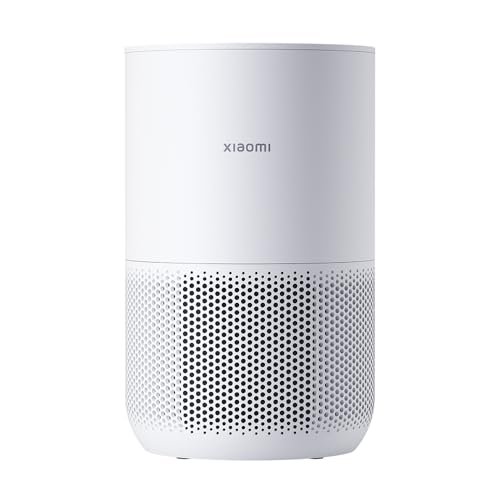
2. Mijia Smart Air Purifier 4 Compact — Best Compact Option
Not every home needs a large air purifier. If your main concern is airborne dust in a compact bedroom, study room or home office, the Mijia Smart Air Purifier 4 Compact is worth considering.
Xiaomi lists a particle CADR of 230 m³/h and a sleep mode rated at 20 dB. The manufacturer advertises coverage of up to 400 square feet based on two air changes per hour.
That last detail is important. Two air changes per hour provide a different level of purification from four or five air changes per hour. For a dusty room where faster particle reduction is desirable, you may need to treat the effective room size more conservatively.
Key Features
- Particle CADR: 230 m³/h.
- Pre-filter, HEPA filter and activated-carbon layer.
- Sleep mode rated at 20 dB.
- Xiaomi Home app control.
- Rated power: 27 W.
- Compact cylindrical design.
Why We Recommend It
The compact design makes this model easier to fit into smaller rooms without dedicating a large amount of floor space to an appliance.
Its sleep mode is another practical advantage for people who want a purifier running in the bedroom at night. Lower noise can make consistent operation easier, although the quietest setting will generally provide less airflow than higher fan speeds.
This model is best considered a single-room solution rather than a purifier for an entire home.
Pros and Cons
| What We Like | What We Don’t Like |
|---|---|
| Compact footprint | Lower airflow than larger models |
| Quiet rated sleep mode | Not the first choice for a large, heavily polluted room |
| Rated power of 27 W | Actual electricity use depends on operating mode |
| Smart controls and particle filtration | Replacement-filter costs still need budgeting |
Who Should Buy It?
- People with compact bedrooms or study rooms.
- Buyers who prioritise quiet nighttime operation.
- Anyone who wants to purify one room rather than the entire house.
- People who prefer a smaller appliance.
Who Should Skip It?
- Households looking for a high-airflow purifier for a large living room.
- Buyers expecting the same performance as a larger model.
- People who cannot source genuine replacement filters.
Our Verdict: The Mijia Smart Air Purifier 4 Compact is worth considering when space and quiet operation matter more than maximum airflow. Check your room dimensions and the current filter price before buying.
CTA: Check the Latest Price on Xiaomi India

- High-Efficiency: This air purifier effectively filters pet hair, dust, smoke, and more. With integrated electrostatic an…
- Powerful Performance: You can actually feel a noticeable difference in the air quality when the purifier is on. This air…
- 20 dB Low Noise Operation: The noise level is 33% lower than regular air purifiers. ideal for enclosed rooms like living…
3. Philips 1000 Series AC1711 — Best Alternative for Medium Rooms
If you want an alternative to Xiaomi, the Philips 1000 Series AC1711 deserves a place on your shortlist.
Philips lists a CADR of 300 m³/h and room coverage of up to 36 square metres, approximately 388 square feet. Its filtration system combines HEPA and activated-carbon filtration.
Key Features
- CADR: 300 m³/h.
- HEPA and activated-carbon filtration.
- Manufacturer-stated coverage of up to 36 square metres.
- Automatic air-quality adjustment.
- Designed for medium-sized rooms.
Why We Recommend It
The Philips AC1711 is worth comparing if you want a medium-room purifier from an established home-appliance brand.
Its published CADR makes it a potential fit for a typical bedroom or medium-sized room, provided you account for room dimensions and the desired cleaning speed.
The combination of particle filtration and activated carbon is useful because airborne particles and odours are different problems. Particle filters capture airborne particles, while activated carbon adsorbs certain gases and odour-causing compounds.
Before purchasing, confirm the exact model variant, local warranty and replacement-filter availability. Product variants can differ in their specifications and features.
Pros and Cons
| What We Like | What We Don’t Like |
|---|---|
| CADR of 300 m³/h for medium-room use | Lower CADR than the standard Xiaomi Smart Air Purifier 4 |
| HEPA and activated-carbon filtration | Replacement-filter costs need checking |
| Automatic air-quality adjustment | Advertised coverage does not guarantee identical performance in every room |
| A useful alternative to Xiaomi | Features must be confirmed for the exact variant |
Who Should Buy It?
- People looking for a purifier for a medium-sized room.
- Buyers comparing Philips and Xiaomi models.
- Households that want particle filtration and some odour reduction.
- People who value automatic operation.
Who Should Skip It?
- People who need higher airflow for a large living room.
- Buyers who require a particular smart-home feature that their selected variant does not support.
- Anyone who has not checked genuine filter availability.
Our Verdict: The Philips AC1711 is a sensible alternative for medium-sized rooms. Compare its current price, filter costs and features against the Xiaomi 4 Lite instead of choosing solely by brand name.
CTA: Check the Philips AC1711 on the Official Website

- *Philips – India’s No. 1 Air Purifier Brand . WARRANTY: – 2 years on product
- IDEAL PURIFIER FOR BEDROOM: Large coverage of up to 36 m²(380 sqft), it purifies a standard room in just 10 minutes with…
- 3-LAYER HEPA FILTRATION: Captures 99.97% of particles up to 0.003 microns (PM0.003)– to protect from pollen, dust, pet d…
4. Xiaomi Smart Air Purifier 4 Lite — Best Value to Compare
The Xiaomi Smart Air Purifier 4 Lite sits between compact models and higher-airflow options. It is worth considering if you need a purifier for a bedroom or medium-sized living space and want smart features.
Xiaomi specifies a particle CADR of 360 m³/h and an effective coverage range of 269–463 square feet. Its filtration system includes a pre-filter, high-efficiency particle filtration and activated carbon.
Key Features
- Particle CADR: 360 m³/h.
- Manufacturer-stated effective coverage: 269–463 square feet.
- Three-layer filtration.
- Real-time air-quality monitoring.
- App control and automatic operation.
- Sleep mode.
Why We Recommend It
The main attraction is its balance of airflow and everyday convenience.
Compared with the Mijia Compact, the Xiaomi 4 Lite offers a higher particle CADR, which can be useful if your room is larger or your dust problem is more challenging.
Compared with the standard Xiaomi Smart Air Purifier 4, however, the 4 Lite has a lower particle CADR. That difference may not matter much in a smaller bedroom, but it becomes more relevant when you want faster cleaning in a larger room.
Pros and Cons
| What We Like | What We Don’t Like |
|---|---|
| Higher airflow than the compact model | Lower airflow than the standard Xiaomi 4 |
| App-based monitoring and controls | Requires replacement-filter budgeting |
| Particle filtration and activated carbon | Smart features may not matter to every buyer |
| A useful middle-ground option | Performance depends on room size and conditions |
Who Should Buy It?
- People who need more airflow than a compact bedroom purifier offers.
- Families comparing mid-range smart purifiers.
- Buyers who want to monitor indoor particle levels.
- People looking for a balance between room coverage and features.
Who Should Skip It?
- People with very small rooms who could use a compact model.
- Buyers who need the highest airflow among the models in this guide.
- Anyone choosing solely on advertised coverage without considering CADR.
Our Verdict: The Xiaomi Smart Air Purifier 4 Lite is a strong model to compare against the Philips AC1711. Which one offers better value depends on the selling price, replacement-filter costs and features that matter to you.
CTA: Check the Latest Price on Xiaomi India

- Ideal Air Purifier for Bedroom: Large coverage area of 462 Sq.ft and high particle CADR of up to 360m³/h, delivering 600…
- Real-time AQI & Environmental Display: LED display provides real-time AQI, temperature, humidity, Wi-Fi status and mode …
- TÜV Allergy Care Certification: World’s First TUV Allergy Care certified Air Purifier, TÜV is an internationally recogni…
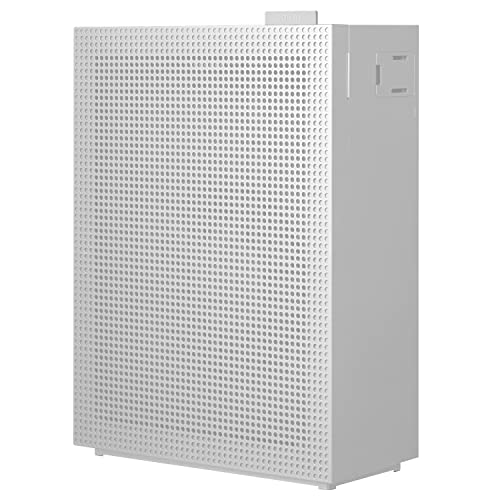
5. Coway Airmega 150 — Another Option Worth Considering
Coway is another brand worth investigating when shopping for a dedicated home air purifier.
The Coway Airmega 150 is listed on the official Indian store with manufacturer-stated coverage of approximately 355 square feet. Before purchasing, check the current product specification sheet to confirm its CADR, filtration details and recommended room size.
Key Features to Check
- Exact model and room-coverage specification.
- Particle filtration system.
- Genuine replacement-filter availability.
- Noise levels at different fan speeds.
- Warranty and service availability in your area.
- Current selling price and filter replacement costs.
Why We Recommend Comparing It
The Airmega 150 gives shoppers another brand to consider rather than limiting their research to Xiaomi and Philips.
However, a room-coverage figure alone does not reveal how quickly an air purifier can clean a dusty room. Before ranking it above another model, compare its verified CADR using a comparable test standard, its intended room size and its long-term maintenance costs.
Pros and Cons
| What We Like | What We Don’t Like |
|---|---|
| An additional established brand to compare | Confirm current CADR and exact model specifications |
| Manufacturer-listed room coverage | Coverage alone does not establish cleaning speed |
| Dedicated air-purification product range | Genuine replacement-filter costs need checking |
| Worth investigating for bedroom use | Overall value depends on the current price |
Who Should Buy It?
- Buyers who want to compare several air-purifier brands.
- People looking for a purifier for a bedroom or medium-sized space.
- Shoppers who have confirmed filter availability and service support.
Who Should Skip It?
- Anyone unable to verify the model’s airflow and filtration specifications.
- Buyers who cannot find genuine replacement filters at a reasonable cost.
- People who need a high-CADR model for a large living area.
Our Verdict: Keep the Coway Airmega 150 on your shortlist, but verify its current specifications, filter prices and warranty before choosing it over the models with more readily comparable published CADR figures.
CTA: Visit Coway’s Official Indian Store
- WORLD LEADER IN AIR CARE: Coway is a trusted South Korean brand renowned for its innovative air purifiers. With the worl…
- SPECIAL ANTI-VIRUS GREEN TRUE HEPA FILTER: Coway’s Patented Anti-Virus Hepa Filter not only captures allergies, viruses,…
- 3-STAGE AIR PURIFICATION: Features a Pre-Filter for PM10 particles, a Patented Urethane Carbon Filter for removing bad o…
Air Purifier Comparison Table
Here is a side-by-side comparison of the five models discussed in this guide.
| Air Purifier | Best For | Published CADR | Manufacturer-Stated Coverage | Main Advantage |
|---|---|---|---|---|
| Xiaomi Smart Air Purifier 4 | Larger bedrooms and medium living rooms | 400 m³/h | 301–516 sq. ft. | Higher airflow and smart monitoring |
| Mijia Smart Air Purifier 4 Compact | Compact bedrooms and study rooms | 230 m³/h | Up to 400 sq. ft. at 2 air changes per hour | Compact design and quiet sleep mode |
| Philips 1000 Series AC1711 | Medium-sized rooms | 300 m³/h | Up to 36 m² | HEPA and activated-carbon filtration |
| Xiaomi Smart Air Purifier 4 Lite | Medium-sized rooms | 360 m³/h | 269–463 sq. ft. | Balance of airflow and smart controls |
| Coway Airmega 150 | Bedroom and medium-room comparison | Not verified here | Approximately 355 sq. ft. | Another brand to consider |
Important: Coverage figures are manufacturer-stated and may be based on different assumptions. Do not treat them as directly equivalent. Check each model’s official specification sheet before purchasing.
Which Air Purifier Should You Choose?
- For a larger room: Start with the Xiaomi Smart Air Purifier 4 and compare it with other models offering similar or higher verified CADR.
- For a compact bedroom: Consider the Mijia Smart Air Purifier 4 Compact.
- For a medium-sized room: Compare the Philips AC1711 and Xiaomi Smart Air Purifier 4 Lite.
- For another brand option: Investigate the Coway Airmega 150 after checking its current specifications and filter costs.
A useful buying rule is to compare CADR first, room size second and ownership costs third. Extra features come after these fundamentals.
Quick Answer: Which Air Purifier Is Best for Dusty Indian Homes?
Here are five air purifiers worth considering for different room sizes and requirements.
- Best Overall: Xiaomi Smart Air Purifier 4 — offers a particle CADR of 400 m³/h, app control and air-quality monitoring.
- Best Compact Option: Mijia Smart Air Purifier 4 Compact — suitable for smaller rooms, with a particle CADR of 230 m³/h.
- Best Philips Alternative: Philips 1000 Series AC1711 — offers a CADR of 300 m³/h and HEPA and activated-carbon filtration.
- Best Value to Compare: Xiaomi Smart Air Purifier 4 Lite — provides a particle CADR of 360 m³/h and smart controls.
- Another Option Worth Considering: Coway Airmega 150 — worth comparing after checking its current specifications, replacement-filter costs and service availability.
These recommendations are based on published manufacturer information and practical buying considerations, not independent hands-on testing. Prices, availability and product specifications may change, so verify the latest details before purchasing.
What to Look for When Buying an Air Purifier for a Dusty Indian Home
Choosing the right purifier becomes much easier when you understand the specifications that affect performance.
1. CADR: How Much Clean Air Can It Deliver?
CADR stands for Clean Air Delivery Rate. It indicates how much filtered air a purifier delivers per unit of time, generally measured in cubic metres per hour.
For dusty homes, CADR is one of the most important specifications because the purifier must circulate enough clean air to help control airborne particle levels.
As a preliminary shopping guide, consider these room sizes:
| Room Size | Suggested Starting Point |
|---|---|
| 100–150 sq. ft. | Compact purifier with appropriately rated airflow |
| 150–250 sq. ft. | Small or medium-room purifier |
| 250–350 sq. ft. | Medium-room purifier with stronger airflow |
| 350–500 sq. ft. | Higher-CADR model, depending on the desired air changes |
These are starting points, not universal engineering limits. Ceiling height, room layout, air leakage and the desired cleaning rate all influence the airflow you need.
A useful relationship is:
Required CADR = Room volume × Target air changes per hour
For example, consider a 200-square-foot room with an 8-foot ceiling.
- Room volume: 1,600 cubic feet.
- Room volume in metric units: approximately 45.3 cubic metres.
- Desired air changes: 5 per hour.
- Required airflow: approximately 227 m³/h.
This calculation helps explain why a small purifier may struggle in a large room even if its advertised coverage looks impressive.
2. Choose the Right Filter
For everyday dust and fine airborne particles, look for a clearly specified HEPA or high-efficiency particle filtration system.
A typical filtration arrangement may include:
- Pre-filter: Captures larger dust particles, lint and hair.
- Fine-particle filter: Captures smaller airborne particles, depending on its verified filtration efficiency.
- Activated-carbon layer: Adsorbs certain gases and odour-causing compounds.
Not all filters have identical performance. Check the manufacturer’s filtration claims and applicable test standards instead of assuming that every product labelled “HEPA-type” is equivalent.
For homes near construction sites or busy roads, effective particle filtration should be a priority.
3. Check Replacement-Filter Costs
A seemingly affordable purifier can become expensive if its replacement filters are costly or difficult to find.
Before purchasing, check:
- The price of a genuine replacement filter.
- The recommended replacement interval.
- Whether replacement filters are available in India.
- Whether local delivery and after-sales support are reliable.
- Whether the filter-life indicator is based on estimated usage or another monitoring method.
Some manufacturers advertise filter life of around 6–12 months or longer, depending on the model. Dusty environments and intensive operation can shorten the practical replacement interval.
Buying tip: Compare the purchase price plus the expected cost of filters over two years. A slightly more expensive purifier may offer better long-term value if its filters are affordable and readily available.
4. Look for a PM2.5 Sensor
A built-in particle sensor can help you understand when indoor particle levels rise.
Useful features include:
- Real-time particle readings.
- Colour-coded air-quality indicators.
- Automatic fan-speed adjustment.
- Filter-life indicators.
Remember that a particle sensor does not measure every pollutant. A low PM2.5 reading does not automatically mean the air is free from gases, volatile organic compounds or carbon monoxide.
5. Consider Noise and Electricity Consumption
A purifier that operates quietly is easier to use throughout the night.
Check the noise specifications for both sleep mode and higher fan speeds. The quietest published rating generally does not apply when the purifier operates at maximum airflow.
Electricity consumption also matters.
For example, a purifier rated at 30 W running continuously for 24 hours would theoretically use:
30 W × 24 hours = 720 Wh, or 0.72 kWh per day.
At an illustrative electricity rate of ₹8 per unit, that would cost approximately ₹5.76 per day, or ₹173 over 30 days.
Actual consumption depends on the model, operating mode, fan speed and standby use. Use your local electricity tariff when estimating running costs.
6. Check Warranty and Service Support
Before buying, confirm the warranty, service availability in your area and access to genuine replacement filters.
A purifier that cannot be maintained easily is a poor long-term investment, regardless of its initial specifications.
Common Buying Mistakes to Avoid
Buying Based Only on Advertised Coverage
Two purifiers can claim to cover the same room size while delivering different amounts of clean air per hour.
Compare CADR and understand the assumptions behind the manufacturer’s coverage figure.
Expecting an Air Purifier to Remove All Visible Dust
Air purifiers primarily address airborne particles. Once dust settles on furniture, floors and curtains, it needs to be removed through cleaning.
Ignoring Replacement Filters
A purifier is not a one-time purchase. Budget for genuine filters and replace them according to the manufacturer’s guidance.
Choosing the Cheapest Model Without Checking Specifications
A low-priced model may have insufficient airflow for your room or unclear filtration claims. A cheaper purifier that cannot meet your needs is not a bargain.
Placing the Purifier in a Corner
Blocking the air intake or outlet can restrict circulation. Keep the purifier away from curtains, furniture and other obstructions according to the manufacturer’s instructions.
Expecting One Purifier to Clean the Entire Home
A bedroom purifier may not deliver sufficient clean air to several closed rooms or a large open-plan home.
Choose a purifier for the room where you need it most, or consider separate units if your requirements extend across multiple rooms.
How to Use an Air Purifier Effectively in an Indian Home
Buying the right purifier is only half the job. Good operating habits can make a difference.
- Manage outdoor air entry. Keep doors and windows closed when outdoor pollution is high, while ensuring that the room remains appropriately ventilated. Do not compromise necessary ventilation or combustion safety.
- Run the purifier consistently. Switching it on only when the room looks dusty may not provide the same benefit as regular operation.
- Use a higher fan speed when needed. Follow the manufacturer’s operating recommendations when indoor particle levels rise or after activities that disturb dust.
- Clean the pre-filter if permitted. Follow the manual’s instructions. Do not wash filters that are not designed to be washed.
- Vacuum and damp-dust surfaces regularly. This helps reduce the dust that can become airborne again.
- Address dust at its source. Door gaps, poorly sealed windows, construction dust and outdoor footwear can contribute to indoor dust.
- Avoid ozone-generating air-cleaning devices. Ozone can irritate the respiratory system and should not be treated as a harmless substitute for particle filtration.
Remember that air purifiers are one part of indoor air-quality management, not a complete solution to outdoor pollution.
How We Selected These Products
For this BestBuy93.IN buying guide, we considered manufacturer-published specifications and the practical requirements of dusty Indian homes.
Our evaluation focused on:
- Particle CADR and intended room size.
- Filtration systems and published filter information.
- Automatic operation and air-quality monitoring.
- Noise-related features for bedroom use.
- Availability of official product information.
- Replacement-filter access and long-term ownership costs.
- Suitability for different room sizes and shopping priorities.
We consulted official product information from Xiaomi, Philips and Coway where available. We have not claimed independent laboratory testing or personal hands-on testing.
Specifications, prices and product availability can change. Confirm the exact model, genuine replacement-filter cost and warranty before purchasing.
In Case You Are Looking For –
- Best Water Purifier for Borewell Water in India
- Water Purifiers: Lifesaver in a Jug
- Top 3 Purifiers for Home & Office!
- Best Ceiling Fan for Low Voltage Areas in India
Frequently Asked Questions
1. Which air purifier is best for a dusty Indian home?
The Xiaomi Smart Air Purifier 4 is a strong starting point for larger bedrooms and medium-sized living spaces because it offers a particle CADR of 400 m³/h and smart monitoring. For smaller bedrooms, the Mijia Smart Air Purifier 4 Compact may be more practical. The best choice depends on room size, pollution levels and replacement-filter costs.
2. Do air purifiers remove dust from furniture?
Air purifiers can reduce airborne dust particles, but they do not directly remove dust that has already settled on furniture, floors or curtains. Regular vacuuming and damp-dusting remain necessary. A purifier may reduce the amount of dust circulating in the air, but it cannot make a home completely dust-free.
3. Is a HEPA filter necessary for a dusty home?
A properly specified HEPA or high-efficiency particle filter is a sensible choice when your main concern is airborne dust and fine particles. Check the manufacturer’s stated filtration efficiency and applicable test standards. A pre-filter helps capture larger particles, while an activated-carbon layer can provide additional odour reduction.
4. Should I run my air purifier all day?
Continuous operation can help maintain lower airborne particle levels, particularly when outdoor pollution is high. Use the automatic mode if your purifier has one, and follow the manufacturer’s operating guidance. Keep the room appropriately ventilated and replace filters when required. Electricity consumption depends on the model and fan speed.
5. Which air purifier is best for a bedroom?
For a compact bedroom, consider the Mijia Smart Air Purifier 4 Compact, which has a particle CADR of 230 m³/h and a sleep mode rated at 20 dB. For a larger bedroom, compare the Xiaomi Smart Air Purifier 4 Lite or Philips AC1711 according to room size, airflow, noise and maintenance costs.
6. How often should I replace an air purifier filter?
The replacement interval depends on the model, usage and pollution levels. Some manufacturers recommend replacement after around 6–12 months, but a dusty environment can shorten filter life. Check the manual, inspect the filter when permitted and follow the manufacturer’s replacement guidance rather than relying on a universal schedule.
7. Are expensive air purifiers always better?
No. A more expensive purifier may offer stronger airflow, better monitoring or additional features, but those advantages may not matter in a small bedroom. Choose according to your room size, required filtration, noise levels and replacement-filter costs. A well-matched mid-range purifier can be more useful than an oversized premium model.
8. Can an air purifier reduce PM2.5 pollution indoors?
A properly sized purifier with effective particle filtration can reduce indoor airborne PM2.5 when operated and maintained correctly. Results depend on airflow, filter performance, room conditions and the rate at which polluted air enters the room. It cannot eliminate outdoor pollution or replace broader pollution-control measures.
Final Verdict
The best air purifier for a dusty Indian home is not necessarily the most expensive model or the one with the biggest coverage number. It is the purifier that delivers enough clean air for your room, uses effective particle filtration and remains affordable to maintain.
Here is our final shortlist:
- Best Overall: Xiaomi Smart Air Purifier 4 — for higher airflow and smart monitoring.
- Best Compact Option: Mijia Smart Air Purifier 4 Compact — for smaller bedrooms and study rooms.
- Best Alternative for Medium Rooms: Philips 1000 Series AC1711 — for HEPA and activated-carbon filtration.
- Best Value to Compare: Xiaomi Smart Air Purifier 4 Lite — for a balance of airflow and smart controls.
- Another Option Worth Investigating: Coway Airmega 150 — after verifying the current specifications and filter costs.
Before placing an order, compare the current selling price, genuine replacement-filter availability and warranty. These three checks can save you money long after the initial purchase.
Ready to choose? Start by measuring the room where you spend the most time, then compare the Xiaomi Smart Air Purifier 4, Xiaomi 4 Lite and Philips AC1711 against your requirements.
Choose the model that fits your room, your budget and your maintenance preferences. Cleaner indoor air starts with a well-matched purifier and consistent use.