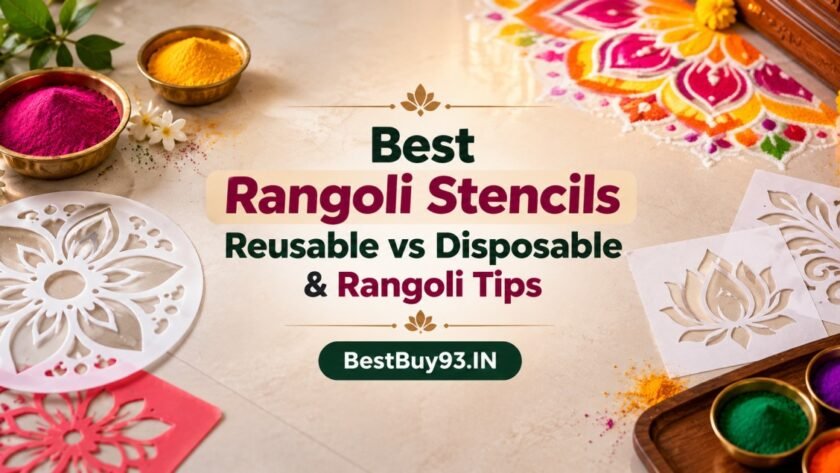

Rangol is a beautiful way to decorate your home’s entrance, balcony or pooja corner. But creating a neat design by hand can take time, especially if you want symmetrical patterns, intricate details or a clean finish. Rangoli stencils offer a simpler way to create attractive designs without needing advanced drawing skills.
From reusable plastic stencils and traditional geometric patterns to disposable rangoli sheets and ready-to-use templates, there are several options to consider. But which type is best for your home? Are reusable stencils worth buying, and what should you check before choosing a design?
In this guide, we compare reusable vs disposable rangoli stencils, explain the different materials and patterns available, and share practical tips for creating neat rangoli designs at home.
Quick Answer: Reusable or Disposable Rangoli Stencils?
- Choose reusable stencils if you make rangoli regularly and want to use the same designs multiple times.
- Choose disposable stencils or sheets if you want a quick, low-maintenance option for a one-time celebration.
- Choose fine-detail stencils for mandala-inspired patterns, floral motifs and intricate designs.
- Choose larger geometric stencils for entrances, doorways and broader floor patterns.
- Choose traditional hand-drawn rangoli if you enjoy custom designs and want complete creative freedom.
For most households that make rangoli during multiple festivals or special occasions, a small reusable stencil set can offer better long-term value than repeatedly purchasing disposable templates.
What Are Rangoli Stencils?
Rangoli stencils are templates with cut-out patterns that help you create designs by applying rangoli powder, coloured sand or another suitable decorative medium through the openings.
They are particularly useful for people who want clean outlines, repeated motifs or symmetrical patterns without drawing every element freehand.
You can use rangoli stencils for:
- Main door and entrance decoration
- Pooja room corners
- Balcony and veranda designs
- Floral and geometric rangoli patterns
- Mandala-inspired designs
- Repeated motifs around a larger rangoli
- Small decorative patterns for everyday occasions
The finished result depends on the stencil’s design, the surface, the powder consistency and how carefully you apply and remove the template.

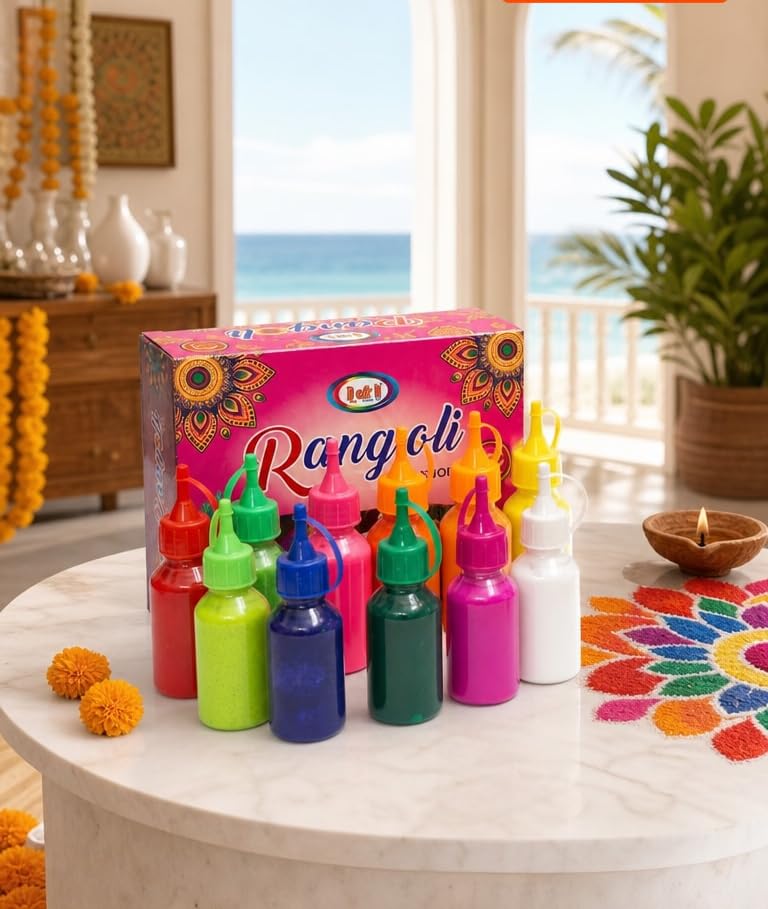
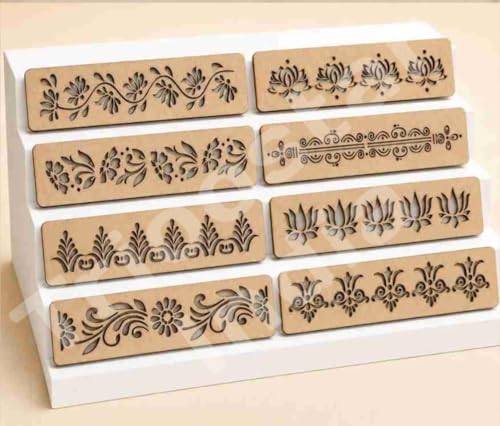
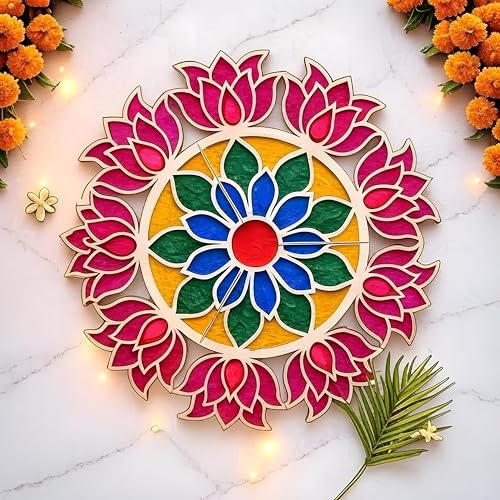

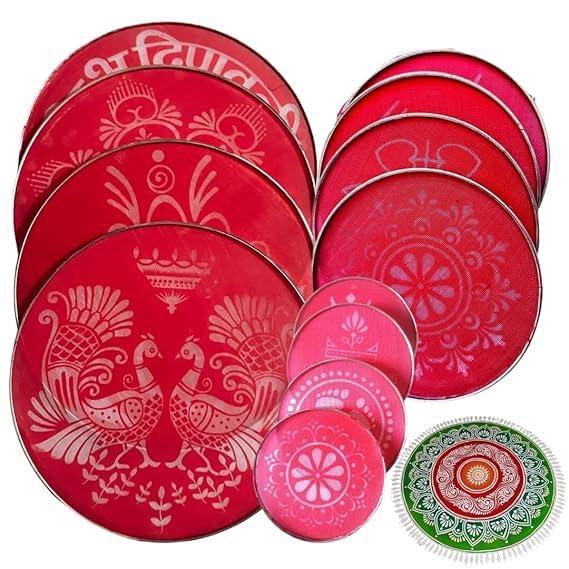


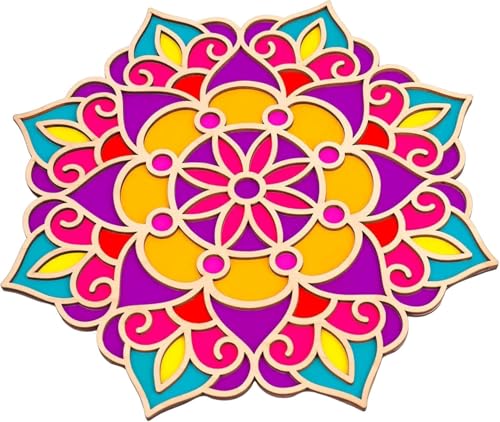
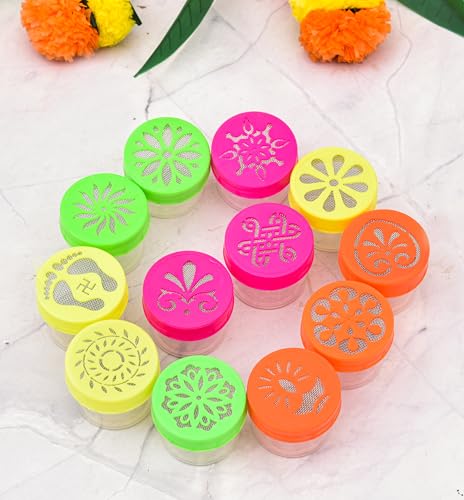
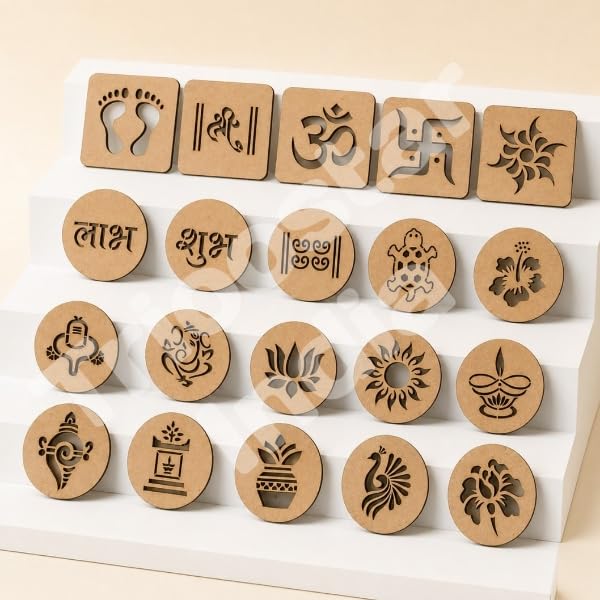

Best Types of Rangoli Stencils in India
Reusable Plastic Rangoli Stencils — Best Overall Choice
Best for: Families who make rangoli regularly.
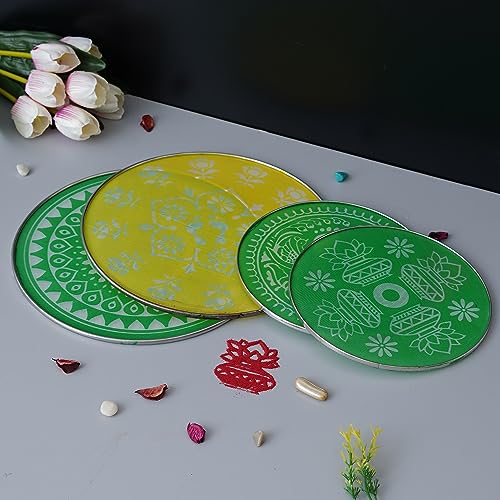
Reusable plastic stencils are popular because they can be used multiple times when handled and cleaned correctly. They are available in floral, geometric, traditional and contemporary patterns.
Advantages
- Suitable for repeated use
- Available in many designs and sizes
- Easy to store as a set
- Useful for beginners and experienced rangoli makers
- Can offer better long-term value for regular use
Limitations
- Thin plastic may bend or crack
- Powder can collect around narrow cut-outs
- Very intricate patterns may be difficult to clean
- Larger sets require organised storage
Buying tip: Look for a stencil that lies flat on your floor, has cleanly cut openings and is easy to lift without disturbing the powder.
Our take: A good starting point for most households, especially if you decorate your entrance or pooja area on multiple occasions.
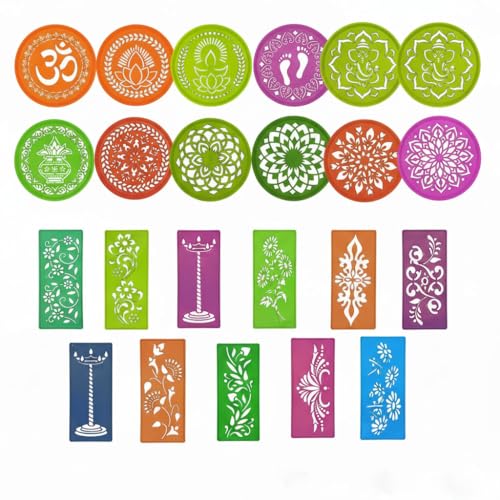
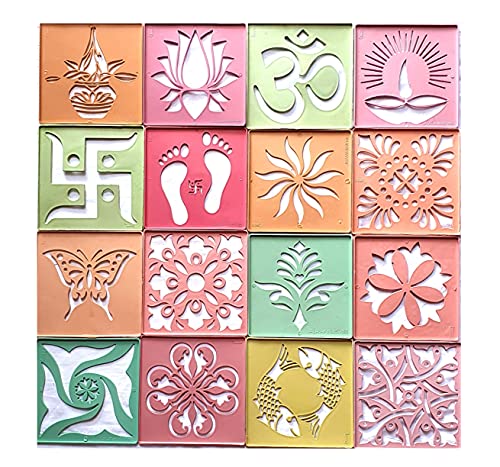

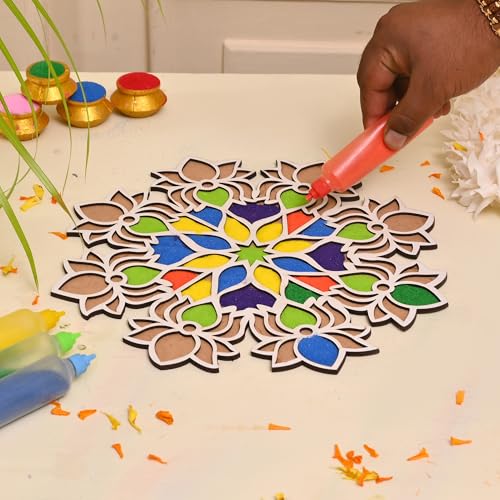


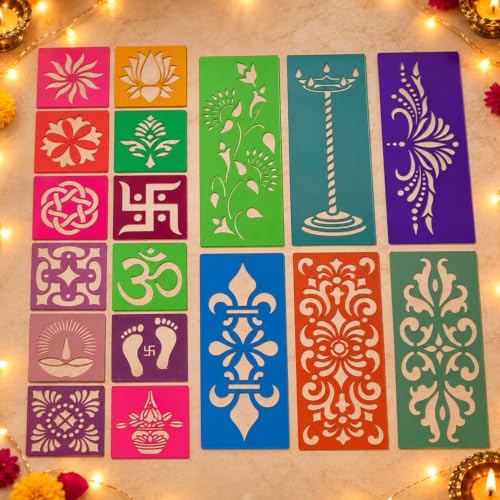


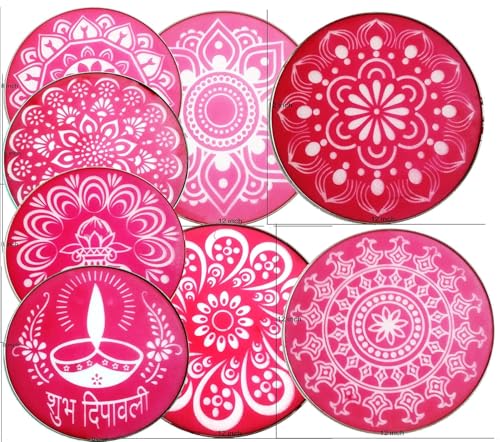
Disposable Rangoli Stencils and Sheets — Best for Occasional Use
Best for: People who want quick decoration without storing or cleaning templates.
Disposable stencils or ready-made rangoli sheets are designed for temporary use. Depending on the product, they may be paper-based, thin-film templates or pre-designed decorative sheets.
Advantages
- Convenient for one-time events
- Minimal cleaning after use
- Useful for quick designs
- Can be practical for small spaces
Limitations
- Usually unsuitable for repeated use
- Paper-based products may tear or absorb moisture
- Some sheets are decorative stickers rather than powder stencils
- Repeated purchases can add up
Buying tip: Check whether the product is a cut-out stencil for applying powder or a finished rangoli sticker. These products serve different purposes.
Our take: A convenient choice for occasional decoration, provided the material suits the intended surface and method.
Large Rangoli Stencils — Best for Main Entrances
Best for: People who want a noticeable design near the main door.
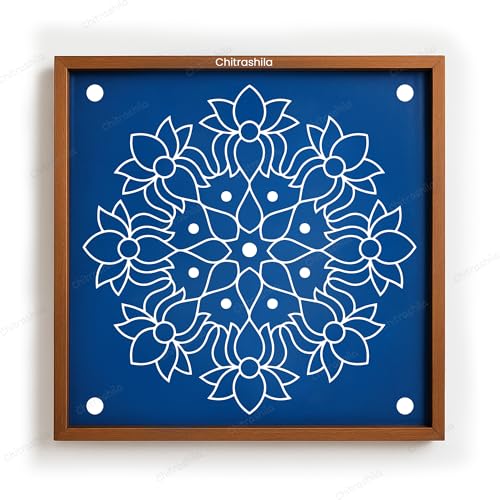
Large stencils can help create a central motif or a prominent entrance pattern. They are available in mandala, flower, lotus and geometric designs.
Advantages
- Create a visible focal point
- Can reduce the effort involved in drawing large patterns
- Useful for entrances and open floor areas
Limitations
- Need sufficient floor space
- Can be awkward to position if the sheet is flexible
- Large patterns may require more rangoli powder
- Difficult to use neatly on uneven surfaces
Buying tip: Measure the available area before ordering. Leave enough space around the design for doors to open and people to walk safely.
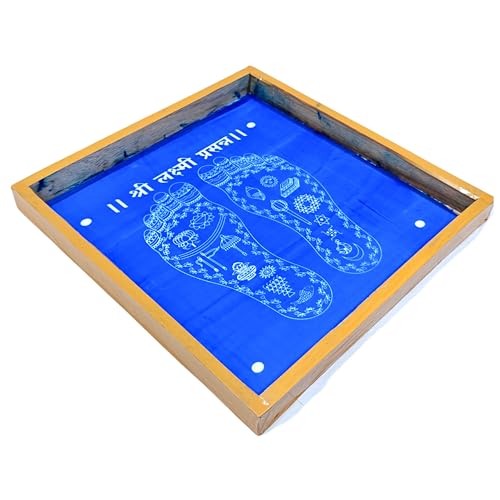
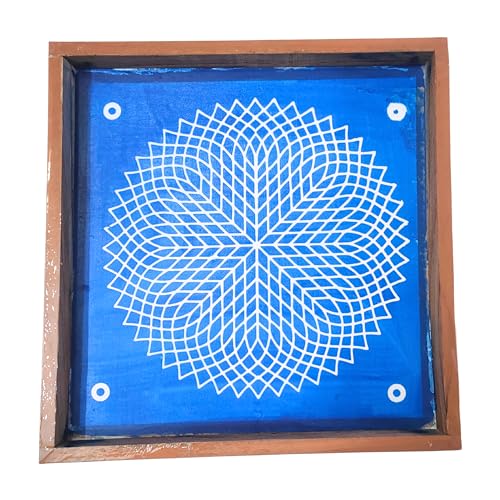
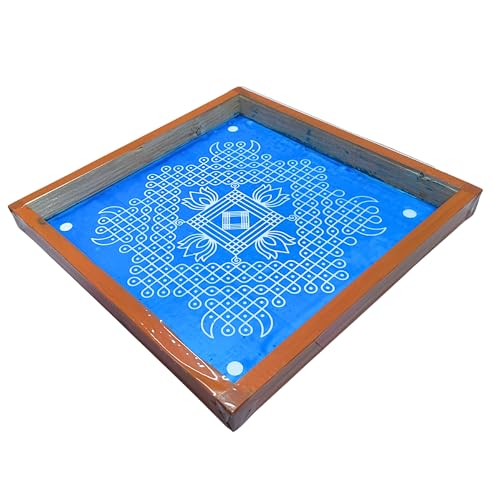




Small Rangoli Stencils — Best for Pooja Corners and Details
Best for: Compact homes, small pooja spaces and decorative borders.
Small stencils work well for creating a sequence of motifs or adding details around a larger design.
Advantages
- Easy to position
- Useful for compact spaces
- Suitable for repeated patterns and borders
- Require relatively little powder
Limitations
- May take longer to arrange several designs
- Small cut-outs can clog with powder
- Less suitable for creating one large central rangoli
Buying tip: Choose designs that are easy to lift without smudging the surrounding powder.



Multi-Design Rangoli Stencil Sets — Best for Variety
Best for: Buyers who want different patterns for different occasions.
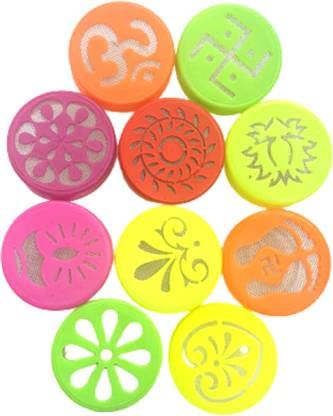
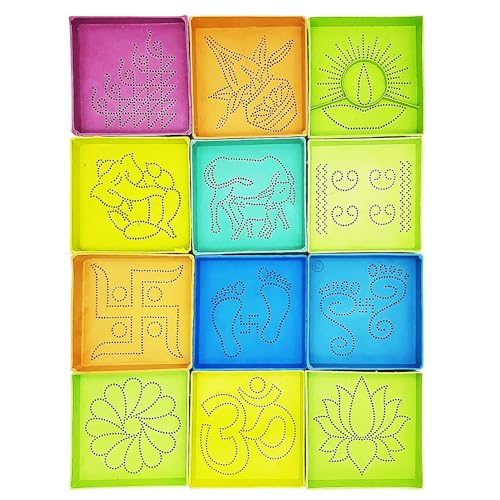
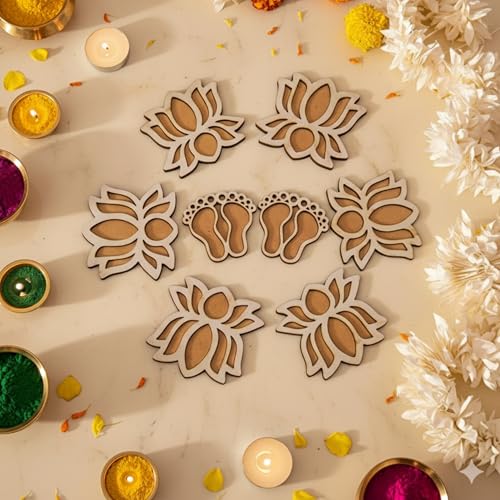
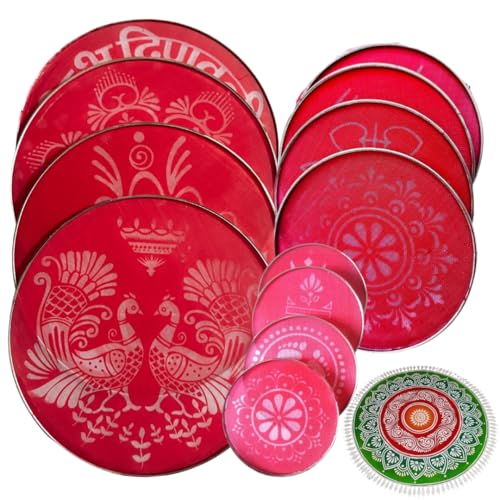
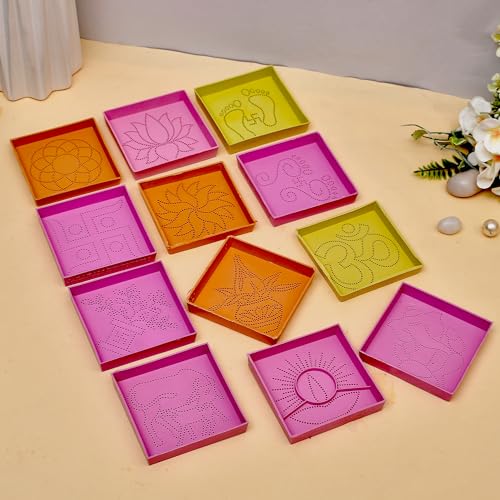
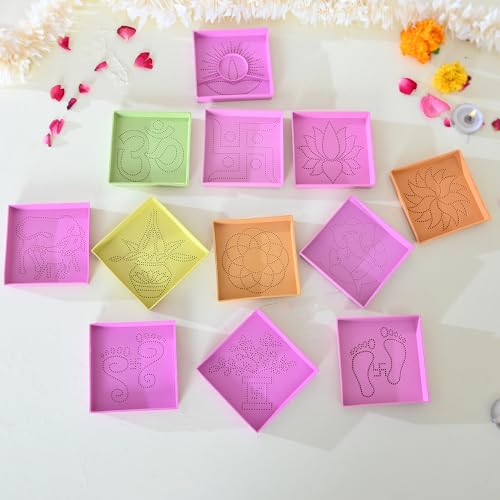
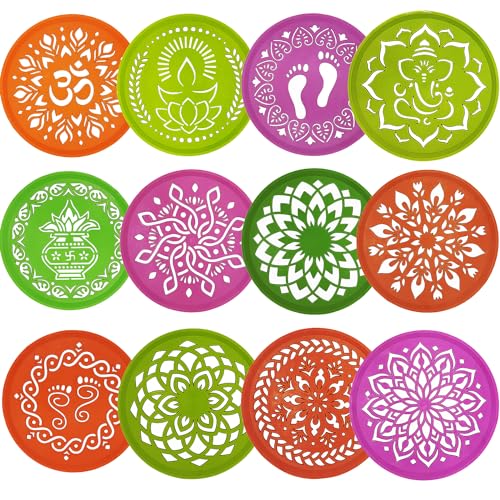
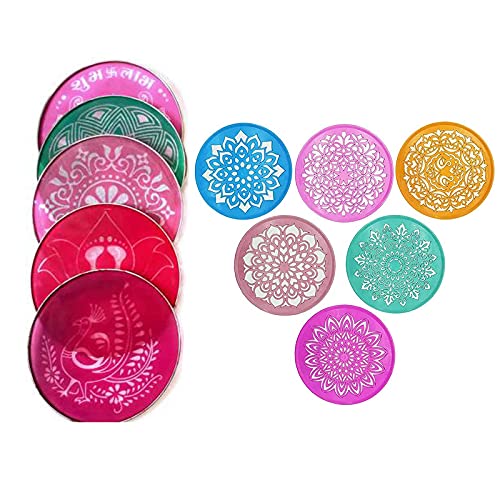
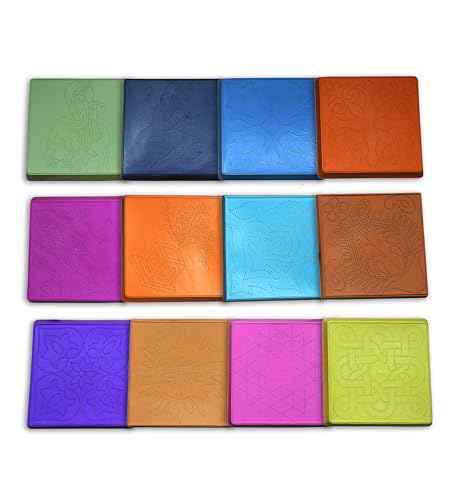
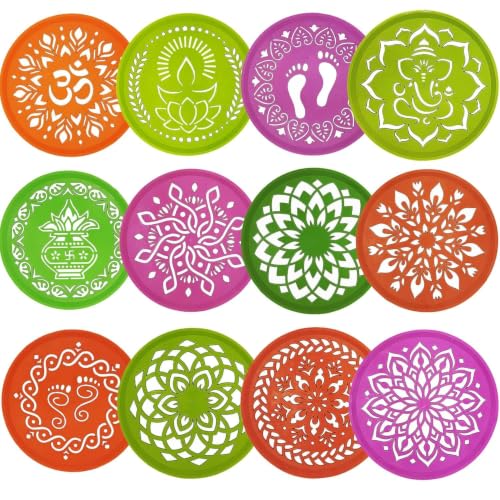
Multi-design sets may include flowers, leaves, diyas, dots, geometric patterns and traditional motifs. They can be useful when you want to vary your rangoli without buying a new stencil every time.
Advantages
- Multiple designs in one purchase
- Useful for borders and combinations
- Can suit several occasions
- Often easier to organise than buying separate templates
Limitations
- Some designs may rarely be used
- Quality may vary between pieces
- Very large sets may contain repetitive patterns
Buying tip: Prioritise useful patterns and material quality over the number of stencils included.




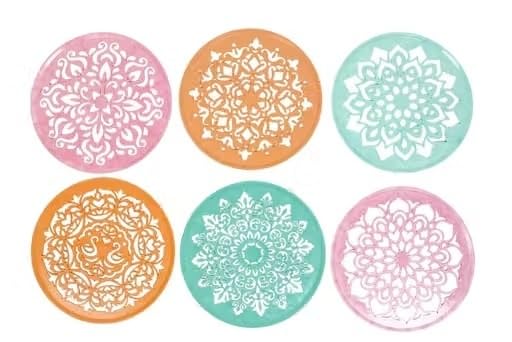
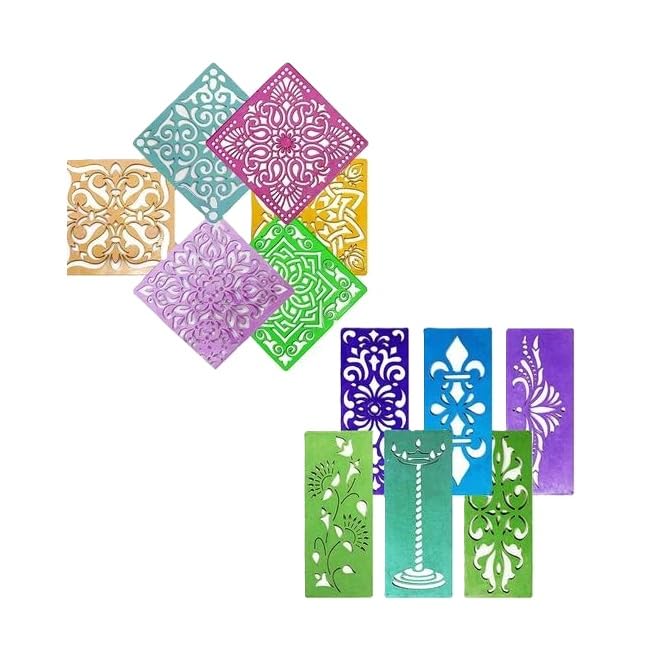
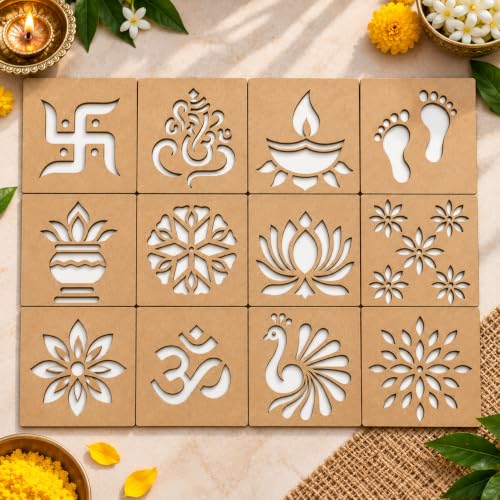
Reusable vs Disposable Rangoli Stencils
| Feature | Reusable stencils | Disposable stencils or sheets |
|---|---|---|
| Best for | Regular rangoli making | Occasional decoration |
| Repeated use | Yes, with proper care | Usually no |
| Cleaning | Required after use | Usually minimal |
| Storage | Needed | Often unnecessary |
| Design variety | Available in sets | Depends on the product |
| Long-term value | Often better for frequent use | Can suit one-time use |
| Durability | Depends on material and thickness | Depends on paper or sheet material |
| Best buying priority | Flatness, cut quality and durability | Ease of use and intended purpose |
Which is better?
For regular festive decoration, reusable stencils are usually the more practical choice. If you need a quick design for one event, a disposable template or ready-made sheet may be more convenient.
Remember that disposable rangoli stickers are not the same as powder stencils. Check the product description and photographs carefully before ordering.
Popular Rangoli Stencil Designs
Floral Rangoli Stencils
Floral designs are versatile and work well near entrances, balconies and pooja areas. Lotus, rose-inspired, petal and symmetrical flower patterns are popular choices.
Choose a stencil with clear petal outlines if you plan to use multiple colours.
Geometric Rangoli Stencils
Geometric patterns are suitable for modern homes and minimalist decor. Circles, diamonds, squares and repeating symmetrical shapes can create a neat look without requiring many colours.
These designs are particularly useful when you want a clean pattern rather than a heavily detailed arrangement.
Mandala Rangoli Stencils
Mandala-inspired patterns feature concentric circles and repeated details. They can look attractive in larger open areas, but intricate cut-outs may require careful powder application.
For beginners, a medium-detail mandala is often easier to manage than a very fine pattern.
Traditional Rangoli Motifs
Traditional designs may include diyas, lotus flowers, dots, swastika motifs used in Hindu auspicious decoration, kalash-inspired patterns and other cultural symbols.
Choose designs that suit your family’s traditions and the occasion.
Border Rangoli Stencils
Border stencils are useful along doorways, walls and the edges of a larger rangoli. Repeated flowers, dots or geometric motifs can create a coordinated look without filling the entire floor.
Minimal Rangoli Stencils
Minimal designs use a small number of shapes and colours. They are useful for compact entrances, apartments and everyday decoration.
If your home decor is understated, a simple white, yellow or red rangoli design may complement the space better than an oversized multicolour pattern.
How to Choose the Right Rangoli Stencil
A. Check the Material
Plastic stencils are widely available, but the thickness and flexibility can vary. Choose a template that feels sturdy enough to lie flat and withstand careful cleaning.
For paper-based or disposable products, check whether the material is intended for powder application, single use or decorative placement.
B. Select the Right Size
Think about where you plan to make rangoli.
- Small: Pooja corners, compact entrances and borders
- Medium: Apartment doorways and everyday decorative patterns
- Large: Spacious entrances, verandas and open floor areas
Measure the area before buying, particularly if the stencil has a large central motif.
C. Inspect the Cut-Outs
Clean, well-defined openings help powder form clearer outlines. Avoid templates with rough edges, blocked cut-outs or narrow sections that are likely to clog easily.
D. Choose Designs You Will Reuse
If you plan to create rangoli throughout the year, choose a versatile set with flowers, geometric shapes and border patterns. A smaller set of useful designs may be more practical than a large set of repetitive motifs.
E. Consider the Floor Surface
Smooth floors can make it easier to position a stencil and create a neat design. Dusty, damp or uneven surfaces may cause the template to move or the powder to spread.
Always test the powder and stencil on a small area before creating the full design.
F. Check Cleaning and Storage Requirements
Reusable stencils should be easy to clean and store flat. If a stencil has many fine details, check whether powder can be removed without bending or damaging the material.
G. Compare Total Value, Not Just Price
A cheap stencil may be sufficient for occasional use, but a durable reusable stencil can be more economical if you use it repeatedly.
Compare material, design variety, size, cut quality and seller return conditions before deciding.
Easy Rangoli Tips for Beginners
Step 1: Clean and Dry the Floor
Remove dust, loose debris and moisture. A clean, dry surface helps the stencil sit properly and reduces unwanted smudging.
Step 2: Position the Stencil Carefully
Place the stencil on the floor and check that it lies flat. If it moves easily, hold it gently at the edges without covering the cut-outs.
Avoid using adhesives that may leave residue or damage the floor finish.
Step 3: Use Fine, Dry Rangoli Powder
Dry, finely textured powder usually passes through stencil openings more evenly than damp or clumpy powder.
If you are using coloured powder, prepare the shades before starting so that you do not have to move the stencil repeatedly.
Step 4: Apply Powder Gradually
Use a small spoon, shaker or your fingers to distribute powder gently over the openings. Avoid piling on too much powder, especially around narrow lines and detailed motifs.
A light, even application is easier to control.
Step 5: Lift the Stencil Straight Up
Once the design is complete, lift the stencil slowly and vertically. Dragging it sideways can blur the outline and move powder into neighbouring sections.
Step 6: Correct the Edges
Use a small spoon, cotton bud or fingertip to tidy uneven edges. Add contrasting colours carefully if you want a layered design.
Step 7: Add Simple Finishing Details
Small dots, petals or a few contrasting accents can improve the appearance without overcrowding the pattern.
Keep the surrounding floor clear so that the design remains the focal point.
In Case You Are Looking For:
- Best Fairy Lights: Warm White vs Multicolor
- Best Artificial Flower Garlands: Festive Floral Decor
- Best LED Strip Lights for Home
Common Rangoli Stencil Mistakes to Avoid
1. Using damp powder
Moisture can cause clumps and uneven patterns. Use dry powder and keep it protected from humidity.
2. Moving the stencil while applying powder
Even a small movement can blur the outlines. Hold the stencil steadily and work in controlled amounts.
3. Applying too much powder
Excess powder can spill into neighbouring cut-outs. Apply a thin, even layer instead.
4. Choosing an oversized design
A stencil that is too large may crowd a narrow entrance or make the space look cluttered. Measure first.
5. Lifting the stencil sideways
Always lift vertically and slowly to preserve the design.
6. Buying a set based only on the number of pieces
A smaller, well-made set may be more useful than a large set with rough cut-outs or repetitive designs.
7. Ignoring floor safety
Loose rangoli powder can make smooth floors slippery. Keep walking paths clear and avoid creating raised powder piles in areas with frequent foot traffic.
8. Using unsuitable cleaning products
Follow the stencil material’s cleaning instructions. Harsh chemicals or excessive heat can damage some plastics.
Cleaning and Storage Tips for Reusable Rangoli Stencils
Proper care can help reusable stencils remain useful for multiple occasions.
- Remove loose powder gently after use.
- Clean washable stencils according to the manufacturer’s instructions.
- Avoid scrubbing delicate cut-outs with sharp objects.
- Allow the stencil to dry fully before storing it.
- Store flat to reduce bending and warping.
- Keep stencils away from excessive heat and direct sunlight if the material may deform.
- Sort designs by size or motif for easier access next time.
For disposable paper templates, follow the product’s reuse instructions rather than assuming they can be washed.
Frequently Asked Questions
1. Are reusable rangoli stencils better than disposable ones?
Reusable stencils are usually better for people who make rangoli regularly. Disposable templates are convenient for occasional use and require less storage and cleaning.
2. Which material is best for rangoli stencils?
Sturdy plastic is a practical option for many reusable stencils because it can be cleaned and stored. Material quality and cut-out design matter as much as the material itself.
3. Can beginners use rangoli stencils?
Yes. Stencils can make symmetrical patterns easier to create, even if you are not comfortable drawing rangoli freehand. Start with a simple floral or geometric design.
4. Which rangoli stencil size should I buy?
Choose a small stencil for a pooja corner or border, a medium stencil for an apartment entrance, and a large stencil for an open floor area. Measure the available space before buying.
5. Can I use rangoli stencils with coloured powder?
Yes, if the stencil and powder are suitable for the method. Dry, finely textured powder generally gives cleaner results. Apply it gradually to avoid spilling between sections.
6. How do I stop rangoli powder from spreading?
Start with a clean, dry floor, hold the stencil steadily, use small amounts of powder and lift the stencil vertically. Tidy the edges gently after removing it.
7. Are rangoli stickers the same as stencils?
No. A stencil is a template used to form a design with powder or another material. A rangoli sticker or ready-made sheet is a finished decorative item that is placed on the surface.
8. How do I clean a reusable plastic rangoli stencil?
Remove loose powder first and clean the stencil as directed by the manufacturer. Dry it completely before storing it flat.
9. Can I reuse paper rangoli stencils?
It depends on the paper, coating and product instructions. Paper templates can tear or become misshapen, particularly if they get wet.
10. How can I make a stencil rangoli look more attractive?
Use a limited colour palette, apply powder evenly, add a few contrasting details and keep the surrounding floor clean. A simple, balanced design often looks neater than one with too many colours and decorations.
Final Verdict: Which Rangoli Stencil Should You Buy?
The best rangoli stencil depends on how often you decorate, the space available and the style you prefer.
- Best for regular use: A sturdy reusable plastic stencil set with versatile patterns.
- Best for one-time occasions: A disposable stencil or ready-made rangoli sheet.
- Best for main entrances: A large floral or geometric stencil that fits the available floor space.
- Best for pooja corners: Small traditional motifs or compact floral designs.
- Best for variety: A multi-design set with useful patterns and clean cut-outs.
- Best for beginners: A simple stencil with broad openings and minimal detail.
For most Indian homes, a compact reusable set with a few floral, geometric and traditional patterns is a sensible starting point. It offers flexibility for different occasions without requiring a large collection.
The secret to a neat stencil rangoli is not just the template. A clean floor, dry powder, careful placement and a gentle vertical lift all help create a sharper finish.