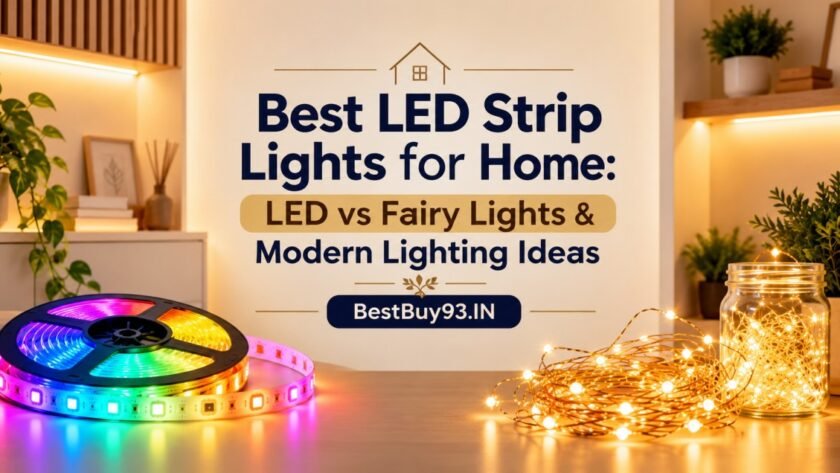

If your room feels a little too plain but you don’t want to start drilling holes, changing furniture or turning your home into a lighting showroom, LED strip lights can be one of the easiest upgrades you can make. ✨
But there is one small problem: there are way too many LED strips available today. Some are designed for false ceilings and profile lighting, some are made for TV backlighting, some are colourful RGB strips for bedrooms and gaming setups, and others are smart lights that work with apps and voice assistants.
And then there are fairy lights.
They may look similar online, but LED strip lights and fairy lights create completely different effects.
In this guide, we’ll look at the best LED strip lights for home use, compare LED strips with fairy lights, explain which type works best in different rooms, and cover the features that actually matter before you buy.
I’ll also explain when you should spend more on a smart strip and when a simple ₹500–₹1,000 option is perfectly enough.
Also Read | Best Smart Bulbs for Festive Home Lighting
Best LED Strip Lights for Home
1. Philips Profile Shine — Best Overall
Best for: False ceilings, walls, shelves, furniture and modern home interiors
If your goal is a clean, premium-looking glow rather than a colourful gaming-room effect, Philips Profile Shine is one of the most sensible choices.
Philips lists the Profile Shine as a profile-lighting strip with 240 LEDs over 5 metres, with up to 900 lumens per metre and options designed to provide more uniform illumination with fewer visible dark spots.
That distinction matters.
Cheap LED strips can sometimes look like a row of individual dots stuck to your furniture. That’s not necessarily the sophisticated interior-design look you’re going for.
Profile-style lighting is better when the strip is installed inside a suitable profile or concealed location so that you see the light rather than the individual LEDs.
Key Features
- 5-metre strip
- 240 LEDs
- Up to 900 lumens/m
- Warm White, Natural White and Cool Daylight options
- Designed for profile lighting
- Suitable for architectural accents
- Adhesive-backed installation
Why We Recommend It
The biggest advantage is uniformity.
For a false ceiling, TV unit, shelf or architectural feature, consistent light usually looks much better than an aggressively bright RGB strip.
Best For
- Modern living rooms
- False ceilings
- TV units
- Wardrobes
- Shelves
- Bedrooms
- Accent walls
Who Should Skip It
Skip this type if you specifically want:
- Music-sync lighting
- Gaming effects
- RGB colour animations
- A cheap temporary festive decoration
Pros
- Excellent choice for modern interiors
- High LED density
- More uniform-looking illumination
- Multiple white-light options
- Better suited to architectural lighting
Cons
- Not the cheapest decorative option
- Installation needs more planning than fairy lights
- Not primarily designed for colourful party effects
Our Verdict
If your priority is making your home look modern and polished, start here.
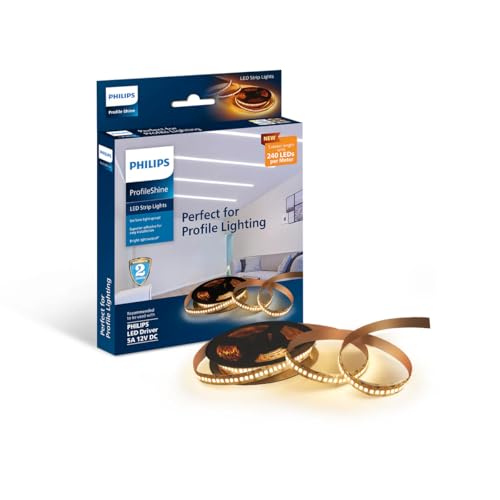
- 5-meter LED Strip especially designed for Profile use
- Uniform brightness with 900 lumens/meter
- Superior adhesive for easy and worry-free installation
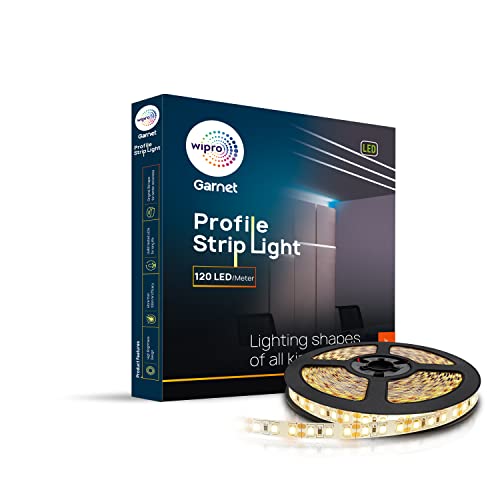
2. Wipro Garnet Profile Strip 12V — Best Value
Best for: Budget-conscious homeowners who want profile-style lighting
Wipro’s Garnet Profile Strip is a particularly interesting option because it gives you the architectural-lighting approach without automatically pushing you into premium pricing.
Wipro currently lists the Garnet Profile Strip 12V at a discounted price on its own website, with 2-year warranty coverage. The product is available in Natural White/Warm White configurations.
The strip is designed around the kind of concealed lighting that works beautifully underneath shelves, inside profiles, around furniture and as indirect ceiling illumination.
Key Features
- 12V profile strip
- Natural White/Warm White options
- Designed for indoor applications
- Aluminium heat-management approach
- 2-year warranty listed by Wipro
- Compatible driver required
Why We Recommend It
This is the kind of product I’d look at if I wanted to improve the lighting in a room without turning the project into a ₹10,000 smart-lighting experiment.
Best For
- Bedrooms
- Living rooms
- Wardrobes
- Shelves
- False ceilings
- Budget renovations
Who Should Skip It
Skip it if you want app control, RGB effects or voice-controlled lighting.
Pros
- Good value
- Suitable for modern interiors
- Warm and natural lighting options
- 2-year warranty
- Better suited to permanent installations than novelty lighting
Cons
- Not an RGB party light
- Driver requirements need to be checked
- Installation requires more planning
Our Verdict
A strong choice when you want stylish architectural lighting without spending heavily on smart features.
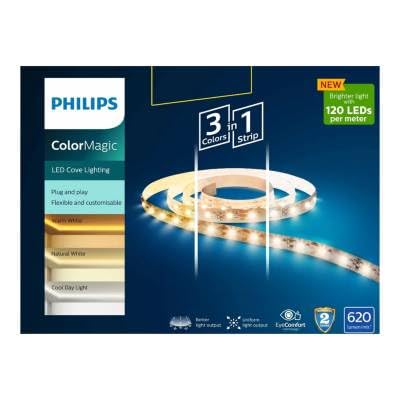
3. Philips ColorMagic 3-in-1 LED Strip — Best for Flexible Ambience
Best for: People who want different white-light moods without going fully smart
Here’s something many buyers overlook:
You don’t necessarily need RGB to change the mood of a room.
Philips ColorMagic offers three white-light modes Warm White, Natural White and Cool Daylight allowing you to switch the atmosphere depending on how you’re using the room.
That’s actually more practical for many homes than having 16 million colours you will use twice and then forget about. 😄
Best For
- Bedrooms
- Living rooms
- Study areas
- Home offices
- People who prefer white lighting
Why We Recommend It
It’s a nice middle ground between a basic fixed strip and a full smart RGB setup.
You can have warmer lighting when relaxing and cooler lighting when you need a brighter, more functional environment.
Pros
- Three useful white-light modes
- More practical than unnecessary RGB effects
- Good for everyday home use
- Philips ecosystem and brand support
Cons
- Not the same as a fully smart RGB strip
- Less exciting for gaming or party setups
Our Verdict
Choose this if you want lighting flexibility rather than rainbow effects.
4. Philips Smart Wi-Fi LED Strip — Best Smart LED Strip
Best for: Smart-home users
If you want to control your lighting from your phone, the Philips Smart Wi-Fi LED Strip is a much more interesting proposition.
Philips currently lists the strip as a 5-metre Wi-Fi-enabled product with tunable white light and 16 million colour options. It can be controlled through a smartphone app and supports voice assistants, while Philips says it can be installed on surfaces including cabinets, windows and tray ceilings.
Key Features
- 5 metres
- Wi-Fi controlled
- Tunable white
- Full-colour lighting
- Smartphone control
- Voice-assistant compatibility
- Adhesive-backed strip
Why We Recommend It
This is where an LED strip starts becoming part of your home automation setup, rather than simply being decorative lighting.
You can change brightness and colour without reaching behind furniture to find a switch.
Best For
- Smart homes
- Bedrooms
- TV rooms
- Modern living rooms
- Home offices
- Entertainment areas
Who Should Skip It
Don’t spend the extra money on smart lighting if you’re only going to turn the light on and leave it on warm white every evening.
A basic strip can do that job.
Pros
- App control
- Colour + tunable white
- Voice control
- 5-metre length
- Useful for automated lighting routines
Cons
- More expensive than basic strips
- Smart features may be unnecessary for some users
- Wi-Fi dependency adds another layer of setup
Our Verdict
A good upgrade if you actually want smart-home control rather than simply wanting an LED strip.
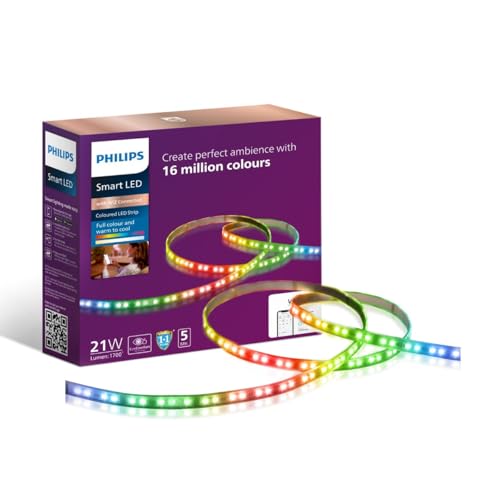
- Smart LED Strip Light with Driver : Philips Wiz LED Strip Light with Driver is a smart 5-meter RGB strip light that work…
- Technicality: Philips Wiz strip light is a 21-watt 5-meter LED smart RGB strip light that can change its color .The LED …
- Application: Philips Wiz Strip light can be used to enhance your gaming and entertainment experience. This smart wiz RGB…
5. Govee RGBIC LED Strip — Best for RGB Entertainment
Best for: Gaming rooms, TV rooms, parties and colourful bedroom setups
Govee is worth considering if your idea of home lighting involves colour-changing scenes, music synchronisation and dramatic effects rather than subtle architectural lighting.
Current Indian-market listings for Govee RGBIC strips show features such as app control, music synchronisation and RGBIC multi-colour effects, although availability and pricing can vary considerably because some models are sold through import channels.
Why RGBIC Matters
Traditional RGB strips often show one colour across the strip at a time.
RGBIC technology can allow different sections of the strip to display different colours simultaneously.
That creates much more interesting animations.
Best For
- Gaming setups
- Bedrooms
- TV walls
- Parties
- Teen rooms
- Entertainment spaces
Pros
- Dynamic colour effects
- App control
- Music-sync modes on supported models
- Excellent for entertainment
- More interesting than basic RGB strips
Cons
- Often more expensive in India
- Availability varies
- Overkill for simple ambient lighting
- International/imported products can complicate warranty support
Our Verdict
Fantastic for entertainment. Probably unnecessary if you simply want your living room to look elegant.
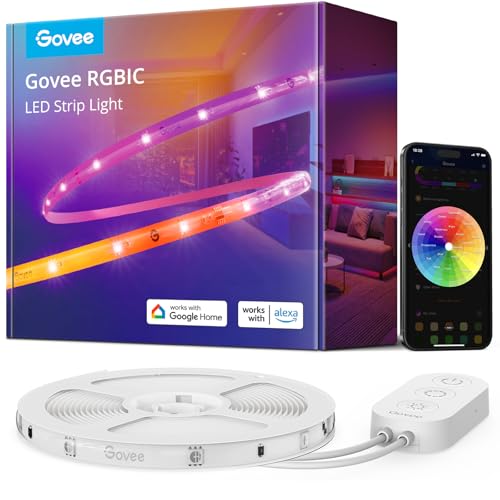
- Protective Coating: The LED strips light are covered with protective coating, which is highly durable and flexible. It c…
- Smart RGBIC Effects: Unlike RGB, RGBIC LED strip lights present stunning segmented colors on a line. The smart LED strip…
- Alexa Compatible LED Lights: Connect smart LED strip lights directly to your WiFi router, Alexa/Google Assistant providi…
6. Philips Hue LightStrip Plus — Best Premium Smart Lighting
Best for: Premium smart-home setups
If budget isn’t your main concern and you already like the Philips Hue ecosystem, the Hue LightStrip Plus is the premium option in this list.
Philips Hue lists the LightStrip Plus with 16 million colours, dimming, app control and compatibility with major smart-home ecosystems. The 2-metre base version can also be extended, with Philips specifying extension capability up to 10 metres for compatible versions.
Why We Recommend It
The big selling point isn’t simply “it changes colour.”
There are hundreds of cheaper strips that do that.
The appeal is the ecosystem, smart-home integration, control and ability to build a more sophisticated lighting setup.
Best For
- Premium homes
- Smart-home enthusiasts
- Entertainment rooms
- Home offices
- TV areas
Who Should Skip It
If you’re looking for a ₹500 decorative light for Diwali, please don’t buy this. 😂
You’re paying for an ecosystem and advanced functionality.
Pros
- Premium smart-lighting ecosystem
- Excellent colour flexibility
- Dimmable
- Extendable
- Alexa/Google Home/Apple Home compatibility
- Strong automation options
Cons
- Expensive
- More than most homes need
- Some advanced ecosystem features require additional Hue hardware
Our Verdict
The luxury choice for people who actually want to build a smart lighting system.
![Philips Hue Lightstrip Extension v4 [1 m] White and Colour Ambian...](https://m.media-amazon.com/images/I/21NgIFkyofL.jpg "Best LED Strip Lights for Home 7")
Quick Answer: Which LED Strip Light Is Best for Your Home?
If you want the short version:
- 🏆 Best Overall for Modern Home Lighting: Philips Profile Shine
- 💰 Best Value: Wipro Garnet Profile Strip
- 🌈 Best for Colour-Changing Ambience: Philips ColorMagic
- 📱 Best Smart Option: Philips Smart Wi-Fi LED Strip
- 🎮 Best for RGB/Entertainment Setups: Govee RGBIC LED Strip
- 🏠 Best for Smart-Home Users: Philips Hue LightStrip Plus
- ✨ Best for Traditional/Festive Decoration: Fairy lights
The important thing is that there isn’t one universally best LED strip.
If you’re lighting a false ceiling, you need something very different from what you’d buy for a gaming desk
LED Strip Light Comparison
| Product | Best For | Type | Smart Control | Colour Options |
|---|---|---|---|---|
| Philips Profile Shine | Modern interiors | Profile strip | No | White-light variants |
| Wipro Garnet Profile Strip | Budget modern lighting | Profile strip | No | Warm/Natural White |
| Philips ColorMagic | Flexible white lighting | Colour-temperature strip | Limited/manual | 3 white modes |
| Philips Smart Wi-Fi Strip | Smart homes | Smart RGB strip | Yes | RGB + tunable white |
| Govee RGBIC | Gaming/entertainment | RGBIC strip | Yes | Dynamic RGB |
| Philips Hue LightStrip Plus | Premium smart homes | Smart strip | Yes | 16M colours + white |
Note: Prices vary by seller, length, promotions and availability. Treat the table as a relative price guide rather than a fixed October 2026 price.
LED Strip Lights vs Fairy Lights: Which Is Better?
Here’s the simplest answer:
Choose LED strip lights for structured, modern and concealed lighting. Choose fairy lights for soft, decorative and festive lighting.
They’re not really competing products.
Think of it this way:
LED strip = architecture + ambience
Fairy lights = decoration + sparkle
LED strips create a continuous line of illumination. Fairy lights create individual points of light along a wire.
That difference completely changes how they look in a room.
| Feature | LED Strip Lights | Fairy Lights |
|---|---|---|
| Appearance | Continuous glow | Individual points of light |
| Style | Modern/minimal | Cozy/decorative |
| Installation | Stick/mount | Hang/drape/wrap |
| Best for | Ceilings, shelves, TV units | Windows, balconies, plants |
| RGB options | Very common | Available but less universal |
| Smart control | Common in premium models | Less common |
| Festive decor | Good | Excellent |
| Architectural lighting | Excellent | Poor |
| Quick temporary decor | Okay | Excellent |
| Everyday ambient lighting | Excellent | Limited |
Current home-decor guidance also makes this distinction: LED strips are particularly useful for ceilings, shelves and TV units, while fairy lights work well around windows, balconies and decorative elements.
When Should You Choose Fairy Lights Instead?
Choose fairy lights when you want the light itself to be visible.
They’re fantastic around:
- Curtain rods
- Windows
- Balcony railings
- Mirrors
- Plants
- Bed frames
- Wall photo displays
- Festive decorations
- Puja corners
- Diwali décor
Warm-white fairy lights can also work beautifully with traditional Indian interiors because the tiny points of light complement flowers, diyas, brass décor and wooden furniture rather than creating one strong illuminated line.
For festive decorating, this is where fairy lights still absolutely win.
You don’t need an RGB strip shouting “party mode activated” when you’ve already got rangoli, marigolds, diyas and a gorgeous toran doing the heavy lifting. 😄
Which LED Strip Light Is Best for Different Rooms?
🛋️ Living Room
Go for:
Warm white or natural white profile lighting.
Good locations include:
- TV unit
- False ceiling
- Floating shelves
- Display cabinets
- Behind furniture
Avoid covering every possible edge with LED strips.
A little indirect lighting looks expensive.
Too much looks like a gaming café.
🛏️ Bedroom
Warm white is usually the safer choice.
Install strips:
- Behind the headboard
- Under the bed
- Behind a dressing mirror
- Inside wardrobes
- Along a ceiling cove
If you want RGB, keep it as an accent rather than the primary light source.
🍳 Kitchen
LED strips can be extremely useful under kitchen cabinets.
Here, functional lighting matters more than decorative lighting.
A bright, neutral-white strip under an upper cabinet can illuminate the countertop far better than a string of fairy lights.
For kitchens, check the product’s environmental/IP rating if the strip will be exposed to moisture or splashes.
💻 Home Office
Choose neutral or cool white lighting.
A strip under a shelf can provide useful indirect illumination without putting a harsh light directly behind your monitor.
For a work setup, don’t choose RGB purely because it looks cool in Instagram reels.
Your eyes have bills to pay. 😂
📺 TV Unit
LED strips work brilliantly behind TVs and entertainment units.
A subtle warm or neutral glow can create depth around the screen without visually cluttering the wall.
Smart RGB strips are also popular if you want movie-night or gaming scenes.
Modern LED Strip Lighting Ideas for Home
1. Floating TV Wall
Install a warm-white strip behind the TV panel.
The light creates a floating effect and gives a flat wall more depth.
2. Under-Bed Lighting
A strip installed beneath the bed frame creates a subtle floating effect.
It’s also useful as low-level night lighting.
3. Wardrobe Lighting
Use a strip inside or underneath wardrobe shelves.
This is one of those upgrades that sounds unnecessary until you actually have it.
Then suddenly you’re wondering how you survived without it.
4. Kitchen Cabinet Lighting
Install a neutral-white strip underneath overhead cabinets.
This combines decor and functionality, making it one of the best uses for LED strips.
5. False Ceiling Cove
This is probably the most classic application.
The strip stays hidden while the ceiling reflects the light.
The result is softer than exposing the LEDs directly.
6. Study Shelf
Add a strip underneath a shelf above your desk.
Use neutral white rather than aggressive RGB if you actually plan to study there.
7. Balcony Accent
For balconies, use only products specifically rated for the environment in which they will be installed.
Do not assume every LED strip is waterproof just because it is sold as “outdoor-looking.”
What to Look for When Buying LED Strip Lights
1. Decide What Kind of Lighting You Need
Before looking at brands, answer this:
Do I want decoration, ambience or functional lighting?
- Decoration → Fairy lights
- Ambient accent → LED strip
- Task lighting → High-quality white LED strip
- Entertainment → RGB/RGBIC
- Smart home → Wi-Fi/Bluetooth strip
This single decision eliminates half the confusion.
2. Check LED Density
LED density means how closely the LEDs are placed along the strip.
Higher density can produce a more uniform appearance.
For architectural lighting, this matters because you don’t want obvious bright dots and dark gaps.
Philips’ Profile Shine, for example, is positioned as a high-density profile strip designed for uniform illumination.
3. Check Brightness
Don’t judge a strip solely by:
“It has 300 LEDs!”
More LEDs do not automatically mean a better light.
Look for actual brightness information such as lumens, when available.
4. Check Colour Temperature
For home interiors:
- Warm white: Cozy, relaxing
- Natural/neutral white: Balanced everyday lighting
- Cool daylight: Brighter, more functional
- RGB: Decorative/entertainment
For most bedrooms and living rooms, warm white is a safe choice.
5. Check Whether You Need a Driver
This is a big one.
Some LED strips require a compatible driver or power supply.
Don’t buy the strip first and then discover that you have purchased half a lighting system.
Check:
- Voltage
- Driver requirements
- Wattage
- Connector compatibility
6. Check IP Rating for Moisture
If you’re using a strip in a humid or potentially wet location, check its IP rating.
A normal indoor strip should not automatically be installed outdoors or in a wet environment.
Wipro specifically notes that strips intended for humid/wet applications should have an appropriate IP rating, such as IP65 or higher depending on the environment.
7. Check Cutting Points
Many strips can be cut, but only at the marked cutting points.
Don’t grab scissors and cut wherever you feel like it.
That is how a perfectly good strip becomes an expensive piece of electronic ribbon.
8. Think About Heat Management
LEDs are efficient, but they still produce heat.
For permanent installations, particularly brighter strips, proper heat dissipation can matter for long-term performance.
Wipro, for example, highlights aluminium heat management in its Garnet Profile Strip.
Common LED Strip Light Buying Mistakes
❌ Buying RGB when you actually need everyday lighting
RGB looks fun, but warm white is usually much more useful for daily home ambience.
❌ Choosing only by LED count
LED density, brightness, colour quality and installation matter too.
❌ Ignoring the power supply
Make sure the strip, driver and voltage requirements match.
❌ Sticking it onto a dusty wall
Adhesive works much better on a clean, dry surface.
❌ Making the entire room glow
You don’t need LED strips around every cupboard, wall, bed and ceiling.
Use lighting to highlight something.
❌ Assuming every strip is waterproof
It isn’t.
❌ Buying imported smart lights without checking support
A cheap imported RGB strip may look fantastic online. But if something fails, warranty support can become a whole different adventure.
How to Install LED Strip Lights Neatly
You don’t necessarily need complicated tools, but planning makes a huge difference.
Step 1: Measure the area
Measure the actual path before buying.
Step 2: Locate the power source
Know where the adapter or driver will sit.
Step 3: Clean the surface
Remove dust and grease.
Step 4: Test before sticking
Turn the strip on first.
Check colour, brightness and length.
Step 5: Install carefully
Follow the manufacturer’s mounting instructions.
Step 6: Hide the wires
This is where a good installation separates itself from a random Amazon purchase stuck to a wall.
Use cable clips, channels or concealed routing where practical.
Step 7: Diffuse the light where appropriate
For premium-looking architectural lighting, an aluminium profile with a diffuser can hide individual LED points and create a smoother glow.
Can You Combine LED Strip Lights and Fairy Lights?
Absolutely and this is actually one of the best approaches.
Instead of making one product do everything, give each lighting type a job.
Example: Modern Festive Living Room
LED strip:
Behind TV unit or inside ceiling cove.
Fairy lights:
Around windows or balcony doors.
Diyas:
Coffee table or puja area.
Main ceiling light:
Normal everyday illumination.
Now you’ve created layers instead of simply covering the room in lights.
And layered lighting almost always looks more intentional.
How We Selected These Products
For this guide, the products were evaluated based on factors relevant to Indian home users, including:
- Lighting purpose
- LED density where specified
- Brightness information
- Colour options
- Smart controls
- Installation method
- Voltage/driver requirements
- Brand reputation
- Warranty information
- Practical use cases
- Value for money
- Availability in the Indian market
We also reviewed current manufacturer information rather than relying entirely on marketplace listings.
We have not claimed personal hands-on testing of these products.
Prices and availability can change, particularly for smart and imported products.
Frequently Asked Questions
Are LED strip lights better than fairy lights?
Not necessarily. They are designed for different purposes. LED strips are better for continuous, concealed and modern accent lighting, while fairy lights are better for decorative, festive and cozy lighting. If you want to highlight a TV unit or ceiling, choose a strip. If you want to decorate a balcony or window, fairy lights usually make more sense.
Which LED strip light is best for home decoration?
For modern architectural decoration, Philips Profile Shine is a strong choice because it is designed for uniform profile lighting. For colourful ambience, consider a smart RGB/RGBIC strip such as Philips Smart Wi-Fi or Govee RGBIC, depending on your budget and availability.
Are LED strip lights good for bedrooms?
Yes. Warm-white LED strips work particularly well behind headboards, under beds, inside wardrobes and around ceiling coves. For a bedroom, choose dimmable or adjustable lighting where possible and avoid placing very bright LEDs directly within your line of sight.
Can LED strip lights be used on a false ceiling?
Yes. In fact, false-ceiling coves are one of the classic applications for LED strips. The strip is usually concealed so the ceiling reflects the light, creating an indirect glow rather than exposing the individual LEDs.
Are LED strip lights expensive to run?
LED lighting is generally energy-efficient compared with traditional incandescent lighting, although actual electricity consumption depends on the strip’s wattage, brightness setting, length and how long you use it. Don’t assume every LED strip consumes the same amount of power.
Can LED strip lights be cut?
Many LED strips can be cut, but only at their designated cutting points. Always check the manufacturer’s instructions before cutting. Some smart strips and proprietary systems may also have specific limitations regarding cutting and reconnecting.
Can LED strip lights replace the main ceiling light?
Some high-output LED strips can contribute significant illumination, but most decorative strips are better considered accent or ambient lighting, not a replacement for a properly designed main light. For everyday room illumination, choose a product specifically rated for the required brightness.
Which is better for Diwali: LED strips or fairy lights?
For traditional Diwali decoration, warm-white fairy lights are usually the easier choice because they can be draped around windows, balconies, plants and decorative elements. LED strips are better for modern accent lighting such as TV units, false ceilings and shelves. Using both can give you the best result.
Final Verdict
There isn’t one “best” LED strip light for every home.
The right choice depends on what you want the light to accomplish.
🏆 Best Overall: Philips Profile Shine
Choose this for modern, clean and architectural lighting around ceilings, shelves, TV units and furniture.
💰 Best Value: Wipro Garnet Profile Strip
A sensible option when you want profile-style home lighting without paying for unnecessary smart features.
🌈 Best for Flexible Ambience: Philips ColorMagic
Great if you want to switch between warm white, natural white and cool daylight without needing a full smart-lighting setup.
📱 Best Smart Option: Philips Smart Wi-Fi LED Strip
Choose this if app control, colours, automation and voice assistants genuinely matter to you.
🎮 Best for RGB Entertainment: Govee RGBIC
Best suited to gaming rooms, parties, entertainment setups and people who actually want dynamic lighting effects.
👑 Best Premium Smart Setup: Philips Hue LightStrip Plus
For buyers building a serious smart-home lighting ecosystem, Hue remains the premium choice.
✨ Best for Festive Decoration: Fairy Lights
And yes sometimes the answer isn’t an LED strip at all.
For balconies, windows, plants, photo walls and traditional festive décor, good old fairy lights still win.
The biggest mistake is trying to make one light do every job.
Use LED strips for structure and ambience. Use fairy lights for sparkle. Use your main lights for actual illumination.
That combination will make your home look much more intentional and much less like you accidentally bought the entire lighting aisle. 😄
👉 Before buying, measure your space, check the voltage and driver requirements, decide whether you actually need RGB/smart controls, and then choose the lighting style that matches your room.