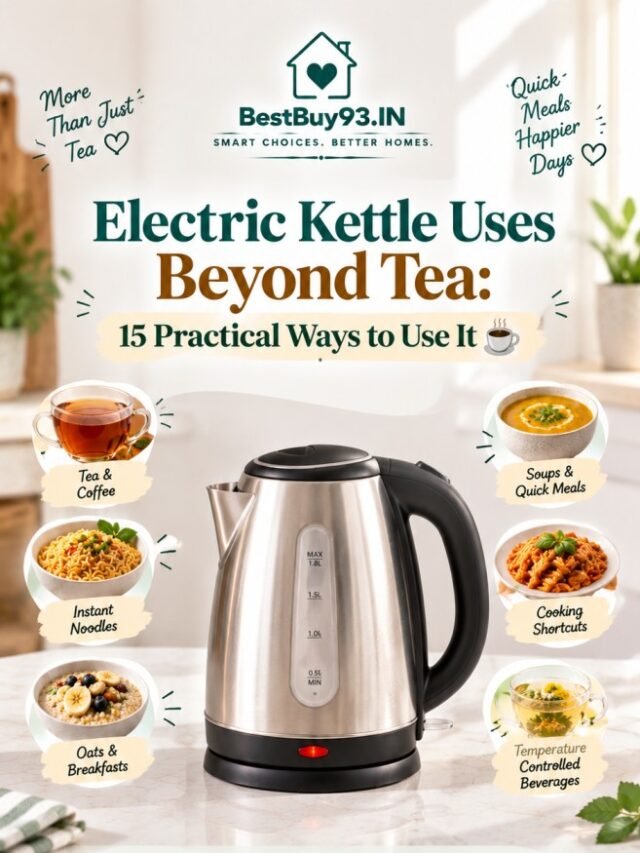

☕ Waiting for water to boil on the gas stove every time you want tea, coffee or hot water?
Yeah… there’s an appliance for that. 😄⚡
An electric kettle is one of those small kitchen appliances that doesn’t look particularly exciting until you start using one every day.
Need hot water for chai? ☕
Need water for coffee? ☕
Making instant noodles? 🍜
Preparing oats? 🥣
Need hot water quickly in the morning? 💧
Just fill, switch on and let the kettle do its thing.
But here’s where buying one gets confusing.
There are hundreds of electric kettles in India, ranging from basic ₹500–₹700 models to premium kettles costing ₹2,000 or more. You’ll find stainless steel kettles, glass kettles, cool-touch models, multipurpose kettles and temperature-control kettles and the specifications can look almost identical at first glance.
So, which one should you actually buy?
We’ve researched the current 2026 market and shortlisted some of the most practical options based on capacity, power, safety features, build, everyday usability and value for money. Current Indian buying guides commonly identify 1.5–1.8L stainless-steel models with automatic shut-off and boil-dry protection as strong everyday choices, while temperature-control models make more sense for specific tea and coffee use cases.
Also Read | Amazon Kitchen Appliances That Simplify Your Life
Let’s find the right one for your kitchen. 👇
🔥 Quick Comparison: Best Electric Kettles
| Electric Kettle | Capacity | Power | Best For | Approx. Price* |
|---|---|---|---|---|
| Prestige PKOSS | 1.5L | 1350W | Best overall value | ₹700–₹800 |
| Pigeon Amaze Plus | 1.5L | 1500W | Budget everyday use | ₹600–₹800 |
| Butterfly EKN | 1.5L | 1500W | Fast boiling on a budget | ₹600–₹1,000 |
| Havells Aqua Plus | 1.2L | ~1250–1300W | Premium/cool-touch build | ₹1,300–₹1,800 |
| Milton Rapid | 1.8L | 1500W | Best large-capacity everyday use | ₹600–₹800 |
| Borosil Lifestyle Glass Kettle | 1.8L | ~1500W | Glass-kettle lovers | ₹1,000–₹1,800 |
| AGARO Regency | 1.2L | 600W | Multipurpose cooking | ₹1,400–₹1,700 |
*Prices are indicative and can change with retailer, colour, offers and availability. Current 2026 market listings place models such as Prestige PKOSS around ₹750, while premium and multipurpose options cost considerably more.
🏆 1. Prestige PKOSS 1.5L — Best Overall for Most Homes
If you don’t want to overthink your electric kettle purchase, the Prestige PKOSS is a very sensible place to start.
It focuses on the features most households actually need instead of loading the kettle with unnecessary extras.
The current Prestige listing specifies a 1.5L stainless-steel body, 1350W heating element, concealed element, automatic cut-off, 360° swivel base, wide-mouth design and single-touch lid locking. It also carries ISI certification and a 1-year manufacturer warranty.
Why we like it
- 🥇 Practical everyday design
- ⚡ 1350W heating
- 🥣 1.5L capacity
- 🪙 Stainless-steel body
- 🔥 Concealed heating element
- 🛑 Automatic cut-off
- 🔄 360° swivel base
- 🧼 Wide opening for cleaning
- 🤲 Cool-touch handle
Best for:
Families, couples and everyday chai/coffee use.
The current Prestige website lists the PKOSS at around ₹750 during its current offer, although retail pricing can change.
Verdict
A straightforward kettle that gets the important things right.

- COMPACT DIMENSIONS: With a 1.5L capacity and dimensions of 19L x 19W x 24H centimeters, this Prestige Electric Kettle fo…
- WARRANTY ASSURANCE: Prestige 1.5L electric kettle is backed by a 1-year warranty, ensuring assurance and peace of mind f…
- DURABLE STAINLESS STEEL: Crafted from premium stainless steel, this kettle guarantees durability and easy maintenance, e…
💰 2. Pigeon Amaze Plus 1.5L — Best Budget Everyday Pick
If your priority is:
“Mujhe bas ek reliable kettle chahiye jo paani jaldi garam kare.”
then Pigeon is worth considering.
The Amaze Plus is commonly listed as a 1.5L, 1500W stainless-steel kettle with auto shut-off, concealed heating element and 360° swivel base. Current 2026 market listings place it in the budget segment, often around ₹600–₹800 depending on the seller and offer.
Best for:
- Students
- Couples
- Small families
- Daily tea/coffee
- Budget buyers
Pros
✔️ Affordable
✔️ 1.5L capacity
✔️ High wattage for quick boiling
✔️ Stainless-steel construction
✔️ Auto shut-off
✔️ Simple operation
Cons
❌ Basic design
❌ Not designed for precise temperature control
❌ Single-wall bodies can become hot externally
Verdict
A good choice if you want basic electric-kettle functionality without spending much.
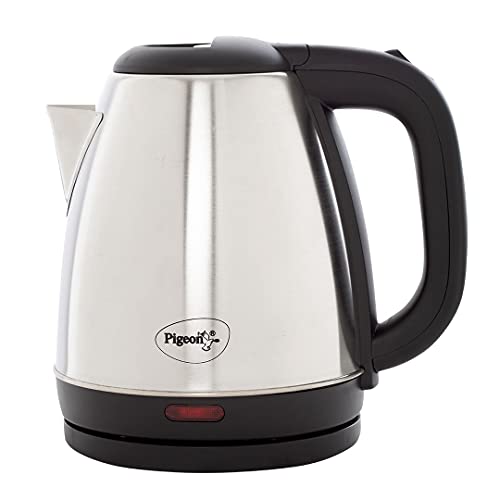
- CLASSIC DESIGN: The classical mirror polish of the appearance makes your electric kettle unique and aesthetic, which can…
- CORDLESS POURING: The electric kettle can be easily lifts from its swivel base for easy filling at the sink and graceful…
- CONVENIENT: The cordless & BPA-Free electric electric kettle makes a striking presence on any kitchen counter or buffet …
⚡ 3. Butterfly EKN 1.5L — Best Budget Fast-Boiling Option
The Butterfly EKN repeatedly appears in current 2026 Indian electric-kettle roundups as a value-focused 1.5L option.
Current market listings identify it as a 1500W stainless-steel kettle with automatic shut-off, generally positioned below the premium segment.
Why consider it?
Because for everyday boiling, you don’t necessarily need a fancy digital display.
You need:
Good capacity + sufficient power + safety features + decent build.
And that’s basically what this type of kettle is designed to provide.
Best for:
☕ Chai
☕ Coffee
💧 Hot water
🍜 Instant noodles
🏠 Everyday kitchen use
Verdict
A practical option for buyers who care more about performance than fancy features.
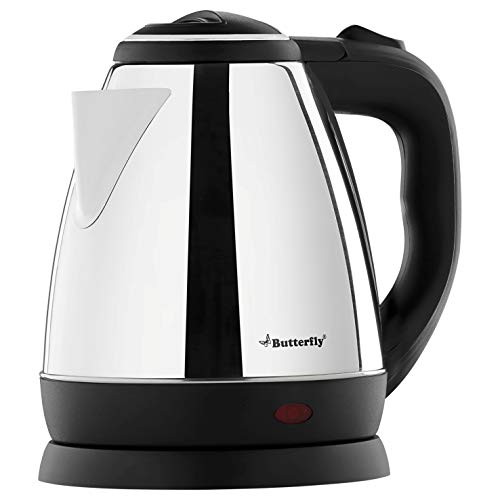
- Filter Type : Spout
- Auto cut off facility, Dry Boil Protection: Yes
- 360 degree swivel base. Power: 1500 watts; Operating Voltage: 220 – 230 volts, 50-60Hz
🛡️ 4. Havells Aqua Plus — Best for Cool-Touch Safety
Now let’s move up a level.
If you’re concerned about the kettle’s outer body becoming extremely hot, look at a double-wall/cool-touch model.
The Havells Aqua Plus is a popular example, with current listings describing a roughly 1.2L capacity, cool-touch outer body and stainless-steel interior, with warranty support making it a more premium everyday option.
Why the cool-touch design matters
A traditional single-wall steel kettle can become very hot externally.
A double-wall kettle separates the hot inner chamber from the outer body.
That can be useful if:
- 👶 Children are around
- 🏠 You have a busy kitchen
- 👨👩👧 Multiple people use the kettle
- 🔥 You are concerned about accidental contact
Best for:
Safety-conscious households and buyers willing to spend more for better insulation.
Verdict
Worth considering if exterior heat is a bigger concern than getting the cheapest kettle possible.
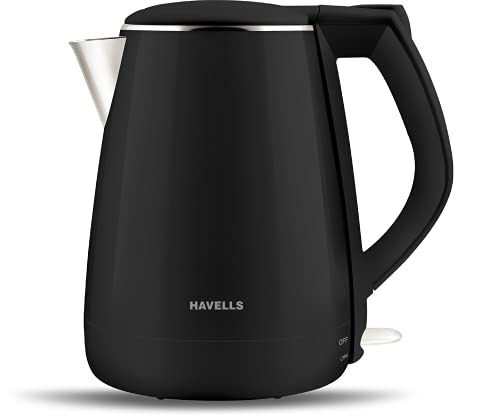
- Auto shut off function
- Integrated stainless steel function. 360° Cordless Kettle
- 304 stainless steel interior with no plastic
🚀 5. Milton Rapid 1.8L — Best Large-Capacity Everyday Kettle
If your attitude is:
“Mujhe ek simple, reliable kettle chahiye jo ek baar mein kaafi paani boil kar de.” ☕💧
then the Milton Rapid 1.8L Electric Kettle is a practical option to consider.
With a 1.8L capacity and 1500W power, it makes more sense for families or heavier everyday use than smaller 1L–1.2L kettles.
Why it’s different
The biggest advantage here is capacity.
If you’re regularly making tea or coffee for multiple people, preparing hot water for cooking, or simply don’t want to refill the kettle again and again, the 1.8L size can be genuinely useful.
The 1500W power also gives it a good balance between capacity and heating performance.
Best for:
- Families
- Multiple cups of tea or coffee
- Regular hot-water requirements
- People who prefer larger kettles
- Everyday home use
- Buyers looking for a practical budget-friendly option
Pros
✔️ Large 1.8L capacity
✔️ 1500W power
✔️ Stainless-steel construction
✔️ Auto shut-off
✔️ Boil-dry protection
✔️ Suitable for multiple servings
✔️ Practical everyday design
✔️ Generally affordable compared with premium kettles
Cons
❌ Takes up more counter space than compact kettles
❌ Overkill for someone who usually boils only one cup
❌ No need to pay for 1.8L capacity if your usage is very small
❌ Doesn’t offer the advanced temperature-control features found on some premium kettles
Verdict
A practical choice if you want more capacity without spending too much.
The Milton Rapid 1.8L isn’t trying to be a fancy smart kettle and that’s actually its appeal.
If your priority is simply good capacity, decent power and everyday convenience, this is a sensible option for a family kitchen.
For a single person who only boils one or two cups at a time, however, a smaller 1L–1.2L kettle may be more convenient.

- 🔹 1.8L Family-Size Capacity – Ideal Electric Kettle for Home & Office This Milton electric kettle lets you boil up to 1….
- 🔹 Elegant & Modern Design – Premium Water Kettle Electric Crafted with a sleek, stylish body, this water kettle electric…
- 🔹 Auto Cut-Off Feature – Safe & Smart Electric Kettle for Daily Use Equipped with automatic Cut-off and dry-boil protect…
🪟 6. Borosil Lifestyle Glass Kettle — Best for a Glass Design
Not everyone wants a stainless-steel kettle.
Some people simply like being able to see the water boiling. 😄
That’s where a glass kettle makes sense.
Current 2026 roundups include the Borosil Lifestyle Glass Kettle among notable electric-kettle options, generally around the 1.8L capacity category.
Why choose glass?
- 👀 Easy to see water level
- ✨ Looks attractive
- 🧼 Visual cleanliness is easy to monitor
- 🏠 Looks good in modern kitchens
But remember
Glass isn’t automatically better.
It can be:
- More fragile
- Heavier
- More vulnerable to impact
- Less forgiving during rough handling
Best for:
Home users who prefer aesthetics and visibility.
Verdict
Choose glass for the experience and appearance not because you assume it automatically boils better.
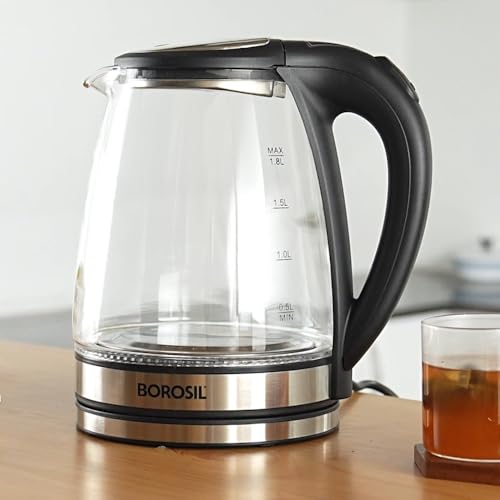
- Premium Borosilicate Glass Bod: Durable thick glass with Max–Min markings, spout mesh filter, and blue backlight for a s…
🍜 7. AGARO Regency — Best for Multipurpose Use
Here’s where things get interesting.
A standard electric kettle is primarily designed to boil water.
A multipurpose kettle tries to do more.
The AGARO Regency is currently listed as a multipurpose kettle with around 1.2L capacity and 600W power, aimed at tasks beyond simple water boiling.
Depending on the exact version, these appliances may be useful for things like:
- 🍜 Instant noodles
- 🥚 Boiling
- ☕ Tea
- 🥣 Small cooking tasks
- ♨️ Steaming
Important difference
Don’t compare a 600W multipurpose kettle directly with a 1500W boiling kettle and conclude that the 600W model is “weaker.”
They’re designed for different jobs.
A standard 1500W kettle prioritises fast water heating.
A lower-powered multipurpose cooker may prioritise controlled cooking and versatility.
Best for:
Hostels, PGs, students and people who want more than just boiling water.
Verdict
Choose this type only if you actually need cooking functionality.
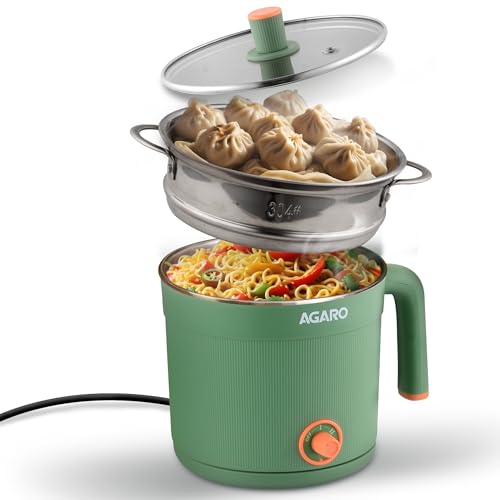
- Boils water, prepares tea, coffee, noodles, steams vegetables quickly.
- Double layered body (Inner SS304, Outer Plastic) with 1.2L inner pot capacity and 0.92L steamer capacity
- Variable Temperature Control
🧠 Which Electric Kettle Should You Buy?
The “best” kettle depends on what you actually do with it.
☕ Mostly Tea & Coffee
Go for:
Prestige PKOSS / Pigeon Amaze Plus / Butterfly EKN
You don’t need complicated features.
👨👩👧 Family of 3–5
Look for:
1.5L–1.8L capacity
Good options include:
Prestige PKOSS, Pigeon Amaze Plus, Philips HD9352
👶 Safety Is Your Main Concern
Consider:
Havells Aqua Plus
The cool-touch/double-wall approach can make sense in busy households.
🧑🎓 Student / Hostel / PG
Look for:
- 1L–1.5L
- Affordable price
- Stainless steel
- Auto shut-off
- Wide opening
- Easy cleaning
Don’t spend ₹2,500 just to boil water for Maggi. 😂
🍜 Want to Cook Too?
Look at:
Multipurpose electric kettles
such as AGARO Regency-type models.
But check exactly what the manufacturer allows you to cook before using one for food preparation.
☕ Green Tea / Specialty Coffee
This is where temperature control starts becoming useful.
Different beverages can benefit from different water temperatures, so a variable-temperature kettle can make more sense than a basic boil-only model.
But if you’re just making normal chai…
You absolutely don’t need a temperature-control kettle. 😄
⚡ How Much Wattage Do You Actually Need?
This is one of the most important things to understand.
600–1000W
Usually suitable for:
- Small quantities
- Compact kettles
- Multipurpose cooking
- Travel-style use
1200–1500W
This is the practical sweet spot for many Indian homes.
Good for:
- Chai
- Coffee
- Hot water
- Instant noodles
- Everyday family use
Current Indian buying guides commonly position 1500W kettles as strong everyday choices because they balance fast boiling with mainstream household capacity.
1800–2400W+
Best suited for:
- Larger capacity
- Faster boiling
- Heavy daily use
- Premium kettles
But remember:
Higher wattage doesn’t automatically mean better kettle.
You still need to look at capacity, heating element, safety, build quality and warranty.
📏 What Capacity Should You Choose?
Here’s a simple rule.
| Household | Suggested Capacity |
|---|---|
| 1 person | 0.8–1.0L |
| 1–2 people | 1.0–1.2L |
| 2–4 people | 1.2–1.5L |
| 4–6 people | 1.5–1.8L |
| Office/shared use | 1.5–1.8L+ |
But don’t automatically buy the biggest kettle.
If you live alone and boil only one cup, repeatedly heating 1.8L is unnecessary.
Choose capacity according to your actual use.
🛑 Safety Features You Should Not Skip
A cheap kettle can still be a good kettle but don’t compromise on basic safety.
Look for:
🛑 Automatic shut-off
The kettle switches off after reaching boiling point.
🔥 Boil-dry protection
The kettle should protect itself if it is switched on without sufficient water.
🔄 360° swivel base
Makes handling easier, particularly with cordless serving.
🔒 Secure lid
A properly designed lid helps reduce accidental spills and steam exposure.
🧼 Concealed heating element
Makes cleaning easier and prevents direct contact with the heating coil.
Current product specifications from Prestige, for example, list automatic cut-off, concealed heating element and 360° swivel base on the PKOSS.
🥇 Stainless Steel vs Glass vs Plastic
This is another common question.
🥇 Stainless Steel
Best for: Everyday durability
Pros
✔️ Durable
✔️ Usually long-lasting
✔️ Good for daily use
✔️ Easy to find
✔️ Many affordable options
Cons
❌ Exterior can get hot
❌ Water level isn’t always visible
🪟 Glass
Best for: Visibility + aesthetics
Pros
✔️ See water level
✔️ Attractive
✔️ Easy to monitor boiling
Cons
❌ Fragile
❌ Heavier
❌ Requires careful handling
🧴 Plastic
Best for: Lightweight budget use
Pros
✔️ Lightweight
✔️ Affordable
✔️ Doesn’t get as hot externally in some designs
Cons
❌ Build quality varies significantly
❌ Cheap plastic can affect taste/odour
❌ Inner material matters
If choosing plastic, pay attention to the material that actually comes into contact with hot water rather than judging only by the outer shell.
🧼 Don’t Forget About Hard Water
If you live in an area with hard water, your kettle may develop limescale over time.
You might notice:
- White deposits
- Slower heating
- Flakes in water
- Strange taste
- Reduced performance
This doesn’t necessarily mean the kettle is defective.
It’s often a maintenance issue.
So when buying, look for:
Wide opening + concealed element + easy cleaning access.
And clean the kettle regularly according to the manufacturer’s instructions.
💰 How Much Should You Spend?
You don’t need to spend ₹3,000 on an electric kettle for basic use.
Under ₹1,000
Best for:
Basic boiling + tea + coffee
You can find practical 1.2–1.5L models in this range. Current 2026 listings include several Prestige, Pigeon, Butterfly and other options around this price point.
₹1,000–₹1,800
Best for:
Better build + cool-touch + larger selection
This is where more premium everyday models start appearing.
₹1,800–₹3,000+
Best for:
Premium build + higher power + glass/temperature-control features
Only spend this much if you actually need the additional features.
🚫 5 Electric Kettle Buying Mistakes to Avoid
❌ 1. Buying Only Based on Wattage
1500W doesn’t automatically mean better.
❌ 2. Buying Too Large
A 1.8L kettle isn’t useful if you only boil 300ml.
❌ 3. Ignoring Safety Features
Auto shut-off and boil-dry protection are much more important than fancy LED effects.
❌ 4. Buying a Multipurpose Kettle When You Only Need Hot Water
You’re paying for features you may never use.
❌ 5. Ignoring Warranty and Service
The kettle may be inexpensive, but a failed heating element still means replacement.
Choose a brand with accessible support and spare/service options where available.
Also Read | Top 5 Electric Kettles for Quick Boiling
🏆 Our Picks at a Glance
🥇 Best Overall
Best balance of price, capacity, stainless-steel build and everyday features.
💰 Best Budget
For buyers who want straightforward boiling without spending much.
⚡ Best Fast-Boiling Premium
For heavy daily use and buyers who prefer a premium kettle.
🛡️ Best Cool-Touch Option
For households where exterior insulation matters.
🪟 Best Glass Option
Borosil Lifestyle Glass Kettle
For people who prefer a glass body and visible boiling.
🍜 Best Multipurpose
For students, hostels and users who want cooking functionality rather than just boiling water.
🛒 Final Buying Checklist
Before clicking Buy Now, check these:
☐ Capacity matches your household
☐ 1200–1500W+ for fast everyday boiling
☐ Stainless steel or good-quality glass interior
☐ Automatic shut-off
☐ Boil-dry protection
☐ Concealed heating element
☐ 360° swivel base
☐ Secure lid
☐ Comfortable handle
☐ Easy cleaning access
☐ Suitable warranty
☐ Reliable brand/service support
☐ Price fits your actual needs
📌 Quick Takeaway
If you’re still confused, use this:
☕ Tea/Coffee → 1.2–1.5L stainless steel
👨👩👧 Family → 1.5–1.8L
🧑🎓 Student → 1L–1.5L budget model
🛡️ Safety-focused → Cool-touch/double-wall
🍜 Cooking → Multipurpose kettle
☕ Specialty tea/coffee → Temperature control
💰 Budget → ₹600–₹1,000
✨ Premium → ₹1,800+
Simple. No kettle PhD required. 😂
☕ How to Choose the Right One for Your Home
An electric kettle looks like one of the simplest appliances in your kitchen.
Fill it with water.
Press a button.
Wait.
Done. 😄
But once you actually start shopping, things get surprisingly complicated.
1200W or 1500W?
1L or 1.5L?
Steel or glass?
Normal kettle or temperature control?
Cool-touch body or regular steel?
Can you make Maggi in it? 🍜😂
And then there are features like automatic shut-off, boil-dry protection, concealed heating elements, 360° swivel bases and water-level indicators.
So, how do you know which features actually matter?
This guide goes deeper than simply listing the best electric kettles. We’ll look at how an electric kettle actually performs and what you should check before spending your money.
⚡ 1. What Does Electric Kettle Wattage Actually Mean?
Wattage tells you how much electrical power the kettle’s heating element can use while operating.
In simple terms:
Higher wattage can generally provide faster heating, assuming the kettle has a comparable design and you’re heating a similar amount of water.
You’ll commonly see:
- 600–1000W
- 1200W
- 1350W
- 1500W
- 1800W
- 2000W+
- 2200–2400W
But don’t make the mistake of thinking:
Higher wattage = automatically better kettle.
That’s not how it works.
A 1500W kettle with a 1.5L capacity may be much more practical for your home than a 2400W kettle if you rarely boil large quantities.
🔥 2. 1200W vs 1500W vs 2000W
Let’s make this practical.
1200W–1350W
Good for:
☕ Tea
☕ Coffee
💧 Hot water
🍜 Small kitchen tasks
These kettles can be perfectly adequate for normal household use.
1500W
This is a very practical range for many Indian households.
It offers a good balance between:
heating speed + capacity + everyday usability.
That’s one reason 1500W models are so common.
1800W–2000W+
Useful when:
- You want faster boiling
- You frequently boil larger quantities
- You use the kettle several times a day
- You have a larger-capacity model
2200W–2400W
Usually seen in higher-powered premium kettles.
These can be useful for fast boiling, but they aren’t necessary for everyone.
💧 3. How Much Water Do You Actually Need?
Capacity is arguably more important than people realise.
Imagine you live alone and make:
☕ One cup of tea in the morning
☕ One coffee in the evening
Do you need a 1.8L kettle?
Probably not.
You’re paying for capacity you’re rarely going to use.
📏 Capacity Guide
| User | Recommended Capacity |
|---|---|
| One person | 0.8–1.0L |
| 1–2 people | 1.0–1.2L |
| 2–4 people | 1.2–1.5L |
| 4–6 people | 1.5–1.8L |
| Shared/office use | 1.5–2L |
These are practical guidelines rather than strict rules.
Your actual requirement depends on how much water you normally boil.
☕ 4. Don’t Fill the Kettle Just Because You Can
This is an extremely common habit.
You need one cup.
You fill the entire kettle.
Then you boil all of it.
Then you pour one cup.
The remaining water cools down.
Later you heat it again.
Repeat.
This wastes both time and energy.
Better approach:
Heat approximately the amount you actually need.
Just make sure you remain within the manufacturer’s minimum and maximum fill markings.
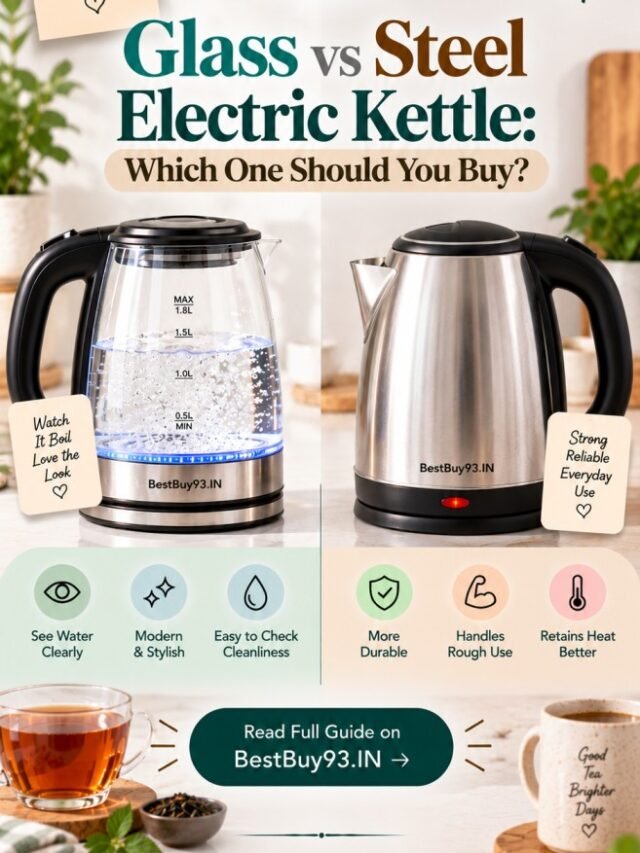
🥇 5. Stainless Steel vs Glass: Which Is Better?
This is probably the most common material comparison.
🥇 Stainless Steel Electric Kettle
Advantages
✔️ Durable
✔️ Good for everyday use
✔️ Resistant to everyday knocks
✔️ Easy to find
✔️ Available across many price ranges
Disadvantages
❌ Exterior can become hot
❌ Water level may not always be visible
❌ Some models can feel basic aesthetically
For a normal family kitchen, stainless steel is usually the easiest material to recommend.
🪟 6. Glass Electric Kettle
Glass kettles have one major advantage:
You can see what’s happening inside. 👀
You can easily see:
- Water level
- Boiling
- Limescale buildup
- General cleanliness
They can also look very attractive on a modern kitchen counter.
But…
Glass is still glass.
It requires more careful handling than stainless steel.
If your kitchen is busy or you’re particularly rough with appliances, steel may be the more practical option.
🧴 7. What About Plastic Kettles?
Plastic kettles are lightweight and can be inexpensive.
But don’t judge the appliance simply by looking at the outer shell.
What matters is:
What material comes into contact with the hot water?
Look for clear manufacturer information about the internal water-contact components.
If you’re buying a budget plastic model, don’t choose solely because it is ₹200 cheaper.
🛡️ 8. Automatic Shut-Off Is a Must-Have
This is one feature you should genuinely care about.
When the water reaches boiling point, the kettle should automatically switch itself off.
This is useful because you don’t have to stand beside it waiting.
You can:
☕ Prepare your cup
🍞 Make breakfast
📱 Check a message
🧹 Do something else
while the kettle completes its cycle.
Of course, don’t treat automatic shut-off as permission to leave a faulty appliance unattended.
🔥 9. Boil-Dry Protection
This is another important safety feature.
Imagine you accidentally switch on the kettle without enough water.
A good kettle with boil-dry protection is designed to prevent the heating element from continuing to operate under that condition.
When comparing models, look for explicit manufacturer information about boil-dry protection.
🌀 10. Why Is a 360° Swivel Base Useful?
A 360° swivel base allows the kettle to sit on its power base from different directions.
Sounds small.
But in everyday use, it’s surprisingly convenient.
You can pick up the kettle from almost any angle without worrying about lining up the appliance perfectly.
This is especially useful when multiple people use the same kitchen.
🧼 11. Why a Concealed Heating Element Matters
Older-style kettles can have an exposed heating coil.
Modern electric kettles commonly use a concealed heating element beneath the base.
This has several advantages:
✔️ Easier cleaning
✔️ No exposed coil inside the water chamber
✔️ Smoother interior
✔️ Better compatibility with everyday cleaning
A concealed element is one of those features that sounds boring until you’ve owned a kettle with one.
Then you realise:
“Oh. This is actually useful.” 😂
💧 12. Hard Water Can Become Your Kettle’s Enemy
If your water contains a lot of dissolved minerals, your kettle can develop limescale.
You may eventually notice:
- White deposits
- Chalky residue
- Flakes
- Reduced heating efficiency
- Strange appearance inside the kettle
This is especially relevant in areas with harder water.
🧼 13. How to Maintain a Kettle With Hard Water
First:
Don’t wait until the kettle looks like a science experiment. 😂
Clean it regularly according to the manufacturer’s instructions.
Depending on the model, descaling may involve a suitable descaling solution or another manufacturer-approved method.
Basic maintenance routine:
Use → Empty → Allow to cool → Clean → Descale when required
Also:
Don’t permanently store leftover water inside the kettle.
Emptying it after use can help keep the interior cleaner.
🌡️ 14. Do You Need Temperature Control?
This feature is becoming increasingly popular.
A basic kettle generally does one thing:
Boil water.
A temperature-control kettle allows you to heat water to a selected temperature.
This can be useful for:
🍵 Green tea
🍃 Herbal tea
☕ Specialty coffee
🍼 Certain food/beverage preparation where a specific temperature is appropriate
The exact temperature you choose should depend on the beverage or manufacturer’s instructions.
☕ Who Actually Needs Temperature Control?
Worth considering if:
✔️ You regularly drink specialty tea
✔️ You prepare pour-over coffee
✔️ You care about precise water temperature
✔️ You use different temperatures throughout the day
Probably unnecessary if:
You mostly make:
chai + instant coffee + hot water.
For those tasks, a normal boil kettle is perfectly fine.
🍼 15. Can You Use an Electric Kettle for Baby Formula?
This needs a little caution.
A kettle can boil water, but that doesn’t automatically mean the resulting water is ready for every infant-feeding situation.
Follow the specific preparation instructions provided by your paediatrician or formula manufacturer, including the required water temperature and cooling procedure.
Don’t rely on the kettle’s “keep warm” setting or a random temperature preset as a substitute for those instructions.
🍜 16. Can You Cook Maggi in an Electric Kettle?
This is one of India’s favourite questions. 😂
The answer is:
It depends on the kettle.
A standard electric kettle is primarily designed for heating water.
Some multipurpose electric kettles are specifically designed to handle cooking tasks.
If your kettle’s manufacturer says:
“Water only”
then don’t use it as a mini cooking pot.
If it is explicitly designed for cooking, follow the manufacturer’s instructions regarding food quantity, cleaning and usage.
🍳 17. What Can Multipurpose Electric Kettles Do?
Depending on the model, multipurpose kettles may support tasks such as:
- 🍜 Noodles
- 🥚 Boiling eggs
- 🍵 Tea
- 🥣 Small food preparation
- ♨️ Steaming
But functionality varies considerably.
So always check the exact model’s instructions.
Don’t assume that because one kettle can cook noodles, every kettle can.
🛡️ 18. Cool-Touch vs Regular Steel Body
This is another feature worth understanding.
A standard single-wall steel kettle can become hot externally.
A double-wall or cool-touch design adds insulation between the hot inner chamber and the outer surface.
Cool-touch designs can be useful for:
👨👩👧 Families
👶 Homes with children
🏠 Busy kitchens
🤲 Frequent handling
But don’t interpret “cool-touch” as “safe to touch anywhere at any time.”
Steam, lid areas and other components may still become hot.
🔌 19. Don’t Ignore the Power Cord and Base
A kettle is an electrical appliance that operates around water.
So the power setup matters.
Check:
- Plug quality
- Cord condition
- Base stability
- Socket condition
- Cable length
- Placement near the sink
Avoid operating it with:
❌ Wet hands
❌ Wet electrical connections
❌ Damaged cords
❌ Water spilled around the base
And never immerse the electrical base in water.
🏠 20. Where Should You Keep Your Electric Kettle?
The best location is:
Flat + dry + stable + away from the edge.
Avoid:
- Right beside the sink
- Under dripping cabinets
- On an unstable surface
- Near children
- Near loose wires
- Under hanging fabric
Give the steam some space too.
Don’t position the kettle directly underneath cabinets that could be damaged by repeated steam exposure.
🧽 21. Easy Cleaning Is an Underrated Feature
When shopping, open the lid.
Seriously.
If possible, check:
Can I comfortably put my hand or cleaning brush inside?
A narrow opening can make cleaning annoying.
Look for:
✔️ Wide opening
✔️ Removable filter where applicable
✔️ Smooth interior
✔️ Concealed heating element
✔️ Easy water-level visibility
A kettle that’s difficult to clean is a kettle you’re likely to neglect.
🫖 22. What Is the Small Filter Near the Spout?
Many kettles have a small mesh filter near the pouring spout.
Its purpose can include helping reduce mineral particles or scale from entering your cup.
It doesn’t mean your water becomes magically purified.
It also doesn’t replace regular descaling.
If the filter is removable, clean it according to the manufacturer’s instructions.
💨 23. What About Steam?
Steam can cause burns.
This sounds obvious, but people often forget because the kettle looks harmless.
When opening the lid immediately after boiling:
Steam can escape suddenly.
So:
- Keep your face away from the opening.
- Don’t place your hand over the spout.
- Be careful when pouring.
- Keep children away while boiling.
🔊 24. Are Electric Kettles Noisy?
Yes, to some extent.
Boiling water creates sound.
A kettle that becomes progressively louder as water approaches boiling isn’t necessarily defective.
However, unusual sounds such as:
- Loud rattling
- Buzzing
- Electrical crackling
- Burning smell
should not be ignored.
Switch it off and follow the manufacturer’s safety/service guidance.
⚡ 25. Does a Higher-Wattage Kettle Use More Electricity?
Potentially, yes but the complete picture depends on how long it operates.
For example:
A 1500W kettle running for 5 minutes uses:
1.5 kW × 5/60 = 0.125 kWh
A 2000W kettle running for 4 minutes uses:
2.0 kW × 4/60 ≈ 0.133 kWh
So the higher-wattage kettle isn’t automatically dramatically more expensive if it boils the water faster.
The important factor is:
Power × operating time
This is why you shouldn’t judge electricity consumption based only on the wattage printed on the box.
☕ 26. One Cup vs Full Kettle: Real-Life Difference
Let’s imagine you need 250ml of water.
Using a 1.8L kettle doesn’t make sense just because it has a bigger capacity.
You’re heating far more water than necessary.
For everyday efficiency:
One cup
Heat one cup’s worth.
Two cups
Heat two cups’ worth.
Family requirement
Heat the amount you actually need.
Always stay within the kettle’s minimum and maximum fill levels.
🧠 27. What Features Should You Prioritise?
If you’re confused by a product page showing 15 different features, use this order.
⭐⭐⭐⭐⭐ Essential
- Automatic shut-off
- Boil-dry protection
- Suitable capacity
- Appropriate power
- Good build quality
⭐⭐⭐⭐ Very Useful
- Concealed heating element
- 360° swivel base
- Wide opening
- Water-level indicator
- Removable filter
⭐⭐⭐ Nice to Have
- Cool-touch body
- Temperature control
- Keep-warm function
- Digital display
⭐ Optional
- Fancy LED lighting
- Multiple decorative modes
- App connectivity
You are buying a kettle.
Not a spaceship. 😂🚀
🛒 28. Online Shopping Checklist
Before buying an electric kettle online, check:
Product
☐ Capacity
☐ Wattage
☐ Material
☐ Heating element
☐ Auto shut-off
☐ Boil-dry protection
Design
☐ Handle
☐ Lid
☐ Spout
☐ Base
☐ Water-level indicator
Maintenance
☐ Opening size
☐ Filter
☐ Descaling instructions
Safety
☐ Electrical rating
☐ Manufacturer safety information
☐ Warranty
Reviews
Don’t only look at the star rating.
Read reviews specifically mentioning:
leakage + heating + lid + smell + durability + switch + service.
Those are much more useful than:
“Nice product, delivered fast.” 😂
🏠 29. Electric Kettle Buying Guide by User Type
🧑🎓 Student
Choose:
1L–1.5L + 1200–1500W + basic safety
Don’t overspend.
🏠 Couple
Choose:
1.2L–1.5L + stainless steel + auto shut-off
Simple is enough.
👨👩👧 Family
Choose:
1.5L–1.8L + 1500W+ + good safety features
A larger capacity becomes more useful.
☕ Tea/Coffee Enthusiast
Choose:
Temperature control + accurate settings
Especially useful if you prepare different beverages.
🍜 Hostel/PG User
Choose:
Multipurpose model, but only if the manufacturer permits cooking.
🛡️ Safety-Conscious Household
Choose:
Cool-touch/double-wall design + auto shut-off + boil-dry protection
🚫 30. Five Features You Shouldn’t Buy Blindly
1. Extremely High Wattage
You may not need it.
2. Huge Capacity
Bigger isn’t always better.
3. Temperature Control
Useful for some people, unnecessary for others.
4. Fancy Digital Display
Nice but doesn’t boil water better by itself.
5. Multipurpose Functions
Only useful if you’ll actually use them.
🧠 31. The 30-Second Buying Formula
If you want to choose quickly, use this:
Capacity → Power → Safety → Material → Cleaning → Warranty
Ask:
1. How much water do I need?
2. How quickly do I want it boiled?
3. Does it have proper safety features?
4. Is the water-contact material suitable?
5. Can I clean it easily?
6. Is the brand/service reliable enough for the price?
If all six answers are satisfactory:
You probably have a good kettle for your needs. ☕
☕ Budget, Maintenance & Final Checklist
So, you’ve understood the basics.
You know how wattage and capacity work.
You know the difference between stainless steel and glass.
You know why automatic shut-off and boil-dry protection matter.
And you probably know by now that you don’t need a kettle with 17 different buttons just to make chai. 😂
But there’s one final part of buying an electric kettle that often gets ignored:
How much should you spend, how do you maintain it, and how do you know whether you’re actually getting good value?
That’s what this final part is about.
Because buying a kettle for ₹700 that lasts two years can sometimes be better value than buying one for ₹2,500 that has features you never use.
Let’s break down the final decision. 👇
💰 1. How Much Should You Spend on an Electric Kettle?
There is no universal “correct” budget.
Your spending should depend on how frequently you use the kettle and what you expect from it.
🪙 Under ₹1,000
Best for:
- Students
- Couples
- Basic home use
- Tea and coffee
- Occasional hot water
Look for:
✔️ 1–1.5L capacity
✔️ 1200–1500W
✔️ Stainless-steel body
✔️ Auto shut-off
✔️ Boil-dry protection
You don’t need much more.
💵 ₹1,000–₹1,800
This is a good range if you want something a little more refined.
You may find:
- Better build quality
- Better handles
- Improved insulation
- Glass models
- Better finishing
- More convenient designs
This range can make sense for regular users.
💎 ₹1,800–₹3,000+
Now you’re entering premium territory.
You may get:
- Higher wattage
- Double-wall construction
- Better materials
- Temperature control
- Keep-warm functions
- More refined design
- Premium brand positioning
But ask yourself:
“Will I actually use these features?”
If the answer is no, save your money.
🧠 2. The Cheapest Kettle Isn’t Always the Cheapest Purchase
Suppose:
Kettle A
₹700
Lasts 1 year.
Kettle B
₹1,500
Lasts 3 years.
Ignoring other factors, Kettle B costs approximately:
₹500 per year
while Kettle A costs:
₹700 per year
So the cheaper upfront purchase isn’t necessarily the better long-term value.
This is why durability matters more than the sticker price alone.
⚡ 3. How Much Electricity Does an Electric Kettle Use?
Electric kettles can have relatively high wattage, but they generally run for short periods.
For example:
A 1500W kettle running for 5 minutes consumes approximately:
1.5 × 5/60 = 0.125 kWh
If your electricity tariff were ₹8 per kWh, that would be about:
₹1 per five-minute heating cycle.
Actual costs depend on your tariff, water quantity, starting temperature and heating time.
So don’t panic when you see 1500W on the box.
The kettle may consume substantial power while heating, but it typically doesn’t run continuously for hours.
💡 4. How to Reduce Electric Kettle Energy Use
You don’t need complicated tricks.
Do these:
1. Heat only the amount you need.
If you need one cup, don’t fill the kettle to 1.5L.
2. Don’t repeatedly reboil water.
If you don’t need it, don’t heat it again.
3. Descale regularly.
Heavy mineral buildup can interfere with heating performance.
4. Keep the kettle clean.
A clean heating chamber generally makes maintenance easier.
5. Choose appropriate capacity.
Don’t buy a huge kettle for tiny daily quantities.
🧼 5. How to Clean Your Electric Kettle
This is one of the most important maintenance routines.
After regular use:
- Switch off and unplug.
- Allow the kettle to cool.
- Empty leftover water.
- Wipe the exterior.
- Keep the lid open for the interior to dry.
Never immerse the electrical base in water.
💧 6. How Often Should You Descale It?
There isn’t one fixed interval for every home.
It depends heavily on:
- Water hardness
- Frequency of use
- Kettle material
- Amount of mineral buildup
If you use the kettle every day in a hard-water area, you may need to descale much more frequently than someone who uses it occasionally with relatively soft water.
Watch for:
⚪ White deposits
⚪ Chalky buildup
⚪ Flakes
⚪ Slower heating
⚪ Unusual taste
When you notice these signs, check the manufacturer’s cleaning instructions and use an appropriate descaling method.
🍋 7. Can You Use Vinegar or Lemon to Descale?
You’ll find plenty of internet hacks recommending vinegar, lemon or other household ingredients.
But here’s the safer approach:
Check the manufacturer’s instructions first.
Some manufacturers provide specific cleaning recommendations or descaling products.
If the manufacturer permits a particular method, follow the stated concentration and procedure.
Don’t experiment with harsh chemicals.
And never mix cleaning chemicals together.
🧽 8. Don’t Scrub the Interior Aggressively
If you see limescale, your first instinct might be:
“Scrub kar deta hoon.” 😂
Don’t attack the heating chamber with abrasive tools.
You could damage surfaces or components.
Instead:
Descale → Rinse thoroughly → Repeat if necessary
according to the manufacturer’s guidance.
🛑 9. Never Operate an Empty Kettle
Even with boil-dry protection, don’t intentionally test the feature.
The kettle is designed to heat water.
Not air.
Always maintain at least the manufacturer’s minimum fill level.
🚰 10. Don’t Overfill It Either
Most kettles have a maximum water-level marking.
Stay below it.
Why?
Because boiling water expands and can splash or spill if the kettle is overfilled.
This can also increase the chance of hot water reaching the lid or spout unexpectedly.
Simple rule:
Minimum mark → enough water
Maximum mark → never exceed
💨 11. Be Careful With Steam
The water may look harmless.
The steam isn’t.
When you open a kettle immediately after boiling, hot steam can escape.
So:
- Keep your face away.
- Don’t place your hand over the opening.
- Open the lid carefully.
- Keep children away.
- Pour slowly.
A kettle can boil water quickly, but that doesn’t make the water less dangerous.
🏠 12. Where You Place the Kettle Matters
Keep it on:
A flat + dry + stable surface.
Avoid placing it:
❌ On the edge of a counter
❌ Directly beside the sink
❌ Under a dripping cabinet
❌ Near loose cloth
❌ Near children
❌ Where the cable can be pulled
And keep the electrical base dry.
🔌 13. Should You Use an Extension Board?
Ideally, use a suitable wall socket according to the manufacturer’s electrical requirements.
If you must use an extension board, make sure it is properly rated for the kettle’s power and is in good condition.
Don’t overload an extension board with:
Kettle + microwave + induction + toaster + air fryer
all at once.
That’s not a kitchen setup.
That’s an electrical stress test. 😂
🛡️ 14. Warranty Matters More Than You Think
Electric kettles aren’t the most expensive appliances.
So people often ignore warranty.
Don’t.
A warranty gives you some protection against manufacturing defects during the specified period.
Before buying, check:
- Warranty length
- Who provides the warranty
- Service availability
- Replacement policy
- Whether the heating base is covered
- Whether accessories are covered
A cheaper kettle from a brand with poor support may become frustrating if something fails.
🏢 15. Brand vs No-Name Kettle
Should you always buy a famous brand?
Not necessarily.
But brand reputation becomes more important when comparing products at similar prices.
Look for:
✔️ Clear manufacturer details
✔️ Warranty information
✔️ Safety specifications
✔️ Customer service
✔️ Consistent product reviews
✔️ Replacement/service availability
Don’t buy an unknown product just because:
“Same 1500W hai aur ₹200 cheaper hai.”
There may be a reason for the price difference.
🛒 16. Online vs Offline: Where Should You Buy?
Both can work.
Online
Advantages:
✔️ More options
✔️ Easy price comparison
✔️ Customer reviews
✔️ Convenient
Check:
- Seller
- Warranty
- Return policy
- Exact model number
- Reviews
- Product dimensions
Offline
Advantages:
✔️ See the build physically
✔️ Check handle comfort
✔️ Open the lid
✔️ Feel the weight
✔️ Inspect the spout
If you’re unsure about size or build, physically seeing the product can be helpful.
🔍 17. What Should You Check in Customer Reviews?
Don’t waste time reading 500 reviews.
Search for specific problems.
Look for:
“leak”
“heating”
“lid”
“smell”
“rust”
“switch”
“auto cut”
“durability”
“service”
This gives you far more useful information than generic five-star comments.
🚫 18. Five Things You Shouldn’t Pay Extra For
❌ 1. Fancy LED Effects
Looks nice.
Doesn’t boil better.
❌ 2. Huge Capacity
If you don’t need it, you’re just heating extra water.
❌ 3. Extremely High Wattage
More isn’t automatically better.
❌ 4. Temperature Control
Fantastic for some users.
Unnecessary for basic chai and coffee.
❌ 5. Too Many “Smart” Features
Wi-Fi-connected kettle?
If you genuinely want one, fine.
But most people can survive without sending their kettle a notification. 😂📱
☕ 19. Who Should Buy a Temperature-Control Kettle?
Temperature control makes more sense if you regularly prepare:
- Green tea
- White tea
- Specialty coffee
- Different types of tea
- Drinks that require specific water temperatures
It is particularly useful for people who care about brewing precision.
But if your daily routine is:
chai → coffee → hot water
then a regular kettle is enough.
🍜 20. Who Should Buy a Multipurpose Kettle?
Choose a multipurpose kettle if you genuinely need:
- Noodles
- Boiling eggs
- Small cooking tasks
- Tea preparation
- Other manufacturer-approved cooking functions
This can be useful for:
🧑🎓 Students
🏠 PG residents
🛏️ Hostel users
🏢 Office users
But always check the manufacturer’s instructions.
A regular water-boiling kettle shouldn’t automatically become your cooking pot.
🧠 21. Your Kettle Should Match Your Routine
Here’s the easiest way to decide.
| Your Lifestyle | What to Look For |
|---|---|
| One cup of tea daily | Small basic kettle |
| 2–3 cups daily | 1–1.2L |
| Family use | 1.5–1.8L |
| Heavy daily use | Higher-power durable model |
| Specialty tea | Temperature control |
| Student/PG | Multipurpose model if needed |
| Safety-focused | Cool-touch/double-wall |
| Budget buyer | Basic 1200–1500W model |
💰 22. Where Should You Spend More?
If you’re going to increase your budget, prioritise:
⭐ Build Quality
Rather than decorative features.
⭐ Safety
Rather than fancy displays.
⭐ Insulation
If exterior heat matters.
⭐ Temperature Control
If you actually brew temperature-sensitive beverages.
⭐ Warranty/Service
For peace of mind.
That’s where your extra money is more likely to provide practical value.
📦 23. Don’t Forget Storage
If you use your kettle occasionally, don’t store it with water inside.
Instead:
Empty → Dry → Store
Keep the cord and base clean and dry.
Avoid wrapping the cord aggressively around the appliance if the manufacturer advises against it.
🧯 24. When Should You Stop Using Your Kettle?
Stop using it if you notice:
🚨 Damaged power cord
🚨 Burning smell
🚨 Sparks
🚨 Electrical shocks
🚨 Cracked body
🚨 Persistent leakage
🚨 Malfunctioning automatic shut-off
🚨 Unusual electrical noise
Don’t try to “adjust” or repair electrical components yourself unless you’re qualified to do so.
When in doubt:
Unplug it and contact the manufacturer/service centre.
📋 25. The Ultimate Electric Kettle Buying Checklist
Before you buy, check every box.
Capacity
☐ Suitable for your household
☐ Not unnecessarily large
Power
☐ Around 1200–1500W for common everyday use
☐ Higher wattage only if genuinely useful
Safety
☐ Automatic shut-off
☐ Boil-dry protection
☐ Secure lid
☐ Stable base
Construction
☐ Suitable water-contact material
☐ Good-quality handle
☐ Good spout
☐ Concealed heating element
Cleaning
☐ Wide opening
☐ Removable filter where applicable
☐ Easy descaling
Convenience
☐ 360° swivel base
☐ Water-level indicator
☐ Cord storage/management
Optional
☐ Cool-touch body
☐ Temperature control
☐ Keep-warm function
After-Sales
☐ Warranty
☐ Reliable manufacturer
☐ Service availability
❓ Electric Kettle FAQs
Is 1500W enough for an electric kettle?
Yes, for many household applications.
A 1500W kettle can provide reasonably fast heating while remaining a practical choice for common 1.2–1.5L models.
Is a 2000W kettle better than a 1500W kettle?
Not automatically.
A 2000W model can potentially boil water faster, but whether that’s useful depends on the kettle’s capacity and your usage.
Which is better: glass or stainless steel?
For everyday durability, stainless steel is usually the more practical choice.
Glass is attractive and lets you see the water, but requires more careful handling.
How long do electric kettles last?
There is no universal lifespan.
It depends on:
- Build quality
- Usage frequency
- Water hardness
- Maintenance
- Electrical conditions
A well-maintained quality kettle can last considerably longer than a poorly built one.
Can I leave water inside the kettle overnight?
It’s generally better to empty unused water rather than routinely leaving it sitting inside.
Emptying and drying the kettle also makes cleaning easier.
Can I boil milk in an electric kettle?
Only if the manufacturer explicitly states that the kettle is suitable for milk or cooking.
A standard water kettle is generally intended primarily for water.
Can I make tea directly in the kettle?
Only if the manufacturer permits it.
Tea leaves and milk can create residue that is harder to clean and may not be suitable for a standard water-only kettle.
Is a temperature-control kettle worth it?
For specialty tea and coffee drinkers, it can be very useful.
For ordinary tea, coffee and hot-water use, it may be unnecessary.
🧠 26. The Five-Question Final Decision Test
Before you click Buy Now, answer these:
1️⃣ How much water do I usually boil?
This determines capacity.
2️⃣ How quickly do I want it?
This determines the useful wattage range.
3️⃣ What do I actually use it for?
Water only? Tea? Coffee? Cooking?
4️⃣ Which safety features are essential?
At minimum, look for automatic shut-off and boil-dry protection.
5️⃣ Will I actually use the premium features?
If not, don’t pay for them.
🏆 27. Our Final Recommendation
For most Indian homes, the sweet spot remains surprisingly simple:
☕ Everyday Home User
1.2–1.5L + 1200–1500W + stainless steel + auto shut-off + boil-dry protection
👨👩👧 Family
1.5–1.8L + 1500W+ + good safety features
🧑🎓 Student
1–1.5L + affordable + basic safety
🛡️ Safety-Focused
Double-wall/cool-touch + auto shut-off + boil-dry protection
🍵 Tea/Coffee Enthusiast
Temperature-control kettle
🍜 Multipurpose User
Cooking-capable electric kettle
❤️ Final Verdict: Which Electric Kettle Should You Buy?
If you’ve made it this far, here’s the simplest answer:
For most people, buy a good-quality 1.2–1.5L stainless-steel electric kettle with around 1200–1500W power and proper safety features.
You don’t need a premium model unless you have a specific reason.
Want faster boiling?
→ Consider higher wattage.
Want safer exterior handling?
→ Consider double-wall construction.
Want specialty tea or coffee?
→ Consider temperature control.
Want to cook?
→ Choose a multipurpose model designed for cooking.
Want to save money?
→ Buy a basic kettle with essential safety features.
And most importantly:
Don’t buy features. Buy usefulness. ☕❤️
An electric kettle is supposed to make your routine easier not give you another appliance to troubleshoot every morning.
So choose the capacity you actually need, prioritise safety, maintain it properly and spend extra only where the feature genuinely benefits your routine.
That’s how you get better value not simply a more expensive kettle.
📌 Electric Kettle Final Checklist
☕ Capacity: Match your daily quantity.
⚡ Power: 1200–1500W works well for many homes.
🛡️ Safety: Auto shut-off + boil-dry protection.
🥇 Material: Stainless steel for durability; glass for visibility.
🧼 Cleaning: Wide opening + concealed element.
🌡️ Temperature Control: Useful for specialty beverages.
🍜 Multipurpose: Only if cooking is actually required.
💧 Hard Water: Descale when buildup appears.
🔌 Electrical Safety: Keep the base and connections dry.
💰 Budget: Spend more on build, safety and useful features not gimmicks.
☕ The Best Electric Kettle?
The one that fits your routine, your kitchen and your budget.