

Your first tarot deck doesn’t need to be the most expensive, prettiest, or most mysterious-looking one on the shelf. It needs to be easy to understand, comfortable to use, and suited to the way you want to learn tarot.
For most beginners, a clearly illustrated 78-card Rider–Waite–Smith (RWS)-based deck is a practical starting point. Its familiar symbolism makes it easier to follow beginner books, online lessons, and card interpretations.
In this guide, we’ll look at what to check before buying your first deck, which styles are beginner-friendly, and how to avoid common first-time buying mistakes.
Quick answer: What is the best first tarot deck for a beginner?
Start with a complete 78-card Rider–Waite–Smith-style tarot deck that has clearly illustrated cards and a beginner-friendly guidebook. This gives you a familiar system to study and makes it easier to follow most introductory tarot tutorials.
You don’t need a premium collector’s edition or a deck with complicated spiritual claims. A simple, readable deck that you enjoy handling is a much better first purchase.
Understand the different types of tarot decks
Before choosing artwork, understand the system behind the cards. Most traditional tarot decks contain 78 cards: 22 Major Arcana and 56 Minor Arcana. However, different tarot traditions present their symbolism in different ways.
| Tarot style | What makes it different | Beginner suitability |
|---|---|---|
| Rider–Waite–Smith (RWS) | Illustrated scenes across the deck, including the numbered Minor Arcana | Excellent starting point |
| Tarot de Marseille | Traditional artwork; numbered Minor Arcana often show suit symbols rather than full scenes | Better if you enjoy learning through numbers and symbolism |
| Thoth Tarot | Dense esoteric symbolism, including astrological and other correspondences | Better for structured, deeper study |
Why choose Rider–Waite–Smith first?
The illustrated scenes give you visual clues. For example, instead of memorising a list of meanings for the Five of Cups, you can first observe the figure, the spilled cups and the remaining cups. This gives you something concrete to discuss while learning the card’s traditional interpretation.
You don’t have to buy the exact classic edition. A modern deck that follows the RWS structure can also work well, provided its imagery remains recognisable.
What should beginners look for in their first tarot deck?
A complete 78-card deck
Check the product description before ordering. A standard tarot deck should include:
- 22 Major Arcana cards
- 56 Minor Arcana cards
- Four suits: Cups, Wands, Swords and Pentacles
- Numbered cards and court cards
Some products are marketed as tarot-inspired decks but contain fewer cards or use a different structure. Those may be interesting, but they aren’t necessarily suitable for learning traditional tarot.
Fully illustrated Minor Arcana
This is one of the most useful beginner-friendly features.
Look beyond the Major Arcana artwork. Open the product listing’s sample images and check cards such as the Three of Cups, Five of Pentacles or Eight of Wands. If the numbered cards show full scenes, you’ll have more visual details to explore.
A guidebook that explains all 78 cards
A useful beginner guide should cover:
- Upright and reversed meanings
- Major and Minor Arcana explanations
- Suit meanings and court cards
- Simple tarot spreads
- Examples of how cards can be interpreted together
A small booklet is better than nothing, but a proper companion guide can make your learning process much easier.
Artwork you genuinely enjoy
This is where personal preference matters. You might prefer classic illustrations, modern minimalism, nature-inspired artwork, Indian-inspired themes or soft pastel colours.
Don’t choose a deck only because it looks expensive or mysterious. You’ll be looking at these cards repeatedly, so choose artwork that feels clear and comfortable to you.
Comfortable size and good card quality
Check the card dimensions, finish and material before buying.
| Feature | What to check |
|---|---|
| Card size | Can you comfortably hold and shuffle it? |
| Cardstock | Does it look sturdy enough for regular handling? |
| Finish | Is the surface too glossy or difficult to grip? |
| Printing | Are the illustrations and text sharp and readable? |
| Storage | Does it include a protective box or pouch? |
If you have smaller hands, a very large deck may be awkward to shuffle. A compact edition can be practical, but make sure the illustrations remain readable.
A guide language you understand
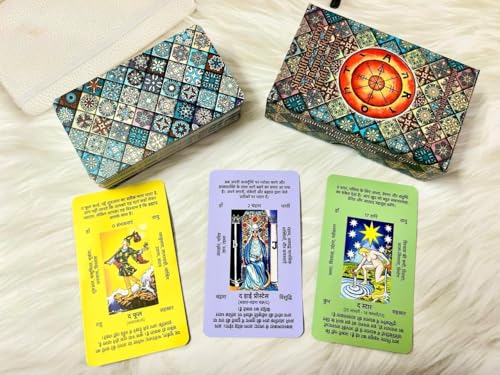
If you’re more comfortable learning in Hindi, consider a Hindi guidebook or a deck with Hindi explanations. If you prefer English tutorials, an RWS-based deck with English card names and familiar symbolism may be easier to follow.
Don’t buy a deck just because it says for beginners. Check what learning material is actually included.
Beginner-friendly tarot deck options to compare in India
Here are a few listings worth comparing. These aren’t presented as hands-on-tested winners: check the seller, edition, card count, sample images and return policy before ordering. Prices can change.
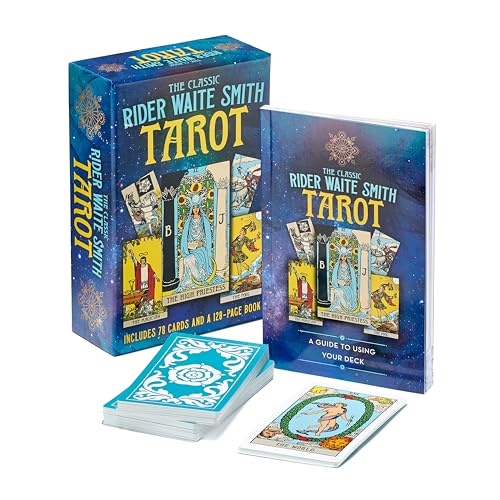
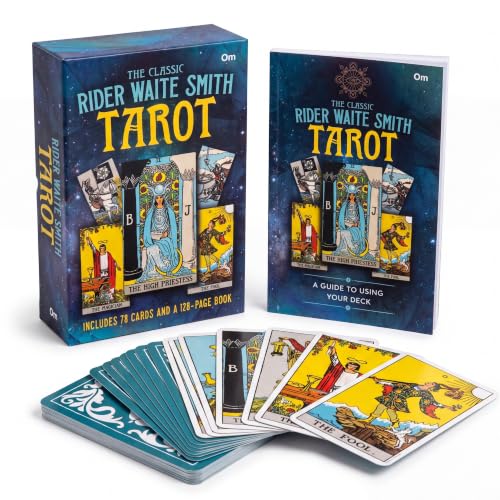
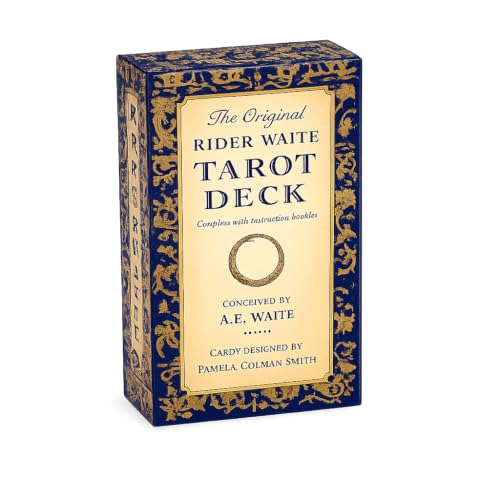
- THE ORIGINAL CLASSIC DECK: The authentic Rider Waite Tarot Deck, conceived by A.E. Waite with iconic card artwork design…
- COMPLETE 78-CARD SET: Includes all 78 tarot cards featuring the Major and Minor Arcana with richly illustrated, symbolis…
- INCLUDES INSTRUCTION BOOKLET: Comes complete with a guidance booklet to help you understand card meanings, making it ide…
Tarot deck vs. oracle deck: Are they the same?
No. They may look similar, but they are different card systems.
| Feature | Tarot deck | Oracle deck |
|---|---|---|
| Card count | Traditionally 78 | Varies by deck |
| Structure | Major and Minor Arcana | No universal structure |
| Suits | Usually four | Depends on creator |
| Learning system | Shared traditional framework | Each deck has its own system |
| Best use for a beginner | Learning traditional tarot | Exploring a separate intuitive card system |
If your goal is to learn tarot properly, buy a tarot deck first. You can always explore oracle cards later as a separate practice.
Common mistakes beginners should avoid
- Choosing only by the box: Attractive packaging doesn’t guarantee clear illustrations or useful learning material.
- Buying an incomplete deck: Check that all 78 cards are included.
- Ignoring the Minor Arcana: These cards are essential to learning the complete tarot system.
- Confusing tarot and oracle cards: They are not interchangeable.
- Buying an advanced deck too soon: Highly abstract or symbol-heavy decks may make your first few weeks harder.
- Assuming expensive means better: A higher price doesn’t automatically mean better cardstock, printing or interpretation.
- Believing your first deck must be gifted: You can choose and buy your own tarot deck. There is no requirement to wait for someone to gift it to you.
What should you do after buying your first tarot deck?
You don’t need an elaborate ceremony to begin. Give yourself time to become familiar with the cards.
- Check all the cardsMake sure the deck is complete and the cards are in good condition.
- Look through the full deckNotice the artwork, symbols, characters and recurring themes. Don’t rush to memorise all 78 meanings.
- Read the guidebookStart with the Major Arcana, then learn the four Minor Arcana suits and court cards.
- Practise a one-card drawPull one card, observe its imagery, write down your first impression and then compare it with the guidebook.
- Keep a tarot journalRecord the date, card, traditional meaning and your own interpretation. Reviewing older entries can help you understand how your reading skills develop.
Do you need to cleanse your tarot deck before using it?
Some readers like to shuffle their new cards, knock gently on the deck, keep it near a crystal, or use a personal cleansing ritual. These are optional spiritual customs, not requirements for learning tarot.
You can simply open the box, check the cards, shuffle them and start studying. Choose a ritual if it feels meaningful to you, not because you are afraid something bad will happen otherwise.
In Case You Are Looking For –
- Tarot Major Arcana vs. Minor Arcana: Key Differences
- How to Choose a Gemstone: Birth Date, Zodiac Sign or Personal Style?
Frequently asked questions about choosing your first tarot deck
Which tarot deck is best for absolute beginners?
A complete Rider–Waite–Smith-style deck is a practical choice for most beginners. Its illustrated Minor Arcana cards make it easier to study traditional meanings and follow introductory resources. V&A+1
Can I buy my first tarot deck myself?
Absolutely. You don’t have to wait for someone to gift you a deck. Choose one that fits your budget, learning style and artwork preference.
Should I buy a 78-card tarot deck or a 22-card deck?
Choose the complete 78-card deck if you want to learn traditional tarot. A 22-card Major Arcana-only set can be useful for a limited study exercise, but it doesn’t teach you the complete system.
Is a Rider–Waite deck different from a Rider–Waite–Smith deck?
The names are commonly used for the same tarot tradition. The more inclusive name acknowledges Pamela Colman Smith, the artist who illustrated the famous deck under Arthur Edward Waite’s direction. It was first published in 1909. V&A+1
Should my first tarot deck have meanings printed on the cards?
Printed meanings can be convenient, particularly if you’re learning without a guidebook. However, don’t rely only on keywords. Learning the imagery, symbolism and context of each card will help you develop a deeper understanding.
Is an expensive tarot deck better for learning?
Not necessarily. Clear artwork, complete cards, comfortable handling and a helpful guidebook matter more than premium packaging.
Can I learn tarot without joining a course?
Yes. You can start with a beginner-friendly book, a suitable deck, reliable learning resources and regular practice. A course can provide structure, but it isn’t compulsory.
Should beginners use reversed cards?
You can learn upright meanings first and introduce reversed interpretations once you’re comfortable. There is no need to complicate your first few practice sessions.
Final verdict: Which first tarot deck should you choose?
If you’re completely new to tarot, don’t overcomplicate your first purchase. Choose a 78-card Rider–Waite–Smith-style deck with fully illustrated Minor Arcana and a useful guidebook.
If you prefer Hindi, compare a Hindi-language deck with printed meanings. If you love modern artwork, choose an RWS-inspired version that keeps the traditional card structure and recognisable symbolism.
Most importantly, remember that your first deck is a learning tool. You don’t need a collection of ten decks to become familiar with tarot. One well-chosen deck, a notebook and consistent practice are enough to begin. ✨