


A well-organized pooja room can make daily worship more peaceful while keeping your home interiors neat and beautiful. Whether you have a dedicated prayer room, a compact mandir in the living room or a small worship corner in an apartment, the right shelves can help you arrange idols, prayer books, incense sticks, diyas, bells and other essentials without creating unnecessary clutter.
However, choosing the right pooja unit is not just about appearance. You also need to consider available space, wall strength, storage capacity, material, cleaning requirements and the way your family performs daily rituals.
This is where the decision between wall-mounted pooja room shelves and floor-standing temple units becomes important.
Wall-mounted shelves are especially useful when floor space is limited. Floor-standing units, on the other hand, generally provide more storage and can create a dedicated focal point in a larger room. Hybrid designs combine wall-mounted shelves with a floor cabinet to provide both display space and concealed storage.
In this guide, we compare these options, explore the materials and features worth considering, and share practical temple organization ideas for Indian homes in 2026.
Quick Answer: Wall-Mounted vs Floor-Standing Pooja Units
- Best for small apartments: Wall-mounted pooja shelves that keep the floor clear.
- Best for storage: Floor-standing mandir cabinets with drawers and cupboards.
- Best for a modern home: A hybrid pooja unit combining wall shelves and a lower cabinet.
- Best for renters: A lightweight tabletop mandir or a freestanding unit that does not require permanent wall modifications.
- Best for daily organization: A unit with a dedicated space for prayer books, incense, cotton wicks, bells and the aarti thali.
The right choice depends on your room dimensions, the weight of your idols and accessories, your storage needs and whether you prefer standing or seated worship.
What Are Pooja Room Shelves?
Pooja room shelves are surfaces or storage units designed to hold religious idols, framed images, prayer books and daily worship accessories. They can be installed on a wall, placed on the floor, incorporated into a cabinet or fitted into a dedicated niche.
Unlike ordinary decorative shelves, pooja shelves should be selected with attention to stability, ease of cleaning and the practical requirements of worship.
A useful pooja setup generally includes three functional areas:
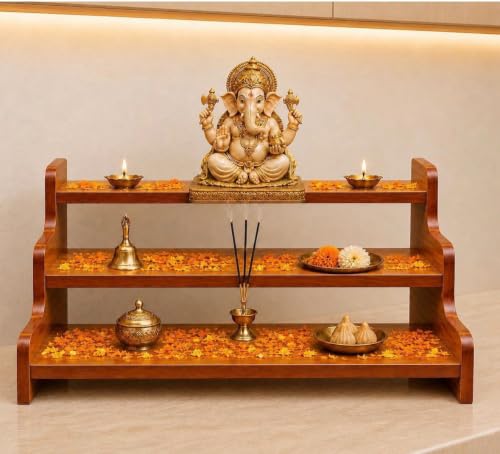
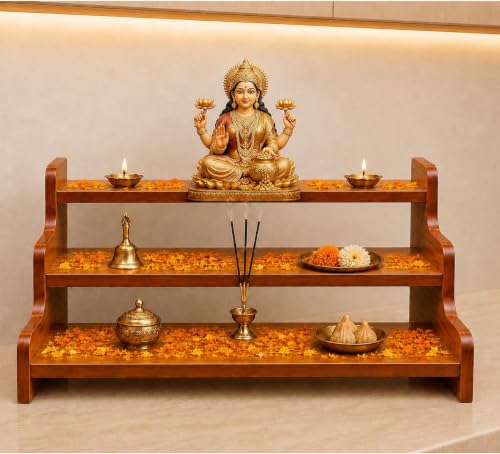
- Display area: A stable surface for idols and framed images.
- Daily-use area: Accessible space for the bell, aarti thali and other frequently used items.
- Storage area: Drawers, baskets or cupboards for incense, cotton wicks, prayer books and festival decorations.
Separating these areas helps maintain a clean appearance without making everyday rituals inconvenient.



Best Types of Pooja Room Shelves
1. Wall-Mounted Pooja Shelves
Best for: Small apartments, compact prayer corners and homes with limited floor space.
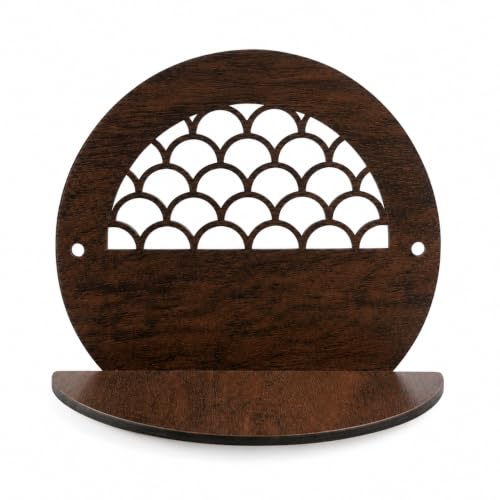
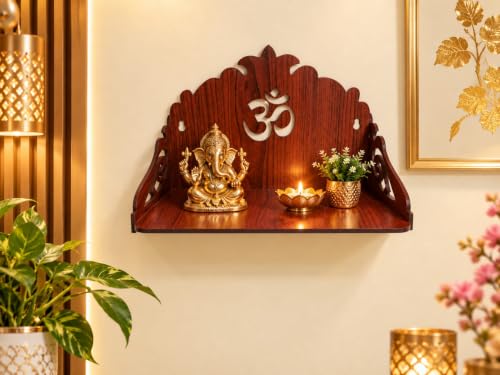
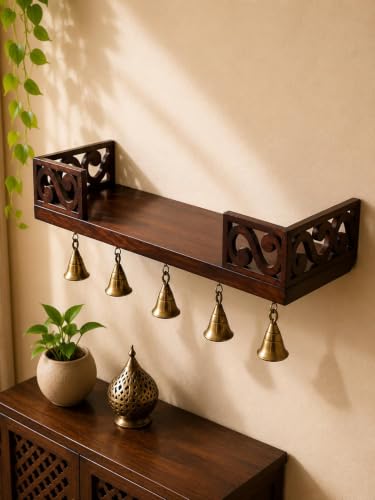
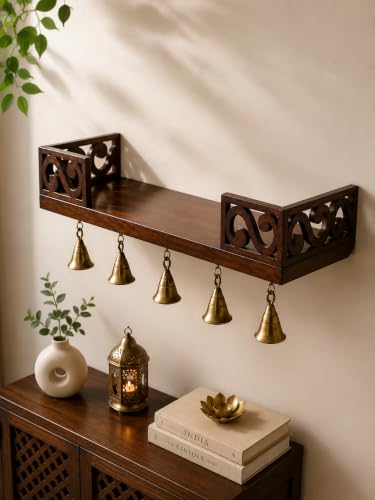
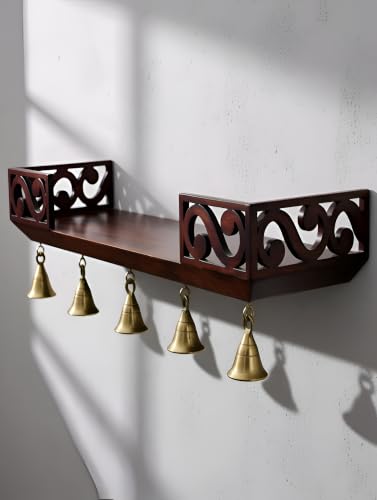
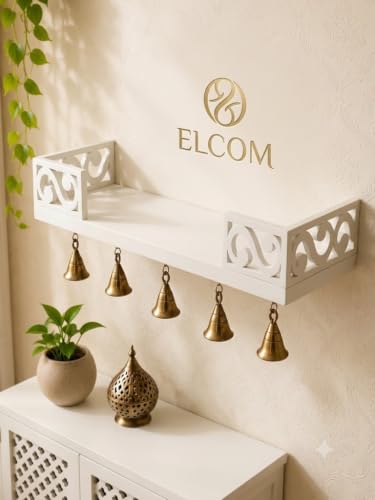
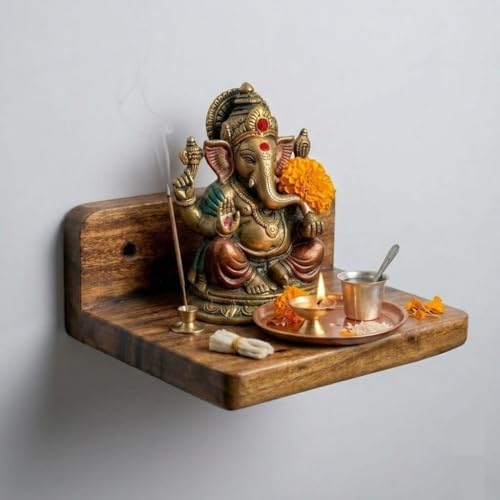
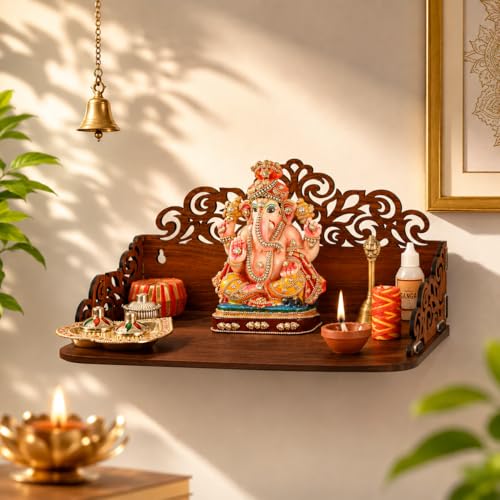
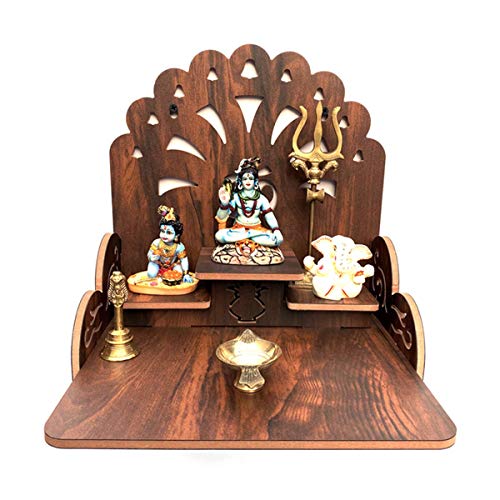
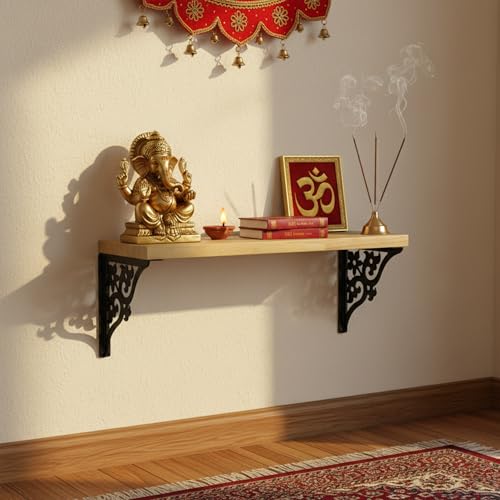
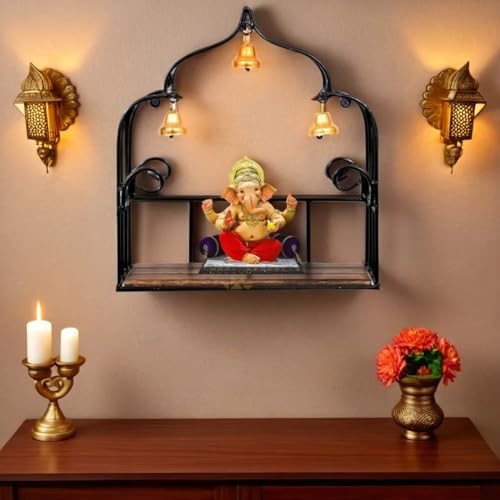
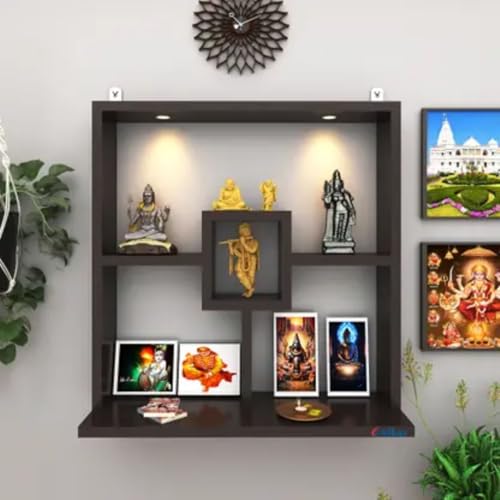
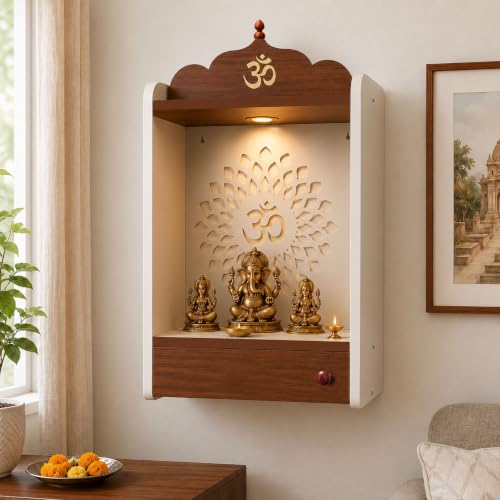
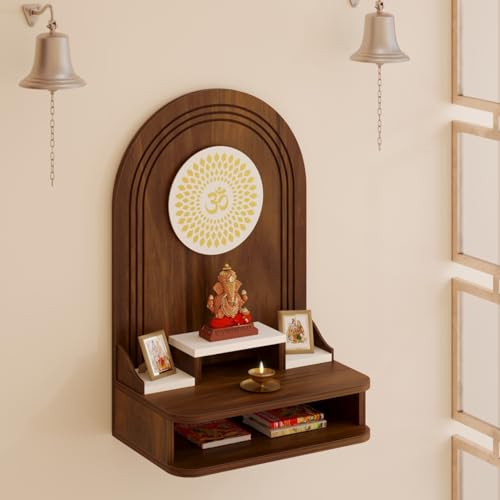
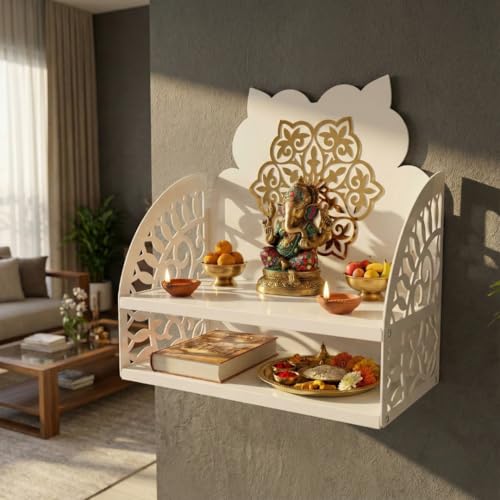
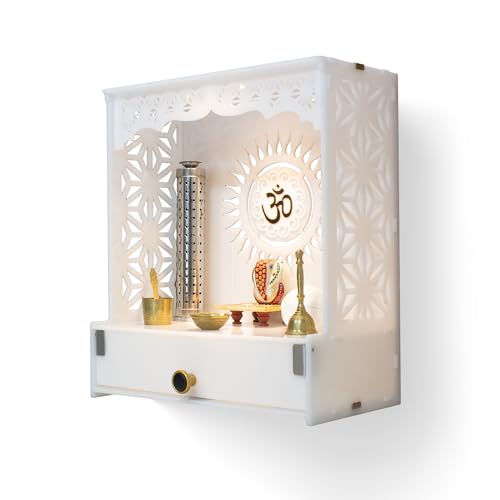
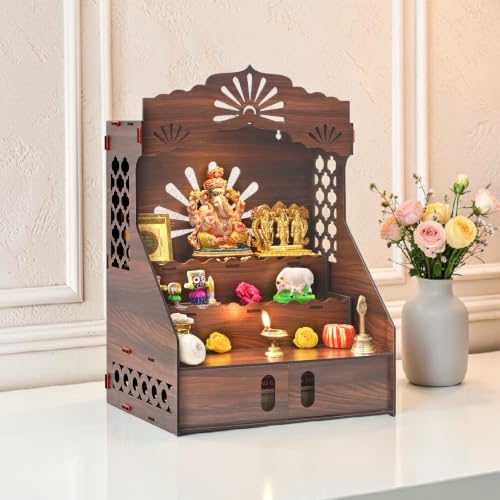
Wall-mounted pooja shelves are fixed directly to a wall and can provide a dedicated worship area without occupying floor space. Depending on the design, they may consist of a simple floating shelf, a small enclosed mandir or a multi-tier unit with a decorative back panel.
Advantages
- Keep the floor clear for cleaning.
- Work well in compact living rooms and apartments.
- Can create a neat, minimalist worship corner.
- May be easier to coordinate with existing furniture.
- Some models include drawers or small cabinets.
Limitations
- Require suitable wall construction and secure mounting.
- Offer less storage than many floor-standing units.
- May be difficult to access if installed too high.
- Can be unsuitable for heavy idols unless the shelf and fixing system are specifically rated for the load.
What to look for
Choose a shelf with a stable platform, adequate depth, smooth edges and enough space for your essential worship items. If you use a diya regularly, plan its position carefully and keep it away from curtains, decorative fabrics and electrical components.



2. Floor-Standing Pooja Units
Best for: Families with more worship accessories, larger idols or a dedicated prayer corner.
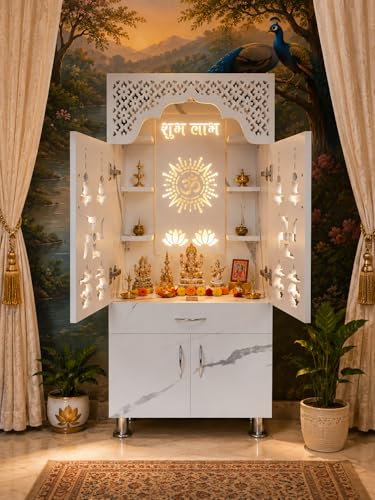
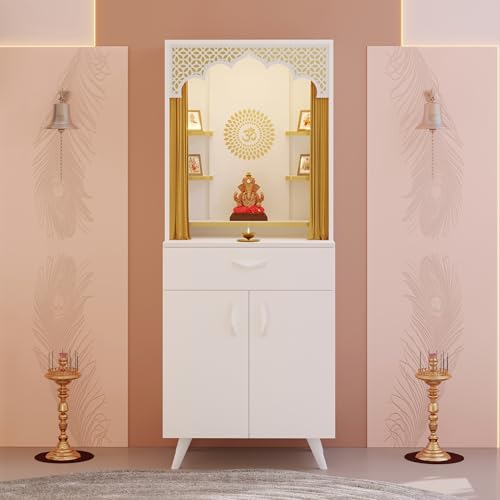
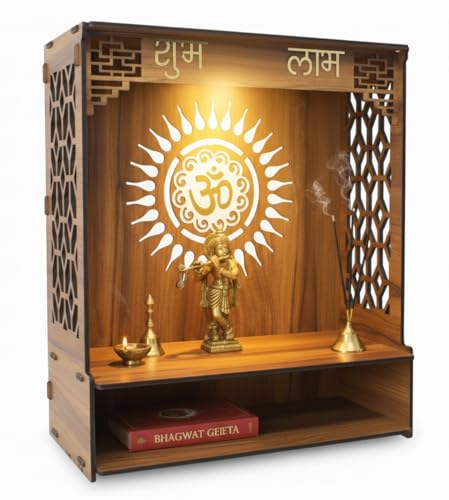
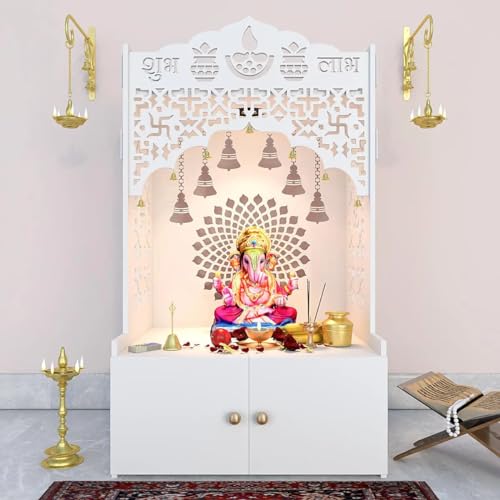
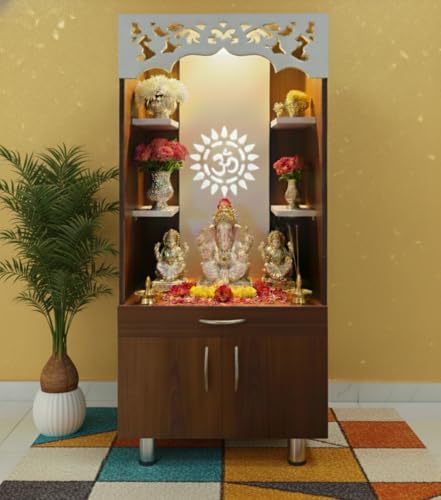
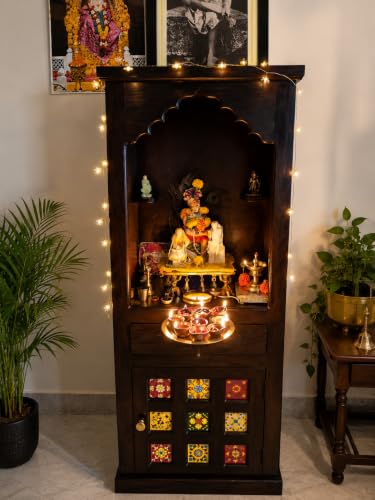
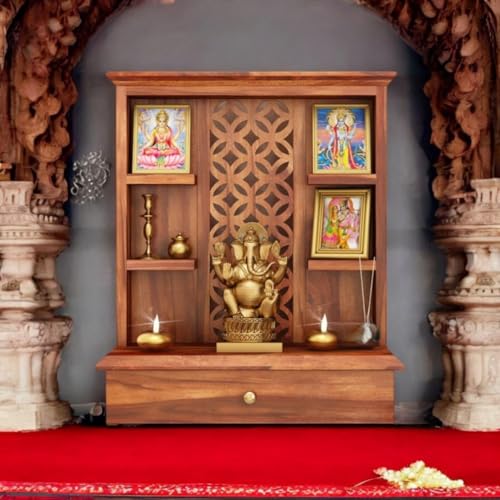
Floor-standing units sit directly on the floor and often include a raised altar, drawers and a lower storage cabinet. They are available in traditional carved designs, contemporary cabinets and compact console-style formats.
Advantages
- Usually provide more storage space.
- Can accommodate a larger arrangement of idols and framed images.
- Do not depend on wall-mounted shelf brackets for their primary support.
- Can create a defined worship area.
- Offer room for prayer books, spare diyas and festival supplies.
Limitations
- Occupy floor space.
- Need sufficient clearance in front for worship and cleaning.
- Larger models can be difficult to move.
- Deep carvings, grooves and decorative panels may collect dust.
What to look for
Check the overall footprint, cabinet capacity, stability, door clearance and the material used for the base. If you plan to sit on the floor while praying, ensure there is enough comfortable space in front of the unit.

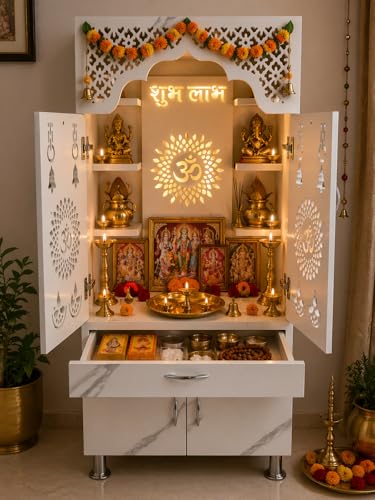
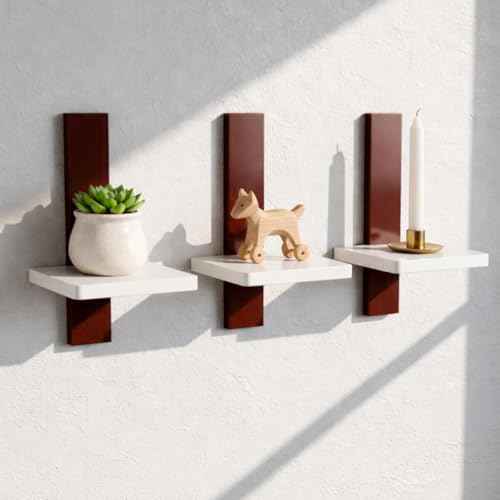
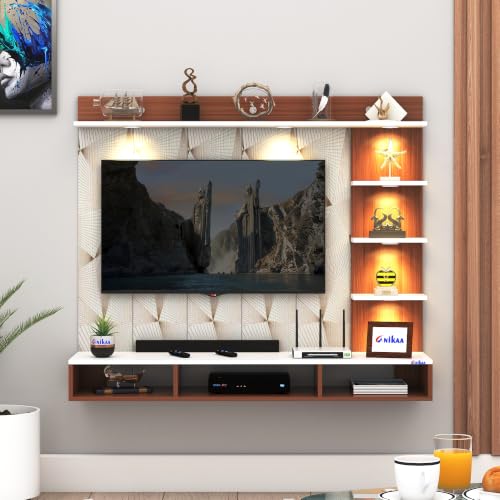
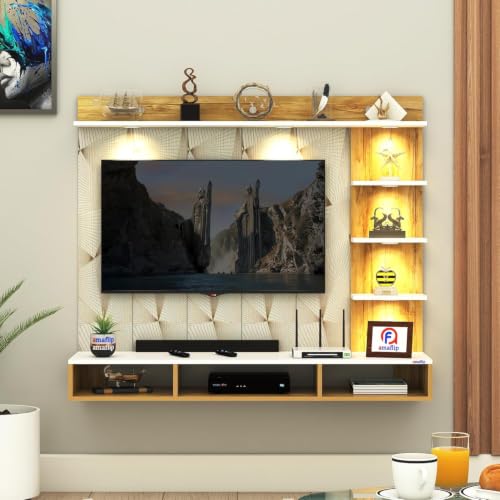
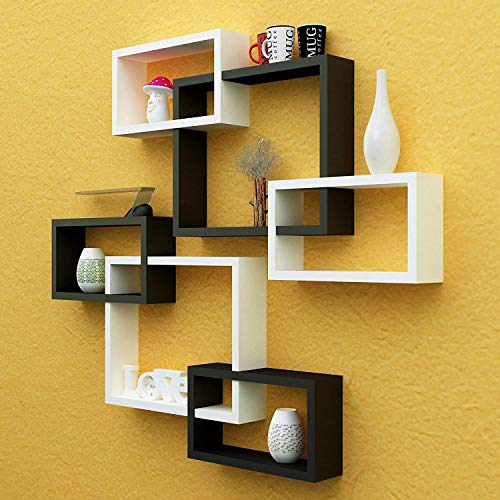
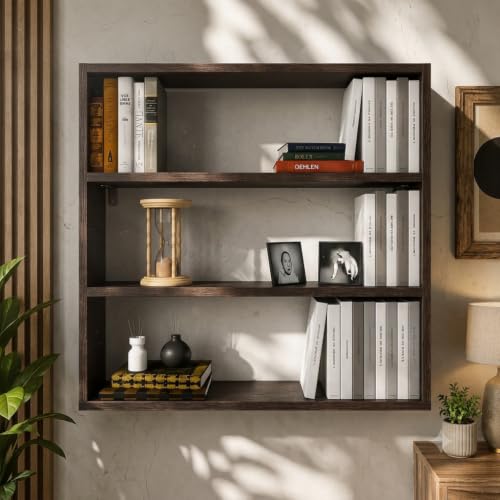
3. Floating Shelves With a Decorative Back Panel
Best for: Modern interiors and small worship corners.
This design combines one or more floating shelves with a decorative panel behind them. The panel may feature wood slats, a subtle motif, a marble-look finish or a CNC-cut pattern.
The back panel creates visual separation between the mandir and the surrounding wall, while the shelves provide space for idols and small accessories.
Advantages
- Visually lightweight and contemporary.
- Can be customized to fit a specific wall.
- Offers a clear backdrop for the main altar.
- Works with neutral, wooden and marble-inspired interiors.
Limitations
- Open shelves offer limited concealed storage.
- Decorative grooves and patterns require regular dusting.
- Lighting and decorative elements must be positioned safely around any open flame.
Organization tip: Use a separate small cabinet or drawer unit for supplies that do not need to remain on display.
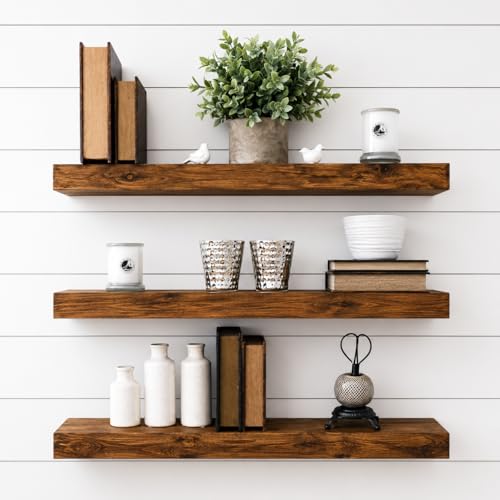
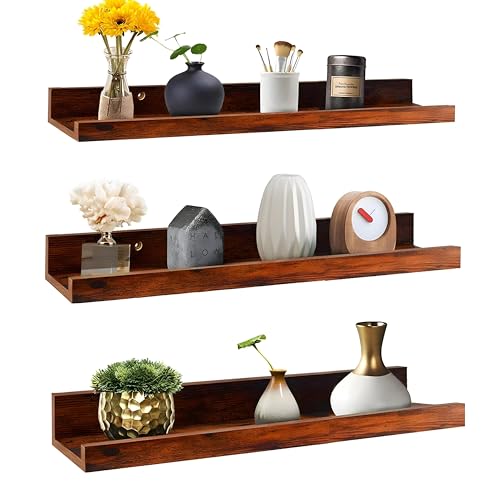
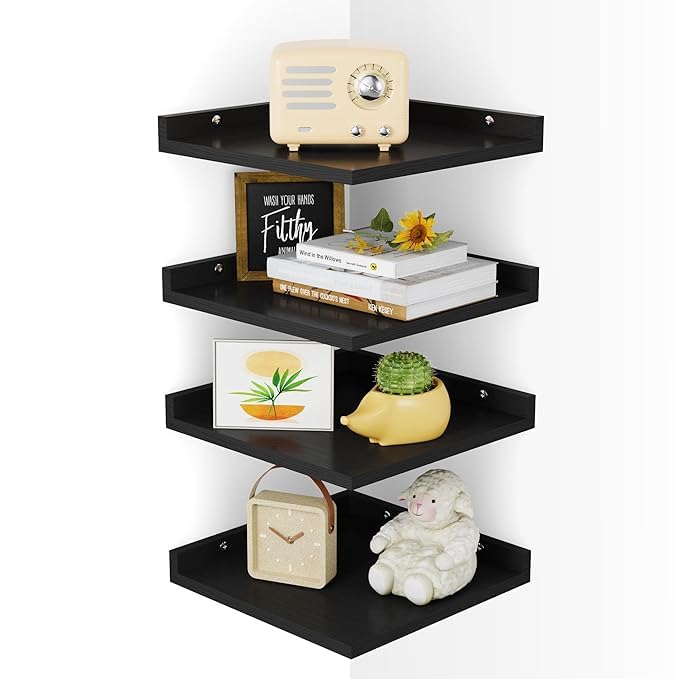
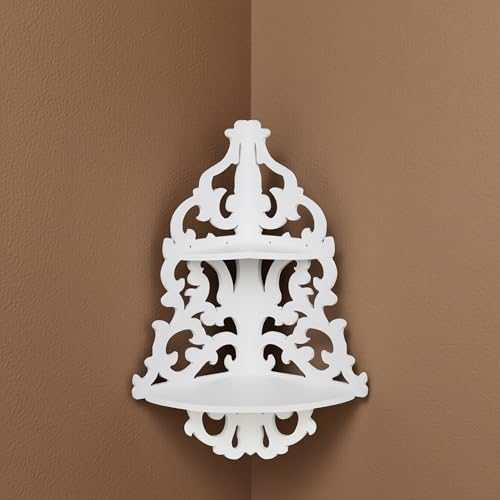
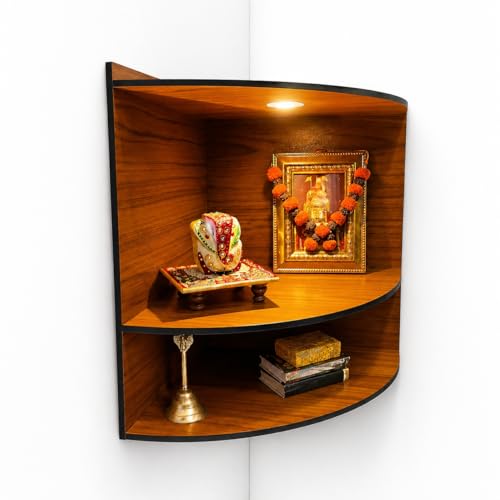
4. Corner Pooja Shelves
Best for: Apartments with an unused corner or limited wall space.
Corner shelves can turn an underused area into a compact prayer corner. Triangular, L-shaped and purpose-built corner mandirs are available in different materials and sizes.
Advantages
- Make use of otherwise unused space.
- Can fit into compact rooms.
- Leave more open wall area for other furniture.
- Can be paired with a small floor mat or a compact storage basket.
Limitations
- Deep corners may be harder to clean.
- Some shelf shapes provide less usable surface area than expected.
- Nearby doors, windows and furniture can restrict access.
Organization tip: Keep the most frequently used items on the easiest-to-reach shelf and store occasional-use items separately.




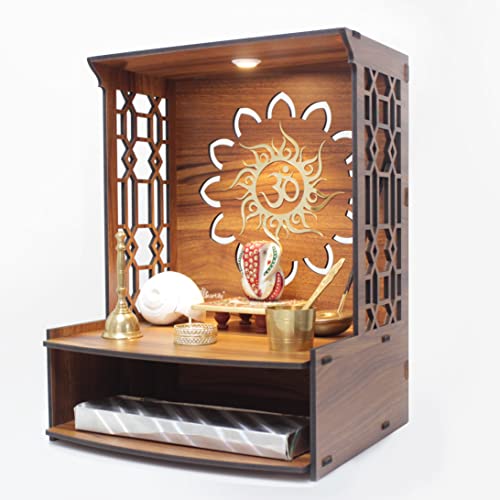
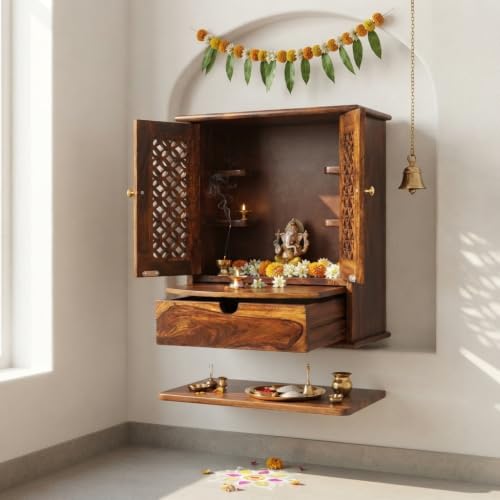
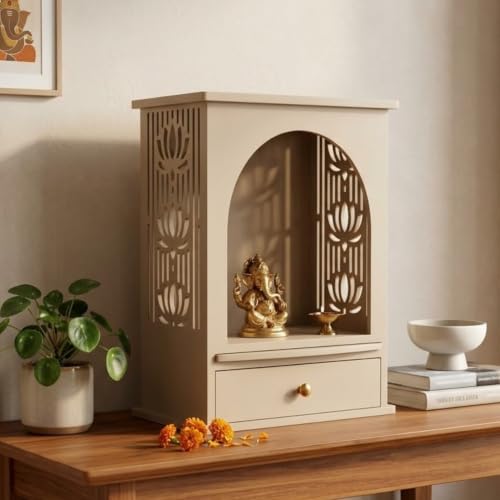
5. Pooja Shelves With Drawers
Best for: Homes that need to keep small worship essentials organized.
A shelf with drawers combines an altar surface with concealed storage. It is useful for items such as cotton wicks, incense sticks, camphor, prayer beads and small accessories.
Advantages
- Helps reduce visible clutter.
- Keeps small items grouped together.
- Can create a cleaner-looking altar.
- Makes daily preparation easier.
Limitations
- Drawers reduce the space available for other design features.
- Poorly designed drawers may be difficult to clean.
- Oil or ghee spills can damage some drawer interiors.
Organization tip: Use small removable organizers inside drawers. Keep oils upright in a separate tray, away from paper, cloth and electrical accessories.
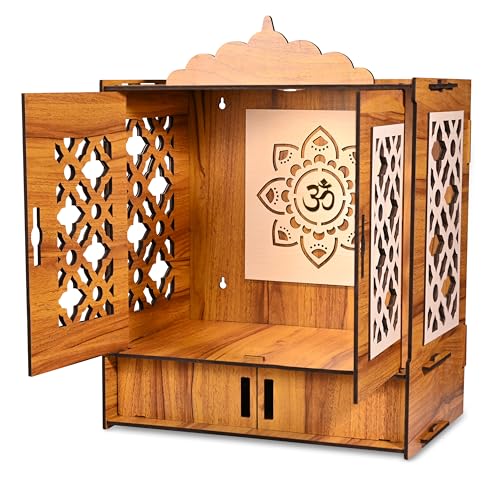

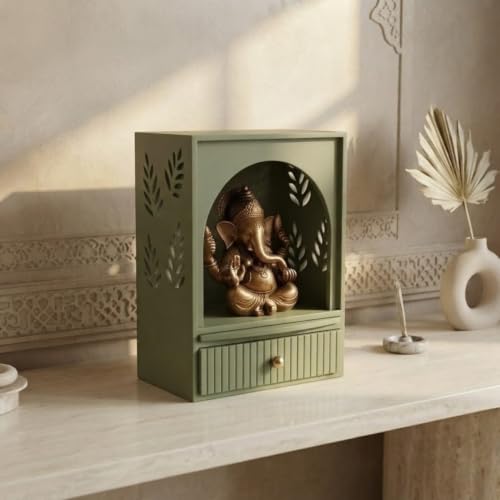

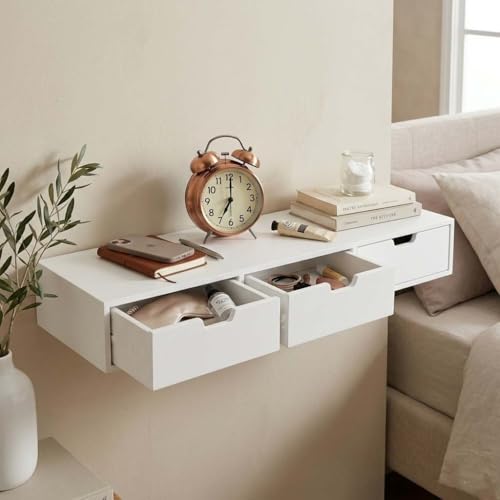
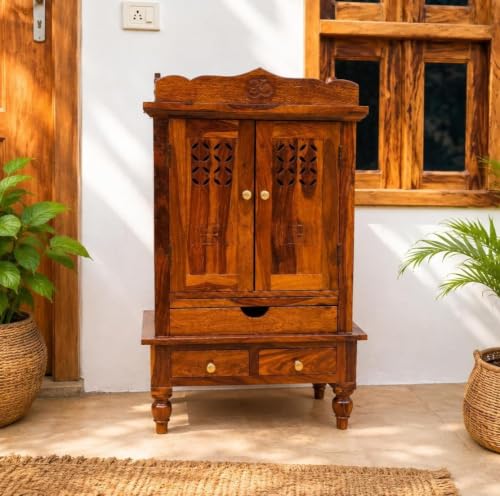

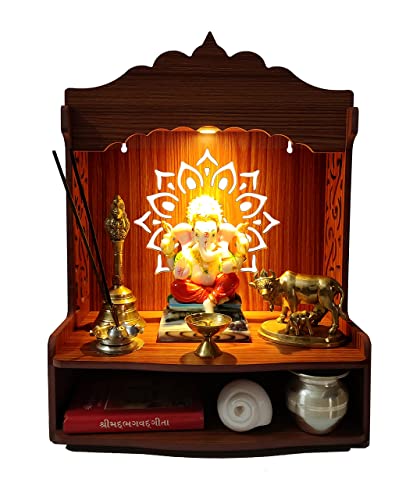
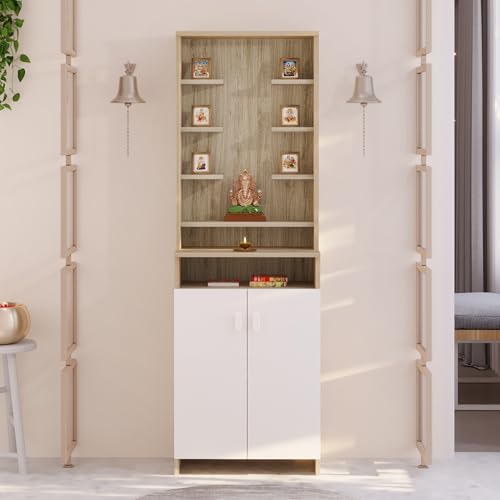
6. Hybrid Pooja Units With Wall Shelves and Floor Storage
Best for: Families who want both display space and concealed storage.
Hybrid units combine wall-mounted shelves or a decorative panel with a floor-standing cabinet below. They can provide a spacious-looking altar without sacrificing the storage available in a larger unit.
Advantages
- Combines display and storage.
- Can create a coordinated focal point.
- Provides space for larger collections of worship accessories.
- Can be customized to match the room’s furniture.
Limitations
- Requires more planning and floor space than a simple floating shelf.
- Custom installations may cost more.
- Wall-mounted and floor-mounted components must be installed and aligned properly.
Organization tip: Keep the altar surface relatively uncluttered and use the lower cabinet for supplies, books and seasonal decorations.
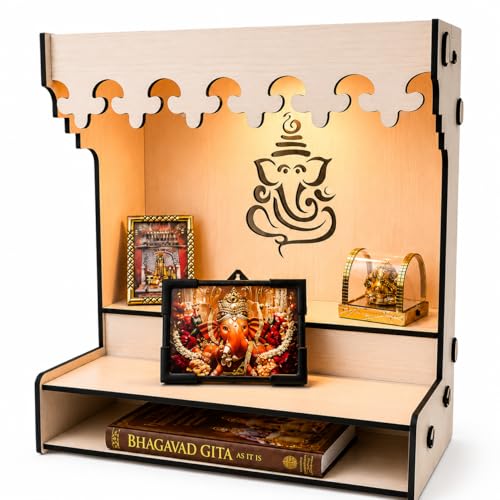

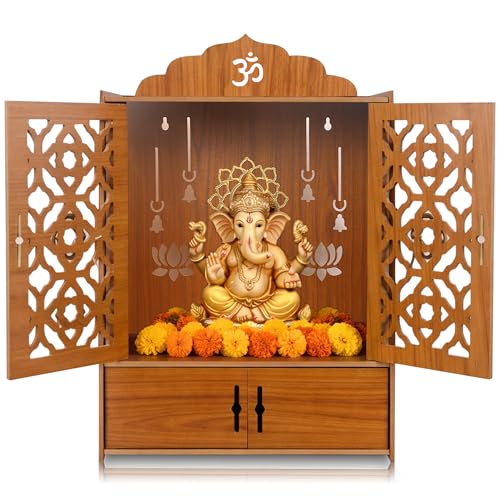
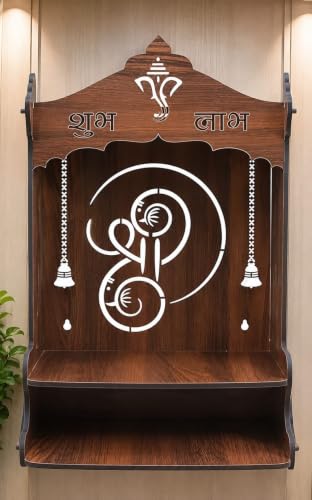
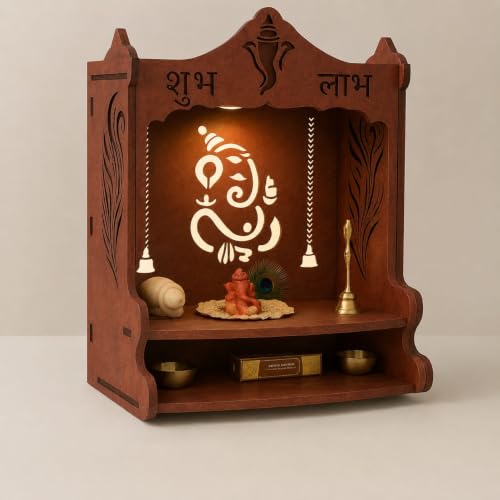

Wall-Mounted vs Floor-Standing Pooja Units: Comparison
| Feature | Wall-mounted shelves | Floor-standing unit |
|---|---|---|
| Floor space | Minimal | Requires a footprint |
| Storage | Limited to moderate | Often moderate to extensive |
| Installation | Needs secure wall fixing | Needs a stable floor position |
| Best for | Small homes and compact corners | Larger prayer spaces |
| Cleaning | Floor below is accessible | Requires cleaning around the base |
| Design options | Floating shelves, cabinets and panels | Traditional temples and modern cabinets |
| Heavy idols | Requires verified wall and fixing capacity | Requires a suitably rated, stable structure |
| Portability | Usually difficult to relocate after installation | Freestanding models may be easier to move |
| Cost | Depends on material and installation | Depends on size, material and storage |
Which one should you choose?
Choose wall-mounted shelves if preserving floor space is your priority and the wall can safely support the installation. Choose a floor-standing unit if you need more storage or want a larger, self-contained temple.
If you want both benefits, a hybrid unit can be a practical compromise.
Best Materials for Pooja Room Shelves
The material affects appearance, durability, cleaning and how well the shelf suits your home’s interior.
Solid wood
Solid wood offers a traditional appearance and can be repaired or refinished depending on its finish and construction.
Advantages: Natural grain, classic styling and a substantial appearance.
Limitations: Quality wood can be expensive, and some finishes require protection from moisture, heat and oil stains.
Best for: Traditional interiors and families looking for a long-term furniture piece.
Engineered wood and MDF
Engineered wood and medium-density fibreboard are commonly used for contemporary mandir cabinets and decorative panels.
Advantages: A range of finishes, relatively uniform surfaces and flexibility in design.
Limitations: Water exposure, damaged edges and excessive heat can affect some products. The load capacity depends on the board, construction and fixing system.
Best for: Modern units with laminate finishes, drawers and decorative panels.
Marble or stone
Marble and other stone surfaces provide a substantial, premium appearance and can be convenient to wipe clean when appropriately finished.
Advantages: Solid appearance, easy surface cleaning and compatibility with traditional or contemporary designs.
Limitations: Heavy weight, higher handling requirements and the need for suitable structural support.
Best for: Fixed installations and homes with a suitable supporting structure.
Metal
Metal brackets, frames and shelves can provide a slim profile and a contemporary look.
Advantages: Compact construction and potentially strong support when appropriately engineered.
Limitations: Finish quality, corrosion resistance, heat transfer and the stability of the complete assembly must be checked.
Best for: Minimalist shelves and designs that combine metal supports with wood or stone.
Glass
Glass is sometimes used as a decorative shelf or door component.
Advantages: A visually light appearance and a smooth surface.
Limitations: Requires careful selection of appropriate safety glass, suitable supports and correct installation. It may be unsuitable for heavy objects or areas exposed to impacts.
Best for: Decorative applications where the shelf’s rated load and glass specification are appropriate.
Buying tip: Do not choose a material based on appearance alone. Check the shelf’s construction, supported load, wall-fixing requirements and suitability for the intended placement.
How to Choose the Right Pooja Shelf Size
There is no single ideal dimension for every pooja shelf. The right size depends on the objects you need to place on it, the available wall or floor area and how you perform your rituals.
Before buying, measure the following:
- Available width: Measure the usable wall space or floor area, accounting for doors, windows and nearby furniture.
- Available height: Leave comfortable access to idols, framed images and everyday items.
- Shelf depth: Ensure the platform accommodates the base of the largest object without creating an unstable overhang.
- Storage requirements: Count your prayer books, vessels, incense supplies and festival decorations.
- Movement space: Leave enough room for comfortable standing or seated worship.
- Mounting requirements: Confirm that the wall and fixing system can safely support the fully loaded shelf.
Small apartments
A compact wall-mounted mandir, a corner shelf or a tabletop unit can be more practical than a large floor-standing temple. A separate drawer organizer can help keep supplies accessible without filling the display area.
Medium-sized homes
A floor-standing cabinet or hybrid unit can provide a dedicated altar with additional storage. Choose a design that fits the room without obstructing the normal walking path.
Larger homes
A full temple cabinet or a dedicated pooja room can accommodate a larger altar, more storage and space for seated worship. Plan ventilation and cleaning access as part of the layout.
Temple Organization Ideas for a Clutter-Free Pooja Room
A beautiful mandir does not need to be filled with decorative objects. Organizing the items you actually use is often more effective than adding more shelves.
1. Create a dedicated drawer for daily essentials
Store cotton wicks, incense sticks, matchboxes, prayer beads and other small accessories in a dedicated drawer or divided organizer.
Keep combustible supplies away from open flames and hot surfaces.
2. Separate oil and ghee from paper and fabric
Keep oil and ghee containers upright in a stable tray. Store them separately from prayer books, cotton cloth and other absorbent materials to prevent accidental spills.
3. Arrange idols and framed images thoughtfully
Keep the primary worship area stable and uncluttered. Arrange objects according to your family’s traditions and ensure that each item has a secure base.
Avoid overcrowding the shelf with objects that make it difficult to light a diya or clean the altar.
4. Keep the aarti thali easy to access
Use a dedicated shelf or tray for the bell, aarti thali and frequently used vessels. Return items to the same place after worship so they are easy to find the next day.
5. Store prayer books vertically
If your shelf has a cabinet, use a dry, clean section for prayer books and religious literature. Avoid placing books directly beside oil containers or where smoke and heat can damage them.
6. Use removable organizers
Small trays, baskets and drawer dividers make it easier to group items without permanently changing the furniture.
Choose materials that can be cleaned easily and do not place plastic organizers close to a diya flame.
7. Keep festival decorations separate
Decorative lights, spare garlands, seasonal fabrics and extra vessels do not need to remain on the daily altar. Store them in labelled containers and bring them out when required.
8. Create a simple cleaning routine
- Wipe the shelf surface with a material-appropriate cleaner.
- Remove ash and loose dust after the area is cool.
- Check for oil spills and residue.
- Clean drawer interiors and handles.
- Inspect wall brackets and visible fixings periodically.
- Keep the area around the unit free of unnecessary objects.
Lighting and Diya Safety for Pooja Shelves
Lighting can make a pooja corner feel calm and inviting, but it should be planned around safe worship practices.
Warm LED lighting
Warm white LED lighting can highlight the altar and create a softer appearance than harsh lighting. Concealed LED strips, small spotlights and backlit panels can work well in modern mandir designs.
Keep the light source and its wiring away from open flames and hot surfaces. Follow the manufacturer’s installation instructions and use appropriately rated electrical components.
Brass diyas and traditional lamps
Brass diyas can complement wooden, marble and neutral-coloured mandirs. However, the diya must be placed on a stable, heat-resistant surface with adequate clearance from nearby materials.
Essential precautions:
- Keep flames away from curtains, garlands, paper, wood decorations and loose fabric.
- Never leave a burning diya unattended.
- Do not place an open flame beneath electrical lighting, LED strips or wiring.
- Keep oil containers and spare cotton wicks away from the flame.
- Ensure the shelf is stable and does not wobble.
- Extinguish the flame safely before cleaning or rearranging the area.
For enclosed cabinets, consider how smoke and heat will disperse. If your daily worship includes incense or an open flame, avoid treating a sealed display cabinet as a substitute for appropriate ventilation.
Pooja Room Shelf Styling Ideas for Different Interiors
Traditional Indian interiors
Choose a wooden mandir with traditional detailing, brass accessories and a restrained arrangement of framed images. Keep decorative pieces coordinated rather than mixing too many finishes.
Modern minimalist interiors
Use a floating shelf, a light neutral backdrop and a small number of carefully arranged objects. Concealed storage can help maintain the minimalist look.
Marble-inspired interiors
A marble-look back panel or suitable stone shelf can create a refined appearance. Pair it with a limited number of brass or gold-toned accessories.
Small apartment worship corners
Choose a compact shelf, keep daily essentials close at hand and store seasonal items elsewhere. Make sure the shelf does not interfere with door movement or the usual walking route.
Common Mistakes to Avoid When Choosing Pooja Shelves
Choosing a shelf before measuring the space: A visually attractive unit may obstruct a doorway or leave insufficient room for worship.
Ignoring the loaded weight: Idols, stone accessories and brass vessels can add considerable weight. Verify the load capacity of the complete shelf and fixing system.
Using unsuitable wall fixings: Different wall materials require different mounting methods. Ask a qualified installer to assess the wall and use appropriate anchors and hardware.
Overcrowding the altar: Too many items can make cleaning and daily worship inconvenient. Keep the main display area focused on the objects you use and value.
Choosing high-maintenance detailing: Intricate carvings and deep grooves may look beautiful but require more frequent dusting.
Placing diyas close to decorations: Curtains, garlands, fabric backdrops and electrical components should be kept away from open flames.
Forgetting storage: If there is no designated place for incense, books and small accessories, clutter can quickly return.
Buying a unit with no maintenance access: Make sure you can clean the shelf, reach the drawers and inspect visible fixings without difficulty.
In Case You Are Looking For:
- Best Decorative Urlis: Brass vs Ceramic
- Best Rangoli Stencils: Reusable vs Disposable
- Best Decorative Torans for Indian Homes
- Best Artificial Flower Garlands: Festive Floral Decor
- Best Gift Ideas for Moms Who Are Spiritual
Frequently Asked Questions
1. Are wall-mounted pooja shelves better than floor-standing mandirs?
Wall-mounted shelves are often better for compact homes because they save floor space. Floor-standing mandirs are generally preferable when you need more storage, a larger altar or a self-contained worship unit.
2. Which pooja shelf is best for a small apartment?
A compact wall-mounted mandir, floating shelf or corner unit can work well. Measure the available space and verify the shelf’s load capacity before installation.
3. Which material is best for pooja room shelves?
Solid wood offers a traditional appearance, engineered wood provides varied finishes, and marble or stone can create a premium, solid surface. The best choice depends on budget, maintenance, structural support and the intended use.
4. Can I keep a diya on a wall-mounted pooja shelf?
Only if the shelf and its placement are suitable for the intended use. Use a stable, heat-resistant surface and maintain safe clearance from curtains, decorations, electrical components and other combustible materials. Never leave a burning diya unattended.
5. How do I organize pooja essentials without clutter?
Use dedicated drawers, small removable organizers and separate storage for daily supplies and festival decorations. Keep the main altar surface reserved for the objects needed during worship.
6. How much depth should a pooja shelf have?
There is no universal ideal depth. Measure the base of your largest idol or vessel, allow enough space to position items securely and consider the room’s available clearance. Avoid placing heavy objects near an unsupported edge.
7. Are floating pooja shelves suitable for heavy idols?
They can be suitable only when the shelf, brackets, wall and fixing hardware are specifically appropriate for the combined load. Have the installation assessed if the idols or shelf are heavy.
8. Can I use MDF or engineered wood for a pooja unit?
Yes, if the product is appropriately constructed for the intended load and environment. Protect it from standing water, excessive heat and oil spills, and inspect damaged edges or joints.
9. How can I keep a pooja room dust-free?
Wipe open shelves regularly, clean decorative panels and drawer interiors, and avoid unnecessary objects. Closed storage can reduce visible clutter, but it still needs routine cleaning.
10. What is a hybrid pooja unit?
A hybrid unit combines wall-mounted shelves or a decorative back panel with a floor-standing cabinet. It offers display space above and storage below, making it a useful option for households that need both.
11. Should I choose open shelves or a pooja cabinet with doors?
Open shelves offer easy access and a light visual appearance. A cabinet with doors helps keep supplies out of sight and may protect stored items from dust. Consider ventilation and access if you regularly use incense or diyas.
12. How do I choose a pooja unit that matches my home decor?
Match the main finish to nearby furniture or wall colours, then use a small number of coordinated accents. Wooden finishes work well with warm interiors, while white and light neutral finishes can complement minimalist spaces.
Final Verdict
The best pooja room shelves are those that support your family’s daily worship while keeping the space safe, organized and visually calm.
- Choose wall-mounted shelves if floor space is limited and the wall can safely support the installation.
- Choose a floor-standing mandir if you need more storage or want a larger, self-contained altar.
- Choose floating shelves with a back panel for a contemporary, streamlined appearance.
- Choose corner shelves to make use of an otherwise unused area.
- Choose a hybrid unit if you want display space above and concealed storage below.
Before purchasing, measure the space, consider the weight of your idols and accessories, check material quality, plan safe diya placement and decide where daily essentials will be stored.
A thoughtfully organized pooja corner does not need to be large or elaborate. With the right shelf, practical storage and regular maintenance, even a compact space can become a peaceful and functional part of your home.