

🍚⚡Cooking rice sounds simple.
Wash the rice. Add water. Put it on the stove. Wait. Check it. Lower the flame. Check again. And then somehow, after all that supervision, the rice still decides whether it wants to be perfectly fluffy or suspiciously mushy. 😂
That’s exactly where an electric rice cooker can make life easier.
A rice cooker is designed to automate the cooking process so you don’t have to stand beside the stove constantly. Depending on the model, it can also offer automatic cooking, keep-warm functionality, steaming and additional cooking modes.
And for Indian kitchens, that’s particularly useful because rice isn’t just one dish.
We’re talking about:
🍚 Basmati rice
🍚 Sona Masoori
🍚 Brown rice
🍚 Idli rice
🍚 Jeera rice
🍚 Pulao
🍚 Khichdi
🍚 Steamed vegetables
🍚 One-pot meals
Current 2026 buying guides show that rice cookers in India range from compact 1L models to 5L options, with basic cookers generally being much simpler than premium fuzzy-logic or multi-cooking appliances.
So if you’re thinking about buying one, the real question isn’t:
“Which rice cooker has the biggest capacity?”
It’s:
“Which rice cooker actually fits my family, cooking style and budget?”
Also Read | Amazon Kitchen Appliances That Simplify Your Life
Let’s find out. 👇
🏆 Best Rice Cookers for Home in India
Here’s a practical shortlist of models worth considering across different requirements and budgets.
| Rice Cooker | Capacity | Best For | Key Advantage |
|---|---|---|---|
| Panasonic Warmer Series | 1.8L | Everyday family use | Reliable cooking + keep-warm |
| Prestige PRWO | 1.8L | Value buyers | Simple cooking + practical design |
| Pigeon Joy | 1L/1.8L | Budget users | Affordable and compact |
| Pigeon Easy | 3L | Larger families | Bigger capacity + multiple pots |
| AGARO Regal | 3L | Feature seekers | Ceramic bowl + more cooking flexibility |
Current listings and 2026 comparisons show these brands/models spanning roughly the ₹1,400–₹4,700 range depending on model and retailer, with prices changing during sales.
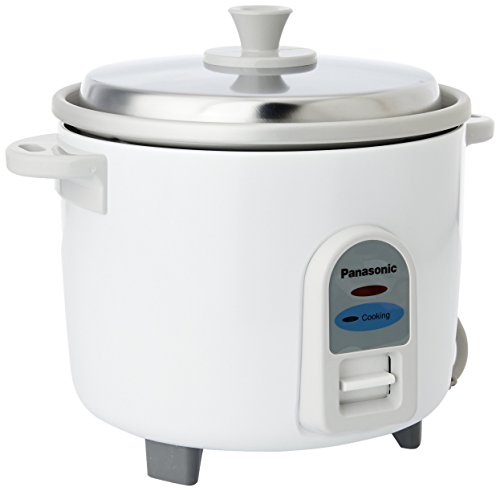
🥇 1. Panasonic Warmer Series Rice Cooker — Best for Everyday Family Use
If you don’t want unnecessary complexity and simply want a rice cooker that does its main job reliably, Panasonic’s Warmer Series is one of the strongest places to start.
Current 1.8L Panasonic models are positioned for everyday family cooking and include automatic keep-warm functionality. One current listing shows the 1.8L model at around ₹2,849, although pricing varies by retailer.
Why it’s worth considering
The big advantage is simplicity.
You don’t necessarily need:
❌ 20 cooking programs
❌ Wi-Fi
❌ Smartphone controls
❌ Complicated menus
Sometimes you just want:
Rice → cook → keep warm.
That’s it.
Best for:
👨👩👧👦 Small families
🍚 Daily rice cooking
🏠 Busy households
🍱 Meal preparation
⭐ Why we like it
The keep-warm function is particularly useful if everyone in the house doesn’t eat at exactly the same time.
Rice can remain available after cooking instead of requiring immediate serving.


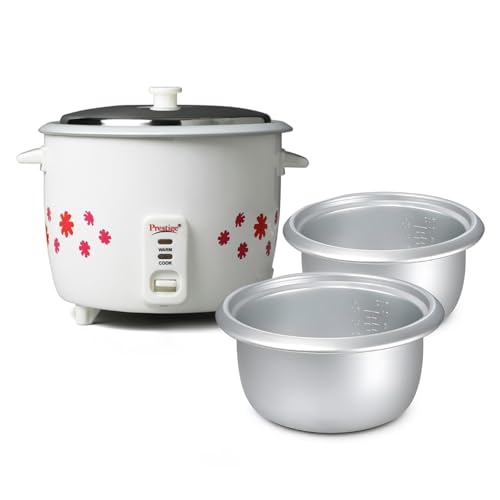
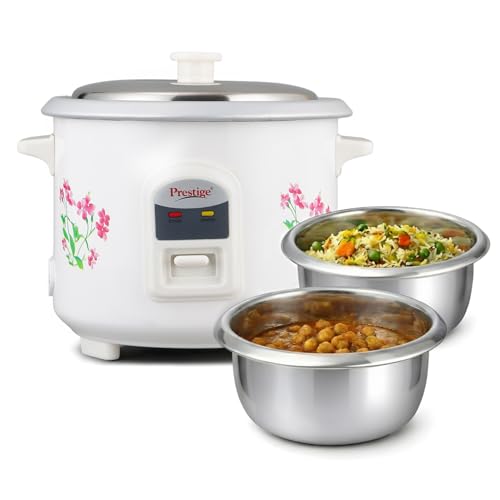
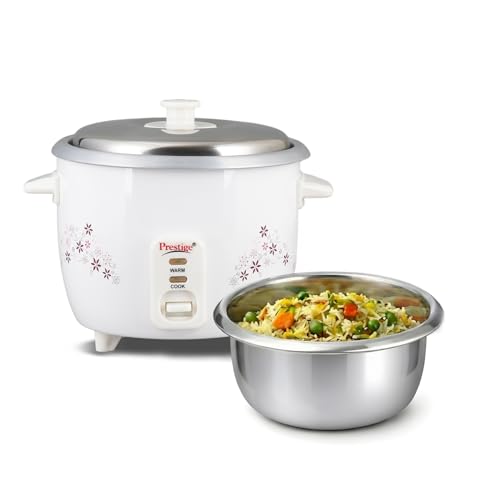
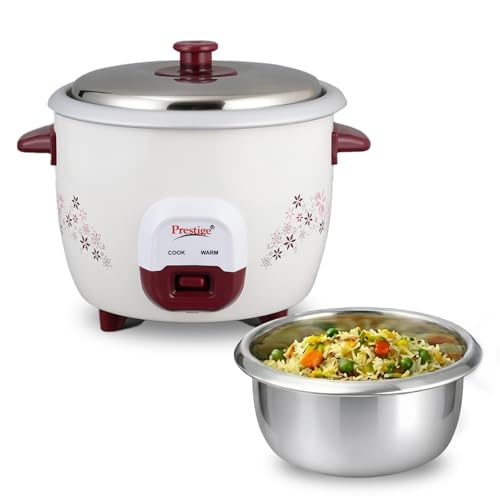
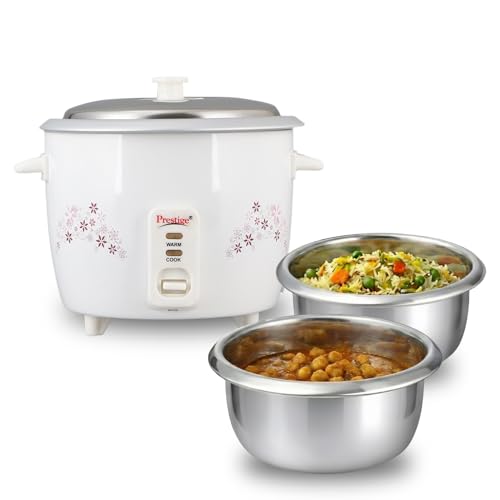
🥈 2. Prestige PRWO — Best Value-Oriented Choice
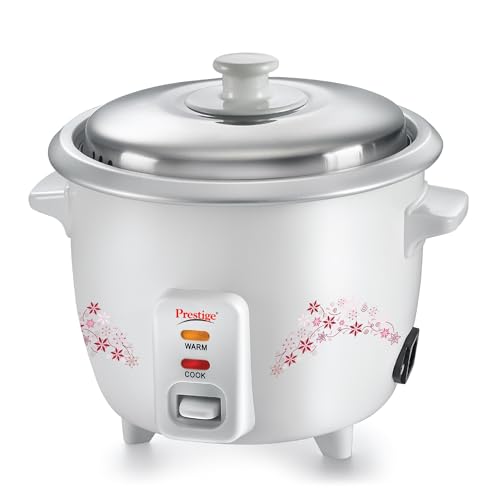
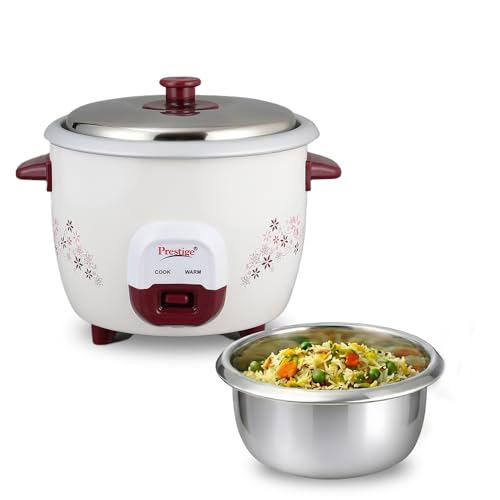
Prestige has a broad range of electric rice cookers in India, including the PRWO series.
Current Prestige listings show multiple PRWO variants in the roughly 1.5L–1.8L range, with current prices varying by model.
The biggest attraction here is straightforward:
Simple cooking without making the appliance complicated.
Depending on the specific variant, you may get features such as:
- Automatic cooking
- Keep-warm functionality
- Multiple cooking pots
- Close-fit lid
- Compact design
Some PRWO variants also use a two-pot arrangement, which can be useful if you want more flexibility while cooking.
Best for:
💰 Value-focused buyers
🏠 Small families
🍚 Regular rice cooking
🎓 Students who want more than a basic kettle
🥉 3. Pigeon Joy — Budget-Friendly Everyday Option
If you’re looking for something affordable and don’t want to spend heavily on a rice cooker, the Pigeon Joy series is worth checking.
Current listings show 1L and 1.8L variants, with the 1L model available around ₹1,400 in current listings.
The smaller version can be particularly interesting for:
👤 Singles
👫 Couples
🎓 Students
🏠 Small kitchens
What makes it attractive?
It’s simple.
And that’s sometimes exactly what you want from a rice cooker.
You don’t need an appliance with ten modes if your daily requirement is simply:
“Cook my rice while I do something else.”
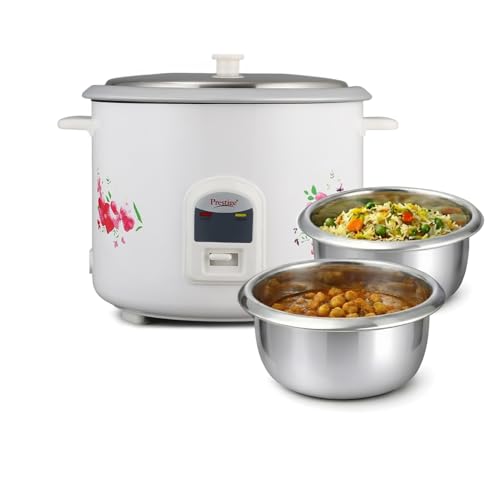
🏅 4. Pigeon Easy 3L — For Larger Batches
If you’re cooking for a larger family or frequently preparing bigger quantities, stepping up to a 3L rice cooker makes more sense.
The Pigeon Easy 3L model currently appears with two pots and is listed around ₹3,176 in current product results.
Best for:
👨👩👧👦 Larger families
🍚 Bigger rice batches
🍲 Multiple cooking tasks
🎉 Occasional gatherings
But don’t make the mistake of thinking:
3L = automatically better.
If you’re cooking one or two portions every day, a large cooker may simply occupy more counter space than necessary.
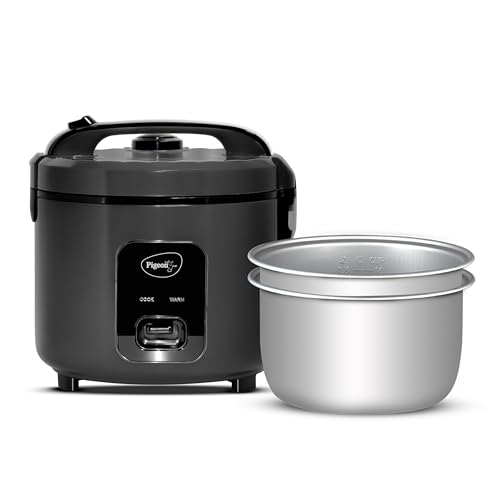
- RICE COOKER COMES WITH STRONG & STURDY BODY
- HIGH QUALITY ALUMINIUM COOKING BOWL
- REMOVABLE STEAM VENT
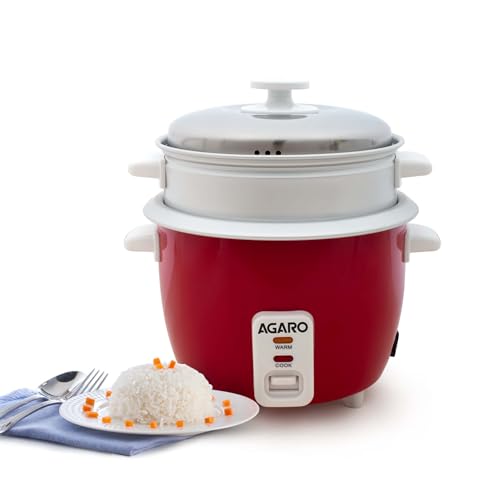
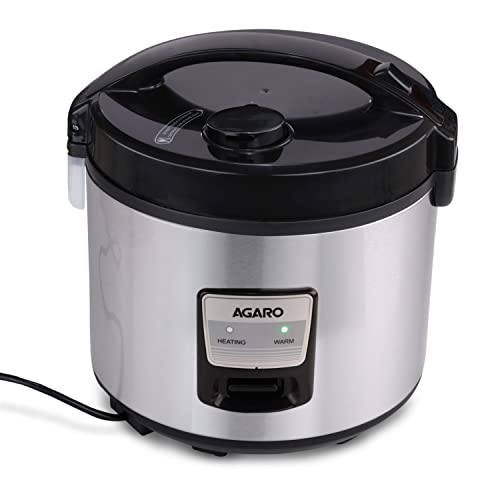
⭐ 5. AGARO Regal 3L — Feature-Oriented Choice
If you want something beyond a basic rice cooker, the AGARO Regal 3L is an interesting option.
Current comparisons list it with a ceramic-coated bowl, multiple functions and keep-warm functionality, while current product listings show the 3L model around ₹4,600 depending on retailer.
This makes it more attractive for someone who wants:
🍚 Rice
🥣 Other cooking tasks
🥘 More versatility
⏱️ Less manual monitoring
Best for:
Feature-focused buyers
Small families
Users interested in multifunction cooking
People willing to spend more for additional flexibility





🍚 6. What Size Rice Cooker Do You Actually Need?
This is probably the most important decision.
Because rice cooker capacity can be confusing.
A cooker may say:
1L
but that doesn’t mean you should fill it with 1L of raw rice. 😅
The stated capacity refers to the cooker/pot volume, while usable rice capacity depends on the manufacturer’s specifications.
A practical starting point:
| Household | Suggested Capacity |
|---|---|
| 1 person | 0.6–1L |
| 1–2 people | Around 1L |
| 2–4 people | 1.5–1.8L |
| 4–6 people | Around 2–3L |
| Larger family | 3L+ |
Current 2026 guides commonly place 1L models with singles/couples and 1.8L models with small-to-medium families, while 2.8–3L models are more suitable when larger batches are required.
But here’s the real trick:
Think about how much rice you actually cook, not just how many people live in your house.
A family of four that eats small rice portions may not need a huge cooker.
⚡ 7. How Much Wattage Does a Rice Cooker Need?
Rice cookers commonly range from roughly 400W to 1200W, depending on size and technology.
But don’t make the mistake of thinking:
More watts = better rice cooker.
It doesn’t work that way.
A 1200W cooker isn’t automatically better than a 700W model.
Wattage affects heating power and cooking time, but you should also consider:
- Capacity
- Heating design
- Thermostat
- Inner pot
- Cooking controls
- Keep-warm system
- Insulation
For a basic rice cooker, consistent cooking is more important than chasing the highest wattage number.
🍚 8. Which Rice Can You Cook?
A good rice cooker isn’t limited to ordinary white rice.
Depending on the model and cooking method, you can prepare:
🤍 White Rice
The simplest and most common use.
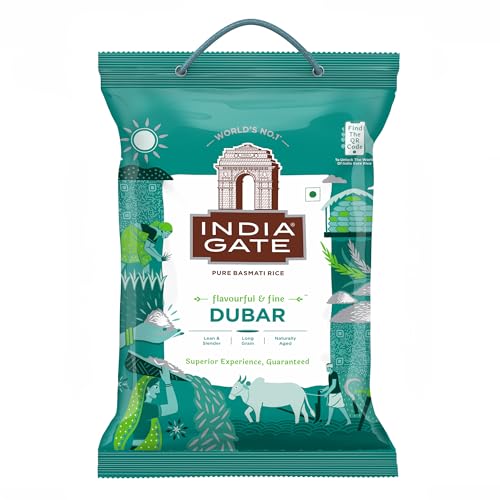
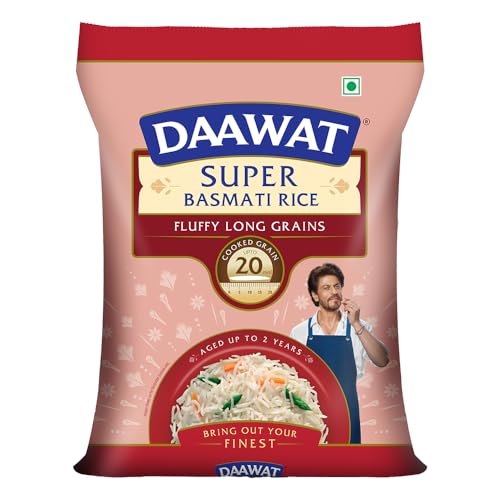
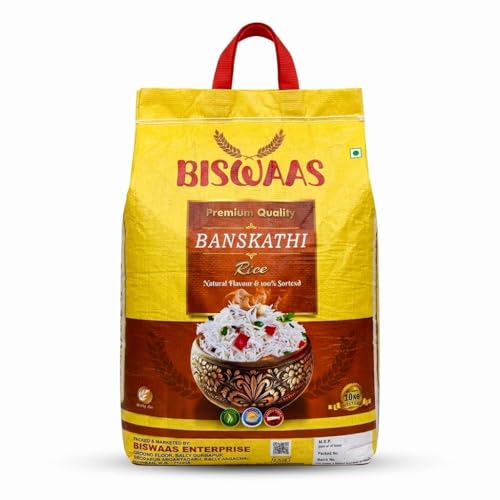
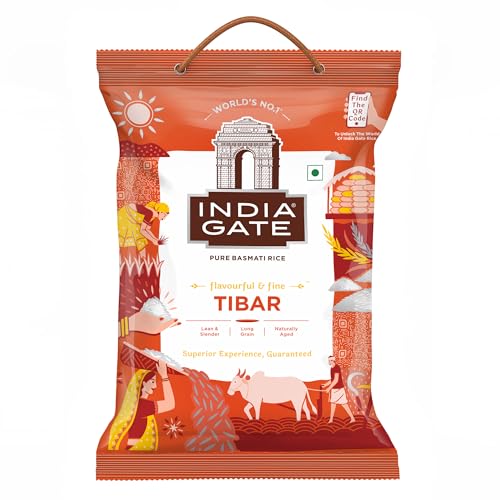
🌾 Basmati Rice
Popular in Indian households, but water ratios matter.
🍚 Sona Masoori
A common everyday rice variety in many Indian homes.
🌿 Brown Rice
Usually requires different water and cooking requirements than white rice.
🥣 Idli Rice
Can be cooked, although soaking and preparation may still be required depending on the recipe.
🍲 Khichdi
Some rice cookers and multifunction models can handle khichdi.
🍛 Pulao
Certain larger or multifunction cookers can also be useful for one-pot rice dishes.
But remember:
The rice cooker doesn’t eliminate the need to follow the correct water ratio.
Different rice varieties behave differently.
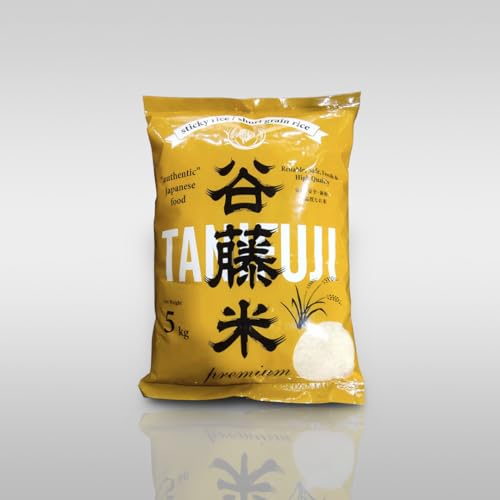
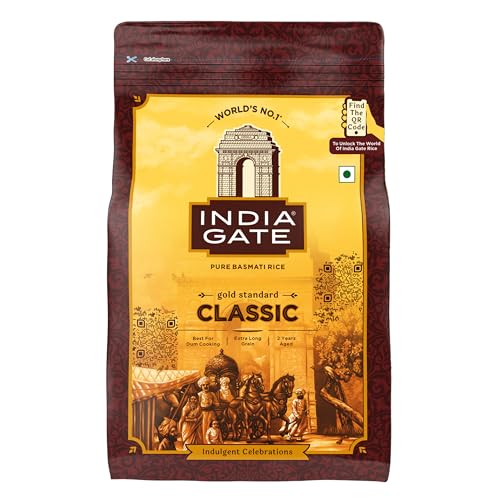
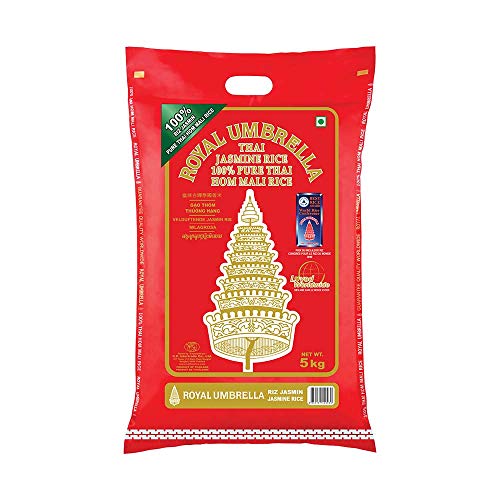
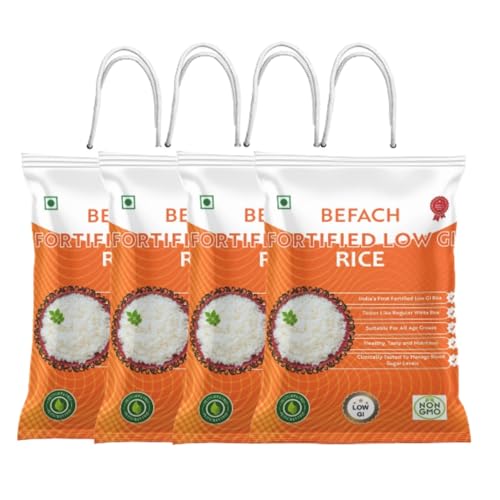
💧 9. Water Ratio Matters More Than You Think
This is where beginners often make mistakes.
They buy a rice cooker expecting:
Rice + random amount of water = perfect rice.
Unfortunately, rice doesn’t work that way. 😂
Water requirements depend on:
- Rice variety
- Age of rice
- Washing
- Soaking
- Desired texture
- Cooker design
- Cooking method
For example, basmati and brown rice don’t necessarily require identical treatment.
Some current rice-cooker guides specifically highlight the importance of matching water ratios to Indian rice varieties.
Best approach:
Start with the manufacturer’s instructions.
Then adjust slightly based on your preferred texture and rice variety.
🧠 10. What Does “Automatic Cooking” Actually Mean?
A basic rice cooker generally works using a thermostat.
You select the cooking function and the cooker heats the contents.
As the cooking process changes and the temperature rises, the cooker can transition away from active cooking.
This is why you don’t have to stand beside it constantly.
That’s the main convenience.
Instead of:
Stove → monitor → adjust flame → check rice
you get:
Measure → start → let the cooker work.
🔥 11. What Is the Keep-Warm Function?
This is one of the most useful rice cooker features.
Once cooking is complete, the cooker can automatically switch to a lower-temperature keep-warm mode.
This is particularly useful when:
👨👩👧👦 Family members eat at different times
🍚 You prepare rice before other dishes
🏢 You want rice ready when needed
Current Panasonic, Pigeon and other rice-cooker models commonly offer automatic or timed keep-warm functionality depending on the model.
But remember:
Keep-warm isn’t the same as “keep rice fresh forever.”
Rice quality can change if it sits warm for too long.
Follow the manufacturer’s recommendations and normal food-safety practices.
🥘 12. Can You Cook More Than Rice?
Yes depending on the cooker.
Some basic rice cookers can be useful for simple preparations beyond rice.
Depending on the design, you may be able to prepare:
🥣 Khichdi
🍲 Porridge
🌽 Steamed vegetables
🥚 Some steamed foods
🍛 Pulao
🥘 Simple one-pot meals
More advanced models may offer dedicated cooking functions.
But don’t confuse:
Rice cooker
with:
Electric pressure cooker.
They are different appliances.
A basic rice cooker generally isn’t designed to replace a pressure cooker for dishes that require pressure cooking.
🧺 13. Why the Inner Pot Matters
If there’s one component you should inspect carefully, it’s the inner cooking pot.
This is where the rice actually cooks.
Common constructions include:
- Aluminium
- Non-stick coated aluminium
- Hard-anodised aluminium
- Ceramic-coated interiors
Current comparisons note that bowl construction can have a noticeable effect on sticking, cleaning and long-term usability.
Non-stick
Advantages:
✅ Easier rice removal
✅ Easier cleaning
✅ Less sticking
But:
❌ Requires careful handling
❌ Avoid metal utensils
❌ Coating can deteriorate with misuse
🥇 14. Is a Ceramic Bowl Better?
Ceramic-coated cooking bowls can be attractive because they can provide a non-stick cooking surface while avoiding some of the concerns users have about conventional coatings.
Current AGARO Regal models, for example, are listed with ceramic-coated bowls.
But don’t automatically pay a huge premium just because the word ceramic appears on the box.
The overall cooker still matters:
Heating + thermostat + lid + capacity + service + bowl quality.
🧼 15. Is a Rice Cooker Easy to Clean?
Generally, yes.
But choose the design carefully.
Look for:
✔ Removable inner pot
✔ Easy-access lid
✔ Steam vent that’s easy to clean
✔ Condensation collection where provided
✔ Simple exterior
The inner pot is usually the easiest part to clean.
Important:
Don’t immerse the electrical base in water.
Clean the heating area according to the manufacturer’s instructions.
🛡️ 16. Safety Features to Look For
Rice cookers aren’t complicated appliances, but safety still matters.
Look for:
✅ Thermal protection
Helps protect against excessive temperature.
✅ Fuse protection
Some models include electrical protection systems.
✅ Secure lid
Especially important when steam is involved.
✅ Steam vent
Allows steam to escape appropriately.
✅ Stable body
The cooker shouldn’t easily slide around while operating.
Current Indian rice-cooker buying guides specifically highlight features such as fuse protection and steam control when comparing models.
🎓 17. Best Rice Cooker for Students
For students, simplicity usually wins.
You probably don’t need:
❌ 15 programs
❌ Huge capacity
❌ Wi-Fi
❌ Fancy touchscreen
Look for:
✔ 1L–1.5L
✔ Simple controls
✔ Automatic cooking
✔ Easy cleaning
✔ Compact footprint
✔ Reliable warranty
A compact cooker can handle rice, oats, simple one-pot meals and other basic cooking tasks depending on the model.
And if you’re living in a hostel or PG:
Check whether electric cooking appliances are permitted.
👨👩👧👦 18. Best Rice Cooker for Families
For a typical family, the 1.8L–2.8L range can be a practical place to start depending on portions.
A family that eats rice regularly may benefit from:
🍚 Larger batch capacity
🔥 Automatic cooking
♨️ Keep-warm
🧼 Easy cleaning
🥘 Additional cooking functions
But don’t buy 3L simply because you have four family members.
Think about your actual meal portions.
🍛 19. Rice Cooker for Indian Cooking
Indian cooking presents some interesting requirements.
You’re not necessarily making plain steamed rice every day.
You may want:
- Basmati
- Sona Masoori
- Brown rice
- Khichdi
- Pulao
- Jeera rice
- Steamed vegetables
So if you’re buying specifically for Indian cooking, pay attention to:
1. Cooking consistency
Does it handle your preferred rice variety well?
2. Capacity
Can it cook enough for your family?
3. Keep-warm
Useful for meal timing.
4. Inner pot
Important for sticking and cleaning.
5. Versatility
Useful if you want more than plain rice.
🧠 20. Basic Rice Cooker vs Fuzzy Logic
This is where rice cookers start getting more interesting.
Basic Rice Cooker
Uses relatively simple temperature-based control.
Best for:
🍚 White rice
🏠 Everyday use
💰 Budget buyers
Fuzzy Logic Rice Cooker
Uses electronic controls and sensors to adjust cooking parameters.
Potential benefits:
- Better control
- More consistent results
- Multiple rice types
- More cooking programs
Current Indian market guides generally place fuzzy-logic cookers above basic models in price, with premium induction-heating models costing substantially more.
Do you need fuzzy logic?
For everyday white rice:
Probably not.
For people who regularly cook different grains and want more automated control:
It can be worth considering.
⚡ 21. Basic Rice Cooker vs Multi-Cooker
Don’t confuse the two.
Rice Cooker
Primarily designed around:
Rice + simple cooking
Multi-Cooker
Can potentially handle:
🍚 Rice
🍲 Pressure cooking
🥘 Slow cooking
♨️ Steaming
🍳 Sautéing
🥣 Other recipes
If you already have several appliances, a basic rice cooker may be enough.
If you’re trying to reduce the number of appliances on your kitchen counter, a multi-cooker can make more sense.
💰 22. What Budget Should You Keep?
A practical starting framework:
Under ₹2,000
Basic rice cooking.
Good for:
🎓 Students
👤 Singles
💰 Budget buyers
₹2,000–₹4,000
More options.
You may find:
- Better capacity
- Keep-warm
- Better inner pots
- Larger models
- Additional functionality
₹4,000+
Start looking at:
- Ceramic bowls
- More cooking functions
- Better controls
- Fuzzy logic
- Premium construction
₹8,000+
You enter a more premium multi-cooker/fuzzy-logic/IH territory depending on the model.
You should only spend this much if the additional functionality actually matters to you.
❌ 23. Common Rice Cooker Buying Mistakes
Mistake 1: Buying Based Only on Capacity
A 3L cooker isn’t automatically better than a 1.8L cooker.
Mistake 2: Ignoring the Inner Pot
The bowl directly affects cooking and cleaning.
Mistake 3: Assuming All Rice Needs the Same Water
Different varieties need different treatment.
Mistake 4: Buying Too Many Features
You may end up paying for cooking modes you’ll never use.
Mistake 5: Ignoring Keep-Warm
If your family eats at different times, this feature can be genuinely useful.
Mistake 6: Ignoring Warranty
Electrical appliances need after-sales support.
Mistake 7: Using Metal Utensils on a Non-Stick Bowl
This can damage the coating.
Mistake 8: Overfilling
Always follow the manufacturer’s maximum fill guidance.
🛒 24. Rice Cooker Buying Checklist
Before clicking Buy Now, check:
Capacity
☐ Right size for household
☐ Enough for normal rice quantity
☐ Not unnecessarily large
Cooking
☐ Automatic cooking
☐ Suitable rice types
☐ Correct water markings/instructions
Convenience
☐ Keep-warm if required
☐ Easy controls
☐ Clear indicators
Inner Pot
☐ Good-quality construction
☐ Non-stick/ceramic/hard-anodised as preferred
☐ Easy cleaning
Safety
☐ Thermal protection
☐ Fuse/electrical protection where specified
☐ Secure lid
☐ Steam vent
☐ Stable base
Maintenance
☐ Removable cooking pot
☐ Easy-to-clean lid
☐ Accessible steam vent
Ownership
☐ Warranty
☐ Service availability
☐ Spare/replacement pot availability where relevant
🏆 25. Which Rice Cooker Should You Buy?
🥇 For most families
1.8L Panasonic/Prestige-type cooker with keep-warm
A simple, practical choice.
💰 For budget buyers
Pigeon Joy
Especially the smaller variants for singles/couples.
👨👩👧👦 For larger batches
3L-class cooker
Useful for larger families or frequent batch cooking.
🥣 For more versatility
AGARO Regal-type multifunction cooker
Worth considering if you genuinely want more than basic rice cooking.
🎓 For students
1L compact rice cooker
Small, simple and easier to manage.
🍚 BestBuy93.IN Quick Recommendation
👤 Single: 1L
👫 Couple: 1–1.5L
👨👩👧 Small family: 1.8L
👨👩👧👦 Larger family: 2.8–3L+
💰 Budget: Basic automatic cooker
♨️ Different meal times: Keep-warm model
🥣 More cooking flexibility: Multifunction cooker
🧠 Multiple rice varieties: Consider better electronic controls/fuzzy logic
🏠 Everyday Indian kitchen: Don’t overcomplicate it—choose the cooker that matches your actual rice quantity and routine.
Cooking Performance, Features & Real-World Guide 🍚⚡
A rice cooker looks like a very simple appliance.
Put rice in.
Add water.
Switch it on.
Wait.
Done. 😄
But if you’ve ever used different rice cookers, you’ll know that not every cooker produces the same result.
One may give you fluffy rice.
Another may leave the bottom slightly sticky.
One may cook basmati beautifully.
Another may need a little experimentation with water.
And that’s why choosing a rice cooker shouldn’t be based only on capacity, wattage or price.
The real questions are:
How consistently does it cook?
Can it handle the rice varieties you normally eat?
Does it keep rice warm properly?
Is the inner pot good?
Can you use it for anything beyond plain rice?
And most importantly:
Does it make your everyday cooking genuinely easier?
Let’s go deeper. 👇
🍚 1. Rice Cooker Performance Is More Than “Cook” and “Off”
Basic rice cookers generally use a temperature-based control system.
You add rice and water, start the cooker and let it heat.
As the cooking process progresses, the temperature behaviour changes and the cooker can switch from cooking to a lower-temperature mode such as keep-warm, depending on the model.
This simple system is one reason rice cookers are so convenient.
You don’t have to continuously:
❌ Monitor the flame
❌ Stir the rice
❌ Check the water every few minutes
❌ Adjust the burner
Instead:
Measure → Start → Let the cooker work.
That’s the real convenience.
💧 2. Water-to-Rice Ratio Is Still Important
Here’s where some people get disappointed with their first rice cooker.
They assume:
“Rice cooker means I don’t need to think about water.”
Unfortunately… rice didn’t get that memo. 😂
The amount of water you need depends on:
- Rice variety
- Rice age
- Washing
- Soaking
- Desired texture
- Cooker design
- Cooking quantity
For example:
Basmati rice may need different treatment from:
🌾 Sona Masoori
🌾 Brown rice
🌾 Idli rice
🌾 Parboiled rice
So don’t blindly use the same ratio for every rice variety.
Best approach
Start with the manufacturer’s instructions or markings, then adjust slightly based on your preferred texture.
If your rice consistently turns out:
Too soft → slightly reduce water
Too firm → slightly increase water
Make small adjustments rather than changing the ratio dramatically.
🍚 3. Can You Cook Basmati Rice in a Rice Cooker?
Absolutely.
Basmati can work very well in a rice cooker.
But preparation matters.
For fluffier basmati:
- Measure the rice.
- Wash it according to your normal cooking method.
- Soak if your recipe normally calls for soaking.
- Add the appropriate amount of water.
- Start the cooker.
- Let it finish the cooking cycle.
- Allow the rice to rest briefly before fluffing if appropriate.
Don’t immediately attack the rice with a spoon. 😂
Letting it settle can help the grains finish absorbing moisture.
🌾 4. What About Sona Masoori?
Sona Masoori is another common rice variety in Indian kitchens.
It can be cooked in a rice cooker, but again, water requirements can differ from basmati.
If you’re buying a rice cooker specifically for everyday Indian rice, don’t judge it only by how well it cooks basmati.
Think about the rice you actually eat.
Ask yourself:
What rice do I cook 80% of the time?
That’s the rice your cooker needs to handle reliably.
🌾 5. Can You Cook Brown Rice?
Many rice cookers can cook brown rice, but it typically requires:
- More water
- Longer cooking
- Different preparation
Some advanced cookers have dedicated brown-rice programs that simplify this process.
If brown rice is part of your regular diet, look for a model whose manual specifically supports it.
Don’t simply use:
White rice settings + random water adjustment
and expect identical results.
Brown rice has a different structure and cooking requirement.
🍲 6. Khichdi in a Rice Cooker
This is where rice cookers become genuinely useful.
Depending on the model, you may be able to prepare simple khichdi.
Typical ingredients include:
🍚 Rice
🌾 Dal
🥕 Vegetables
🌿 Spices
💧 Water
The exact recipe depends on your preferred style.
Why a rice cooker works well here
Khichdi doesn’t require constant high-heat frying.
It’s essentially a one-pot preparation where controlled cooking can be useful.
However, always make sure the cooker is designed for such preparations and don’t exceed its recommended capacity.
🍛 7. Pulao and Jeera Rice
Some larger or multifunction rice cookers can also be useful for:
🌿 Jeera rice
🍛 Pulao
🥕 Vegetable rice
But here’s an important distinction.
A basic rice cooker may be excellent at cooking rice but not necessarily designed for sautéing onions, spices or whole ingredients.
If your recipe starts with:
Oil → onions → spices → frying → rice
you need a cooker that specifically supports that cooking function.
Otherwise:
Better method
Cook your tempering separately.
Then add the prepared ingredients and rice to the cooker according to your recipe.
🥦 8. Steaming With a Rice Cooker
Some rice cookers come with a steaming basket or tray.
This can expand the appliance’s usefulness considerably.
Depending on the model, you may be able to steam:
🥦 Broccoli
🥕 Carrots
🌽 Corn
🥟 Dumplings
🥔 Certain vegetables
🥚 Eggs
The exact foods and method depend on the manufacturer’s instructions.
Why steaming is useful
You can potentially:
Cook rice below + steam food above.
That’s a great way to save time.
But don’t improvise with random containers inside the cooker.
Use the supplied steaming accessory or cookware specifically approved for the appliance.
♨️ 9. Keep-Warm: One of the Most Useful Features
If you ask me which feature makes a rice cooker genuinely convenient, keep-warm is near the top of the list.
Imagine:
You start cooking rice at 7 PM.
But dinner isn’t ready until 7:30.
With a keep-warm function, the cooker can automatically transition after cooking and keep the rice warm.
This is useful when:
👨👩👧 Family members eat at different times
🍛 You prepare rice before the rest of the meal
🏢 You’re managing multiple dishes
⏱️ You don’t want to coordinate everything perfectly
But don’t interpret keep-warm as:
“Rice can stay there indefinitely.”
Rice quality can deteriorate over time, and food-safety considerations still apply.
Follow the manufacturer’s recommendations and use sensible food-storage practices.
🔥 10. Does Keep-Warm Use Electricity?
Yes.
The cooker needs energy to maintain the warm temperature.
But the power requirement in keep-warm mode is generally much lower than the cooker’s maximum cooking power.
Still, there’s no reason to keep the appliance warm for hours if you don’t need it.
Better habit:
Cook → serve → switch off when no longer needed.
This is both practical and energy-conscious.
⚡ 11. How Does Wattage Affect Rice Cooking?
Rice cookers can have different wattage ratings depending on their capacity and technology.
You’ll commonly see models in the range of several hundred watts, with larger and more feature-rich cookers often using more power.
But wattage isn’t the only factor determining cooking performance.
Consider:
⚡ Heating element
🌡️ Thermostat
🍚 Cooking capacity
🥣 Inner pot
🧠 Electronic controls
♨️ Keep-warm system
A well-designed 700W cooker can produce excellent rice.
A poorly designed high-wattage cooker isn’t automatically better.
🧠 12. What Is Fuzzy Logic?
Now we’re getting into premium rice cookers.
A basic cooker generally follows a relatively simple heating pattern.
A fuzzy-logic rice cooker uses sensors and electronic control to adjust cooking behaviour based on conditions such as temperature and cooking progress.
Think of it as:
Basic cooker:
“Heat until condition X.”
Fuzzy logic:
“Let’s continuously evaluate what’s happening and adjust the cooking process.”
This can be useful when you regularly cook:
🍚 Different rice varieties
🌾 Brown rice
🥣 Porridge
🌾 Other grains
It can also provide more cooking programs and finer control.
💰 13. Do You Need Fuzzy Logic?
For most households:
No.
If you mostly cook regular white rice, a basic automatic cooker can be perfectly adequate.
Fuzzy logic becomes more interesting if:
✔ You cook multiple rice varieties
✔ You want more automated control
✔ You use different cooking programs
✔ You’re willing to spend more
✔ Cooking consistency matters more than price
Don’t pay premium money for technology you won’t use.
🥣 14. Inner Pot: The Part You Shouldn’t Ignore
The inner pot is one of the most important parts of a rice cooker.
It’s where your rice actually cooks.
And its quality affects:
- Sticking
- Cleaning
- Cooking consistency
- Durability
- Handling
Common options include:
Aluminium
Lightweight and commonly used.
Non-stick coated
Usually easier to clean and can reduce sticking.
Hard-anodised
Can offer a tougher cooking surface depending on the design.
Ceramic-coated
Found in some more premium or multifunction models.
🥄 15. Be Careful With Non-Stick Bowls
If your rice cooker uses a non-stick inner pot, treat it properly.
Avoid:
❌ Metal spoons
❌ Steel scrubbers
❌ Knives
❌ Aggressive scraping
Instead use:
✔ Silicone utensils
✔ Wooden utensils
✔ Plastic rice paddles
The goal is simple:
Don’t scratch the cooking surface.
🧼 16. How Easy Is a Rice Cooker to Clean?
A good rice cooker shouldn’t turn cleaning into a separate weekend project. 😂
Look for:
Removable inner pot
Makes washing much easier.
Removable steam vent
Useful if the design allows it.
Removable lid components
Some models make these easier to clean than others.
Condensation collector
Certain cookers include a system for collecting water produced by steam.
These small design differences can make a big difference over months of use.
💦 17. Don’t Forget the Steam Vent
The steam vent isn’t decorative.
It allows steam to escape during cooking.
Keep it clean and unobstructed.
If food residue accumulates around it, cleaning becomes more difficult and the appliance may not operate as intended.
Good habit:
After cooking:
Check → clean → dry.
🛡️ 18. Safety Features That Matter
A rice cooker doesn’t need 30 safety features.
It needs the right ones.
Look for:
✅ Thermal protection
Helps prevent excessive temperature.
✅ Fuse/electrical protection
Useful as an additional safety mechanism where provided.
✅ Secure lid
Important for steam management.
✅ Steam vent
Allows steam to escape.
✅ Stable base
Prevents unnecessary movement during operation.
✅ Heat-resistant handles
Useful when moving the cooker after cooking.
🏠 19. Rice Cooker for a Small Apartment
If you’re living in a small apartment, don’t buy a huge cooker simply because your kitchen has space for it.
A compact cooker can handle:
🍚 Rice
🥣 Oats
🍲 Simple meals
🥦 Steaming
🍛 Small portions
depending on the model.
The advantage:
It takes less:
- Counter space
- Storage space
- Water
- Time for small batches
For one or two people, a 1L-class cooker can be a practical starting point.
🎓 20. Rice Cooker for Students
For students, a rice cooker can be incredibly useful if permitted by the accommodation.
It can potentially help with:
🍚 Rice
🥣 Oats
🍲 Khichdi
🍜 Simple meals
🥦 Steaming
But students should prioritize:
🥇 Safety
Auto/thermal protection.
🥈 Size
Compact.
🥉 Cleaning
Easy.
💰 Price
Affordable.
There’s no point buying a ₹10,000 cooker when your actual requirement is:
Rice + basic meals.
👨👩👧👦 21. Rice Cooker for a Family
For families, capacity becomes more important.
A 1.8L cooker can be a useful middle ground for many households.
If you regularly cook larger batches, moving toward:
2.8–3L
can make more sense.
But remember:
Capacity isn’t the same as recommended rice quantity.
Always follow the manufacturer’s maximum cooking guidance.
🍱 22. Meal Prep With a Rice Cooker
A rice cooker can also fit nicely into a meal-prep routine.
For example:
Step 1
Cook rice.
Step 2
While it cooks, prepare vegetables or dal separately.
Step 3
Use the finished rice for:
🍚 Lunch bowls
🍛 Pulao
🥗 Rice-based meals
🍱 Meal prep boxes
This can reduce active cooking time.
The rice cooker is doing the repetitive part while you’re working on everything else.
⏱️ 23. Why Rice Cookers Are Useful for Busy People
If you’re working full-time, cooking after work can feel exhausting.
An electric rice cooker can reduce one of the most repetitive parts of dinner preparation.
Example:
7:00 PM: Start rice.
7:05 PM: Prepare dal.
7:20 PM: Make vegetables.
7:30 PM: Rice is ready.
Instead of actively watching the rice, you can focus on everything else.
That’s the real benefit.
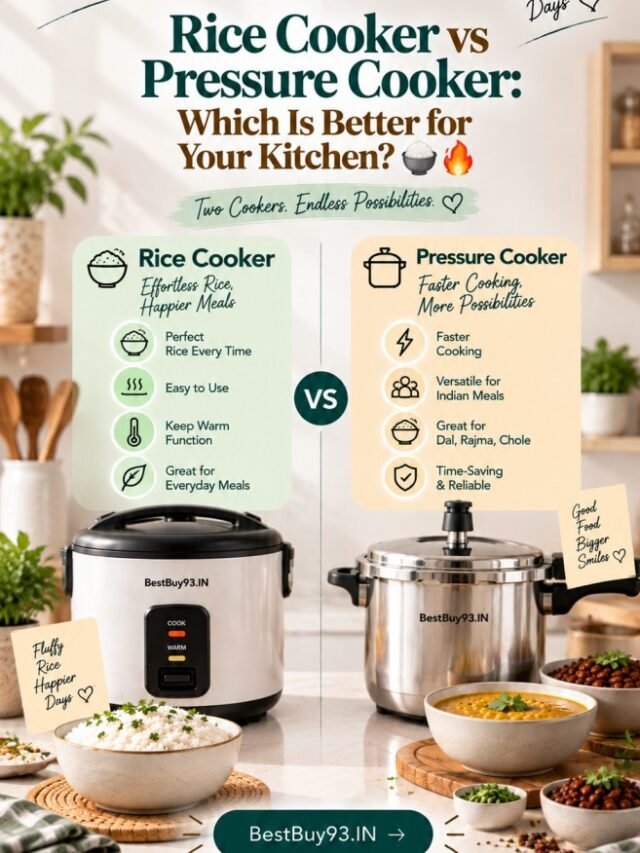
🧠 24. The Rice Cooker Doesn’t Replace Your Pressure Cooker
This is an important distinction.
A rice cooker is excellent for:
🍚 Rice
🥣 Porridge
🍲 Some one-pot preparations
♨️ Steaming
🍛 Certain rice dishes
A pressure cooker is designed for:
🔥 Pressure cooking
🥘 Dal
🥩 Certain meats
🥔 Tough ingredients
🍲 Faster high-pressure cooking
If your household already owns a pressure cooker, you don’t necessarily need a rice cooker to replace it.
The rice cooker is about:
Convenience + consistency + automation.
Also Read | 10 Must-Have Kitchen Appliances for Every Home Chef
📊 25. Basic vs Premium Rice Cooker
| Feature | Basic Rice Cooker | Premium/Fuzzy Logic |
|---|---|---|
| Automatic cooking | ✅ | ✅ |
| Keep-warm | Often | Usually |
| White rice | ✅ | ✅ |
| Multiple rice varieties | Limited | Better support |
| Brown rice | Model dependent | Often supported |
| Porridge | Model dependent | Often available |
| Multiple programs | Few | Many |
| Sensor-based control | Basic | Advanced |
| Price | Lower | Higher |
| Best for | Everyday rice | Versatile users |
| Ease of use | ⭐⭐⭐⭐⭐ | ⭐⭐⭐⭐ |
| Flexibility | ⭐⭐⭐ | ⭐⭐⭐⭐⭐ |
🛒 26. What Should You Check Before Buying?
Before purchasing a rice cooker, look at these specifications in order.
1️⃣ Capacity
Choose according to actual household requirements.
2️⃣ Rice compatibility
Check whether your preferred rice varieties are supported.
3️⃣ Inner pot
Look at the material and coating.
4️⃣ Keep-warm
Especially useful for families.
5️⃣ Cooking programs
Only pay for extra modes if you’ll use them.
6️⃣ Steaming
Useful if the model includes a proper steaming accessory.
7️⃣ Cleaning
Check whether the pot, lid and steam components are easy to clean.
8️⃣ Safety
Thermal/electrical protection and stable construction.
9️⃣ Warranty
Don’t ignore after-sales support.
🔟 Replacement parts
Check whether inner pots or accessories are available separately where relevant.
❌ 27. Rice Cooker Buying Mistakes to Avoid
Mistake 1: Buying the biggest cooker
More capacity doesn’t automatically mean better.
Mistake 2: Ignoring the inner pot
A cheap or inconvenient pot can become frustrating very quickly.
Mistake 3: Assuming every rice variety needs the same water
It doesn’t.
Mistake 4: Paying for 15 cooking modes
If you only cook rice, you’ll probably use one.
😂
Mistake 5: Ignoring keep-warm
It can be one of the most useful features for families.
Mistake 6: Using metal utensils
Especially with non-stick bowls.
Mistake 7: Overfilling
Always follow the manufacturer’s maximum level.
Mistake 8: Ignoring the steam vent
Keep it clean and unobstructed.
Mistake 9: Assuming every cooker can sauté
Basic rice cookers may not be designed for frying onions or spices.
Mistake 10: Treating a rice cooker like a pressure cooker
They’re different appliances with different functions.
🧪 28. The Best Way to Test a Rice Cooker
If you’re buying offline and can inspect the product, check:
🥣 Inner pot
Is it sturdy?
🥄 Handle
Is it comfortable?
🔒 Lid
Does it close securely?
💨 Steam vent
Is it easy to clean?
🔌 Cord
Is the cable long enough for your setup?
🛠️ Build quality
Does the body feel stable?
📖 Manual
Does it clearly explain rice ratios and cooking functions?
That last one is surprisingly important.
A good manual can save you a lot of trial and error.
🏆 29. Which Type Is Best for You?
👤 Single User
1L basic rice cooker
Simple and compact.
👫 Couple
1–1.5L
Good balance between capacity and countertop space.
👨👩👧 Small Family
1.8L
A practical everyday size.
👨👩👧👦 Larger Family
2.8–3L+
Better for larger batches.
💰 Budget Buyer
Basic automatic cooker.
🍛 Versatile Cook
Multifunction model.
🌾 Multiple Rice Varieties
Consider a programmable/fuzzy-logic cooker.
♨️ Steaming Enthusiast
Choose a model with a proper steaming basket.
🍚 BestBuy93.IN Smart Buying Formula
Before buying, remember:
Capacity → Cooking Needs → Inner Pot → Safety → Keep-Warm → Cleaning → Features → Warranty → Price
Not:
Price → Brand → Biggest Number → Buy Now. 😂
That’s how you end up with an expensive appliance that spends most of its life sitting inside a cupboard.
The best rice cooker is the one you’ll actually use regularly.
Budget, Maintenance & Final Buying Guide 🍚🛒
By now, we’ve covered the best rice cookers for home in India and looked deeper into how they actually perform in everyday cooking.
We’ve discussed:
🍚 Different rice varieties
💧 Water-to-rice ratios
♨️ Keep-warm functionality
⚡ Wattage
🥣 Inner pots
🍲 Khichdi and pulao
🥦 Steaming
🧠 Fuzzy-logic models
🏠 Different household sizes
Now comes the part that usually matters most before clicking “Buy Now.” 😄
How much should you spend?
Which features are actually worth paying for?
How do you maintain the cooker?
What should you check about warranty and replacement parts?
And finally:
Which rice cooker makes the most sense for your money?
Let’s finish the buying guide. 👇
💰 1. How Much Should You Spend on a Rice Cooker?
You don’t necessarily need an expensive rice cooker to get good results.
The right budget depends mainly on how often you use it and what you expect it to do.
🟢 Budget: Around ₹1,000–₹2,000
Usually suitable for:
- Students
- Singles
- Couples
- Basic everyday rice cooking
- Occasional use
At this level, focus on:
✔ Correct capacity
✔ Automatic cooking
✔ Basic safety
✔ Decent inner pot
✔ Easy cleaning
Don’t worry too much about fancy programs.
🔵 Mid-Range: Around ₹2,000–₹5,000
This is where things get more interesting.
You may find:
- Larger capacities
- Better inner pots
- Keep-warm functionality
- Better construction
- Steaming accessories
- More convenient controls
For many Indian families, this can be the sweet spot.
🟣 Premium: ₹5,000+
Premium models may offer:
- Fuzzy logic
- Multiple cooking programs
- Better temperature control
- Advanced sensors
- Better support for different grains
- More multifunction cooking options
These make sense if you actually use those features.
Otherwise, you’re basically paying extra for buttons you’ll admire once and ignore forever. 😂
🧠 2. Don’t Buy Features You Won’t Use
Rice cookers can come with a surprisingly long list of modes.
You might see:
🍚 White Rice
🌾 Brown Rice
🥣 Porridge
🍲 Soup
🍛 Pulao
♨️ Steam
⏱️ Delay Start
🔥 Reheat
🧠 Smart Cooking
🌾 Multigrain
Sounds impressive.
But ask yourself:
“How many of these will I actually use?”
If your answer is:
“Mostly rice.”
Then a simple automatic rice cooker can be the smarter purchase.
♨️ 3. Is Keep-Warm Worth Paying For?
For many users, yes.
Keep-warm is especially useful when:
👨👩👧 Family members eat at different times
🍛 Lunch is prepared before everyone arrives
⏰ You have multiple dishes cooking
🏢 You don’t want to serve rice immediately
It adds convenience without requiring you to manually reheat the rice every time.
However, don’t treat keep-warm as indefinite food storage.
If the rice won’t be eaten for a long period, follow appropriate food-safety and storage practices rather than leaving it warm for hours unnecessarily.
🥣 4. Is a Non-Stick Inner Pot Better?
For convenience, it can be.
A non-stick cooking bowl can make:
✔ Rice removal easier
✔ Cleaning easier
✔ Sticking less annoying
But it also needs more careful handling.
Use:
🪵 Wooden spoon
🥄 Plastic rice paddle
🥄 Silicone utensils
Avoid:
❌ Steel spoon
❌ Metal spatula
❌ Knife
❌ Steel scrubber
A damaged coating can make an otherwise perfectly good cooker much less pleasant to use.
🔄 5. Can You Replace the Inner Pot?
This is something many buyers completely ignore.
And then two years later:
“Bowl kharab ho gaya… ab poora cooker phenkna padega?” 😭
Not necessarily.
Depending on the brand and model, replacement inner pots or other spare parts may be available.
Before buying, check:
✔ Does the brand sell replacement bowls?
✔ Are replacement accessories available?
✔ Is there an authorised service network?
✔ Can you easily identify the exact model number?
This is particularly important if you’re spending several thousand rupees on the appliance.
🛠️ 6. Warranty Matters More Than You Think
A rice cooker is a relatively simple appliance, but it still contains:
- Heating components
- Thermostat/sensors
- Electrical connections
- Control systems
- Switches
- Cables
So warranty and service support matter.
Before purchasing, check:
Warranty duration
What components are covered
Service availability in your city
Whether accessories are covered
Whether the warranty requires authorised servicing
Don’t assume:
“Big brand = everything automatically covered.”
Read the actual warranty terms.
🏪 7. Brand vs Features: What Should You Prioritise?
Brand matters.
But it shouldn’t be the only deciding factor.
A better order is:
1️⃣ Capacity
Does it fit your household?
2️⃣ Cooking requirement
Does it support the rice and dishes you normally prepare?
3️⃣ Inner pot
Is it practical and durable?
4️⃣ Safety
Does the cooker have appropriate electrical and thermal protection?
5️⃣ Keep-warm
Useful for your routine?
6️⃣ Cleaning
Can you easily clean the bowl and steam components?
7️⃣ Warranty/service
Can you get support if something fails?
8️⃣ Price
Does the overall package justify the cost?
9️⃣ Brand
Is the manufacturer reputable for this category?
This is much better than:
Brand → price → buy.
🛒 8. Buying Online? Check These Things First
Online shopping makes comparison easier, but don’t only look at the first product image.
Before ordering, check:
📌 Product title
Confirm the exact capacity and model.
📌 Specifications
Check:
- Wattage
- Capacity
- Inner-pot material
- Keep-warm
- Cooking modes
- Steamer availability
📌 Warranty
Look for the manufacturer’s warranty rather than relying only on seller information.
📌 Reviews
Read reviews for recurring problems, not just the overall star rating.
Look specifically for comments about:
🍚 Rice sticking
🔥 Overheating
♨️ Keep-warm behaviour
🥣 Bowl quality
🔌 Cord problems
🧼 Cleaning
🛠️ Service experience
📌 Seller
Check whether the seller is reputable and whether the listing clearly identifies the product model.
⭐ 9. How to Read Rice Cooker Reviews Properly
Don’t get fooled by:
“Amazing product!”
“Very good.”
“Worth it.”
Those reviews don’t tell you much.
Instead search the reviews for words like:
“Rice”
“Bowl”
“Keep warm”
“Cleaning”
“Steam”
“Service”
“Warranty”
“Capacity”
This helps you identify patterns.
One negative review isn’t necessarily a problem.
But if dozens of buyers mention the same issue?
🚨 Pay attention.
⚡ 10. Electricity Consumption: What Actually Matters?
A rice cooker might have a rating of several hundred watts, but it doesn’t continuously draw maximum power for the entire cooking cycle in the same way.
Actual electricity use depends on:
- Cooking time
- Wattage
- Quantity
- Heating cycle
- Keep-warm duration
- Model design
Simple example
Suppose a cooker uses around 700W while actively heating.
That’s:
0.7 kWh for one hour of continuous full-power operation.
But a normal cooking cycle may not draw that maximum continuously.
So don’t judge running cost purely from the wattage printed on the box.
🧼 11. How to Clean Your Rice Cooker Properly
Maintenance is simple if you do it regularly.
After every use:
- Switch off and unplug.
- Allow the appliance to cool.
- Remove the inner pot.
- Wash it according to the manufacturer’s instructions.
- Clean the rice paddle.
- Wipe the cooker body.
- Check the lid and steam vent.
- Dry everything properly before storing.
Important:
Never immerse the electrical base in water.
The base contains the heating and electrical components.
💨 12. Clean the Steam Vent
The steam vent can collect:
- Starch
- Rice particles
- Condensation
- Food residue
If the design allows removal, clean it regularly.
A blocked or dirty steam pathway can affect proper operation and make the cooker messier.
Simple rule:
Steam vent = clean it.
Don’t wait until it looks like a science experiment. 😂
💧 13. What About Hard Water?
If you’re in an area with hard water, mineral deposits can gradually accumulate around components that come into contact with water.
You may notice:
⚪ White deposits
⚪ Chalky residue
⚪ Dull-looking surfaces
Clean the affected removable parts according to the manufacturer’s instructions.
Don’t automatically use strong chemicals.
If the manufacturer provides a specific descaling or cleaning procedure, follow that first.
🍚 14. What If Rice Starts Sticking?
A little sticking at the bottom isn’t necessarily a defect.
Possible reasons include:
- Too little water
- Different rice variety
- Excessive cooking
- Long keep-warm time
- Old or damaged coating
- Incorrect quantity
Try:
✔ Adjusting water slightly
✔ Washing rice consistently
✔ Avoiding excessive keep-warm time
✔ Using the correct cooking quantity
✔ Checking the condition of the inner pot
🔥 15. What If Rice Burns at the Bottom?
If this repeatedly happens, don’t simply blame the cooker.
Check:
Water
Is there enough?
Quantity
Are you cooking too little or too much?
Rice
Does this variety need different treatment?
Inner pot
Is the coating damaged?
Cooking mode
Are you using the correct program?
If the problem continues despite following the manufacturer’s instructions, then the appliance itself may need inspection.
❌ 16. Common Rice Cooker Mistakes
❌ Overfilling the pot
Rice expands during cooking.
Always respect the maximum level.
❌ Guessing water every time
Use the manufacturer’s markings or recommended ratio as your starting point.
❌ Scratching the inner pot
This can damage the coating.
❌ Washing the electrical base
Never do this.
❌ Blocking the steam vent
Steam needs a safe path to escape.
❌ Leaving rice warm forever
Keep-warm is for convenience, not indefinite storage.
❌ Using the cooker for unsupported foods
A basic rice cooker isn’t automatically a soup maker, pressure cooker or frying pan.
❌ Buying a huge cooker for a small household
More capacity isn’t automatically better.
❌ Ignoring service availability
A cheap appliance isn’t necessarily cheap if replacement parts are impossible to find.
💡 17. Features Worth Paying For
If your budget allows, these are the features I’d prioritise.
⭐ Automatic cooking
Essential convenience.
⭐ Keep-warm
Very useful for families.
⭐ Good inner pot
Extremely important.
⭐ Steamer
Worth considering if you actually steam food.
⭐ Multiple cooking programs
Useful for people who cook different foods.
⭐ Fuzzy logic
Worth considering for advanced users.
⭐ Easy-clean lid/vent
Underrated but highly useful.
⭐ Good warranty
Always valuable.
🚫 18. Features You Don’t Necessarily Need
You don’t have to pay extra for:
❌ Wi-Fi connectivity
❌ Smartphone control
❌ Dozens of unnecessary presets
❌ Decorative displays
❌ Oversized capacity
❌ Fancy controls you won’t use
A rice cooker doesn’t need to become a smartphone. 😂📱🍚
🧮 19. Rice Cooker Decision Matrix
| Your Requirement | Recommended Type |
|---|---|
| Single person | 1L-class basic cooker |
| Couple | 1–1.5L |
| Small family | Around 1.8L |
| Larger family | 2.8–3L+ |
| Mostly white rice | Basic automatic |
| Different rice varieties | Programmable model |
| Occasional steaming | Cooker with steamer |
| Frequent steaming | Larger multifunction model |
| Student | Compact + affordable |
| Family | Keep-warm + suitable capacity |
| Premium user | Fuzzy logic |
| Budget buyer | Basic automatic |
| Minimal kitchen | Compact model |
🏆 20. Which Rice Cooker Type Gives the Best Value?
For most Indian households, the best value isn’t necessarily the cheapest cooker.
It’s the cooker that gives you:
The right capacity + reliable cooking + easy cleaning + useful features + decent service.
For many users, that means a basic or mid-range automatic rice cooker.
You don’t necessarily need advanced technology.
But you also shouldn’t compromise heavily on:
Inner-pot quality, safety, capacity and reliability.
🥇 21. Our BestBuy93.IN Buying Recommendations
👤 Best for Singles
Compact 1L-class cooker
Choose this if you mainly prepare small portions.
👫 Best for Couples
1–1.5L cooker
A good balance between size and convenience.
👨👩👧 Best Everyday Family Choice
Around 1.8L
This is a practical size for many small families.
👨👩👧👦 Best for Larger Families
2.8–3L+
Choose this if you regularly prepare larger batches.
💰 Best Budget Strategy
Buy a simple automatic cooker with a decent inner pot rather than spending extra on unnecessary programs.
🧠 Best Premium Strategy
If you regularly cook multiple rice varieties and want automated control, consider a programmable/fuzzy-logic model.
❓ 22. Rice Cooker FAQs
Can I cook dal in a rice cooker?
Some models can handle simple dal-based preparations, but a basic rice cooker should not automatically be treated like a pressure cooker.
Always check the manufacturer’s permitted uses.
Can I cook Maggi in a rice cooker?
Some rice cookers can be used for simple noodle preparations, but this depends on the model and its instructions.
Don’t assume every cooker is designed for cooking other foods.
Can I cook brown rice?
Yes, many rice cookers can cook brown rice.
However, the water quantity and cooking time can differ from white rice.
Is 1.8L enough for a family?
For many small families, 1.8L can be a practical size.
However, actual serving requirements vary, so check the manufacturer’s recommended rice quantity rather than assuming the full bowl equals the amount of dry rice you should cook.
Is a rice cooker better than a pressure cooker?
Neither is universally better.
A rice cooker is primarily about automated rice preparation and convenience.
A pressure cooker is more versatile for pressure-cooking ingredients such as dal, potatoes and tougher foods.
Many kitchens can benefit from having both.
Does a rice cooker save electricity?
It can be convenient and potentially efficient for the task, but actual electricity use depends on wattage, cooking time, heating cycles and keep-warm duration.
Don’t compare appliances based only on their wattage number.
Can I leave rice on keep-warm?
You can use the keep-warm function according to the manufacturer’s guidance, but don’t treat it as long-term food storage.
For longer periods, proper refrigeration and food-safety practices are more appropriate.
Are expensive rice cookers worth it?
Only if you’ll use their additional capabilities.
If you mainly cook standard rice, a reliable basic cooker can provide excellent value.
If you cook different grains and want programmable cooking, premium technology can make more sense.
How long can a rice cooker last?
There’s no single guaranteed lifespan.
It depends on:
- Build quality
- Frequency of use
- Cleaning
- Inner-pot care
- Electrical conditions
- Maintenance
- Availability of replacement parts
Taking care of the inner pot and electrical base can help you get more useful years from the appliance.
✅ 23. Final Rice Cooker Buying Checklist
Before you buy, run through this list:
Capacity
☐ Does the size match my household?
Rice
☐ Does it suit the rice varieties I normally cook?
Inner Pot
☐ Is the bowl good quality?
Coating
☐ If non-stick, can I maintain it properly?
Cooking
☐ Does it automatically switch to the appropriate mode?
Keep-Warm
☐ Do I actually need this feature?
Steaming
☐ Is a proper steaming accessory included if required?
Cleaning
☐ Can the pot and removable components be cleaned easily?
Safety
☐ Does it have appropriate thermal/electrical protection?
Warranty
☐ Is the warranty clear?
Service
☐ Is service available where I live?
Spare Parts
☐ Can I get a replacement inner pot or relevant accessories?
Price
☐ Am I paying for useful features rather than just extra buttons?
Reviews
☐ Have I checked recurring complaints?
If you can tick most of these boxes, you’re probably looking at the right type of rice cooker. 🍚✅
🏁 Final Verdict: Which Rice Cooker Should You Buy?
After looking at capacity, performance, features, maintenance, budget and long-term value, the answer is actually pretty simple.
🥇 For most households:
Go for a reliable automatic rice cooker around the 1.8L range if the capacity suits your family.
Look for:
Automatic cooking + keep-warm + good inner pot + easy cleaning + safety + reliable warranty.
👤 For singles:
Choose a compact 1L-class model.
👫 For couples:
A 1–1.5L model is often sufficient.
👨👩👧👦 For larger families:
Move toward 2.8–3L or larger, depending on your actual cooking requirements.
🧠 For advanced users:
Consider programmable or fuzzy-logic models if you genuinely cook different grains and want greater automation.
💰 For budget buyers:
Don’t chase features.
Spend your money on capacity, inner-pot quality, safety and reliability.
❤️ The Best Rice Cooker Is the One You’ll Actually Use
Here’s the biggest takeaway from this entire series:
You don’t need the most expensive rice cooker.
You don’t need the cooker with the most buttons.
You don’t need the biggest capacity.
And you definitely don’t need a cooker that connects to Wi-Fi just to tell you:
“Bro, your rice is ready.” 😂📱🍚
What you need is an appliance that fits your kitchen and your routine.
Right size.
Good cooking.
Easy cleaning.
Useful features.
Reasonable price.
Reliable support.
That’s the combination that makes a rice cooker worth buying.
And if you’re still confused between two models, compare them using this simple formula:
🍚 Capacity → Inner Pot → Cooking Performance → Safety → Keep-Warm → Cleaning → Warranty → Price
Get those eight things right, and you won’t go far wrong.
📌 BestBuy93.IN Final Buying Rule
Don’t buy the rice cooker with the most features.
Buy the one with the features you’ll actually use. ❤️
That’s how you get better value, less kitchen clutter and a rice cooker that earns its place on your countertop.
Also Read | Best Amazon Kitchen Finds and Appliances in 2025





[…] Read | Best Rice Cookers for Home in India | Rice vs Pressure Cooker: Which Is […]