

Want the beauty of greenery without remembering to water it, checking the sunlight every morning, or wondering why your plant suddenly looks personally offended? 😂🌿
Artificial plants have come a long way. The better ones can add colour, texture and a natural-looking element to your home without the regular watering, pruning and sunlight requirements of live plants.
But there’s a catch.
Not every artificial plant looks convincing. Some have overly shiny leaves, unnatural colours, thin stems or identical-looking foliage that immediately gives away the fact that they’re fake.
That’s why choosing the best artificial plants isn’t simply about picking the biggest or cheapest option.
In this guide, we’re looking at 10 stylish artificial plant types that can work across living rooms, bedrooms, balconies, entryways, shelves and workspaces. We’ll also explain what makes artificial greenery look realistic and how to choose the right size and style for your home.
Also Read | Best Side Tables for Every Living Room
🏆 10 Best Artificial Plants at a Glance
| Artificial Plant | Best For | Realistic Look | Ideal Placement |
|---|---|---|---|
| Artificial Monstera | Statement décor | ⭐⭐⭐⭐⭐ | Living room |
| Artificial Snake Plant | Corners & bedrooms | ⭐⭐⭐⭐⭐ | Bedroom/corner |
| Artificial Areca Palm | Large spaces | ⭐⭐⭐⭐⭐ | Living room |
| Artificial Fiddle Leaf Fig | Statement styling | ⭐⭐⭐⭐⭐ | Living room |
| Artificial Money Plant/Pothos | Shelves | ⭐⭐⭐⭐ | Shelf/cabinet |
| Artificial Bamboo | Minimal interiors | ⭐⭐⭐⭐ | Entryway |
| Artificial Olive Tree | Modern décor | ⭐⭐⭐⭐⭐ | Living room |
| Artificial Eucalyptus | Minimal styling | ⭐⭐⭐⭐ | Bedroom/shelf |
| Artificial Fern | Natural texture | ⭐⭐⭐⭐ | Shelf/corner |
| Artificial Succulent | Small spaces | ⭐⭐⭐⭐ | Desk/table |
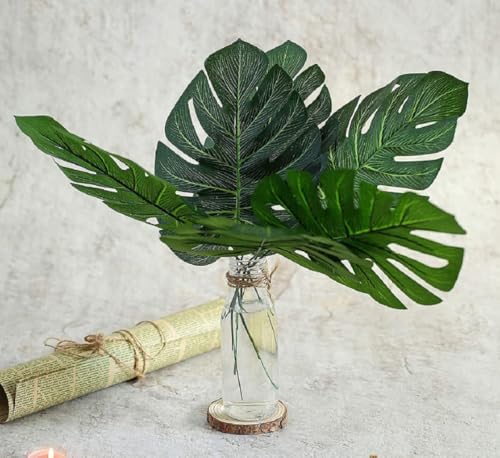
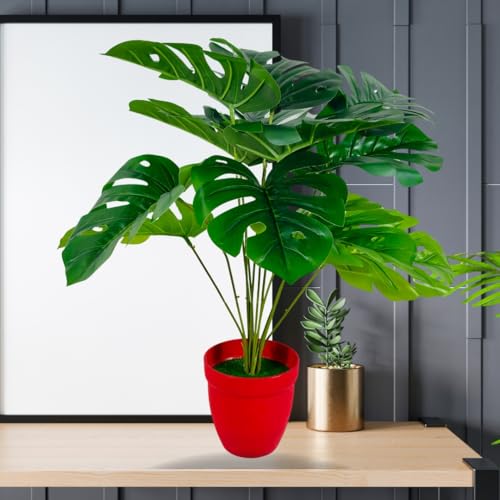
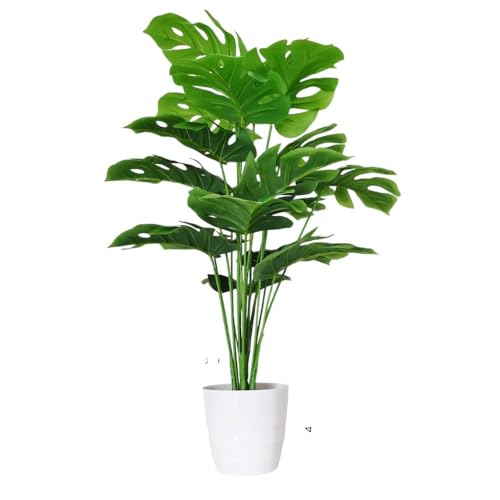
🌿 1. Artificial Monstera


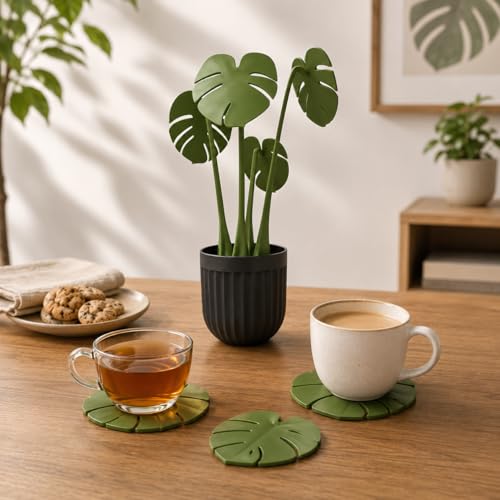
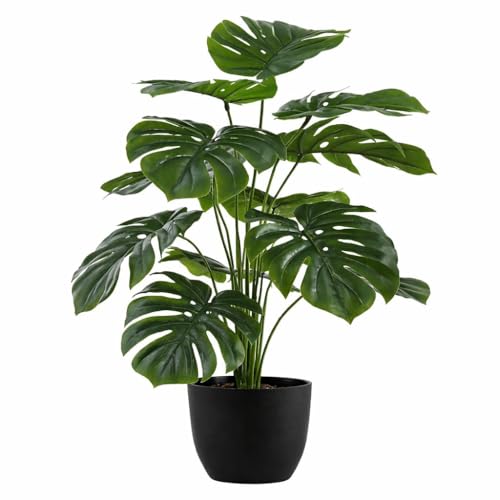
The Monstera is one of those plants that can instantly become a visual feature.
Its large, split leaves create a tropical appearance and work particularly well when you want greenery to be noticeable rather than merely decorative.
An artificial Monstera can be placed in a large planter beside a sofa, TV unit, console or empty corner.
🏆 Best For
Living rooms that need a statement greenery piece.
What We Like
- Large, distinctive leaves
- Strong decorative impact
- Works with modern interiors
- Available in tabletop and floor versions
- Doesn’t require natural sunlight
What to Watch
The leaves can look artificial if the colour is overly bright or the material is excessively glossy.
Look for natural-looking colour variation and realistic leaf texture.
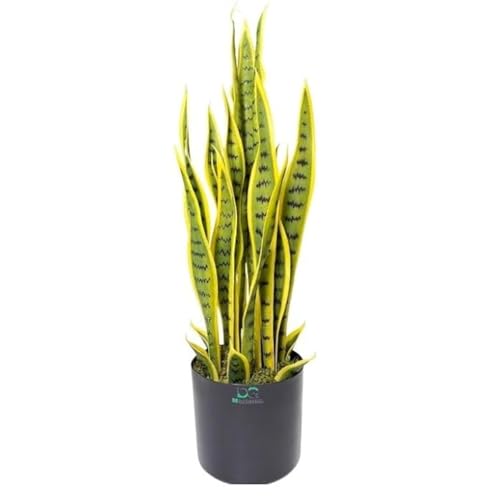
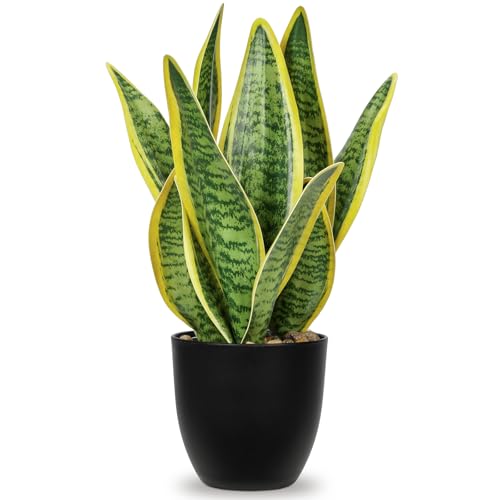
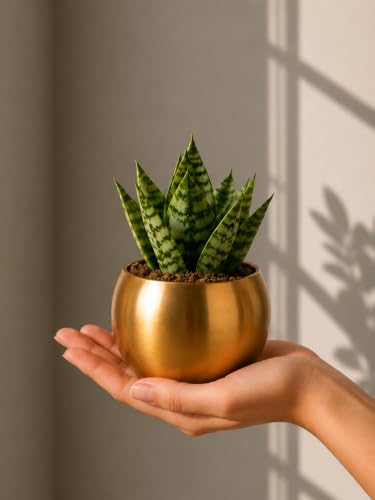
🌱 2. Artificial Snake Plant


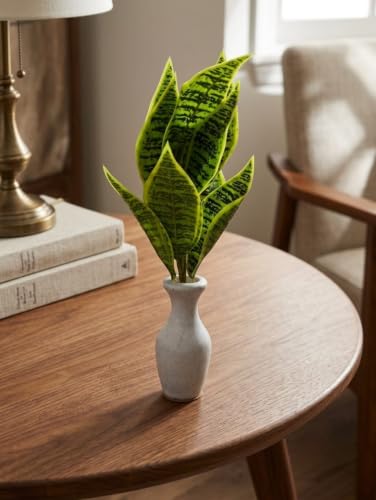
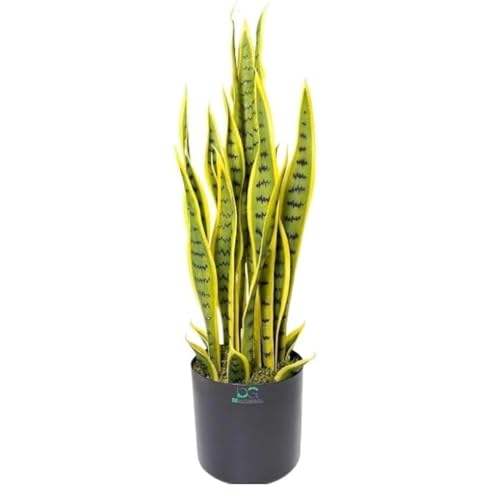
The snake plant is famous for its tall, upright leaves and the artificial version is particularly useful for filling narrow vertical spaces.
It doesn’t need a huge footprint, making it a great choice for:
- Bedroom corners
- Living-room corners
- Entryways
- Office spaces
- Beside cabinets
🏆 Best For
Narrow spaces and minimalist interiors.
What We Like
- Slim footprint
- Tall vertical shape
- Easy to position
- Works with contemporary décor
- Low visual clutter
What to Watch
Look for leaves with subtle colour variation.
Artificial foliage that’s perfectly flat and identical can make the plant look less realistic.


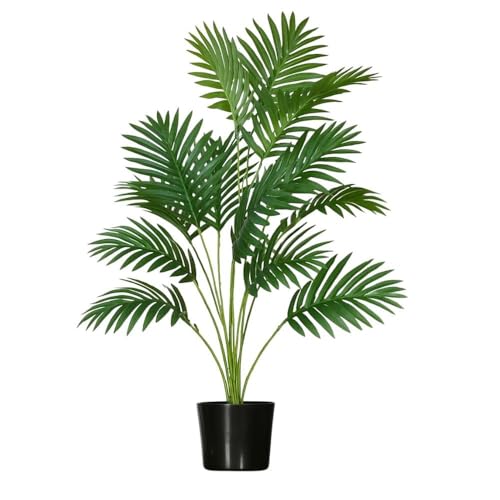
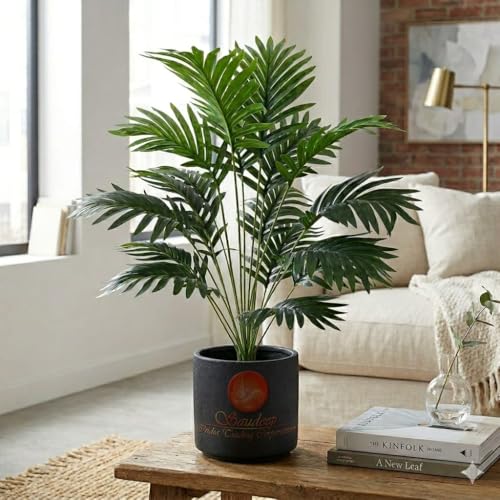
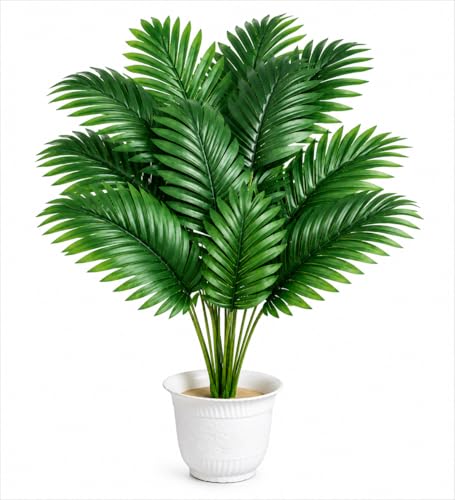
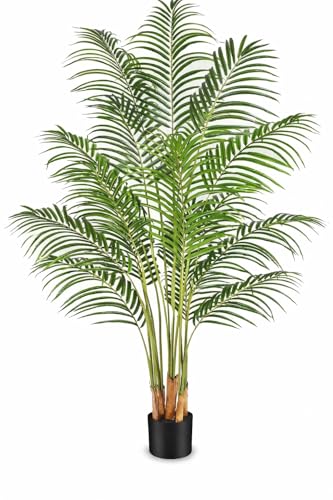
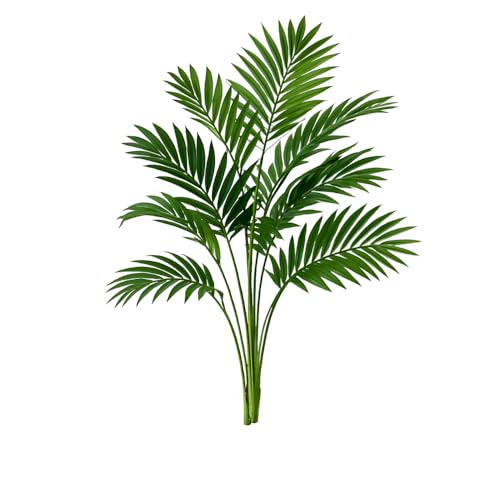
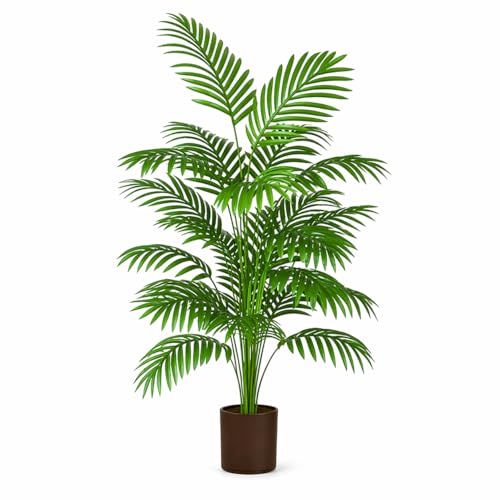
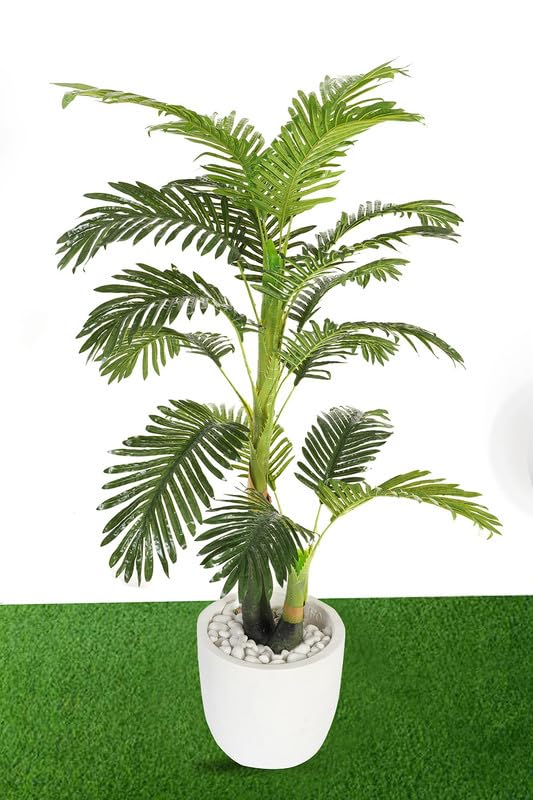
🌴 3. Artificial Areca Palm


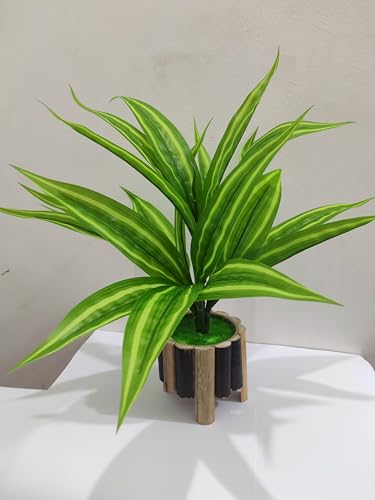
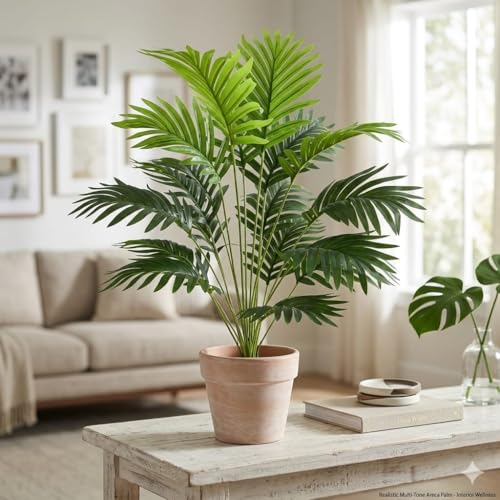
If you want your artificial plant to create a lush, tropical feeling, the Areca Palm is a strong option.
Its long, arching leaves can fill an empty corner beautifully.
This makes it particularly suitable for larger living rooms where a tiny plant might look lost.
🏆 Best For
Large corners and spacious living rooms.
What We Like
- Full appearance
- Tropical aesthetic
- Great floor plant
- Adds height and volume
- Works well beside sofas
What to Watch
Very dense foliage can look artificial.
A slightly varied arrangement of leaves often looks more natural.
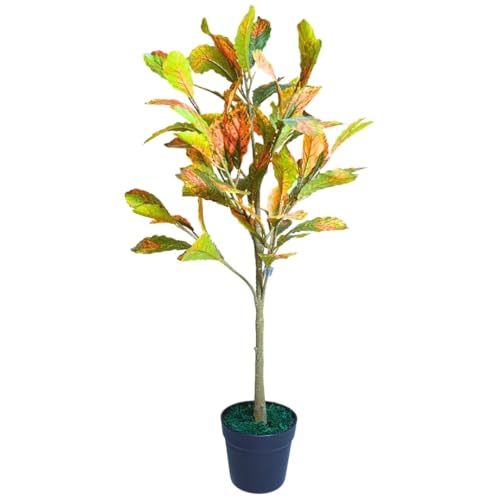
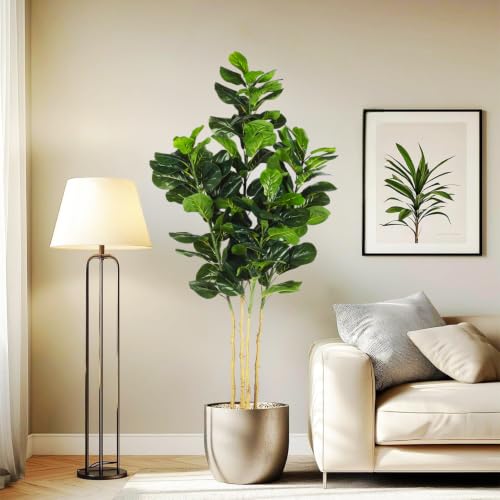
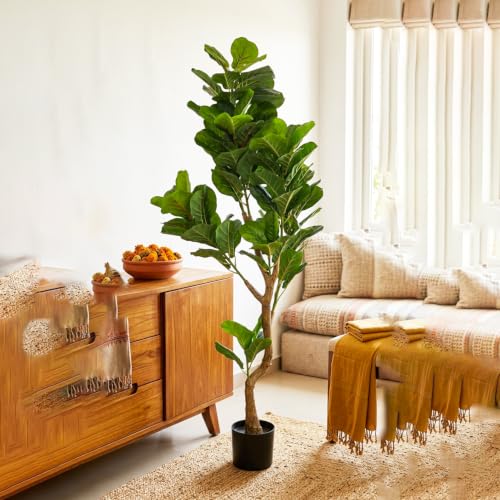
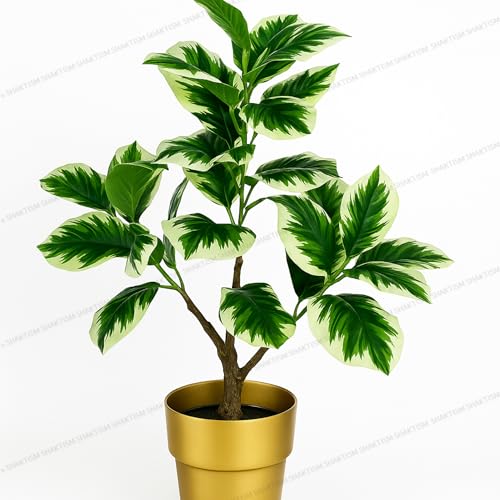
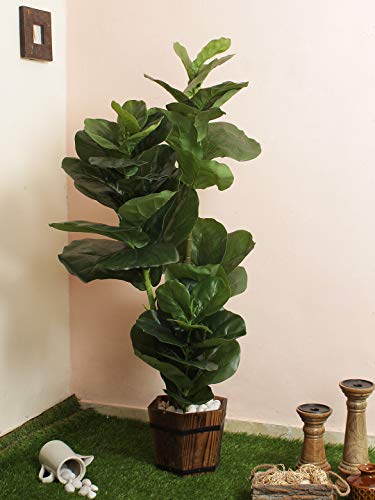
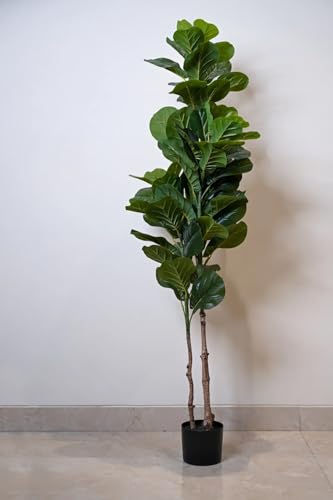
🌳 4. Artificial Fiddle Leaf Fig


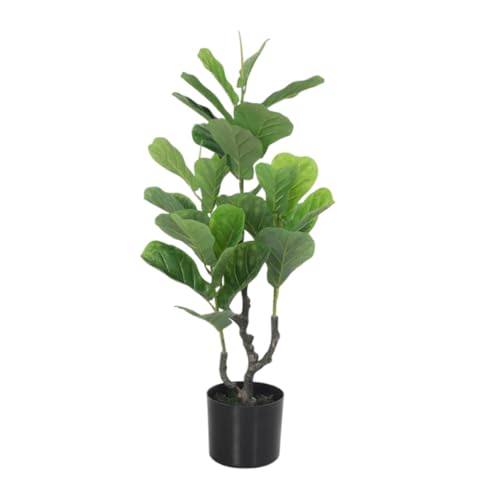
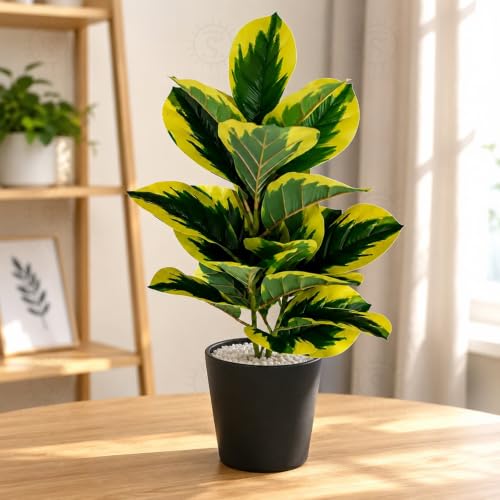
The Fiddle Leaf Fig has become a favourite in contemporary interiors because of its large, sculptural leaves.
An artificial version can give you the same visual effect without worrying about whether the plant is receiving enough light.
Its tall form makes it particularly useful beside:
- Sofas
- Consoles
- Accent chairs
- Empty walls
- Windows
🏆 Best For
Modern and contemporary living rooms.
What We Like
- Stylish silhouette
- Large statement leaves
- Excellent vertical presence
- Works with neutral interiors
- Looks good in decorative planters
What to Watch
The trunk and stems matter.
A realistic-looking leaf attached to an obviously plastic-looking stem can ruin the overall effect.

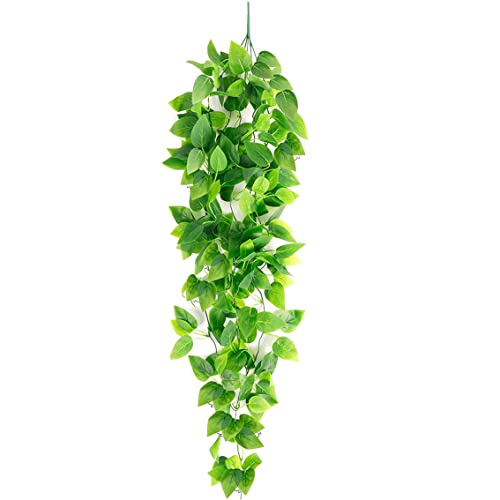
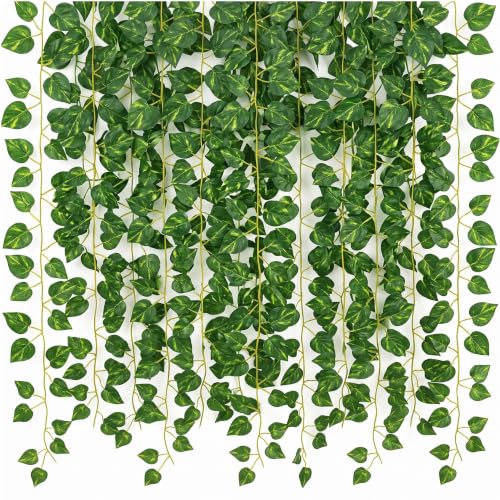
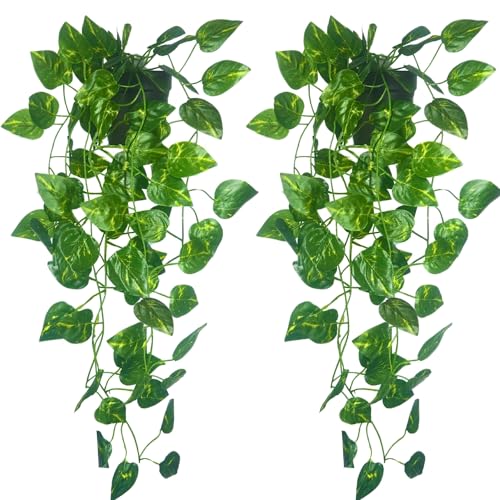
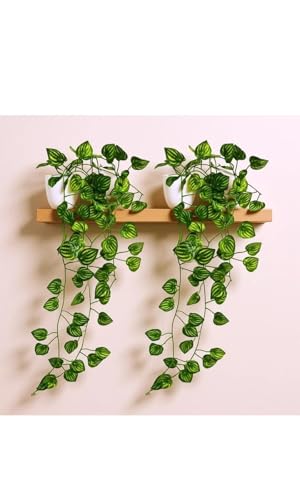
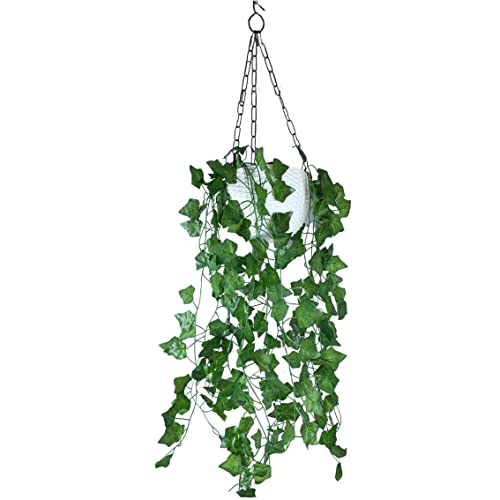
🍃 5. Artificial Money Plant / Pothos

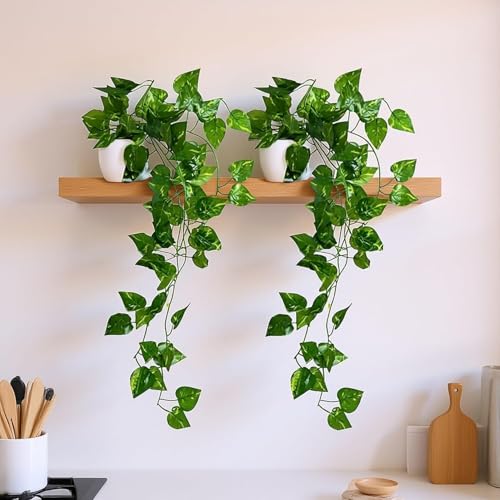
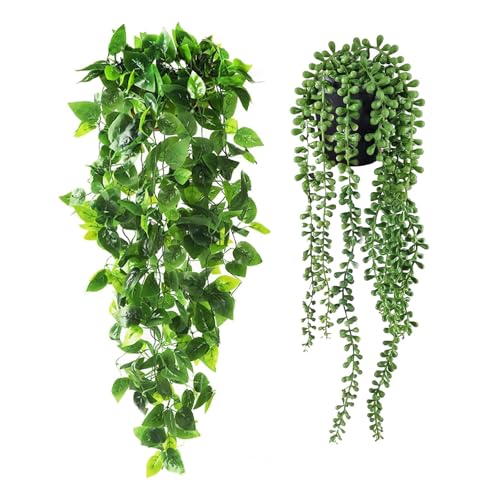
Trailing plants are particularly useful when you want greenery without taking up much floor space.
An artificial Pothos can be placed on:
- Floating shelves
- TV units
- Bookcases
- Cabinets
- Console tables
Allow some of the foliage to hang over the edge for a more natural effect.
🏆 Best For
Shelves and elevated surfaces.
What We Like
- Space-efficient
- Trailing appearance
- Easy to style
- Works with different décor styles
- Adds greenery to vertical surfaces
What to Watch
Avoid arranging every vine in exactly the same direction.
A little variation makes the display look more organic.

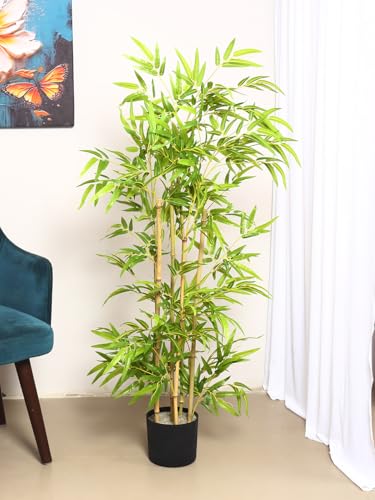
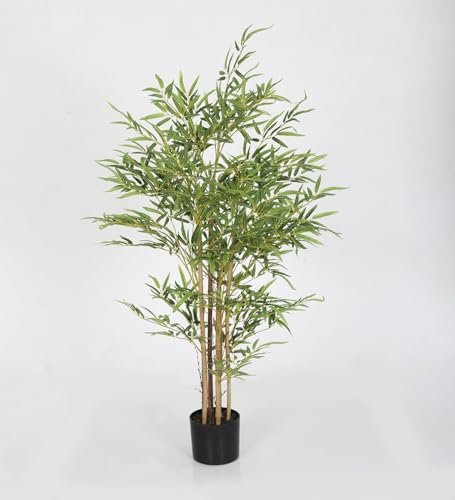
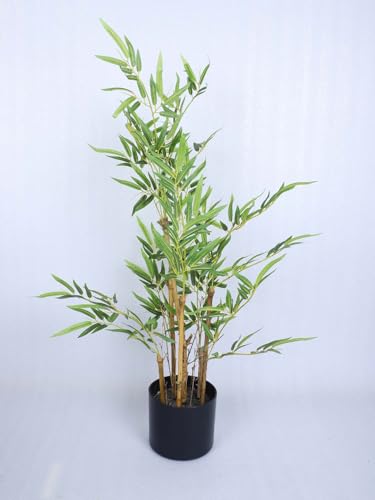
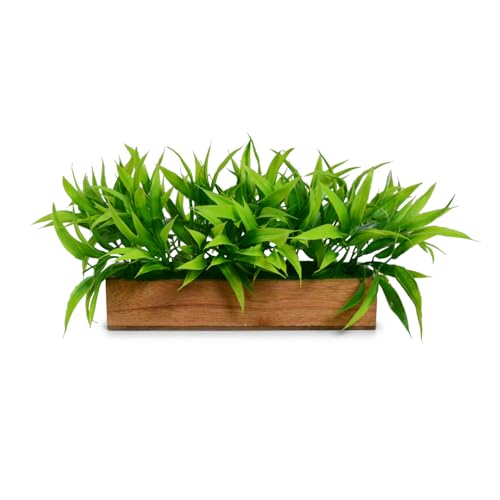
🎋 6. Artificial Bamboo Plant


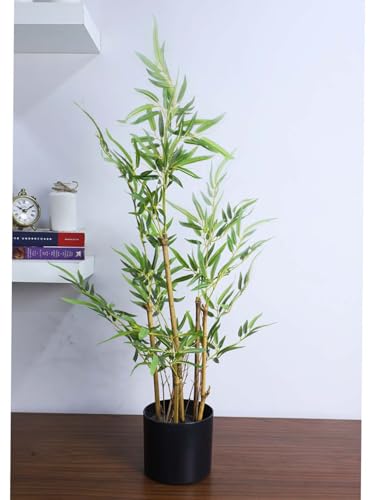
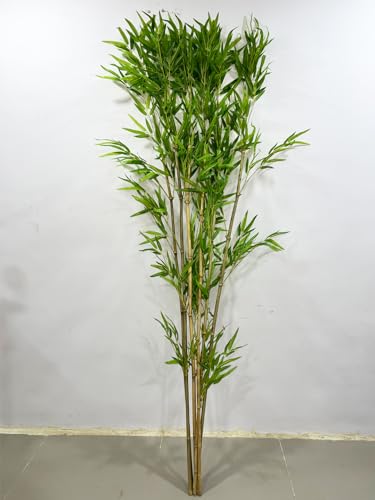
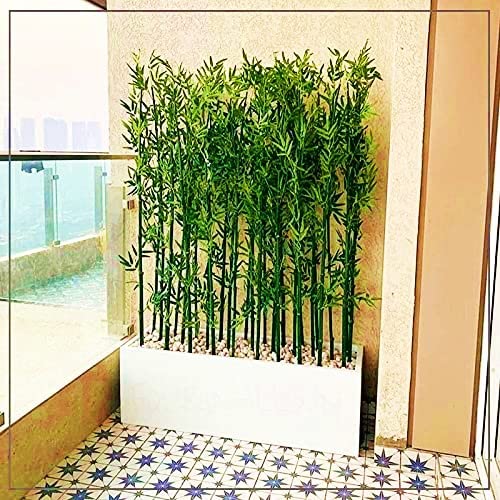
Artificial bamboo can add height without creating a visually bulky display.
Its vertical structure works particularly well with modern and minimalist interiors.
You can use it in:
- Entryways
- Living-room corners
- Beside cabinets
- Home offices
🏆 Best For
Minimalist and contemporary spaces.
What We Like
- Tall and narrow
- Doesn’t require much floor width
- Clean silhouette
- Easy to combine with neutral décor
What to Watch
Check the base and planter.
A realistic plant in a cheap-looking pot can still make the entire arrangement feel less premium.


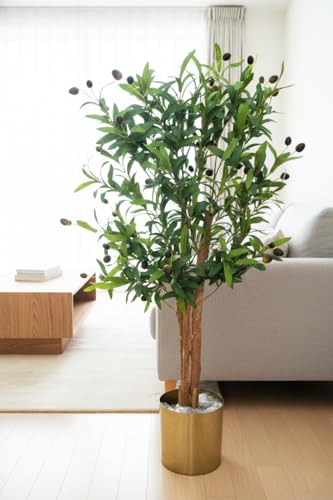
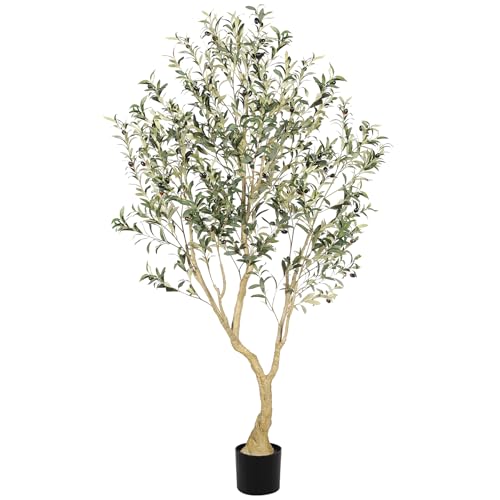
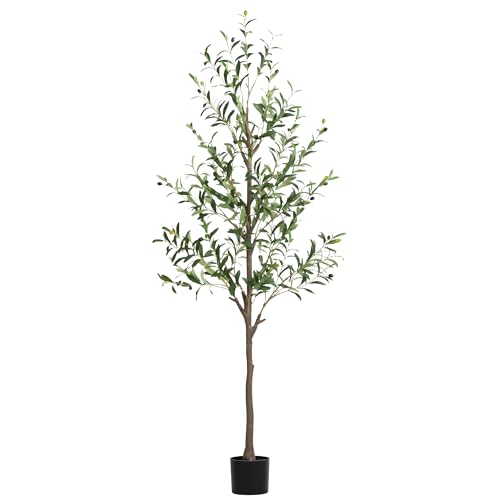
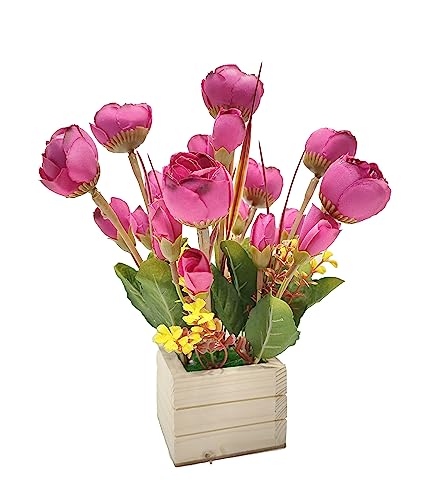
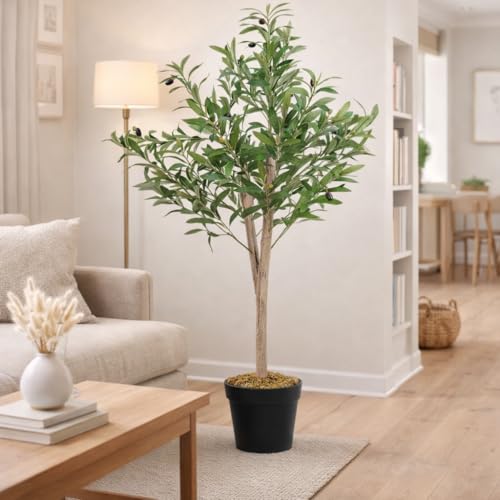
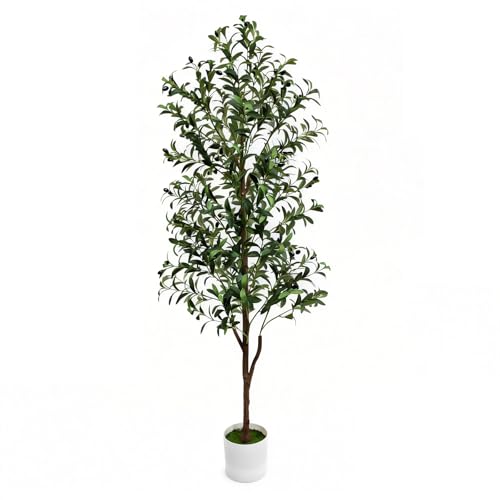
🫒 7. Artificial Olive Tree


Olive trees have become popular in modern home décor because of their understated appearance.
Unlike lush tropical plants, olive foliage is more delicate and muted.
That makes it particularly suitable for:
- Beige interiors
- Neutral living rooms
- Scandinavian-inspired spaces
- Minimalist homes
- Contemporary décor
🏆 Best For
Elegant, understated interiors.
What We Like
- Soft muted foliage
- Sophisticated appearance
- Works with neutral colour palettes
- Great floor plant
- Doesn’t visually overwhelm a room
What to Watch
Look for variation in leaf size and colour.
Uniform green leaves can make an artificial olive tree look less convincing.


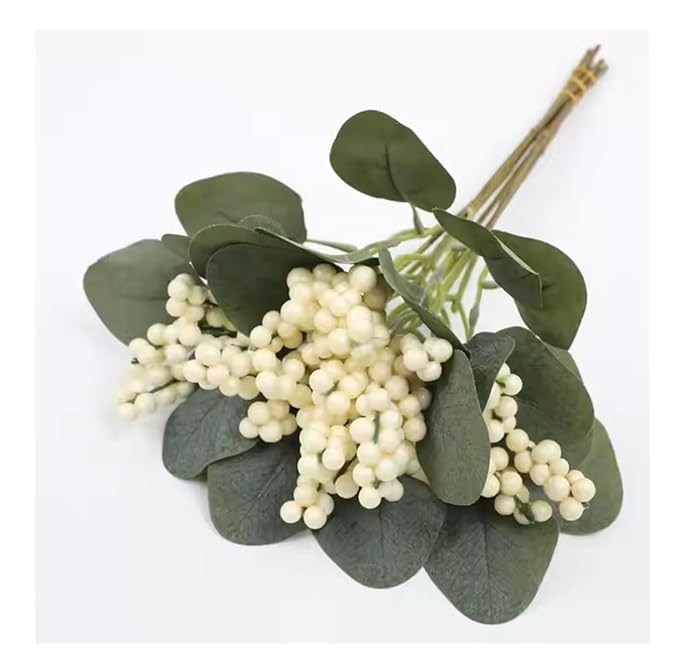
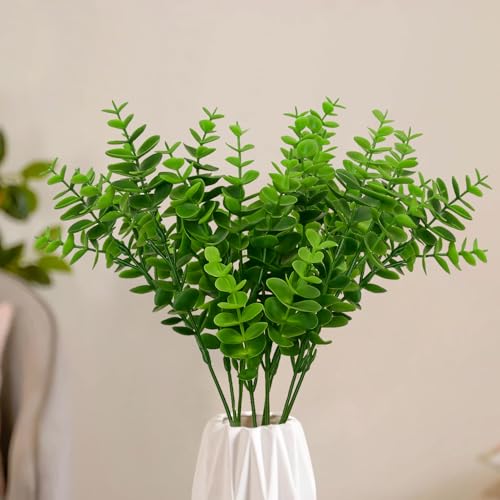
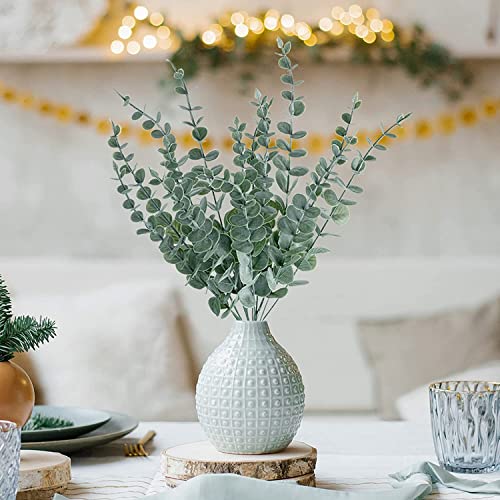
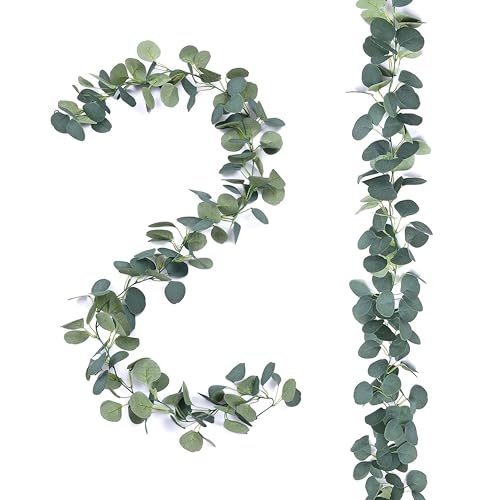
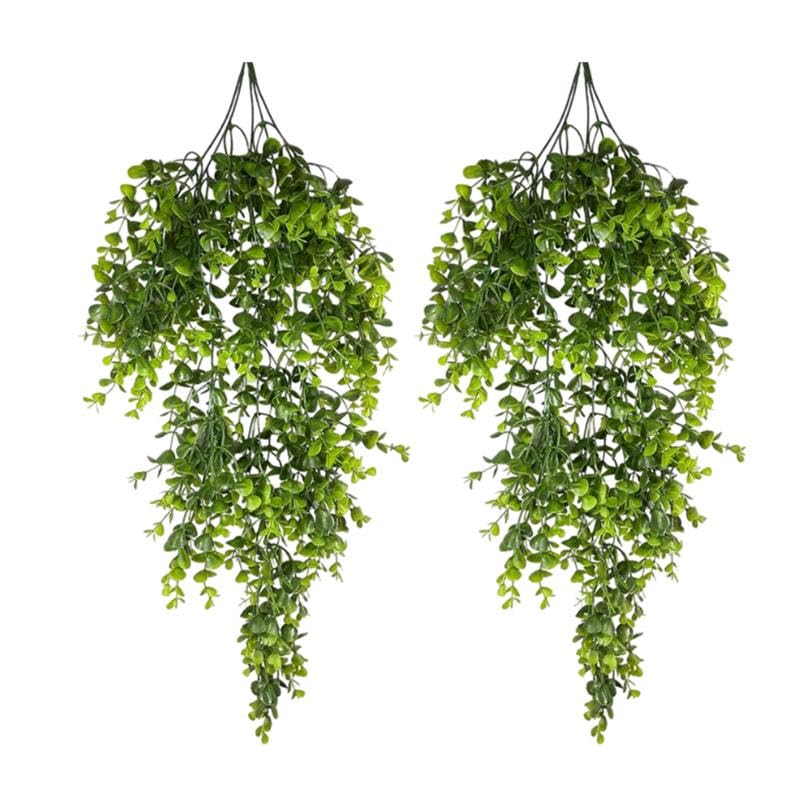
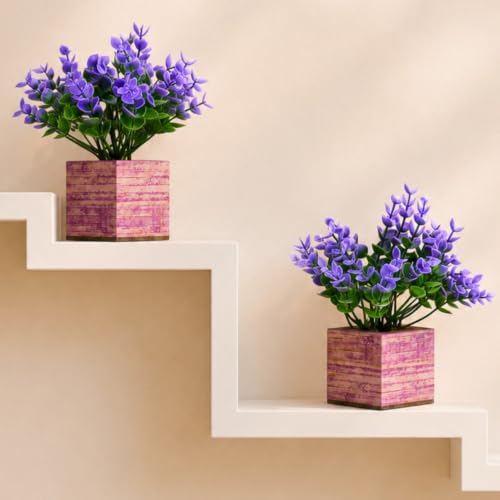
🌿 8. Artificial Eucalyptus


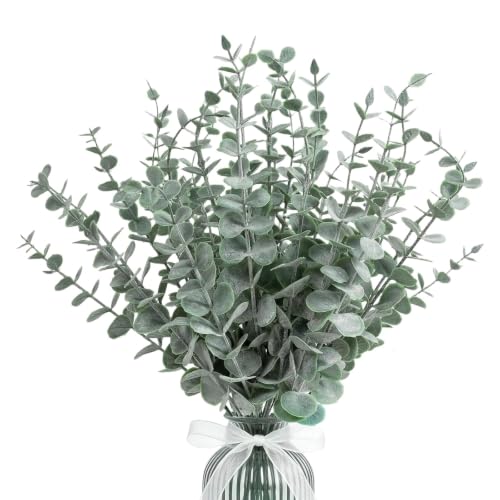
Eucalyptus is perfect if you prefer subtle greenery rather than a large statement plant.
You can place artificial eucalyptus stems in a simple vase and use them as a tabletop accent.
🏆 Best For
Minimalist shelves, bedrooms and side tables.
What We Like
- Soft colour palette
- Lightweight visual appearance
- Easy to style
- Works in small spaces
- Pairs well with neutral décor
What to Watch
Because eucalyptus is delicate, poor-quality artificial versions can look obviously plastic.
Pay attention to the leaf texture and colour.

🌿 9. Artificial Fern


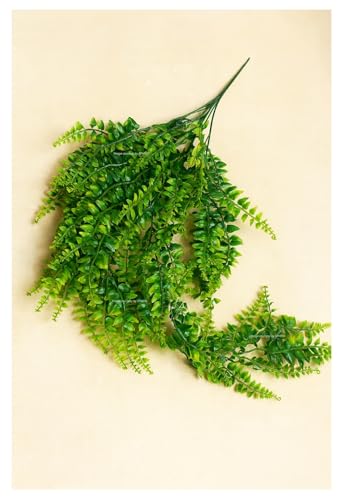
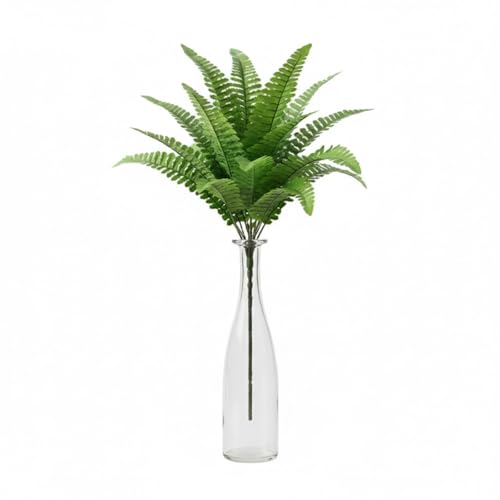
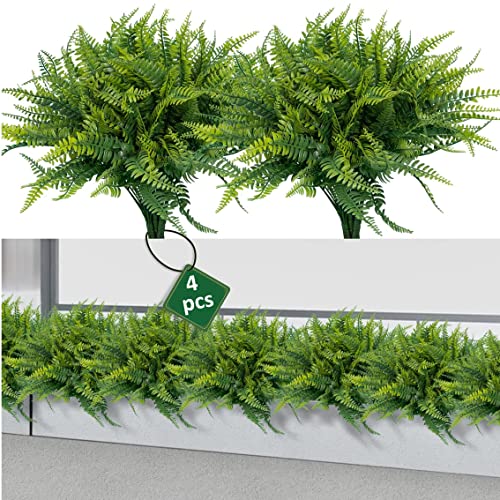
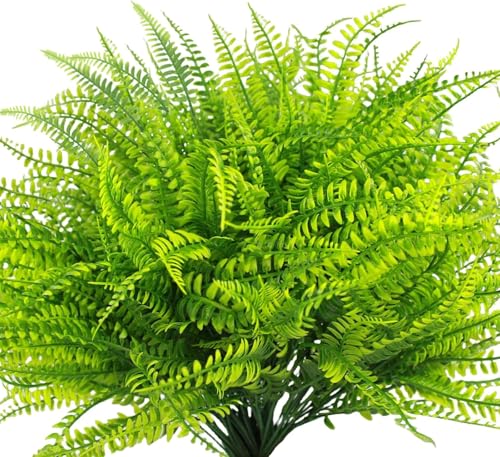
Ferns can add a softer, fuller texture to a room.
Unlike large statement plants, artificial ferns can be used in smaller spaces without overwhelming the décor.
Try placing one:
- On a shelf
- In a hanging planter
- On a console
- Beside a cabinet
- In a small decorative pot
🏆 Best For
Adding texture to shelves and small corners.
What We Like
- Full foliage
- Natural-looking texture
- Works in different styles
- Good for small displays
What to Watch
Dense foliage can collect dust, so choose a design that is relatively easy to clean.
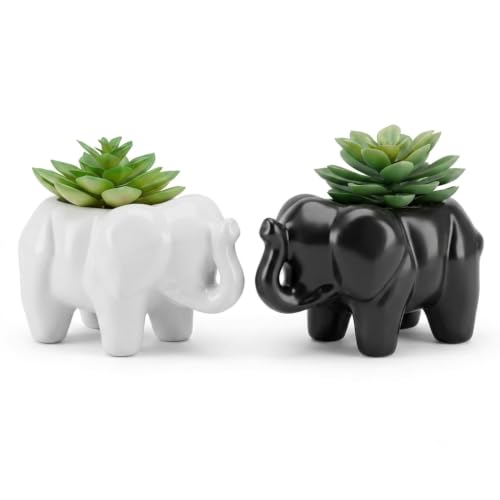
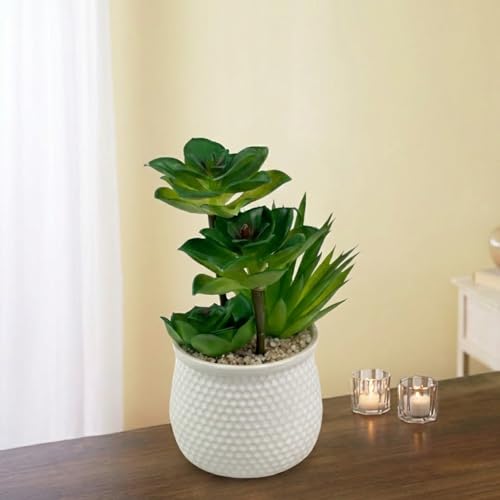
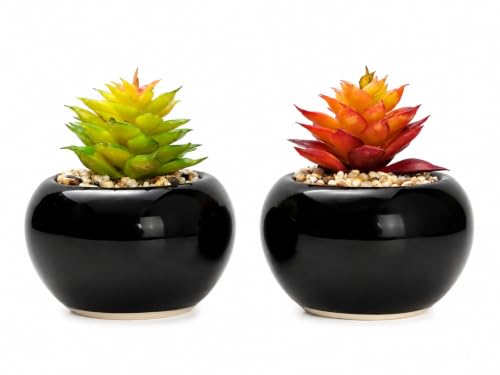
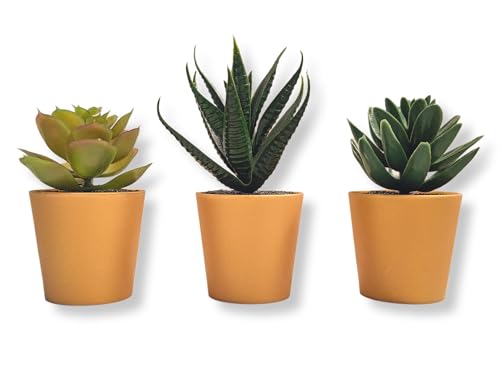
🌵 10. Artificial Succulent

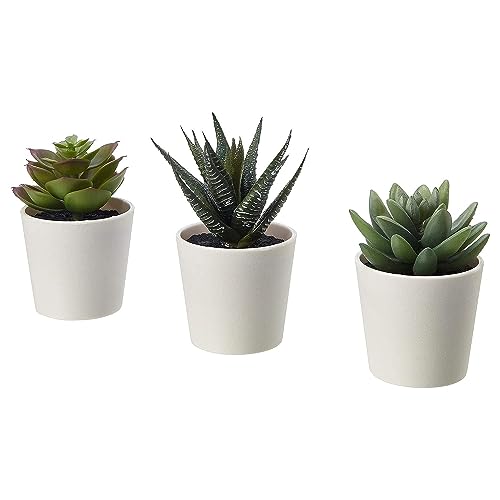
If you don’t have much space for a large plant, artificial succulents are an easy solution.
They’re small enough for:
- Desks
- Side tables
- Coffee tables
- Bookshelves
- Bathroom shelves
- Window ledges
🏆 Best For
Small spaces and tabletop styling.
What We Like
- Compact
- Easy to style
- Minimal maintenance
- Lots of shapes and colours
- Affordable options available
What to Watch
Small artificial plants can sometimes look more obviously fake because they’re viewed from close range.
Look for realistic texture rather than overly glossy plastic.


🏆 Which Artificial Plant Should You Choose?
Here’s the quick version:
🌿 Want a statement piece?
Monstera
🌱 Need something slim?
🌴 Want lush greenery?
🌳 Want a modern statement plant?
🍃 Need shelf décor?
Pothos
🎋 Want height without bulk?
🫒 Want an elegant neutral look?
Olive Tree
🌿 Want subtle greenery?
Eucalyptus
🌱 Want textured foliage?
Fern
🌵 Have almost no space?
Succulent
🏠 How to Choose the Right Size
One of the biggest mistakes people make when buying artificial plants is choosing based purely on appearance.
The plant needs to be proportionate to its surroundings.
Small Table
Choose:
Small succulent / eucalyptus / pothos
Side Table
Choose:
Compact fern / pothos / small plant
Empty Corner
Choose:
Areca palm / fiddle leaf fig / olive tree
Beside Sofa
Choose:
Medium-to-tall plant
TV Unit
Choose:
Small plant or trailing greenery
Entryway
Choose:
Tall bamboo or olive tree
🌿 What Makes an Artificial Plant Look Real?
This is where the quality difference becomes obvious.
1. Natural Colour
Real foliage isn’t always one perfectly uniform shade of green.
Subtle colour variation can make artificial leaves more convincing.
2. Leaf Texture
Leaves shouldn’t necessarily look completely flat and shiny.
Texture adds realism.
3. Natural Stems
Look for stems that don’t look excessively smooth or plastic.
4. Variation
Leaves shouldn’t all face the exact same direction.
5. Good Proportions
The leaves, stems and planter should look like they belong together.
🧹 Do Artificial Plants Need Maintenance?
Yes but far less than real plants.
They don’t need:
❌ Watering
❌ Pruning
❌ Fertilizing
❌ Natural sunlight
But they do need:
🧽 Dusting
Dust can accumulate on artificial leaves.
Use a soft microfiber cloth, feather duster or another care method appropriate for the material.
🧹 Occasional Cleaning
Depending on the manufacturer’s instructions, some artificial plants can be gently cleaned.
Always check the product’s care recommendations first.
⚠️ A Note About Outdoor Use
Not every artificial plant is designed for outdoor placement.
If you’re planning to use one on:
- Balcony
- Terrace
- Outdoor entrance
- Patio
look specifically for UV-resistant or outdoor-rated construction, where appropriate.
Regular indoor artificial foliage may fade or deteriorate when exposed to prolonged sunlight and weather.
🌿 Artificial Plants vs Real Plants
Artificial plants aren’t a replacement for real plants in every situation.
Real Plants
✔ Natural growth
✔ Living ecosystem
✔ Can change over time
✔ Some varieties may contribute to indoor biodiversity
Artificial Plants
✔ No watering
✔ No sunlight requirement
✔ Very low maintenance
✔ Consistent appearance
✔ Easy to move
If your main goal is low-maintenance decoration, artificial plants make sense.
If you enjoy gardening and caring for plants, real greenery is obviously a different experience altogether.
Now comes the more important question: How do you choose an artificial plant that actually looks good in your home?
Because there is a huge difference between a realistic artificial plant and one that looks like it belongs in a forgotten office lobby. 😂🌿
The right choice comes down to realism, materials, size, planter quality, placement, maintenance and how well the plant works with your existing décor.
🌿 1. Look for Realistic Foliage
The first thing to inspect is the foliage.
A good artificial plant should have leaves that look reasonably natural in terms of:
- Shape
- Colour
- Texture
- Thickness
- Arrangement
- Veining
Real plants rarely have perfectly identical leaves.
If every leaf looks exactly the same, has the same angle and carries the same shade of green, the plant can quickly look artificial.
What to Look For
✔ Slight variations in leaf size
✔ Natural-looking shapes
✔ Subtle colour differences
✔ Visible or realistic-looking veins
✔ Leaves arranged in different directions
Avoid
❌ Extremely glossy leaves
❌ Neon-looking green
❌ Identical foliage
❌ Completely flat leaves
🍃 2. Pay Attention to Leaf Colour
Colour can make or break the realism of an artificial plant.
Many low-quality plants use a single, extremely saturated shade of green.
Real foliage tends to have more variation.
Depending on the plant, you may see:
- Darker green
- Lighter green
- Yellow-green
- Muted green
- Slightly brown or faded areas
This variation gives artificial foliage more depth.
💡 Design Tip
If your home has a neutral palette of cream, beige, warm white, taupe or natural wood, muted green foliage can look more sophisticated than extremely bright green.
🌱 3. Examine the Stems
People often focus entirely on the leaves and forget about the stems.
But a realistic leaf attached to a visibly plastic stem can immediately reveal the artificial nature of the plant.
Look for stems with:
- Natural-looking colour
- Appropriate thickness
- Some variation
- A realistic connection to the leaves
- A finish that doesn’t look excessively shiny
For Tall Plants
The trunk or central stem becomes even more important.
A large artificial Olive Tree or Fiddle Leaf Fig can look convincing from a distance but noticeably artificial if the trunk is poorly designed.
🪴 4. Don’t Ignore the Planter
The plant and planter work as one visual arrangement.
A beautiful artificial plant can look cheap when paired with an undersized or poorly finished pot.
Consider:
Ceramic Planters
Great for modern and minimalist interiors.
Textured Planters
Work well with natural and earthy décor.
Woven Baskets
Useful for relaxed, bohemian or organic interiors.
Concrete-Look Planters
Good for contemporary spaces.
Simple Neutral Pots
Extremely versatile and easy to coordinate.
📏 5. Choose the Right Height
Size matters more than many people realize.
A plant that’s too small can disappear into the furniture.
A plant that’s too large can overwhelm the room.
For Side Tables
Choose a compact plant that doesn’t obstruct your view or interfere with everyday use.
For Shelves
Trailing plants and small foliage work particularly well.
For Empty Corners
A taller floor plant can add height and fill visual space.
Beside a Sofa
Choose a plant that complements the sofa’s scale rather than towering dramatically over it.
🏠 6. Consider the Room Before Buying
Different rooms call for different types of artificial plants.
Living Room
Good options include:
- Monstera
- Fiddle Leaf Fig
- Areca Palm
- Olive Tree
These can act as statement pieces.
Bedroom
Consider:
- Snake Plant
- Eucalyptus
- Small Pothos
- Small Fern
The goal is usually to keep the arrangement calm rather than overwhelming.
Home Office
Try:
- Succulents
- Small Snake Plants
- Pothos
- Eucalyptus
Smaller plants work particularly well around desks and shelves.
Entryway
Tall, narrow plants can make an entrance feel more welcoming.
Consider:
- Bamboo
- Olive Tree
- Snake Plant
🧱 7. Match the Plant to Your Available Space
Before buying, look at the footprint, not just the height.
A tall plant can still require considerable floor space if it has wide foliage.
Narrow Space
Choose:
Snake Plant or Bamboo
Wide Empty Corner
Choose:
Areca Palm or Monstera
Shelf
Choose:
Pothos or Fern
Desk
Choose:
Succulent or small Eucalyptus
Large Open Area
Choose:
Fiddle Leaf Fig or Olive Tree
🎨 8. Match the Plant to Your Interior Style
Artificial plants work best when they feel like part of the room rather than an object randomly added at the end.
Modern
Try:
- Monstera
- Olive Tree
- Fiddle Leaf Fig
Minimalist
Try:
- Eucalyptus
- Bamboo
- Snake Plant
Bohemian
Try:
- Fern
- Pothos
- Areca Palm
Traditional
Try:
- Bamboo
- Areca Palm
- Fern
Scandinavian-Inspired
Try:
- Olive Tree
- Eucalyptus
- Small Pothos
🪵 9. Think About the Planter Material
The planter can change the entire character of the arrangement.
For a warm interior, consider:
Natural wood + woven basket
For a minimalist interior:
White or beige ceramic
For a contemporary room:
Stone-look or matte planter
For an industrial interior:
Metal or concrete-look planter
The plant may be artificial, but the planter still needs to feel intentional.
☀️ 10. Indoor vs Outdoor Artificial Plants
Not all artificial plants are suitable for outdoor environments.
For indoor use, focus on:
- Appearance
- Texture
- Size
- Styling
- Easy maintenance
For outdoor use, look for products specifically designed or rated for outdoor conditions.
Check For
UV resistance
This can help reduce fading from prolonged sunlight exposure.
If the product isn’t intended for outdoor use, placing it on a sunny balcony may shorten its useful life.
🧹 11. How to Keep Artificial Plants Looking Good
Artificial plants are low-maintenance not zero-maintenance.
Dust is their biggest enemy.
Over time, dust can settle on leaves and make even a premium artificial plant look dull.
Simple Maintenance Routine
Step 1: Dust regularly with a soft microfiber cloth or suitable duster.
Step 2: Pay attention to larger leaves where dust is especially noticeable.
Step 3: Clean according to the manufacturer’s care instructions.
Step 4: Inspect stems and leaves occasionally for damage.
Step 5: Keep the planter clean.
A clean artificial plant can look dramatically better than the same plant covered in dust.
🧽 12. Be Careful With Cleaning Products
Don’t automatically spray household cleaners onto artificial foliage.
Different materials can react differently to moisture and cleaning products.
Before cleaning:
Check the manufacturer’s instructions.
If no specific guidance is available, start with a gentle dry-cleaning method such as a soft microfiber cloth or appropriate duster.
Avoid aggressive scrubbing that could damage the foliage.
🏠 13. Artificial Plants for Small Spaces
If you live in a compact apartment, you don’t need to sacrifice greenery.
The trick is choosing plants that use vertical or tabletop space efficiently.
Great Choices
Floating Shelf → Pothos
Desk → Succulent
Corner → Snake Plant
Side Table → Small Fern
Narrow Entryway → Bamboo
Wall Shelf → Eucalyptus
This lets you add greenery without filling valuable floor space.
🪴 14. Use Artificial Plants to Fill Awkward Corners
Every home has that one corner.
You know the one.
It’s too empty for furniture but too visible to ignore. 😂
Artificial plants can be particularly useful here.
A tall plant can fill vertical space without requiring a large piece of furniture.
Good Options
- Areca Palm
- Olive Tree
- Fiddle Leaf Fig
- Bamboo
- Snake Plant
Choose the plant based on the width and height of the available area.
📺 15. Styling Artificial Plants Around the TV Unit
Your TV wall is already a visual focal point, so don’t overcrowd it.
Instead, use greenery selectively.
Option 1
Small plant on one side of the TV unit.
Option 2
Trailing Pothos on an open shelf.
Option 3
Tall plant positioned beside the TV console.
Option 4
Small decorative plant inside an open storage compartment.
The goal is balance, not turning the TV unit into a jungle. 🌿😂
🛋️ 16. Styling Artificial Plants Around the Sofa
The sofa is another excellent location for greenery.
Large Sofa
Try a tall floor plant beside one end.
Small Sofa
Use a compact side-table plant.
Corner Sofa
A tall plant can fill the empty corner behind or beside the seating area.
Accent Chair
A small round table with a plant can create a simple reading corner.
🪴 17. Don’t Put Every Plant on the Floor
One of the easiest ways to make artificial plants feel repetitive is placing every plant in a large floor planter.
Instead, create different heights.
Floor
Tall plant
Console
Medium plant
Shelf
Trailing plant
Table
Small plant
Desk
Tiny succulent
This creates visual layering.
🌿 18. Use Different Leaf Shapes
If you’re decorating with multiple artificial plants, don’t buy five versions of the same foliage.
Mix shapes.
For example:
Large Monstera leaves
Fine Eucalyptus foliage
Tall Snake Plant leaves
This creates texture and variation.
🎨 19. Avoid Overdoing Greenery
Artificial plants are supposed to complement your décor.
They shouldn’t become the entire décor.
A few well-positioned plants can have a stronger visual impact than covering every shelf with greenery.
A Good Starting Point
For a compact living room:
1 statement plant + 1–2 smaller plants
may be enough.
For a larger room, you can create several greenery zones.
🧠 20. Consider the Visual Weight
A plant with dense, dark foliage can feel visually heavy.
A plant with delicate foliage can feel lighter.
Heavy-Looking Plants
- Dense Areca Palm
- Large Monstera
- Full Fiddle Leaf Fig
Lighter-Looking Plants
- Eucalyptus
- Olive Tree
- Bamboo
- Small Fern
Use this to balance your room.
If your furniture is already visually heavy, lighter foliage may work better.
🛒 21. What to Check Before Buying
Here’s your artificial plant shopping checklist:
🌿 Plant Quality
☐ Realistic leaf shape
☐ Natural colour variation
☐ Good leaf texture
☐ Realistic stems
☐ Natural-looking arrangement
📏 Size
☐ Appropriate height
☐ Suitable width
☐ Correct footprint
☐ Proportionate to furniture
🪴 Planter
☐ Good-quality finish
☐ Stable base
☐ Suitable size
☐ Matches your interior
🏠 Placement
☐ Indoor/outdoor suitability
☐ Enough clearance
☐ Doesn’t block walkways
☐ Doesn’t interfere with furniture
🧹 Maintenance
☐ Easy to dust
☐ Material is suitable for cleaning
☐ UV resistance if needed outdoors
🚨 22. Common Artificial Plant Buying Mistakes
❌ Buying the Cheapest Option
Price isn’t always an indicator of quality, but extremely inexpensive plants often compromise on foliage, stems or planters.
❌ Choosing Only by Height
A tall plant isn’t necessarily the right plant.
Consider width and footprint too.
❌ Ignoring the Pot
A poor-quality planter can make an otherwise good plant look cheap.
❌ Buying Extremely Glossy Leaves
Excessive shine can make foliage look plastic.
❌ Choosing One Uniform Green
Natural variation generally looks more convincing.
❌ Ignoring Dust
Artificial plants still need cleaning.
❌ Using Indoor Plants Outdoors
Check whether the product is intended for outdoor use.
❌ Buying Too Many
You don’t need a fake botanical garden in every room.
🌿 Artificial Plants vs Real Plants: Which Should You Choose?
This really depends on what you want from greenery.
| Feature | Artificial Plants | Real Plants |
|---|---|---|
| Watering | ❌ Not required | ✅ Required |
| Sunlight | ❌ Usually not required | ✅ Depends on plant |
| Pruning | ❌ No | ✅ Often required |
| Growth | ❌ No | ✅ Yes |
| Appearance | Consistent | Changes naturally |
| Maintenance | Very Low | Moderate–High |
| Longevity | Can last for years with care | Depends on plant |
| Gardening Experience | ❌ No | ✅ Yes |
Choose Artificial If:
You want consistent greenery with minimal maintenance.
Choose Real If:
You enjoy gardening and want the experience of caring for living plants.
🏆 The Golden Rule for Buying Artificial Plants
Don’t ask:
“Does this look good in the product photograph?”
Ask:
“Will this look believable in my actual room?”
That’s the better question.
Look at the leaf texture, stem quality, proportions, planter, colour and scale.
Then think about where the plant will actually live.
A ₹500 plant in the perfect spot can sometimes look better than a ₹5,000 plant that’s completely wrong for the room.
📊 Best Artificial Plants: Final Comparison
| Artificial Plant | Best For | Size | Realism | Space Requirement | Our Rating |
|---|---|---|---|---|---|
| Artificial Monstera | Statement décor | Medium–Large | ⭐⭐⭐⭐⭐ | Medium | ⭐⭐⭐⭐⭐ |
| Artificial Snake Plant | Small corners | Medium–Tall | ⭐⭐⭐⭐⭐ | Low | ⭐⭐⭐⭐⭐ |
| Artificial Areca Palm | Large rooms | Tall | ⭐⭐⭐⭐⭐ | High | ⭐⭐⭐⭐⭐ |
| Artificial Fiddle Leaf Fig | Modern interiors | Tall | ⭐⭐⭐⭐⭐ | Medium | ⭐⭐⭐⭐⭐ |
| Artificial Money Plant/Pothos | Shelves | Small–Medium | ⭐⭐⭐⭐ | Very Low | ⭐⭐⭐⭐ |
| Artificial Bamboo | Narrow spaces | Tall | ⭐⭐⭐⭐ | Low | ⭐⭐⭐⭐ |
| Artificial Olive Tree | Neutral interiors | Tall | ⭐⭐⭐⭐⭐ | Medium | ⭐⭐⭐⭐⭐ |
| Artificial Eucalyptus | Minimal décor | Small–Medium | ⭐⭐⭐⭐ | Low | ⭐⭐⭐⭐ |
| Artificial Fern | Texture | Small–Medium | ⭐⭐⭐⭐ | Low | ⭐⭐⭐⭐ |
| Artificial Succulent | Desks & tables | Small | ⭐⭐⭐⭐ | Very Low | ⭐⭐⭐⭐ |
🏆 Our Top Picks
If you don’t want to read the entire guide and simply want the shortlist, here it is.
🥇 Best Overall: Artificial Monstera
A versatile statement plant that can instantly add visual interest to a living room.
🥈 Best for Small Spaces: Artificial Snake Plant
Tall, slim and easy to position without consuming much floor space.
🥉 Best for Large Rooms: Artificial Areca Palm
Excellent when you need volume and height.
⭐ Best Modern Statement Plant: Artificial Fiddle Leaf Fig
Its sculptural leaves work beautifully with contemporary interiors.
⭐ Best for Shelves: Artificial Pothos
Trailing foliage adds greenery without requiring floor space.
⭐ Best for Neutral Interiors: Artificial Olive Tree
Muted foliage pairs particularly well with warm, minimalist colour palettes.
🌿 Artificial Monstera — Best Overall
Why We Like It
The Monstera offers a strong combination of size, personality and versatility.
Its large split leaves create a clear focal point without requiring elaborate styling.
Best Placement
- Beside sofa
- Empty living-room corner
- Near TV unit
- Beside console
- Large bedroom corner
Best Interior Styles
Modern, contemporary, tropical and eclectic.
Pros
✔ Strong visual impact
✔ Recognizable foliage
✔ Excellent statement piece
✔ Works in many rooms
Cons
❌ Large leaves can look artificial if poorly made
❌ May overwhelm very small rooms
Verdict
⭐⭐⭐⭐⭐
🌱 Artificial Snake Plant — Best for Small Spaces
The Snake Plant is one of the easiest artificial plants to use when space is limited.
Its upright shape makes it ideal for corners where a wide plant simply won’t work.
Best Placement
- Bedroom corner
- Hallway
- Entryway
- Beside cabinet
- Home office
Pros
✔ Slim footprint
✔ Tall appearance
✔ Easy to position
✔ Minimalist aesthetic
Cons
❌ Less dramatic than larger plants
❌ Poor-quality leaves can look very plastic
Verdict
⭐⭐⭐⭐⭐
🌴 Artificial Areca Palm — Best for Large Spaces
If your living room has a large empty corner, an artificial Areca Palm can fill it beautifully.
Its arching foliage adds volume and height.
Best Placement
Large living-room corners.
Pros
✔ Lush appearance
✔ Adds height
✔ Excellent for large rooms
✔ Tropical feel
Cons
❌ Requires more floor space
❌ Dense foliage can collect dust
Verdict
⭐⭐⭐⭐⭐
🌳 Artificial Fiddle Leaf Fig — Best Modern Statement Plant
The Fiddle Leaf Fig is ideal when you want greenery to become part of the room’s design rather than simply an accessory.
Its large leaves and tall structure make it visually striking.
Best Placement
- Beside sofa
- Near a blank wall
- Beside accent chair
- Living-room corner
Pros
✔ Sculptural appearance
✔ Modern aesthetic
✔ Excellent height
✔ Works with neutral décor
Cons
❌ Large size may not suit small rooms
❌ Poor-quality stems can look artificial
Verdict
⭐⭐⭐⭐⭐
🍃 Artificial Pothos — Best for Shelves
If floor space is limited, go vertical.
Artificial Pothos can hang over the edge of:
- Floating shelves
- TV units
- Bookcases
- Cabinets
- Console tables
Pros
✔ Space-efficient
✔ Easy to style
✔ Adds trailing greenery
✔ Works with many décor styles
Cons
❌ Cheap foliage can look plastic
❌ Requires occasional rearranging for a natural appearance
Verdict
⭐⭐⭐⭐
🎋 Artificial Bamboo — Best for Narrow Spaces
Bamboo’s vertical structure makes it particularly useful for narrow areas.
Best Placement
- Entryway
- Hallway
- Living-room corner
- Home office
Pros
✔ Slim footprint
✔ Adds height
✔ Clean silhouette
✔ Minimalist appearance
Cons
❌ Can look artificial if stems are poorly finished
Verdict
⭐⭐⭐⭐
🫒 Artificial Olive Tree — Best for Neutral Interiors
The Olive Tree is a particularly good choice for homes using:
- Cream
- Beige
- Taupe
- White
- Natural wood
- Soft brown
Its muted foliage doesn’t overpower the rest of the décor.
Pros
✔ Sophisticated appearance
✔ Works with neutral interiors
✔ Excellent statement plant
✔ Visually lighter than dense tropical plants
Cons
❌ Some artificial versions have overly uniform foliage
Verdict
⭐⭐⭐⭐⭐
🌿 Artificial Eucalyptus — Best for Minimalist Styling
Eucalyptus works when you want just a hint of greenery.
Place a few artificial stems in a simple vase and let the arrangement complement the room rather than dominate it.
Best Placement
- Side table
- Console
- Bedroom
- Shelf
- Desk
Pros
✔ Subtle
✔ Lightweight appearance
✔ Great for minimalist décor
✔ Easy to style
Cons
❌ Cheap versions can look noticeably plastic
Verdict
⭐⭐⭐⭐
🌿 Artificial Fern — Best for Texture
Ferns add a different type of foliage.
Instead of large statement leaves, you get lots of smaller leaves and a fuller texture.
Best Placement
- Shelf
- Console
- Hanging planter
- Small corner
Pros
✔ Adds texture
✔ Compact
✔ Versatile
✔ Works with natural décor
Cons
❌ Can collect dust easily
Verdict
⭐⭐⭐⭐
🌵 Artificial Succulent — Best for Desks
If you have very little space, you don’t need a large plant.
A small artificial succulent can add a subtle decorative touch to:
- Work desks
- Coffee tables
- Side tables
- Shelves
- Window ledges
Pros
✔ Very compact
✔ Easy to style
✔ Low maintenance
✔ Great for small spaces
Cons
❌ Small artificial plants are often viewed from close range, making poor-quality materials more obvious
Verdict
⭐⭐⭐⭐
🏠 Best Artificial Plants by Room
| Room | Recommended Plants |
|---|---|
| Living Room | Monstera, Olive Tree, Fiddle Leaf Fig |
| Bedroom | Snake Plant, Eucalyptus, Pothos |
| Home Office | Succulent, Pothos, Snake Plant |
| Entryway | Bamboo, Olive Tree, Snake Plant |
| Large Corner | Areca Palm, Monstera |
| Shelf | Pothos, Fern, Eucalyptus |
| Coffee Table | Succulent, Eucalyptus |
| Side Table | Small Fern, Pothos |
| Balcony | Outdoor-rated/UV-resistant artificial plants |
🏠 Best Artificial Plants for Small Spaces
If you’re working with limited space, don’t automatically choose a tiny plant.
Instead, think about vertical growth.
🥇 Snake Plant
Tall and narrow.
🥈 Bamboo
Vertical without excessive width.
🥉 Pothos
Uses shelves instead of floor space.
⭐ Eucalyptus
Small and visually light.
⭐ Succulent
Almost no footprint.
🛋️ Artificial Plant Styling Ideas
Artificial greenery can be much more effective when you use it as part of the room’s overall composition.
1. Beside the Sofa
Place a tall plant beside one end of the sofa.
Good options:
Olive Tree, Fiddle Leaf Fig or Areca Palm
2. On a Side Table
Keep it small.
Try:
Fern, Succulent or Eucalyptus
3. On a TV Unit
Use a small plant to soften the straight lines of the furniture.
Try:
Pothos or Succulent
4. On Floating Shelves
Use trailing plants.
Try:
Pothos or Fern
5. In an Empty Corner
Use height.
Try:
Areca Palm, Monstera or Bamboo
6. Beside an Accent Chair
Create a small reading corner.
Accent Chair + Side Table + Small Plant + Floor Lamp
Simple. Effective. Very Pinterest-coded. 😂
🌿 How Many Artificial Plants Do You Need?
There is no magic number.
But more doesn’t necessarily mean better.
Small Living Room
Try:
1 large + 1–2 small plants
Medium Living Room
Try:
2–4 plants distributed around the room
Large Living Room
You can create several greenery zones.
The important thing is to avoid placing plants everywhere just because you have them.
🎨 How to Make Artificial Plants Look More Expensive
You don’t necessarily need the most expensive artificial plant.
Instead, focus on presentation.
1. Upgrade the Planter
A simple plant can look dramatically better in a well-designed planter.
2. Add Natural-Looking Base Material
Depending on the product and planter, suitable decorative materials can help hide the artificial base.
3. Vary the Heights
Use:
Tall + medium + small
instead of everything being the same height.
4. Mix Leaf Shapes
Combine large, narrow and delicate foliage.
5. Avoid Perfect Symmetry
Let the foliage fall naturally rather than arranging every stem identically.
🧹 Artificial Plant Maintenance Checklist
Artificial plants are low-maintenance, but they still need attention.
Weekly or Regularly
☐ Dust visible leaves
Occasionally
☐ Wipe suitable surfaces according to care instructions
☐ Clean planter
☐ Check for bent or damaged stems
☐ Rearrange foliage if necessary
Outdoor Plants
☐ Check for fading
☐ Check whether UV protection remains appropriate
☐ Follow the manufacturer’s outdoor-care instructions
🛒 Complete Buying Checklist
Before purchasing, ask:
🌿 Realism
- Do the leaves look natural?
- Is the colour too bright?
- Is the foliage overly glossy?
- Do the stems look convincing?
📏 Size
- Is the height appropriate?
- Does the width fit?
- Is the footprint suitable?
- Does it match the furniture scale?
🪴 Planter
- Is the pot stable?
- Does it complement the room?
- Is it appropriately sized?
🏠 Placement
- Is it intended for indoor or outdoor use?
- Will it block a walkway?
- Will it interfere with doors or furniture?
🧹 Maintenance
- Is it easy to dust?
- Are the materials suitable for the intended location?
- Does it require special care?
🧪 Our Research Methodology
For this Best Artificial Plants guide, we evaluated artificial plant styles based on practical home-decor considerations rather than appearance alone.
Our selection criteria included:
- Realistic foliage
- Leaf colour and texture
- Stem appearance
- Plant proportions
- Size and footprint
- Planter compatibility
- Interior styling potential
- Small-space suitability
- Maintenance requirements
- Indoor and outdoor considerations
- Placement flexibility
- Visual weight
- Everyday practicality
We also considered how different artificial plants work across living rooms, bedrooms, home offices, entryways, shelves and compact spaces.
The goal was to identify plant styles that can provide attractive greenery while remaining easy to maintain and practical for everyday home décor.
🏆 Final Verdict: Which Artificial Plant Is Best?
After comparing all ten options, here’s our final take.
🥇 Best Overall
A versatile statement plant with strong visual impact.
🥇 Best for Small Spaces
Artificial Snake Plant
Slim, tall and easy to position.
🥇 Best for Large Rooms
Artificial Areca Palm
Adds height and lushness.
🥇 Best Modern Option
Artificial Fiddle Leaf Fig
Sculptural and contemporary.
🥇 Best for Shelves
Artificial Pothos
Perfect for adding trailing greenery without using floor space.
🥇 Best for Neutral Homes
Artificial Olive Tree
Subtle, sophisticated and easy to style.
🥇 Best Small Decorative Plant
Artificial Succulent
Ideal for desks, shelves and small tables.
🌿 Are Artificial Plants Worth Buying?
Yes if your priority is decorative greenery with minimal maintenance.
They don’t replace the experience of caring for a living plant, but they can be incredibly practical for:
- Low-light areas
- Busy households
- Rental homes
- Workspaces
- Small apartments
- People who travel frequently
- Rooms where real plants aren’t practical
The biggest thing is quality.
A realistic artificial plant can quietly elevate a room.
A poor-quality one can do the exact opposite.
❓ Frequently Asked Questions
What are the best artificial plants for a living room?
Monstera, Fiddle Leaf Fig, Olive Tree and Areca Palm are excellent choices for living rooms because they can create strong visual impact.
Which artificial plant is best for a small room?
Snake Plants, Bamboo, Pothos, Eucalyptus and Succulents are good options because they can provide greenery without requiring much space.
Do artificial plants need sunlight?
No. Artificial plants don’t need sunlight to grow because they aren’t living plants. However, prolonged direct sunlight can cause some materials to fade, so consider UV-resistant products for bright or outdoor locations.
How do I make artificial plants look realistic?
Choose plants with natural colour variation, realistic leaf textures, varied foliage, convincing stems and a good-quality planter. Avoid overly glossy or uniformly coloured foliage.
How often should artificial plants be cleaned?
Clean them whenever visible dust begins to accumulate. The frequency depends on the room and environment. Always follow the manufacturer’s cleaning instructions.
Are artificial plants good for bedrooms?
Yes. Small Snake Plants, Pothos, Eucalyptus and other subtle artificial plants can add decorative greenery without requiring watering or sunlight.
Can artificial plants be used outdoors?
Only when the product is designed or rated for outdoor use. Look for appropriate weather resistance or UV resistance where needed.
Are artificial plants better than real plants?
Neither is universally better. Artificial plants are better for low maintenance and consistent appearance, while real plants offer the experience and benefits of caring for living greenery.
What is the most realistic artificial plant?
There isn’t one universally realistic option. Monstera, Olive Tree, Fiddle Leaf Fig and Snake Plant designs can look particularly convincing when manufactured with high-quality materials and realistic foliage.
How many artificial plants should I have in my living room?
There is no fixed number. Start with one statement plant and add smaller plants only where they improve the composition. Avoid overcrowding the room with greenery.