
Choosing a puja thali set sounds simple until you start shopping. Do you pick stainless steel for everyday convenience or brass for that timeless, traditional mandir look? Should you buy a complete set with a diya, bowls and bell, or purchase each item separately?
And then comes the bigger question: what should actually go on your puja thali?
Whether you are preparing for daily worship, Navratri, Diwali, Lakshmi Puja, Satyanarayan Puja or a griha pravesh ceremony, the right puja thali can help keep your essentials organised and your पूजा space ready.
In this guide, we compare stainless steel vs brass puja thali sets, explore five options worth considering, explain what to check before buying, and share a practical puja checklist you can save for future festivals.
Quick Answer: Stainless Steel or Brass Puja Thali?
Choose stainless steel if you want a practical, easy-to-clean thali for regular use. Choose brass if you prefer a traditional appearance, a substantial feel and a decorative addition to your home mandir.
Neither material is automatically the right choice for every household. Your budget, cleaning routine, preferred design and puja requirements matter more than appearance alone.
Also Read | Best Brass Diyas: Brass vs Clay & Puja Essentials | Best Pooja Room Shelves: Wall Mounted vs Floor Units
Stainless Steel vs Brass Puja Thali: Which Is Better?
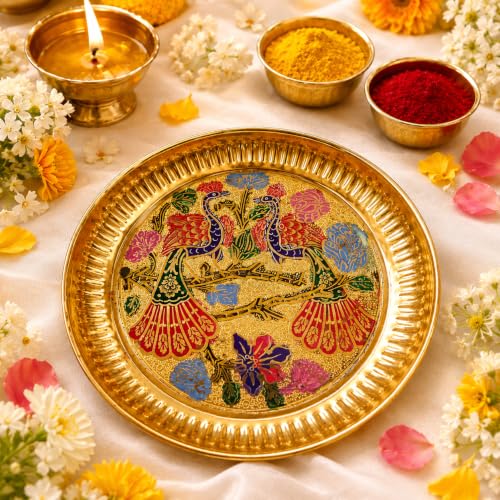
A puja thali is used to arrange worship essentials such as a diya, kumkum, haldi, rice, flowers and prasad. Some sets include additional items such as a bell, incense holder, small bowls, spoon or kalash.
The most useful comparison is not simply which metal looks better. It is which one suits your actual routine.
| Feature | Stainless Steel | Brass (Pital) |
|---|---|---|
| Appearance | Clean, bright and simple | Traditional, warm golden finish |
| Daily maintenance | Generally easier | May require regular polishing |
| Tarnish | Usually resists rust and tarnish when properly maintained, but can stain or corrode in certain conditions | Can develop a darker patina or tarnish |
| Weight | Often lighter, depending on thickness | Often heavier, depending on construction |
| Design options | Plain, engraved, printed and decorative styles | Traditional, engraved, embossed and handcrafted designs |
| Initial budget | Often available at affordable prices | Wide range, from basic to premium |
| Festival presentation | Practical and neat | Particularly suited to traditional festive arrangements |
| Best for | Everyday worship and easy maintenance | Traditional home temples, festivals and gifting |
Material, size and the included accessories are important considerations when comparing puja thalis. A complete set may be more convenient than a plate alone if you are starting from scratch.
Why choose stainless steel?
Stainless steel is a sensible option for households that perform daily puja and prefer straightforward cleaning. A simple steel plate is also easy to pair with existing diyas, bowls and other accessories.
Advantages
- Easy to wash and dry.
- Practical for frequent use.
- Available in plain and decorative designs.
- Often suitable for buyers working with a modest budget.
- Does not require routine metal polishing to maintain a bright appearance.
Things to consider
- Plain designs may feel less decorative for elaborate festive arrangements.
- Thin plates can bend or feel flimsy.
- Decorative coatings or printed finishes may require gentler cleaning.
- Some sets described as golden or silver-coloured may not be made from the material you assume.
Best for: Daily puja, compact mandirs, practical households and buyers who want less maintenance.
Why choose brass?
Brass, commonly called pital, has a traditional golden appearance that complements many home mandirs. A well-made brass thali can also become a long-term household puja item.
Advantages
- Traditional, festive appearance.
- Available in classic and decorative designs.
- Can feel substantial and durable.
- Suitable for households that want matching brass diyas and accessories.
- Can be an attractive gift for housewarmings and religious occasions.
Things to consider
- Brass can tarnish and may need polishing.
- Engraved details can take longer to clean.
- Decorative pieces may cost more than basic steel alternatives.
- A brass-coloured finish does not automatically mean an item is solid brass.
Best for: Traditional home mandirs, festival puja, decorative arrangements and gifting.
My practical recommendation: If you perform daily puja and value convenience, start with stainless steel. If you want a traditional thali primarily for festivals or a coordinated brass mandir setup, consider brass. There is no need to replace a perfectly good thali simply because another material looks more festive.
Five Puja Thali Sets to Consider
The following options represent different styles and budgets. Product descriptions, materials, prices and availability can change, so verify the current listing before ordering. These are research-based suggestions, not products personally tested by us.
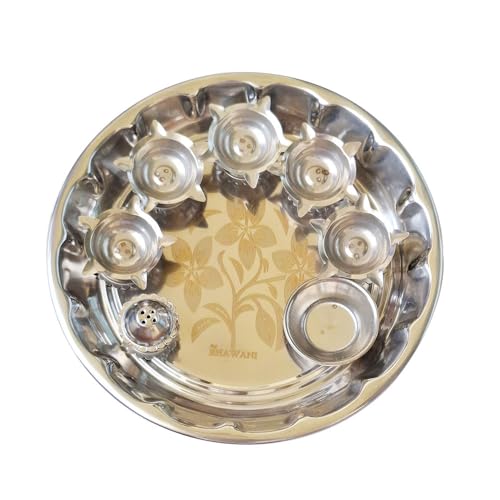
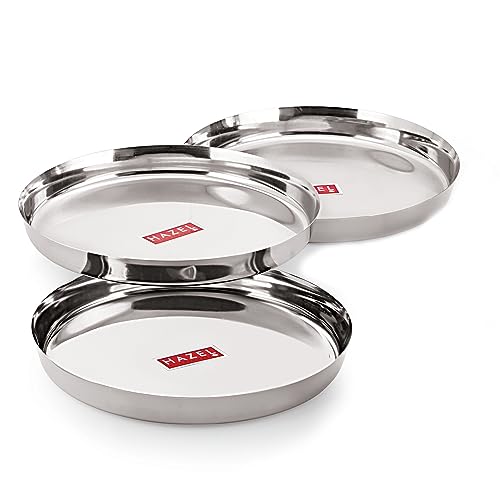
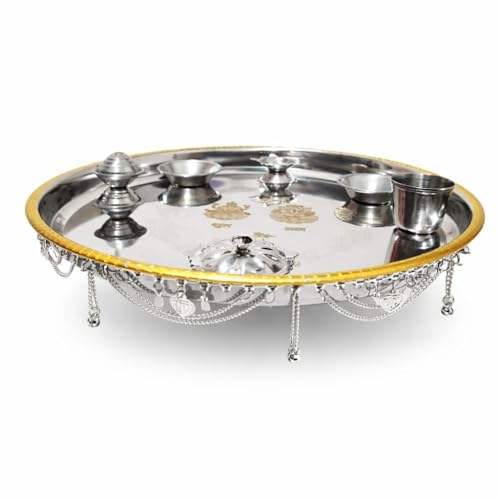
1. HAZEL Stainless Steel Puja Aarti Thali Set
Best for: Buyers who want an organised steel set
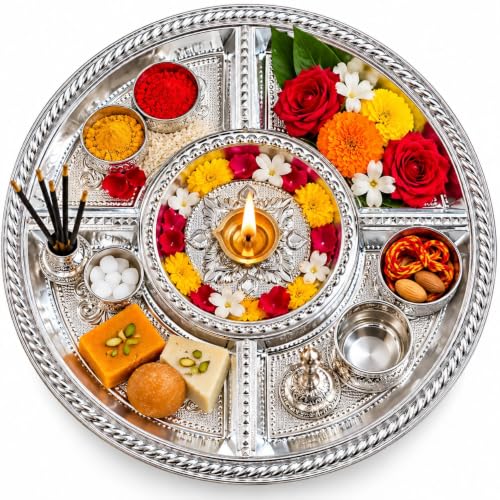
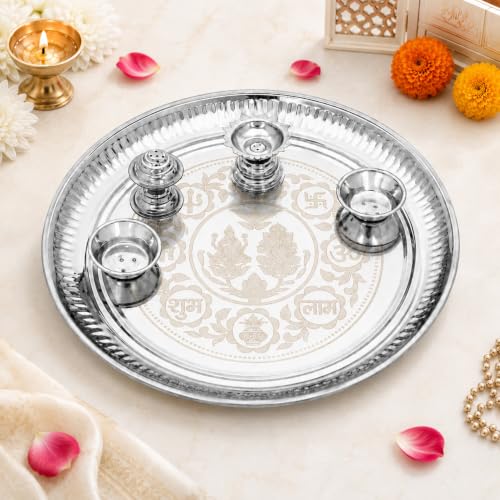
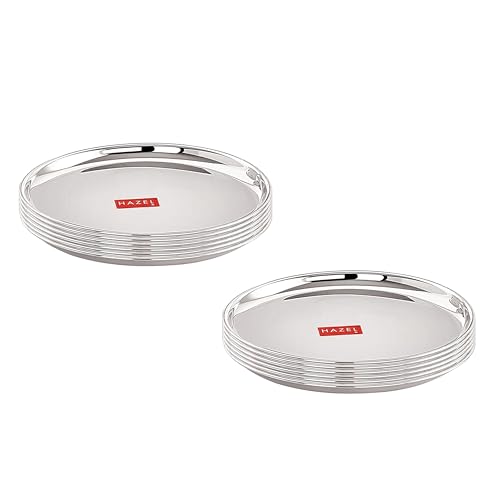
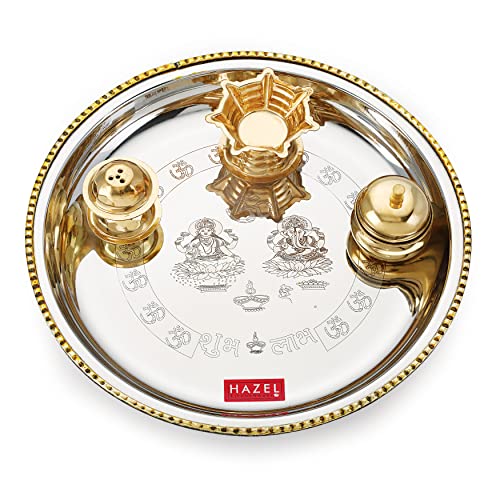
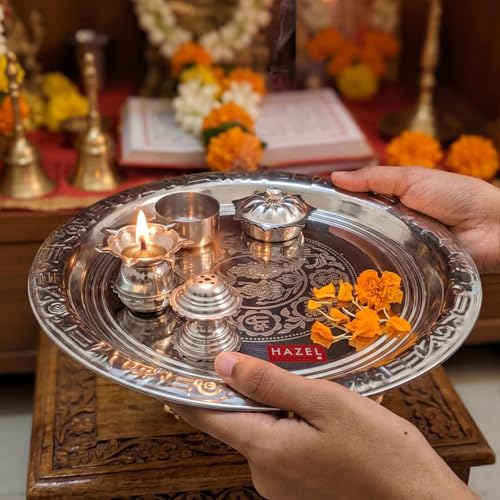
The HAZEL stainless steel puja thali set has been listed with a 28 cm plate and accessories including a diya, incense holder and small bowls. Check the current listing to confirm the exact pieces included.
Why consider it
- A larger plate gives you room to arrange several essentials.
- Multiple accessories can make daily preparation easier.
- A steel finish suits a practical, uncluttered puja setup.
Pros
- Everyday-friendly material.
- Organised arrangement of small puja items.
- Useful if you do not already own the accessories.
Cons
- A larger plate may take up more storage space.
- The accessory count and construction should be checked before purchase.
Skip it if: You already own all the small accessories and only need a basic plate.
Verdict: A useful style to compare if convenience matters more than an elaborate traditional finish.


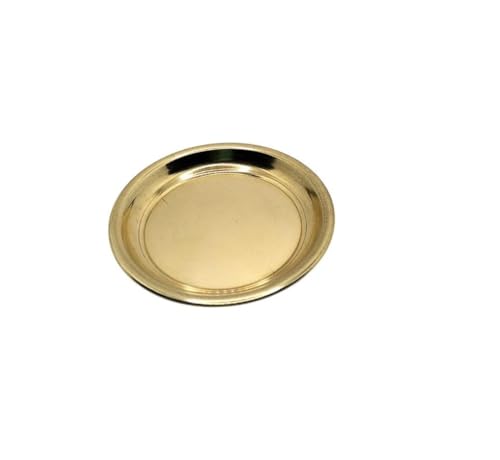
2. The Spiritual Living Brass Aarti Thali
Best for: A traditional brass look on a moderate budget
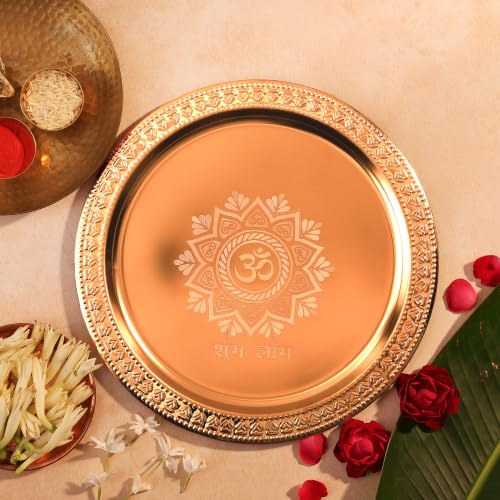
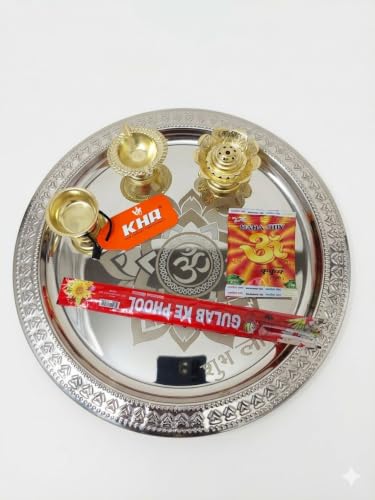
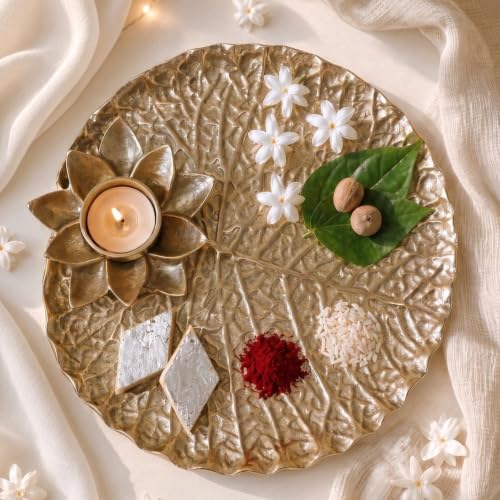
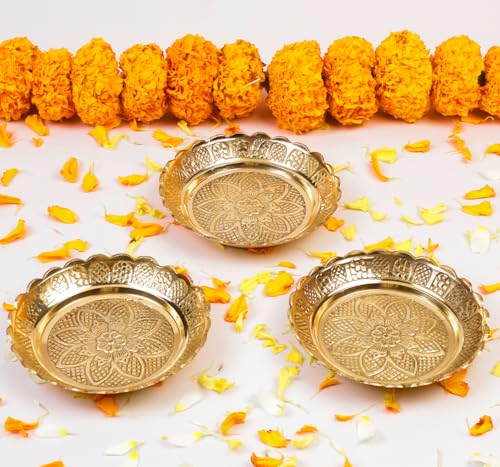
This brass aarti thali is listed as an 8-inch option for home or office worship. Confirm whether the listing is for the plate alone or includes additional accessories.
Why consider it
- Traditional golden appearance.
- Compact size for a small home mandir.
- Can coordinate with other brass puja essentials.
Pros
- Classic design direction.
- Easier to accommodate in a compact worship space than an oversized decorative plate.
- Suitable for buyers who prefer brass.
Cons
- An 8-inch plate may be too small for elaborate arrangements.
- Brass requires appropriate cleaning and drying.
- The material and included pieces should be verified in the product description.
Skip it if: You want a large family-puja thali with multiple bowls and accessories included.
Verdict: A reasonable style to shortlist for a simple traditional setup. Check the latest price and seller details before buying.

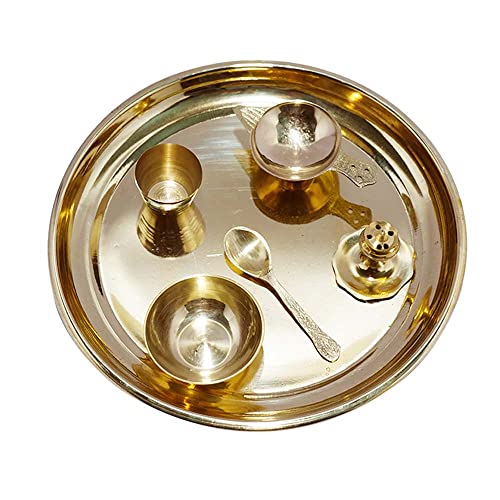
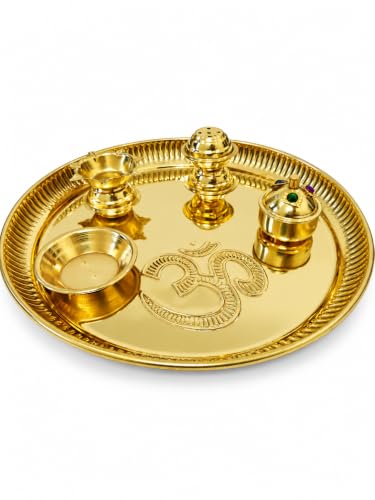
3. BENGALEN Brass Pooja Thali Set
Best for: A complete traditional set
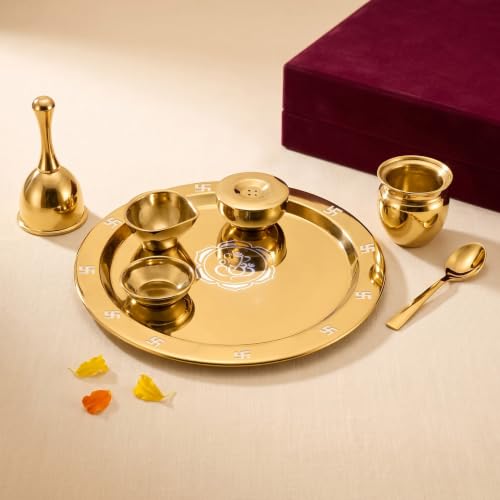
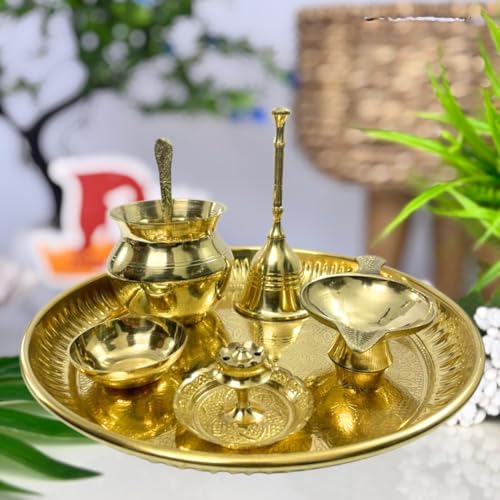
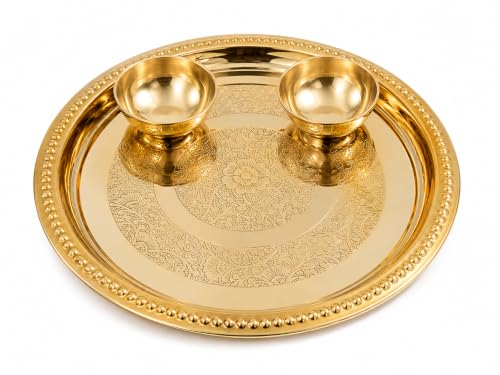
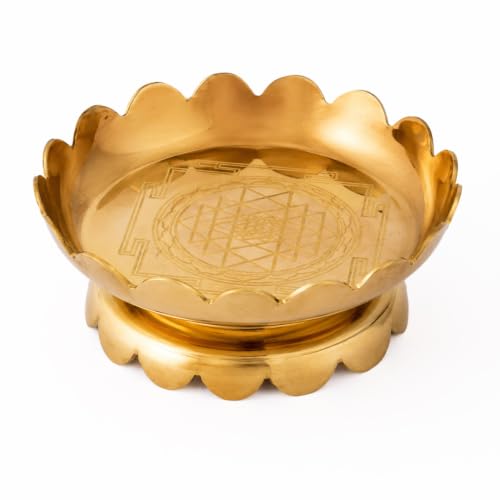
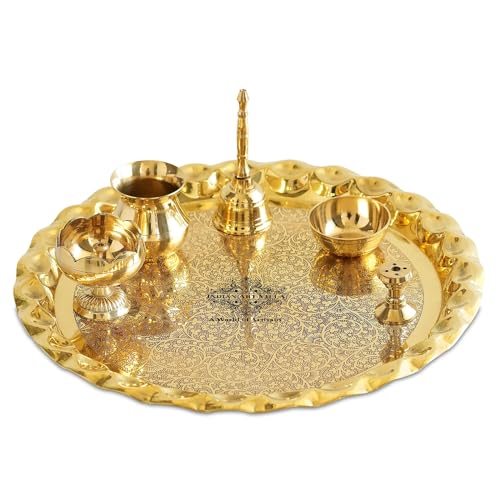
A BENGALEN brass puja thali set has been listed as an 8-inch set with a plate, kalash and other puja accessories. The precise contents can vary by listing, so read the full product description.
Why consider it
- A set may help you assemble several matching essentials together.
- Traditional brass styling works well for festive worship.
- The smaller format can suit a home mandir where storage is limited.
Pros
- Multiple pieces may be included in one purchase.
- Traditional appearance.
- Useful for buyers building a coordinated collection.
Cons
- The included accessories may not match every family’s ritual requirements.
- Decorative details and finish quality need to be inspected.
- A bundled set is not automatically better value than buying only the pieces you need.
Skip it if: You already own a suitable kalash, bowls, diya and bell.
Verdict: Compare the exact piece count and material claims before deciding. Buy for the contents and construction, not just the word “complete” in the title.
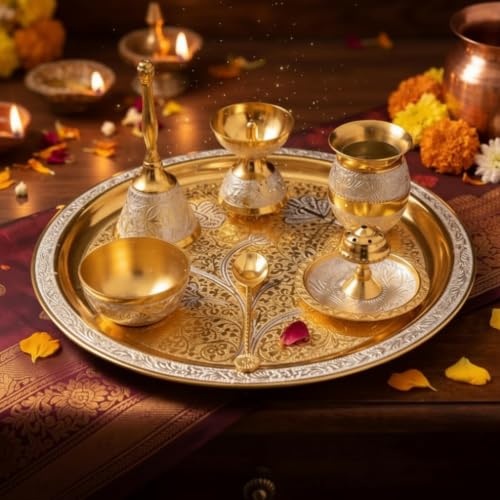
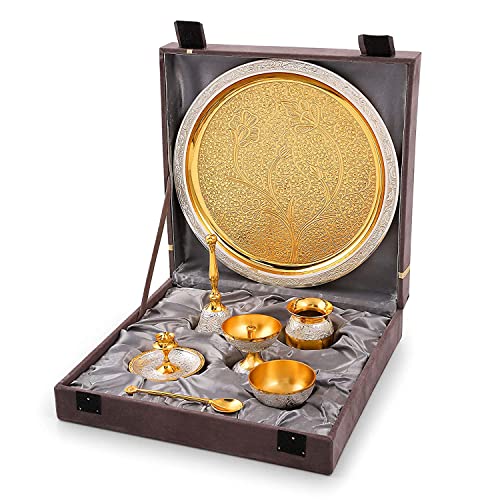
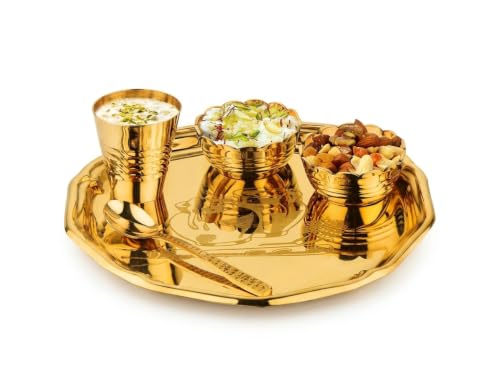


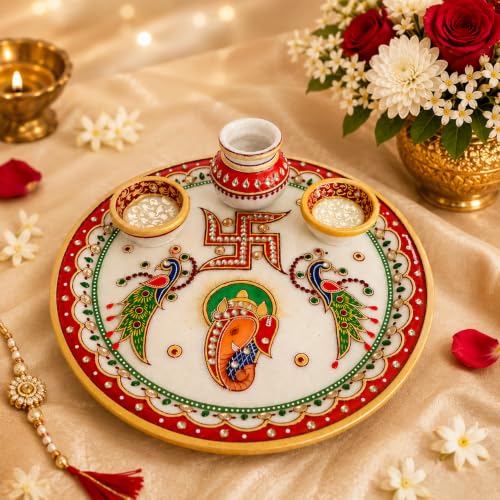
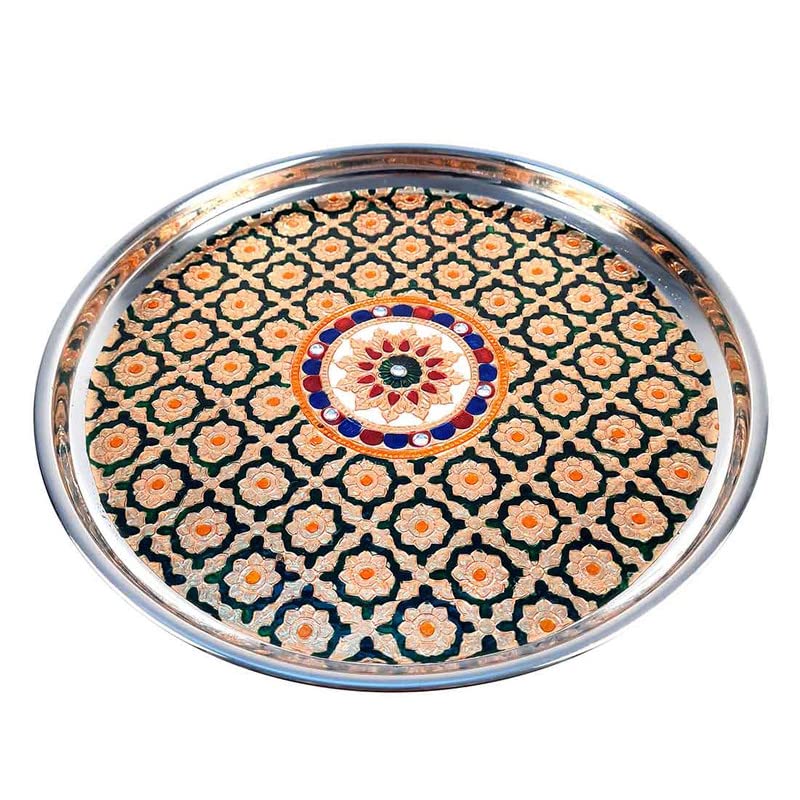
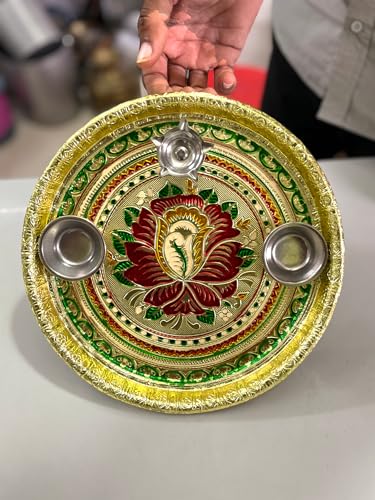
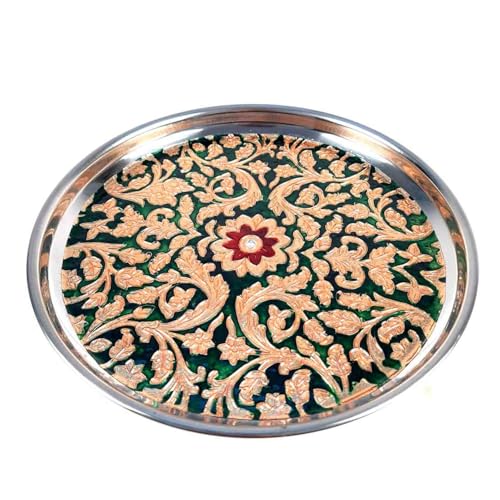
4. Handcrafted Meenakari Stainless Steel Pooja Thali
Best for: Decorative steel styling
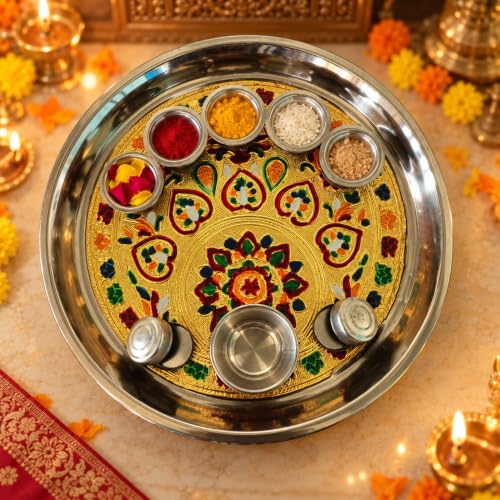
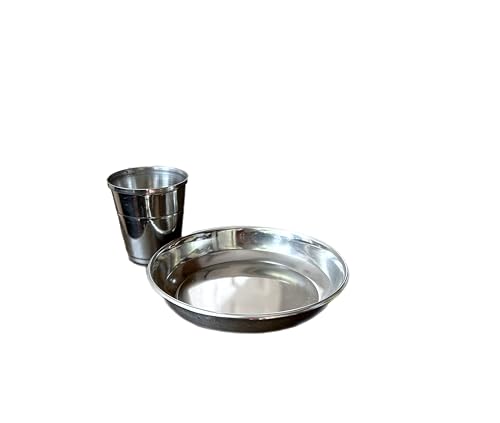
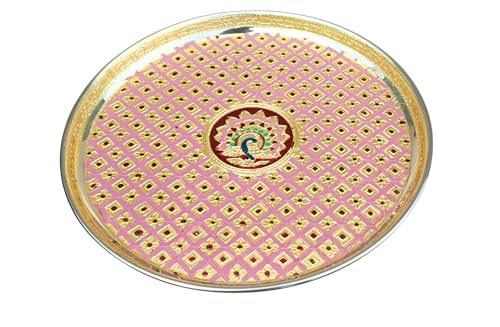
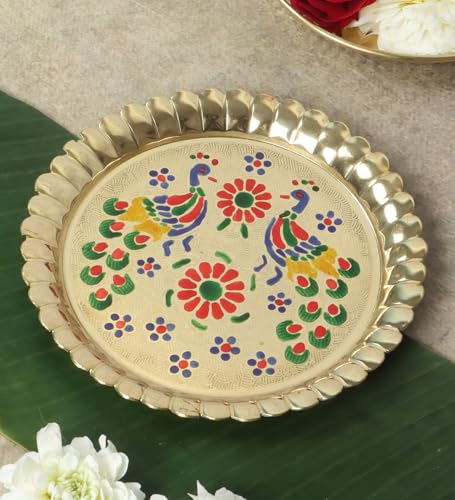
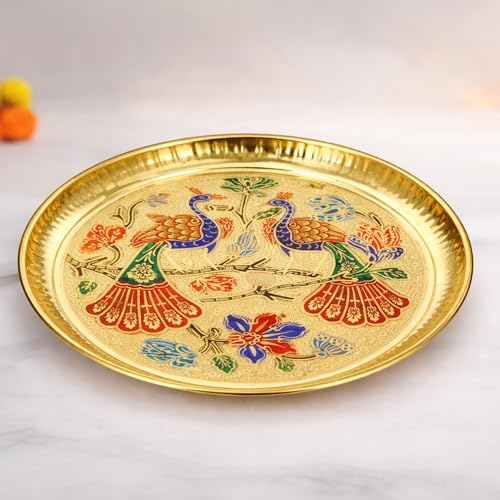
Decorative stainless steel thalis with Meenakari-style detailing offer a middle ground between everyday practicality and a colourful festive appearance. One such style has been listed on Amazon India.
Why consider it
- Decorative detailing can add colour to a festive puja arrangement.
- A steel base may be convenient for regular cleaning, subject to the finish.
- It can work as a gifting option for someone who prefers colourful designs.
Pros
- More decorative than a plain steel plate.
- Suitable for festive occasions.
- Available in a range of designs and colours.
Cons
- Printed or enamel-style finishes may need gentle care.
- The actual material and finish should be confirmed.
- A decorative plate may not include a diya, bowls or other essentials.
Skip it if: You want a simple, plain-metal thali without decorative detailing.
Verdict: Consider it when you want festive presentation without choosing a traditional brass design. Follow the seller’s cleaning instructions to protect the finish.


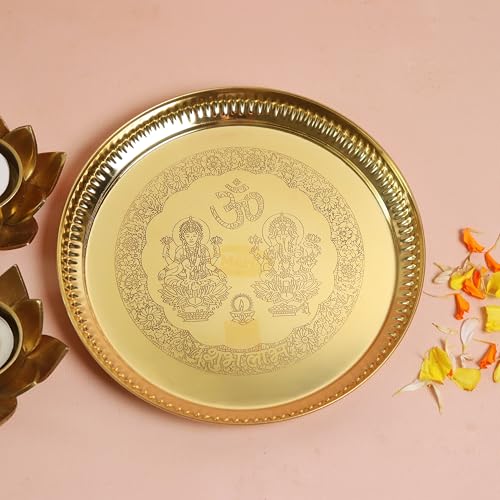
5. IndianArtVilla Brass Flower-Design Puja Thali
Best for: A decorative centrepiece
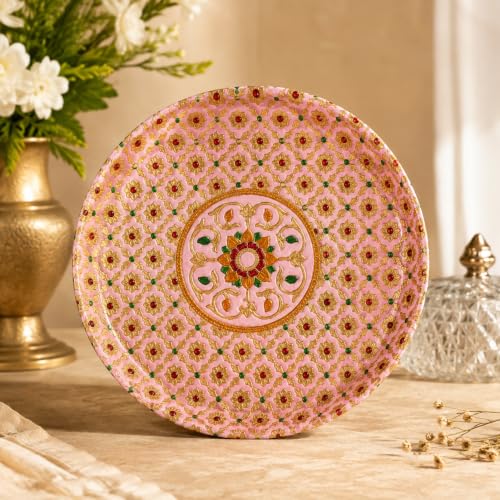
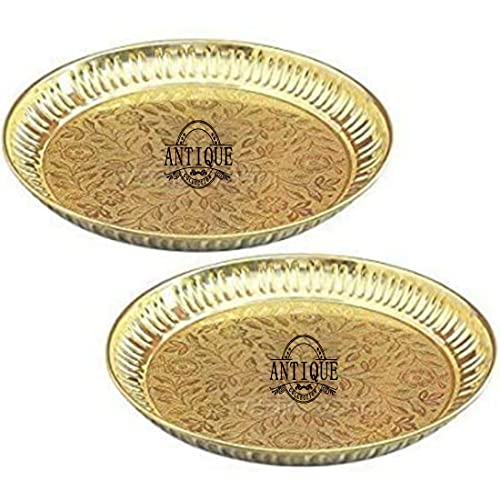
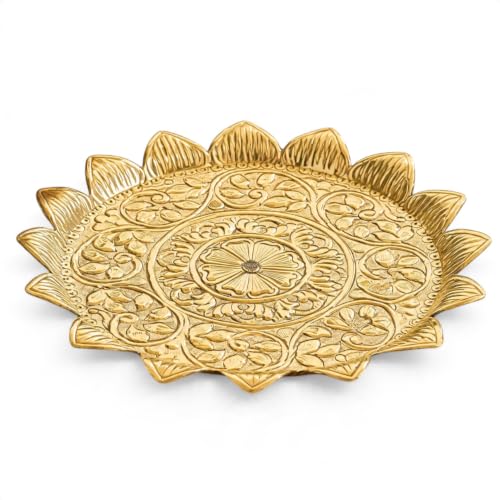
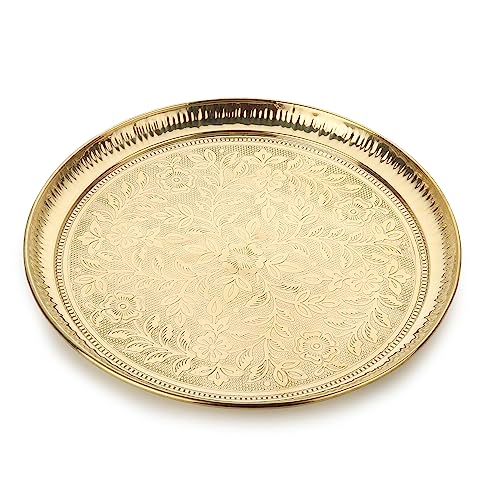
IndianArtVilla has listed brass puja thalis with flower-inspired designs in larger sizes. These are worth comparing if you want a more decorative thali for festivals or a dedicated puja space.
Why consider it
- Decorative detailing can make the thali a focal point.
- A larger plate may offer more room for arranging puja essentials.
- Traditional brass styling pairs well with other classic puja accessories.
Pros
- Festive, traditional appearance.
- Larger sizes may suit more elaborate arrangements.
- Can make a thoughtful gift for a housewarming or festive occasion.
Cons
- Larger plates need more storage space.
- Decorative detailing may take longer to clean.
- Premium-looking designs can cost more than simple alternatives.
Skip it if: Your daily routine requires a lightweight, compact plate that is quick to clean and store.
Verdict: A decorative option for shoppers who prioritise presentation. Confirm the diameter, weight, material and whether accessories are included before ordering.

Quick Comparison of the Five Options
| Option | Main appeal | Ideal use |
|---|---|---|
| HAZEL stainless steel set | Practical organisation | Daily puja |
| The Spiritual Living brass thali | Traditional appearance | Everyday or small festive puja |
| BENGALEN brass set | Multiple matching accessories | Traditional home setup |
| Meenakari stainless steel thali | Colourful decorative finish | Festivals and gifting |
| IndianArtVilla brass thali | Larger decorative design | Elaborate puja arrangements |
Shopping note: These options are not a laboratory-tested ranking. Product listings, stock and prices change. Compare the current product specifications, seller information, customer photographs, recent reviews and return policy before placing an order.
How to Choose the Right Puja Thali Set
Check the size first
Size is easy to overlook when a product photograph makes every thali look generous.
- Small thali: Suitable for a simple daily aarti or a compact mandir.
- Medium thali: A versatile choice for regular worship and occasional festivals.
- Large thali: Useful when you need room for several bowls, flowers, a diya and prasad.
Measure your storage shelf and consider how the thali will be carried. A large plate is not automatically better if it becomes awkward to store.
Decide between a plate and a complete set
A plate-only purchase makes sense if you already own the diya, bowls, spoon and bell.
A complete set may be more convenient if you are setting up a home mandir or buying a gift. However, count the pieces carefully. A set containing six useful items may be better value for your household than a decorative set with twelve items you will rarely use.
Inspect the material claim
Look for an explicit material description rather than relying on a golden or silver-coloured photograph.
For brass, check whether the seller clearly identifies the item as brass or solid brass and whether a coating or decorative finish is mentioned. For stainless steel, check the material details and construction. If the listing is unclear, ask the seller before buying.
Think about cleaning
Ask yourself one practical question: will you enjoy maintaining this item after the festival is over?
If you prefer a quick wash and dry, plain stainless steel is usually a convenient choice. If you love brass, plan to dry it properly and clean it according to the manufacturer’s guidance.
Check stability and construction
Look for:
- Smooth edges that are comfortable to handle.
- A flat base that sits securely.
- Bowls that fit without wobbling.
- A diya holder that can be placed safely.
- Securely attached decorative elements.
- Clear product photographs and realistic dimensions.
A pretty thali should still be practical to use.
Complete Puja Samagri Checklist
Save this checklist before your next puja. The exact items depend on the deity, ceremony, regional tradition and instructions followed by your family or priest.
Essentials to keep on the thali
- Puja thali
- Diya or aarti lamp
- Cotton wicks
- Ghee or oil appropriate for your diya
- Kumkum or roli
- Haldi
- Akshat (rice used for worship)
- Fresh flowers or petals
- Small bowl for water
- Prasad or sweets
- Small spoon, if required
Additional puja items
- Incense sticks or dhoop
- Suitable incense holder
- Small bell
- Camphor, if used in your family’s practice
- Matchbox or a suitable lighter
- Clean cloth for wiping the thali
- A small container for offerings
Items to prepare outside the thali
Some items are easier and safer to keep separately rather than crowding the main plate.
- Clean water in a lota or kalash
- Coconut, if required
- Betel leaves and betel nuts, if required
- Fruits
- Sweets or homemade prasad
- Panchamrit ingredients, if required
- Flowers or garland
- A clean cloth for the puja platform
- The prayer book or written puja instructions
- Any ceremony-specific samagri requested by the priest
Important: This is a general household checklist, not a universal ritual prescription. Some families use different ingredients, quantities or arrangements. Follow the instructions appropriate to your particular puja.
Festival-Specific Puja Checklist
Daily home puja
For a simple daily routine, prepare the essentials you regularly use: a clean thali, diya, wick, ghee or oil, kumkum, haldi, rice, flowers and water. Add incense, a bell and prasad according to your practice.
Keep the setup simple enough that it is easy to maintain every day.
Navratri and Durga Puja
Depending on your family’s tradition, you may need:
- Flowers and garlands.
- A diya and additional lighting supplies.
- Kumkum, haldi and rice.
- Fruits and prasad.
- A kalash and related items if your ritual requires them.
- Any specific offerings or materials prescribed for your puja.
Because Navratri customs vary, prepare the checklist according to your family’s ritual rather than assuming every household needs identical items.
Diwali and Lakshmi Puja
Prepare:
- A clean puja thali and diya.
- Wicks and ghee or oil.
- Kumkum, haldi and rice.
- Flowers and sweets.
- Coins or other offerings if customary.
- A kalash and other samagri required by your family.
- Extra diyas for the designated lighting areas.
Keep decorative lamps and diyas stable, away from curtains, paper decorations and other flammable materials.
Satyanarayan Puja or Griha Pravesh
These ceremonies can require a more specific collection of materials. Depending on the instructions you follow, prepare a larger puja area, a kalash, flowers, fruits, prasad ingredients and the items specified by your priest.
Do not rely on a generic shopping list alone for a ceremony with prescribed steps. Confirm the required samagri in advance so you are not making last-minute trips to the market.
How to Clean and Maintain Your Puja Thali
Cleaning stainless steel
- Remove leftover flowers, ash and oil.
- Wash the thali with mild dishwashing liquid and a soft sponge.
- Rinse thoroughly.
- Dry with a clean cloth to minimise water spots.
- Store it in a dry place.
Avoid abrasive scrubbers on printed, coated or decorative surfaces. Follow the manufacturer’s instructions if the product has a special finish.
Cleaning brass
- Remove loose residue and wipe away excess oil.
- Wash with mild soap and water if suitable for the item’s finish.
- Use a soft cloth or brush for engraved details.
- Rinse and dry thoroughly.
- Use a brass cleaner only when appropriate for the product and its finish.
Brass may darken naturally over time. That does not automatically mean the item is damaged. Avoid harsh acids, aggressive abrasives and improvised cleaners on lacquered, antique, plated or otherwise coated items. Test any suitable cleaner on an inconspicuous area first.
Storage tips
- Store the thali only after it is completely dry.
- Keep small accessories together in a box or organiser.
- Wrap decorative pieces to prevent scratches.
- Keep brass and coated items away from prolonged moisture.
- Store diyas separately when they may leave oil residue on the plate.
Common Puja Thali Buying Mistakes
Buying based only on appearance: A beautiful design cannot compensate for a flimsy plate or missing accessories.
Ignoring dimensions: Check the diameter and height of any included bowls. Product photographs can distort scale.
Assuming every set is complete: Read the included-items list and count the accessories you will actually use.
Confusing brass with a brass-coloured finish: Verify the material description instead of trusting the colour alone.
Ignoring cleaning requirements: Decorative brass and coated thalis may require more care than plain steel.
Overlooking return policies: Check whether the seller accepts returns for damage, missing pieces or a product that differs from its description.
Buying too many accessories: A larger piece count does not automatically mean better value. Buy according to your actual puja requirements.
Frequently Asked Questions
1. Which is better for a puja thali: stainless steel or brass?
Stainless steel is generally more convenient for everyday cleaning, while brass offers a traditional golden appearance. Choose according to your maintenance preferences, budget and intended use.
2. Is a brass puja thali suitable for daily use?
Yes, if you are comfortable cleaning and maintaining it. Dry it properly after washing and follow suitable care instructions for its finish.
3. Is stainless steel suitable for festival puja?
Yes. Stainless steel can be used for festival puja when it suits your family’s practices. Decorative steel designs are also available for festive arrangements.
4. What size puja thali should I buy?
A medium-sized plate is a practical starting point for many households. Choose a larger plate if you need space for several bowls and accessories, and a smaller one if storage is limited.
5. What should a basic puja thali contain?
Common essentials include a diya, cotton wick, suitable fuel, kumkum or roli, haldi, akshat, flowers and space for prasad. The precise contents depend on the puja.
6. Should I buy a complete puja thali set or only a plate?
Buy a complete set if you need several accessories together. Choose a plate-only option if you already own the other items and want to avoid unnecessary purchases.
7. Does a golden-coloured thali mean it is brass?
No. A golden colour may come from brass, another metal or a decorative coating. Check the seller’s material description.
8. How do I maintain the shine of a brass puja thali?
Dry it thoroughly after cleaning and use a suitable brass cleaner only when appropriate for its finish. Some natural patina may develop over time.
9. Can I use the same thali for daily puja and Diwali?
Yes, provided it has enough space for the items you need and suits your family’s practice. You can keep additional festival accessories separately.
10. What should I check before buying a puja thali online?
Check the material, dimensions, included pieces, seller details, recent customer reviews, product photographs, delivery estimate and return policy.
11. Is a heavier brass thali always better?
No. Weight alone does not establish quality. Look at the construction, finish, stability and suitability for the intended use.
12. What is the difference between a puja thali and an aarti thali?
The terms are often used interchangeably. Some sellers use “aarti thali” for a plate designed primarily to hold the diya and aarti essentials, while “puja thali” may refer to a broader arrangement of worship items.
13. Can I keep a burning diya on a decorative thali?
Only if the arrangement is stable and safe for the materials involved. Keep flames away from fabric, paper, flowers that can catch fire and other flammable objects. Never leave a burning diya unattended.
14. Is a decorative puja thali a good gift?
It can be a thoughtful gift for a housewarming, wedding or festival. Check the material, finish, packaging and included accessories before ordering. Best Puja Thali Sets
15. Do I need a different puja thali for every festival?
Not necessarily. A versatile thali can be used for several occasions, while festival-specific items can be added separately according to the ritual. Best Puja Thali Sets
Final Verdict: Which Puja Thali Set Should You Choose?
There is no single best puja thali for every home. The right choice is the one that fits your worship routine and is easy for you to maintain.
- For daily convenience: Choose a simple stainless steel thali or set.
- For traditional styling: Consider a brass thali.
- For a coordinated setup: Compare complete sets and verify every included piece.
- For festive decoration: Consider a decorative steel or engraved brass design.
- For gifting: Prioritise quality, useful accessories and secure packaging over an inflated piece count.
Before you buy, use the checklist in this guide to confirm what you already own and what you actually need. A thoughtfully chosen thali and a well-prepared samagri list can make puja preparation more organised—without buying half the shop.
Explore more home and festive essentials on BestBuy93.IN.