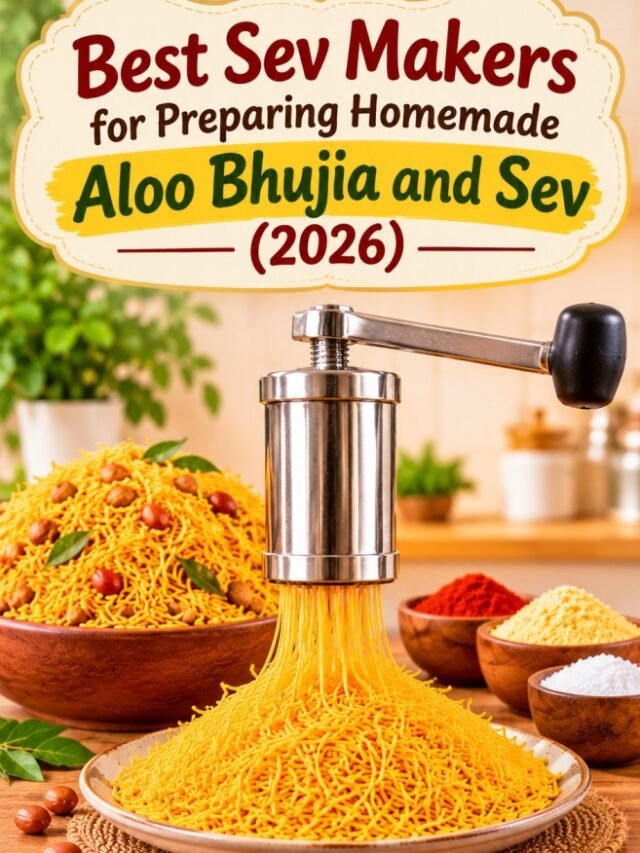
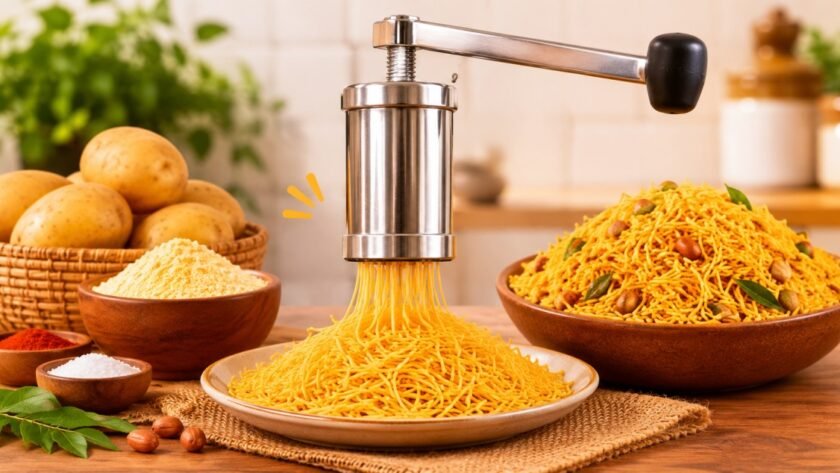

Who doesn’t love a bowl of crispy aloo bhujia or homemade sev with evening chai? Whether you’re preparing namkeen for Diwali, making a fresh batch for the family, or simply trying to recreate your favourite shop-style snack at home, a good sev maker can make the process much easier.
The best part? You don’t need a large commercial machine to prepare homemade sev. A traditional manual sev sancha, also called a sev press or kitchen press, can help you shape different kinds of snacks using interchangeable jali discs.
But here’s where buying one gets a little confusing.
Some sev makers come with six jalis, others offer 12 or 15, some are made from stainless steel, and traditional brass models are also available. There are even larger hand-operated and electric machines designed for commercial snack production.
So, which one should you actually buy?
In this guide, we’ll explore different sev makers available in India, compare their features, explain which type is suitable for aloo bhujia, and share practical buying tips before you spend your money.
We’ll also cover an important detail that many buyers overlook: the number of jalis doesn’t automatically determine how good your sev will be. The right opening size, dough consistency and ease of pressing matter much more.
Also Read | Best Momos Steamers for Making Juicy Homemade Momos
Quick Answer: Which Sev Maker Is Best for Homemade Aloo Bhujia?
For occasional homemade snack preparation, a manual stainless steel sev sancha with interchangeable jalis is a practical starting point.
If you want a traditional alternative, consider a brass sev sancha. If you regularly prepare larger quantities, a lever-operated press may be more comfortable than a small hand-held model.
| Your requirement | What to look for |
|---|---|
| Homemade aloo bhujia | Fine-hole jali suitable for bhujia |
| Regular plain sev | A suitable sev jali with consistent openings |
| Different namkeen shapes | Multiple interchangeable jalis |
| Easy everyday use | Comfortable manual handle or press |
| Traditional kitchen tool | Brass sev sancha |
| Frequent larger batches | Larger hand-press design |
| Commercial production | Purpose-built commercial sev machine |
Our recommendation: Don’t choose a sev maker only because it advertises the highest number of attachments. Check the actual jali shapes and whether the tool is comfortable to operate.
Best Sev Makers to Consider
Here are some sev sancha and kitchen-press options worth comparing for homemade Indian snacks.
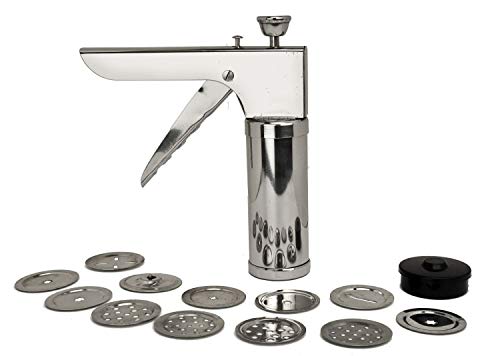
1. Xmart India Stainless Steel Sev Sancha with 6 Jalis – Budget-Friendly Option
If you’re buying a sev maker for the first time, a compact stainless steel model with interchangeable jalis is a sensible place to start.
The Xmart India Stainless Steel Sev Sancha listing includes six jali plates and is marketed for snacks such as sev, murukku, chakli, gathiya and bhujia.
The six-disc arrangement gives you different shaping options without requiring several separate kitchen tools.
Why consider it?
- Stainless steel construction is listed.
- Six interchangeable jali plates are advertised.
- Manual kitchen-press format.
- Suitable for exploring different traditional snack preparations.
Best for: Beginners and households that prepare namkeen occasionally.
Reasons to buy
- Multiple shaping options.
- Compact manual format.
- Budget-friendly listing compared with many larger presses.
What to check
- Exact jali patterns included.
- Whether a fine-hole bhujia disc is supplied.
- Handle construction and assembly.
- Product dimensions and seller return policy.
Our verdict: A reasonable budget shortlist candidate, especially if the included fine jali matches your preferred aloo bhujia texture. Don’t assume all six discs are suitable for fine bhujia.
Buy Now on Amazon India
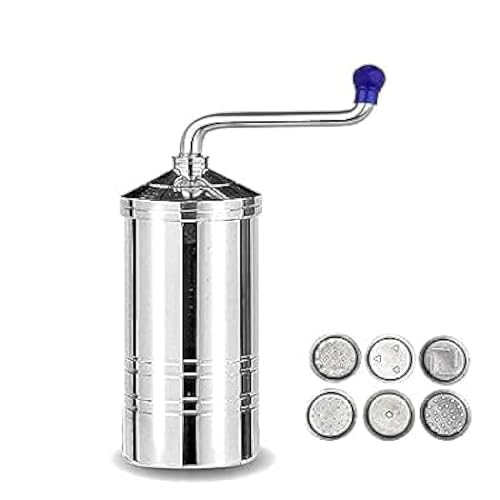
- 🔩 Premium Stainless Steel Build – Xmart India : Made from high-quality stainless steel, ensuring durability, rust-resist…
- 💪 Strong, Durable & Reliable : Heavy-duty construction provides excellent strength and stability, making it perfect for …
- ⚙️ Smooth & Hassle-Free Operation : Ergonomic design allows easy pressing with minimal effort, giving you perfect shapes…
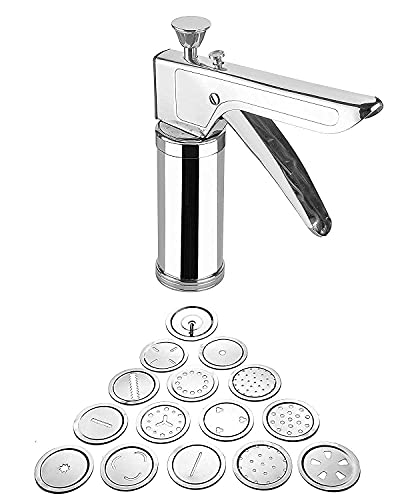
2. Anjali Kitchen Express Gripper with 12 S.S. Jalis – For More Shaping Options
Want to make more than one kind of namkeen? A press with multiple interchangeable jalis may be worth considering.
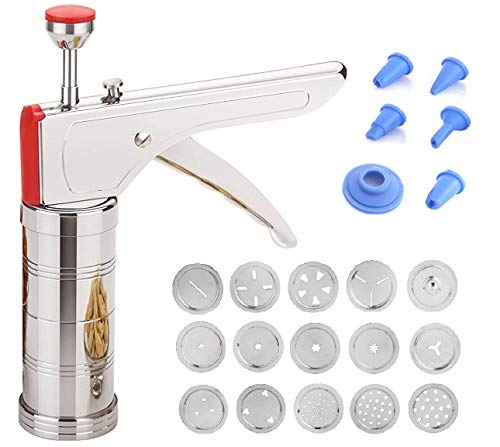
The Anjali Kitchen Express Gripper listing advertises 12 stainless steel jalis. That gives buyers more patterns to investigate when preparing different dough-based snacks.
However, more attachments are useful only when you actually intend to use them.
Why consider it?
- Twelve stainless steel jalis are advertised.
- Multipurpose snack-making format.
- Suitable for users interested in different snack shapes.
- A manual kitchen press rather than an electric appliance.
Best for: Families that enjoy preparing different homemade snacks.
Reasons to buy
- More jali choices than basic six-disc models.
- One tool can support multiple suitable recipes.
- Useful for festive snack preparation.
What to check
- Whether the jalis are removable.
- Which disc is intended for fine sev.
- Whether the pressing mechanism is comfortable.
- Whether the listed accessories are included in the package.
Our verdict: Worth considering if you enjoy experimenting with different snack shapes. For aloo bhujia, inspect the fine-hole attachment before ordering.
Buy Now on Amazon India
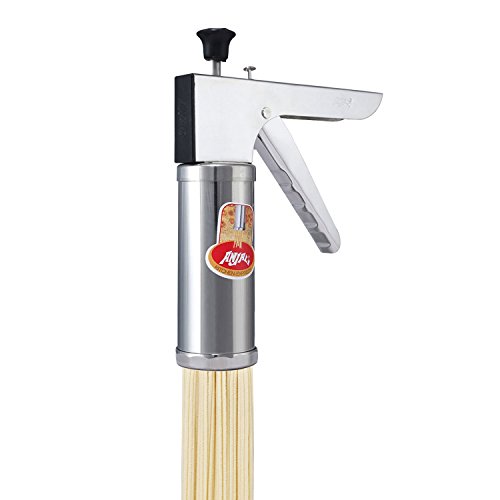
- Ideal hand press
- Make healthy snacks at home
- Anjali product
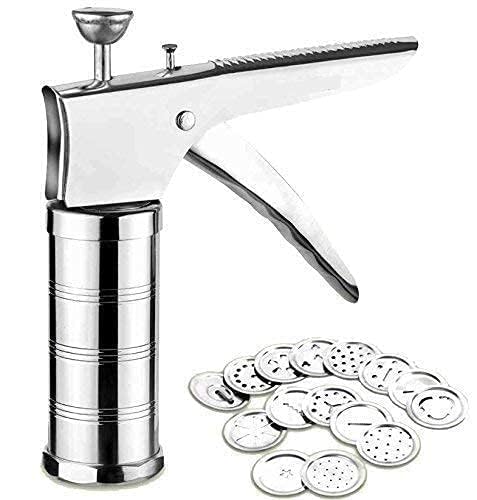
3. SR Stainless Steel Kitchen Press with 5 Jalis – A Simpler Attachment Collection
Not everyone needs a large collection of shaping discs.
The SR Stainless Steel Kitchen Press listing offers five jalis, making it an option for buyers who prefer a smaller attachment set.
A simpler collection may be easier to organise, especially if you mainly prepare one or two snack varieties.
Why consider it?
- Stainless steel kitchen-press format.
- Five jalis listed.
- Multipurpose snack preparation category.
- A relatively simple alternative to larger attachment sets.
Best for: Buyers who want a basic sev and snack-making tool.
Reasons to buy
- Fewer attachments to organise.
- Multiple shaping options.
- Suitable category for homemade snack preparation.
What to check
- Jali opening sizes.
- Whether a fine bhujia disc is included.
- Handle grip and ease of pressing.
- Exact material and construction details.
Our verdict: A practical option to compare if you don’t need 12 or 15 jalis. The right five attachments can be more useful than fifteen unsuitable ones.
Buy Now on Amazon India

- Material : Stainless Steel
- Durable and strong
- If you are looking for a solution for your blending requirements then this multi-purpose designed to provide hassle-free…
4. Whizzo Brass Sev Sancha with 6 Jalis – Traditional Brass Option
If you prefer traditional kitchen tools, a brass sev sancha may catch your attention.
The Whizzo brass sev sancha listing offers a traditional manual snack-making design with interchangeable jalis.
Brass models are often chosen for their traditional construction and substantial feel. However, the exact weight, finish, food-contact suitability and care instructions should be checked for the particular product.
Why consider it?
- Traditional brass construction is advertised.
- Six interchangeable jalis are listed.
- Manual snack-making design.
- Suitable category for different pressed snack preparations.
Best for: Buyers who prefer traditional-style kitchen equipment.
Reasons to buy
- Traditional material and design.
- Multiple shaping attachments.
- Reusable manual kitchen tool.
What to check
- Confirm whether the product is solid brass or has mixed materials.
- Check the food-contact surface and finish.
- Verify the actual product weight.
- Follow the manufacturer’s cleaning instructions.
Our verdict: A traditional alternative to stainless steel, but compare the actual construction and maintenance requirements before paying a premium.

- Comes with 6 different jalis (screens) for making various types of snacks like Sevaiya, Sev, Gathiya, Murukku, Chakli, B…
- Each jali is designed to create a unique texture and shape for different snack varieties
- Easy to use and operate, making it suitable for both beginners and experienced cooks
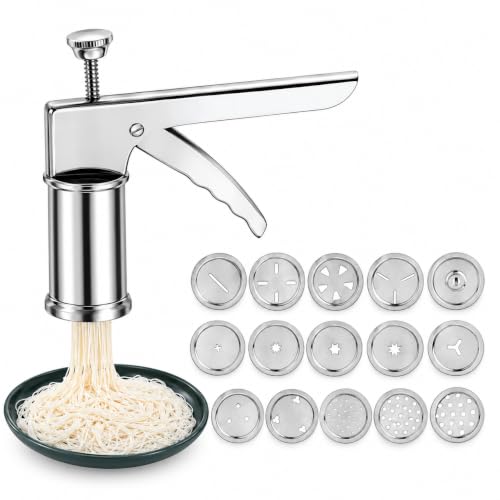
5. Stainless Steel Kitchen Press with 15 Jalis – For Variety
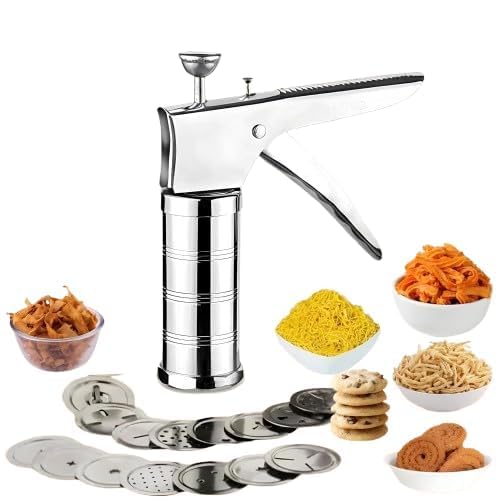
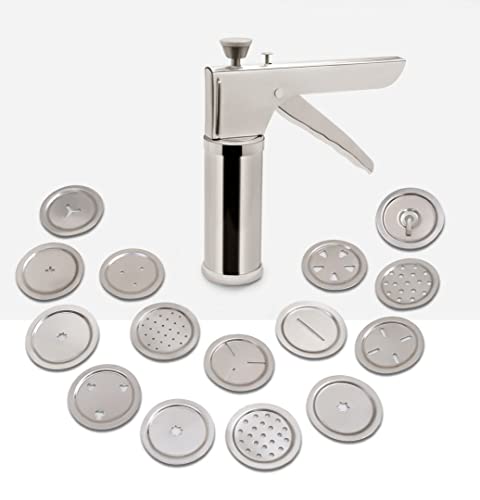
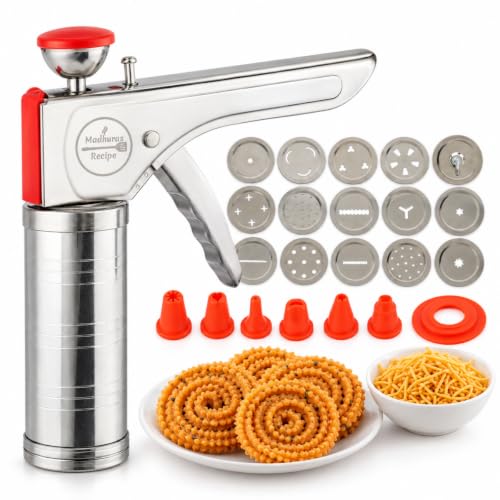
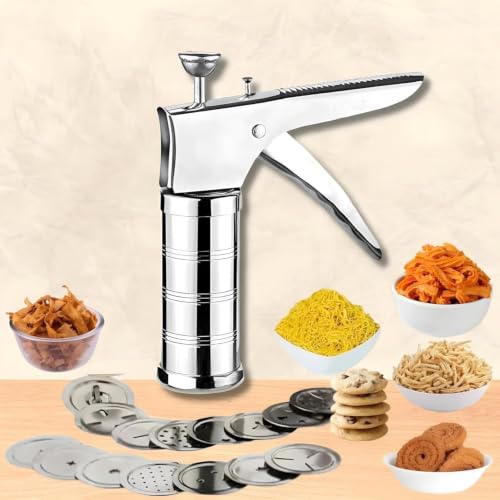
If variety is your priority, a 15-jali kitchen press may look attractive.
These multipurpose presses are commonly marketed for sev, bhujia, chakli, murukku, noodles and other dough-based snacks.
The advantage is flexibility. You can experiment with different shapes without buying separate presses.
The disadvantage? A larger number of attachments can become unnecessary clutter if you use only two or three of them.
Why consider it?
- Fifteen interchangeable jalis are advertised in the listing.
- Multipurpose snack-making category.
- Useful for experimenting with different shapes.
- Suitable for buyers who enjoy making a variety of homemade snacks.
Best for: Home cooks who regularly prepare multiple types of namkeen and pressed snacks.
Reasons to buy
- Wide selection of shaping patterns.
- More versatility than a basic single-jali tool.
- One press can serve multiple suitable recipes.
What to check
- Actual number of jalis in the package.
- Material of the press and attachments.
- Whether the fine sev and bhujia patterns are included.
- Whether the attachments can be cleaned easily.
Our verdict: A good category to investigate for variety, but don’t let the number 15 make the buying decision for you.




6. Whizzo Brass Sev Sancha 800 g – For Buyers Who Prefer a Heavier Traditional Press
Another traditional-style option worth comparing is the Whizzo 800 g brass sev sancha listing.
A heavier press may appeal to buyers who prefer a substantial kitchen tool. However, weight alone doesn’t establish how comfortable it will be to operate.
The handle length, chamber capacity, pressing mechanism and jali design are equally important.
Why consider it?
- Brass construction is advertised.
- Traditional manual sancha format.
- Eight-hundred-gram weight is mentioned in the listing title.
- Interchangeable jali options are advertised.
Best for: Buyers who specifically want a heavier traditional-style sev sancha.
Reasons to buy
- Traditional brass-style design.
- Multiple shaping attachments.
- Reusable kitchen tool category.
What to check
- Exact package contents.
- Confirmed weight and dimensions.
- Handle comfort.
- Care and cleaning instructions.
Our verdict: A more traditional option to shortlist, but compare its usability with a lighter stainless steel press before buying.
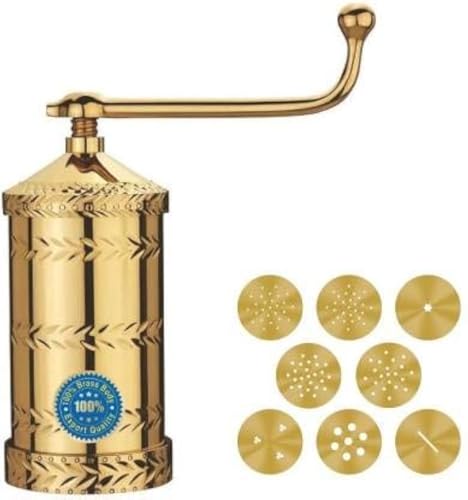
- Comes with 8 different jalis (screens) for making various types of snacks like Sevaiya, Sev, Gathiya, Murukku, Chakli, B…
- Each jali is designed to create a unique texture and shape for different snack varieties
- Easy to use and operate, making it suitable for both beginners and experienced cooks
Sev Maker Comparison Table
| Product | Material advertised | Jalis advertised | Best suited for |
|---|---|---|---|
| Xmart India Sev Sancha | Stainless steel | 6 | Budget-conscious buyers |
| Anjali Kitchen Express Gripper | Stainless steel jalis | 12 | Multiple snack shapes |
| SR Stainless Steel Press | Stainless steel | 5 | Basic homemade snacks |
| Whizzo Brass Sev Sancha | Brass | 6 | Traditional-style preference |
| Stainless Steel Kitchen Press | Stainless steel | 15 | Variety of snack patterns |
| Whizzo Brass 800 g | Brass | Multiple | Heavier traditional press |
The number of jalis and material details are based on the respective product listings. Confirm the exact package configuration before purchase.
What Is a Sev Sancha?
A sev sancha is a manual kitchen tool used to press prepared dough through a perforated disc called a jali.
The dough comes out through the openings, creating strands or other shapes that can then be fried, cooked or prepared according to the recipe.
You may also find these tools listed under names such as:
- Sev maker
- Sev press
- Sev sancha
- Bhujia maker
- Murukku maker
- Chakli press
- Kitchen press
- Namkeen maker
Although these names are often used interchangeably, the attachments and pressing mechanisms can differ.
How does it work?
- Prepare the dough according to your recipe.
- Select the required jali.
- Fit the jali securely into the press.
- Fill the chamber with dough.
- Close the press and operate the handle.
- Press the dough into the required shape.
The final strand thickness depends on the jali opening, dough consistency and pressure applied.
Which Jali Is Suitable for Aloo Bhujia?
This is probably the most important section if you’re specifically buying a sev maker for aloo bhujia.
Aloo bhujia is generally known for its fine, thin, crispy strands. A thick sev attachment may produce a different snack texture, even if the press itself is perfectly good.
Look for a jali with small, closely sized round openings that match the bhujia thickness you want.
| Jali style | Common use |
|---|---|
| Fine round holes | Fine sev and bhujia-style strands |
| Medium round holes | Regular sev |
| Larger round holes | Thick sev and some gathiya preparations |
| Shaped openings | Different snack patterns |
| Flat or specialised openings | Recipe-specific preparations |
Important: Product sellers do not always show the exact hole diameter. If the listing doesn’t provide it, ask the seller for a close-up photograph or measurement.
Don’t assume a disc labelled simply as ‘sev jali’ will automatically produce fine aloo bhujia.
Stainless Steel vs Brass Sev Makers: Which Should You Choose?
Both materials are available in traditional snack-making tools. The better option depends on construction, finish, maintenance and comfort.
| Feature | Stainless steel | Brass |
|---|---|---|
| Appearance | Silver finish | Golden finish |
| Traditional appeal | Modern and practical | Traditional |
| Maintenance | Generally straightforward | Depends on finish and care instructions |
| Weight | Varies by thickness and design | Can be relatively heavy |
| Corrosion care | Dry after washing | Follow product-specific care |
| Buying priority | Check steel grade | Check brass composition and food-contact finish |
Why choose stainless steel?
Stainless steel is a practical choice for many modern kitchens. It is widely used in food-contact equipment and is generally easy to clean when the design has accessible, detachable parts.
However, don’t assume every listing uses SS 304. If the grade is not specified, treat it as unspecified.
Why choose brass?
Brass offers a traditional look and may appeal to people who prefer conventional kitchen equipment.
However, the exact alloy, surface finish and suitability for food contact matter. Don’t assume every brass product is identical.
Our recommendation: Choose the better-built press, not simply the prettier material. A comfortable handle and properly fitted jali are essential.
What to Look for Before Buying a Sev Maker
Before placing your order, check these features.
A. Jali Variety
The jalis determine what shapes the press can produce.
For aloo bhujia, prioritise a fine-hole disc. For regular sev, consider a medium-hole disc. If you make multiple namkeen varieties, a larger interchangeable set may be useful.
B. Pressing Mechanism
Manual sev makers can have different mechanisms.
Small hand-held press: Compact and convenient for occasional home use.
Screw or crank-style press: Uses a rotating mechanism to push dough through the jali.
Lever-operated press: Uses a longer handle to apply pressure. This may be more comfortable for some users, depending on the design.
Try to check the handle length, grip and chamber capacity before buying.
C. Material and Construction
Check whether the body, handle and jalis are made from stainless steel, brass or mixed materials.
Also look for:
- Smooth edges.
- Securely fitting attachments.
- A stable pressing mechanism.
- No visible sharp burrs around the openings.
- Clear cleaning instructions.
D. Chamber Capacity
A compact sancha may be sufficient for a small household batch.
If you regularly make larger quantities, consider a bigger chamber or a longer hand-press design.
Don’t confuse a commercial machine’s production capacity with a household press’s capacity.
E. Ease of Cleaning
Sev dough can stick inside the chamber and around the jali openings.
A press with removable parts is easier to clean thoroughly.
Look for a design that allows you to:
- Remove the jali.
- Open the pressing chamber.
- Reach the dough-contact surfaces.
- Clean small perforations with a suitable brush.
F. Storage
Multiple jalis are useful only if you can store them safely.
A product with a dedicated storage box or organised attachment arrangement may be more convenient than a loose collection of small discs.
Tips for Preparing Better Homemade Aloo Bhujia and Sev
A good sev maker helps with shaping, but the recipe still matters.
Here are some practical preparation tips.
Use the correct dough consistency
Dough that is too hard can make pressing difficult. Dough that is too soft or sticky may produce uneven strands and be harder to handle.
Follow a tested recipe and adjust the moisture gradually.
Choose the right jali
Use a fine-hole attachment for fine bhujia and a suitable medium-hole attachment for regular sev.
Always check that the jali is fitted securely before filling the chamber.
Avoid overfilling the press
Filling the chamber beyond its comfortable capacity can make pressing difficult.
Work in manageable batches, especially when using a small manual press.
Keep the oil temperature appropriate
If the recipe involves deep-frying, maintain a suitable frying temperature.
Oil that is too cool can result in oily snacks. Excessively hot oil can brown the outside too quickly.
Follow the temperature guidance in your chosen recipe.
Let the sev cool completely
Allow freshly prepared sev or bhujia to cool before storing it.
Use a clean, dry, airtight container to help maintain crispness.
Common Mistakes to Avoid When Buying a Sev Maker
Mistake 1: Buying based only on the number of jalis
Fifteen attachments sound impressive, but you may only need two or three.
Check the actual patterns and opening sizes.
Mistake 2: Ignoring the fine bhujia attachment
If aloo bhujia is your main purpose, make sure the package includes a suitable fine-hole jali.
Mistake 3: Choosing an uncomfortable handle
A press that is difficult to operate can make snack preparation tiring.
Check handle length, grip and pressing design.
Mistake 4: Assuming all stainless steel is SS 304
The exact grade should be confirmed by the seller or manufacturer.
Mistake 5: Buying a commercial machine for occasional home use
Industrial sev machines are designed for much larger production requirements.
A compact manual sancha is usually more practical for occasional household batches.
Mistake 6: Forgetting cleaning and storage
Dough can dry inside tiny jali openings. A detachable, accessible design makes cleaning easier.
Frequently Asked Questions
1. Which sev maker is best for homemade aloo bhujia?
A manual sev sancha with a suitable fine-hole jali is a practical choice. Check the actual disc openings rather than relying only on the product title. Sev Maker
2. Can I make aloo bhujia using a regular sev maker?
Yes, provided the sev maker includes a suitable fine-hole attachment and the dough has the correct consistency for pressing. Sev Maker
3. How many jalis should a sev maker have?
For basic home use, a few useful attachments may be sufficient. If you prepare multiple snack varieties, a larger jali collection can offer more flexibility. Sev Maker
4. Is a stainless steel sev maker better than a brass one?
Neither material is automatically better. Compare construction quality, food-contact suitability, handle comfort, maintenance and price. Sev Maker
5. Can I use a sev maker for chakli and murukku?
Many multipurpose presses are designed for suitable chakli and murukku doughs. Use the appropriate jali and confirm that the product supports the required preparation. Sev Maker
6. Is an electric sev maker necessary for home use?
Not usually. A manual sev sancha is generally sufficient for occasional household snack preparation. Electric or commercial machines are more relevant for frequent, larger-volume production. Sev Maker
7. How do I clean a sev maker?
Disassemble the removable parts, wash with mild dishwashing liquid, and use a soft brush to clear dough from the jali openings. Rinse thoroughly and dry completely before storage. Sev Maker
8. Can I use the same jali for fine sev and thick gathiya?
Not necessarily. Fine sev and thicker gathiya generally require different strand thicknesses. Choose the attachment according to your recipe. Sev Maker
Final Verdict: Which Sev Maker Should You Buy?
Making homemade aloo bhujia and sev can be a fun way to prepare fresh traditional snacks for your family. And with the right sev sancha, the shaping process becomes much more manageable.
Here’s how we’d narrow down the options:
- For a budget-friendly first purchase: Consider the Xmart India six-jali stainless steel sev sancha.
- For more shaping options: Compare the Anjali Kitchen Express Gripper with 12 jalis.
- For a simpler attachment set: Consider the SR stainless steel press.
- For a traditional brass option: Explore the Whizzo brass sev sancha.
- For a larger selection of patterns: Compare the 15-jali stainless steel kitchen press.
Our final buying tip is simple: if your main goal is homemade aloo bhujia, prioritise the fine-hole jali, a comfortable pressing mechanism and easy cleaning. Don’t pay extra for attachments you will probably never use.
Because at the end of the day, the goal isn’t to own the sev maker with the most jalis. It’s to make that delicious, crispy homemade bhujia that disappears from the snack box before anyone realises it! 😋