

Have your favourite sweaters, cardigans, trousers or blankets started looking old because of tiny fabric balls and fuzzy patches? You do not always need to replace them. An electric lint remover can help refresh many garments by removing fabric pills and loose fuzz, making well-loved clothes look neater.
These small devices are also known as fabric shavers, lint shavers or electric bobble removers. They use rotating blades behind a protective mesh to trim raised fabric pills without cutting into the fabric when used correctly.
If you are looking for the best electric lint removers for old and fuzzy clothes, the main things to compare are blade quality, safety features, power source, battery life, ease of cleaning and suitability for different fabrics.
Some models are rechargeable and convenient for use around the home, while corded models are useful when you want continuous power without worrying about battery life. However, no electric fabric shaver is suitable for every material, and delicate garments need extra care.
In this guide, we compare seven options worth researching in India, explain what makes a good fabric shaver, and share practical tips for removing fuzz without damaging your favourite clothes.
Also Read | Winter Skin: Your Skincare Guide | Moisturizer Mastery for Winter Skin
Quick Picks: Which Electric Lint Remover Should You Choose?
| Product | Best for | Type |
|---|---|---|
| Philips GC026 Fabric Shaver | Brand familiarity and a protective height-adjustment cap | Battery-operated |
| AGARO LR2007 Lint Remover | Rechargeable everyday use | Cordless |
| Nova Electric Lint Remover | Budget-conscious buyers | Corded options available |
| InstaCuppa Rechargeable Lint Remover | Multiple speed settings | Rechargeable |
| Xiaomi Lint Remover | Buyers researching USB-C charging | Rechargeable, check Indian availability |
| VR PRIME Electric Lint Remover | Budget-friendly online alternatives | Model-dependent |
| AGARO LR2001 Lint Remover | An alternative AGARO model to compare | Check current listing |
What Is an Electric Lint Remover?
An electric lint remover is a handheld fabric-care device designed to trim small balls of tangled fibres from the surface of clothing and household textiles.
These balls are called fabric pills. They commonly form in areas exposed to repeated friction, such as under the arms of sweaters, around trouser thighs, along side seams and where bag straps rub against fabric.
A typical electric fabric shaver includes:
- A motor that rotates the cutting blades.
- A protective metal mesh with holes through which raised pills pass.
- A removable lint container.
- A power button.
- A battery or electrical cord.
- A protective cover or other safety features, depending on the model.
When you move the device gently over suitable fabric, raised pills enter the mesh and are trimmed by the blades underneath.
What can an electric lint remover do?
It can help remove visible pills from suitable garments, refresh the appearance of sweaters and cardigans, and reduce fuzz on some blankets and upholstery.
What can it not do?
It cannot repair holes, replace missing fibres, reverse fabric thinning or restore a garment that has suffered severe wear. A fabric shaver also does not remove every kind of lint, dust or pet hair as effectively as a lint roller or other cleaning tool.
The aim is to improve the surface appearance of the fabric, not make an old garment structurally new again.
Seven Best Electric Lint Removers for Old and Fuzzy Clothes
1. Philips GC026 Fabric Shaver
Best for: Buyers who prefer a familiar appliance brand.
The Philips GC026 is a compact fabric shaver designed to remove pills from garments and other suitable textiles. It is worth considering if you want a simple device from an established home-appliance brand.
Philips lists a blade speed of up to 8,800 rotations per minute and a height-adjustment cap designed to help protect delicate fabrics. The GC026/80 version uses two AA batteries, and Philips has listed a two-year warranty for the model. Availability and exact specifications can vary by version and market.
Key features
- Battery-operated design.
- Rotating cutting blades behind a protective mesh.
- Mesh openings designed to accommodate different pill sizes.
- Height-adjustment cap for additional control.
- Compact size for home use and storage.
Pros
- Convenient for quick fabric-care tasks.
- The height-adjustment feature can be useful when working carefully.
- Battery operation avoids the need for a charging cable.
Cons
- Replacement AA batteries may add ongoing costs.
- It does not offer the same convenience as USB-rechargeable models if you prefer rechargeable devices.
- Stock and pricing should be checked before purchase.
Who should consider it?
Choose this model if you prefer a straightforward fabric shaver from a well-known appliance brand and do not mind replacing batteries.
Who should skip it?
Consider a rechargeable model if you frequently refresh multiple garments and want to avoid buying disposable batteries.
Verdict: A practical option to compare when brand familiarity and controlled fabric shaving matter more than USB charging.
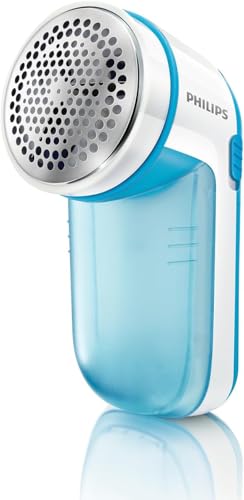
- Large blade surface for covering a large area at once
- Height adjustment cap for the most delicate garments
- Up to 8800 rounds/min blade rotation for effective removal
2. AGARO LR2007 Rechargeable Lint Remover
Best for: Regular household use without a power cord.
The AGARO LR2007 is a rechargeable fabric shaver designed for everyday clothing care. It is worth comparing if you want a cordless device for sweaters, cardigans and other suitable garments.
A published product listing describes three stainless-steel blades, a 5 W motor and approximately 60 minutes of use following a one-hour charge. These are listing claims rather than independently verified runtime results. Check the current listing for the exact specification and warranty.
Key features
- Rechargeable, cordless design.
- Stainless-steel cutting blades.
- Compact handheld format.
- Removable lint container.
- Designed for removing surface pills and fuzz.
Pros
- Convenient to move between rooms.
- No cord to manage while working on clothes.
- Suitable for routine garment maintenance when used correctly.
Cons
- Battery performance can change with use and fabric resistance.
- It is important to confirm the charging connector and warranty for the exact listing.
- A rechargeable device still requires periodic charging.
Who should consider it?
This is a useful option if you want a cordless fabric shaver for regular clothing and household textile care.
Who should skip it?
If you only need to remove pills from one or two garments occasionally, a less expensive manual fabric comb may be sufficient.
Verdict: A worthwhile rechargeable option to compare for routine home use.
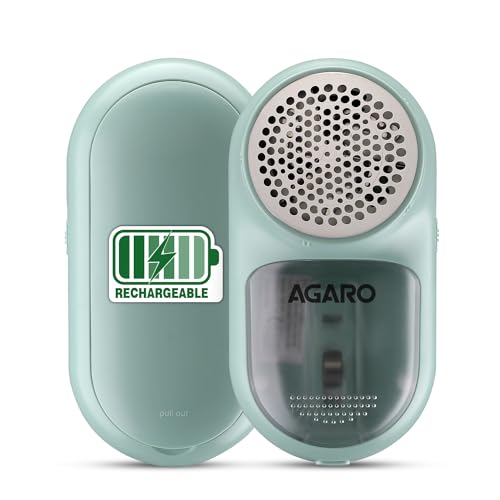
- Efficiently removes fabric fluff, fuzz, bobbles, pills, burr from all types of garments, fabrics and restores to a fresh…
- Fabric brush to quickly remove dust, fuzz, dandruff from shirts, pants jacket and more.
- 5W motor with 6500 RPM ensures quick and smooth removal of lints.
3. Nova Electric Lint Remover
Best for: Budget-conscious buyers who prefer a simple device.
Nova-branded electric lint removers are widely encountered in Indian online marketplaces. Some models are corded, while other listings may differ in design and specifications. Check the exact model rather than assuming every Nova lint remover has the same features.
A corded model can be useful if you want continuous power without waiting for a battery to charge. However, the cord restricts movement, particularly when working on curtains, cushions or blankets away from a socket.
Key features to check
- Whether the model is corded or cordless.
- Protective mesh and blade design.
- Lint-container capacity.
- Available warranty.
- Electrical safety information and applicable certification.
Pros
- Some models have a low purchase price.
- A corded version does not depend on battery charge.
- Simple operation may suit occasional use.
Cons
- A power cord can limit portability.
- Model specifications and build quality can vary between listings.
- Very low-cost products deserve careful checking for safety and warranty details.
Who should consider it?
Consider a Nova model if your priority is affordability and you have confirmed the exact product details.
Who should skip it?
Choose a rechargeable alternative if you need to move around frequently or use the device away from a power socket.
Verdict: Worth comparing on price, but do not choose a model based on price alone.

- Efficient Lint Removal: Nova Lint Remover Equipped with a 5w powerful motor, our lint remover effortlessly removes lint,…
- Gentle on Fabrics: Unlike traditional lint rollers, our fabric cleaner is gentle on your delicate fabrics. It won’t dama…
- Nova Technology: With Nova’s advanced technology, our lint remover ensures precise and thorough lint removal, giving you…
4. InstaCuppa Rechargeable Lint Remover
Best for: Buyers who want adjustable speed settings
The InstaCuppa Rechargeable Lint Remover is another option to compare if you prefer a cordless device with more than one operating speed.
The manufacturer’s product information describes six stainless-steel blades, three speed settings and USB charging. These features may offer more control when switching between suitable heavier fabrics and lighter garments. As with any brand’s product claims, confirm the latest specifications and warranty before buying.
Key features
- Rechargeable handheld design.
- Multiple speed settings, according to the manufacturer.
- Stainless-steel cutting blades.
- Protective mesh.
- Removable lint collection container.
Pros
- Adjustable speed can be useful for different fabric weights.
- Cordless operation makes it convenient to move around.
- Multiple settings can offer more control than a single-speed device.
Cons
- Battery runtime depends on the selected speed and fabric resistance.
- Manufacturer specifications should not be confused with independent test results.
- Check charging time and replacement-part availability.
Who should consider it?
Consider this model if you expect to use a fabric shaver on a variety of suitable garments and value adjustable speed.
Who should skip it?
If you only have a few heavily pilled sweaters, you may not need a model with several operating settings.
Verdict: A useful candidate if adjustable speed is high on your buying checklist.
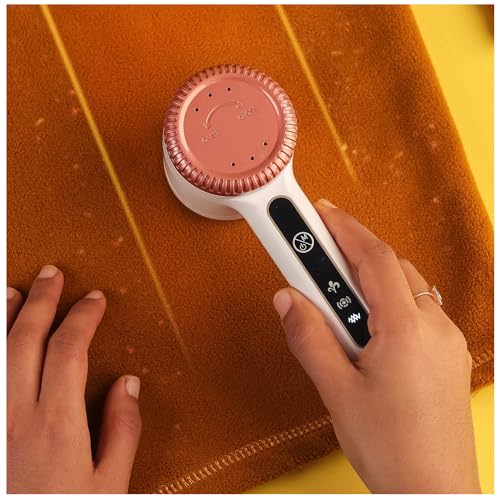
- Portable Wireless Lint Remover: Enjoy the freedom of wireless fabric care with our user-friendly, portable lint remover….
- USB Rechargeable Fast Charging: Say goodbye to battery woes with our fast-charging, USB-rechargeable lint remover. A qui…
- Quick and Powerful: Experience rapid, robust performance that swiftly removes lint and fuzz, saving you precious time. T…
5. Xiaomi Lint Remover
Best for: Buyers researching USB-C rechargeable fabric-care devices.
Xiaomi has a lint-remover product in its global product range. Its published information describes a rechargeable design with USB Type-C charging, a reinforced steel mesh and a safety mechanism that stops the device when the cover or lint container is removed.
The global product information also lists a battery runtime based on the company’s laboratory data. However, availability in India is an important consideration: a global product page does not guarantee that the product is officially sold or supported in the Indian market.
Key features to verify
- USB Type-C charging.
- Protective mesh design.
- Safety mechanism.
- Official Indian availability.
- Warranty and repair support.
Pros
- USB-C charging may be convenient if you already use compatible charging cables.
- A safety mechanism can help reduce accidental operation when components are removed.
- A compact design can be useful for household storage.
Cons
- Official Indian availability may be limited.
- Imported products may not have local warranty support.
- Do not assume global specifications apply to every seller’s version.
Who should consider it?
Consider it if you find a trustworthy seller and can verify the model, warranty and safety details.
Who should skip it?
Avoid an uncertain import if you cannot confirm the product’s authenticity or obtain local support.
Verdict: An interesting option to research, but local availability and after-sales support should come first.
6. VR PRIME Electric Lint Remover
Best for: Buyers comparing affordable online alternatives.
VR PRIME is another name encountered in Indian online listings for electric lint removers. Some marketplace versions are promoted for sweaters, jackets and blankets, but exact specifications can vary.
Before purchasing, examine the blade count, motor details, power source and protective mesh rather than relying only on product photographs or broad claims about suitability for all fabrics.
Key features to check
- Rechargeable or battery-operated design.
- Blade count and replacement availability.
- Mesh guard construction.
- Lint-container removal and cleaning.
- Warranty and seller support.
Pros
- Provides another option for price comparison.
- Some listings offer compact designs for everyday storage.
- May be suitable for basic fabric-care needs if the specifications are appropriate.
Cons
- Features may vary across listings.
- Warranty and replacement-part support need verification.
- Marketplace ratings alone cannot confirm fabric safety.
Who should consider it?
Compare it with other budget models if you can verify the seller, specifications and return policy.
Who should skip it?
Avoid listings with unclear manufacturer details, missing safety information or no meaningful warranty information.
Verdict: A budget alternative worth researching, not an automatic winner simply because it is inexpensive.

- ✅ WIRE USE LINT REMOVER – BETTER THAN RECHARGEABLE! Unlike battery-operated cloth shavers which fail to continuously bri…
- ✅ INNOVATIVE DESIGN, BUILT TO LAST LONGER – Created with quality in mind! Using the premium materials, (heavy-duty abs p…
- ✅ 6-TOOTH BLADE, DEFUZZ ALMOST ALL FABRIC LINTS – Take advantage with our newest and revolutionize lint remover machine …
7. AGARO LR2001 Lint Remover
Best for: Buyers who want to compare another model from the same brand.
If the LR2007 does not match your budget or preferred features, check whether the AGARO LR2001 is available through a trusted retailer. Compare the exact model numbers carefully, as different lint removers from the same manufacturer may have different power sources, charging arrangements and blade designs.
Key features to compare
- Power source and battery capacity.
- Blade design and protective mesh.
- Charging time and runtime, if rechargeable.
- Lint-container capacity.
- Warranty and availability of replacement parts.
Pros
- Gives you another model to compare within the same brand family.
- May suit a different budget or usage requirement.
- Online listings can help clarify its current specifications.
Cons
- Do not assume that specifications from the LR2007 also apply to the LR2001.
- Availability and warranty may differ by seller.
- Confirm all important details before purchasing.
Who should consider it?
Consider it if the current listing clearly states the specifications and offers suitable warranty support.
Who should skip it?
Skip it if the listing does not clearly identify the model or explain its safety features.
Verdict: Compare it on its own specifications rather than choosing it based on the brand name alone.

- Unique magnetic design – Lint remover uses the advanced magnetic technology between the honey comb shaver foil and the b…
- Strong cyclone convection – No need lint roller anymore as this pilling remover has 360 strong cyclone convection that e…
- Powerful and efficient – The 5W powerful motor rotates at nearly 9000 RPM. It has 3-leaf stainless steel blades which re…
Comparison Table: Electric Lint Removers
| Product | Power source | Main reason to consider it | What to verify |
|---|---|---|---|
| Philips GC026 | 2 AA batteries for the GC026/80 version | Height-adjustment cap and familiar brand | Stock, battery cost and warranty |
| AGARO LR2007 | Rechargeable | Cordless everyday use | Current charging and runtime details |
| Nova Electric Lint Remover | Model-dependent; corded options exist | Budget-friendly options | Exact model, cord and safety details |
| InstaCuppa Rechargeable | Rechargeable | Multiple speed settings, according to manufacturer | Runtime, charging time and warranty |
| Xiaomi Lint Remover | Rechargeable global model | USB-C charging on the global model | Official Indian availability and local support |
| VR PRIME | Model-dependent | Additional budget comparison | Seller, specifications and return policy |
| AGARO LR2001 | Verify current listing | Alternative model to compare | Exact specifications and warranty |
This is a feature-based comparison, not a laboratory performance ranking. Product availability, specifications and prices can change, so verify the latest retailer listing before buying.
How to Choose the Best Electric Lint Remover
1. Check the blade design
The blades are responsible for trimming raised fabric pills. Look for clear information about the cutting mechanism, protective mesh and replacement availability.
A higher blade count does not automatically guarantee better results. Mesh quality, blade sharpness, motor performance and correct use also matter.
2. Look for a protective mesh
The metal mesh helps prevent the blades from directly contacting the garment. Inspect it for dents, sharp edges or damage before each use.
Do not use a device if the mesh is bent or the blade assembly is exposed.
3. Decide between rechargeable and corded models
Rechargeable models
- Convenient for moving between rooms.
- Useful for clothes, blankets and suitable upholstery.
- Need charging and battery maintenance.
Corded models
- Provide continuous power while plugged in.
- Do not require battery charging.
- Limit movement and require safe cable management.
For most households that want portability, a rechargeable model is a practical starting point.
4. Consider speed settings
Multiple speed settings can provide greater control when moving between different fabric weights. Start at the lowest setting and follow the manufacturer’s instructions.
A speed setting does not make a device automatically safe for silk, cashmere or loosely woven materials.
5. Check the lint container
A removable lint container makes cleaning easier. A larger container may reduce how frequently you need to empty it, particularly when refreshing blankets or several garments.
Always switch off the device before emptying the container.
6. Check charging time and runtime
If you choose a rechargeable fabric shaver, compare the manufacturer’s stated charging time and runtime. Actual use may differ according to battery condition, speed setting and fabric resistance.
Do not assume that every USB-charged model has the same battery capacity.
7. Check warranty and safety information
Look for a clear manufacturer name, model number, warranty details, safety instructions and accessible customer support.
For electrical appliances sold in India, check the applicable certification and compliance information for the exact product. Do not assume that every product category or model has identical certification requirements.
Which Fabrics Can You Use an Electric Lint Remover On?
An electric fabric shaver is most useful on suitable fabrics with raised surface pills. However, fabric composition, weave and condition matter more than the garment’s name.
| Fabric or item | Recommendation | Precaution |
|---|---|---|
| Acrylic sweaters | Often suitable | Start at low speed |
| Polyester blends | Often suitable | Test a hidden area first |
| Fleece blankets | May be suitable | Avoid pressing hard |
| Cotton knitwear | May be suitable | Check for thin or loose areas |
| Wool sweaters | Use cautiously | Follow garment and device instructions |
| Cashmere | High caution | A manual comb may be more appropriate |
| Silk | Generally avoid unless explicitly permitted | Delicate fibres can snag or be damaged |
| Lace and embroidery | Avoid over raised or delicate details | Risk of catching threads |
| Loose knits | Use extreme caution | Fibres may be pulled into the mesh |
| Thin or damaged fabric | Avoid | The device can worsen existing wear |
Always read the care label and test a hidden area before treating the entire garment. If the manufacturer specifically excludes a fabric, follow that instruction.
Can you use a lint remover on blankets and upholstery?
Some fabric shavers are suitable for selected blankets and upholstery, provided the manufacturer allows it. Check the material carefully and avoid seams, zippers, buttons and decorative elements.
For delicate upholstery or expensive furnishings, test an inconspicuous area first or seek professional fabric-care advice.
How to Use an Electric Lint Remover Safely
Correct technique matters as much as product choice. Follow these steps to remove pills while minimising the risk of damage.
Step 1: Read the garment care label
Check whether the fabric can tolerate the device. Do not assume that every fuzzy garment is safe to shave.
Step 2: Lay the garment flat
Place the garment on a clean, stable surface. Smooth out wrinkles and avoid stretching the fabric.
Step 3: Inspect the mesh and device
Make sure the protective cover is fitted correctly and the mesh is not bent. Do not operate a device with exposed or damaged blades.
Step 4: Test a hidden area
Choose a small, inconspicuous section. Start at the lowest available speed and check the result before continuing.
Step 5: Move gently across the surface
Hold the device flat against the garment and move it slowly without applying excessive pressure. Do not repeatedly shave the same area.
Step 6: Keep away from delicate details
Avoid seams, loose threads, buttons, zippers, embroidery and decorative elements.
Step 7: Empty the lint container
Switch off the device before removing the container. Follow the cleaning instructions and keep your fingers away from the blades.
Step 8: Store the device safely
Allow any washable components to dry completely before reassembly. Store the device with its protective cover fitted and away from children.
Important: Never operate the fabric shaver while wearing the garment. Keep it away from your skin, and do not use it on pet fur or human hair.
Electric Lint Remover vs Lint Roller: Which Is Better?
These two tools solve different problems.
| Feature | Electric lint remover | Lint roller |
|---|---|---|
| Main purpose | Trims fabric pills | Lifts loose lint, hair and debris |
| Mechanism | Rotating blades behind a mesh | Adhesive sheets or reusable surface |
| Best use | Fuzzy sweaters and pilled knitwear | Loose hair, dust and surface lint |
| Power | Battery, rechargeable or corded | Usually manual |
| Risk | Can damage fabric if used incorrectly | Can leave adhesive residue or pull delicate fibres, depending on the roller |
| Maintenance | Empty the lint container and clean as instructed | Replace sheets or clean reusable surface |
Which should you buy?
Choose an electric lint remover if your main problem is small fabric balls on sweaters and blankets. Choose a lint roller if you mostly need to remove loose hair, lint and dust from clothes.
For a well-maintained wardrobe, the two tools can complement each other.
Common Mistakes to Avoid
Pressing too hard: Excessive pressure can damage the garment or cause the mesh to catch on the fabric. Use gentle movements.
Using the device on every fabric: Silk, lace, loose knits and fragile garments may not tolerate shaving. Check the instructions and care label.
Ignoring a damaged mesh: A bent or broken cover can expose the blades. Stop using the device until it is repaired or replaced.
Shaving a garment while wearing it: Always lay the garment flat on a stable surface.
Expecting a worn-out garment to become new: A shaver can remove pills but cannot restore missing fibres, repair holes or reverse thinning.
Buying based only on blade count: Blade count alone does not determine performance or safety.
Skipping maintenance: Accumulated lint can affect performance. Switch off the device and clean it according to the manufacturer’s instructions.
Ignoring warranty details: An inexpensive model may not be good value if replacement parts and support are unavailable.
Frequently Asked Questions
1. Which is the best electric lint remover for old clothes?
The best choice depends on your fabric types, budget and preferred power source. Compare the AGARO LR2007, InstaCuppa rechargeable model and Philips GC026 if you want to begin with a shortlist.
2. Can an electric lint remover make old clothes look new?
It can improve the appearance of suitable garments by removing surface pills. It cannot repair holes, restore lost fibres or reverse severe fabric wear.
3. Is a rechargeable lint remover better than a corded one?
A rechargeable model is more portable, while a corded model provides continuous power without charging. Choose according to how often you use it and where you need to work.
4. Can I use an electric lint remover on woollen sweaters?
Some woollen sweaters may be suitable, but check the garment care label and the manufacturer’s instructions. Test a hidden area at low speed and stop if the fabric catches or thins.
5. Can I use a fabric shaver on cashmere?
Cashmere is delicate and can be damaged by aggressive shaving. Use only a method explicitly suitable for the garment; a specialist cashmere comb or professional advice may be safer.
6. Can an electric lint remover damage clothes?
Yes. Incorrect use, a damaged mesh, excessive pressure or unsuitable fabric can cause damage. Test a hidden area and follow the device instructions.
7. How often should I clean the lint remover?
Empty the lint container when needed and clean the device according to the manufacturer’s instructions. Always switch it off before opening or cleaning any component.
8. Can I use a lint remover on blankets?
Some models can be used on suitable blankets. Check the manufacturer’s instructions and test an inconspicuous area first.
9. Does a higher blade count mean better performance?
Not necessarily. Blade quality, mesh design, motor performance and safe handling also affect results.
10. What is the difference between a lint remover and a fabric shaver?
The terms are often used interchangeably for electric devices that trim fabric pills. However, a lint roller generally lifts loose fibres and debris rather than shaving pills from the fabric.
11. Is a fabric shaver worth buying in India?
It can be useful if you regularly wear knitwear, sweaters or other garments that develop surface pills. If you rarely encounter pilling, a manual fabric comb may be enough.
12. Can I use a fabric shaver on curtains or sofa covers?
Only if the device manufacturer permits it and the fabric is suitable. Test a hidden section first, and avoid seams, decorative details and delicate upholstery.
13. How do I choose a budget lint remover?
Prioritise a protective mesh, clear model details, a reliable power source, a removable lint container and warranty information. Do not choose solely by the lowest listed price.
14. Should I use a lint roller after an electric fabric shaver?
You can use a lint roller to pick up loose fibres left on the garment after shaving. Make sure the fabric is not damaged and follow the roller’s instructions.
Final Verdict
The best electric lint removers for old and fuzzy clothes are the ones that suit your fabrics, offer useful safety features and are easy to maintain.
- For a familiar appliance brand: Compare the Philips GC026.
- For cordless everyday use: Consider the AGARO LR2007.
- For adjustable speed settings: Research the InstaCuppa rechargeable model.
- For budget shopping: Compare the available Nova and VR PRIME models carefully.
- For USB-C charging: Investigate the Xiaomi model only after verifying local availability and warranty support.
Before you buy, compare the exact model specifications, charging details, safety features and return policy. Use the device gently, test a hidden area and avoid delicate fabrics unless the manufacturer explicitly permits them.
A little fabric care can help you enjoy your favourite clothes for longer without needing to replace every garment that develops fuzz.