
Wrinkled clothes can make even a well-planned outfit look untidy. Whether you are getting ready for work, preparing a saree for a family function or packing for a holiday, a garment steamer can help smooth everyday creases without the need to set up a traditional ironing board.
Unlike a conventional dry iron, a garment steamer uses hot steam to relax fabric fibres and reduce wrinkles. Handheld models are convenient for quick touch-ups, while standing steamers are useful when you need to refresh several garments in one session.
However, not every garment steamer is suitable for every wardrobe. A compact travel model may be ideal for a couple of shirts but frustrating when steaming multiple cotton kurtas. A powerful standing unit may work well for a large family but take up unnecessary space in a small apartment.
In this guide, we compare the 7 best garment steamers for wrinkle-free clothes in India in 2026, including handheld, foldable and standing models. We also explain how to choose the right steam output, water-tank capacity, heat-up time and fabric compatibility.
Quick Picks: Best Garment Steamers
| Garment steamer | Best for | Type |
|---|---|---|
| Philips 3000 Series STH3010/70 | Everyday touch-ups and travel | Handheld, foldable |
| Philips 7000 Series STH7020/20 | More demanding handheld steaming | Handheld |
| AGARO Signify | Value-focused home use | Handheld |
| AGARO Icon | Longer steaming sessions in a handheld format | Handheld |
| INALSA Steamax 1400 | Everyday home use | Handheld |
| Philips STE1040/20 | Families and multiple garments | Standing |
| AGARO Grand | Frequent steaming and larger wardrobes | Standing |
Quick recommendation: For occasional touch-ups, start with a handheld steamer. If you regularly prepare several outfits at once, compare a standing model with a larger water tank.
What Is a Garment Steamer?
A garment steamer is an appliance that heats water and releases steam through a nozzle or steam plate. The steam helps relax wrinkles in clothing, allowing the fabric to look smoother.
Garment steamers are especially convenient for:
- Everyday shirts and kurtas.
- Dresses and selected delicate garments.
- Sarees and occasion wear, when the fabric permits steaming.
- Blazers and jackets with suitable care labels.
- Quick touch-ups before leaving home.
- Some curtains and upholstery, if the appliance manufacturer permits those uses.
A steamer is not a complete replacement for every iron. If you need sharply pressed trouser creases, crisp collars or a very flat finish on thick cotton, a conventional iron may deliver better results.
7 Best Garment Steamers for Wrinkle-Free Clothes
1. Philips 3000 Series STH3010/70 Handheld Steamer
Best for: Everyday touch-ups and travel
The Philips 3000 Series STH3010/70 is a compact, foldable handheld garment steamer designed for quick wrinkle removal. Its portable format makes it useful for people who do not want to store a large appliance or take out an ironing board every time they need to refresh an outfit.
According to Philips India, this model has a 1,000 W rating, produces up to 20 g/min of steam and heats up in approximately 30 seconds. Its 100 ml water tank is convenient for short steaming sessions but may require refilling when you have several garments to handle.
Key specifications
- Power: 1,000 W
- Steam output: Up to 20 g/min
- Heat-up time: Approximately 30 seconds
- Water tank: 100 ml
- Design: Compact and foldable
Advantages
- Compact design for easier storage.
- Convenient for travel and quick touch-ups.
- No separate ironing board required for vertical steaming.
- Short heat-up time is useful on busy mornings.
Potential drawbacks
- Small water tank limits uninterrupted steaming time.
- Lower steam output may be less effective on deep creases in heavy fabrics.
- Not the best choice for a large household’s entire laundry load.
Who should buy it?
Choose this model if you want a compact steamer for a few garments at a time, particularly when portability matters more than continuous steam capacity.
Verdict: A practical choice for quick everyday wrinkle removal and travel-friendly storage.
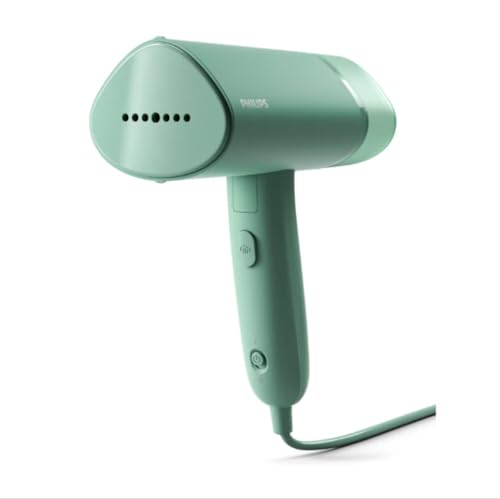
- Color: Green
- Style: Compact
- Included Components: Garment Steamer
2. Philips 7000 Series STH7020/20 Handheld Steamer
Best for: People who want a more capable handheld model
The Philips 7000 Series STH7020/20 is worth considering if you prefer a handheld appliance but want higher steam output than the Philips 3000 Series model.
Philips lists this model with 1,500 W power, up to 28 g/min of steam and a heat-up time of around 30 seconds. It also features an adjustable head and a pointed steam-plate tip designed to reach areas such as collars, buttons and pleats.
Key specifications
- Power: 1,500 W
- Steam output: Up to 28 g/min
- Heat-up time: Approximately 30 seconds
- Water tank: 100 ml
- Design: Handheld with adjustable head
Advantages
- Higher rated steam output than the compact 3000 Series model.
- Pointed steam plate helps with detailed areas.
- Suitable for quick touch-ups on a range of ironable fabrics.
- Handheld design is easier to store than a standing steamer.
Potential drawbacks
- The 100 ml tank may need frequent refilling.
- Higher power does not guarantee that every deep crease will disappear.
- A handheld model still requires you to support and move the garment during steaming.
Who should buy it?
Consider this model if you regularly wear office clothes, shirts, dresses or kurtas and want a handheld steamer with a higher stated steam output.
Verdict: A useful premium handheld option for people who want portability without choosing the most basic model.

- QUICK & EFFORTLESS REMOVE SCRIPLES – 1400W power delivers up to 24g/min continuous steam; tackles even the toughest crea…
- GUARANTEED NO SCREW LEAKS – Actively heated steam plate: Protect your delicate clothing for safe use on all ironable fab…
- ECO & MAX SETTING – Two energy modes to meet your needs; Eco for energy saving, gentle steaming and Max for heavier crea…
3. AGARO Signify Handheld Garment Steamer
Best for: Value-focused home use
The AGARO Signify is an option to compare if you want a handheld garment steamer with a larger water tank than some compact travel models.
Listings reviewed for this guide describe it as a 1,500 W appliance with a 260 ml water tank. The larger tank can be convenient if you need to refresh several garments without stopping as often to refill.
Actual steaming duration depends on the steam setting and how frequently the trigger is used. Confirm the exact model specifications and included accessories before ordering.
Key specifications
- Power: Listed at 1,500 W
- Water tank: Listed at 260 ml
- Type: Handheld
- Best use: Regular home steaming and quick outfit preparation
Advantages
- Larger tank than many compact 100 ml models.
- Handheld format is easier to store than a standing unit.
- Useful for people who steam several garments per session.
- Worth comparing in the value-oriented category.
Potential drawbacks
- A larger tank adds weight when filled.
- Results depend on actual steam output, fabric thickness and technique.
- Check current warranty coverage and service arrangements.
Who should buy it?
Consider the Signify if you want a handheld steamer for home use and prefer fewer water refills over the smallest possible size.
Verdict: A practical model to shortlist when tank capacity is an important buying consideration.

- Perfect for steaming garments to wrinkle out clothes, fabric, upholstery quickly and efficiently for a fresh and crease …
- Ideal for use on wide range of fabrics, heavily embroidered garments, versatile designer wear, occasion-wear, heavily la…
- Ceramic coated steam plate enables even heat distribution and fast heating for perfect results every time
4. AGARO Icon Handheld Garment Steamer
Best for: People who want a larger handheld water tank
The AGARO Icon is another handheld model worth comparing if you want more capacity than a compact travel steamer.
Product listings reviewed for this guide describe an 1,800 W model with a 260 ml water tank and steam output listed at up to 30 g/min. Verify these specifications against the exact listing, as model details can change.
The combination of a relatively large tank and handheld format may suit people who want to refresh several everyday garments without moving to a full standing appliance.
Key specifications
- Power: Listed at 1,800 W
- Steam output: Listed at up to 30 g/min
- Water tank: Listed at 260 ml
- Type: Handheld
Advantages
- Higher stated steam output than basic compact models.
- Larger tank may reduce refill interruptions.
- Easier to store than a floor-standing steamer.
- Worth considering for regular home steaming.
Potential drawbacks
- May feel heavier than smaller handheld steamers.
- Not as convenient as a standing unit for prolonged steaming sessions.
- A higher wattage figure alone does not establish better results on every fabric.
Who should buy it?
Compare this model if you steam multiple garments regularly but do not have space for a standing unit.
Verdict: A useful handheld alternative for buyers who prioritise tank capacity and stated steam output.

- 1600 Watts motor gives you a powerful suction power of 24 kPa to quickly remove dirt from any kind of dry surface, leavi…
- The HEPA filter traps the small air borne particles like dust, pollen and moulds, it acts as a dust barrier to prevent t…
- Cyclonic suction system accelerates air in the cyclonic chamber to separate out the dust
5. INALSA Steamax 1400 Garment Steamer
Best for: Everyday steaming on a practical budget
The INALSA Steamax 1400 is a handheld option for people who want a convenient appliance for regular clothing care.
Listings reviewed for this guide describe a 1,400 W model with a 300 ml water tank and steam output of up to approximately 22 g/min. Check the current product listing to confirm that these figures apply to the version you intend to purchase.
Its tank capacity is worth considering if you find small travel steamers inconvenient but do not want the size of a standing unit.
Key specifications
- Power: Listed at 1,400 W
- Steam output: Listed at up to 22 g/min
- Water tank: Listed at 300 ml
- Type: Handheld
Advantages
- Relatively large stated tank for a handheld model.
- Suitable for routine outfit preparation.
- More compact to store than most standing steamers.
- Worth comparing for everyday home use.
Potential drawbacks
- A full water tank may increase the appliance’s weight.
- Steam output may not match that of higher-output models.
- Verify the current model number, included attachments and warranty.
Who should buy it?
Consider it if you want a handheld steamer with a larger tank for regular use on everyday clothes.
Verdict: A practical contender for shoppers who want a balance between portability and fewer refills.
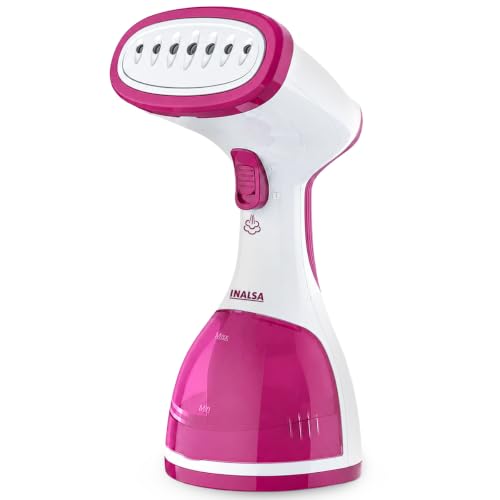
- Get Wrinkle-Free Clothes Every Time- With 1200W of power, Steamax Garment Steamer blasts away wrinkles efficiently and e…
- Automatic Continuous Steam-Steamax releases powerful up to 22g/min & heats up in just few secondsIt generates wrinkle-re…
- Detachable fabric brush & Big Nozzel – Steamax comes with detachable fabric & steam brush which helps you with thicker g…
6. Philips STE1040/20 Standing Garment Steamer
Best for: Families and frequent steaming
The Philips STE1040/20 is a standing garment steamer designed for more extensive steaming sessions. Instead of holding a compact steamer for every garment, you can hang clothes on the stand and work through several items in succession.
Philips India lists this model with 1,800 W power, a 1.8-litre water tank and steam output of up to 36 g/min. It also includes a standing setup with support accessories, depending on the package.
The large tank is especially useful when you regularly steam several outfits, family clothing or occasion wear.
Key specifications
- Power: 1,800 W
- Steam output: Up to 36 g/min
- Water tank: 1.8 litres
- Type: Standing garment steamer
- Accessories: Stand and garment-support features, as supplied with the model
Advantages
- Large tank for longer steaming sessions.
- Higher stated steam output than compact handheld models.
- Suitable for steaming multiple garments in one session.
- Standing setup reduces the need to hold the appliance’s water reservoir.
Potential drawbacks
- Requires more floor and storage space.
- Usually costs more than a basic handheld model.
- Takes longer to move or store than a foldable steamer.
- Not necessary if you only steam one or two garments occasionally.
Who should buy it?
Choose this type of appliance if several people in your household regularly need their clothes refreshed or you frequently prepare outfits for work and special occasions.
Verdict: A strong option to consider when convenience during longer steaming sessions matters more than compact storage.
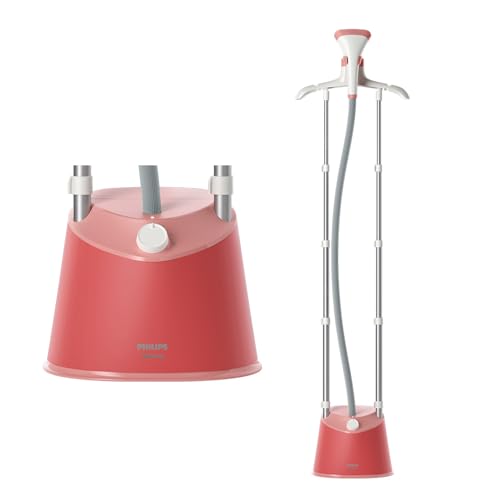
- No Burns Guaranteed – The Philips Garment Steamer enables safe de-wrinkling on all types of fabrics without the risk of …
- 50 Minutes of Continuous Steaming – This Standing Garment Steamer features a large 1.8L detachable water tank for extend…
- Powerful Steam for Fast De-Wrinkling – With 1800W power and 36g/min steam output, the Philips Garment Steamer smooths wr…
7. AGARO Grand Standing Garment Steamer
Best for: Larger wardrobes and frequent steaming
The AGARO Grand is a standing garment steamer designed for users who need more capacity than a handheld appliance provides.
Product information reviewed for this guide lists a 2,000 W model with a 1.8-litre tank, an adjustable pole and a standing arrangement with garment-support features. Some versions are listed with an integrated ironing board or similar support accessory, so verify the package contents before purchase.
The large tank can reduce the need for frequent refills, making the standing format convenient for households with many garments to prepare.
Key specifications
- Power: Listed at 2,000 W
- Water tank: Listed at 1.8 litres
- Type: Standing garment steamer
- Design: Adjustable pole and garment support, depending on variant
Advantages
- Large tank for longer steaming sessions.
- Standing setup is convenient for multiple garments.
- Useful for people who regularly prepare family clothing.
- Worth comparing against standing models from established appliance brands.
Potential drawbacks
- Takes up more space than handheld models.
- Requires a suitable location for storage and use.
- Check assembly, warranty, replacement parts and service availability.
- Accessories and specifications can vary by listing.
Who should buy it?
Consider the AGARO Grand if you regularly steam many garments and have a dedicated laundry or dressing area.
Verdict: A useful standing option to compare if you want high capacity for frequent household steaming.

- The garment steamer can be used to steam various fabrics both horizontally and vertically
- Powerful 2000watt heating element for fast and even heating. Double anti-dry design for comprehensive heat & damage prot…
- Sturdy built one-piece height adjustable panel along with iron board for smooth gliding & pressing of fabric. Side drain…
Comparison Table: Which Garment Steamer Should You Choose?
| Model | Power | Tank capacity | Type | Best for |
|---|---|---|---|---|
| Philips STH3010/70 | 1,000 W | 100 ml | Handheld, foldable | Travel and quick touch-ups |
| Philips STH7020/20 | 1,500 W | 100 ml | Handheld | Higher-output portable steaming |
| AGARO Signify | 1,500 W listed | 260 ml listed | Handheld | Value-focused home use |
| AGARO Icon | 1,800 W listed | 260 ml listed | Handheld | Larger handheld tank |
| INALSA Steamax 1400 | 1,400 W listed | 300 ml listed | Handheld | Everyday steaming |
| Philips STE1040/20 | 1,800 W | 1.8 litres | Standing | Families and frequent use |
| AGARO Grand | 2,000 W listed | 1.8 litres listed | Standing | Larger wardrobes |
Handheld vs Standing Garment Steamers
Choosing between a handheld and a standing garment steamer depends mainly on how many clothes you steam, how much storage space you have and how often you use the appliance.
Handheld garment steamers
Handheld models are compact appliances that you hold while directing steam over a hanging garment.
Choose a handheld model if:
- You usually steam one to five garments at a time.
- You have limited storage space.
- You travel frequently.
- You want to refresh clothes before leaving home.
- You do not want to assemble a standing unit.
Potential limitations: Small tanks may need frequent refilling, and holding the appliance for a long time can become tiring.
Standing garment steamers
Standing models usually have a pole, garment hanger and a larger water tank. Some include a support board for easier steaming.
Choose a standing model if:
- You regularly steam many garments in one session.
- You have sufficient floor and storage space.
- You frequently prepare sarees, dresses, shirts or family outfits.
- You want a larger tank for longer use.
Potential limitations: They are bulkier, take up more storage space and generally cost more than entry-level handheld models.
How to Choose the Best Garment Steamer
1. Check the steam output
Steam output is often measured in grams per minute (g/min). A higher stated output can help with crease removal, although performance also depends on the steam plate, fabric and how you use the appliance.
For light garments and occasional touch-ups, a compact model may be sufficient. For heavier cotton clothing or frequent steaming, compare models with higher stated output.
2. Look at the water-tank capacity
The tank determines how much water the appliance can hold before you need to refill it.
- 70–100 ml: Compact travel and quick-touch-up models.
- 200–300 ml: Useful for longer handheld sessions.
- 1–2 litres: More suitable for standing models and multiple garments.
These are broad categories, not guarantees of steaming duration. Actual runtime depends on the steam setting and water consumption.
3. Consider heat-up time
A quick heat-up time is convenient when you need to refresh an outfit shortly before leaving home.
Many compact steamers heat up in approximately 30 seconds, but this varies by model. Always follow the ready-to-use indicator and instructions rather than guessing from the wattage.
4. Check the power rating
Higher wattage can support greater heating capacity, but it does not automatically mean a steamer will perform better on every fabric.
Compare wattage alongside steam output, tank capacity, heat-up time and the appliance’s design.
5. Look for useful accessories
Depending on your wardrobe, useful accessories may include:
- Fabric brushes for suitable thicker fabrics.
- Heat-resistant gloves.
- A garment hanger.
- A support board.
- A storage bag for travel models.
- Attachments designed for particular fabric types.
Accessories are useful only when they are compatible with the clothes you intend to steam.
6. Check weight and cord length
A large water tank can make a handheld appliance heavier. If you have limited arm strength or intend to steam several garments, pay attention to the steamer’s weight when filled.
Also check the cord length and the location of your power sockets.
7. Confirm service and warranty coverage
Before buying, check the warranty, service availability in your area, return policy and replacement-part support. These practical details can matter more than an extra accessory.
Which Fabrics Can You Steam?
Garment steamers are useful for many fabrics, but not every fabric or garment is suitable for steaming. Always check the garment’s care label and the steamer manufacturer’s instructions.
| Fabric or garment | General guidance |
|---|---|
| Cotton shirts and kurtas | Often suitable; deep creases may need several passes or an iron |
| Polyester clothing | Usually suitable when the care label permits steaming |
| Sarees | Depends on the fibre, embellishments and care instructions |
| Silk | Use extra caution and follow the garment label |
| Wool and selected blazers | May benefit from gentle steaming if permitted |
| Velvet | Requires special care; follow the manufacturer’s instructions |
| Sequined or embellished garments | Avoid direct steam contact with delicate decorations unless explicitly permitted |
| Leather and suede | Do not steam unless the garment manufacturer specifically permits it |
Tips for steaming Indian ethnic wear
Sarees, kurtas, lehengas and occasion wear can combine several fabrics, linings and embellishments. Test an inconspicuous area when permitted and keep the steam plate at the distance specified by the manufacturer.
Do not assume a garment is safe to steam simply because it looks sturdy. Heat-sensitive trims, adhesives and decorations can be damaged.
Common Garment Steamer Buying Mistakes
1. Choosing the smallest tank for a large wardrobe
A tiny water tank may be convenient for travel but frustrating if you regularly steam multiple outfits.
2. Assuming a steamer replaces every iron
Steamers are useful for reducing wrinkles, but a traditional iron can provide sharper creases and a flatter finish on some garments.
3. Buying a standing model without checking storage space
Measure the appliance’s height, base and storage requirements. Confirm that you have enough room to use and store it safely.
4. Ignoring fabric-care labels
Some materials are heat-sensitive or require specialised care. Check the garment label before steaming.
5. Looking only at wattage
Compare steam output, tank size, heat-up time, weight and actual intended use rather than choosing the highest wattage automatically.
6. Forgetting to check the exact model number
Products in the same series can have different specifications, accessories and tank capacities. Confirm the complete model number before purchasing.
In Case You Are Looking For –
- Best Decorative Storage Baskets: Wicker vs Fabric
- Best Storage Ottomans vs Benches
- Best Laundry Hampers for a Neat & Organized Home
- Fabric vs Plastic Laundry Hampers: Which One Is Better?
- Smart Laundry Room Organization Ideas
Garment Steamer Safety and Maintenance
Garment steamers produce hot steam that can cause burns. Use the appliance carefully and follow the manufacturer’s instructions.
- Keep hands and face away from the steam outlet.
- Never direct steam towards yourself or another person.
- Use the appliance on a stable surface or the supplied stand.
- Keep the power cord away from hot surfaces and water.
- Unplug the appliance before refilling or cleaning it, following the product instructions.
- Allow the steamer to cool before storing it.
- Empty the tank if the manufacturer recommends doing so after use.
- Descale the appliance according to its instructions, especially if your water supply is hard.
- Do not add perfume, fabric softener or other additives to the water tank unless the manufacturer explicitly permits them.
- Keep the appliance away from children and pets while operating.
Proper maintenance can help prevent mineral buildup and support consistent steam performance.
Frequently Asked Questions
1. Which garment steamer is best for wrinkle-free clothes?
The best option depends on your needs. A compact Philips handheld model can suit quick touch-ups, while a standing steamer such as the Philips STE1040/20 is worth considering for frequent steaming of multiple garments.
2. Is a garment steamer better than an iron?
Neither is universally better. A steamer is convenient for reducing wrinkles and refreshing suitable garments, while an iron is generally better for sharp creases and a very flat finish.
3. Can I use a garment steamer on sarees?
Some sarees can be steamed, but suitability depends on the fabric, embellishments and care label. Use extra caution with silk, zari, sequins and delicate decorative details.
4. How much water-tank capacity do I need?
A 100 ml tank may be sufficient for quick touch-ups. If you steam several garments regularly, consider a handheld model with a larger tank or a standing steamer with a tank of around 1–2 litres.
5. Can garment steamers remove deep wrinkles?
They can reduce many wrinkles, but results depend on the fabric, steam output and crease severity. Deep creases in thick cotton may require repeated passes or a conventional iron.
6. Are garment steamers safe for delicate fabrics?
Only when the garment’s care label and appliance instructions permit steaming. Test an inconspicuous area when appropriate, and avoid direct steam on delicate decorations or materials that cannot tolerate heat.
7. Can I use tap water in a garment steamer?
Follow the manufacturer’s instructions. Some appliances permit tap water, while others recommend distilled or demineralised water depending on local water hardness. Using the wrong water can contribute to mineral buildup or affect performance.
8. How long does a garment steamer take to heat up?
Many handheld models heat up in approximately 30 seconds, but the time varies. Standing models can differ, so check the specifications for the exact product.
9. Can I use a garment steamer while travelling?
Compact foldable handheld models are convenient for travel, provided the appliance is suitable for the destination’s voltage and plug type. Empty and cool the unit before packing it.
10. Do garment steamers consume a lot of electricity?
Electricity use depends on wattage and how long the appliance operates. A 1,500 W steamer running continuously for 10 minutes would use approximately 0.25 kWh; actual consumption depends on heating cycles and usage.
Final Verdict: Which Garment Steamer Should You Buy?
The best garment steamer for wrinkle-free clothes is the one that suits your wardrobe, steaming frequency and available storage space.
- For travel and quick touch-ups: Philips 3000 Series STH3010/70.
- For a higher-output handheld model: Philips 7000 Series STH7020/20.
- For value-focused handheld use: Compare AGARO Signify and AGARO Icon.
- For everyday steaming with a larger tank: Consider INALSA Steamax 1400.
- For families and frequent steaming: Philips STE1040/20.
- For larger wardrobes and longer sessions: Compare AGARO Grand.
Before purchasing, verify the exact model specifications, warranty and current price. Most importantly, check whether a steamer suits the fabrics you wear most often.
A compact handheld steamer can be more than enough for everyday office clothes, while a standing model makes more sense when steaming is a regular household task. Choose according to your actual routine rather than paying for capacity you may never use.